Coffee Equipment
Best Coffee Storage Containers: A Practical Comparison of 11 Options
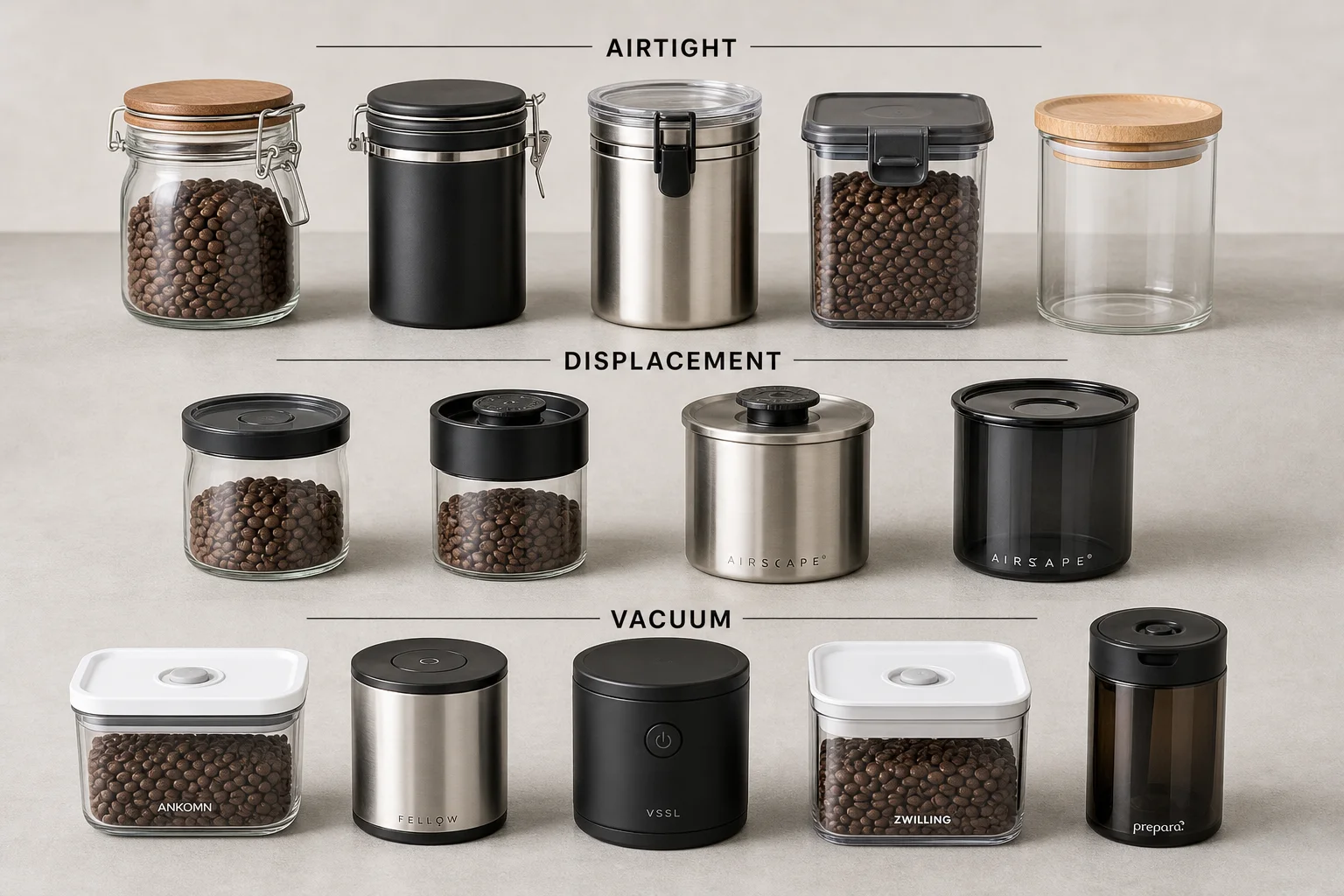
We tested 11 coffee storage containers across three technology categories to understand which methods best preserve coffee freshness and flavor.
Introduction
Coffee freshness matters. Once roasted, coffee begins to lose its aromatic compounds and flavor complexity through oxidation and degassing. The question is not whether storage affects coffee, but which storage method preserves it best. We tested 11 different containers across three distinct technology categories to understand their real-world impact on coffee flavor and espresso performance.
Understanding Coffee Storage Technology
Coffee storage containers fall into three broad categories based on how they manage oxygen exposure. Each approach uses different mechanics to slow the staling process, but the practical differences may surprise you.
The first category includes simple airtight containers that rely on a sealed lid to prevent air exchange. The second uses displacement methods, where a mechanism actively pushes air out of the container before sealing. The third employs vacuum or evacuation systems that significantly reduce the oxygen inside the container. Understanding these categories helps explain why some containers perform better than others in preserving coffee flavor.
Airtight Containers: Simple Sealing Solutions
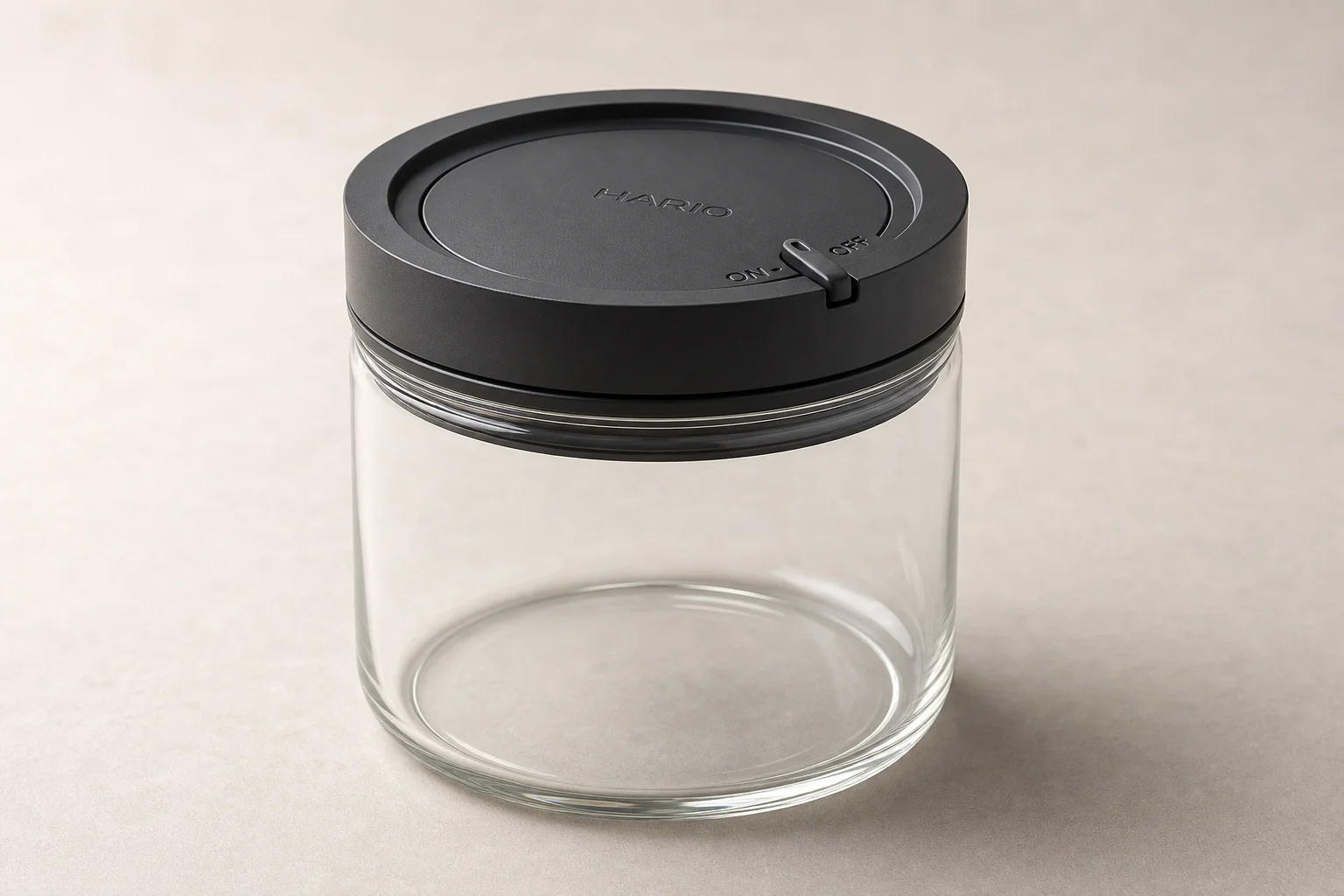
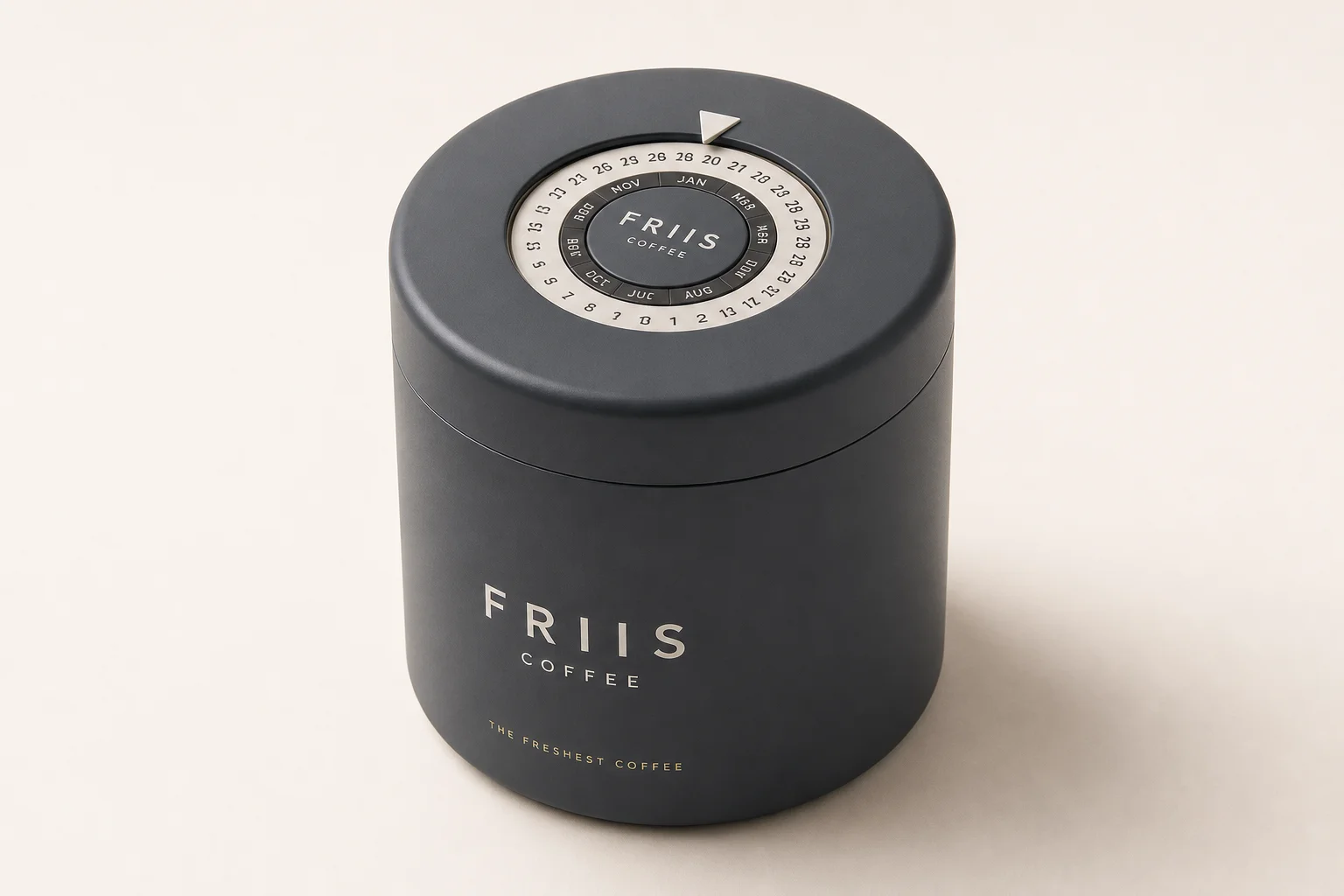
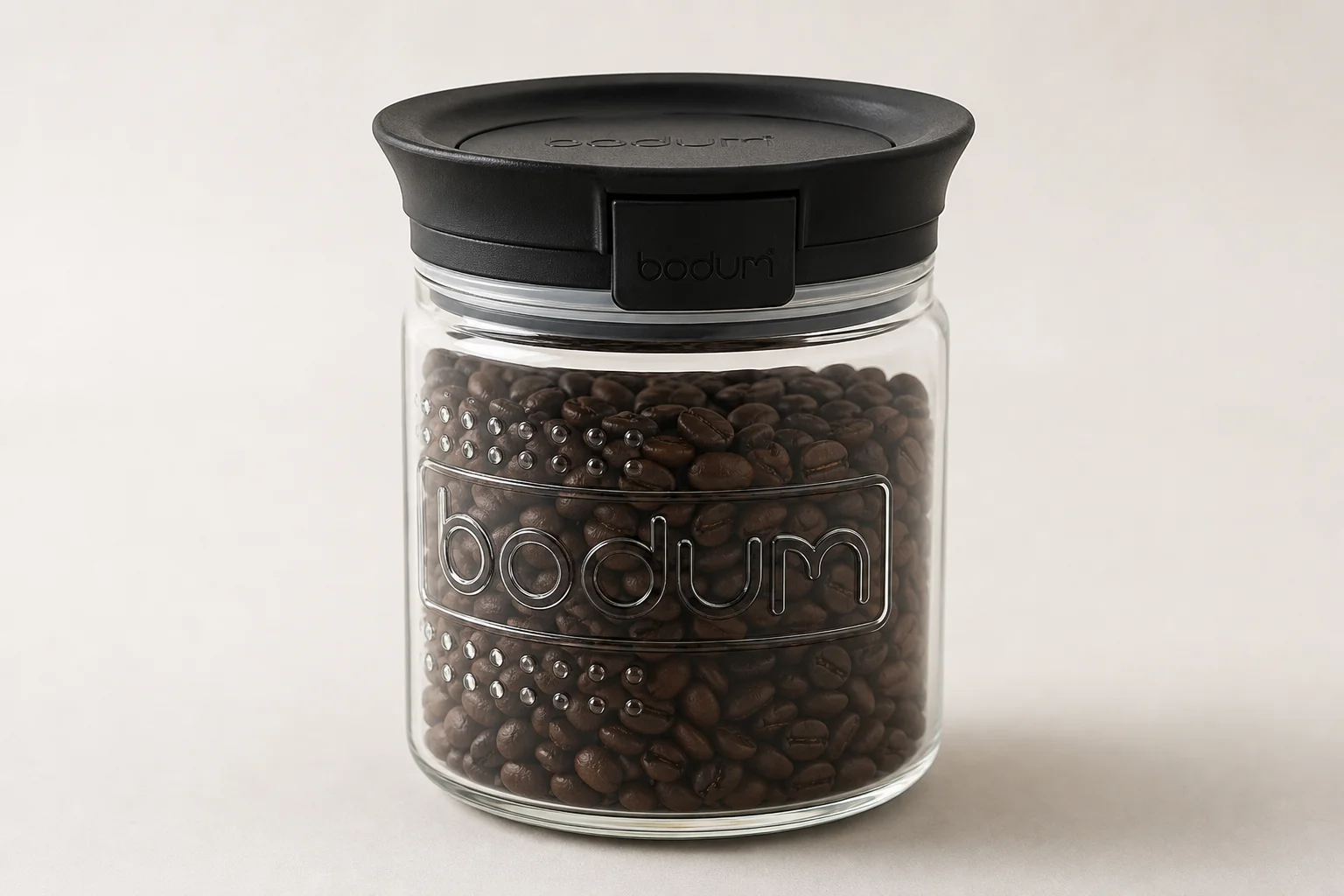
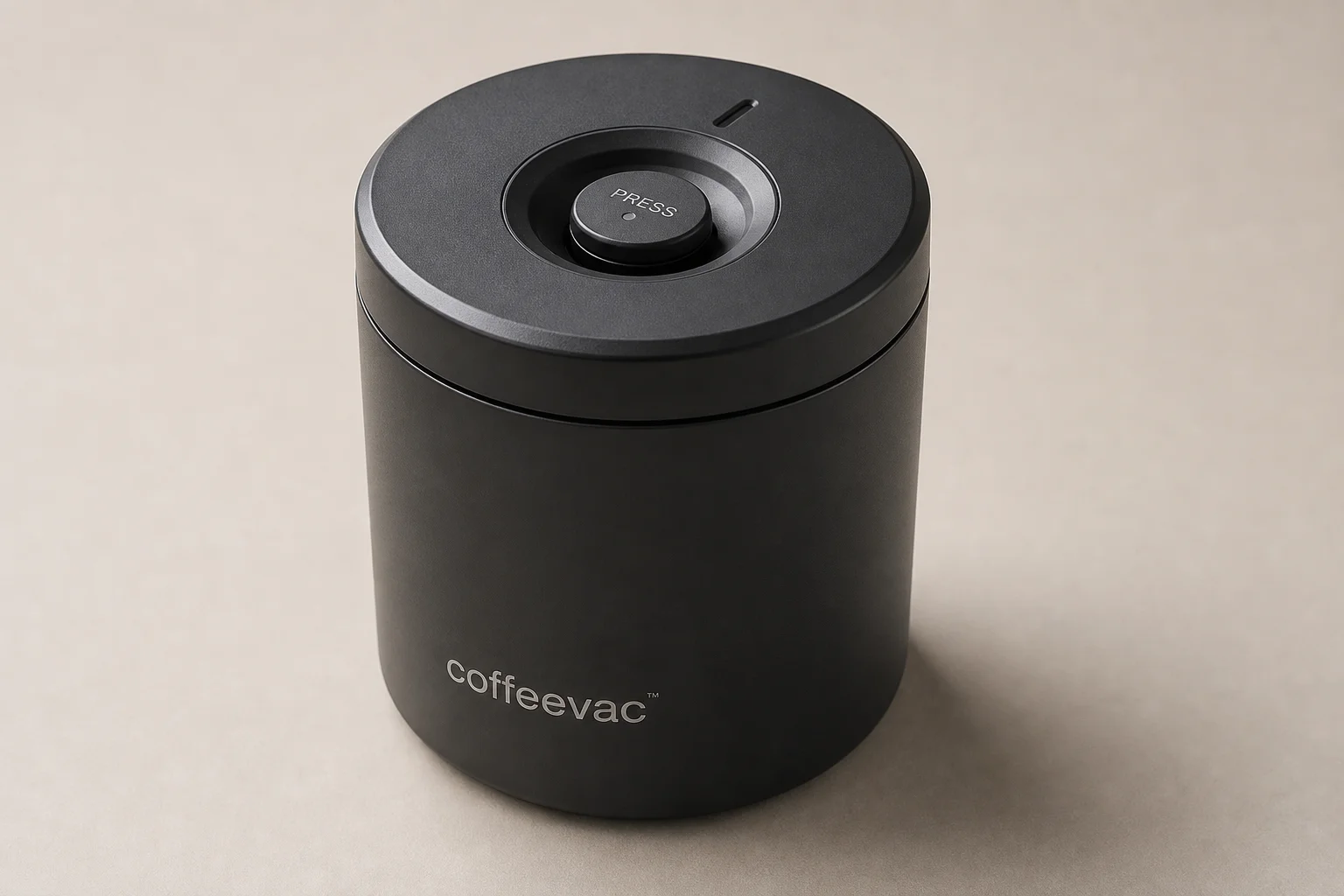
Airtight containers represent the most straightforward approach to coffee storage. They seal the container but do not actively remove air. This category includes the OXO Good Grips, Hario, Friis, Bodum, and Coffeevac.
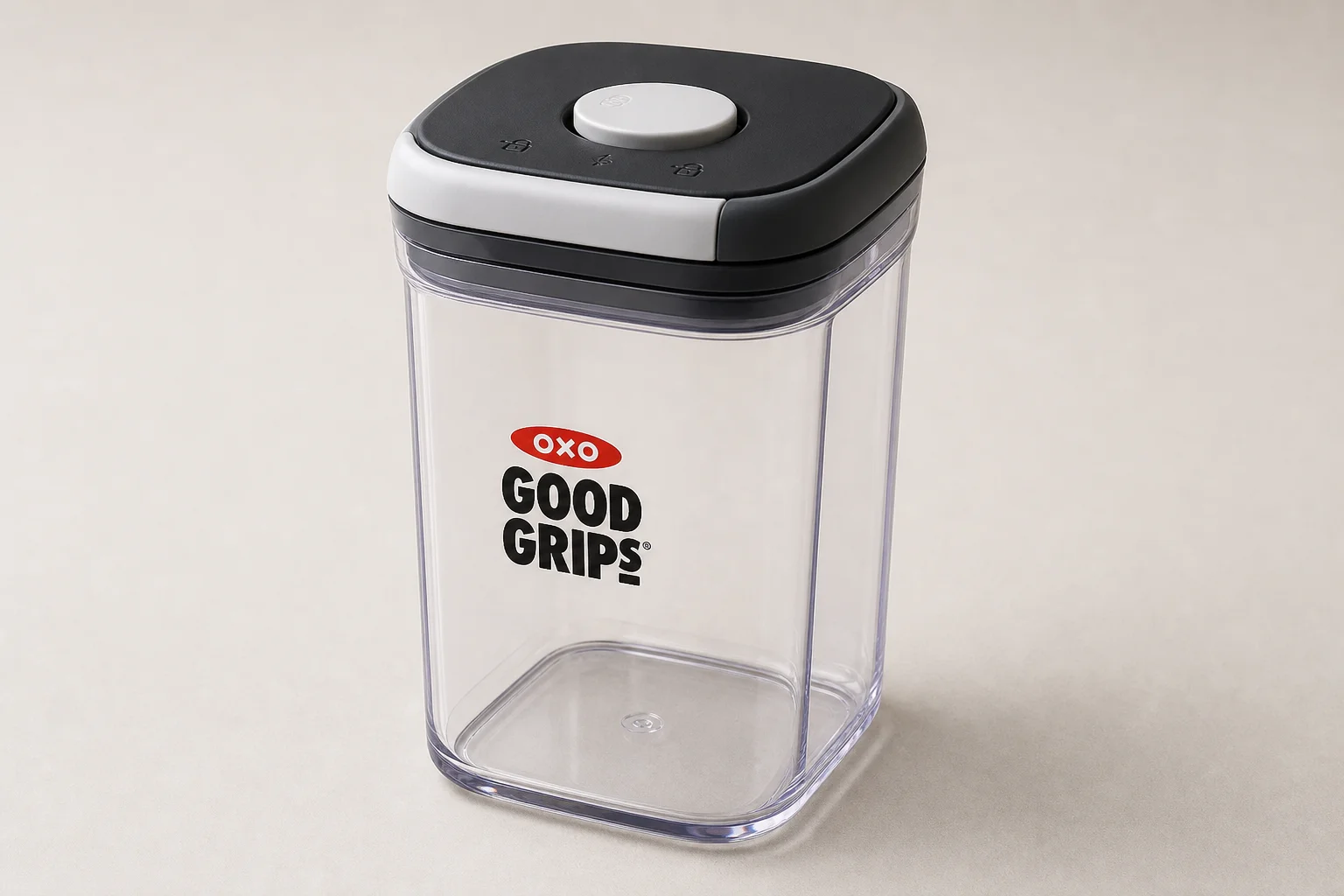
The OXO Good Grips uses a simple button mechanism on the lid that compresses a seal against the container walls. It works reliably, though the design is bulky and expensive for what it offers. The Friis includes a useful date dial on top so you can track when the coffee was roasted or stored, making it practical for managing multiple bags. The Hario operates similarly to the OXO with a simple switch mechanism.
The Bodum is the simplest of all, featuring a glass body with a plastic lid and basic gasket seal. It is surprising how many containers use glass, since coffee is better stored away from direct sunlight. The Coffeevac stands out in this category because of its clever valve mechanism. You cannot remove the lid until you press a button that opens a valve, allowing air to equalize. This creates an exceptionally tight seal and the coffee stored in it tasted notably good. It is also notably cheaper than many alternatives, making it excellent value for money.
Displacement Containers: Active Air Removal
Displacement containers use a physical mechanism to push air out before sealing. This category includes the Prepara, MiiR, and Airscape. These containers sit in the middle ground between simple airtight sealing and full vacuum evacuation.
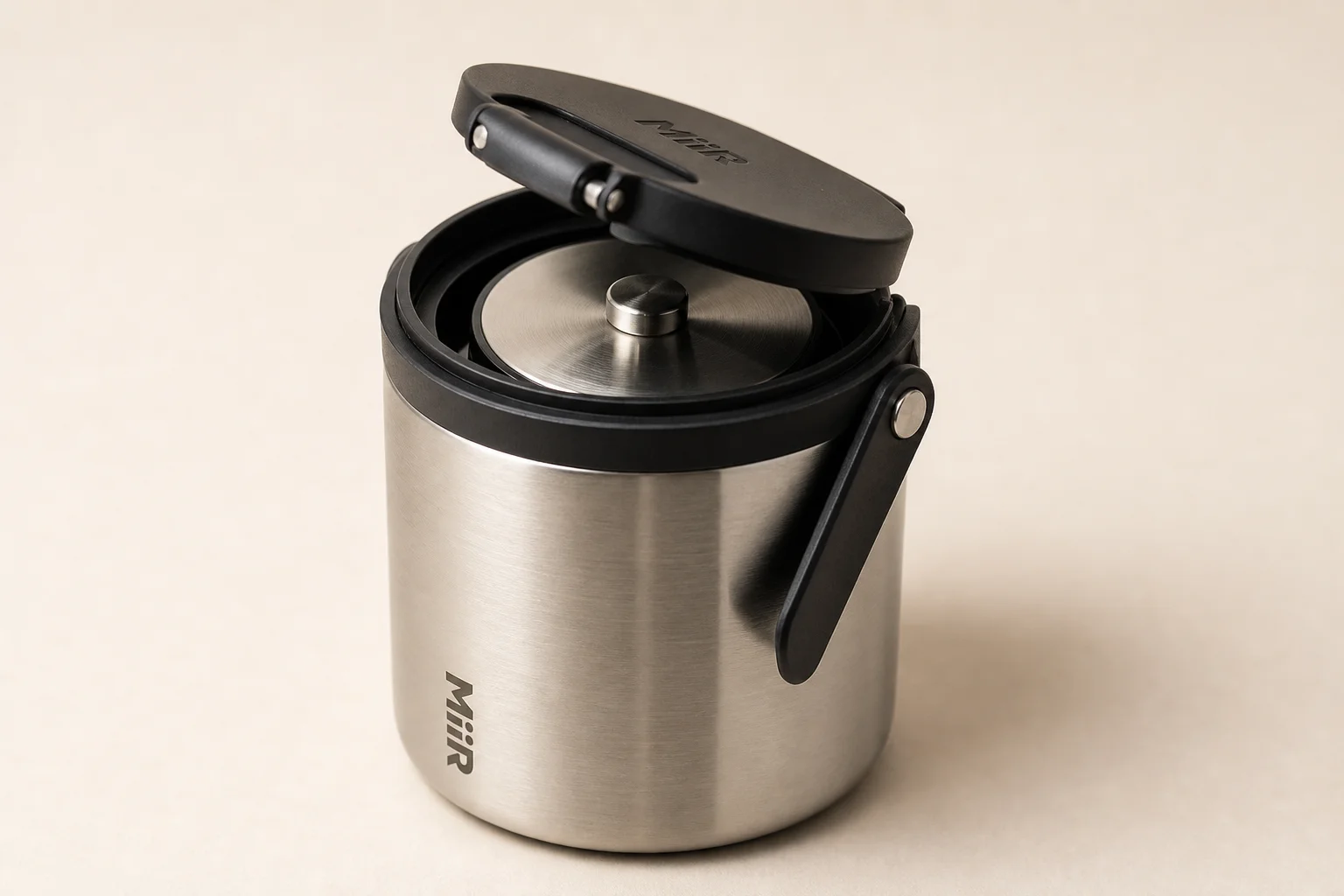
The Prepara works adequately but has a significant usability issue. Its narrow design makes it uncomfortable to use if you have larger hands, as reaching into the container becomes awkward as it fills. The MiiR features excellent build quality and a nice aesthetic, but its displacement mechanism is somewhat finicky. You drop a piston onto the coffee beans and flip a handle down to create a seal around the edges. This requires using both hands in an awkward pushing and twisting motion that feels unnecessarily complicated.
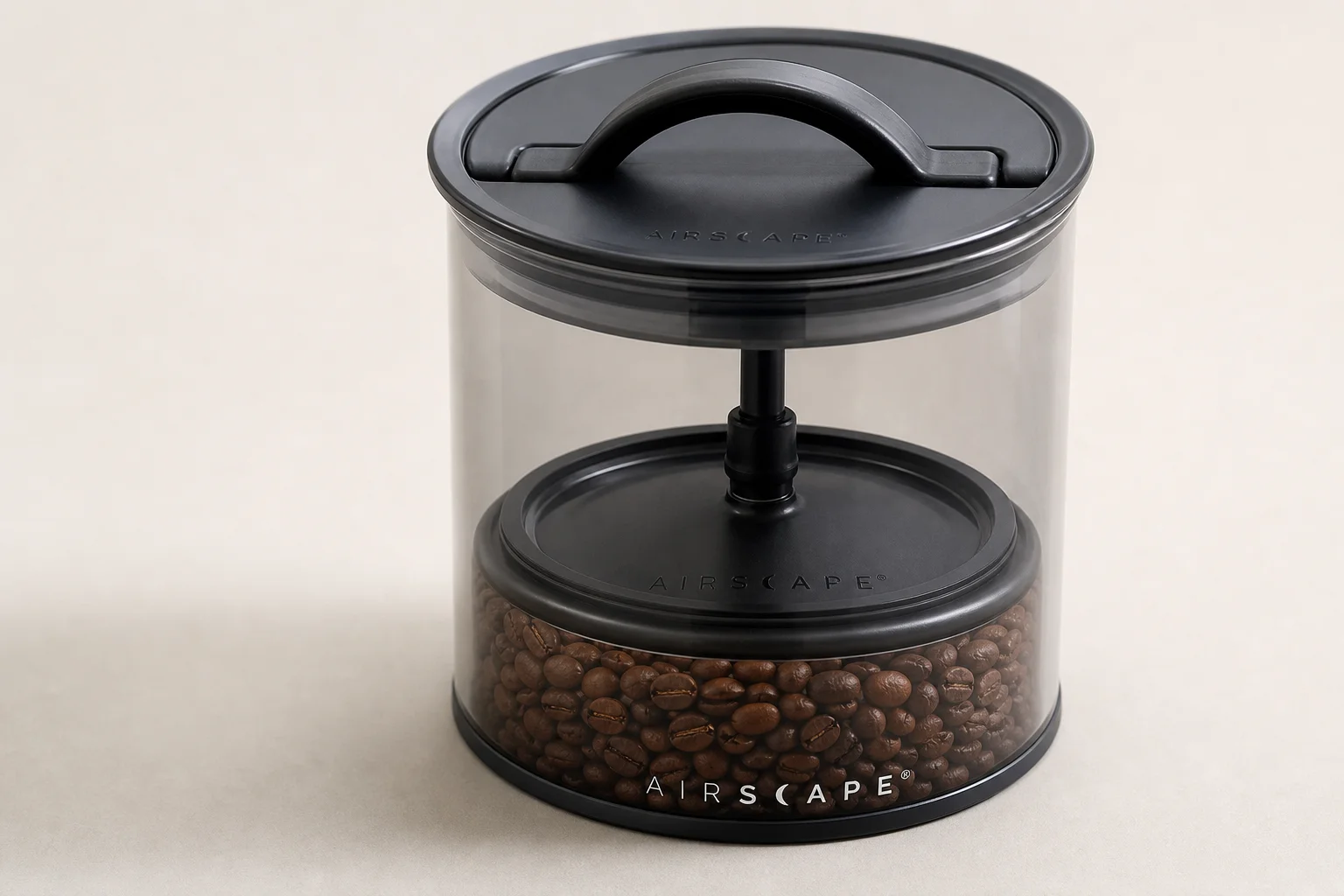
The Airscape works as a hybrid between these two designs. It is much wider, making it easier to use, and the materials are simple and cost-effective. The piston drops in easily and the flip handle seals smoothly. Of the displacement containers tested, the Airscape is the most practical choice, combining good build quality with straightforward usability.
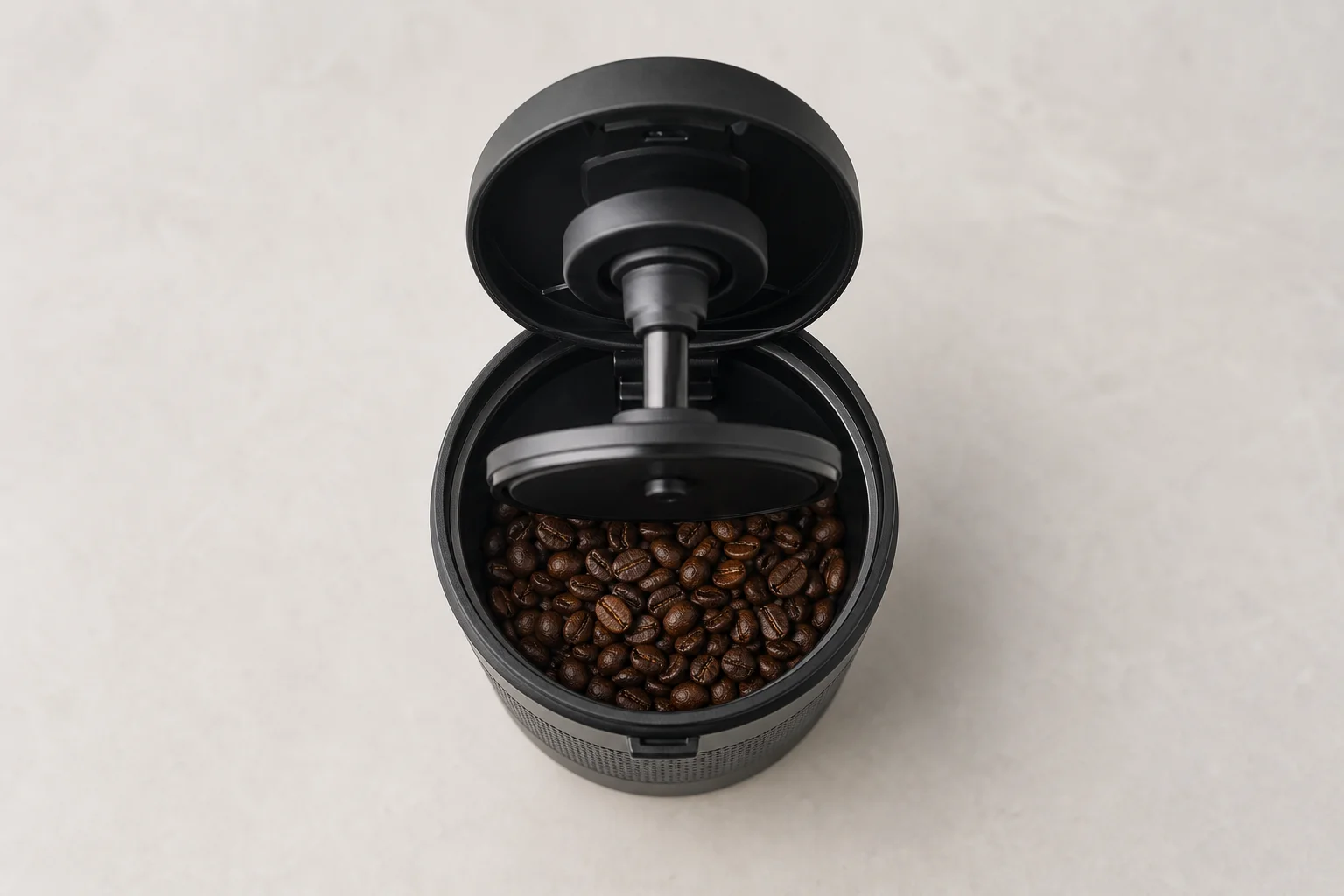
Taste-wise, there was no significant difference between displacement containers in the testing. Broad trends emerged, but the data was not conclusive enough to declare one displacement method clearly superior to the others.
Vacuum Containers: Evacuation Methods
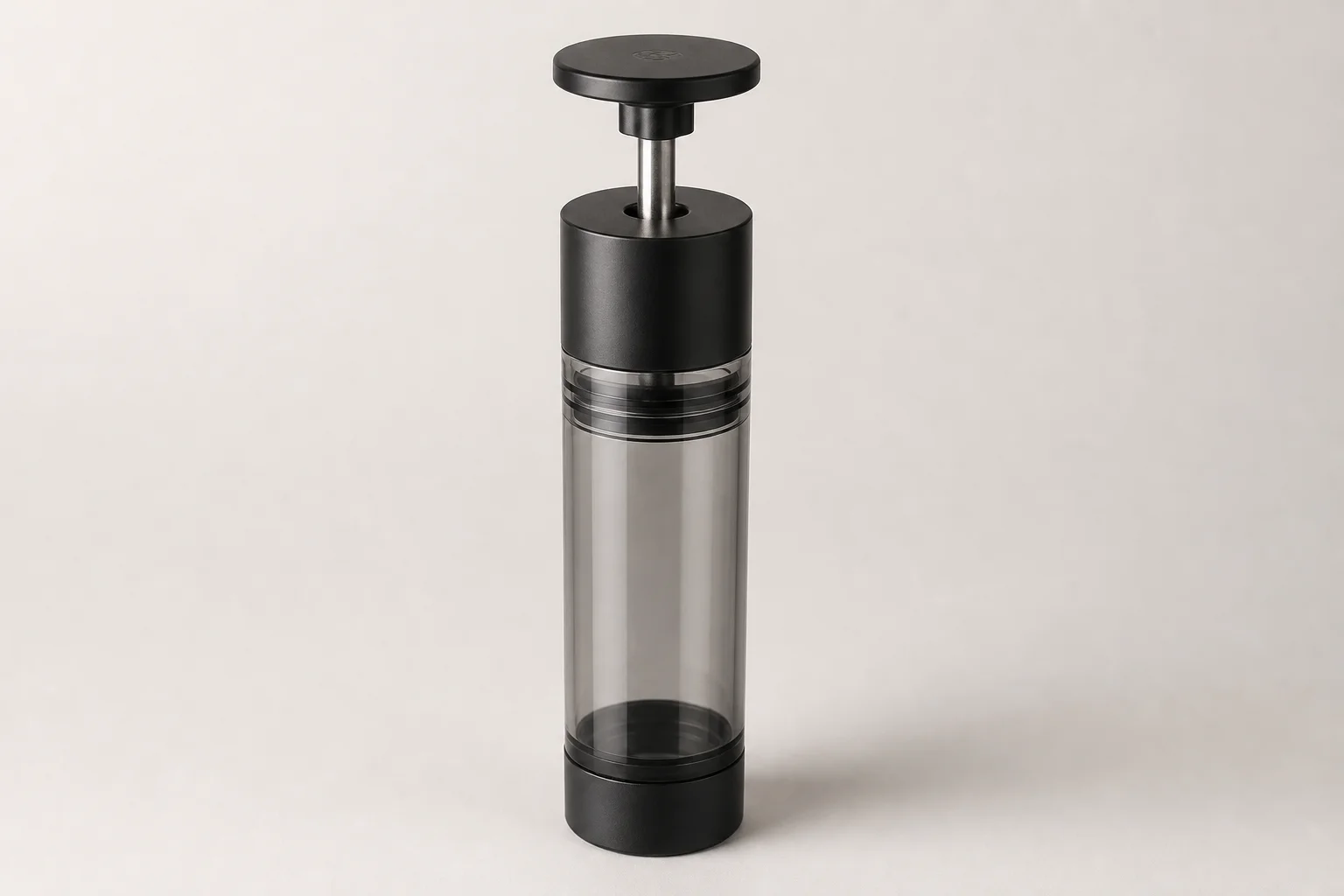
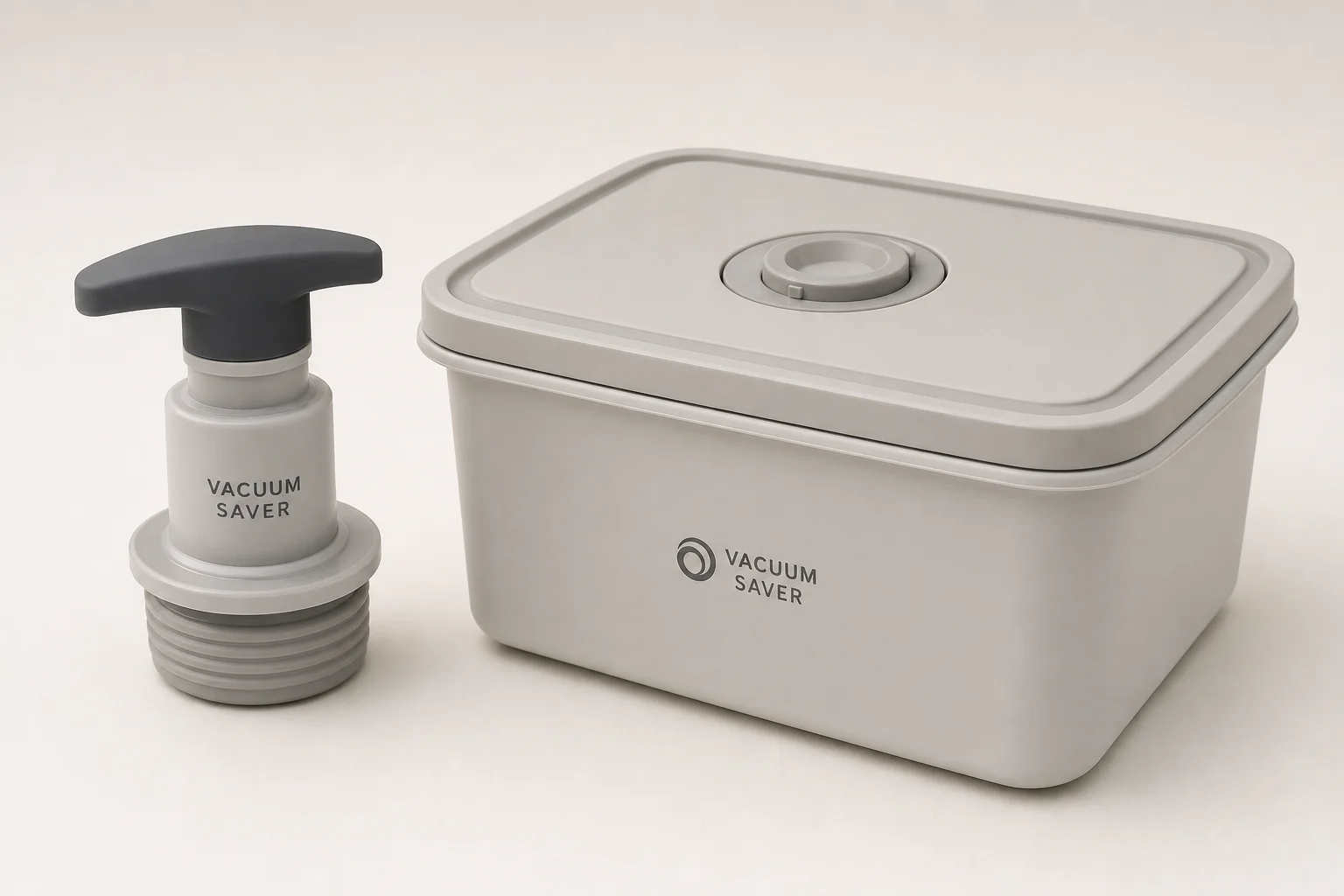
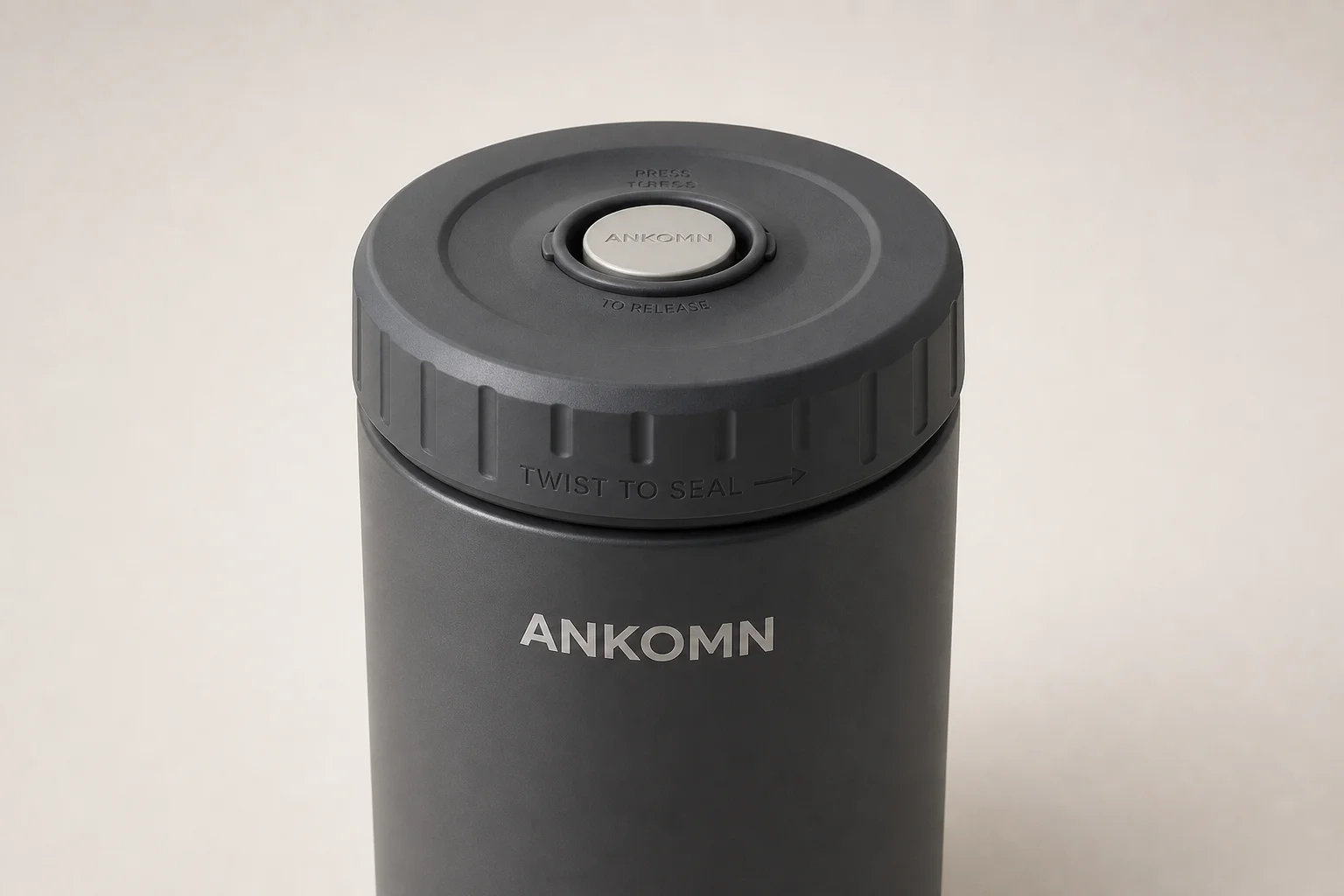
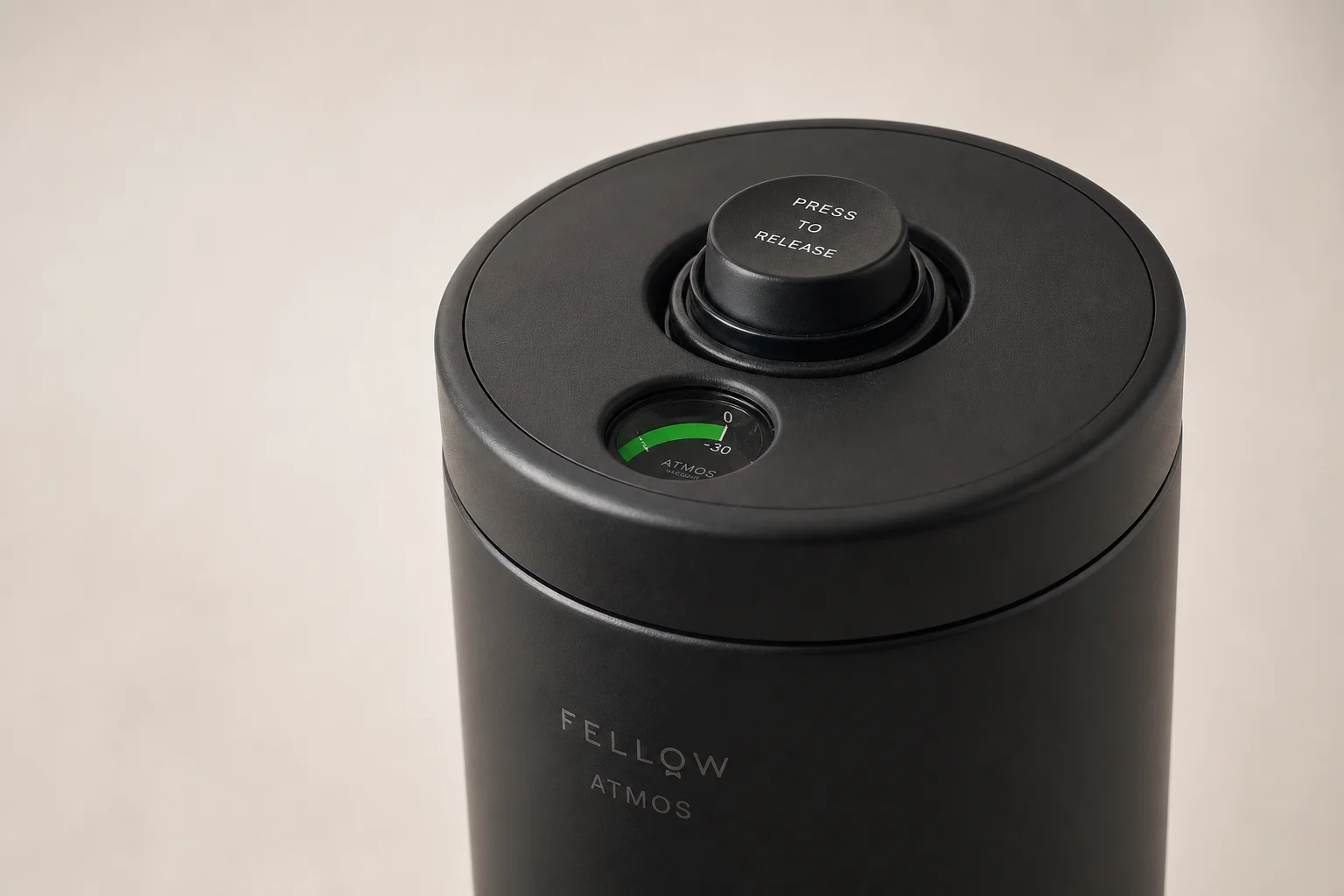
Vacuum containers significantly reduce oxygen inside the container by pulling air out after sealing. This category includes the Vacuum Saver, Ankomn, and Fellow Atmos. These containers showed the most consistent flavor preservation in testing.
The Vacuum Saver is a two-piece system with a separate valve that sits on top. You pump air out manually, but you never know exactly when you have achieved a proper vacuum. The lid becomes difficult to remove, and releasing the valve requires lifting a small piece until you hear air rush back in. The system works but feels bulky and fussy, especially if you are not regularly using a vacuum pump for other purposes.
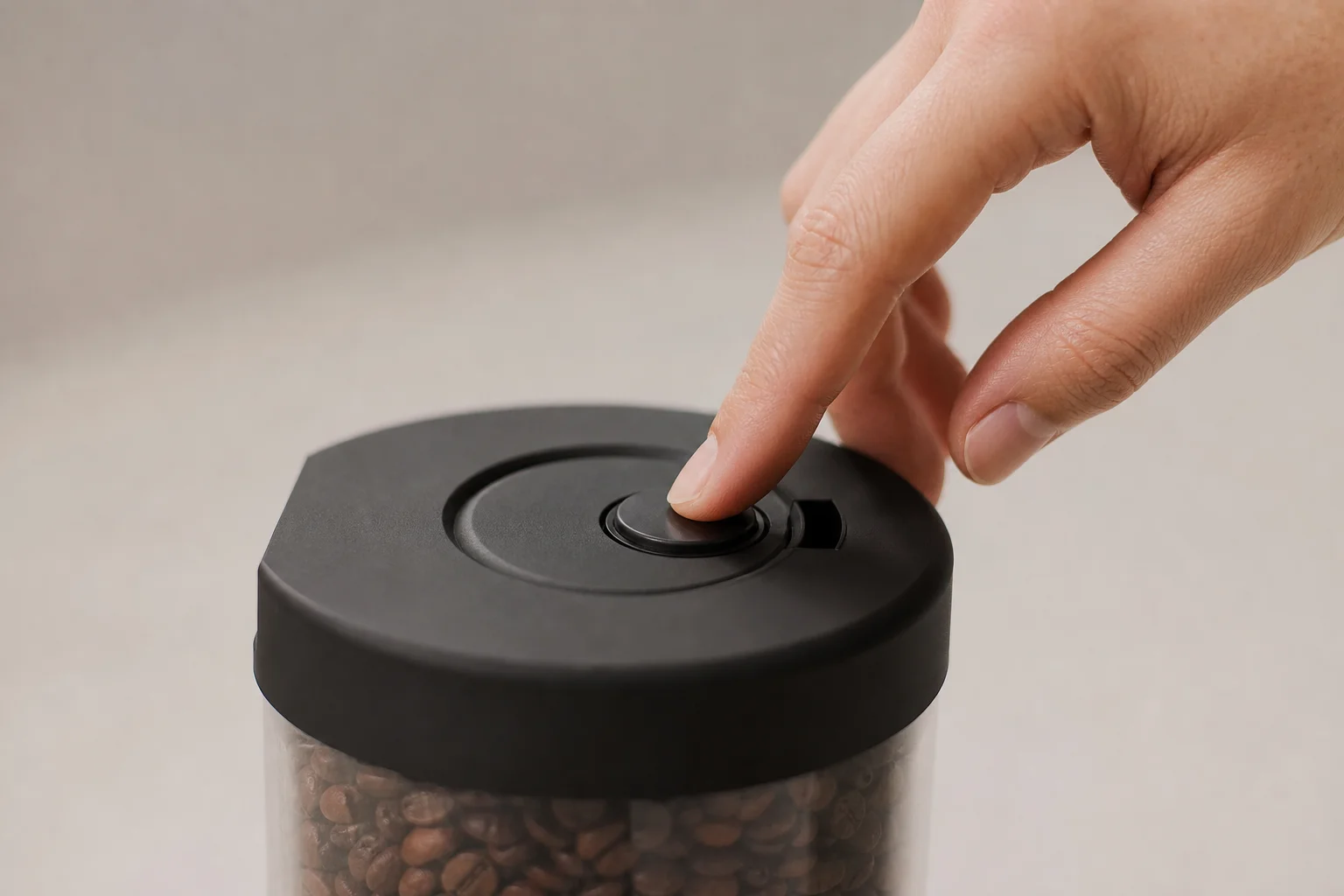
The Ankomn operates more simply. You place the lid on and twist to create a seal, then push a button to release the vacuum when you want to open it. It comes in multiple sizes and works reliably, though the user experience is not as refined as other options.
The Fellow Atmos is the most expensive container tested, but it is also the most thoughtfully designed. It features a simple press-to-release valve on top. The evacuation method involves a backwards-and-forwards pumping motion that is slightly awkward, but the real advantage is that it tells you when you have achieved a vacuum. A small green line appears around the vacuum gauge, providing clear visual feedback. With very fresh coffee, you may see the gauge depressurize as CO2 escapes from the grounds, which is normal and not a product fault. After about a week, this effect stops. The Fellow’s main weakness is that the vacuum mechanism has no obvious way to disassemble for cleaning, though this is rarely an issue in normal use.
Espresso Performance and Crema Retention
Testing espresso performance revealed an interesting correlation between storage method and shot quality. Using the same grind setting and coffee, we measured crema volume and shot flow characteristics across all containers.
Faster espresso shots showed more channeling and less crema, while slower shots produced better extraction and more crema. The key finding was that storage method correlated with shot speed. Vacuum containers produced the slowest shots and the most crema. Displacement containers sat in the middle. Airtight containers produced the fastest shots with the most channeling and least crema.
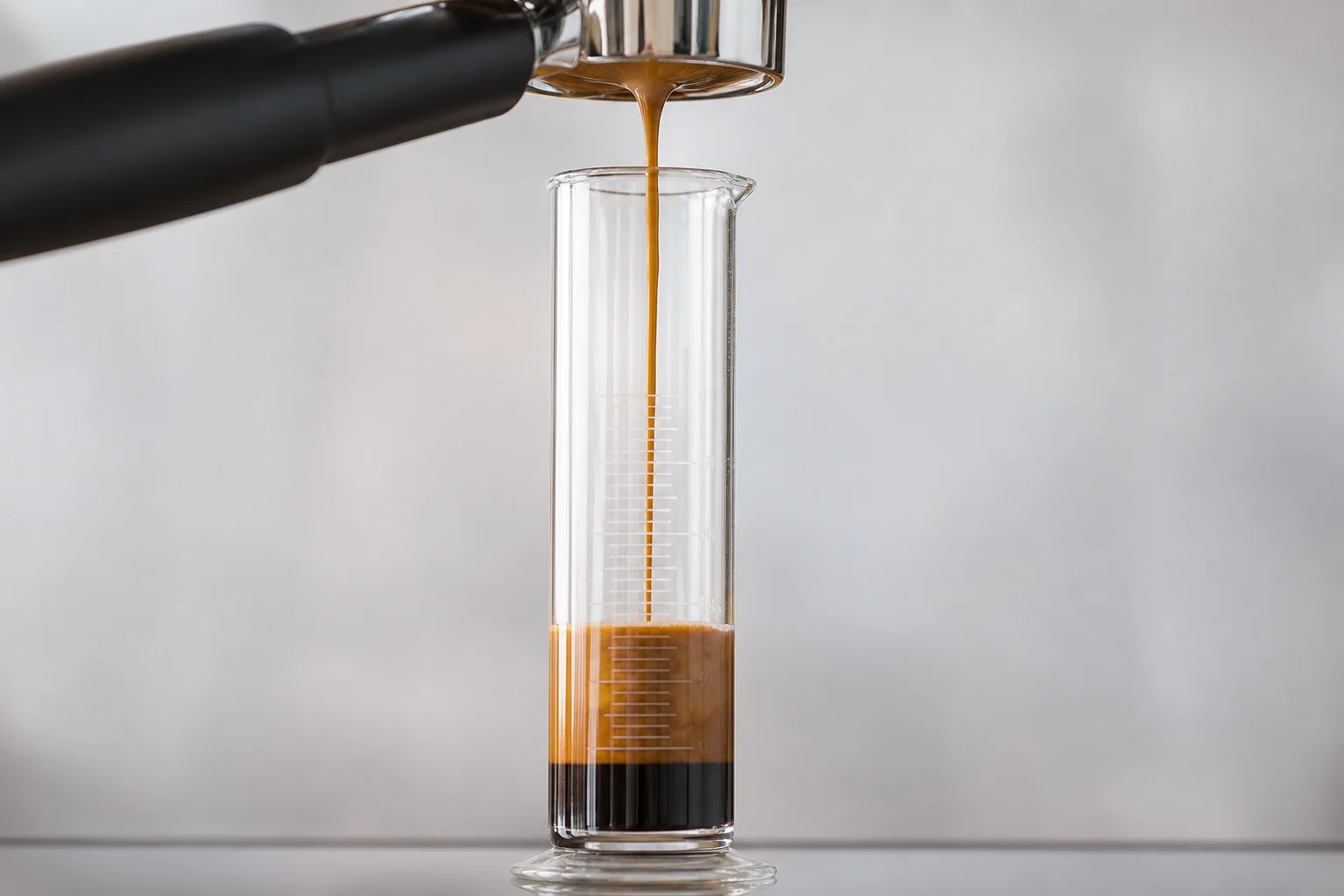
The causation behind this correlation remains unclear, but the pattern was consistent and conclusive. This suggests that storage method does impact espresso performance, even if the mechanism is not fully understood. The vacuum containers’ superior performance in espresso extraction aligns with their slightly better results in the cupping taste tests, where evacuated containers showed a little more sweetness and clarity overall.
Buying Advice and Final Thoughts
The taste differences between storage methods were smaller than expected. After six weeks of storage, even airtight containers preserved coffee reasonably well. This suggests that in many situations, a well-made resealable bag is sufficient for coffee storage, provided it is dark and properly sealed.
However, if you want a dedicated container, the Fellow Atmos is the best choice. It is the most expensive option, but the features are thoughtfully designed, the build quality is excellent, and it produced the best results in testing. The Coffeevac is an excellent value alternative if you prefer a simpler airtight design. The Airscape is the best displacement option if you want active air removal without the cost of a vacuum system.
Your choice ultimately depends on your priorities. If budget is the primary concern, the Coffeevac or Bodum work fine. If you want the best performance and do not mind paying for it, the Fellow Atmos is worth the investment. If you want a middle ground between simplicity and active air removal, the Airscape is well-made and practical.
Conclusion
Coffee storage containers do make a measurable difference in preserving coffee freshness, though the differences are more subtle than many expect. Vacuum containers showed a slight edge in both cupping tests and espresso performance, but simpler airtight containers still preserve coffee adequately for most home use. The best container for you depends on your budget, aesthetic preferences, and how much you value the convenience of active air removal. Whatever you choose, storing coffee in a sealed, opaque container is significantly better than leaving it exposed to air and light.
Further reading
Related Reviews
Coffee Equipment
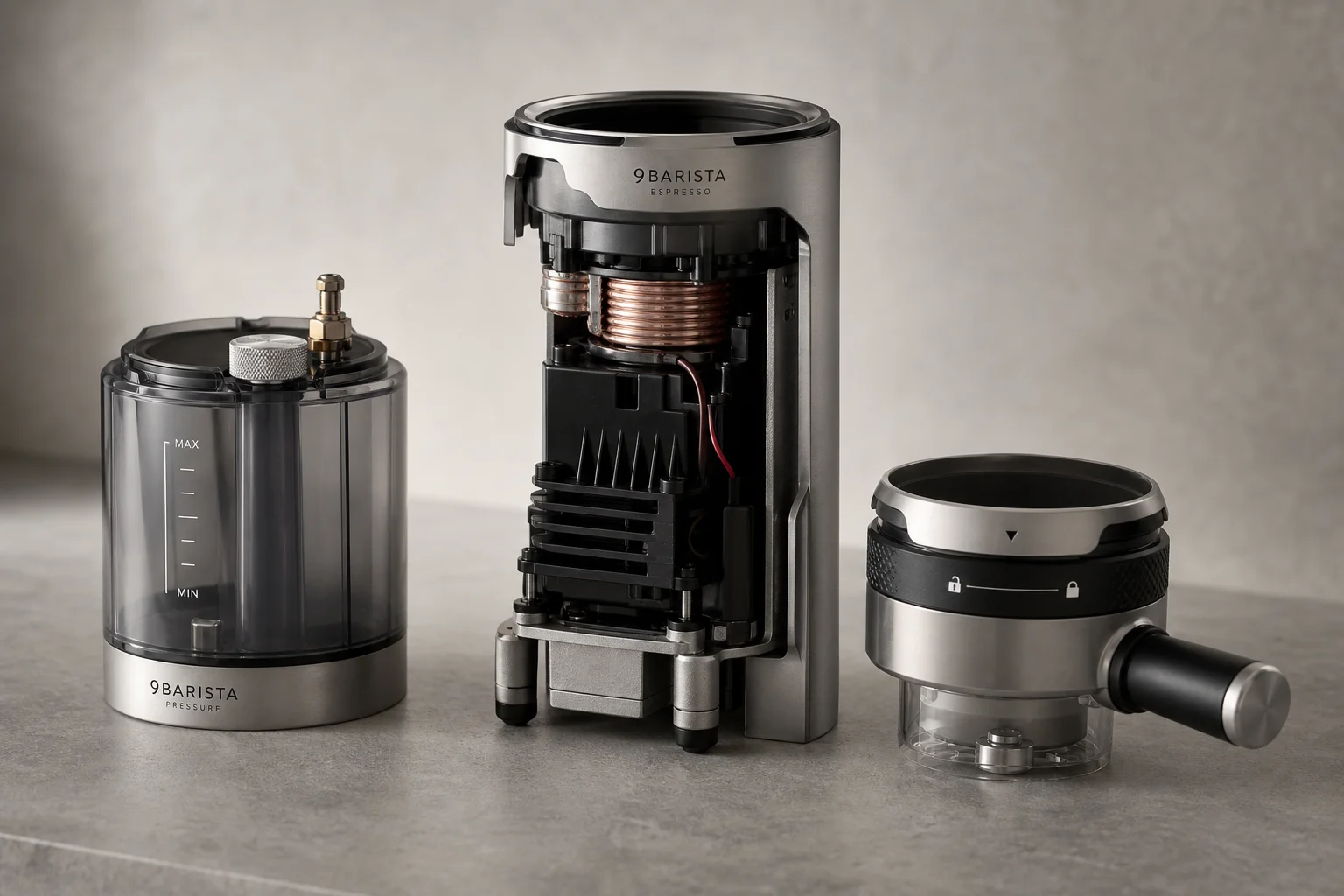
9Barista Espresso Machine Review: Stovetop Espresso for Single-Cup Enthusiasts
A cleverly engineered stovetop espresso maker that generates nine bars of pressure without electricity. Excellent coffee quality, but requires patience and suits solo drinkers only.
Coffee Equipment
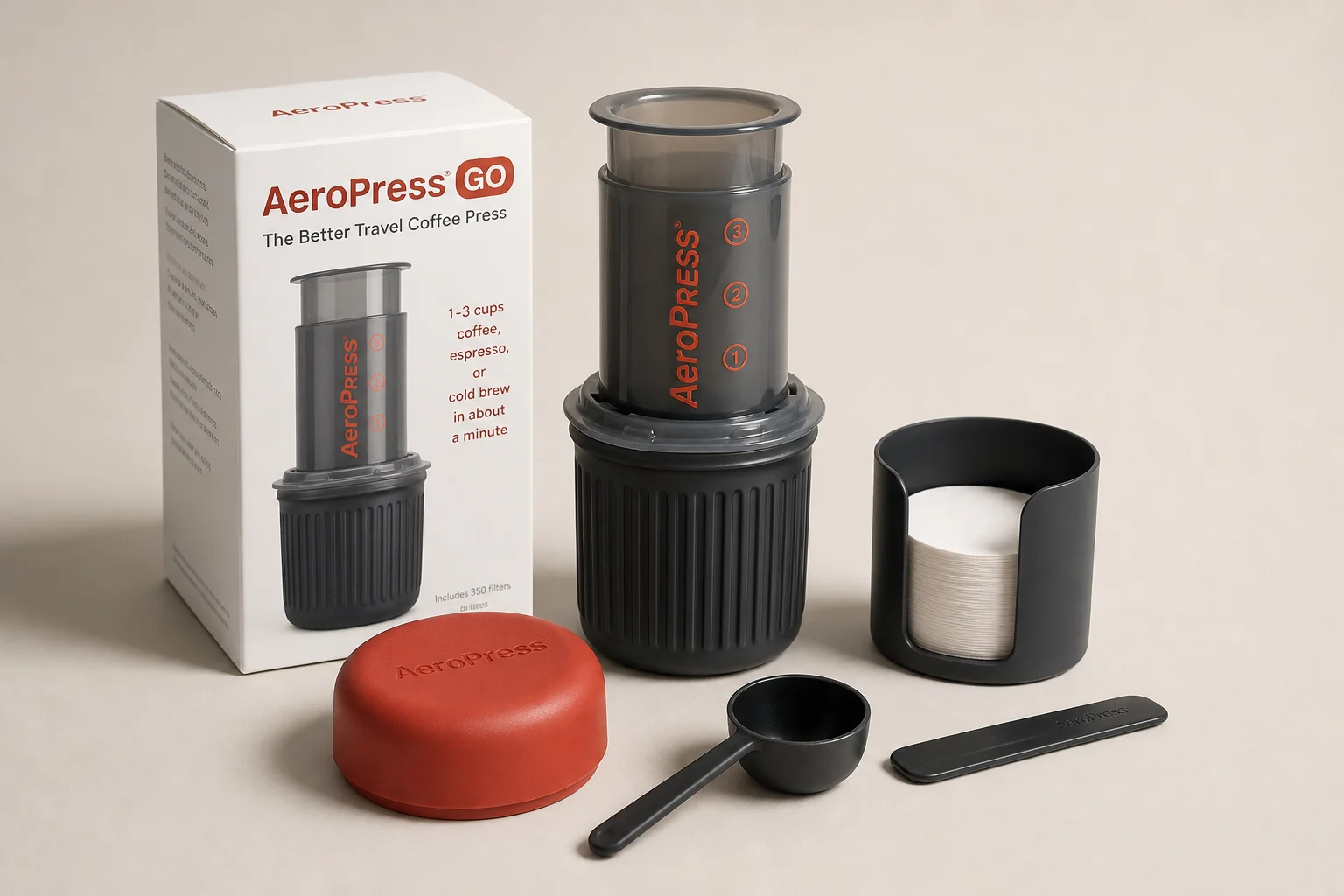
Aeropress Go Review: A Compact Travel Brewer That Solves One Specific Problem
The Aeropress Go shrinks the original design and adds an integrated cup, but it may not address the travel challenges most coffee enthusiasts actually face.
Coffee Equipment
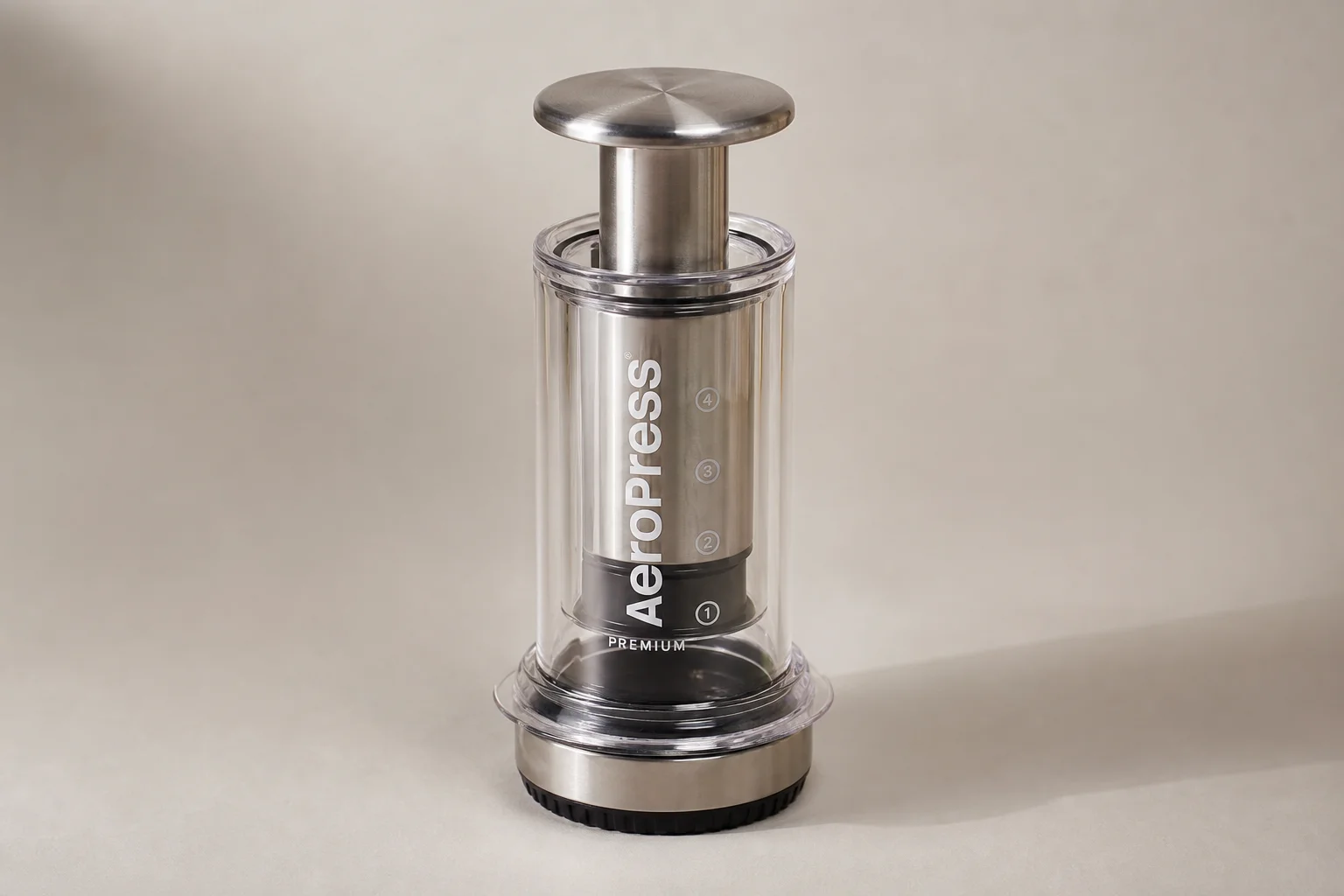
AeroPress Premium Review: Premium Materials, Practical Trade-offs
The AeroPress Premium brings glass and metal construction to a beloved brewer, but trades portability and durability for a more refined feel. Here's what changes in the cup and what matters before you buy.