Kitchen Tools
Best Cheese Graters: A Microplane Rasp and a Rotary Grater Worth Your Counter Space
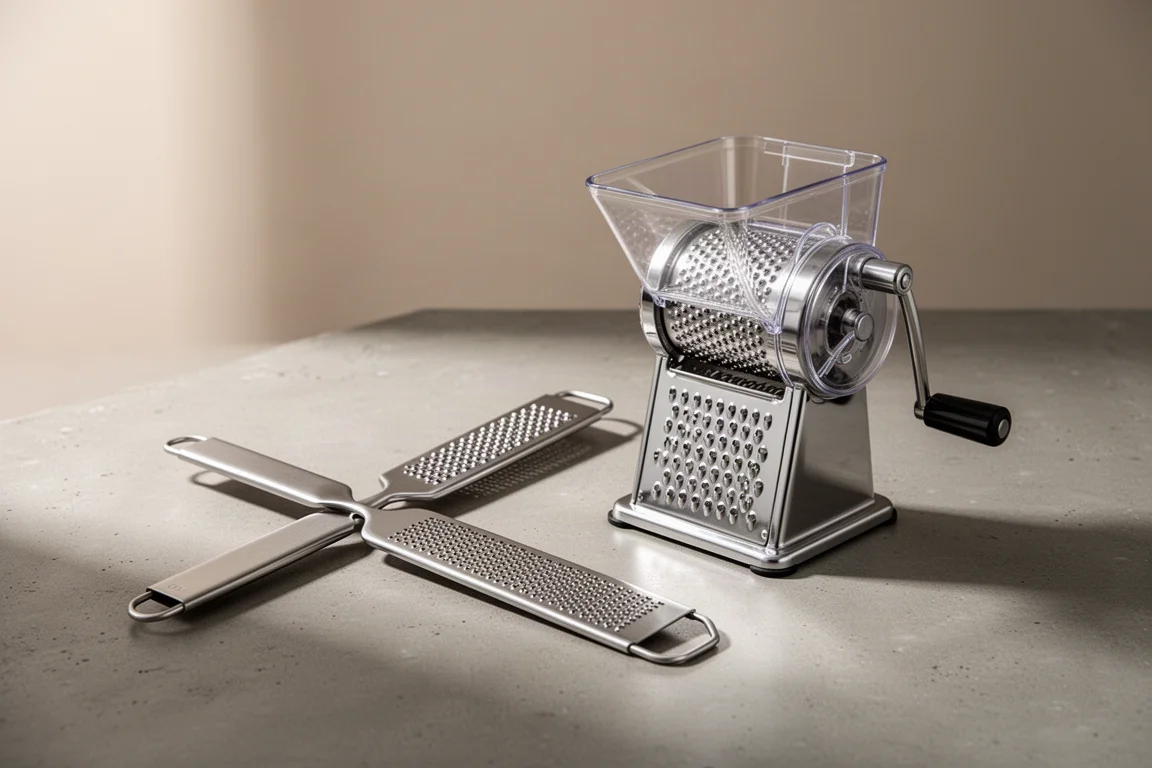
Two graters that made testing worthwhile: a razor-sharp Microplane rasp for zesting and fine shreds, and a Xylis rotary grater for safe, generous cheese piles.
Introduction
Grating is one of those kitchen tasks where the right tool makes an instant, visible difference. Cheese, carrots, potatoes, chocolate, lemon zest, ginger: each one behaves differently, and a grater that excels at one can struggle at another. After testing graters across several categories, two picks stood out: the Microplane rasp grater and the Xylis rotary grater. One is the fastest way to fine zest and feathery shreds we found; the other turns hard cheese into generous piles without putting your fingers anywhere near a blade.
The Rasp: Microplane Rasp Grater
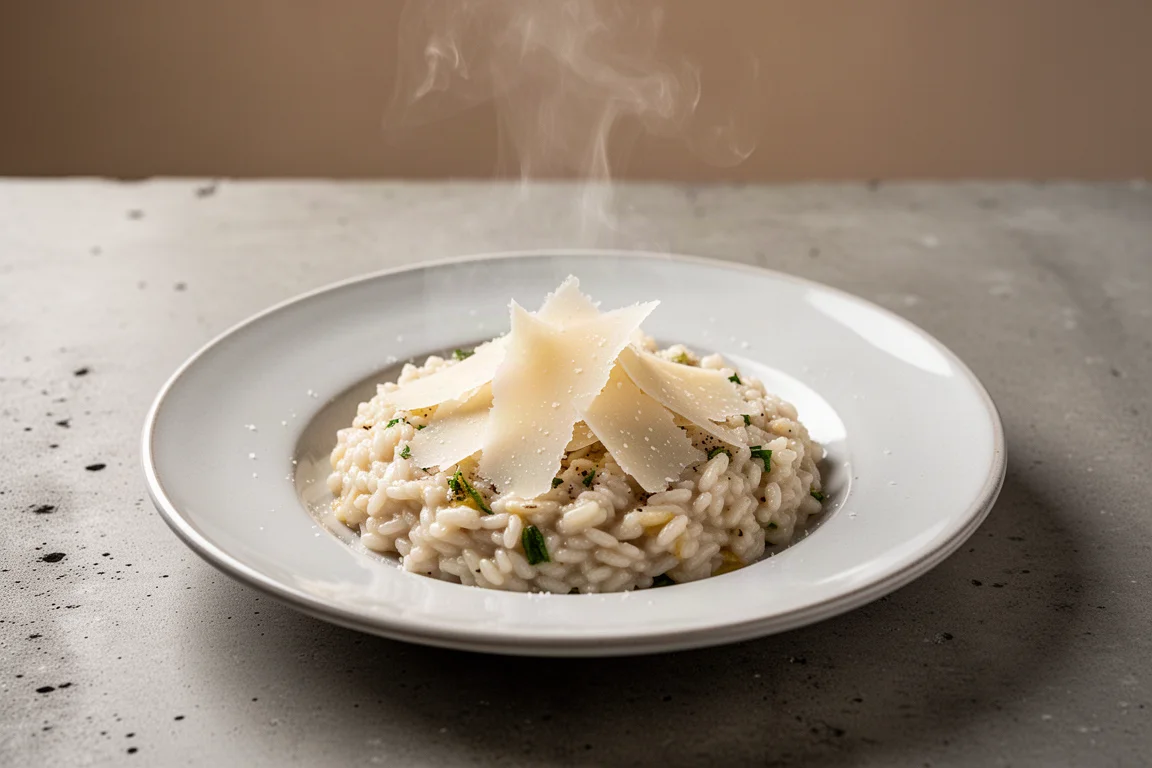
Zesting citrus with the Microplane rasp is fast and easy, and it manages to avoid the bitter white pith that a duller tool tends to drag along. In our comparison against other rasp graters, this one finished the same job in literally half the time. It also produces heaps of whisper-thin parmesan that melt beautifully over risotto or pizza, which makes it as much a finishing tool as a prep tool.
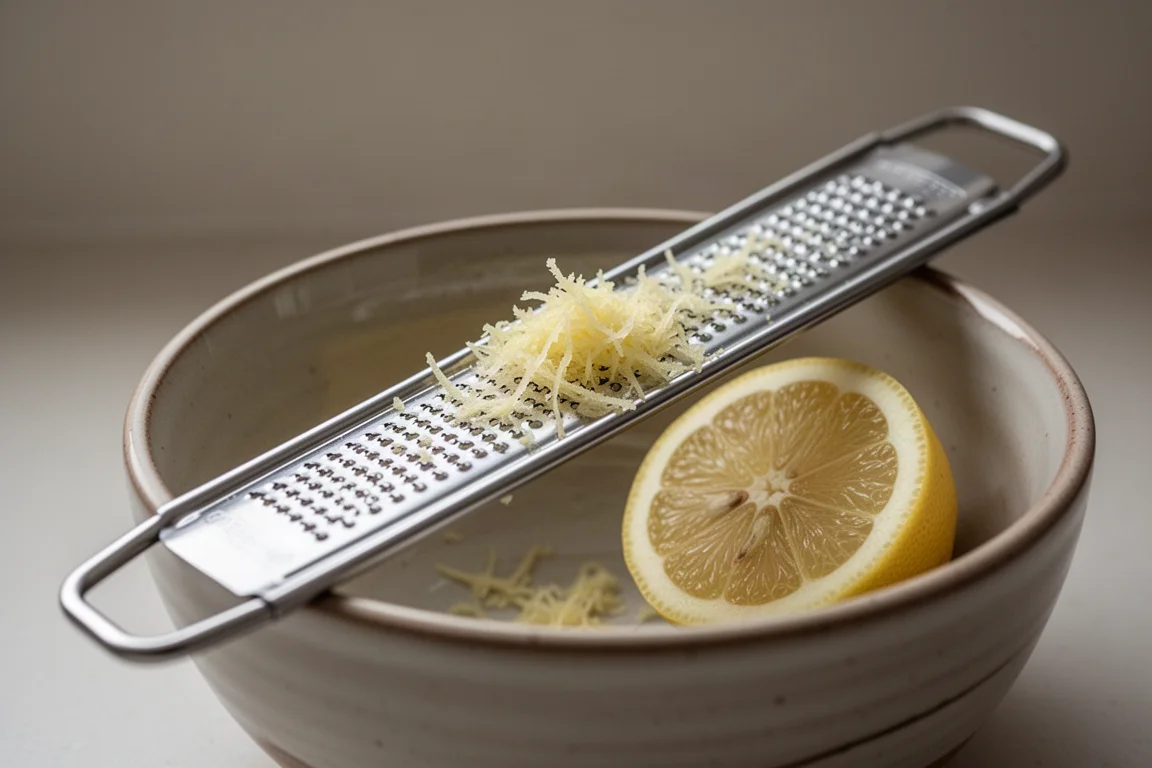
If you cook with citrus, hard cheese, or fresh ginger often, this is the single grater most likely to earn permanent drawer placement. Its appeal is straightforward: sharp teeth, minimal waste, and speed.
Box vs Paddle: Which Shape Makes Sense
For larger shreds, the choice is between box graters and paddle graters. Box graters are the classic, with a sturdy tower-like construction and the handy trait of trapping all the shreds inside. The honest question, though: do you ever really use all four sides?
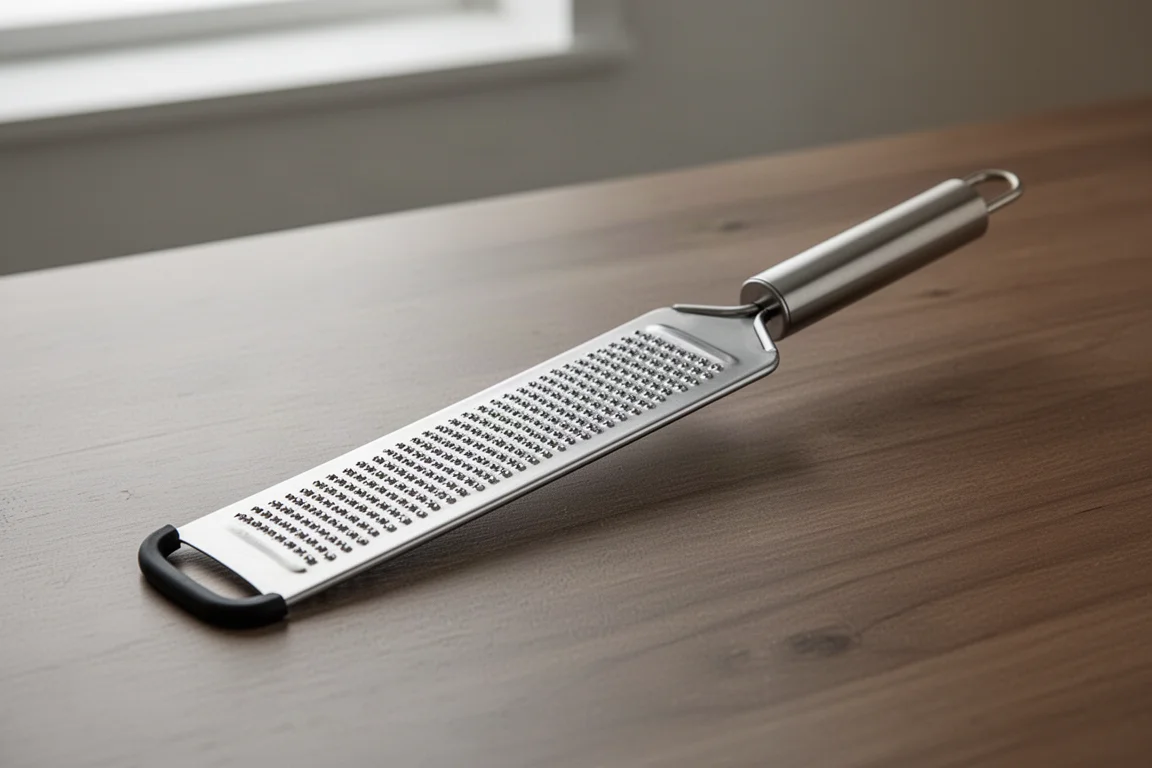
Paddle graters offer a flat, easy-to-store alternative that can prop right over bowls or sit on the cutting board. Either way, the same qualities matter most. Look for large grating surfaces that let you get more shreds per stroke, and large raised holes with sharp teeth that shred hard vegetables and soft cheese quickly with very little waste.
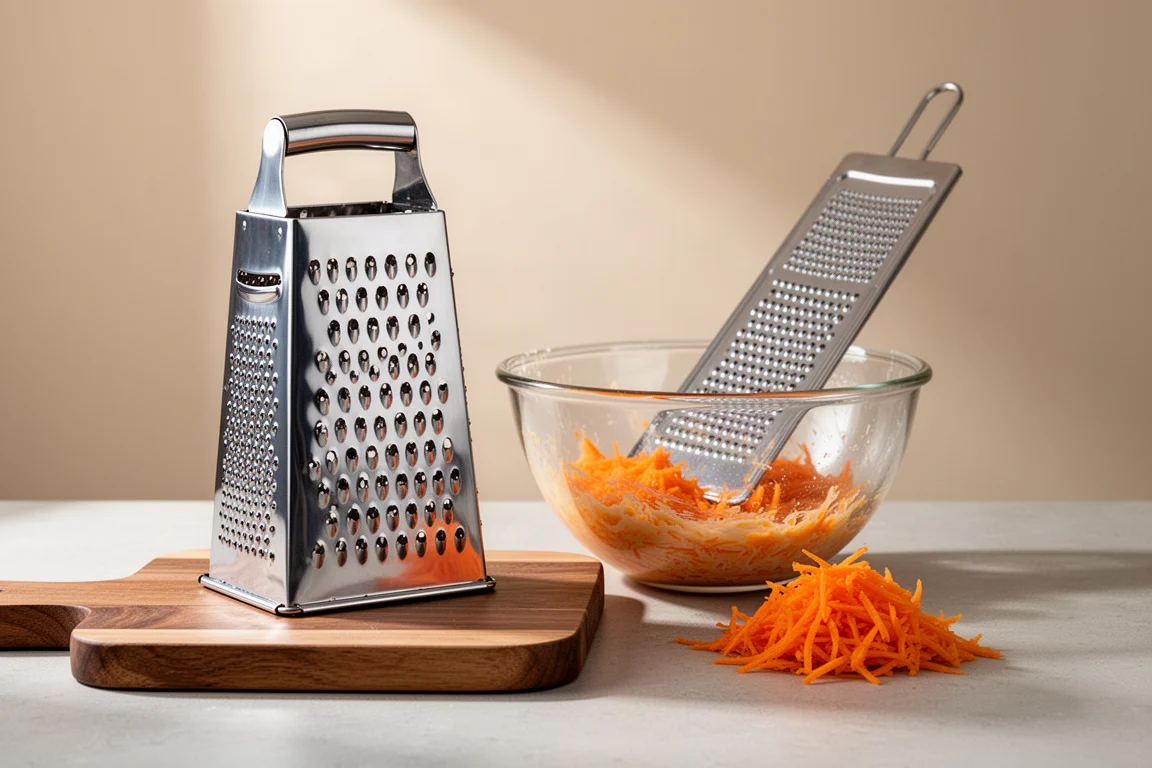
Comfort details matter more than people expect. Big handles plus rubber-tipped feet and bases make a grater easier to hold and keep it sitting securely on the cutting board while you work.
The Rotary Grater: Xylis
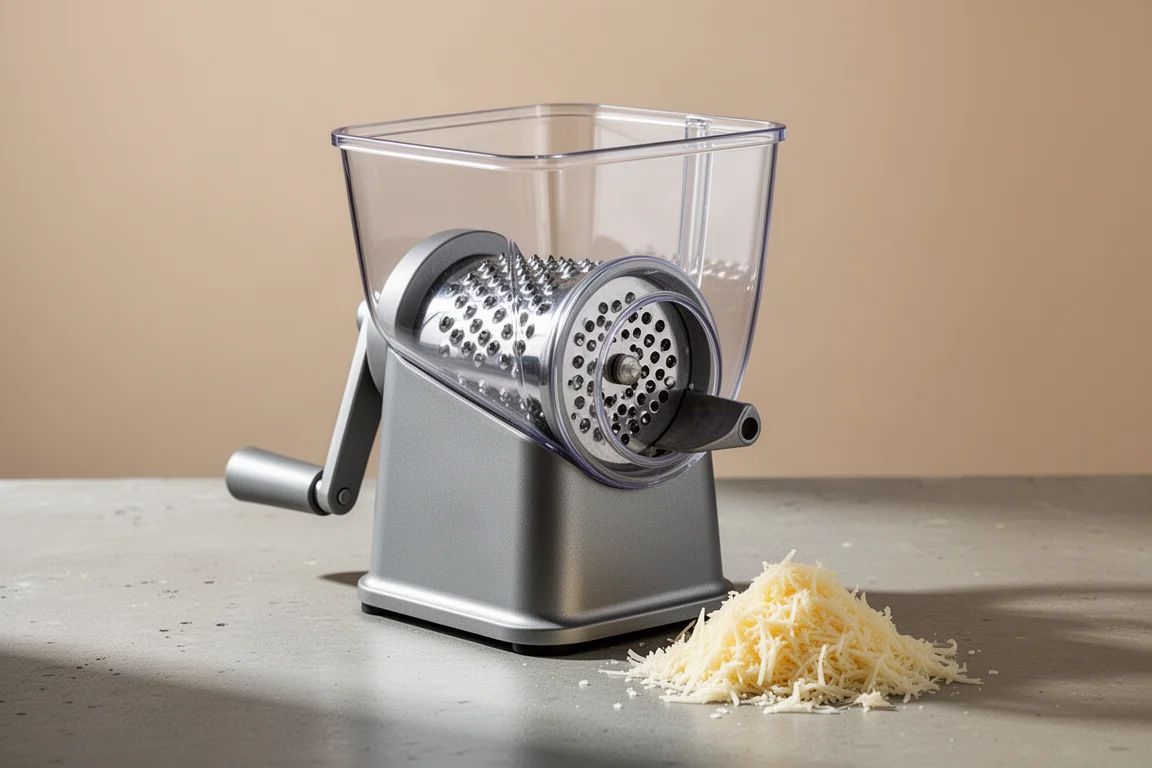
The Xylis rotary grater earns its place both in the kitchen and at the table. It has a nice big hopper that holds chunks of cheese, a handle that does not strain your hands, and a design that keeps the cheese in place while the sharp grating wheel inside does the work. The crank turns easily, so you can grate piles of cheese without worrying about your fingers, and even kids can use it safely.
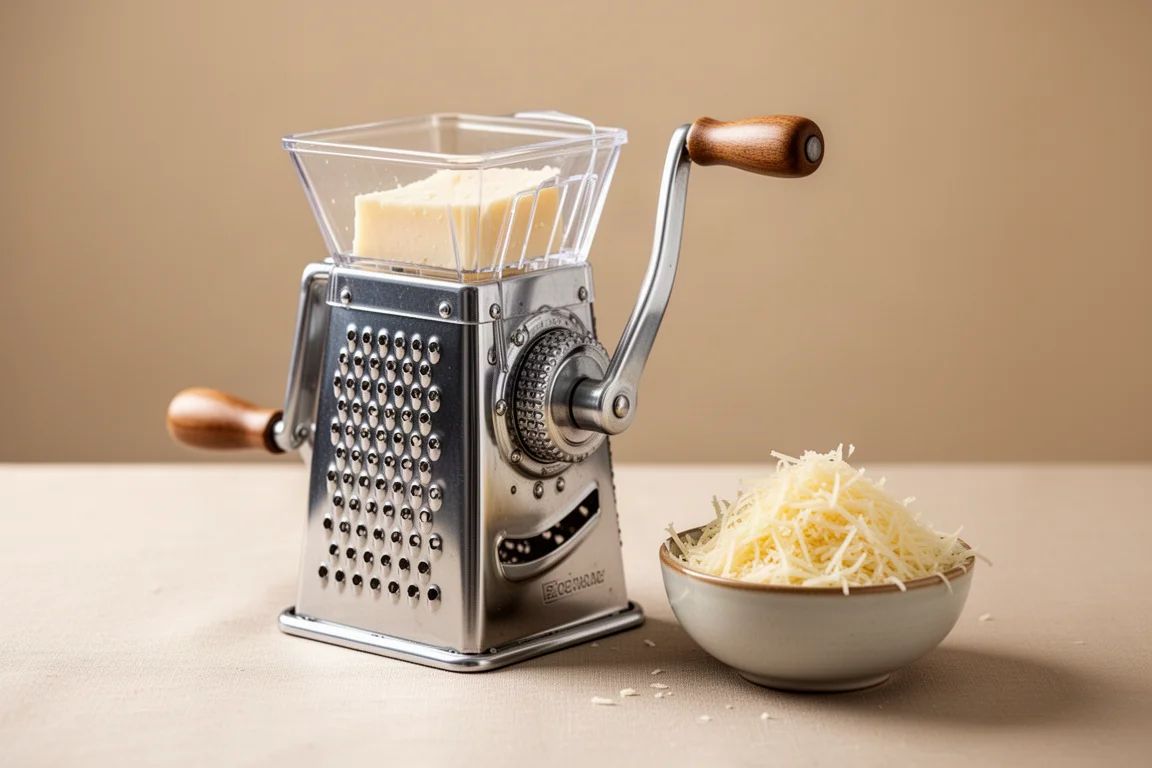
It is not limited to cheese either: the Xylis works for shaving chocolate onto desserts, which makes it a genuinely versatile piece rather than a single-job gadget.
Which Grater Should You Buy
If your grating is mostly zesting, hard cheese, and fine shreds for finishing dishes, the Microplane rasp is the clear pick: it was demonstrably faster than comparable rasps and produces shreds that melt exactly where you want them. If you want volume, comfort, and safety, especially with hard cheese at the table or with kids helping in the kitchen, the Xylis rotary grater is the better fit.
Whichever you choose, prioritize sharp teeth, large raised holes, and secure, comfortable handling. Those traits separate a grater you reach for weekly from one that lives at the back of the drawer.
Conclusion
A great grater is a small investment with an outsized payoff. The Microplane rasp makes fast work of zest and whisper-thin parmesan, while the Xylis rotary grater delivers piles of cheese safely and comfortably, even for chocolate desserts. Match the tool to the job and every grated pile gets easier.
Further reading
Related Reviews
Kitchen Tools
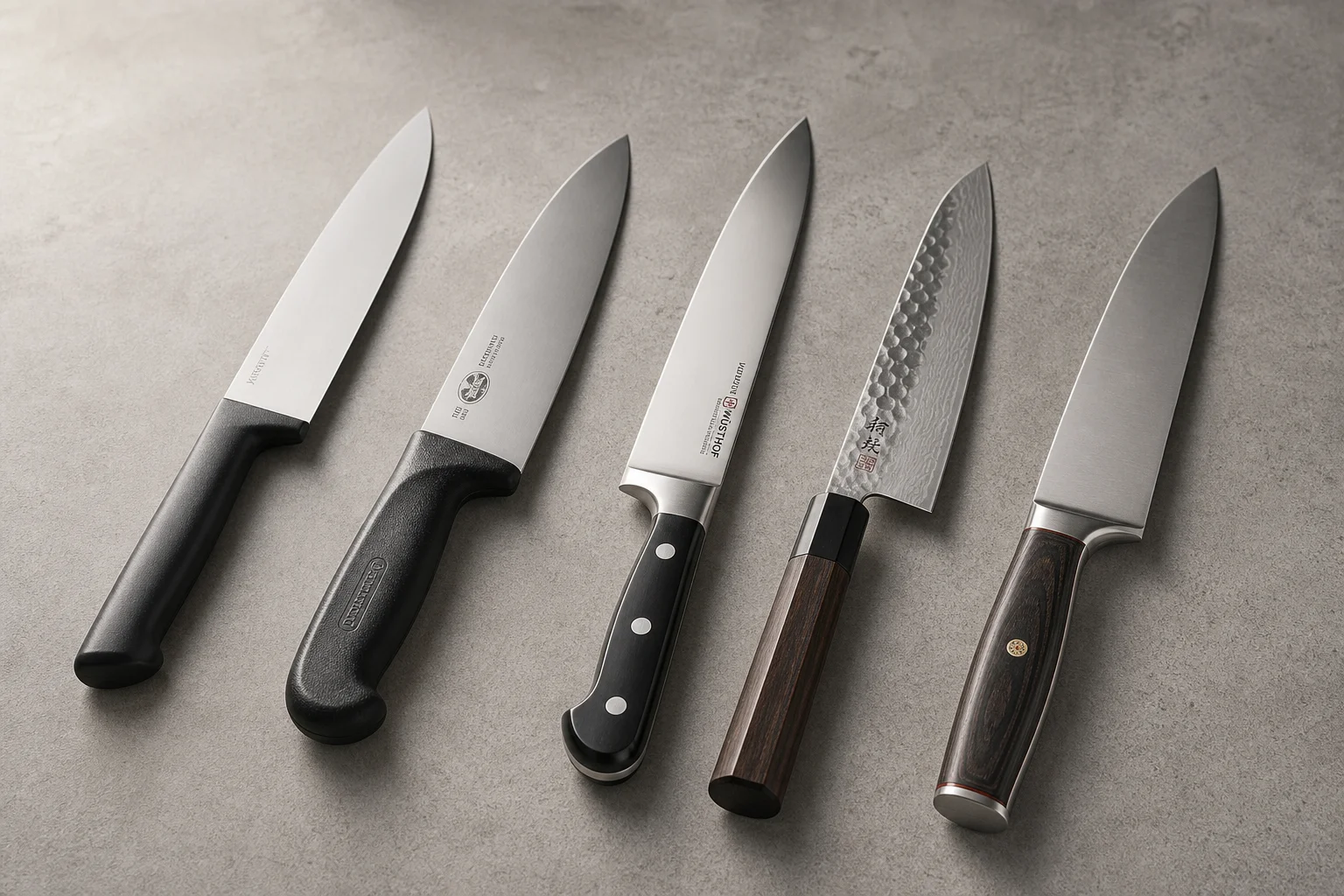
Amazon's Top-Rated Chef Knives Tested: Five Models from £11.50 to £200
We tested five of Amazon's highest-rated chef knives across sharpness, comfort, and versatility to see which delivers the best value and real-world performance.
Kitchen Tools
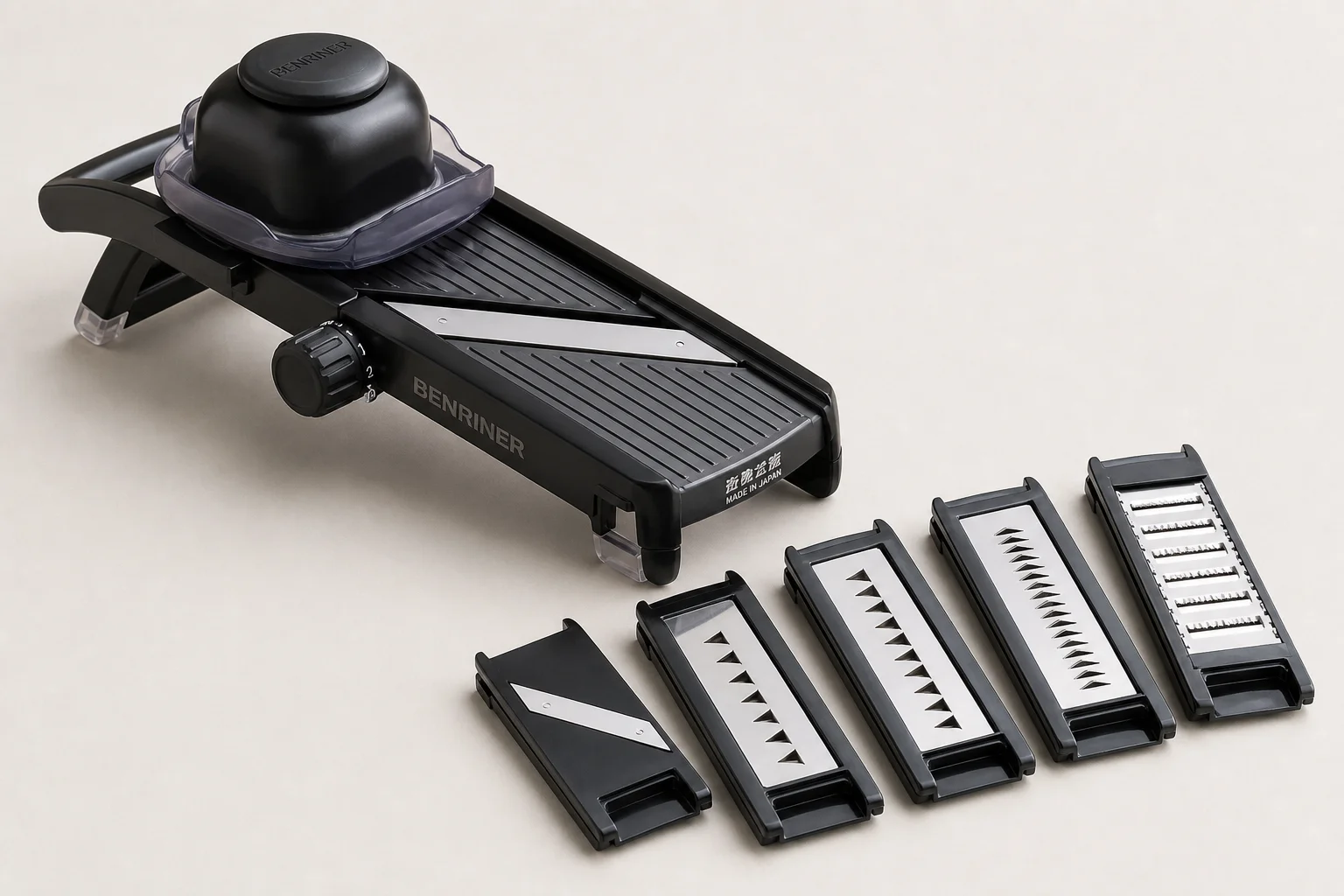
Benriner Japanese Mandoline Review: A Sharp Tool for Precise Vegetable Slicing
A practical guide to using a Japanese mandoline safely and effectively, with tips for achieving consistent, crisp results in the kitchen.
Kitchen Tools
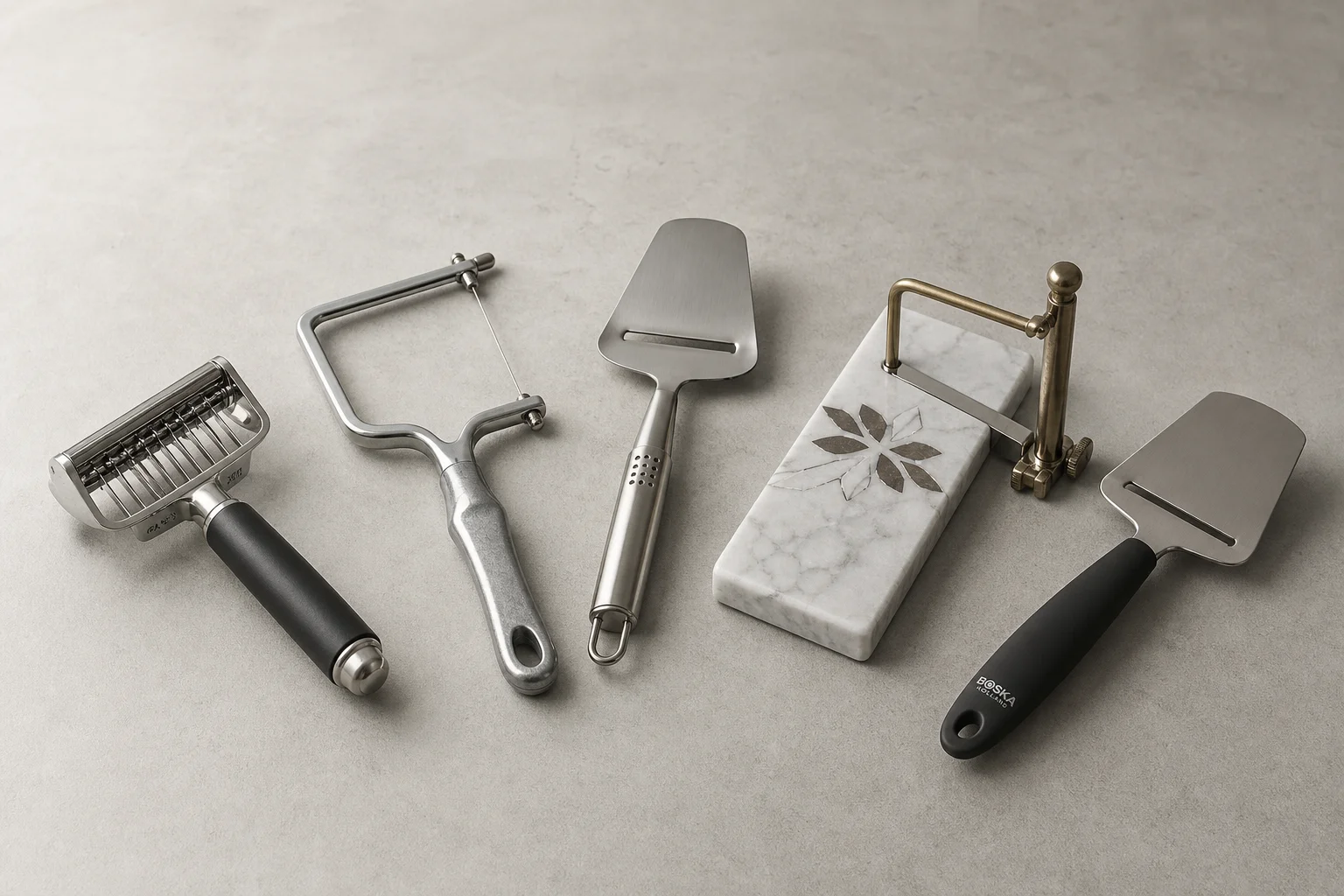
Best Cheese Slicers: Five Practical Options for Consistent Slicing
Five cheese slicers with different designs and features, from multi-blade versatility to wire-based precision, each suited to different kitchen needs and cheese types.