Cookware
Best Ceramic Non-Stick Pans: 6 Popular Options Stress-Tested and Ranked
Six popular ceramic non-stick fry pans went through real cooking and accelerated wear tests to find out which ones hold up and which to avoid.
Introduction
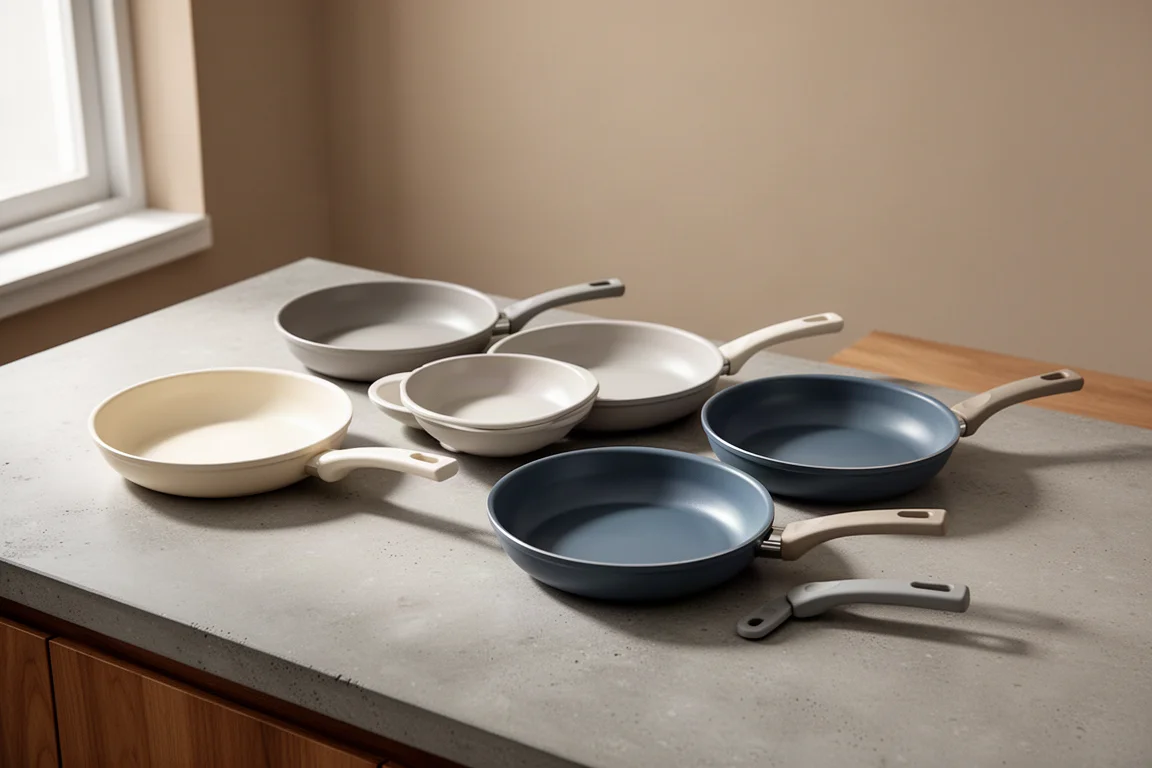
Ceramic non-stick pans are widely believed to be a healthier alternative to Teflon-coated pans, largely because they do not release harmful fumes when overheated. The catch is durability: ceramic coatings have a reputation for wearing out quickly, and in some cases the non-stick surface can fail within just a few months. Some brands openly admit this limitation, while others claim their coating is the strongest and longest-lasting ever made.
To find out which brands deliver, six of the most popular ceramic non-stick pans were tested. Each pan was cooked with straight out of the box, then put through a series of stress tests designed to simulate months of use in a matter of days. After that, the same cooking tests were repeated to see how the wear and tear affected real-world non-stick performance. The results separated the field cleanly into pans worth buying and pans to avoid.
The Contenders
Here is the lineup before testing began:
- Our Place Always Pan: the most expensive pan tested, marketed as a 10-in-1 all-purpose pan, with a claimed non-stick coating that lasts 50 percent longer.
- Made In CeramiClad: the second most expensive, a newer release, one of the few non-stick pans made in the USA, built on a thick 5-ply stainless steel base instead of aluminum, with a claimed top-performing ceramic coating.
- GreenPan GP5: from the brand credited with inventing ceramic non-stick cookware, this premium collection uses the most advanced Infinite8 coating, claimed to be metal utensil safe.
- GreenPan Valencia Pro: less expensive than GP5, with the Thermolon Advanced coating, which GreenPan itself says is not as durable as Infinite8. America’s Test Kitchen named it the best ceramic non-stick pan.
- Caraway: marketing focused on colors and health rather than durability; the brand has run an ad campaign openly admitting its non-stick pans will not last forever.
- Carote: a viral, budget-friendly pan with a detachable handle and a huge social media following.
How the Initial Cooking Tests Played Out
Each pan was rinsed, heated to 300F, coated with half a teaspoon of oil spread evenly with a paper towel, and given an egg. Made In, Caraway, and the Our Place Always Pan had the slickest surfaces out of the box: when tilted, the eggs slid around easily.
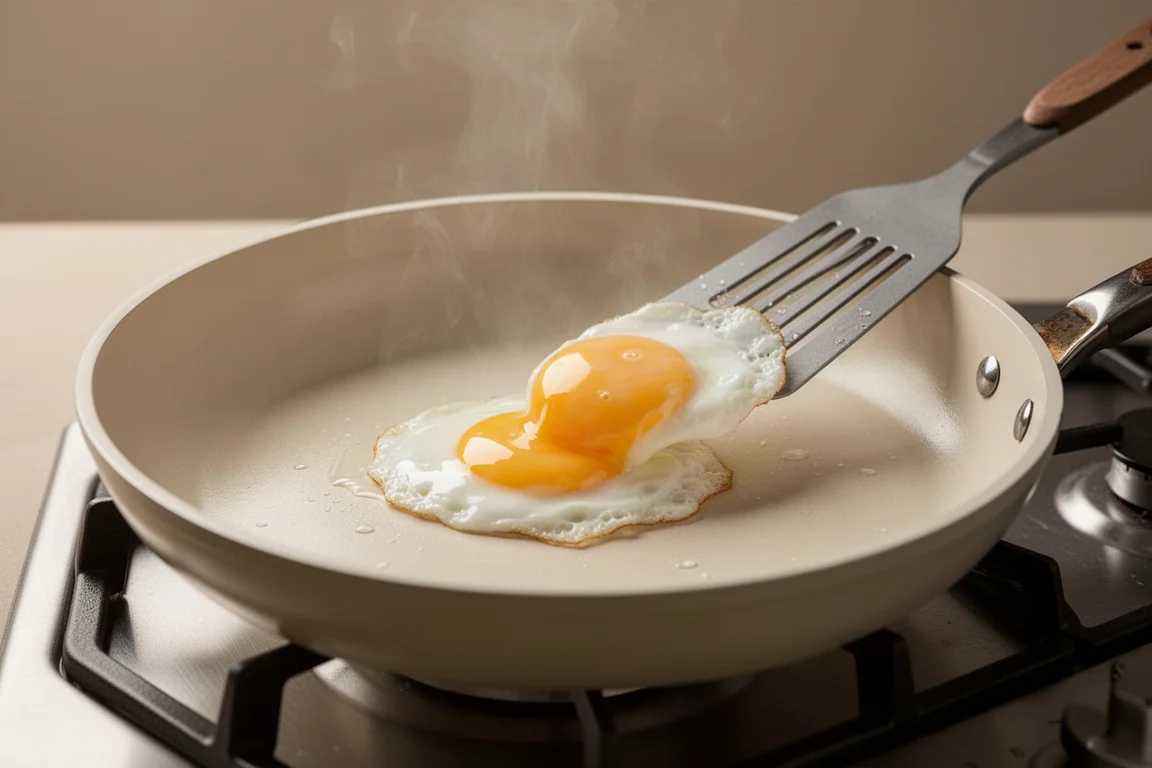
One flaw surfaced with the Caraway pan. Part of the egg flowed quickly to the edge of the cooking surface, and a closer look revealed why: the edge dips down slightly right before the wall. Running a finger across the area where the flat surface meets the side wall confirms the dip. Notably, an older Caraway pan had the same issue, suggesting it is a design characteristic rather than a one-off defect.
The GreenPan and Carote pans did not let the egg stick, but the egg needed a nudge with a spatula to move, and did not slide freely when tilted.
Next, each pan was heated to 350F for a slice of cheddar cheese, then used to cook a piece of chicken breast at the same temperature with the same amount of oil. Cheese and chicken performed identically across all six pans, with no noticeable difference.
Stress Tests: Simulating Months of Use in Days
This is where things got interesting. Three tests were used to compress months of wear into days.
Test one: weighted scraping. A 5-pound weight was attached to a wooden spatula, which was rubbed across each pan 150 times with consistent pressure. Faint rub marks appeared on every pan, but surprisingly, no deep scratches.
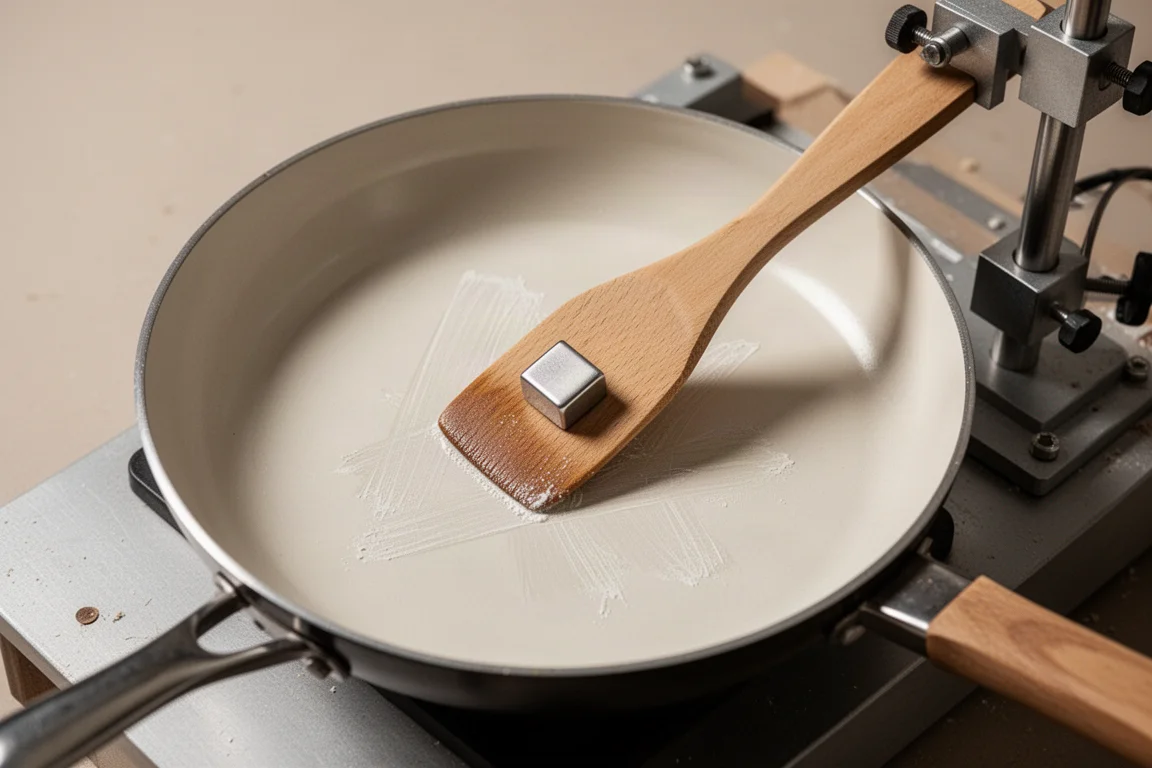
Test two: impact from stacking. A 2-pound steel saucepan was dropped on each pan’s surface from about one inch high, 20 times, simulating how pans get damaged in cabinets. This caused noticeable marks and a small chip on the Made In pan. The other pans showed no visible signs of damage, though as later results showed, that did not mean they escaped unharmed.
Test three: machine scraping. Each pan was propped up so the beater of a stand mixer made full contact with the cooking surface, then run on low speed for exactly two minutes, with the pan rotated halfway through. All pans developed a Venn-diagram-shaped rub mark, more prominent than the spatula marks but still without deep scratches, with one exception: the GreenPan GP5. The beater scratched this pan much deeper than the others, and material was visibly scraped off the surface as the beater rotated.
Test four: accelerated washing. The mixer test was repeated with a drop of soap, a quarter cup of water, and a sponge placed rough-side-down between the beater and the pan, run for five minutes with the pan rotated halfway. The goal was to simulate dozens of hand washes, a meaningful test for coatings that start out extremely slick.
Thermal Shock and Warp Resistance
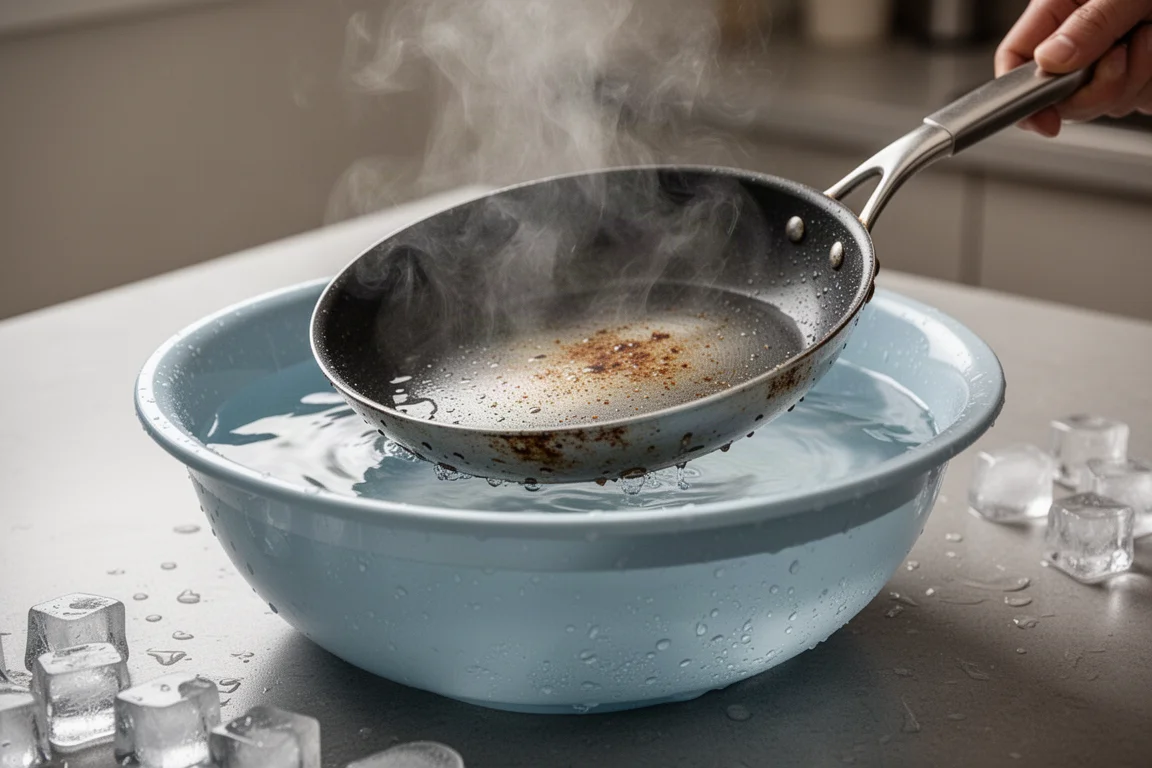
Finally, each pan was heated on a grill to 400F and immediately submerged in cool water held around 65F with ice. Most people know not to rinse a hot pan in cool water, but in a busy kitchen it happens. Fortunately, none of the pans showed any signs of warping.
Repeating the Cooking Tests After Abuse
After all that wear and tear, the egg, cheese, and chicken tests were repeated. Cheese and chicken showed no change: all six pans released those foods with no issues, just as before.
The egg test told a different story:
- Carote, Made In, and Our Place Always Pan: the eggs did not stick, but the surfaces were noticeably less slippery, requiring more force to nudge them into sliding.
- Caraway: a similar minor decline, and the egg again flowed toward the lower edge of the pan.
- GreenPan Valencia Pro: a more pronounced decline. The egg had to be scraped hard with a spatula to flip it, and small bits remained stuck.
- GreenPan GP5: the most dramatic decline. The egg stuck so firmly it could not be moved without tearing it apart. A third egg cooked in the same pan stuck less than the second but still more than any other pan.
Pans to Never Buy
Based on non-stick performance plus weeks of continued use looking at heat conduction, heat retention, construction, and ease of use, three pans landed in the never-buy category.
GreenPan GP5
The flush rivets and wide cooking surface, almost an inch larger than most 10-inch pans, are genuinely appealing. But it failed the egg test after wear, and it costs more than other options that performed better.
Our Place Always Pan
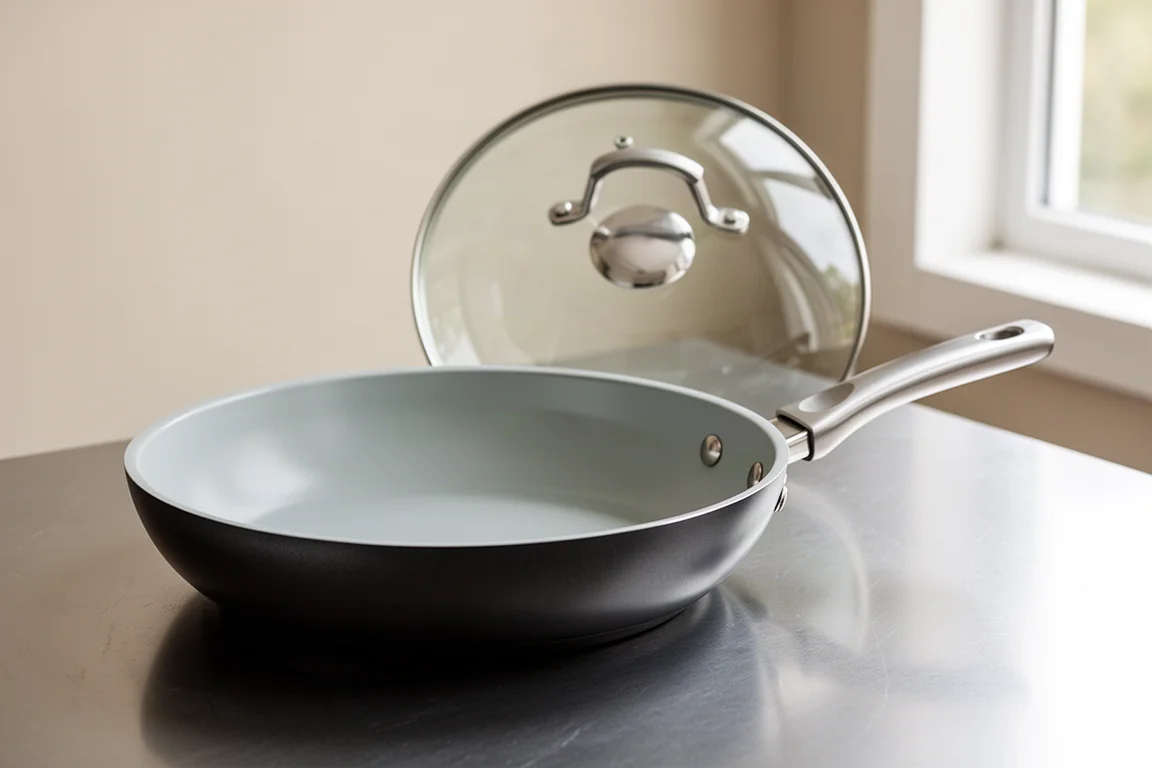
It performed well in the stress tests, but the square handle is uncomfortable, the lid allows steam to escape directly onto the handle, and it is the most expensive pan of the six.
Carote
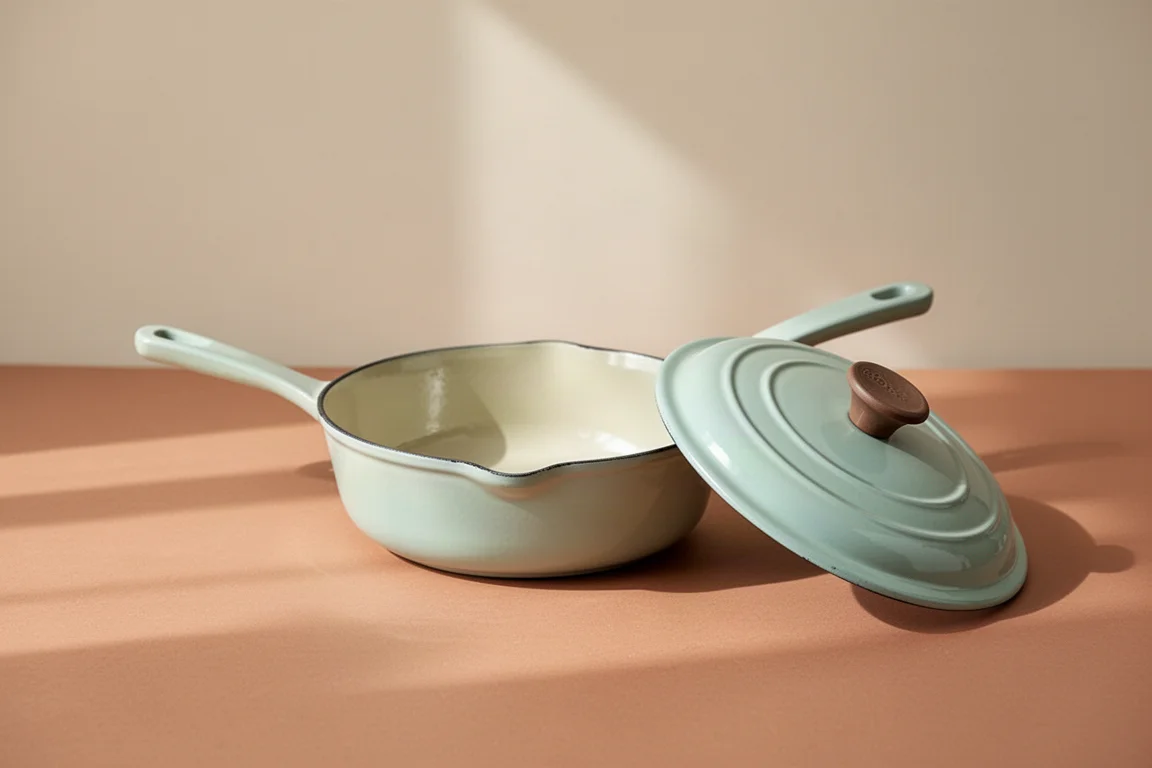
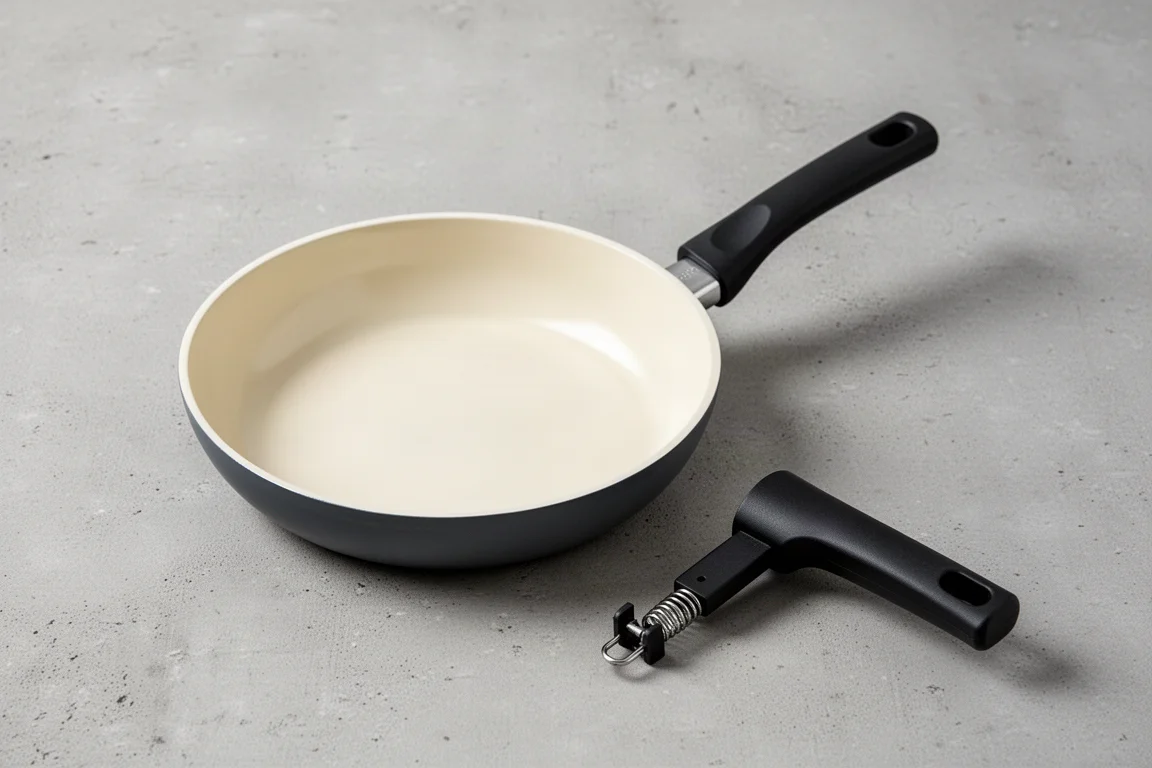
The thinnest and lightest pan by far, it feels cheap and flimsy. The thin walls make temperature difficult to control. The worst part is the detachable handle: it is almost two inches shorter than the others, jiggles, and does not feel secure even when attached properly. It operates on a spring mechanism that is hard to trust long term with a pan full of hot, heavy food. If you see this pan promoted heavily on social platforms, be skeptical.
Pans Worth Considering
Made In CeramiClad
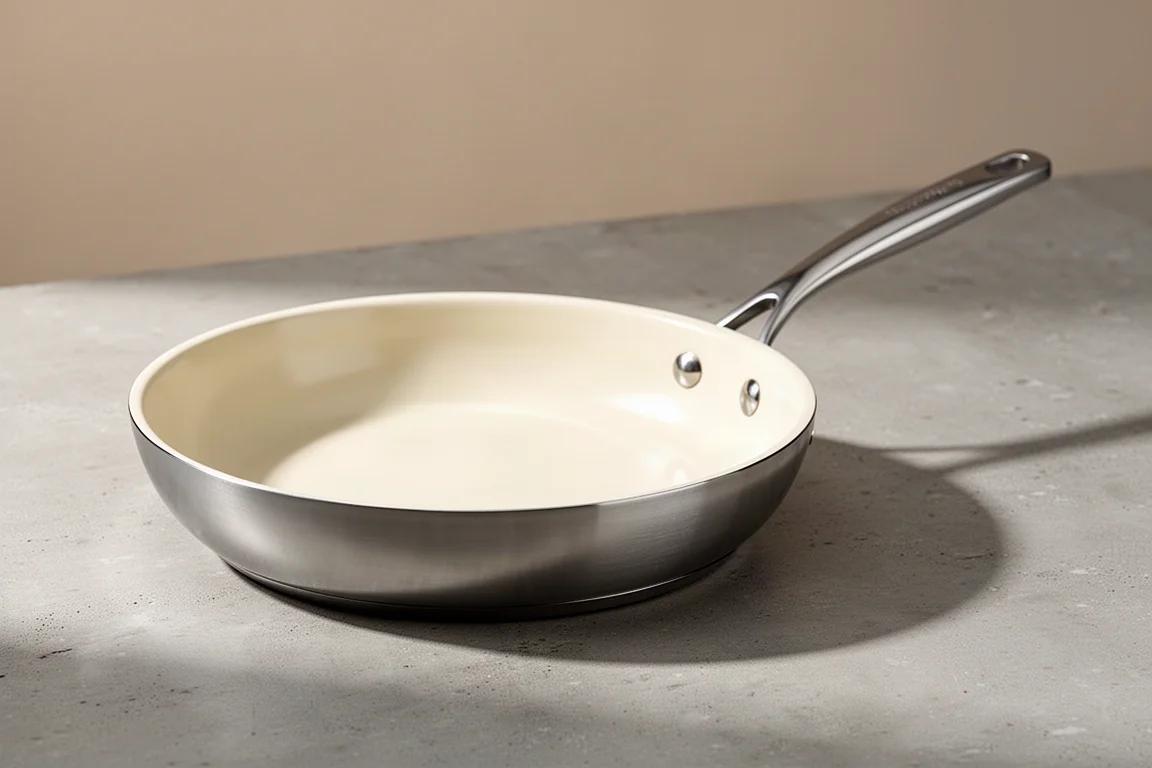
Comfortable handles, flared rims, and the same solid 5-ply construction as Made In’s stainless steel pans make this a strong all-around performer. The downsides: it is the second most expensive pan of the six, and although it passed the cooking tests, the white coating showed the most visible damage in the saucepan impact test.
Caraway
Thick, heavy construction and arguably the best-looking pan out of the box. Two caveats: the shiny blue exterior will chip and flake over time, and the dipped cooking surface near the wall can ruin the shape of your eggs.
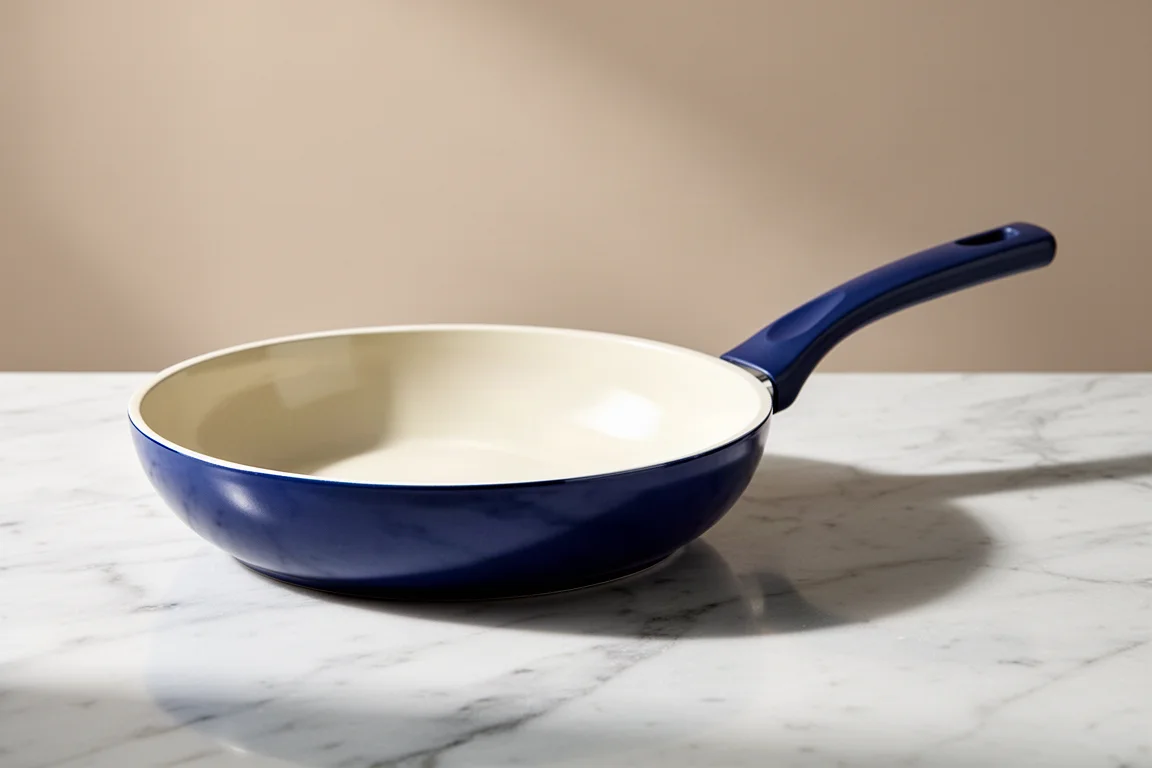
GreenPan Valencia Pro
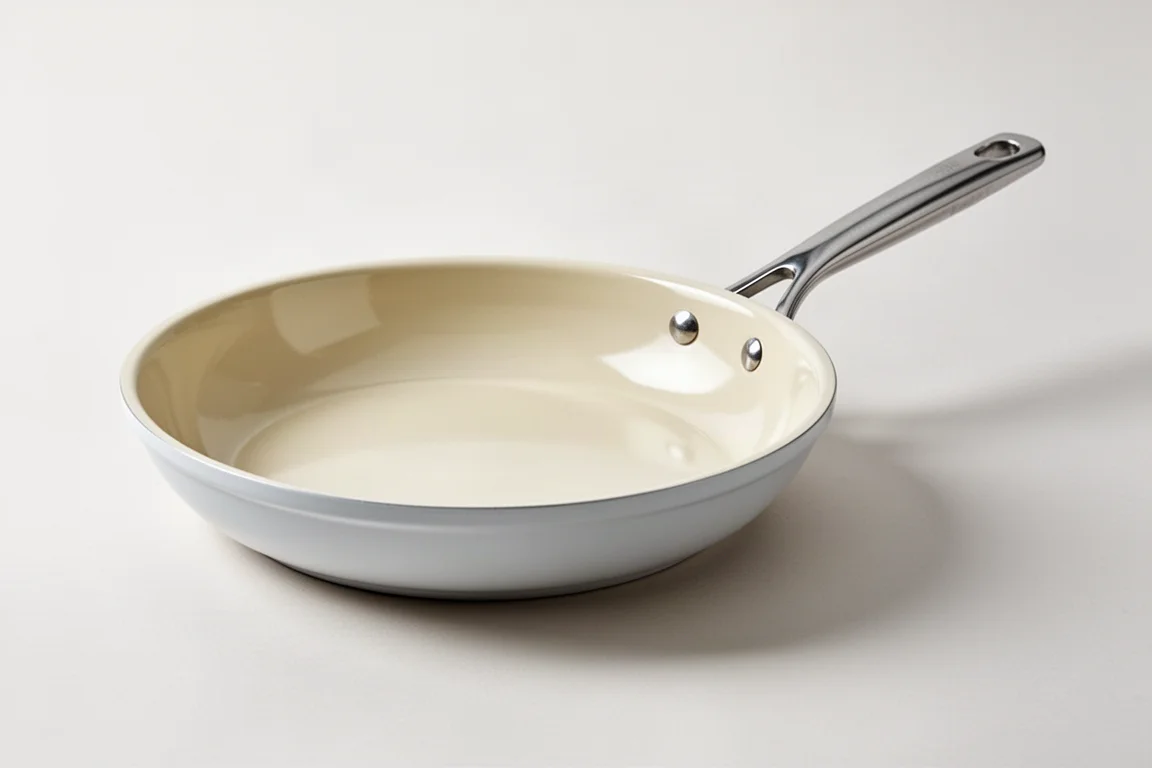
It did not ace the egg test, but it did not perform much worse than Made In or Caraway, and those coatings will degrade over time too. If you want a pan that is lightweight and more affordable, this one is worth considering.
Buying Advice
If you want the best overall balance of build quality and non-stick performance, Made In CeramiClad is the standout, provided you are comfortable with the higher price and store it carefully to protect the coating. Caraway suits buyers who prioritize looks and heft and can live with the edge flaw and exterior chipping. GreenPan Valencia Pro is the sensible lightweight budget pick. Skip the GreenPan GP5, Our Place Always Pan, and Carote unless their specific features matter more to you than durability and performance.
Conclusion
Ceramic non-stick coatings all degrade; the differences are in how fast and how gracefully. After cooking, scraping, dropping, machine-abrading, washing, and thermal shocking six popular pans, Made In CeramiClad, Caraway, and GreenPan Valencia Pro emerged as the options worth considering, while the GreenPan GP5, Our Place Always Pan, and Carote fell short. Choose based on your budget and priorities, and treat whichever pan you buy gently: hand wash it, avoid stacking without protection, and never shock a hot pan with cold water.
Further reading
Related Reviews
Cookware
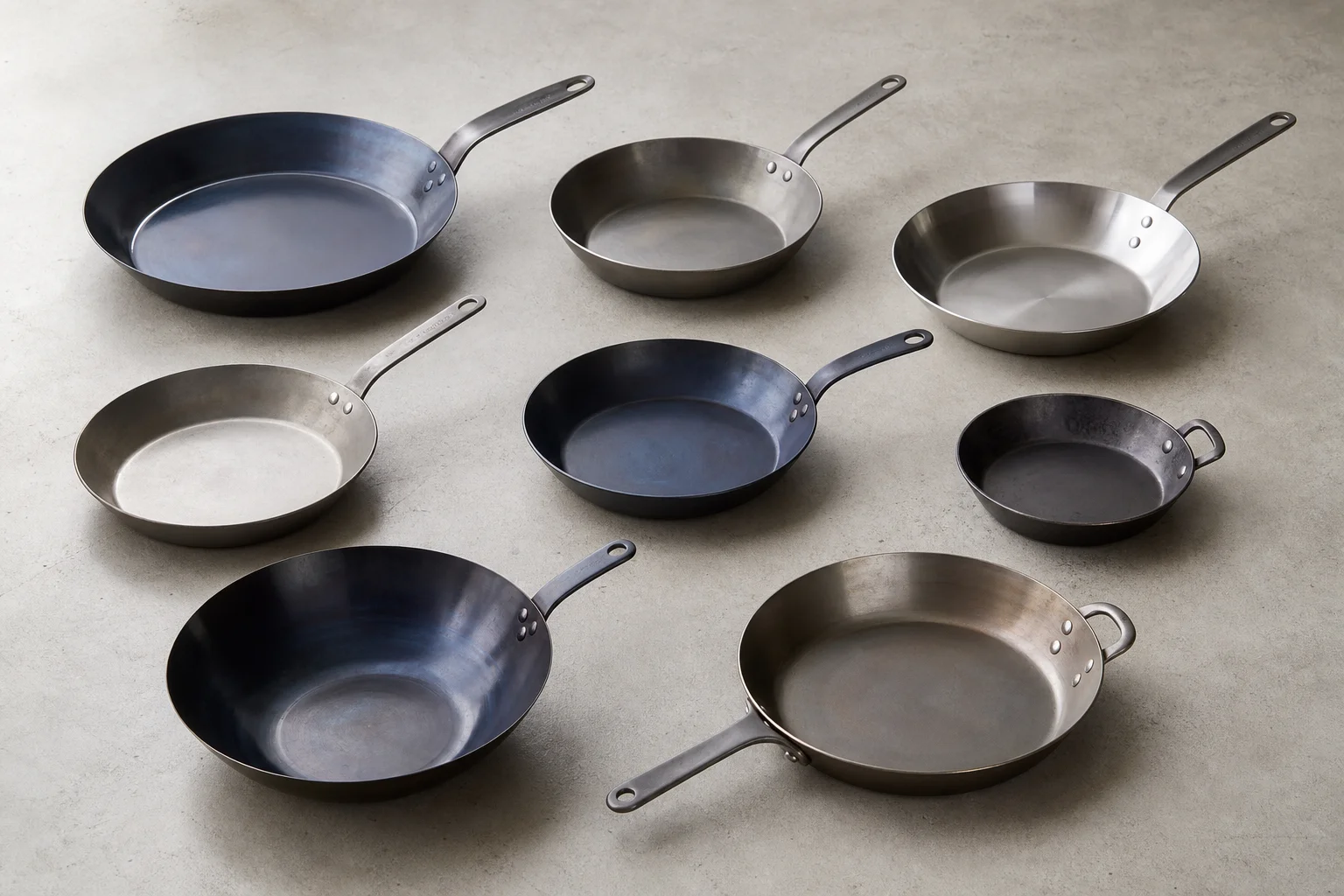
Best Carbon Steel Pans Tested: Which Brands Deliver Real Value
We tested eight popular carbon steel pans with controlled durability, heat, and cooking tests. Here's which ones perform best and which to avoid.
Cookware
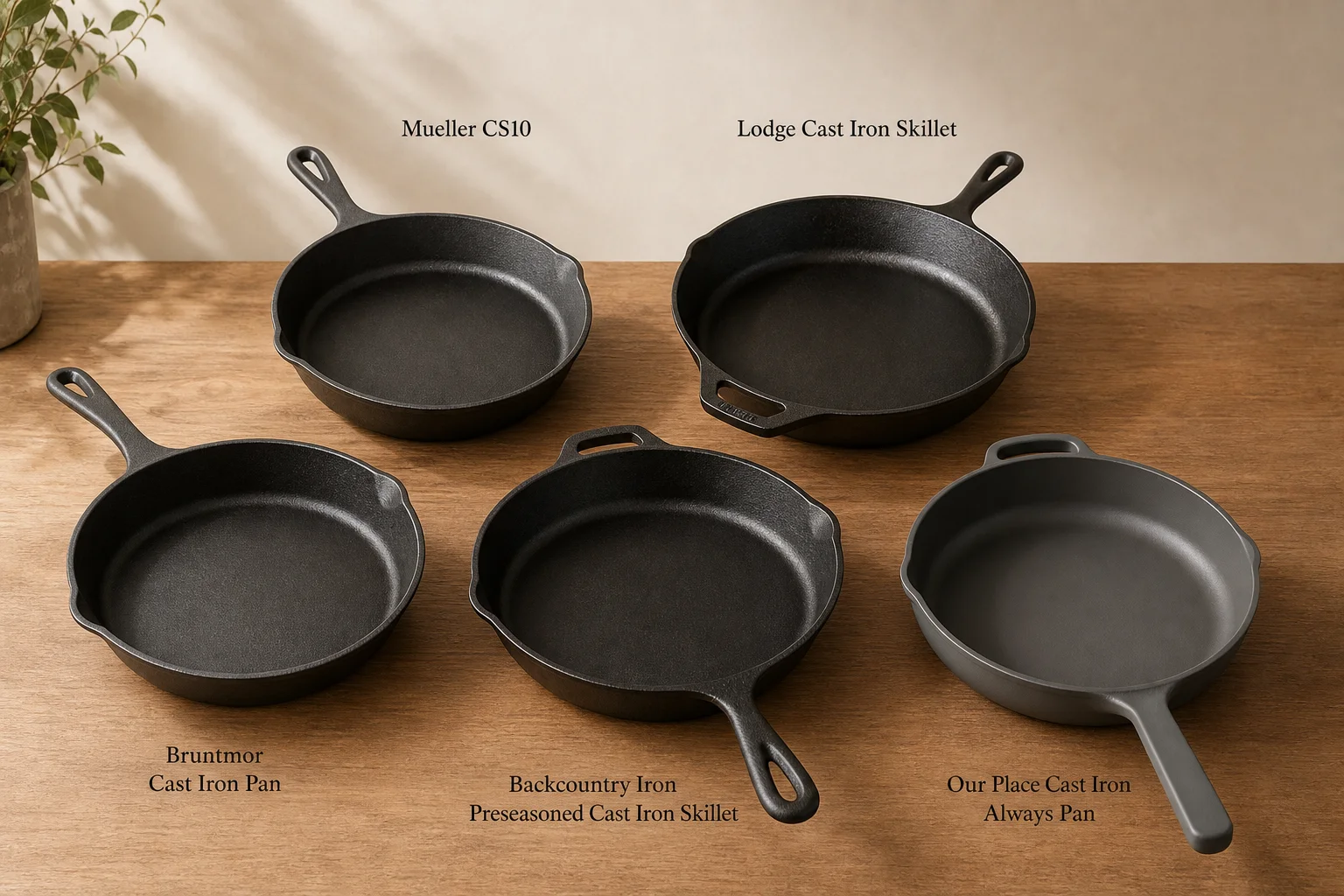
Best Cast Iron Pans 2026: Five Options from Budget to Premium
A practical breakdown of five cast iron skillets, from affordable Mueller to premium Our Place, with clear strengths and trade-offs for different cooking needs.
Cookware
Best 12-Inch Cast Iron Skillets: Premium Craftsmanship vs. Reliable Budget Option
Two standout 12-inch cast iron skillets tested for heat retention, surface finish, and durability. One premium choice and one budget-friendly alternative that both deliver.