Knife Sharpening
Best Ceramic Knife Honers: Five Picks for Keeping Your Edge Sharp
A ceramic hone can bring a dull-feeling knife back to life without removing metal. Here are five ceramic honers and sharpeners worth a look.
Introduction
Ceramic is one of those quietly great materials, like titanium or carbon fiber. It is not rare or exotic, it simply does its job very well, and it turns out to be an excellent knife honer. If your blade has started to feel dull, that does not always mean it needs sharpening. Often it just needs honing, and a ceramic hone is one of the fastest, cheapest ways to get there.
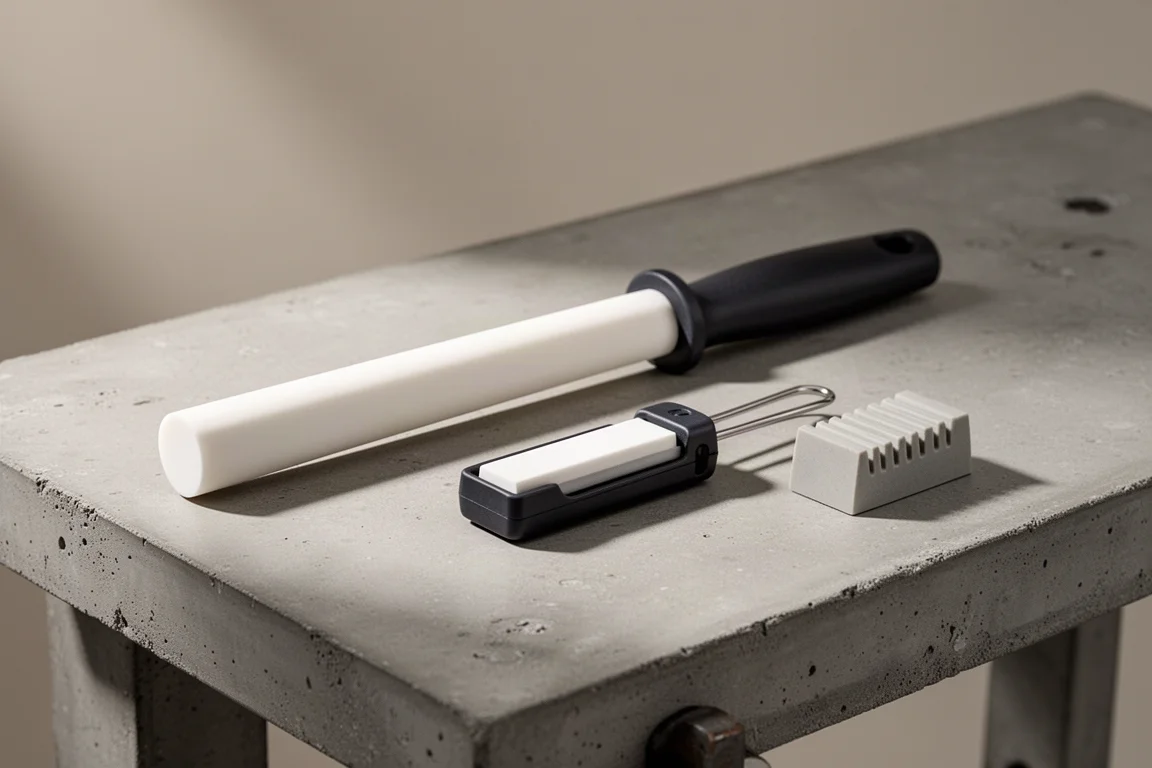
Here are five ceramic honers and sharpeners that cover different needs, from a beginner-friendly budget rod to a stropping plate for pushing an edge to razor sharpness.
Why Hone Instead of Sharpen?
Sharpening removes metal. Over time, especially with grinding wheels or belt sanders, that changes the blade profile and can eventually make a knife unusable. Honing is different. Under a microscope, the metal at the edge is made of tiny flakes that get pushed out of alignment with use, creating a wider, duller-feeling edge. Honing pushes and polishes those flakes back into line until the edge feels sharp again.
The practical benefit is easy to demonstrate. A knife dulled on a piece of wood may not cut paper cleanly, but a few passes on a ceramic hone can restore it in seconds. Because you are not removing much metal, the blade angle does not need to be as precise as it does with diamond stones or wet stones.
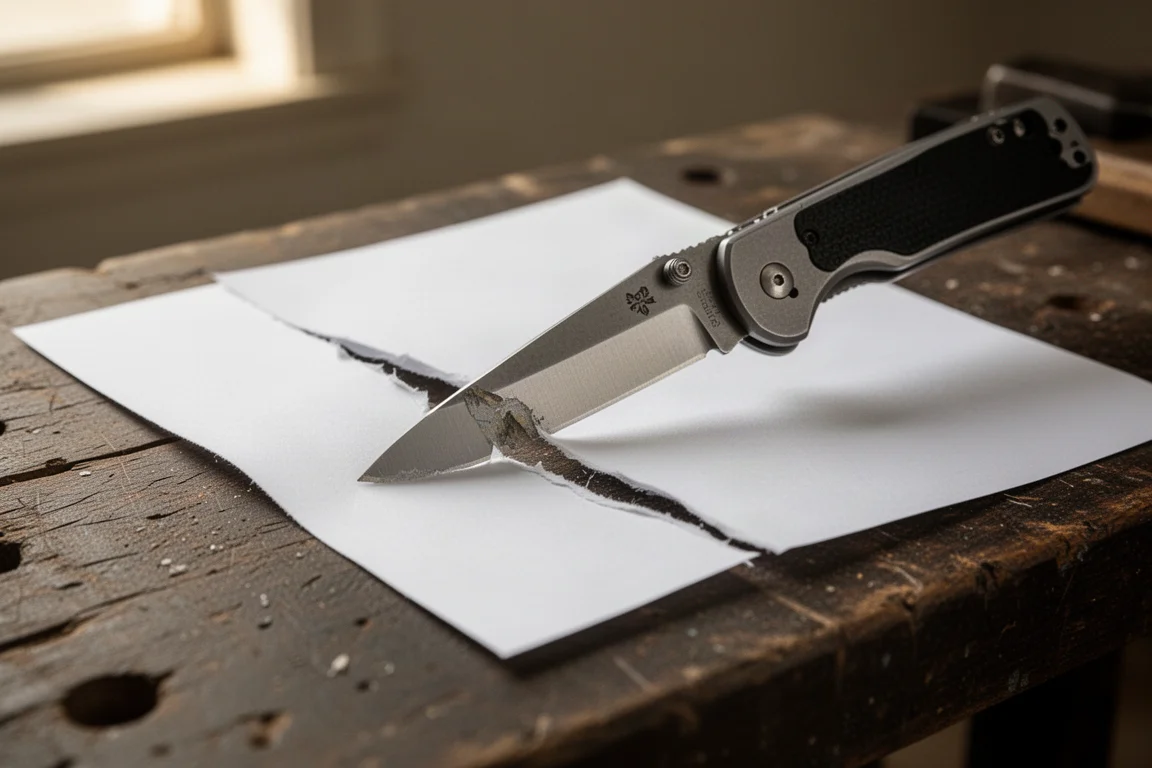
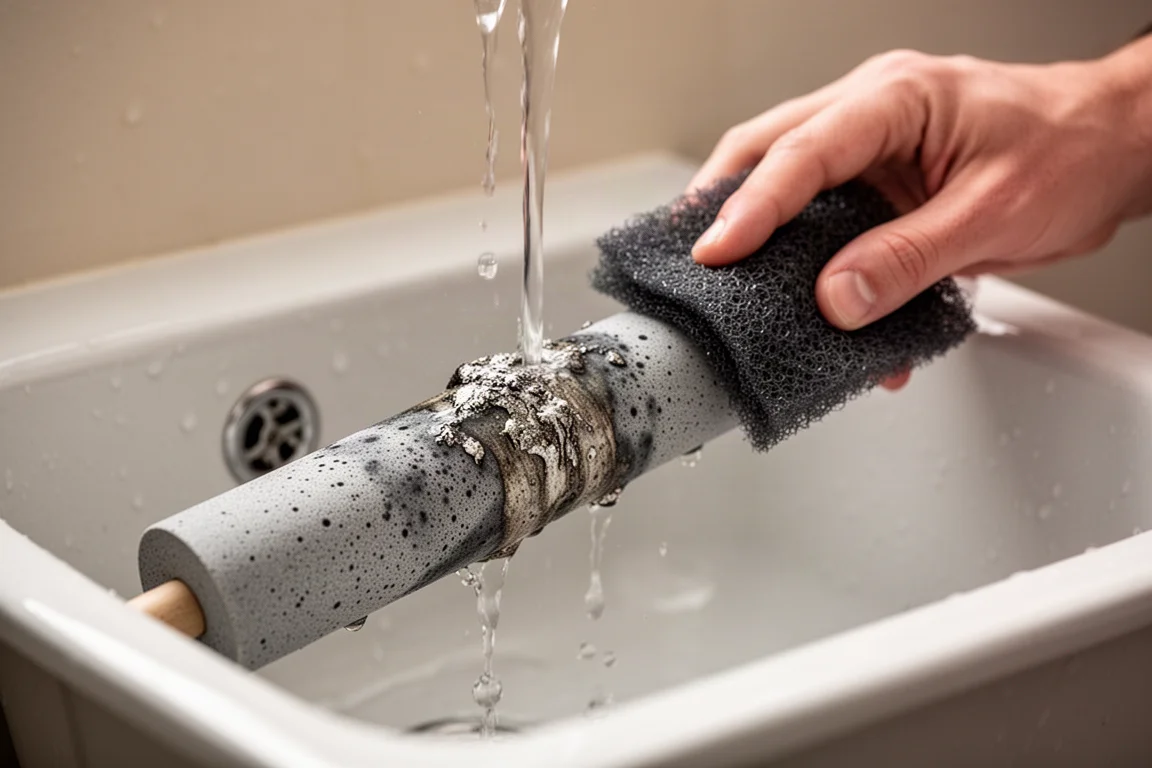
One thing to keep in mind: honing has a point of diminishing returns. When a blade simply will not come back to sharp, it is time to actually remove metal and sharpen it properly. Also note that ceramic hones pick up metal residue over time and turn grey or brown. A scouring pad, water, and a little soap scrub them clean again without hurting the ceramic.
Spyderco Ceramic Hone
The Spyderco ceramic hone is one of the better-known options in this space, and it earns that reputation with a simple, effective ceramic sharpening surface. Like any ceramic hone, it works by realigning the microscopic metal flakes at the edge rather than grinding metal away, which keeps the blade profile intact over the long run.
For regular maintenance between proper sharpenings, it is a tool that is worth its weight in gold.
Smith’s Ceramic Hone
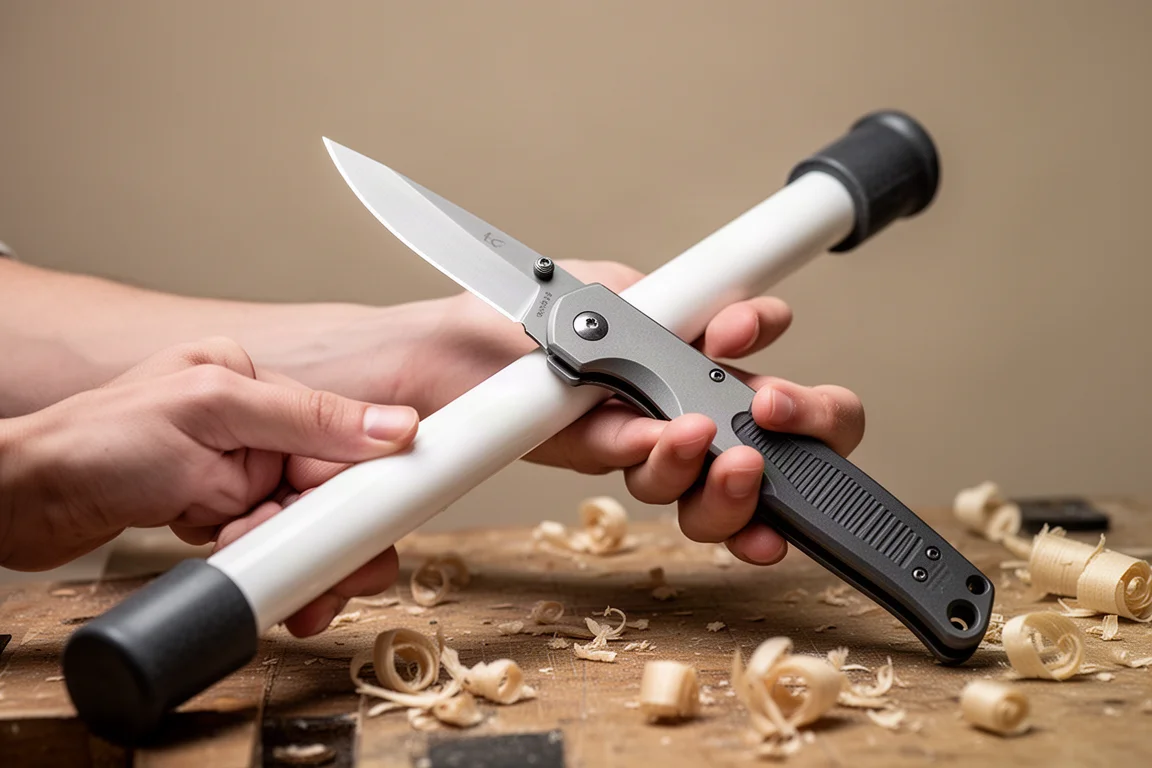
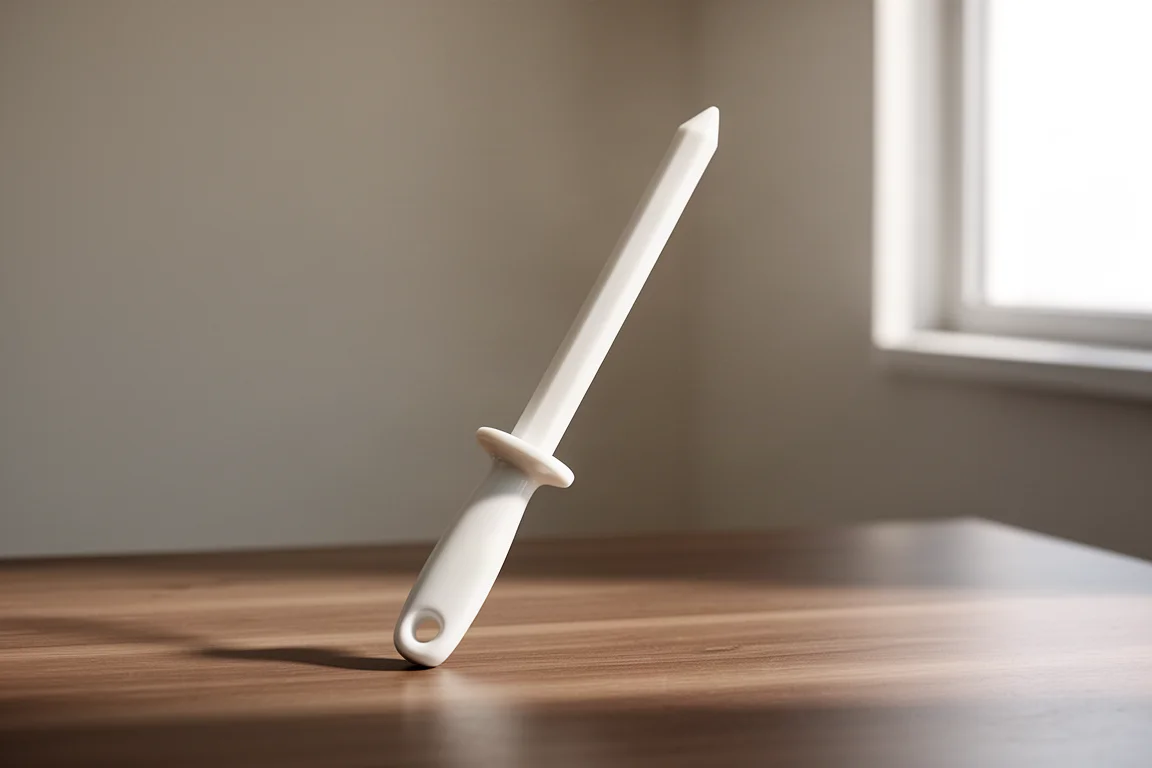
Smith’s makes a range of sharpening devices that include ceramic hone options, and they are a solid pick if you want something practical from an established sharpening brand. The same basics apply: figure out the blade angle you need, make consistent passes, and let the ceramic realign the edge.
Like all ceramic hones, keep an eye on the surface. If it turns brown or grey from metal buildup, a quick scrub with a scouring pad and water brings it back to white.
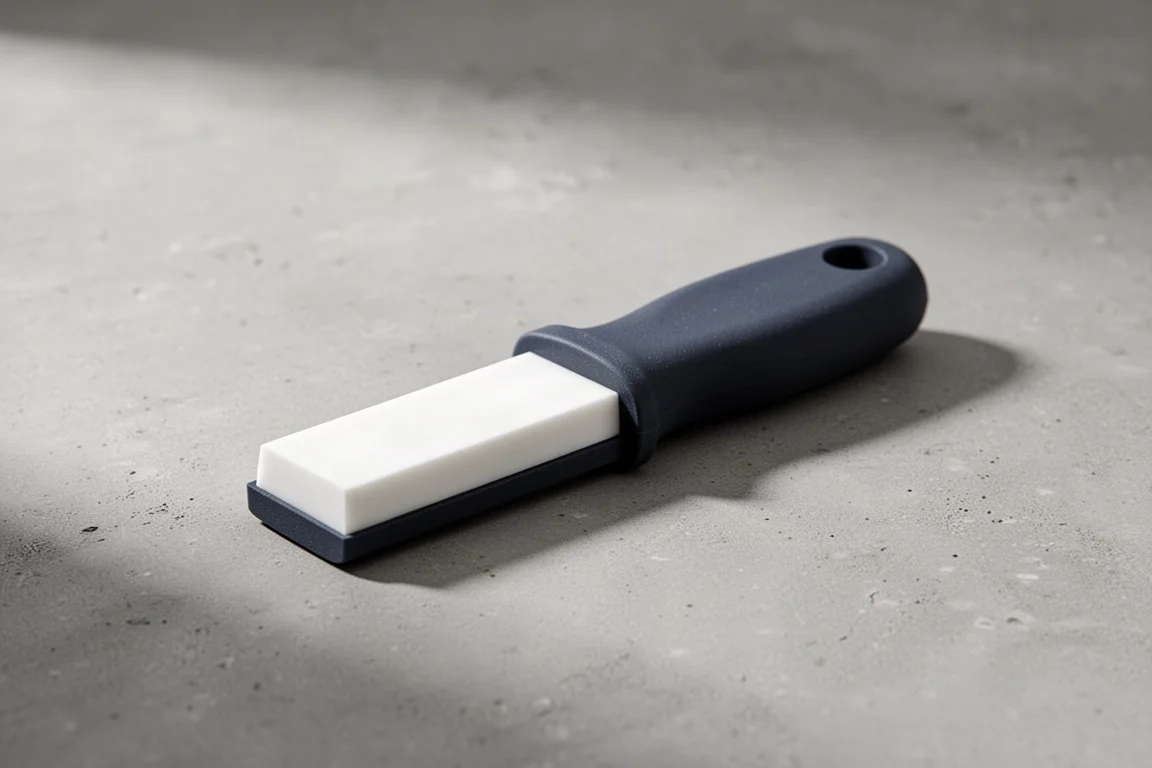
Work Sharp Ceramic Hone
The Work Sharp ceramic hone stands out for guidance. Its ceramic surface includes a marked average blade angle right on the tool, which gives you a clear reference for holding the knife consistently. That is genuinely useful for anyone who struggles with freehand angles.
One caution applies to any ceramic hone: if you hold the angle too close to flat against the blade, you will end up scratching the blade. A little care with angle goes a long way.
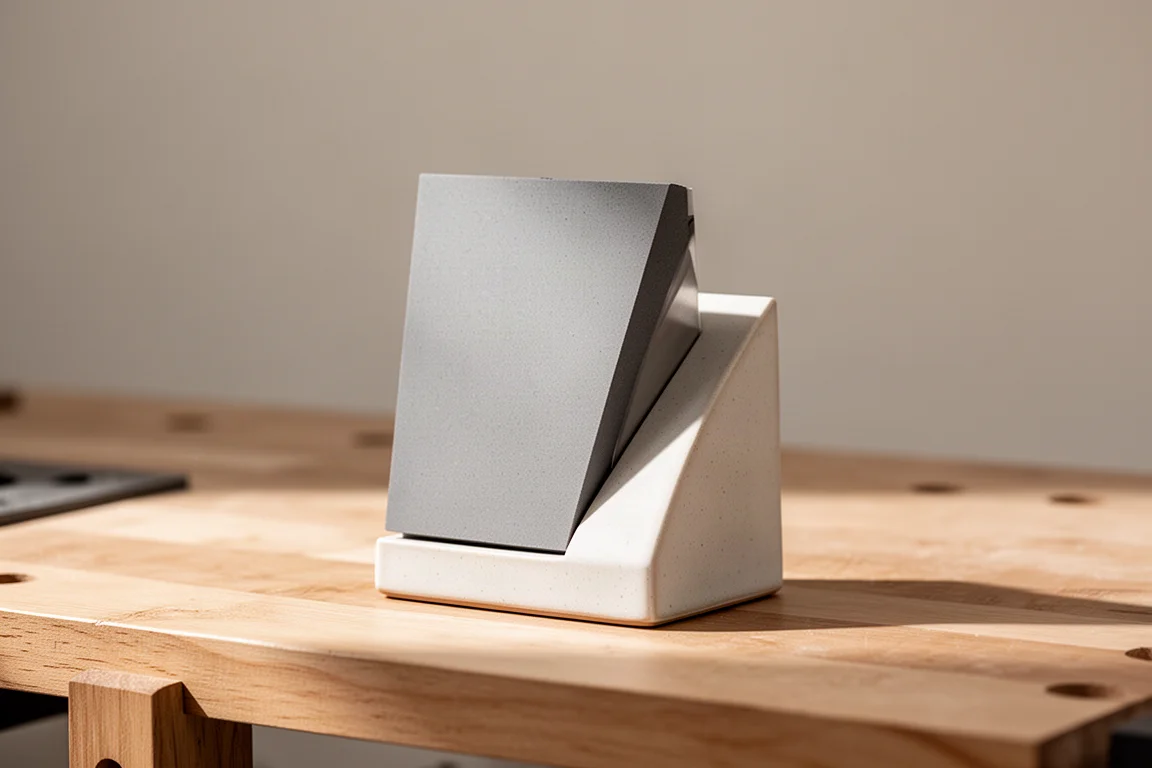
Victorinox Ceramic Sharpener
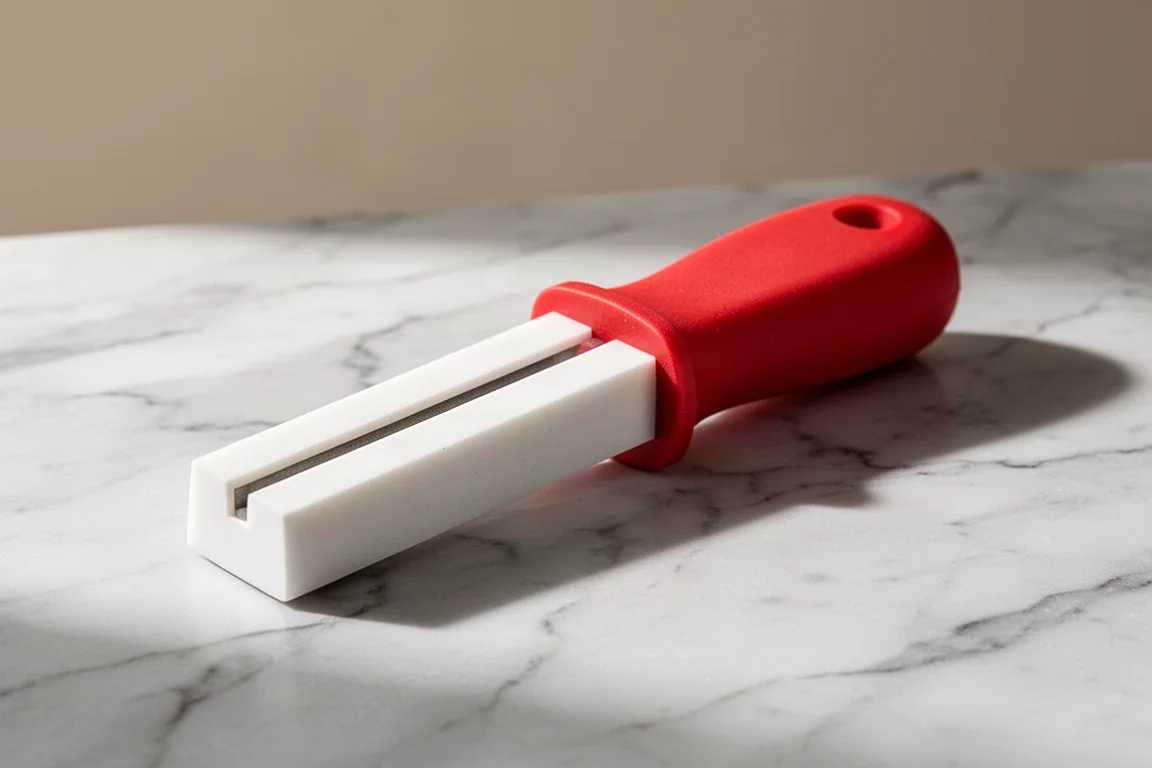
The Victorinox ceramic sharpener is a particularly nice piece, made overseas in Switzerland. Its ceramic surface is a little coarse, and it includes a groove for sharpening fine things like fish hooks, which makes it more versatile than a plain rod.
Because it is coarse enough to actually refine an edge, it can take a dull knife noticeably further than a pure hone. In testing, a blade that could not cut paper was brought back to cutting paper with a short amount of work, and a few more passes lined the edge right back up after another dulling session.
Benchmade Stropping Plate
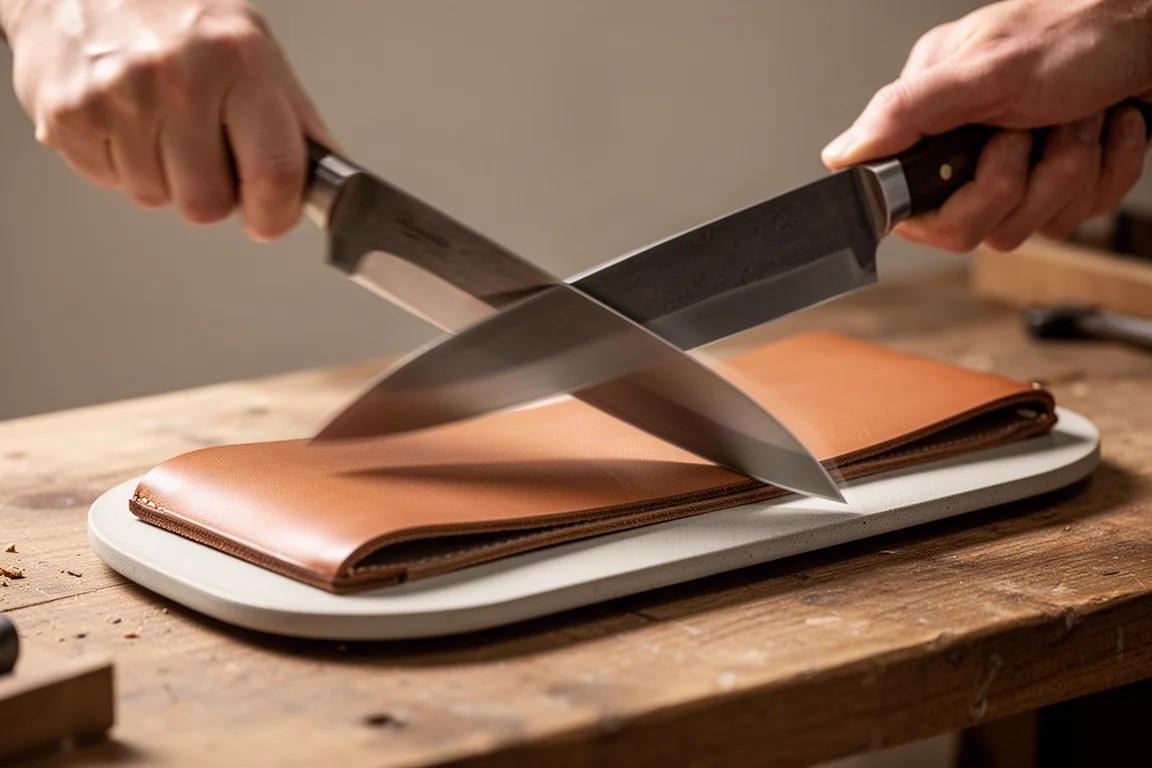
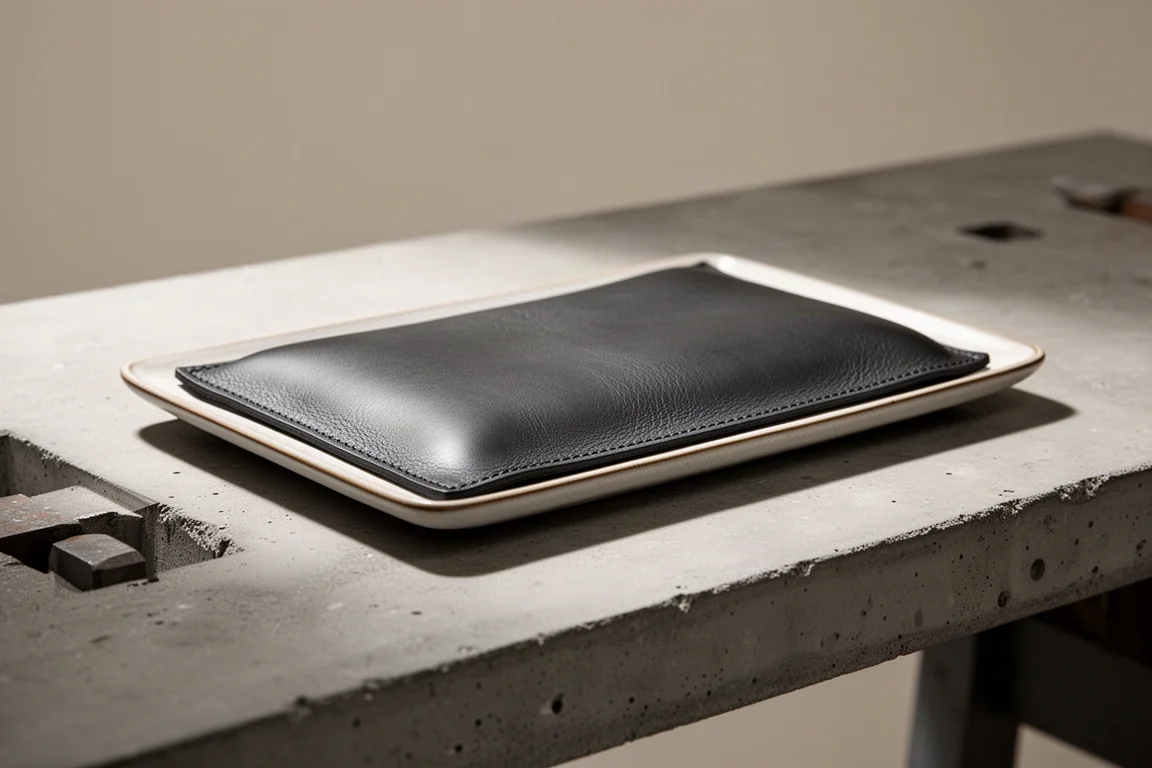
The Benchmade stropping plate, a collaboration with Work Sharp, takes a different approach. Instead of a ceramic rod, it has a stropping plane where you draw the blade away from the edge rather than into it, which is why the plate has no angle guides. Stropping over leather or a plate like this is what takes an edge from merely sharp to razor sharp.
Stropping pairs well with ceramic honing. Hone to realign the edge, then strop to polish it. Between the two, even improvised methods like stropping on wood or using river stones can help, but a dedicated plate does the job properly.
Buying Advice
If you are just starting out, a small beginner ceramic hone for around six dollars is strong enough to get real results. A thick ceramic rod with a plastic handle sells for around fourteen dollars, and the extra mass makes it satisfying to use. For portable EDC, a compact option around twelve dollars works well, and because of how you can hold it, it can also handle axes and other tools.
A traditional sharpening steel is also worth considering. A tip: check a secondhand shop, because high-quality steels often end up donated by people who never learned to use them. But overall, ceramic honers are the recommendation here, and the big thick rod is the standout favorite.
Conclusion
A ceramic hone is a low-cost, low-risk way to keep knives working the way they should. Realigning the edge takes seconds, preserves the blade profile, and delays the day you actually need to grind metal away. Pick the format that suits your kit, learn a consistent angle, and a dull knife stops being a reason to reach for the sharpening stones every week.
Further reading
Related Reviews
Knife Sharpening
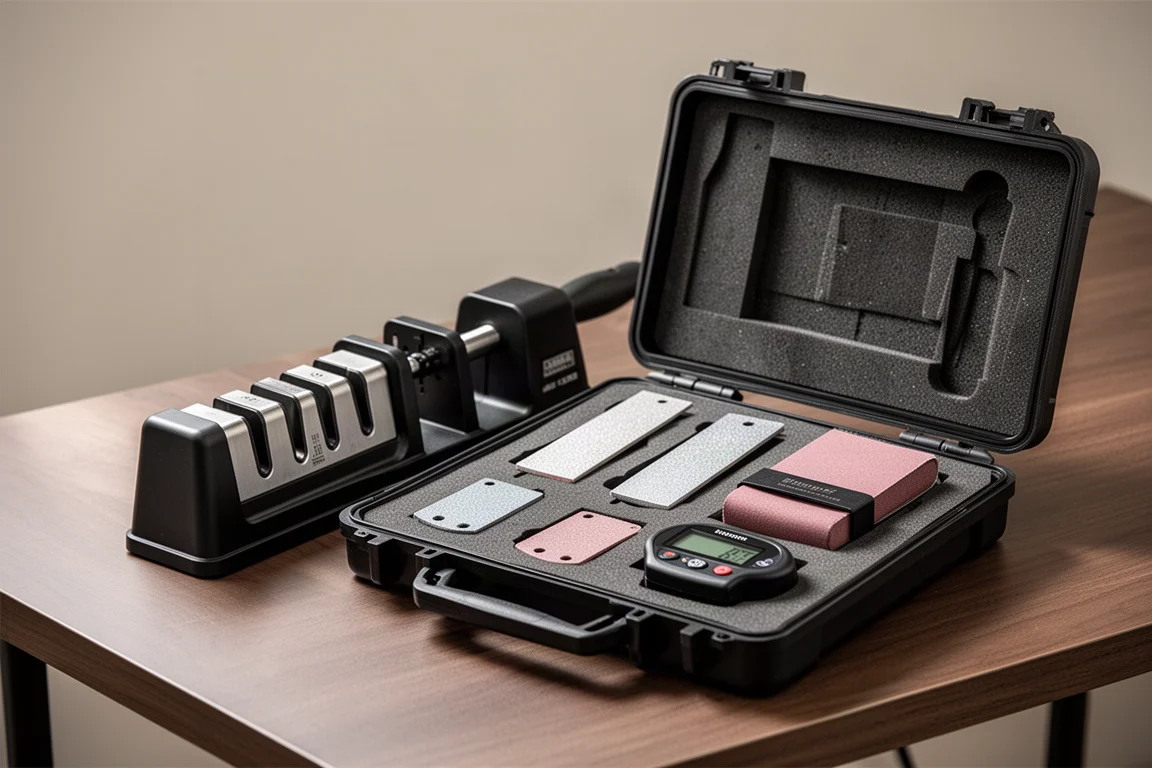
Work Sharp Professional Precision Adjust Elite: A Sharpening System for People Who Care About Edges
The Elite version of the Professional Precision Adjust adds a rugged case, fine resin-bonded diamond plates, and a strop for a true mirror finish.
Knife Sharpening
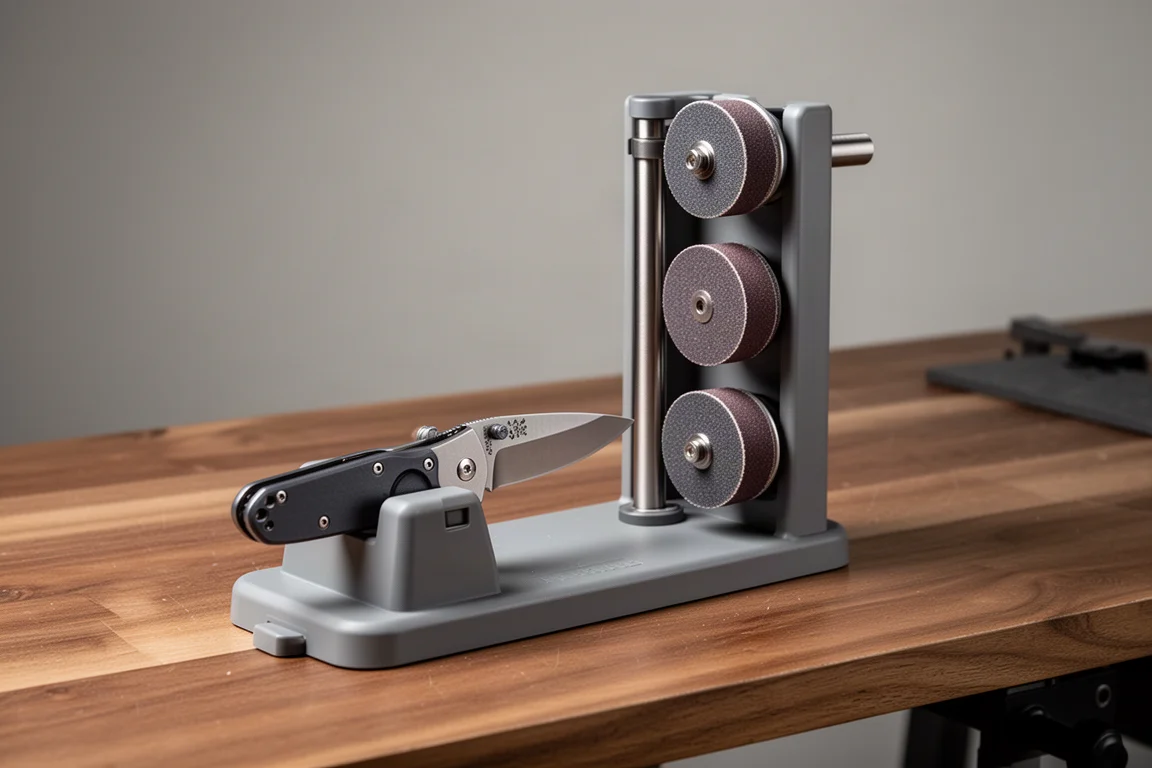
Work Sharp Precision Adjust: The Clamp-and-Jig Sharpener Worth Building Out
A fixed-angle knife sharpener with a rotating abrasive carriage, plus an upgrade kit that turns it into a genuinely complete sharpening setup.
Knife Sharpening
Work Sharp Precision Adjust Upgrade Kit Review: A Wider Grit Range for an Already Great Sharpener
The Upgrade Kit expands the Precision Adjust with extra abrasives, a built-in strop, and a proper carrying case. Here is what changes after months of use.