Cookware
Best Cast Iron Skillets: 12 Skillets Tested From Budget to Premium
We tested 12 cast iron skillets, from a $30 Lodge Classic to a $300 vintage Griswold, comparing heating, heat retention, warping, egg release, and handle comfort.
Introduction
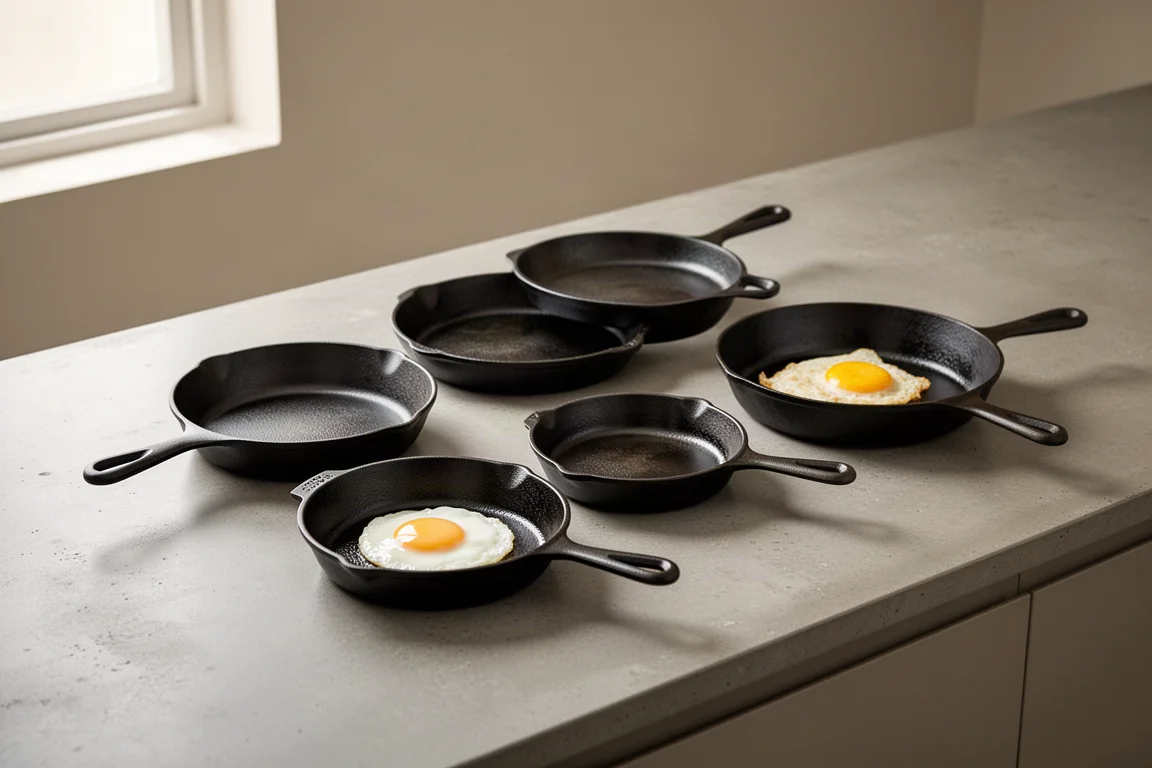
Cast iron skillets range from around $30 to well over $200, and the natural question is whether the expensive ones are actually better. To find out, we cooked with 12 skillets over several months and ran a series of controlled tests, ending with a vintage Griswold that is believed to be around 85 years old. The results were surprising in places, and they make a strong case that price alone does not tell you much about performance.
How We Tested
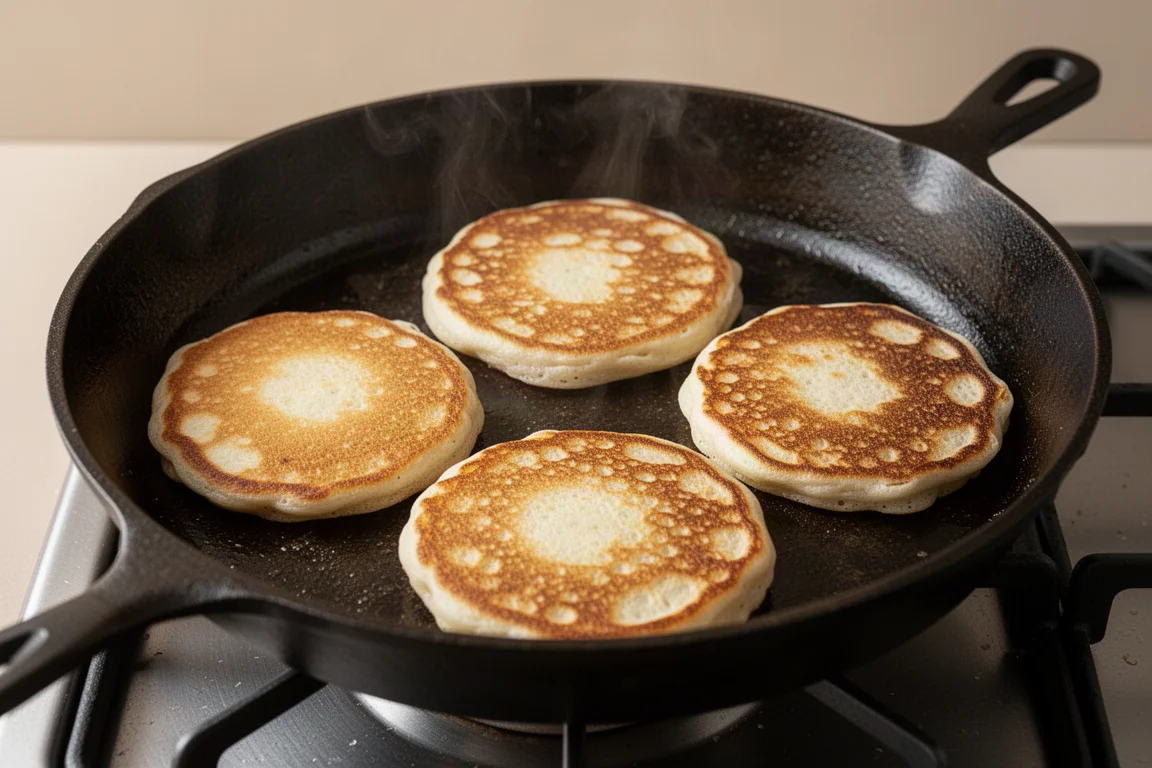
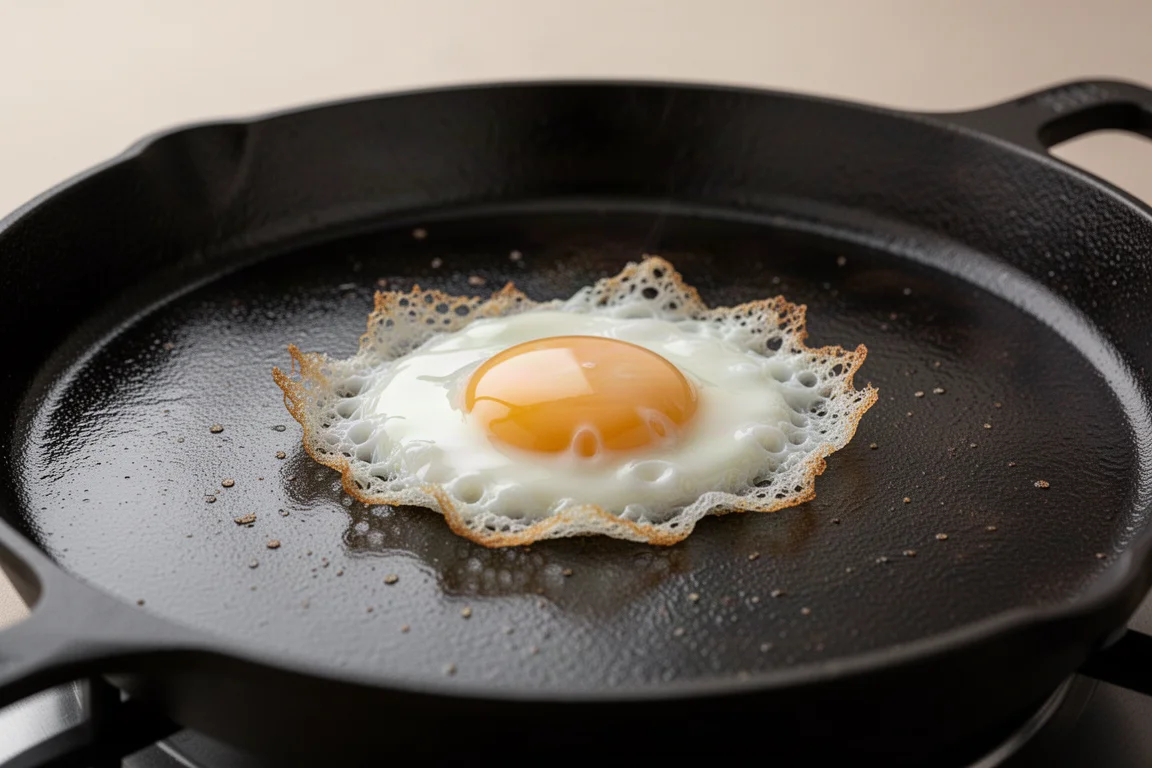
Each skillet was measured for how quickly and evenly it heats, how well it retains heat, how hot the handles get, whether it warps under extreme heat, and how cleanly it pours. To see whether smooth cooking surfaces release food better than rough ones, we cooked eggs in every skillet at the exact same temperature with the same amount of grease. To judge evenness of cooking, we cooked three pancakes at a time with portions near the center and near the sidewalls, then compared browning.
We also compared weight, cooking surface size, wall height, handle design, and thickness. The skillets below are ordered from least expensive to most expensive.
Lodge Classic Cast Iron Skillet
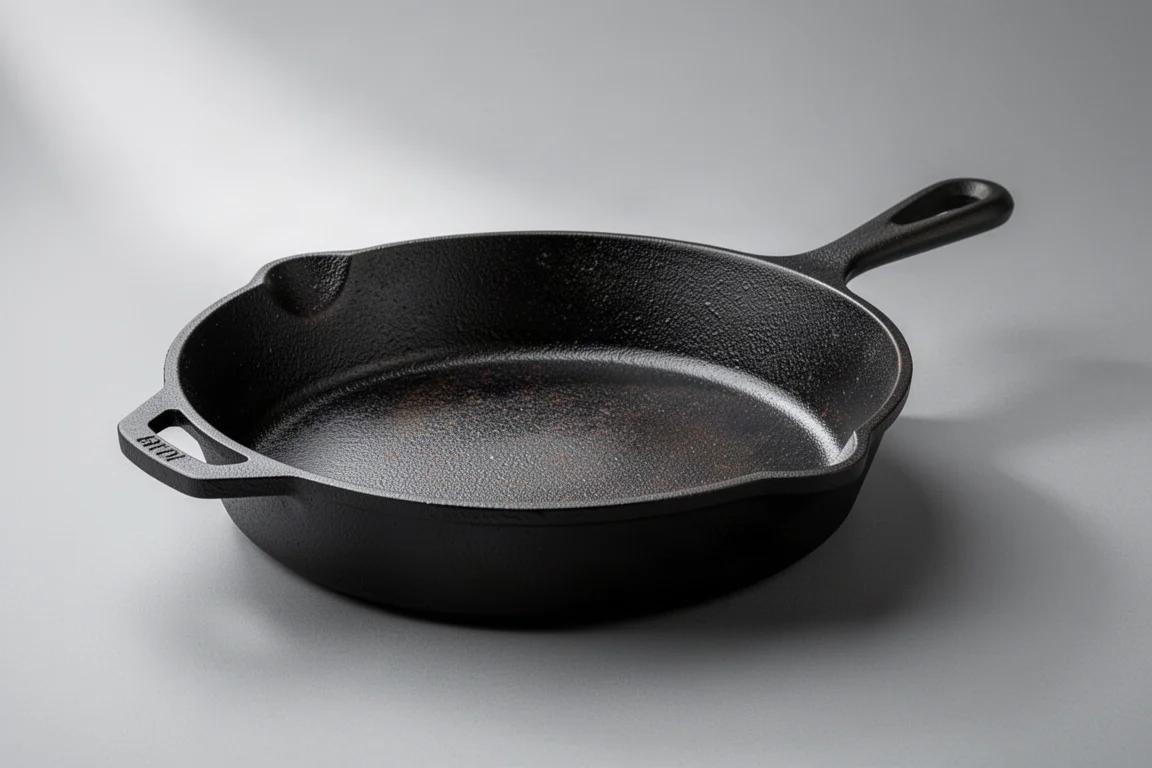
The Lodge Classic is made in South Pittsburg, Tennessee, and it is the least expensive skillet in the group. It has a rough cooking surface, pour spouts on both sides, and a short handle. At 5 mm thick and 8.1 lb, it is the thickest and heaviest skillet tested. That construction means it heats slower than thinner skillets, but it retains heat well and stayed completely flat after two minutes at 425°F on a powerful induction cooktop, which not every skillet managed. Despite the rough surface, the egg did not stick at all, though it did not slide quite as freely as on smoother pans. The main gripe is the handle: it is a little too short, and it was too warm to grab with a bare hand after boiling water for 10 minutes. As a value pick, it performs great.
Victoria Cast Iron Skillet
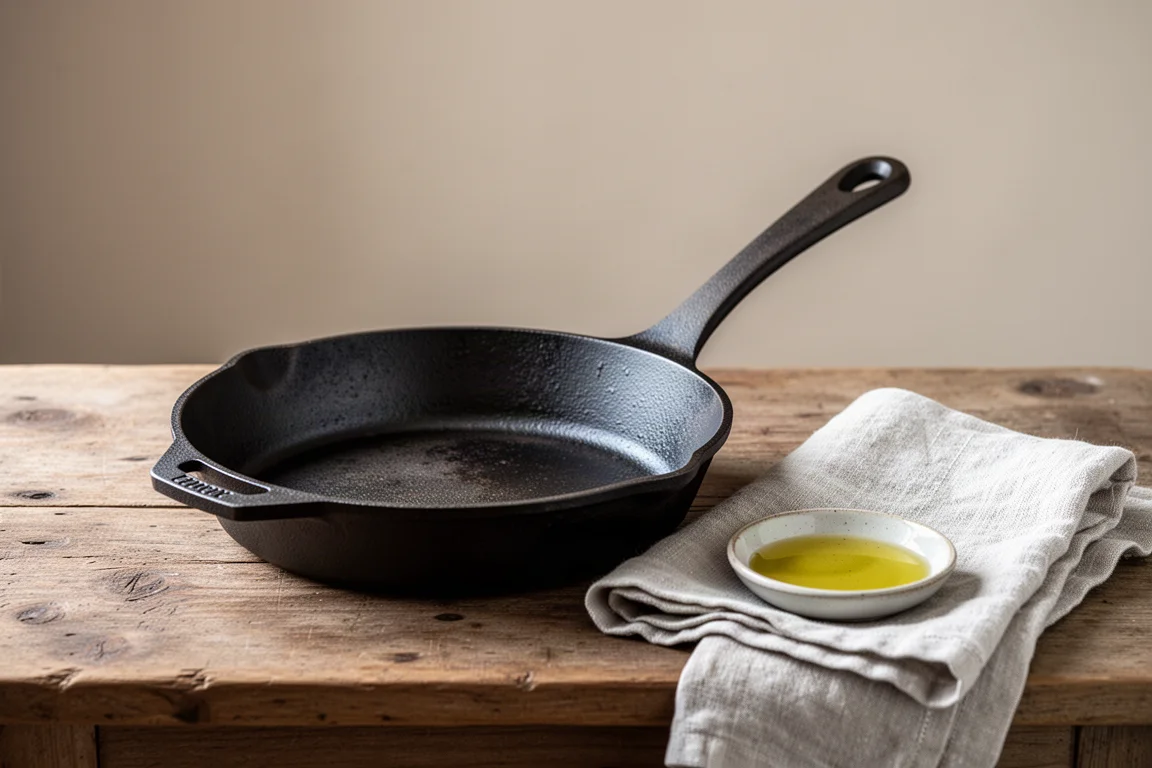
The Victoria is made in Colombia and, like the Lodge, has a rough cooking surface with pour spouts on both sides. It is a little lighter at 7.2 lb, and the biggest design difference is the handle, which is much longer and stays cooler. It was one of the fastest skillets to heat up, yet it retained heat slightly better than the heavier Lodge Classic, and it held up well in the warp test with only a very slight gap before heating and no additional warping afterward. The egg stuck slightly at first and needed help from the spatula, but once released it moved around the pan easily. In the pancake test, the center browned more than the edges, which happened with almost every skillet. For the price, it is one of the strongest performers.
Lodge Chef Collection Cast Iron Skillet
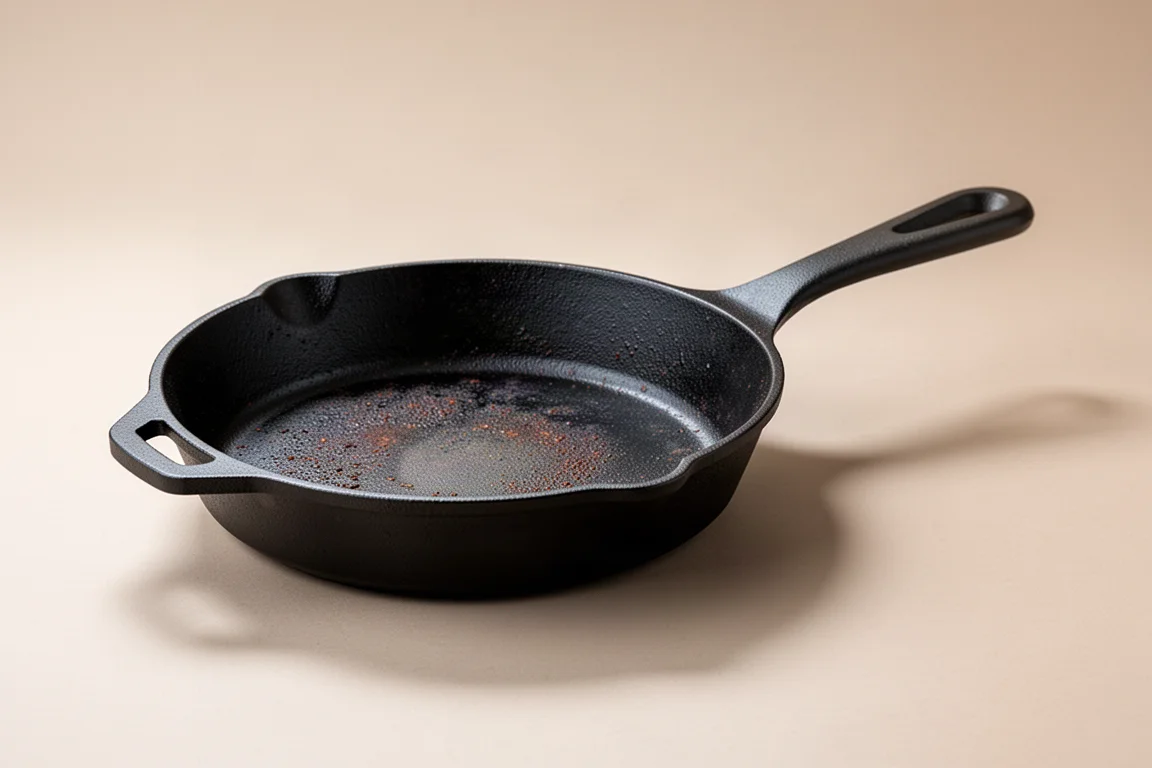
The Lodge Chef Collection has the same rough surface as the Lodge Classic, but the walls are a quarter inch shorter and more sloped, which makes it easier to slide a spatula under food near the edges. The handle is slightly longer, the walls are thinner, and it is almost 2 lb lighter. Despite the lighter build, it had the best heat retention of all 12 skillets. The bottom is slightly concave, which is why the outer cooking surface heated slightly faster than the center and why the pancakes browned more evenly than most. The shape did not get worse during the warp test. In the egg test, it needed a small nudge from the spatula before releasing, then moved around the pan easily. Along with Victoria, it is one of our top lower-end picks.
Lodge Blacklock Cast Iron Skillet
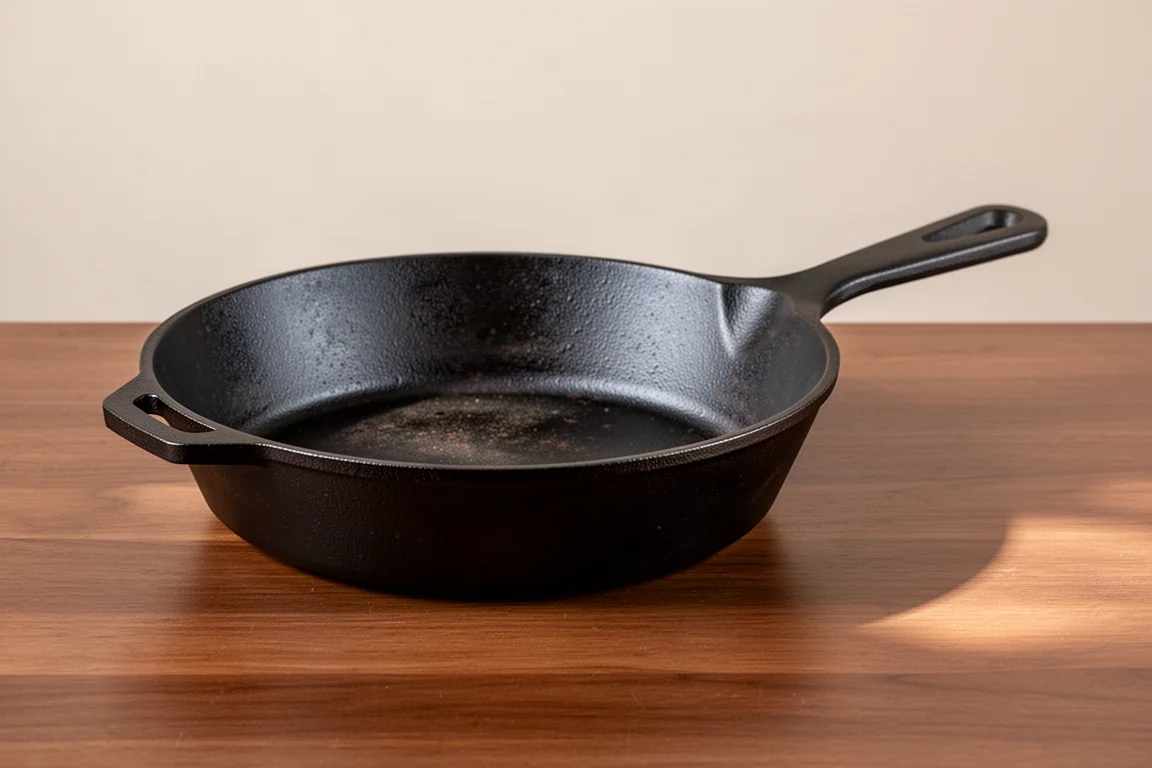
The Lodge Blacklock has the same rough cooking surface as the other Lodge skillets but is thinner and lighter, with a longer redesigned handle. It heated more evenly than most, with only a 32-degree difference between center and edge after two minutes. It retained heat very well and stayed stable during the warp test with no noticeable change. The egg stuck slightly at first and needed a small nudge, but moved freely afterward. The big drawback is the handle: it gets very wide where it connects to the skillet, then narrows toward the end, and the edges feel sharp and dig into your hands. The pour spouts are also small, so water can spill over the rim if you pour too fast.
Stargazer Cast Iron Skillet
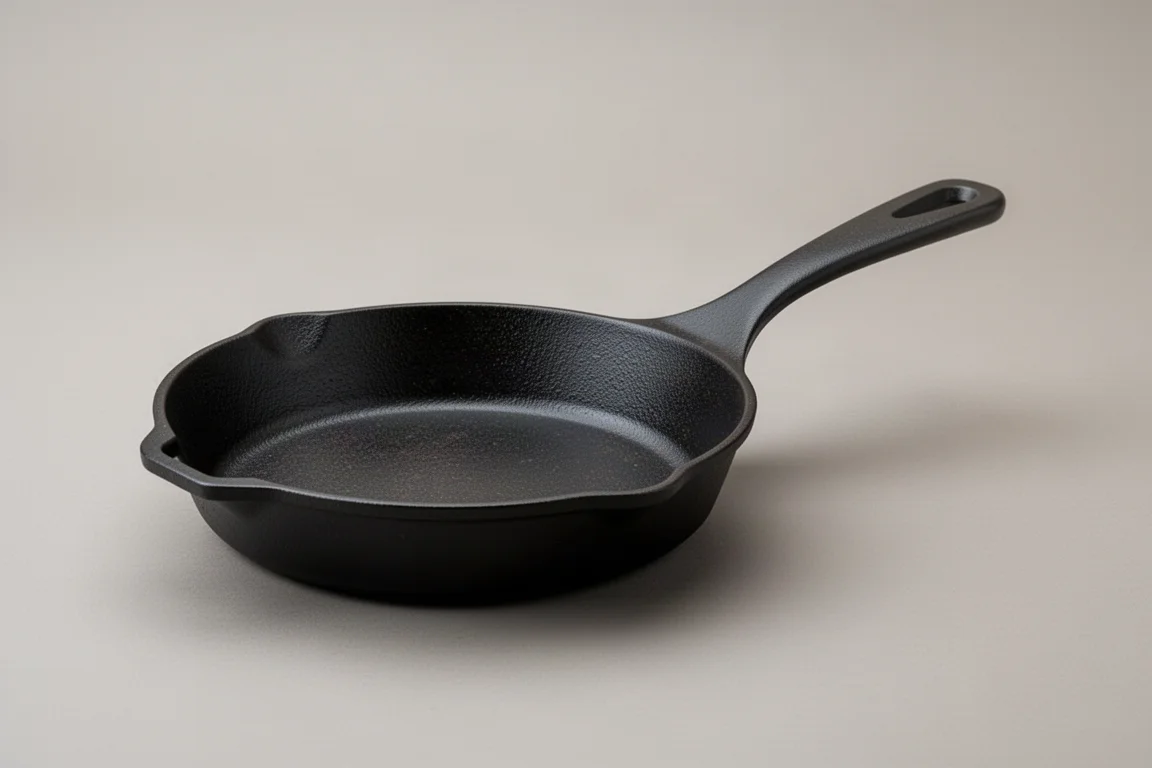
The Stargazer is made in the USA and features flared rims instead of pour spouts, a large helper handle, and the longest handle of the group. The cooking surface is smooth, and it performed extremely well in the egg test: the egg released immediately and slid around the pan without any help. The flared rim poured cleanly, and it was one of the fastest skillets to heat. On the downside, there was a large difference between center and edge after two minutes, heat retention was middle of the pack, and the center bowed outward slightly after heating, producing a minor wobble. The deep groove in the handle keeps the skillet from twisting when held with a towel, but the edges dig into your hand, so it is secure without being comfortable.

Victoria Signature Series Cast Iron Skillet
The Victoria Signature Series has a more high-end look than the standard Victoria, with a smoother cooking surface, thinner walls, and a split-style handle with a piece of metal in the middle. It heated fairly quickly, and heat retention was average. In the egg test it stuck slightly at first, but once loosened with a spatula it was fine, and the pour spouts worked really well. The handle stays cool, though a simpler one-piece design with fewer seams would be easier to clean around. The bigger concern is warping: the bottom was already concave, and the gap grew after heating. That shape stays flat and stable on the cooktop, but oil poured into the center flows toward the edges instead of spreading evenly.
Made In Cast Iron Skillet
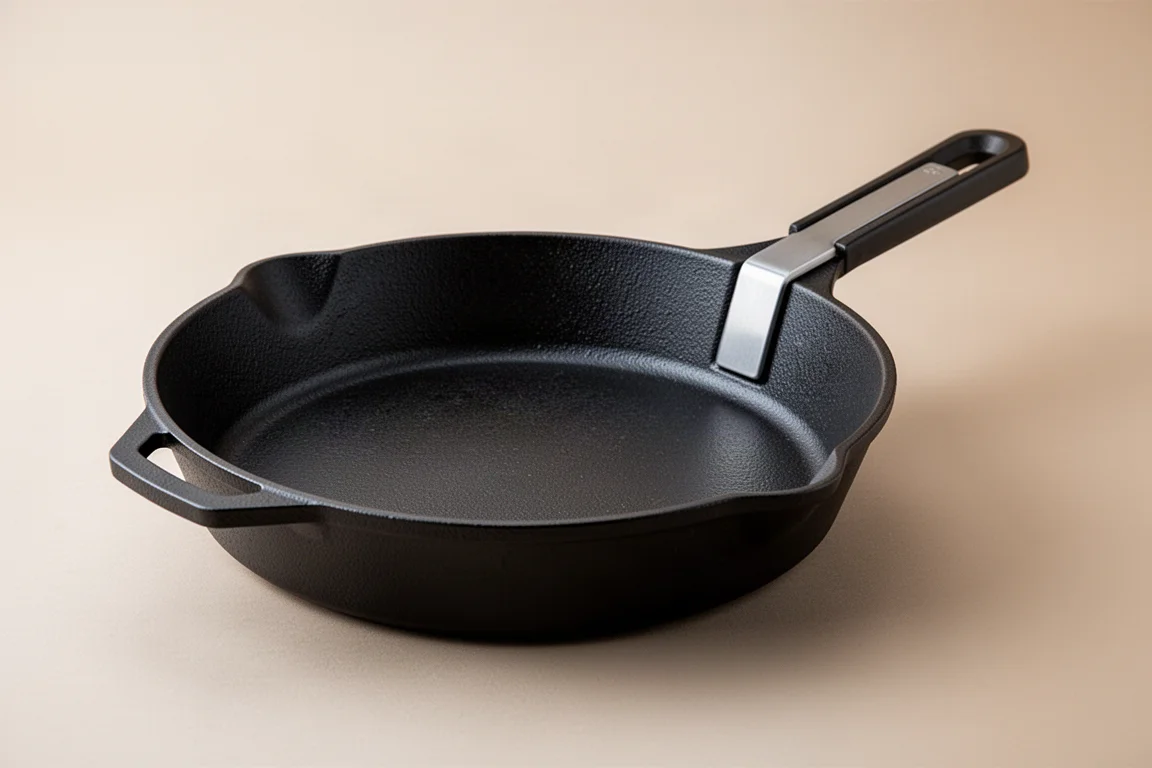
The Made In skillet is made in the USA with a smooth interior, tall walls that curve gradually into the cooking surface, and large primary and helper handles. It is the second heaviest skillet tested, behind only the Lodge Classic. The handle is almost as long as the Stargazer handle, but the shallow groove gives good control without sharp edges digging into your hand. In heat testing, the center heated fairly quickly, but there was a 130-degree difference between center and edge after two minutes, the second-largest gap in the group, and heat retention was average. Given a few minutes to heat gradually, it cooks evenly and is great for searing, and the smooth surface released the egg immediately with no sticking. The pour spouts did not drip at all. It started completely flat, but after heating the center bowed outward slightly, so preheat slowly, especially on induction. It has our favorite handle of the group.
Smithey Cast Iron Skillet
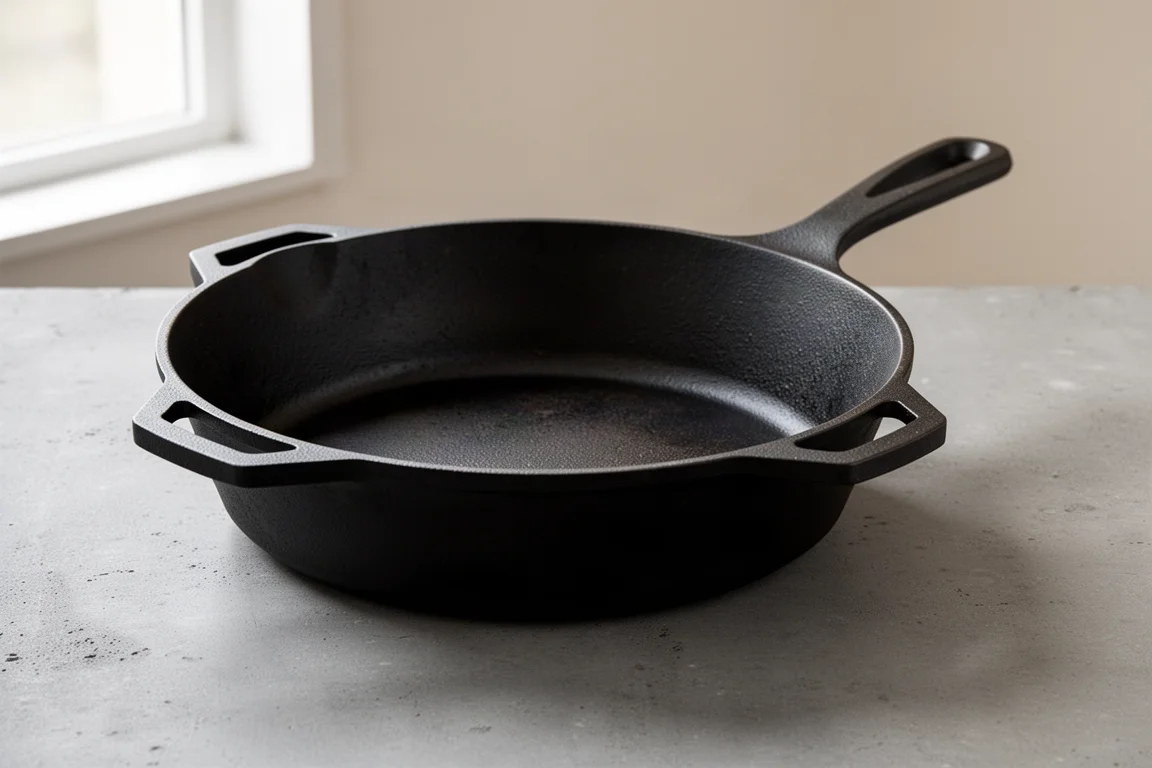
The Smithey is made in Charleston, South Carolina, with a smooth cooking surface, large pour spouts, and a heat ring around the bottom that allows some expansion while keeping the skillet stable. The cooking surface is nearly as thick as the Lodge Classic, but the sidewalls are much thinner, giving you a substantial base without unnecessary weight in the walls. The wide flat handle is comfortable and gives control when tilting, and the three holes in the helper handle give it a distinctive look. It heated slower than some thinner skillets but retained heat really well, and the egg released immediately and slid around without sticking. The center bowed slightly after heating, but the heat ring kept it from wobbling. One note on smooth-surface skillets like this: seasoning can look blotchy at first, but it darkens and evens out over months of cooking if you dry the pan thoroughly after washing.
Field Company Cast Iron Skillet
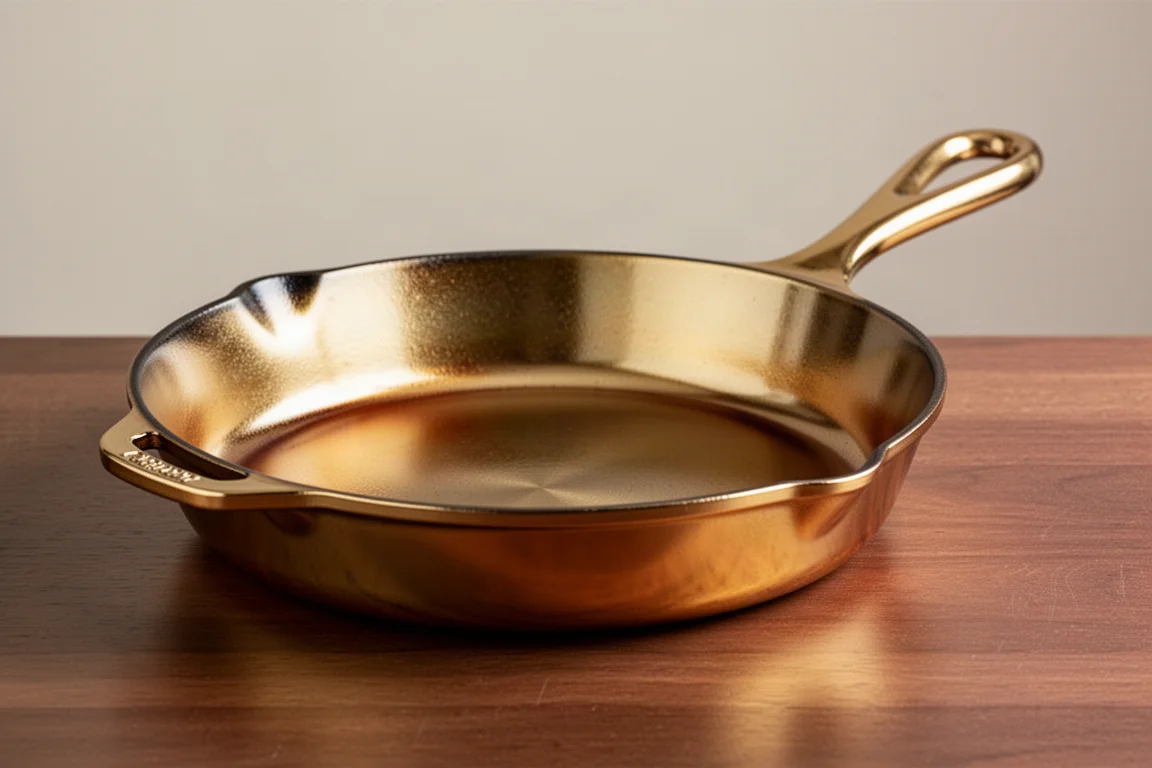
Field Company is made in the USA and is the second lightest skillet tested, with a smooth cooking surface, thin sidewalls, and a flared rim instead of pour spouts. The thinner, lighter construction makes it easy to pick up and maneuver, and it heats up quickly, but with less mass to hold heat, it had the second-lowest heat retention in the group. The egg needed a slight nudge before sliding around with no sticking, and the flared rim did not drip. The primary handle is nice, but the helper handle is the smallest in the group, with little to grab onto. The biggest issue is warping: even with a heat ring, the center bowed outward far enough to extend past the ring after heating, causing a noticeable wobble, and the pan even spun when the handle was tapped.
Lancaster Cast Iron Skillet
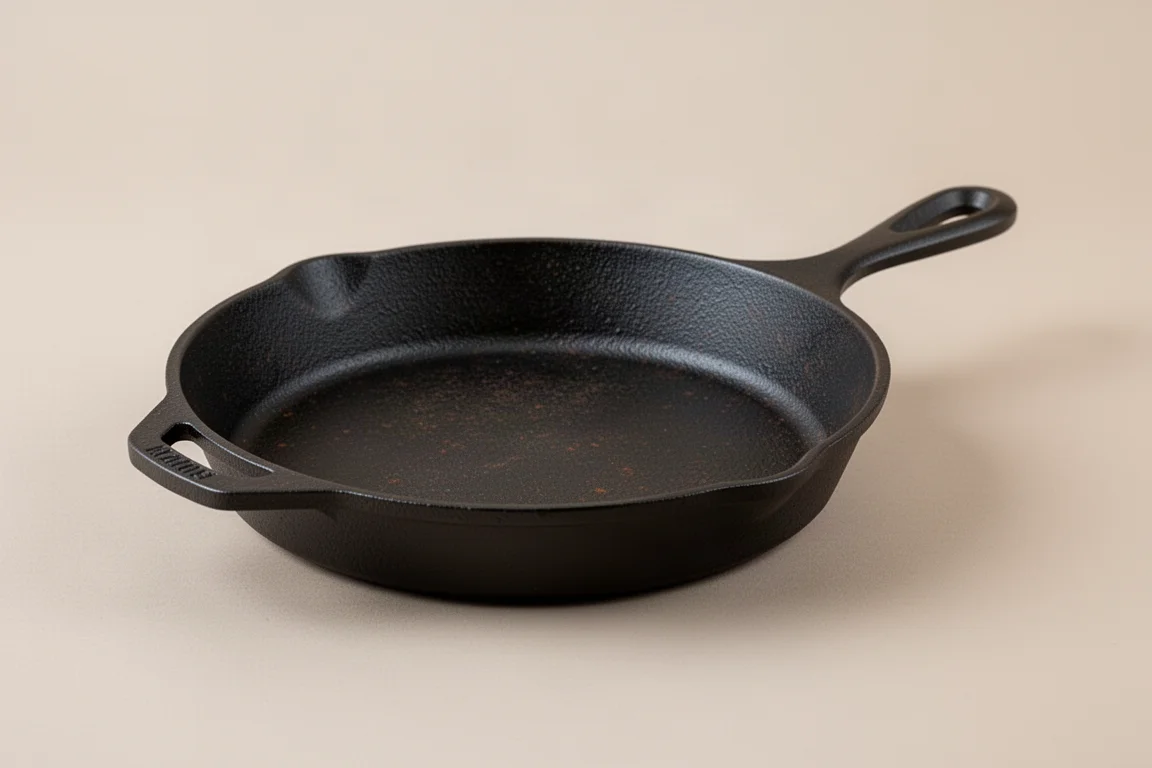
The Lancaster is made in Pennsylvania and looks and feels a lot like the Smithey, with a smooth cooking surface, large pour spouts, a flat handle, and a heat ring around the bottom. The smooth surface performed perfectly in the egg test, and the pour spouts worked great. Heat retention was average, but it performed extremely well in the warp test, staying flat after heating with no wobble or noticeable change. The handle shape is comfortable and gives good control, but it gets noticeably hotter than some others during normal stovetop cooking, and the helper handle is pretty small. It is a good skillet, but it is expensive enough that we would pick Smithey or Made In first.
FINEX Cast Iron Skillet
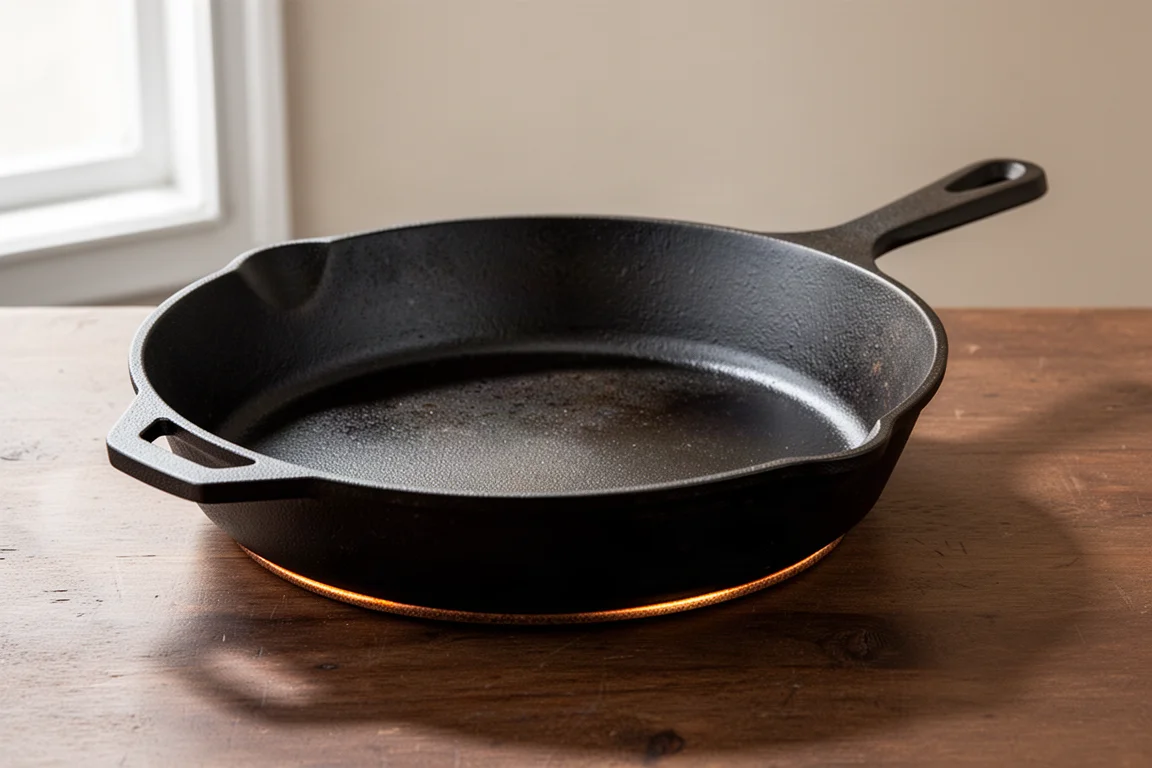
The FINEX is made in South Pittsburg, Tennessee, and it is easily the most distinctive-looking skillet in the group, with an octagonal shape, a smooth cooking surface with rougher inner walls, and a stainless steel coil wrapped around the handle. The corners work surprisingly well for pouring, giving multiple pour points with no spilling in testing. The smooth surface performed well in the egg test, though smoother inner walls would look cleaner. Heat retention was toward the lower end, and it warped slightly, though not enough to cause noticeable wobbling. The coiled handle stayed cooler than most on the stovetop, but after 15 minutes out of a 400-degree oven it was still too hot to touch, no cooler than a regular cast iron handle. The thick, round, smooth handle lets the skillet rotate in your hand when tilting, grease and moisture can collect under the non-removable coil and are hard to clean and dry, and it rusted in the bottom engravings, which no other skillet did.

Griswold No. 10 Cast Iron Skillet
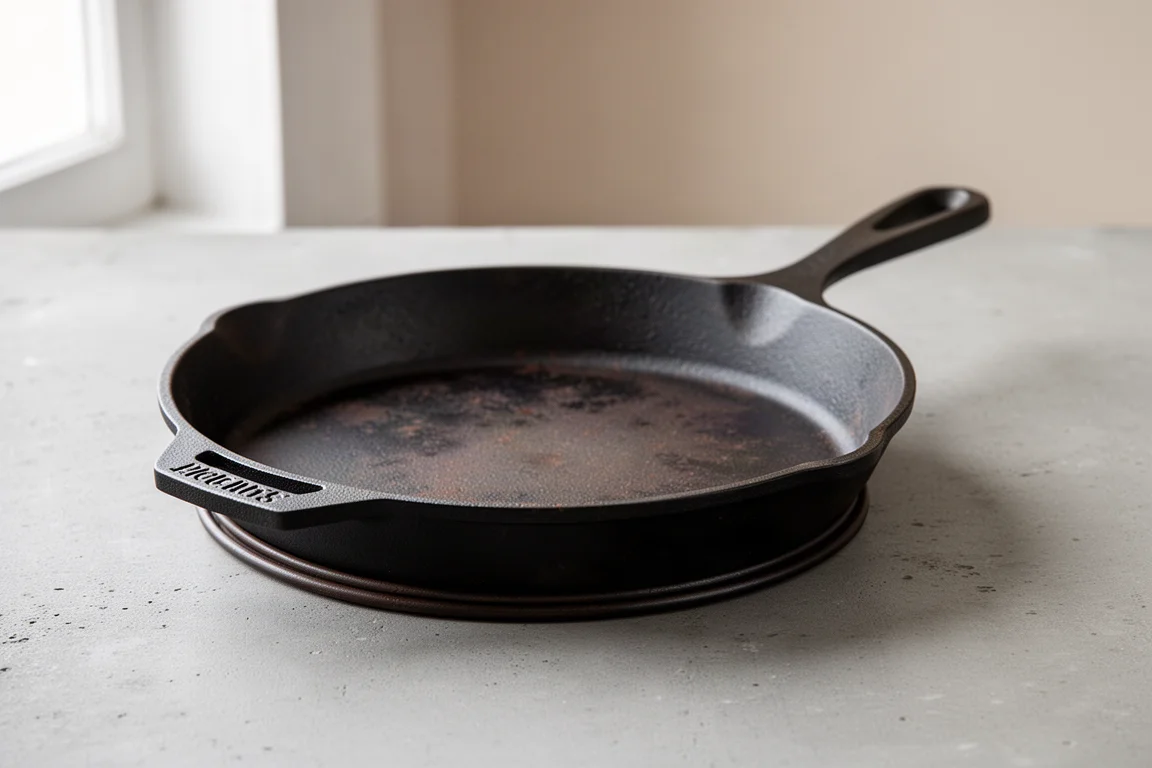
Griswold is a vintage cast iron brand highly regarded by collectors. The company made cookware in Erie, Pennsylvania for decades, but the original factory closed in 1957, so you cannot buy one new today. This No. 10 with the large Griswold logo is believed to have been made between 1939 and 1944 and was purchased secondhand for $300, though some pieces sell for much more depending on model and condition. At 4.8 lb, it is the lightest skillet tested, with a cooking surface only about 3 mm thick, making it the fastest to heat but also giving it the biggest center-to-edge temperature difference and the lowest heat retention in the group. Surprisingly, despite the extremely smooth surface, it had the worst egg test result, likely because decades of use left the seasoning uneven with small pits and marks. It was already slightly warped when purchased, and after the warp test it wobbled and spun on the cooktop. Even so, it still cooks well, is easy to maneuver, and pours cleanly; it simply heats up and cools down much faster than thicker modern skillets.
Which Cast Iron Skillets Are Worth Buying
On the lower end, Victoria and the Lodge Chef Collection are the two top picks. Victoria has a longer handle and excellent performance for the price, while the Lodge Chef Collection is lighter, easier to maneuver, and had the best heat retention in testing. The Lodge Classic is also a great option if you want something more substantial, and the value is incredible.
If you want a smoother surface and a more high-end design, and you do not mind spending more, Smithey and Made In are the two favorite premium options. Smithey has proven itself over more than two years of regular use, and Made In has the favorite handle of the group and cooks extremely well once fully preheated. Field, Stargazer, and Lancaster are all good skillets, but they are expensive and have enough drawbacks that they are hard to recommend over those two. The Lodge Blacklock, Victoria Signature Series, and FINEX have design flaws or performance issues that are harder to overlook at their prices.
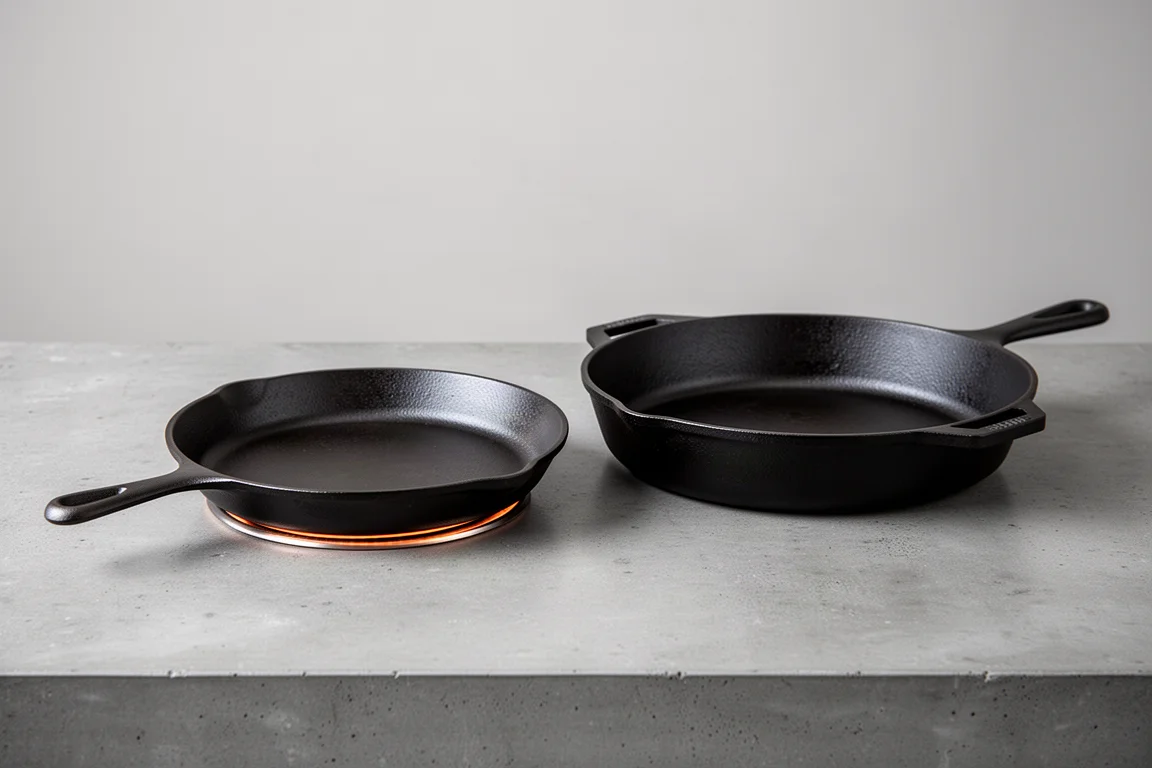
As for Griswold, Wagner, and other vintage cast iron, look at those more as collector’s items. They can still cook extremely well, but spending hundreds of dollars expecting them to outperform a good modern skillet is not realistic.
Conclusion
The takeaway from testing 12 skillets is simple: you do not need to spend a lot to get great performance. Victoria and the Lodge Chef Collection deliver excellent results at lower prices, the Lodge Classic is a tremendous value in a heavier package, and for a premium smooth-surface experience, Smithey and Made In are the ones worth the money. Vintage pieces like Griswold are charming and capable, but they are better appreciated as collectibles than as upgrades.
Further reading
Related Reviews
Cookware
Best Carbon Steel Pans Tested: Which Brands Deliver Real Value
We tested eight popular carbon steel pans with controlled durability, heat, and cooking tests. Here's which ones perform best and which to avoid.
Cookware
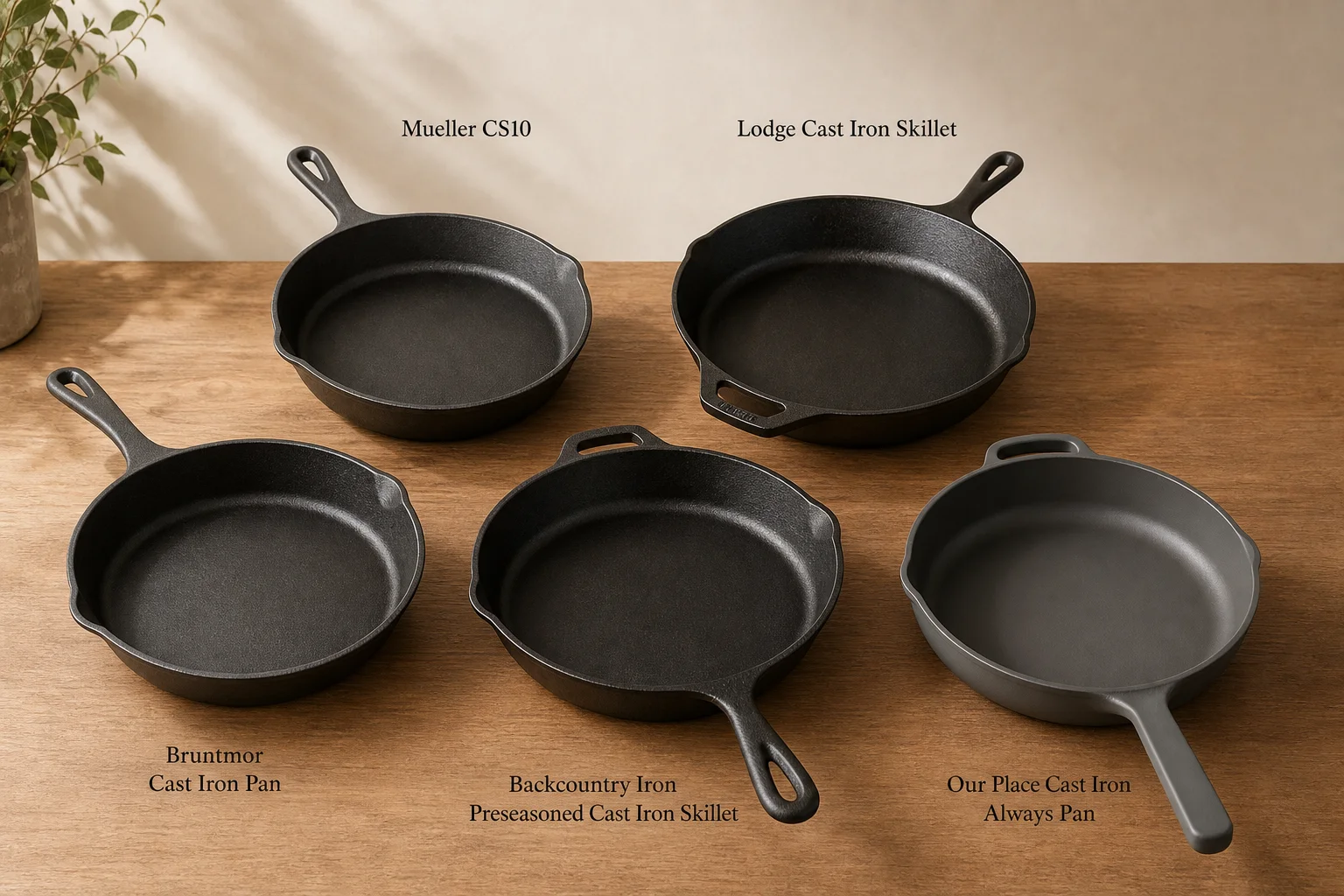
Best Cast Iron Pans 2026: Five Options from Budget to Premium
A practical breakdown of five cast iron skillets, from affordable Mueller to premium Our Place, with clear strengths and trade-offs for different cooking needs.
Cookware
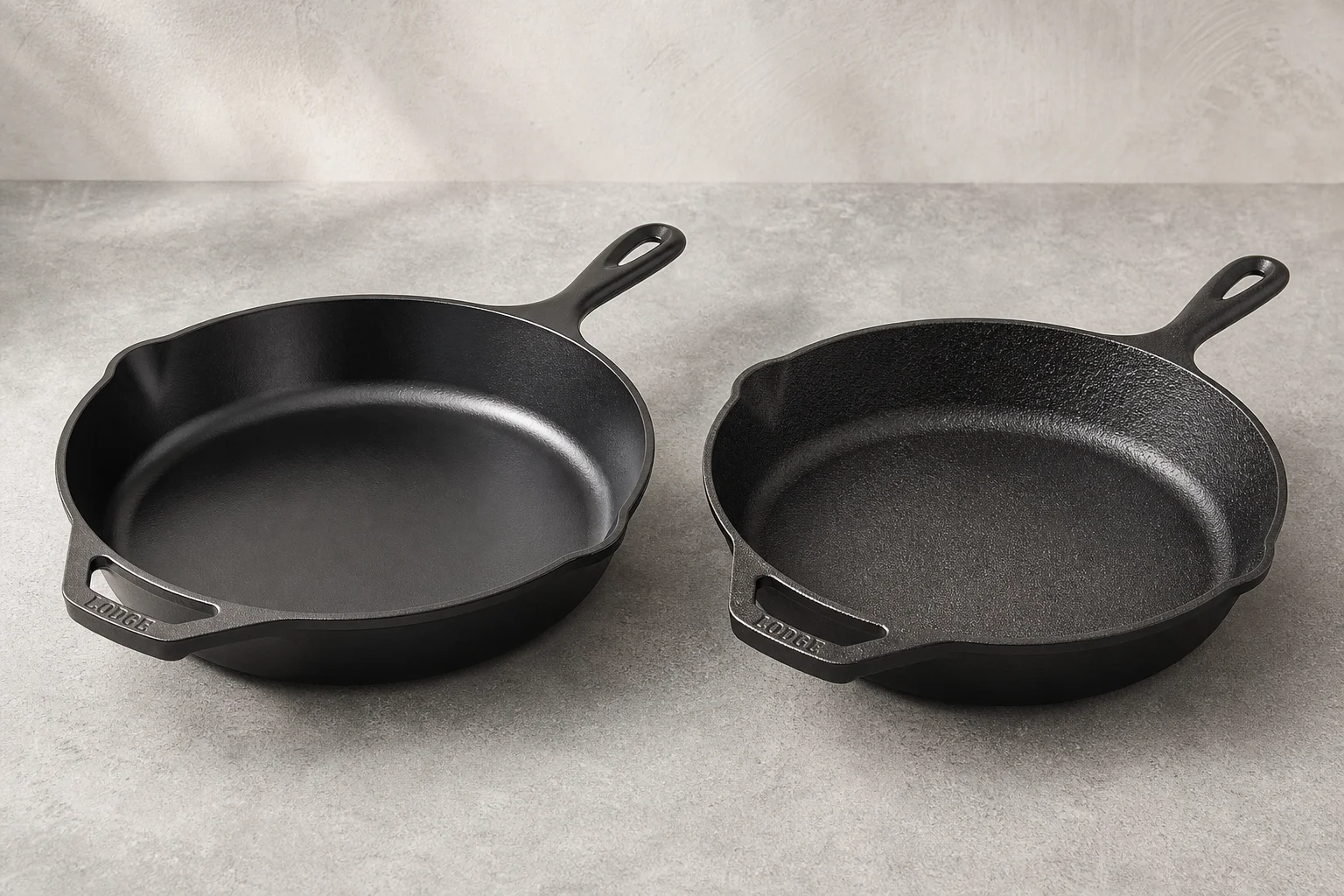
Best 12-Inch Cast Iron Skillets: Premium Craftsmanship vs. Reliable Budget Option
Two standout 12-inch cast iron skillets tested for heat retention, surface finish, and durability. One premium choice and one budget-friendly alternative that both deliver.