Cookware
Best Carbon Steel Skillets 2026: Four Pans Worth Comparing Before You Buy
From Misen's new nitrided hybrid pan to proven preseasoned favorites, here is how four carbon steel skillets differ and who each one suits.
Introduction
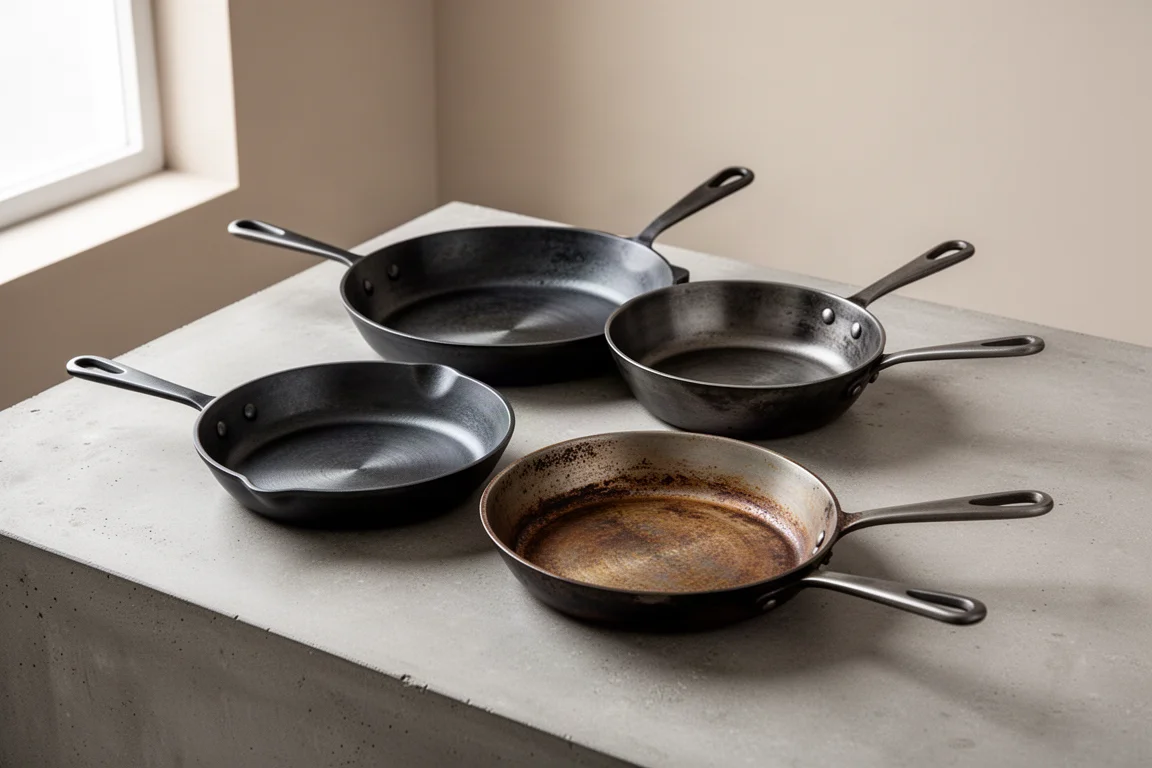
Carbon steel has quietly become the pan of choice for cooks who want something between cast iron and stainless steel: lighter than cast iron, more forgiving than bare stainless, and capable of serious high-heat work. The category has been getting crowded lately, and one of the biggest stories is Misen’s new carbon nonstick pan, which launched as the brand’s eleventh Kickstarter campaign.
We looked at four skillets that cover the realistic range of what most home cooks should consider: Misen’s new hybrid nitrided pan, Misen’s proven preseasoned carbon steel skillet, Strata’s lightweight triply carbon steel pan, and Made In’s deeper carbon steel skillet. Each one suits a different style of cooking, so the right pick depends less on a universal ranking and more on how you actually cook.
Misen Carbon Nonstick Pan: The New Contender
Misen’s new pan is the result of a heavily promoted Kickstarter campaign that launched in early April. It looks like a cross between the brand’s existing preseasoned carbon steel pan and the Strata skillet, and that comparison is not accidental. Strata has become one of the most talked-about new names in cookware, and Misen is clearly aiming at the same audience.
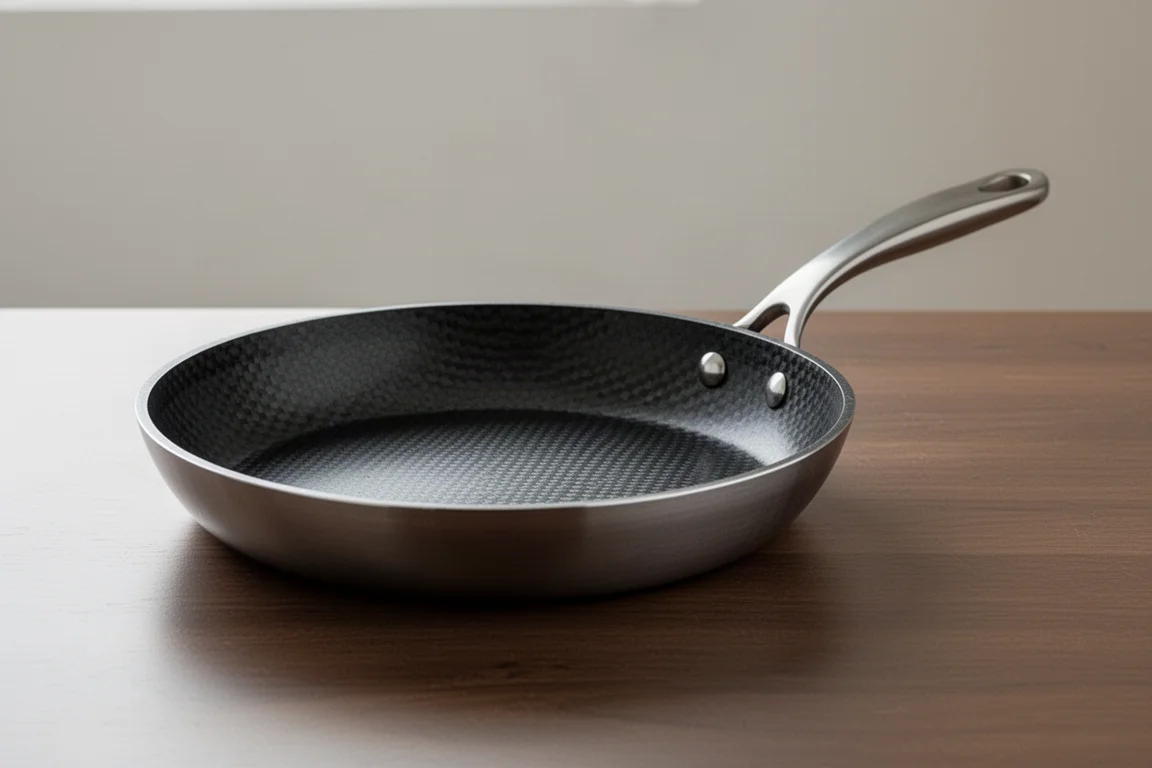
The headline feature is a nitriding process that diffuses nitrogen into the pan’s surface, creating a passive ceramic-like layer on top of the steel. That layer means less exposed iron at the surface, which should reduce sticking. It also promises corrosion resistance: Misen claims the pan tolerates acidic food and even brief sink soaks, things you would never do with a conventional carbon steel pan.
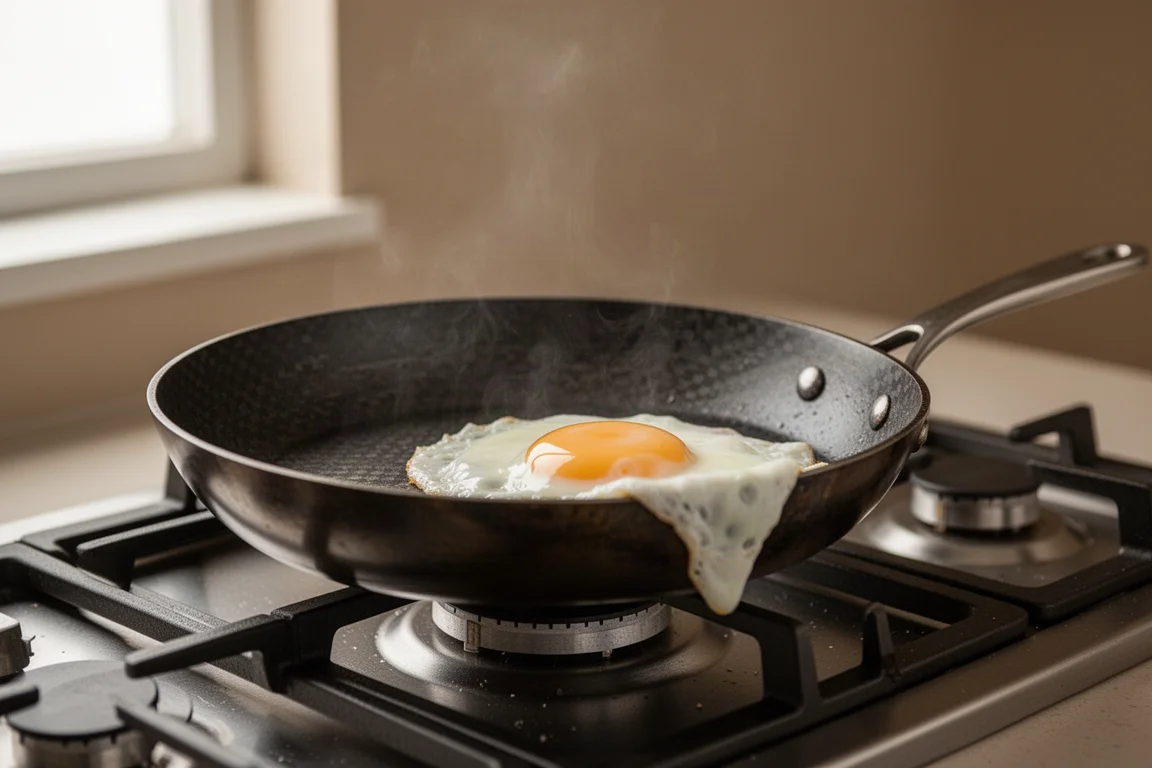
There are also aluminum in the middle of the construction, which changes the pan’s character significantly. Traditional carbon steel is lighter than cast iron but still slow to respond to temperature changes. The aluminum core drops the thermal mass, so the pan heats up much faster and behaves more like a triply stainless pan. That responsiveness is exactly what most home cooks want from an everyday skillet.
A few caveats are worth weighing before backing or buying. The pan is not preseasoned, and Misen says it will become more nonstick over time as it seasons, which is really just ordinary seasoning that has not happened yet. The claimed maximum temperature is 500 degrees Fahrenheit, which is low for carbon steel and the same ceiling typically recommended for PTFE coatings, likely a consequence of the aluminum layer. That limit matters for seasoning too, since the carbonization stage that builds proper seasoning happens around that temperature. The pan is also dishwasher-tolerant in theory, though repeated dishwashing is unwise, particularly with an aluminum layer in the construction.
At launch, the Kickstarter pricing was listed at $84 for the 8-inch, $94 for the 10-inch, and $104 for the 12-inch, with the company absorbing tariff costs for the campaign. The listed weight is the same as Strata’s equivalent pan, so this is not actually lighter than its most direct competitor. It is best understood as a responsive, corrosion-resistant pan for egg work and everyday tasks, backed by a warranty that even covers warping. We are somewhere between skeptical and cautiously optimistic on this one.

Reading the Marketing Claims Carefully
Misen’s campaign leans on phrases like “forever pan without forever chemicals” and “non-toxic and uncoated.” These claims are mostly true in a narrow sense but say very little. Carbon steel is not coated anyway, so the uncoated claim is almost automatic. The non-toxic framing generally just means the pan is not PTFE-based, and PFAS regulations are tightening in several states, which likely explains the timing of this launch given how much of Misen’s sales come from nonstick pans.
The “non-stick out of the box” claim deserves particular scrutiny because the pan is explicitly not preseasoned. Nitrided surfaces in our experience tend to behave more like a handrail than an escalator: they help food release, but they do not do the work for you. Eggs generally work well, while fish and other delicate proteins can still stick unless you keep them moving early on. The company also cites unnamed “textural” manufacturing processes contributing to nonstick performance, which is difficult to evaluate without specifics.
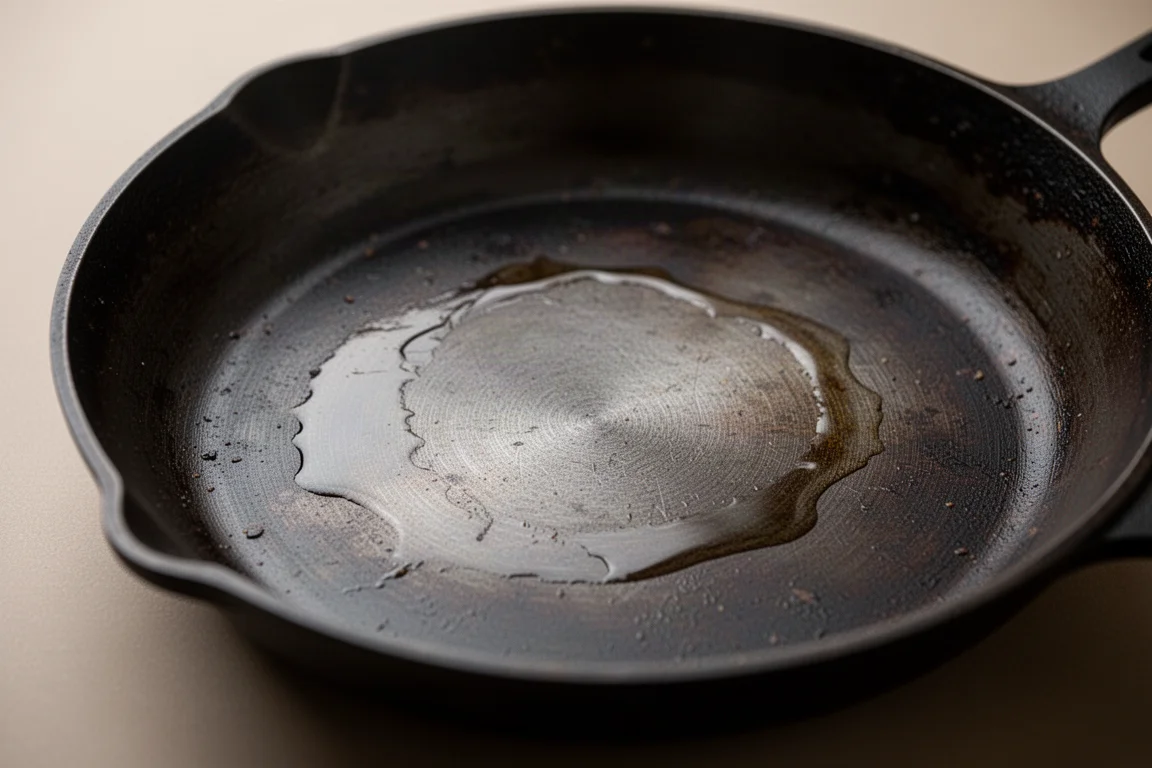
None of this makes the pan a bad product. It makes it a pan whose real-world performance depends on seasoning it properly yourself, and whose durability depends on respecting the temperature ceiling. If you go in understanding that, the trade-off for a responsive, rust-resistant pan may still be worthwhile.
Misen Pre-Seasoned Carbon Steel Skillet
If you want the safest Misen recommendation today, the brand’s standard preseasoned carbon steel skillet is the one with a proven track record. It won an early nonstick shootout among carbon steel pans, and it remains one of the most appealing options for egg and omelette work in carbon steel.
The 10-inch version has a shallow, gently sloped shape that makes flipping and folding eggs far easier than deeper-walled designs. It is reasonably light for its class and the handle is genuinely ergonomic, which matters more than most buyers expect once you start using the pan daily. Because it arrives preseasoned, the intimidating first-seasoning step is already handled.
Strata Carbon Steel Skillet
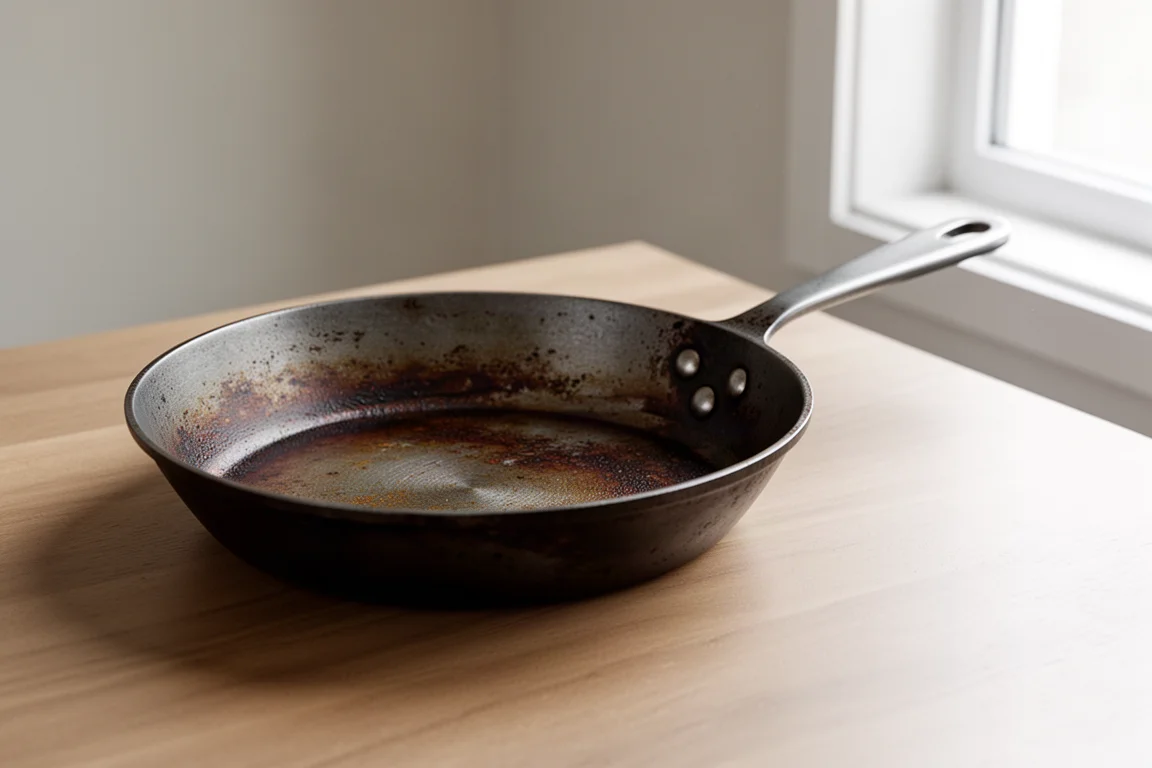
Strata is a separate company from Misen, and its approach is the clearest alternative philosophy in this space: a triply carbon steel pan with a layer of aluminum in the middle. The result is a pan that is extremely light, closer in feel to a good stainless steel skillet than to traditional carbon steel, with much faster heat response.
The trade-off is that you give up some of the thermal mass that carbon steel is traditionally valued for. If you do a lot of high-temperature searing, a conventional carbon steel pan still holds an edge. But for egg work, sautéing, and general everyday cooking where responsiveness matters more than retained heat, Strata’s design is genuinely impressive. The build quality feels comfortable in hand, and the company publishes unusually detailed specifications, which is refreshing in a category full of vague marketing.
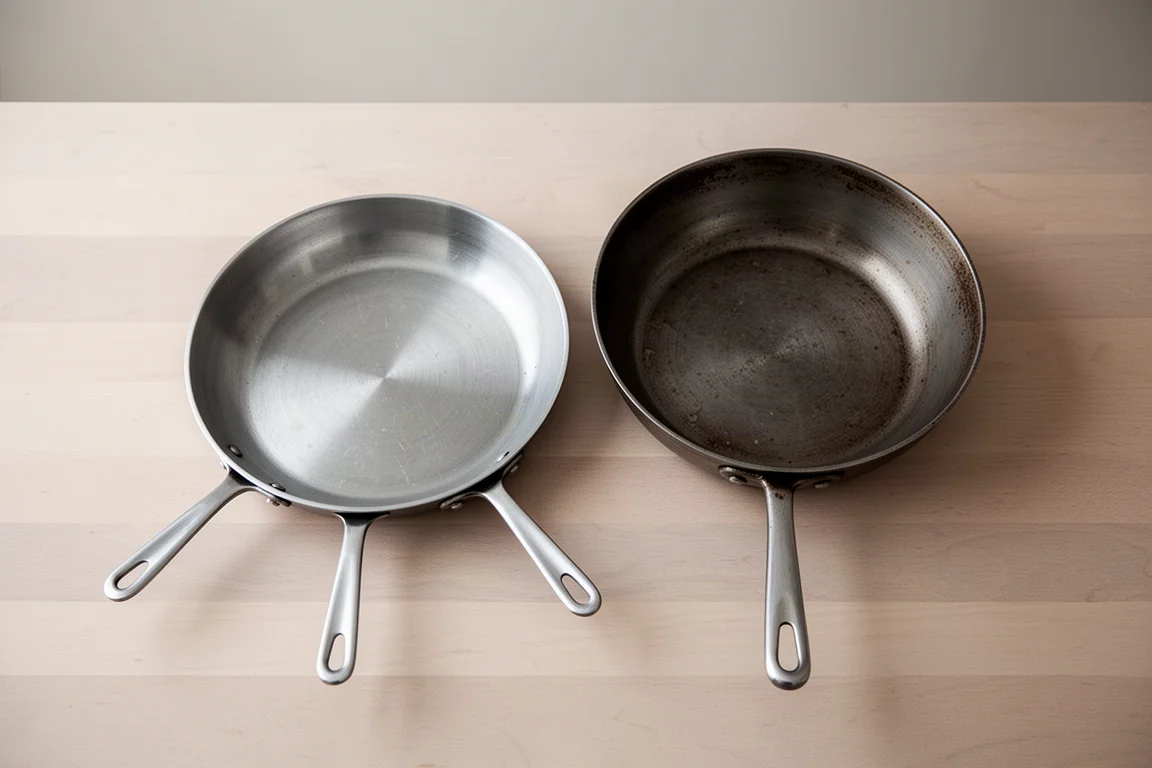
It costs a bit more than Misen’s preseasoned skillet, around $112 when we last checked, but not dramatically so. For cooks who found traditional carbon steel too heavy or too sluggish, this is the pan most likely to convert them.
Made In Carbon Steel Skillet: The Deeper Option
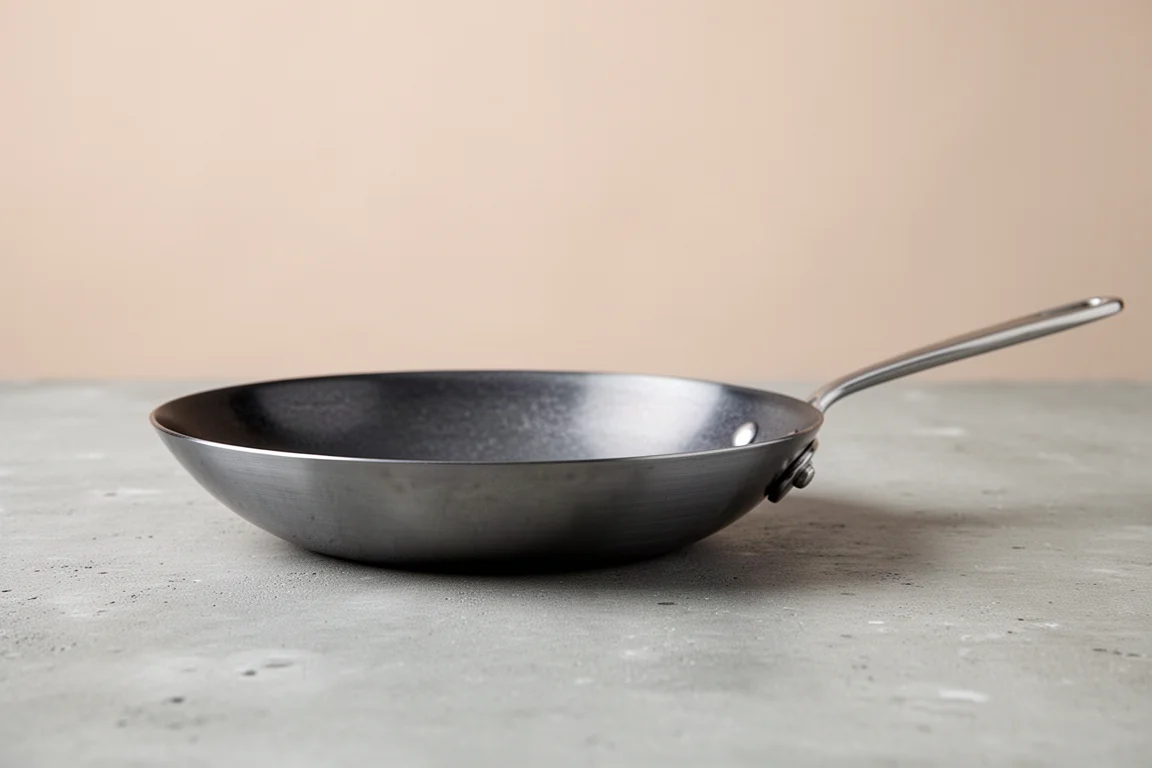
Where the two previous pans are shallow omelette-style designs, Made In’s carbon steel skillet goes the other direction with noticeably taller walls. That makes it the better choice for braising-style work, sautéing larger volumes, and anything where you need working space and less splatter.
The extra depth means it is not the pan we would reach for first when making eggs, but it excels at exactly the jobs shallow pans handle poorly. Tossing cabbage for a stir fry, building a braise, or frying a bigger batch of anything all benefit from the taller walls and generous interior volume. It is a comfortable, reliable workhorse in the traditional carbon steel mold.
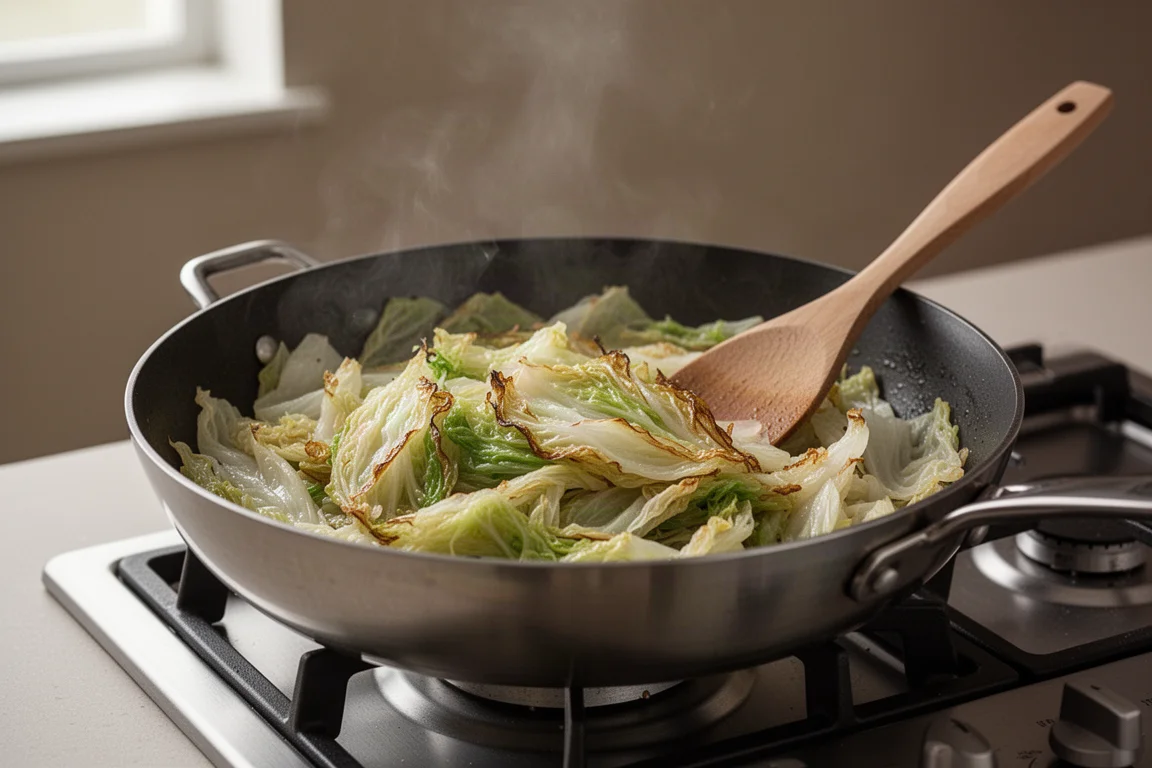
If you can only own one carbon steel pan and you cook a varied mix of dishes rather than specializing in eggs, this deeper shape is arguably the more versatile starting point.
Buying Advice
Choosing between these four comes down to your priorities. If you want a proven, low-drama egg pan with preseasoning done for you, the Misen preseasoned skillet is the easiest recommendation. If lightweight responsiveness matters most and you are willing to pay a little more, Strata is the standout. If you want one deeper pan for bigger, more varied jobs, Made In fits that role well. And if you are intrigued by corrosion-resistant, fast-heating hybrid construction and can live with the temperature limits and unproven long-term performance, the new Misen carbon nonstick pan is worth watching, though a little patience would not hurt.
One general note: treat marketing terms like “non-toxic,” “PFOA-free,” and “virtually indestructible” with skepticism. PFOA has been banned from cookware manufacturing for years, virtually everything is destructible, and the claims that actually help you compare pans are concrete ones: thickness, weight, temperature limits, and construction.
Conclusion
Carbon steel rewards a little knowledge with years of service, and each of these pans earns its place for a different cook. Match the shape and construction to what you cook most often, be realistic about what “nonstick” means on an uncoated pan, and any of these four can serve you well.
Further reading
Related Reviews
Cookware
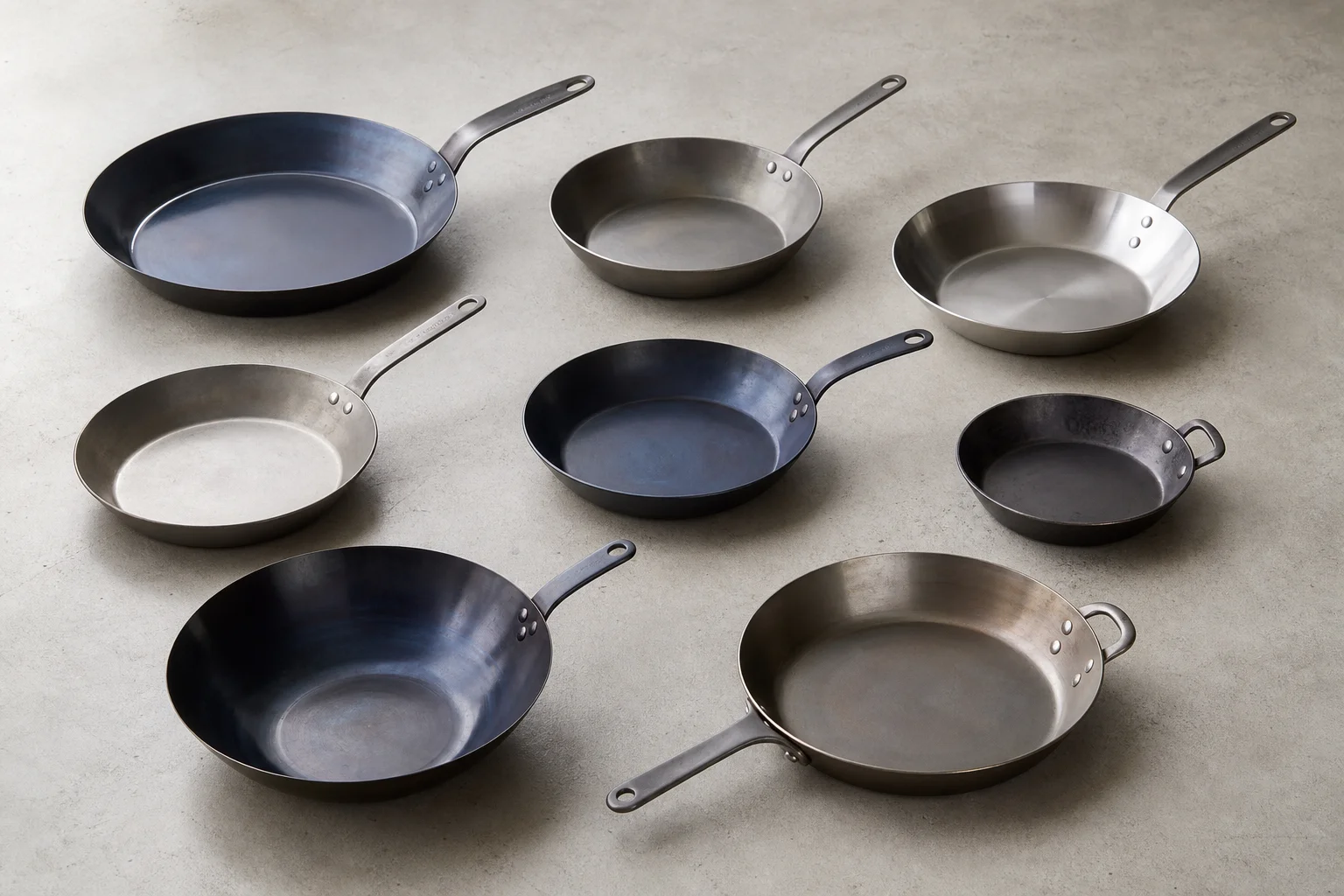
Best Carbon Steel Pans Tested: Which Brands Deliver Real Value
We tested eight popular carbon steel pans with controlled durability, heat, and cooking tests. Here's which ones perform best and which to avoid.
Cookware
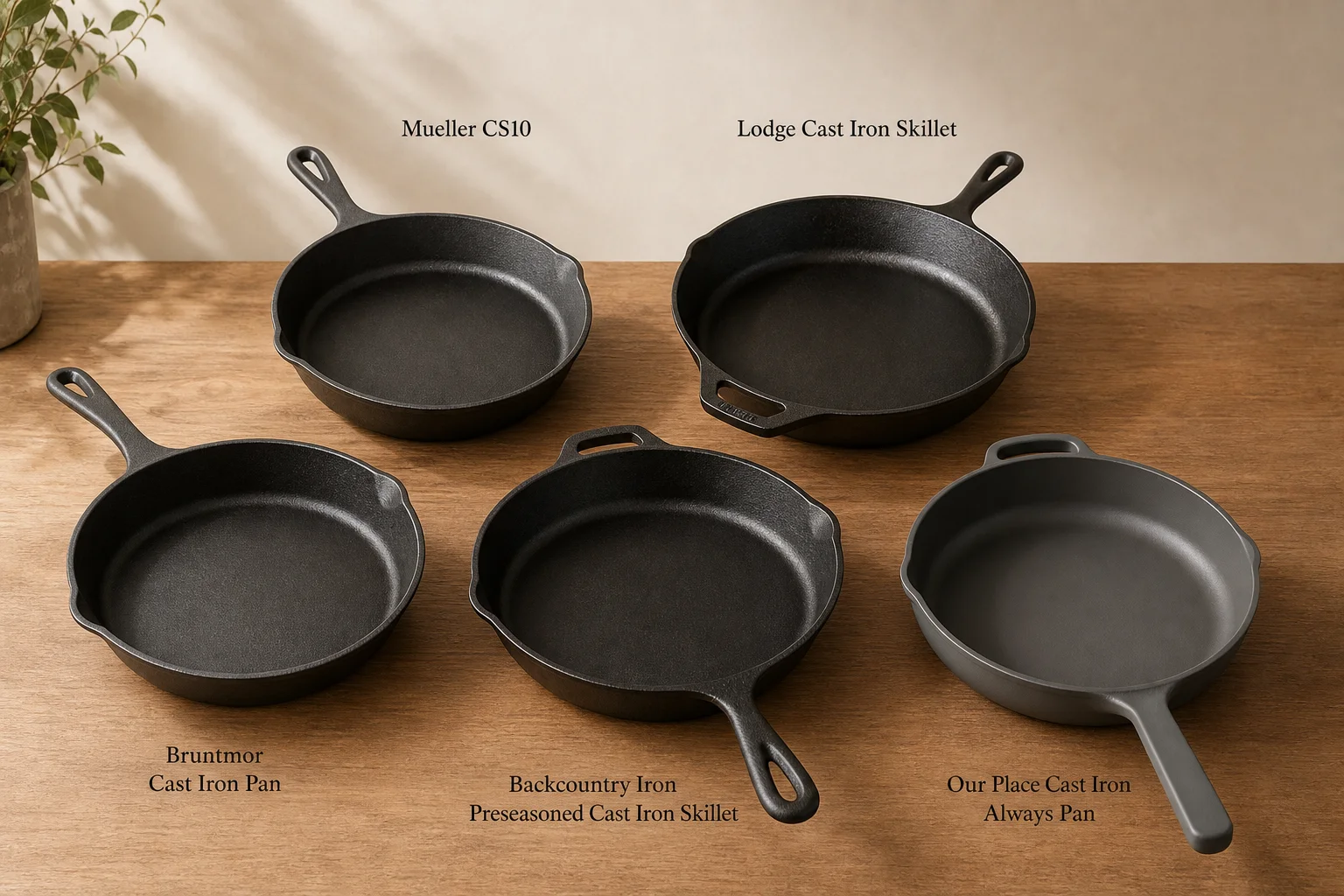
Best Cast Iron Pans 2026: Five Options from Budget to Premium
A practical breakdown of five cast iron skillets, from affordable Mueller to premium Our Place, with clear strengths and trade-offs for different cooking needs.
Cookware
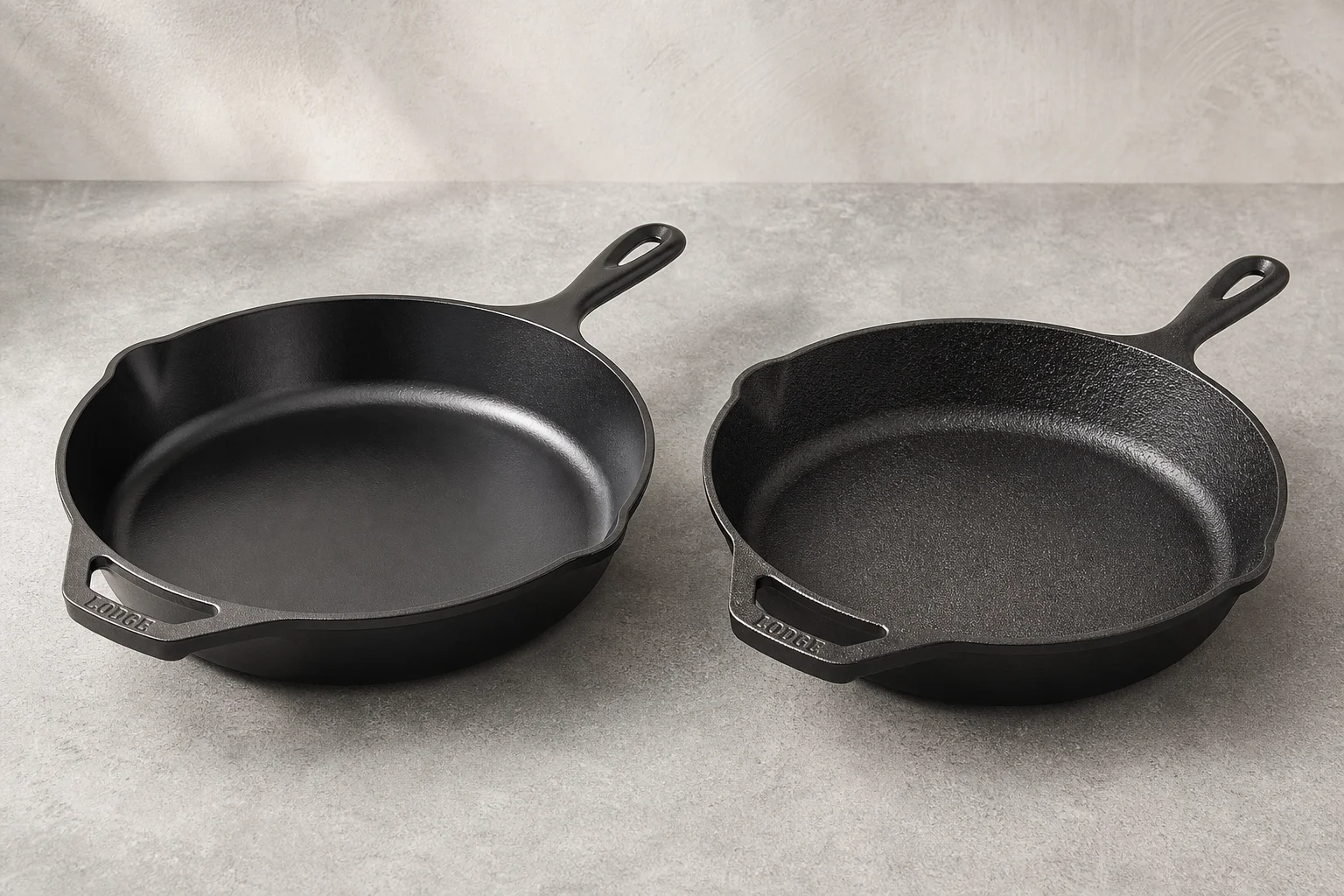
Best 12-Inch Cast Iron Skillets: Premium Craftsmanship vs. Reliable Budget Option
Two standout 12-inch cast iron skillets tested for heat retention, surface finish, and durability. One premium choice and one budget-friendly alternative that both deliver.