Camping Gear
Best Car Camping Luxury Gear: Three Upgrades That Make Camp More Comfortable
A portable power station, a propane fire pit, and a compact propane tank that make car camping warmer, easier, and far more comfortable.
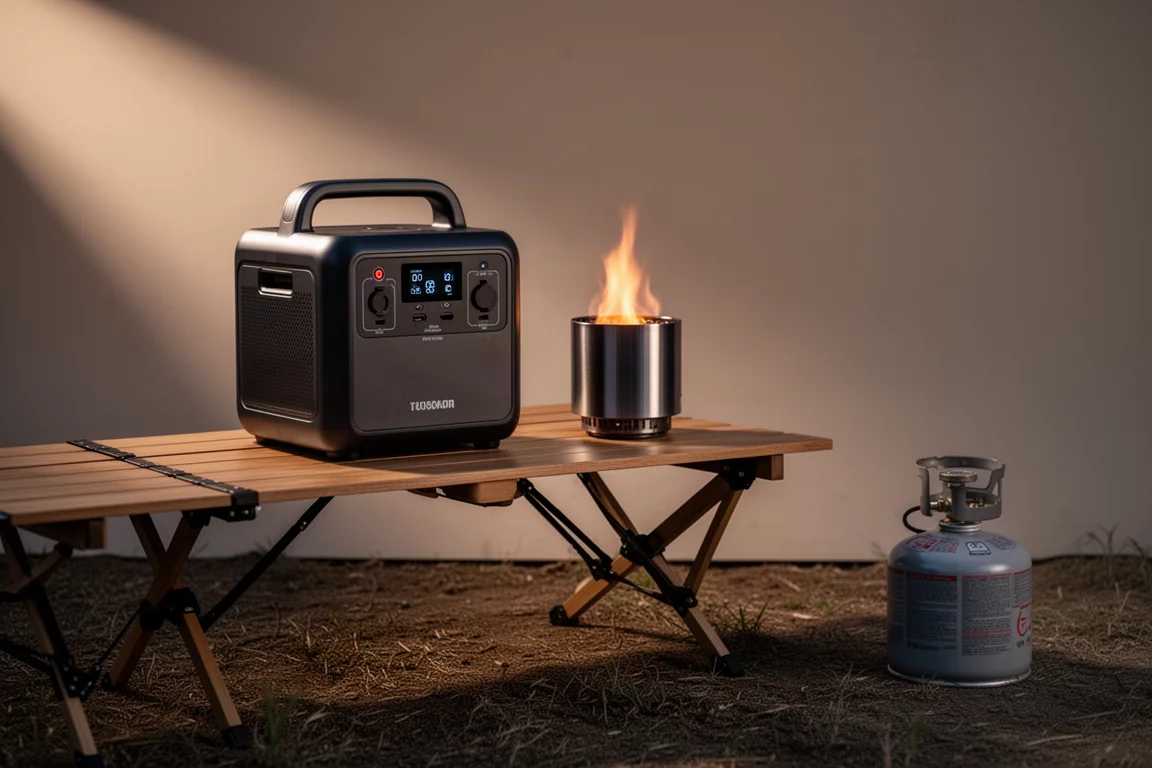
Introduction
Car camping rewards a different kind of packing list. Because the vehicle carries the weight, you can bring gear that exists purely to make camp more comfortable, especially in the hours when the temperature drops and everyone is waiting for the day to warm up again.
The three items in this guide share one practical trait: each removes a recurring annoyance instead of adding a novelty. A portable power station keeps a 12 V fridge running and devices charged without hookups. A propane fire pit delivers instant warmth and a clean flame when a wood fire is impractical. A compact propane tank keeps both of them running for a full weekend.
What to Look For in Car Camping Gear
Four criteria separate gear that earns its place in the vehicle from gear that stays in the garage.
Off-grid capability comes first. Anything that needs a hookup to be useful is limited to developed campgrounds. Multi-use design comes second, because an item that warms, cooks, or powers more than one thing justifies the space it takes. Footprint comes third: car camping offers room, but a crowded vehicle is its own kind of friction. Simplicity comes last and matters most, since the best camp gear is easy to operate in the dark, in the cold, and when you are tired.
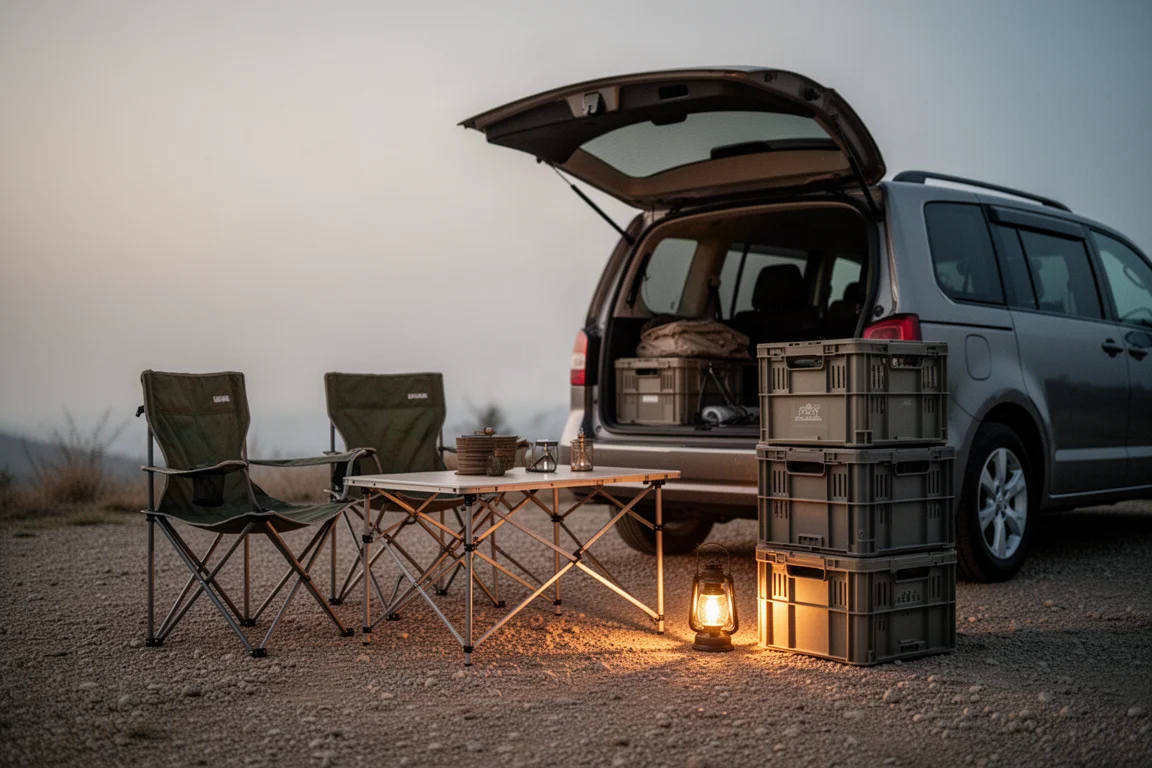
Those criteria matter more than specifications on paper. A device that switches on easily at six in the morning in cold weather will be used far more often than one that needs setup and troubleshooting.
Anker Solix C1000: The Power Hub of the Camp
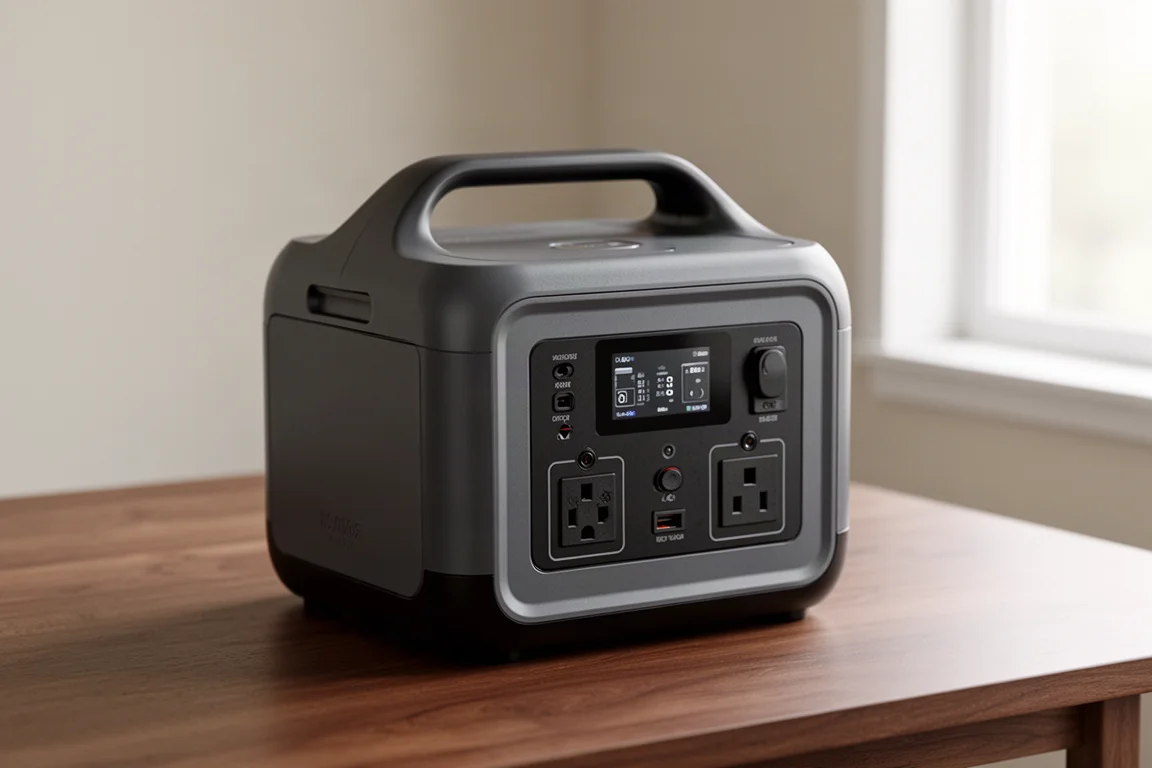
The Anker Solix C1000 is a portable power station with a 1,056 Wh capacity and an 1,800 W inverter, a combination that covers most of what a car camping trip actually needs to run. It offers 11 ports in total: six AC outlets at 110 V, four USB ports, and a 12 V car socket. The two USB-C ports output 100 W and 30 W, enough to charge a tablet, a camera, or an action camera, while the USB-A ports handle smaller accessories and microphones.
Having all of those ports live at the same time is the real advantage. A 12 V fridge can stay plugged into the car socket while tablets charge over USB-C and a camera battery tops up on another port, with no cable juggling and no choosing priorities. For anyone who has moved away from coolers, that 12 V socket is the detail that makes the unit worth carrying.
Recharging is handled two ways. From a wall outlet, the AC input brings the battery from zero to full in roughly 58 minutes, which makes it easy to top up before leaving home or at a campground with power. Off-grid, the unit accepts up to 600 W of solar input, and a 200 W panel is enough to hold the battery at a steady state while the fridge keeps cycling.
A light bar along the top adds three brightness modes, plus an SOS mode activated by pressing and holding the button. The unit stays compact for its capacity, and a companion app shows how much power is being drawn and how much runtime remains, which turns battery management into a quick glance rather than guesswork.
Ignik FireCan Deluxe: Warmth Without the Smoke
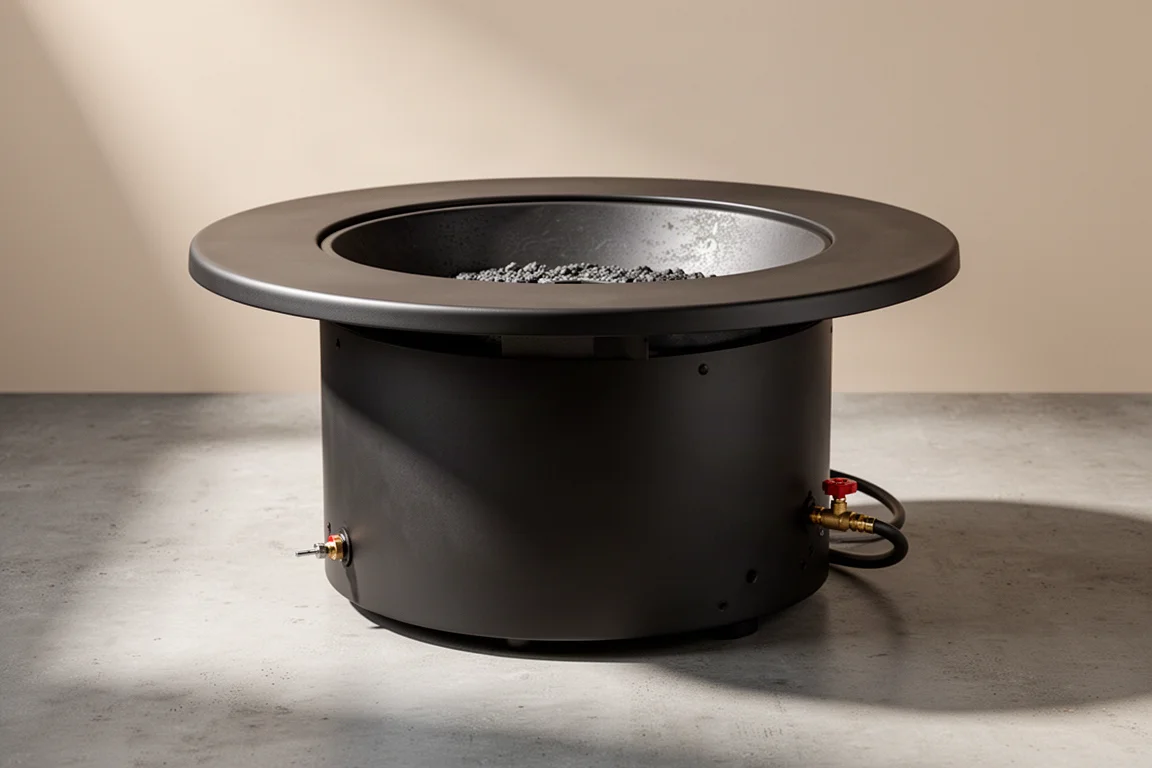
Cold mornings at camp usually mean waiting for the sun to clear a ridge, and that wait is far more pleasant with a heat source that starts instantly. The Ignik FireCan Deluxe is a propane fire pit built for exactly that: a switch-on, switch-off flame with no wood, no ash, and none of the smoke that follows you around for the rest of the day.
Because it runs on propane, it also stays usable when fire restrictions rule out wood burning. You get a clean flame you can shut off in seconds, which is the difference between a campfire that is a project and a heat source that works like an appliance.
The Deluxe version adds a grilling insert that drops inside the body, turning the unit into a compact cooking surface for hot dogs, chicken, or a small steak. That second use is what makes it worth the cargo space: warmth in the morning, a cooking surface in the evening, and s’mores in between.
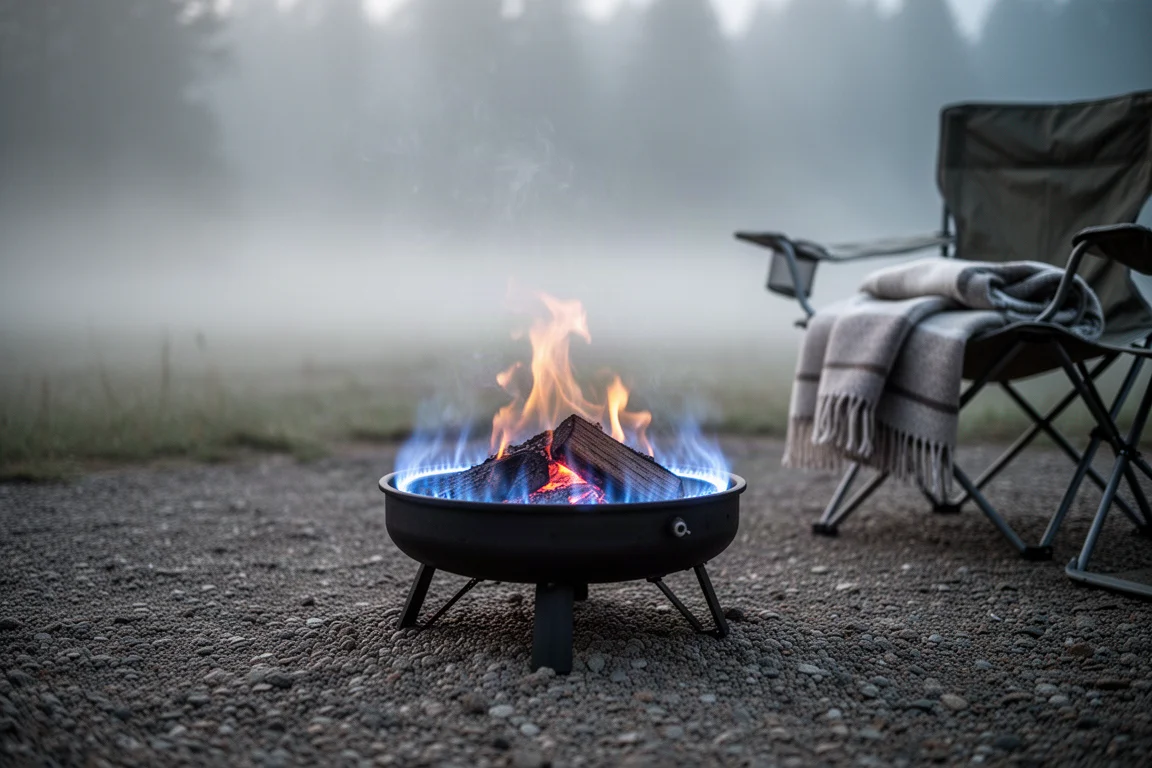
It is small enough to carry easily on a car camping trip and takes up little room once packed, which matters when the vehicle is already full.
Ignik Gas Growler 5 lb: Propane That Lasts the Weekend
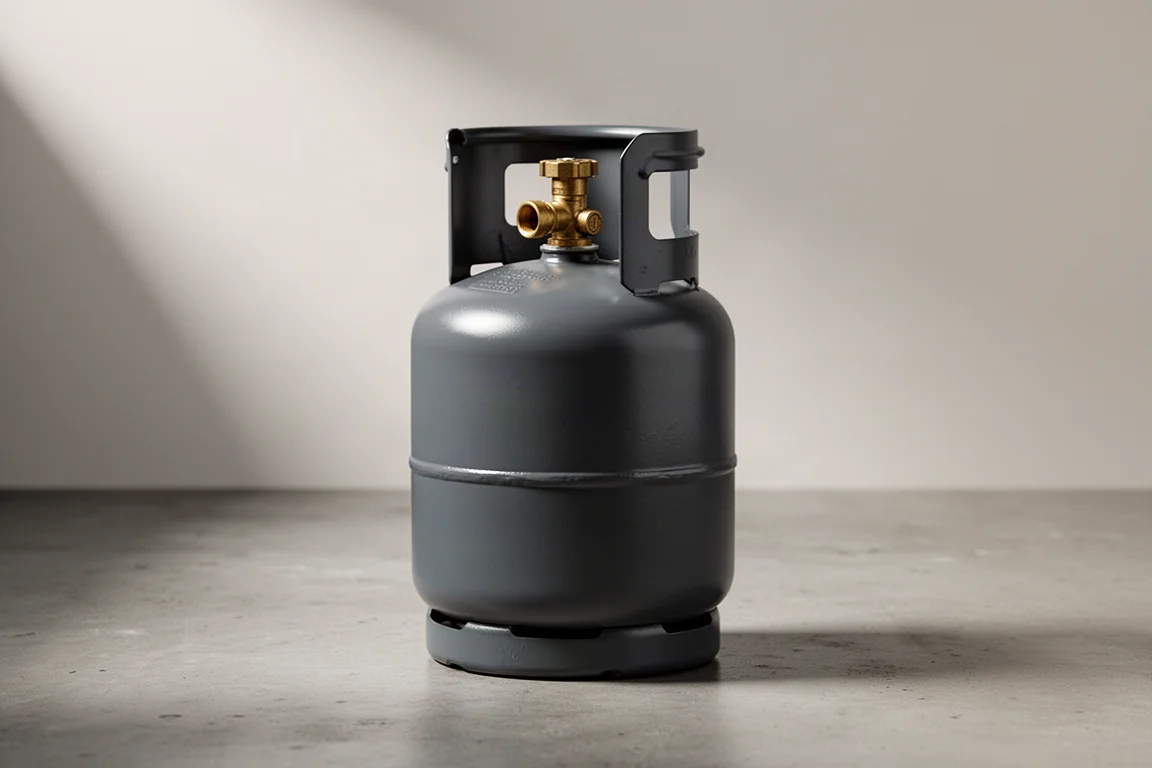
The Ignik Gas Growler is a 5 lb propane tank that pairs naturally with the fire pit. One fill lasts a very long time at camp and comfortably covers a weekend trip, so you are not rationing flame or hauling a large cylinder.
The same tank also feeds a two-burner propane stove, which means a single fuel source covers both cooking and warmth. That consolidation is the practical argument for it: fewer items to pack, one fuel type to manage, and no half-empty cylinders taking up space in the vehicle.
How These Three Work Together at Camp
Individually, each item solves one problem. Together, they cover an entire evening and morning routine.
The fire pit provides immediate heat while dinner is prepared on a propane stove drawing from the same tank. The power station keeps a 12 V fridge at a stable temperature, charges the tablets and cameras that come along, and can run a heated blanket in the tent when the night turns colder than expected. Monitoring draw through the app makes it easy to confirm the fridge is cycling normally and to decide whether it is time to set out a solar panel.
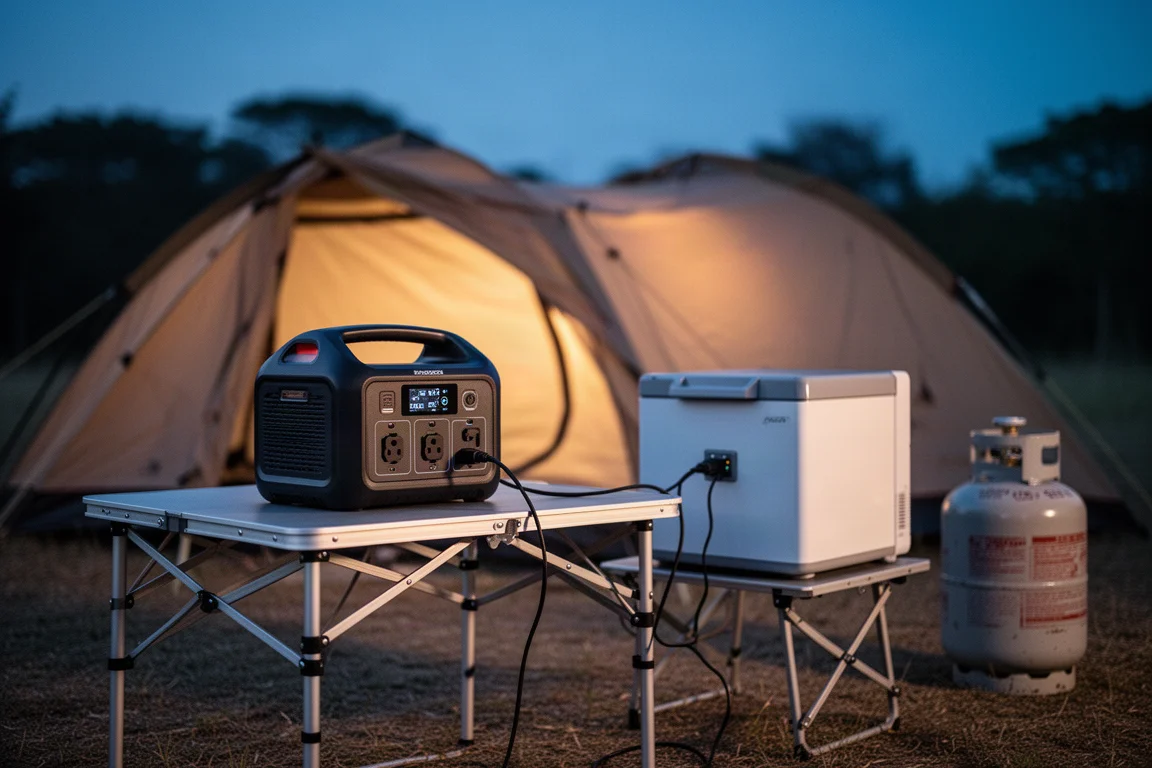
That combination is what makes these items feel like luxuries rather than gadgets. Nothing requires ice, matches, or a trip to the camp store, and the whole setup can be switched off and packed away in minutes when it is time to leave.
Practical Considerations Before You Buy
Think about how you camp before choosing between these items. If most of your trips involve a 12 V fridge, camera gear, or devices that need charging, the power station is the piece that changes the most. If your mornings are cold and your evenings revolve around a fire, the fire pit and propane tank deliver the bigger improvement.
A few practical points are worth weighing. A power station of this capacity is heavier than a small battery bank, so it belongs in a car camping kit rather than a backpack. Propane appliances need to be stored and transported upright, and it is worth checking local fire regulations before any trip, since rules vary by season and location. A solar panel is optional, but it is the difference between topping the battery up on longer trips and heading home early.
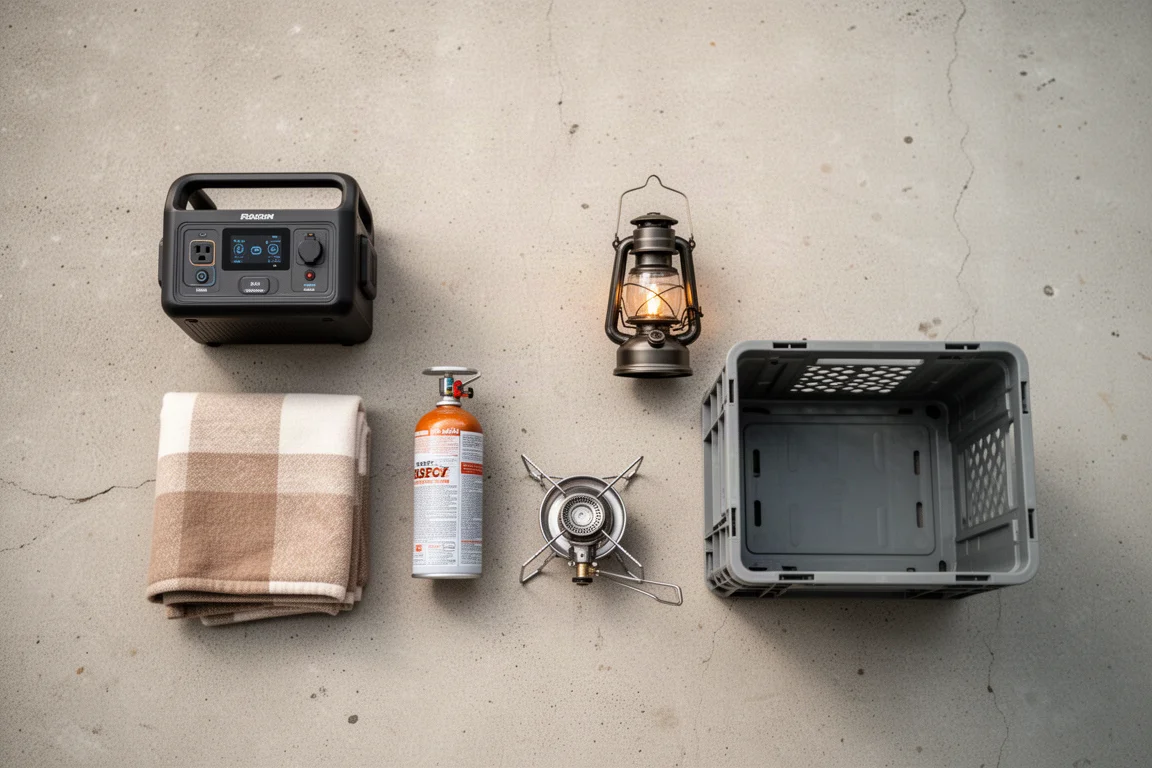
Storage is the last consideration. All three items are compact for what they do, yet they still take up room, and a dedicated crate or bin keeps them organized and ready to load.
Overall Buying Advice
If you are adding one item at a time, start with the piece that solves your most frequent frustration.
The Anker Solix C1000 suits campers who want to run a 12 V fridge, charge a family’s worth of devices, and stop relying on ice. The Ignik FireCan Deluxe suits anyone who wants warmth within minutes without smoke or firewood, and the grilling insert makes it a two-purpose tool. The Ignik Gas Growler 5 lb suits campers who already cook on propane and want one fuel source that covers the whole weekend.
A comfortable sleeping setup matters just as much as warmth and power, and insulation underneath you deserves as much attention as the gear above you. The three items here are the ones that change how a trip actually runs from the moment you park.
Conclusion
Luxury at camp is usually a matter of removing friction. Instant heat, steady refrigeration, and reliable power turn cold, dark evenings into the most enjoyable part of a trip rather than the part everyone endures. These three items do that with gear that is compact, straightforward to use, and built for the way car camping actually works.
Further reading
Related Reviews
Camping Gear
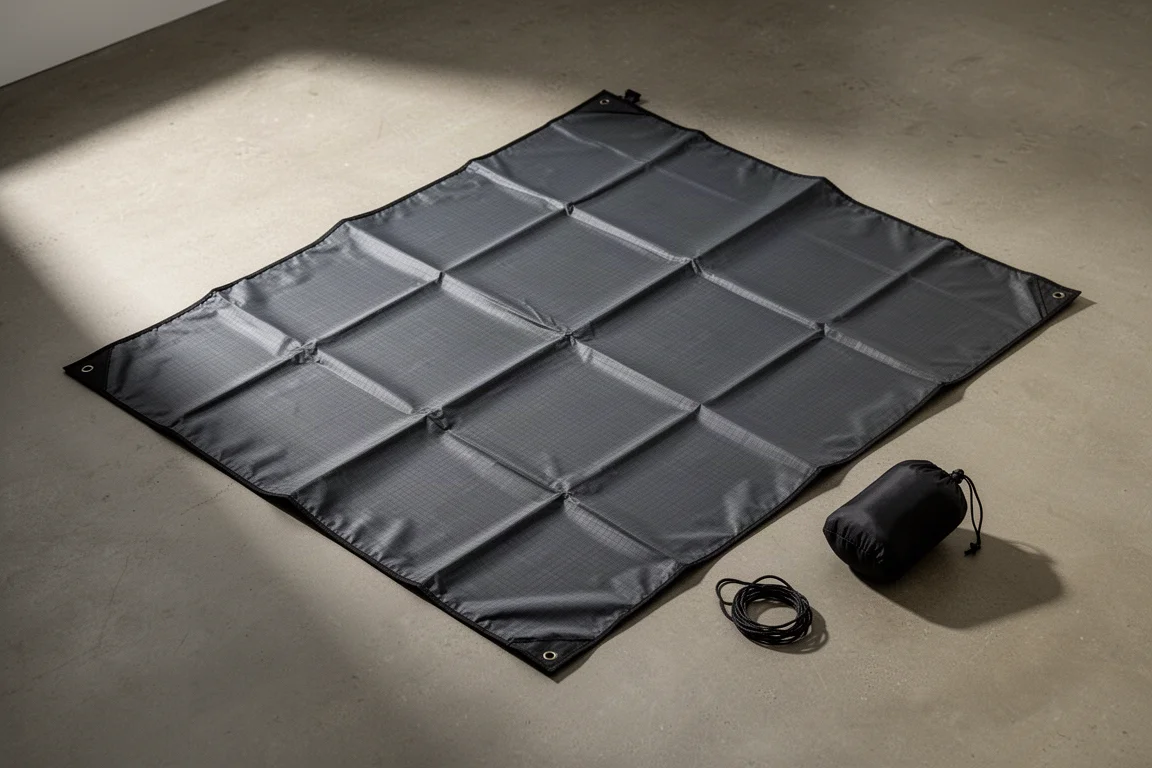
3FUL Ultralight Ground Sheet Review: A Two-Person Footprint Worth Packing
A 6.7 oz two-person ground sheet in ripstop silnylon, priced around $30. Here is what it protects, what it does not do, and who should pack it.
Camping Gear
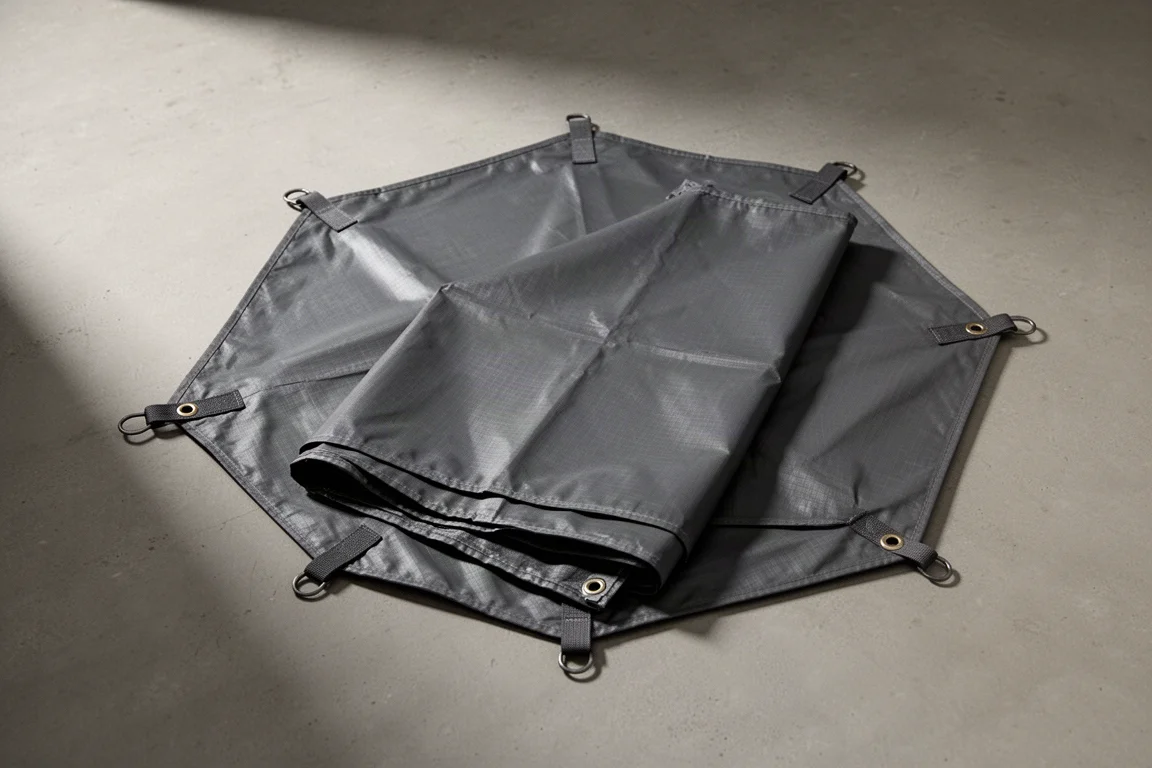
Backcountry Light Dual-Function Tarp and Floor Review: A Footprint First
A dual-purpose tent floor and tarp that keeps falling rain off you, but cannot block wind. Here is where it works and where it does not.
Camping Gear
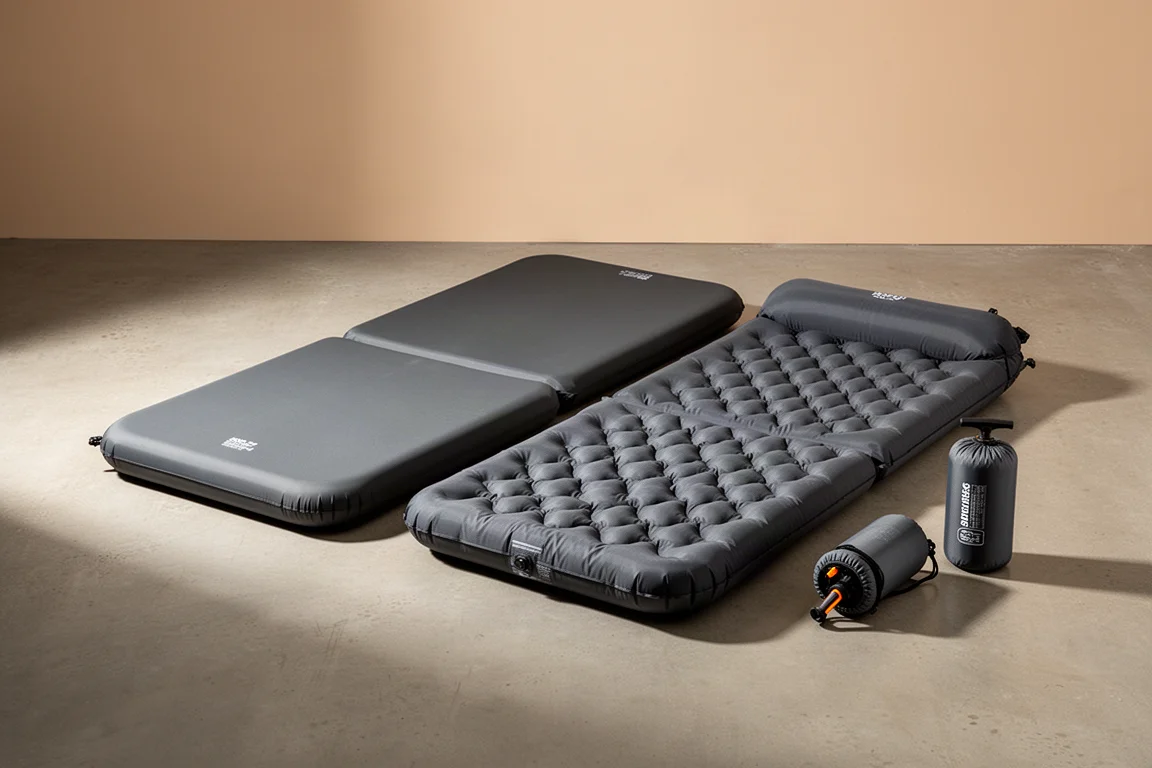
Best 2-Person Camping Mattresses for Couples: 10 Options Compared
A practical comparison of ten two-person camping mattresses, covering self-inflating pads, air pads and air mattresses for couples.