Kitchen
Best Can Openers: 10 Manual, Safety, and Electric Models Put to the Test
We tested 10 can openers across manual, safety, and electric categories, opening more than 70 cans to find which models are worth buying and which to avoid.
Introduction
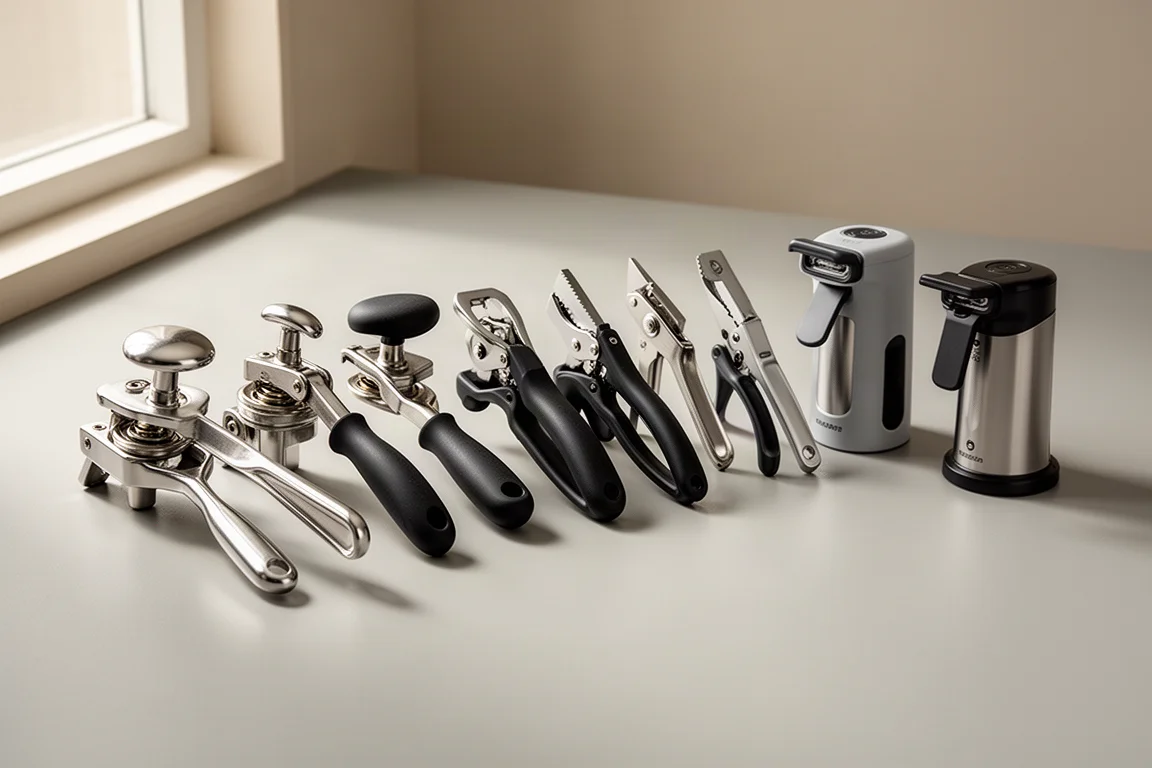
Are all can openers the same, or are some actually better than others? And what about safety can openers: are they really safer? And are electric ones worth it? To answer these questions, we tested 10 models across all types, ordered here from least expensive to most expensive.
How We Tested
With each opener, we opened small cans of tomato paste, medium cans of beans, and large cans of crushed tomatoes. We noted how easily each opener bites into the can, how smooth and effortless it is to turn the knob, how many cranks it takes to get all the way around, and whether it leaves behind a sharp or jagged lid.
We also paid attention to how messy the process was, how easy the lid was to remove, and how loud the electric models were. For durability, we dropped each opener twice from table height onto a concrete floor, once on the handle side and once on the blade side, then opened more cans to see if the drops affected performance. A second tester ran the exact same tests. All in, we opened more than 70 cans.
Traditional Manual Openers
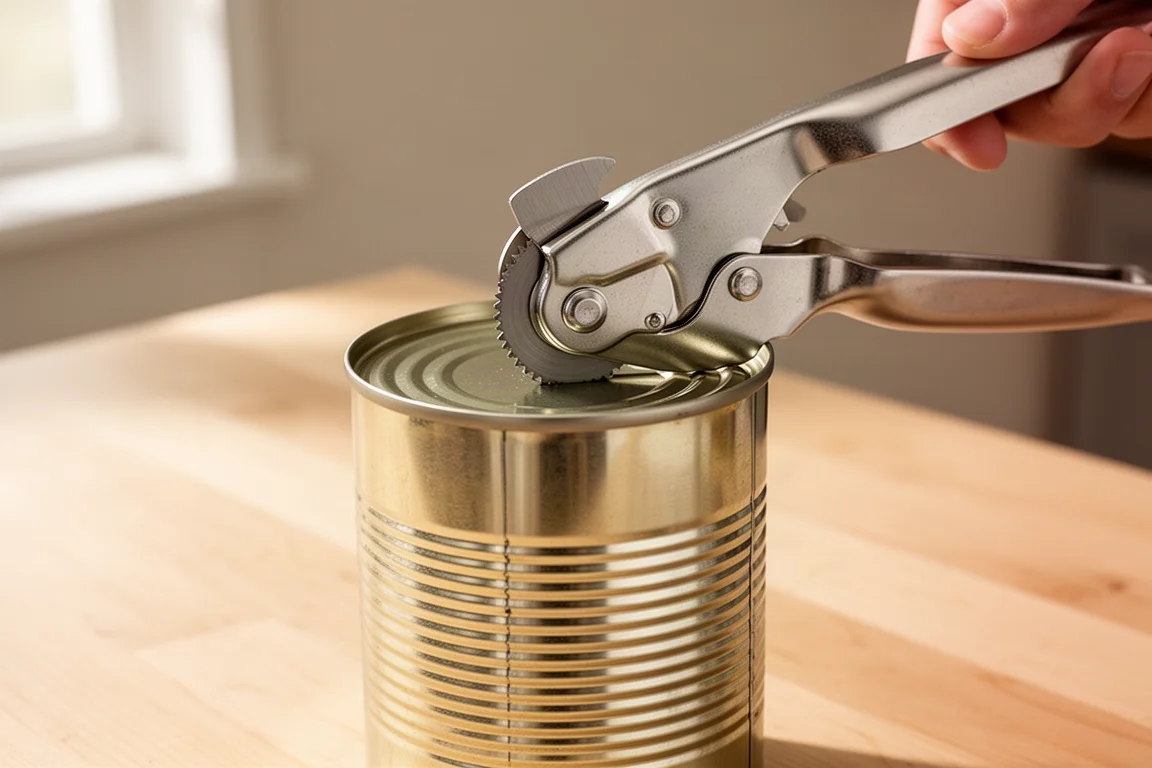
Traditional manual can openers are simple, familiar, and effective. They open cans quickly with relatively little effort, but you have to keep squeezing the handles while you turn, and they always leave behind a sharp, jagged lid that drops into the can.
EZ-DUZ-IT Can Opener
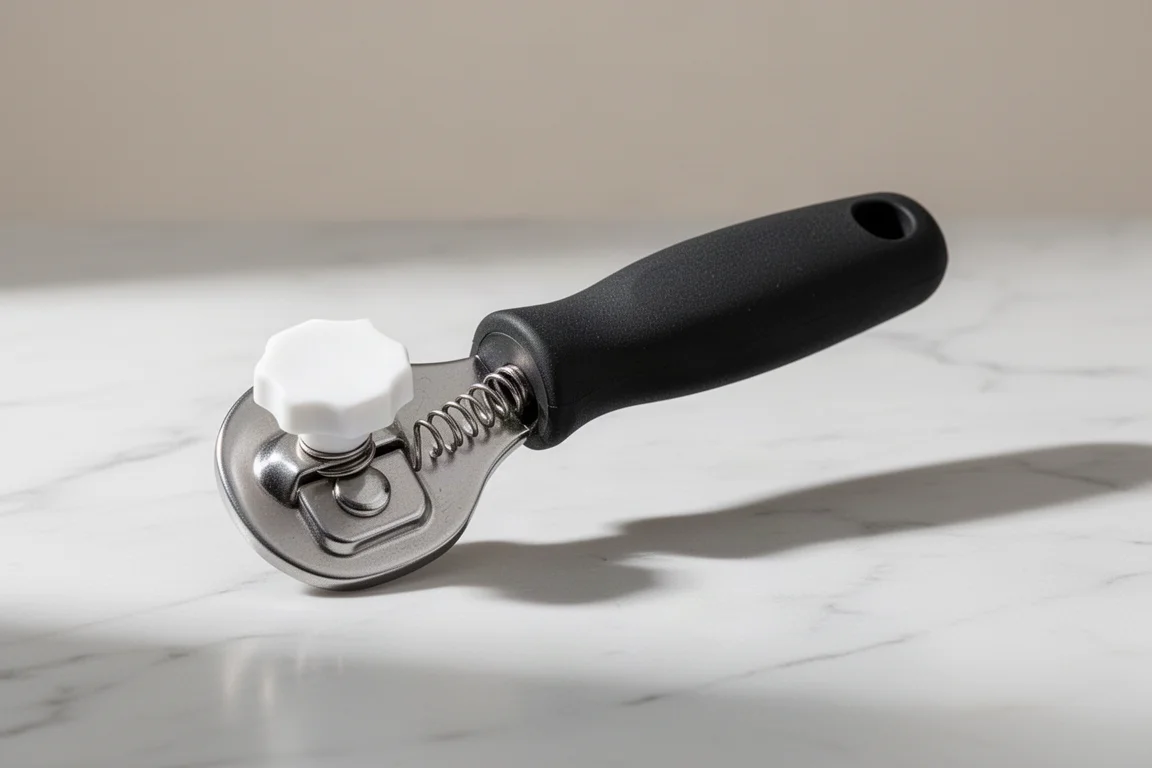
EZ-DUZ-IT is made in the USA and has been ranked the best overall can opener by The New York Times and runner-up by America’s Test Kitchen. The large metal knob provides good leverage and turns with minimal effort. It is noticeably heavier than the other manual openers tested, which gives it a more durable feel. It takes about 10 cranks to open a medium can, on par with other traditional openers, and there was no damage from the drop tests.
On the negative side, the handles rattle a bit and the knob is not as smooth as some of the others. Because it cuts from the top, it leaves behind a sharp, jagged edge, and the lid drops into the can.
OXO Lock & Go Can Opener
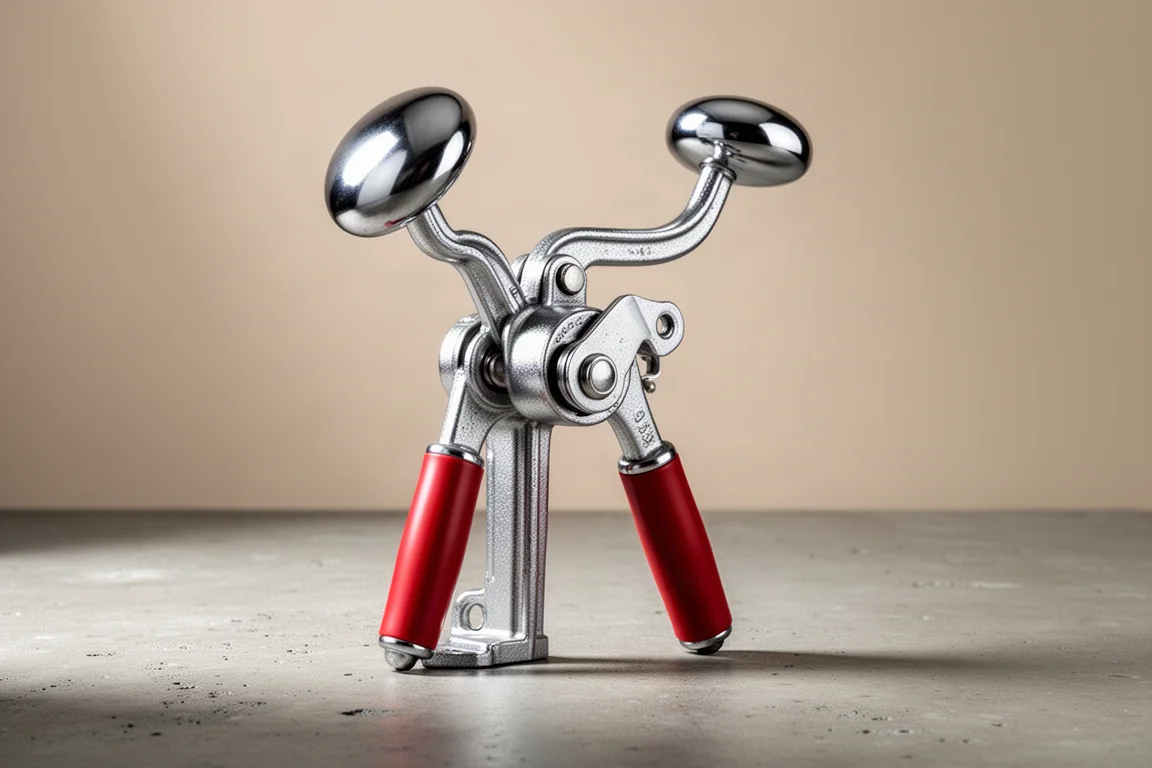
The OXO Lock & Go is a manual can opener with a locking mechanism that clamps onto the can so you do not have to keep squeezing while you turn. It also has a small magnet that lifts the lid off once cutting is done, which is a nice touch. When locked in properly, it turns smoothly and requires very little effort.
But there is one big problem with the locking feature. More than once, it popped off the can mid-turn and had to be reattached. It happened with both testers, and it is the most common complaint in online reviews as well. Once cutting, it performs fine and survived the drop test, but the main selling point is also its biggest flaw, and it is the one traditional opener we would avoid.
KitchenAid Classic Can Opener
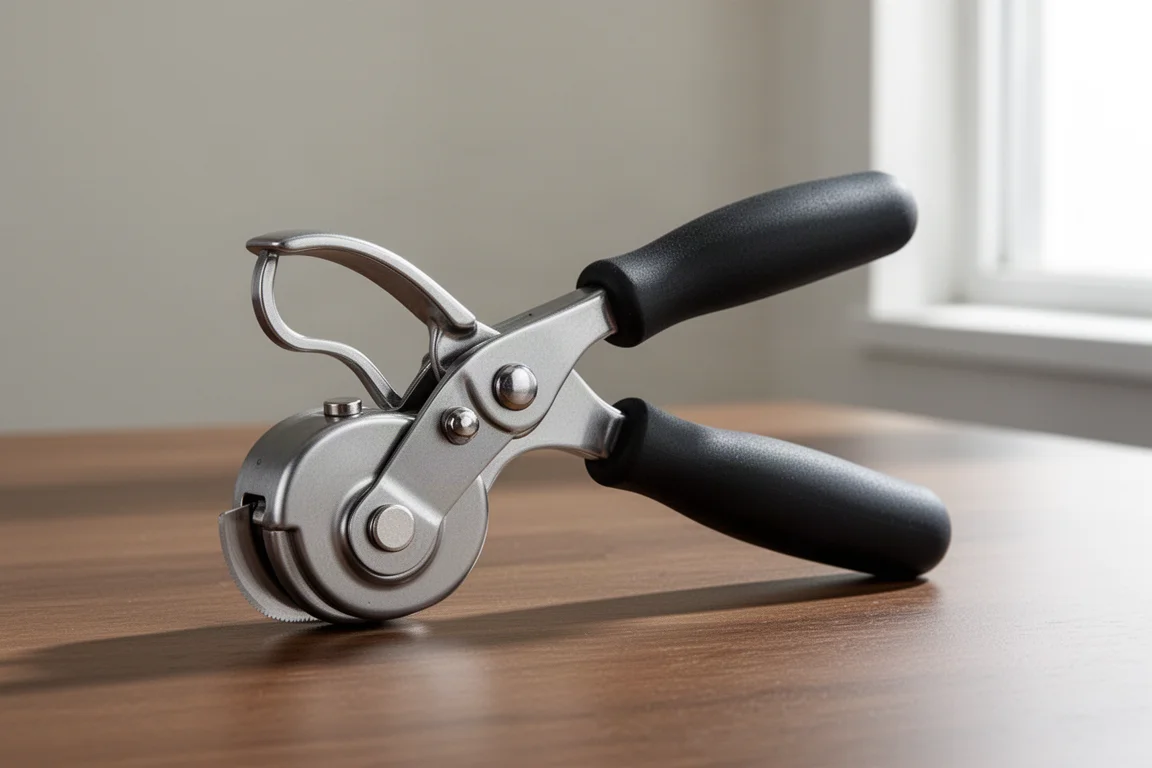
The KitchenAid Classic has rounded handles and a smooth, easy-turning knob. It feels smoother than the EZ-DUZ-IT and there is no rattling. The handles do not open very wide, so lining it up on a can can feel tight at first, but once attached it bites in easily. Like the EZ-DUZ-IT, it cuts from the top, which results in a sharp lid.
The plastic knob feels a little cheaper than metal ones, but it did not break and worked fine after being dropped on both sides. One long-term note: the gears will rust if you leave it wet, which is true of most stainless steel can openers. Drying them completely after washing is the only real prevention.
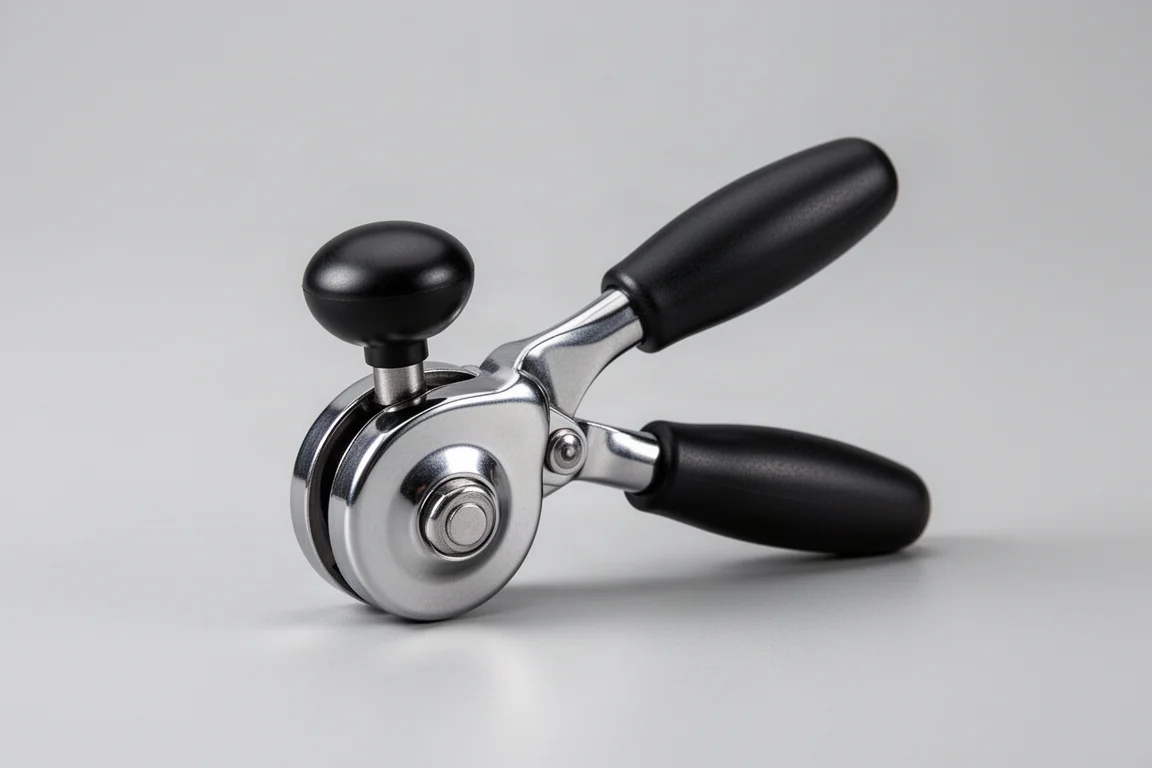
OXO Soft-Handled Can Opener
The OXO Soft-Handled Can Opener has a classic design with the brand’s signature grippy handles. It is sturdy and well built with no looseness or rattling, and it has been named best overall by both Serious Eats and America’s Test Kitchen. After testing, it is easy to see why: it bites in cleanly, cranks smoothly through the can, and the handle is comfortable. After dropping it twice onto concrete, it showed no damage and worked exactly the same.
The one complaint is the same as with the other traditional openers: it cuts from the top, so you get a sharp edge and the lid falls into the can.
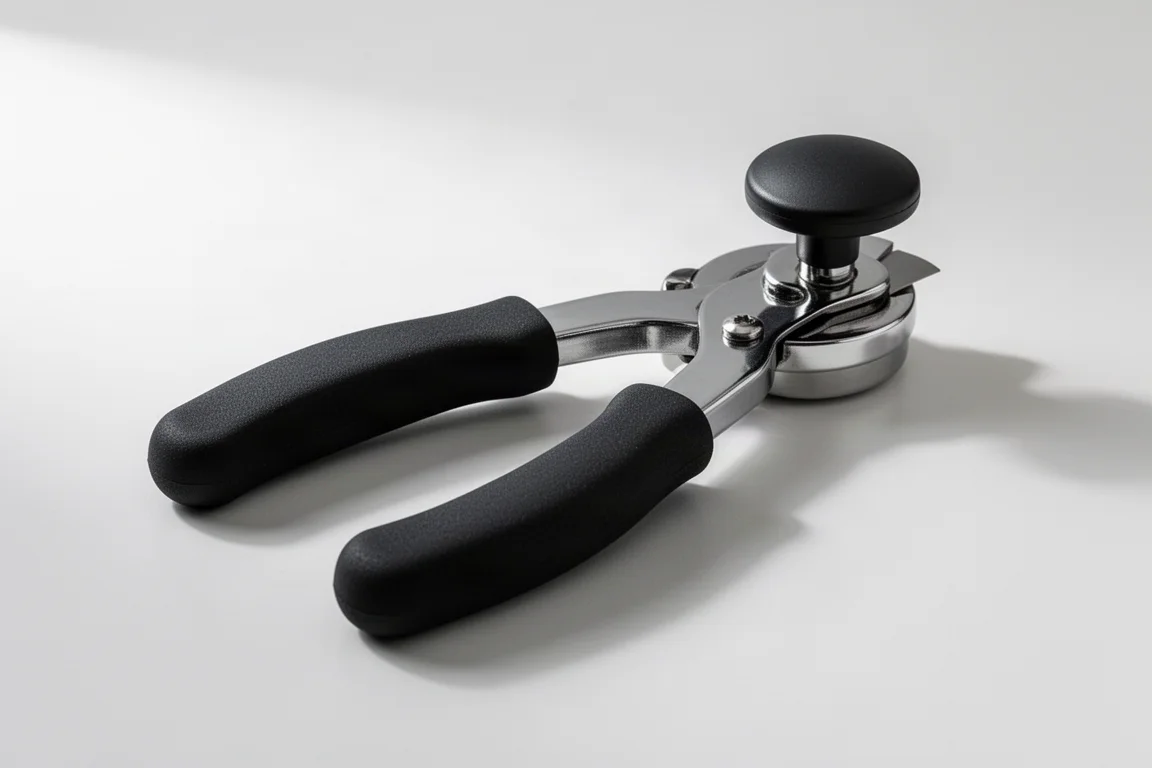
Electric Can Openers: Amazon Basics and Cuisinart Deluxe
Electric can openers take virtually no effort, but smaller cans can trip them up, they have more components that can break over time, and they are more expensive. If you go electric, it is a good idea to keep a manual one around as a backup.
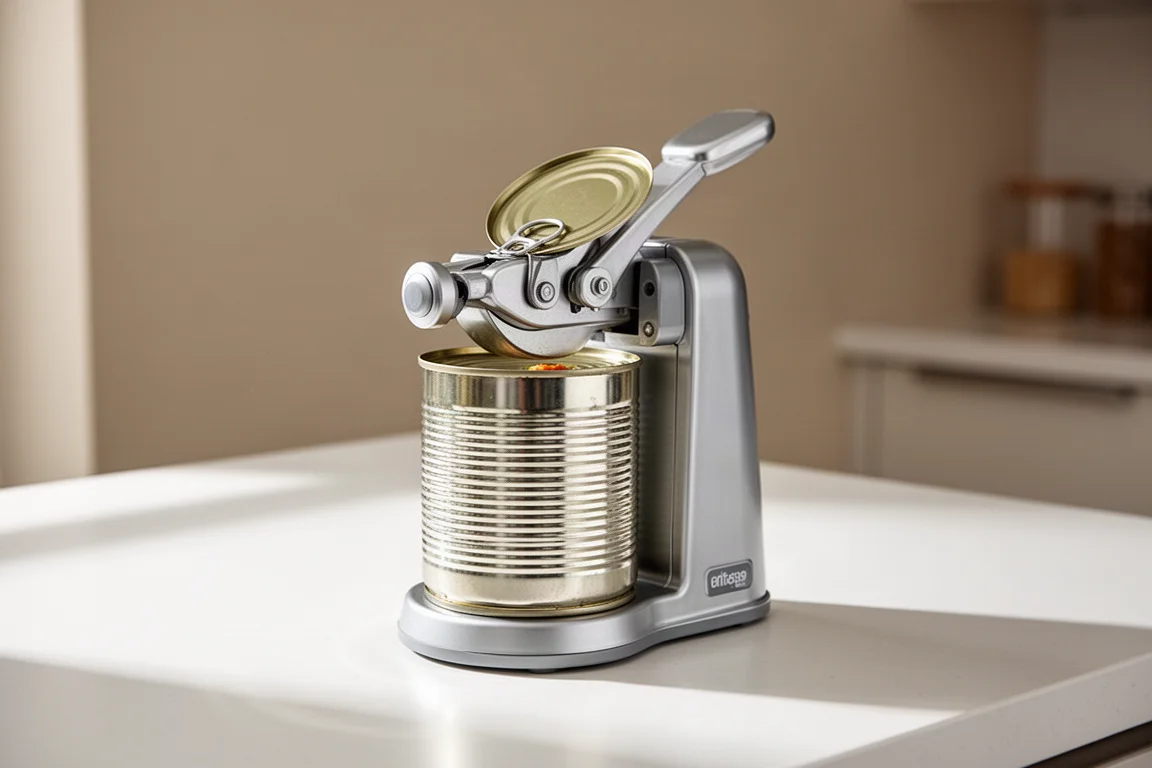
The Amazon Basics Electric Can Opener also includes a bottle opener and a knife sharpener. Press the lever down and the blade bites into the lid; when finished, you lift the lever and a magnet lifts the lid while the can drops away. It is easy to use, does not tip even with large 28-ounce cans, and was the second quietest of the four electric models at about 74 dB. It also has the longest cord of any opener tested at 36 inches. The cutting assembly pops off for cleaning, but the blade is fully exposed, so care is needed. Downside: it leaves behind a sharp, bent lid that drips when you remove the can, smaller cans can take a couple of tries to attach, and the rear cord storage requires stuffing the cord in and hoping it stays.
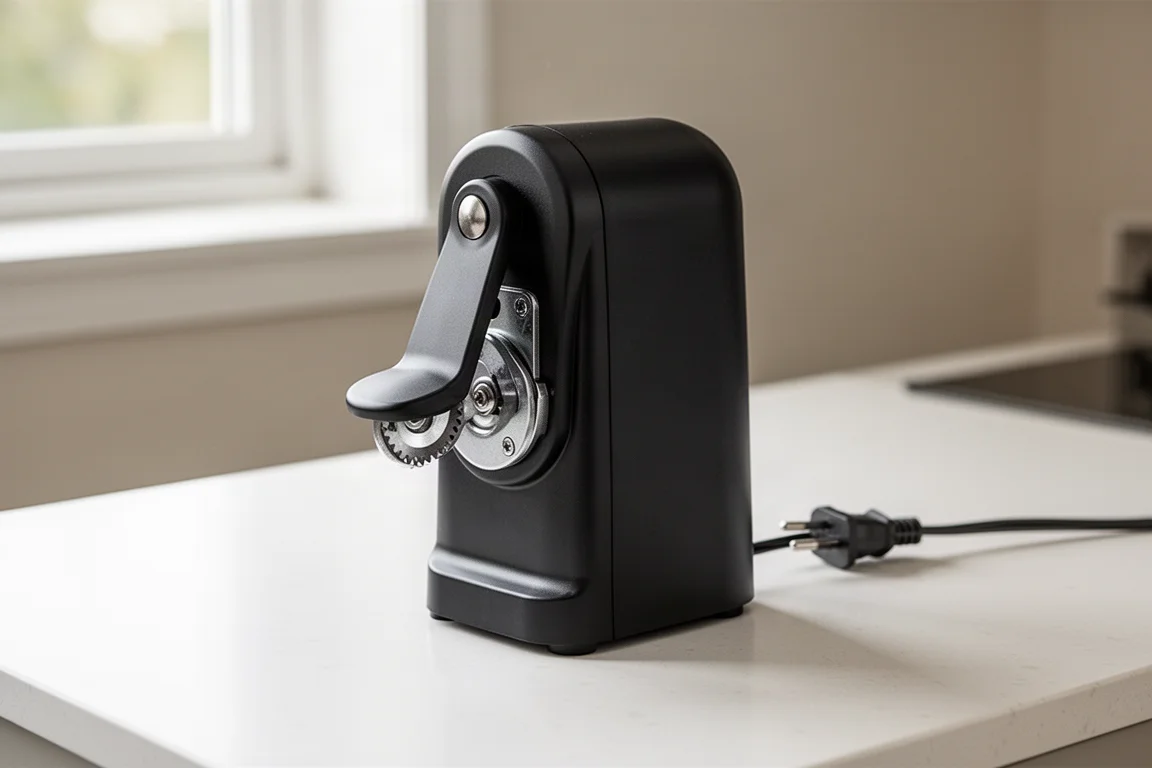
The Cuisinart Deluxe operates almost the same but omits the knife sharpener and bottle opener, has a shorter 26-inch cord, and is slightly quieter at about 69 dBA. One caution with both models: when lifting the lever after cutting, keep a firm grip on the can or it can spill, a lesson learned with a can of crushed tomatoes. Otherwise it is sturdy, easy to use, and has much neater cord storage than the Amazon Basics model.
Safety Can Openers: Kuhn Rikon and OXO Smooth Edge
Safety can openers solve the sharp lid problem completely, and you can put the lid back on to store leftovers, but they take more effort to crank, can be tricky to attach, and it is not always obvious when they have actually cut through.
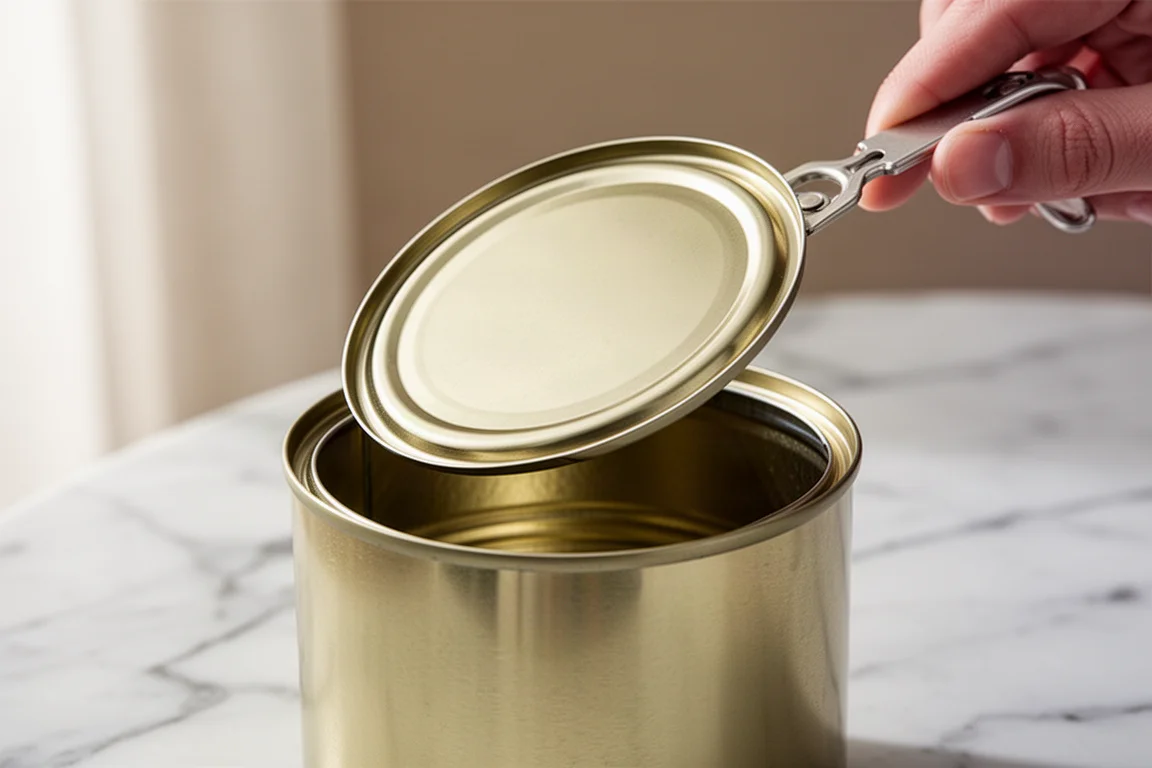
The Kuhn Rikon Safety Can Opener cuts around the outer edge of the lid instead of through the top, so there are no sharp edges and the lid can be placed back on the can. The trade-off is that it feels different: since it cuts from the side rather than puncturing down, there is less feedback when it first engages, and it takes about 13 turns to get around a medium can, three more than a traditional opener, with more cranking effort. The lid does not pop off on its own; you peel it back with a small grabber, and the opener sometimes feels slightly sticky because it cuts through a harmless food-safe sealant, occasionally leaving thin glue strings. It takes a couple of tries to get used to, but it is precise, safe, and mess-free, and showed no damage after the drop test.
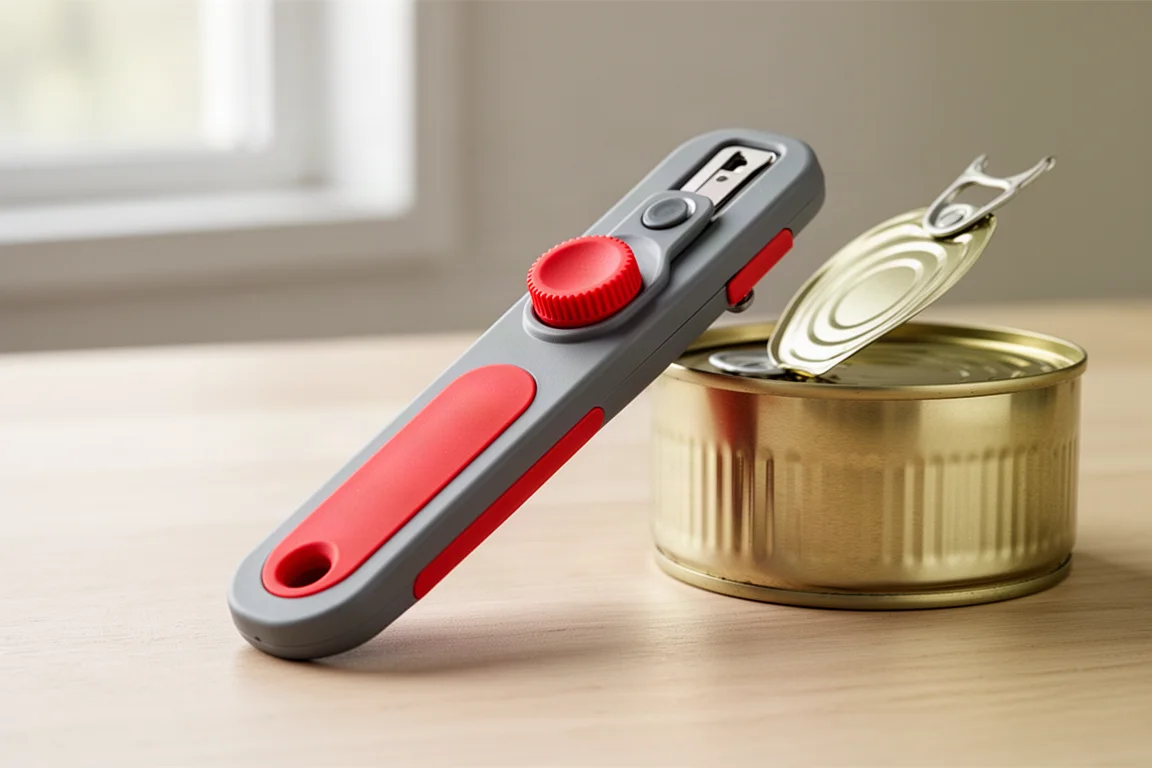
The OXO Smooth Edge works almost the same way, cutting along the side so there are no sharp lids, with the same lack of initial feedback and extra cranking effort. Three differences set it apart from the Kuhn Rikon: it cuts slightly lower on the rim, making the lid edge even duller; the handle has a soft, grippy texture that feels more secure; and the pincher that grabs the lid is sturdier and springy, giving clearer feedback. It held up perfectly in the drop test and consistently made the smoothest, safest cuts of any manual opener tested.
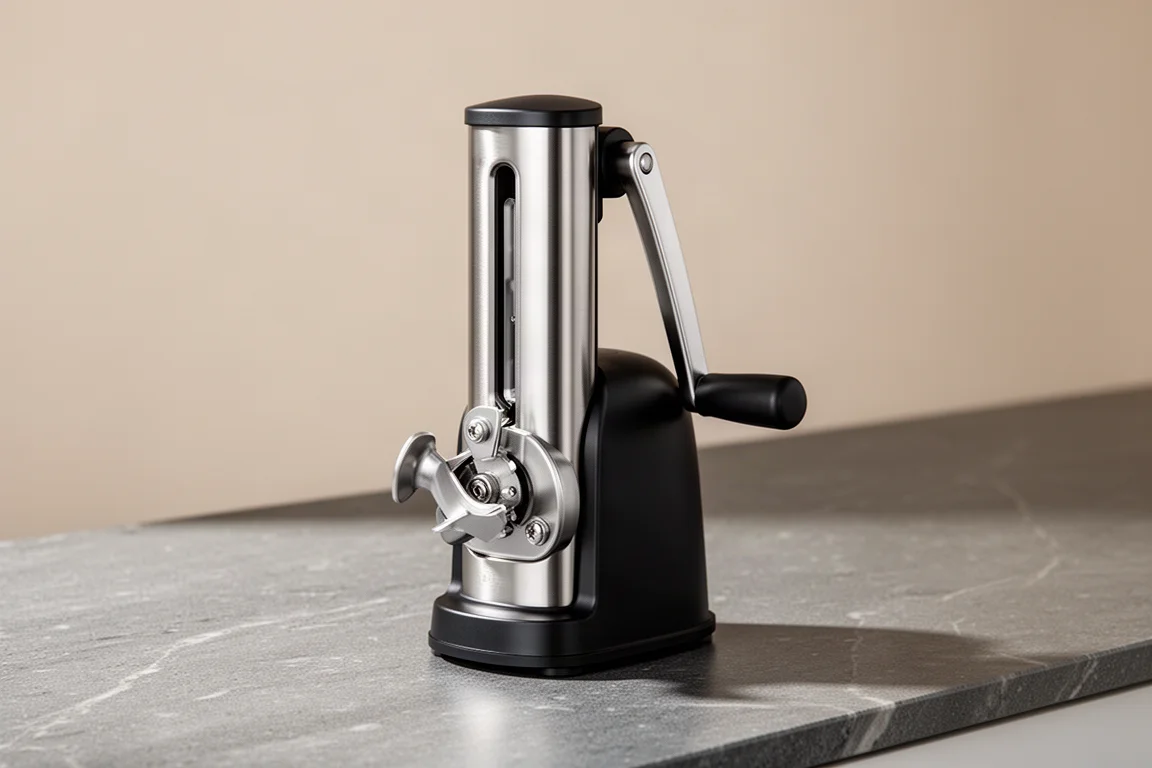
Kitchen Mama Electric Can Opener
The Kitchen Mama is a handheld electric can opener that runs on four AA batteries. You place it on top of the can, press a button, and it spins around the rim; you have to press the button again to stop it, or it keeps spinning. It cuts from the side, so the lid is not sharp and can be placed back on the can. It is cordless, compact, fits easily in a drawer, and the blade never touches food, so there is nothing to clean.
The downsides are significant. It is incredibly slow, taking about 30 seconds to open a medium can while the other electric models finished in 8. It was also the second loudest of the four electric models. Because it spins on top, dented or small cans can cause problems: it worked fine for one tester, but the other could not get it to open a small can of tomato paste after multiple attempts. There are also many reports of units breaking or becoming inconsistent after a few months, which is a real risk with a small battery-powered kitchen gadget like this.
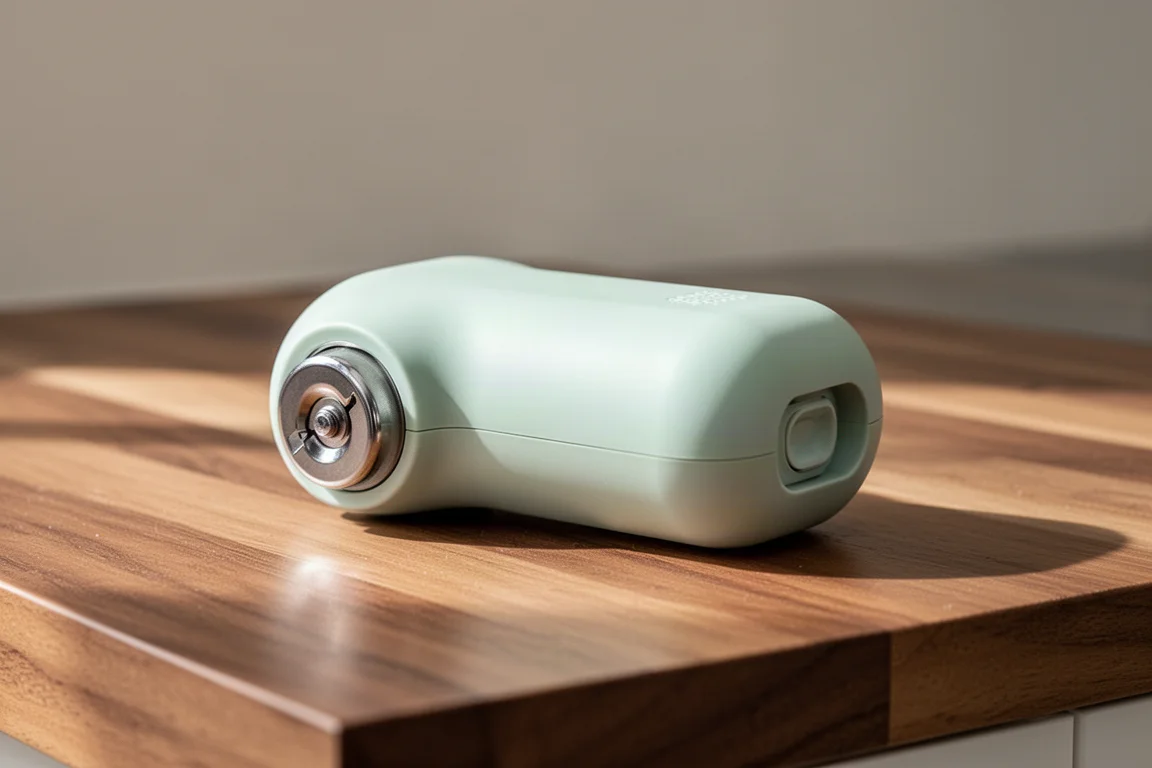
Hamilton Beach Smooth Touch: The Best Electric Pick
The Hamilton Beach Smooth Touch Electric Can Opener is sleek-looking and simple to use: start with the lever up, place the can underneath, press down to lock it in place, then press a little more to start cutting. Let go to stop and lift the lever to release the can. It cuts the side of the lid, so the edges are completely smooth with no sharp spots, and the lid stays attached rather than being lifted off by a magnet, which prevents drips and keeps things cleaner.
The downsides: it was the loudest electric opener tested at about 83 dBA and the heaviest at 3 pounds. One tester had no issues with small cans, but the other tried several times and, although it attached and spun normally, it did not actually cut through the lid.

Buying Advice
The first decision is which type makes the most sense for you. Traditional manual openers are quick and effective but leave sharp lids and require constant squeezing. Safety openers remove the sharp lid entirely and let you reuse the lid for leftovers, at the cost of extra cranking effort and a learning curve. Electric openers take virtually no effort but struggle with small cans, have more parts that can fail, and cost more; keep a manual opener as a backup.
In the traditional manual category, the favorite is the OXO Soft-Handled: comfortable grippy handle, clean bite, smooth turning, and a solid feel. That said, the differences between the top traditional openers were minimal. The only one to definitely avoid is the OXO Lock & Go, whose locking mechanism frequently pops off mid-turn.
If sharp lids are a dealbreaker, the OXO Smooth Edge is the best safety opener, with the smoothest lid edge plus a soft-grip handle and sturdy pincher that make it slightly better than the Kuhn Rikon. In the electric category, the favorite is the Hamilton Beach Smooth Touch, which delivers a smooth, safe lid without the extra manual effort. Cuisinart and Amazon Basics are decent alternatives, but the Kitchen Mama is not recommended: it is slow and loud, struggles with smaller cans, and has many reports of units breaking after a few months.
Conclusion
A good can opener does not need to be complicated. The OXO Soft-Handled is the strongest traditional pick, the OXO Smooth Edge wins for smooth, safe lids, and the Hamilton Beach Smooth Touch is the best electric option. Match the type to your priorities and you will not go wrong.
Further reading
Related Reviews
Kitchen
Best Nonstick Frying Pans Compared: 11 Skillets From $16 to $185, Tested
Eleven nonstick frying pans go head to head in pancakes, eggs, heat distribution, thermal efficiency, and scratch resistance to find out whether a cheap pan can really compete with a premium one.
Kitchen
Vivor Stainless Steel Kitchen Sink Review: A Solid Drop-In Upgrade With One Weak Spot
An all-stainless single-basin drop-in sink with easy-clean rounded corners and a drain-sloped base, at a roughly $200 price point.
Kitchen
Best Bamboo Steamers: Two Tested Picks for Dumplings, Bao, and More
After hands-on steaming tests with dumplings and bao, two bamboo steamers stood out for build quality and staying in alignment.