Camping Gear
Best Camping Gear Upgrades: 11 Pieces That Change the Trip
Eleven camping upgrades across power, sleep and the camp kitchen, with the output figures, comfort details and trade-offs worth knowing before you buy.
Introduction
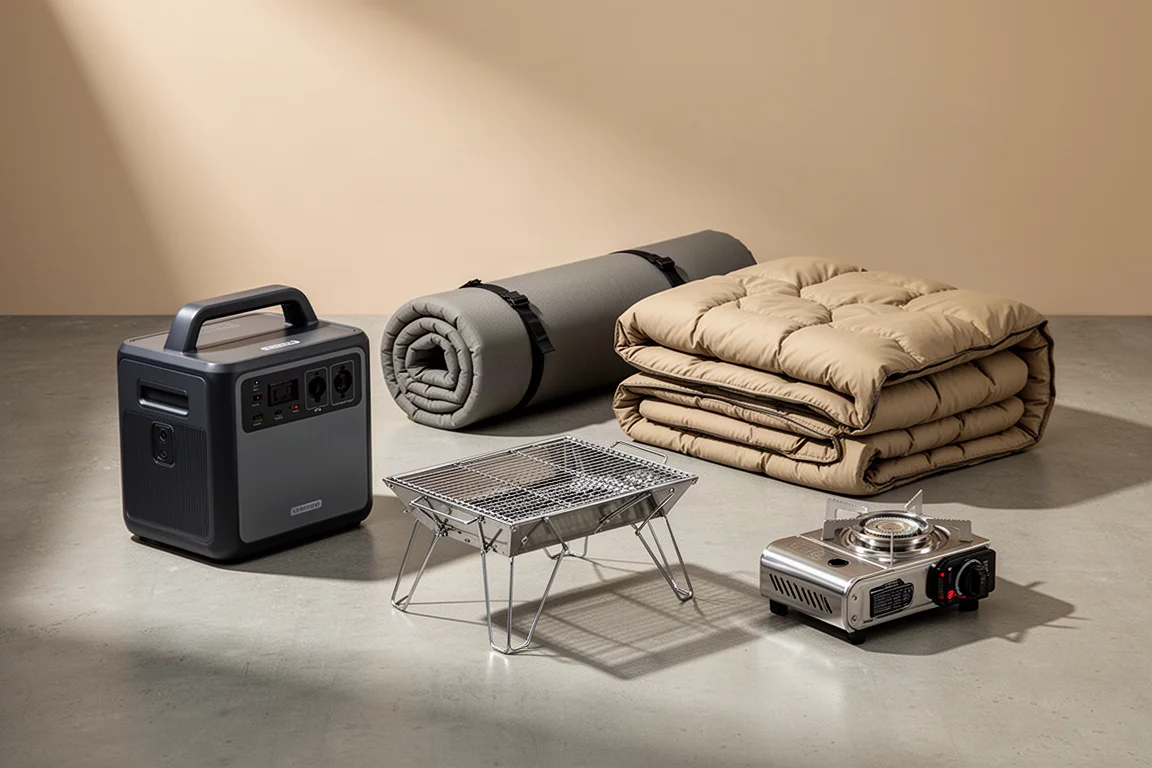
A camping trip is shaped by a handful of decisions: what powers your gear after dark, what you sleep on, and what you cook with. The eleven items below target exactly those three areas. Some are compact and inexpensive, a few take up real space in the vehicle, and several are genuine investments. What they share is a clear problem solved, whether that is running a fridge for three days without ice or sleeping as well in a tent as you do at home.
How to Prioritize a Camping Gear Upgrade
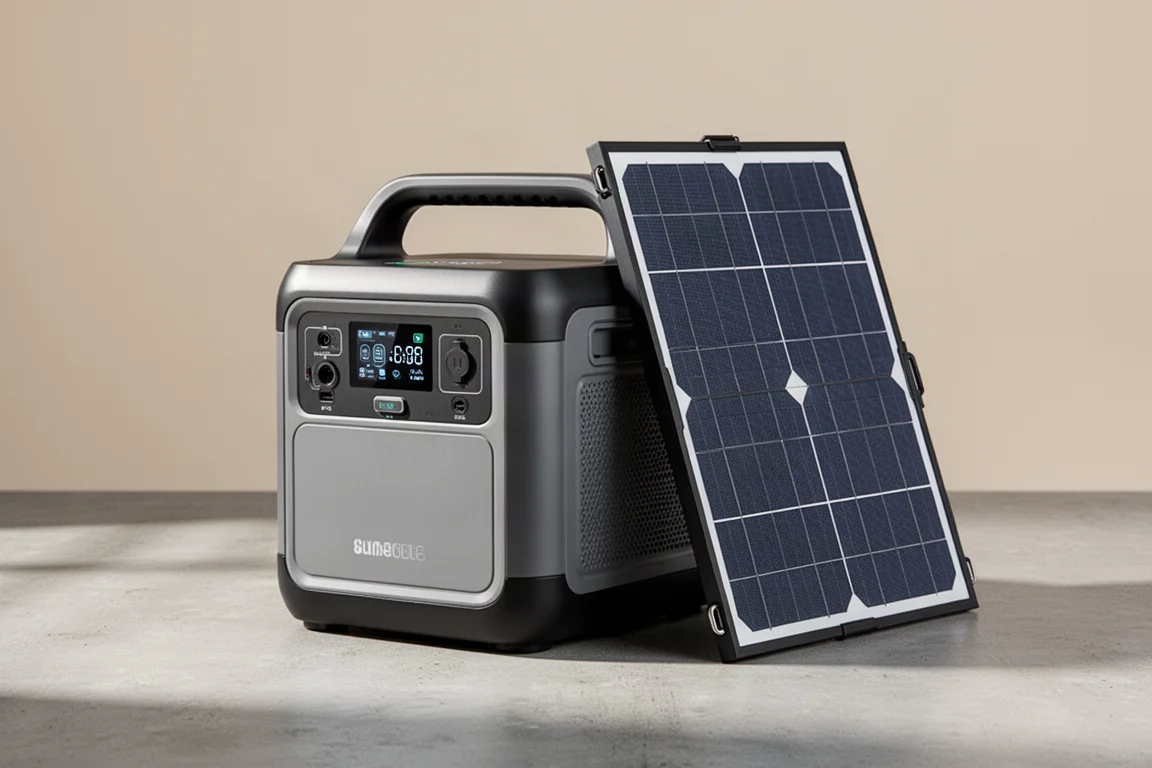
Start with power. A portable power station has become close to essential, because more of what we carry is rechargeable and because the same unit doubles as emergency backup at home when the grid goes down. For a weekend, a capacity of roughly 1,000Wh is a sensible baseline: enough that you rarely think about recharging mid-trip, with a solar panel available to top it off if you do.
Output matters as much as capacity. Check the AC inverter rating and whether it holds for the entire life of the battery, since that decides whether trailer appliances or a small heater will run. Then look at USB output, because fast charging of phones, cameras and drone batteries is where a station earns its keep on shorter trips.
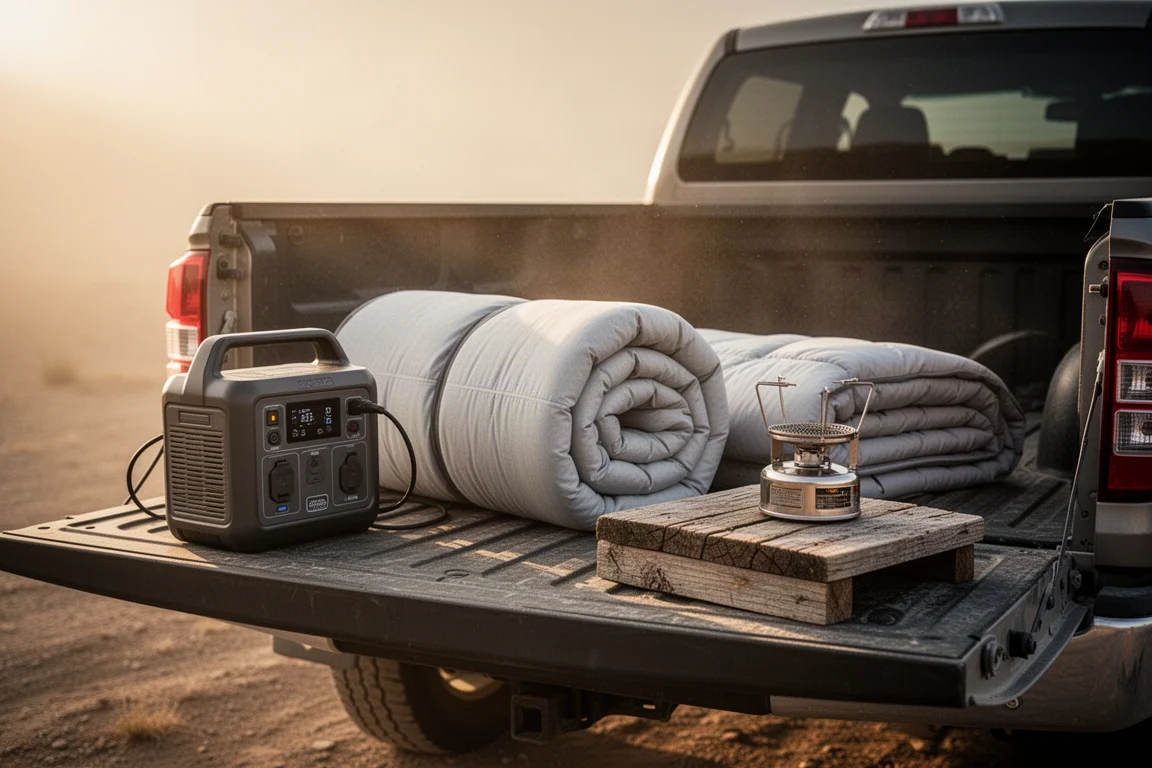
Sleep deserves the same scrutiny. A bed-like setup, whether dense foam or a thick air-foam pad, plus a comforter that stays put and a pillow that feels like home, changes how you feel on day three of a trip. The camp kitchen is the last piece: a compact single-burner stove or a flat-packing grill can replace a bulky two-burner without limiting what you actually cook.
DJI Power 1000: Sustained 2,200W AC Output
The Power 1000 stands out on one number: a 2,200W AC inverter output that stays consistent for the entire life of the battery, rather than tapering as the charge drops. If you need a short burst of extra power, for something like a small space heater, it can be pushed to 2,600W, though that higher figure only holds for about 30 seconds.
Around the front, there are four USB ports in total: two USB-A and two USB-C, with the USB-C ports delivering 140W each. That is plenty to charge demanding devices quickly. The SDC ports on the front add flexibility that the port count alone does not show, including a solar input rated to 400W max and the option of a dongle for 12V or charging from a car. For anyone doing a lot of drone work, those same ports allow fast charging of flight batteries.
The battery chemistry is lithium iron phosphate, which is a reliable, long-life choice for this class of product. Retail is around $1,000, and these units are discounted often, so the street price is frequently well below that.
EcoFlow Delta 2: More Ports, 1,800W Sustained
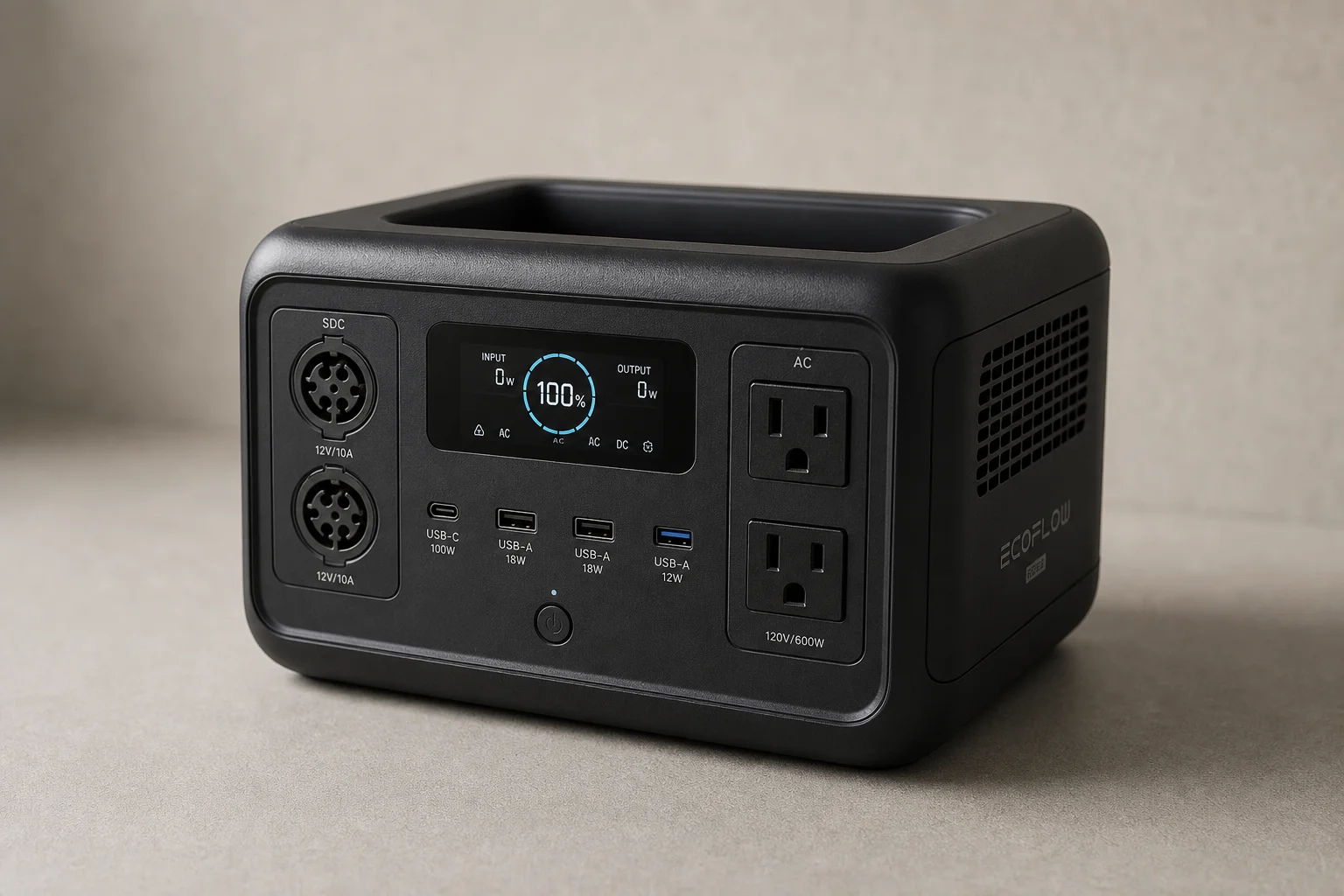
The Delta 2 answers the same brief from a different angle. Its AC inverter is rated at 1,800W, and that figure also holds for the entire life of the battery, so the 400W gap against the Power 1000 is a real difference if you plan to run higher-draw appliances. It spreads that output across six AC outlets, with 12V DC available on the back.
Where it leads is port count: six USB ports, two of which are USB-C at 100W each. That is a step down from the 140W ports on the DJI unit, but not a dramatic one for most people. The distinction matters mainly if you regularly power something in the 80W to 120W range, where the higher output gives more headroom.
Solar input is rated to 500W max, and the battery is again lithium iron phosphate. Retail sits at roughly $1,000, and sales are common, so it is worth checking current pricing before deciding between the two.
Set Power MC 15: The Budget 12V Fridge
A 12V fridge is the quiet upgrade that changes how a trip is planned. Because there is no ice taking up volume, a fridge of a given size holds more food and drinks than a comparable cooler. Temperature stays consistent for days at a time, so there is no worrying about meltwater, warm spots or food sitting at unsafe temperatures after the ice gives out.
The other pleasant surprise is how little power they draw, which is what makes them such a natural companion to a power station. They come in a range of sizes, and the MC 15 is about the smallest option available, at around $150. That often works out cheaper than a hard-sided cooler of similar capacity.
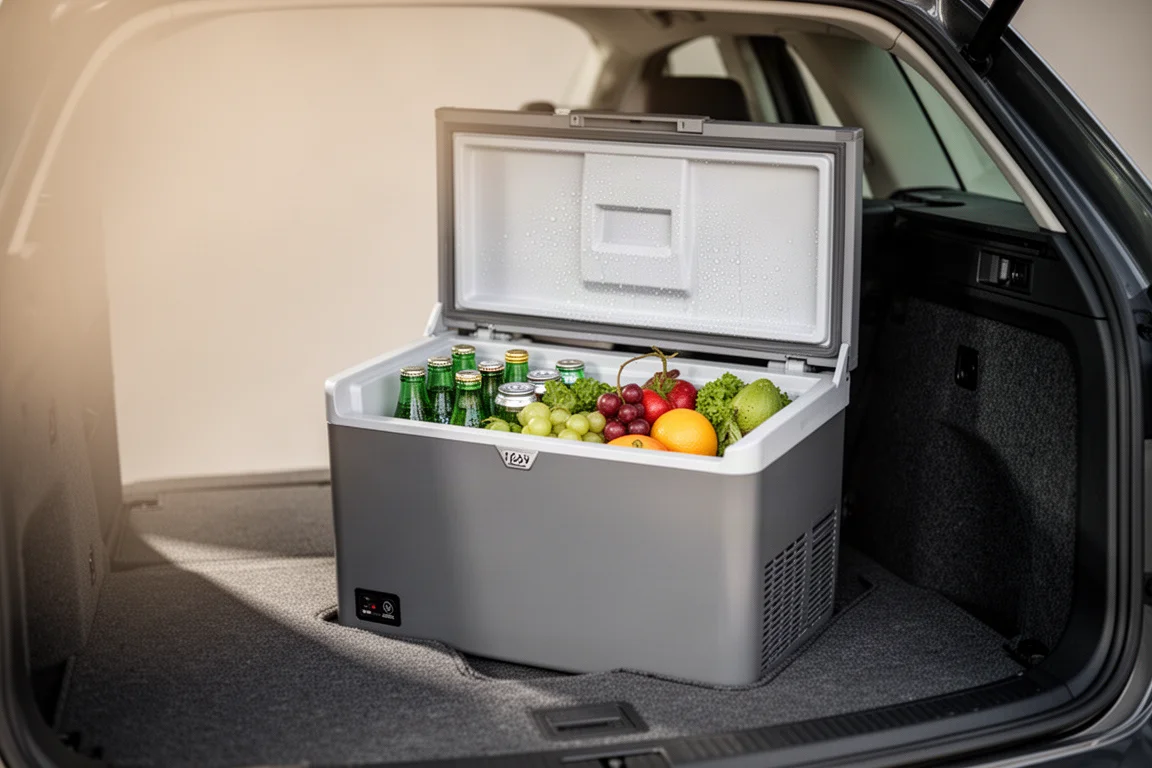
For solo trips and short weekends, that combination of a small fridge and a 1,000Wh station covers everything without much fuss. If you travel with a family, the same logic simply scales up to a larger fridge.
Hest Bed Roll: All-Foam Comfort, No Inflation
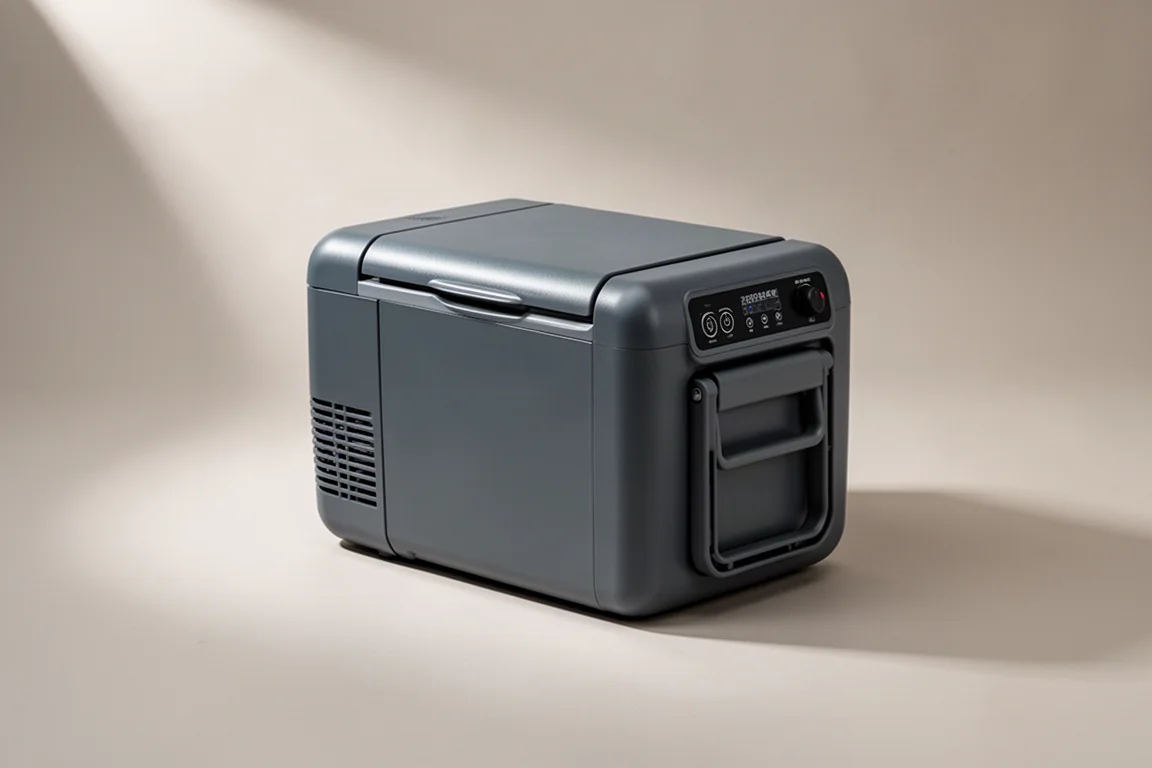
The Hest Bed Roll takes the opposite approach to a backpacking pad. It is all foam, with nothing to inflate, no valve to fuss with and no slow leak to discover at midnight. The result is a genuinely comfortable, bed-like surface that does not depend on how well you blew it up.
The trade-off is bulk. It takes up noticeably more room in a vehicle than a lightweight inflatable pad, so it suits car camping and base-camp style trips rather than anything carried on your back. If you have the space, the comfort return is immediate.
Hest Synthetic Comforter: Draft-Free Summer Warmth
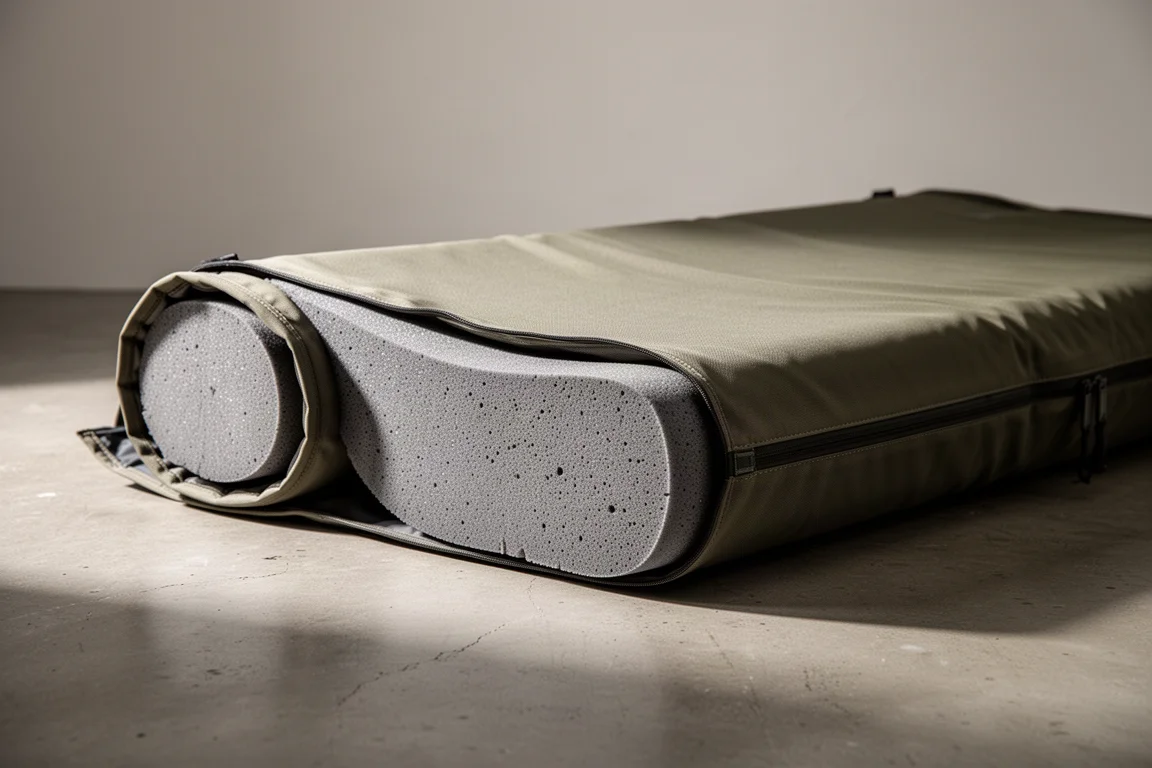
The synthetic comforter is built for summer conditions and works best as a bed-like layer rather than a standalone cold-weather solution. On cooler nights you will want additional blankets on top to stay as warm as you would like.
Its best detail is a piece of shock cord running around the foot of the comforter. Cinch it closed, tuck it underneath, and the drafts that normally creep in around the edges of a blanket disappear. You keep the loose, familiar feel of a duvet at home while removing its main weakness in a tent.
Hest Camp Pillow: The Comfort Upgrade to Buy First
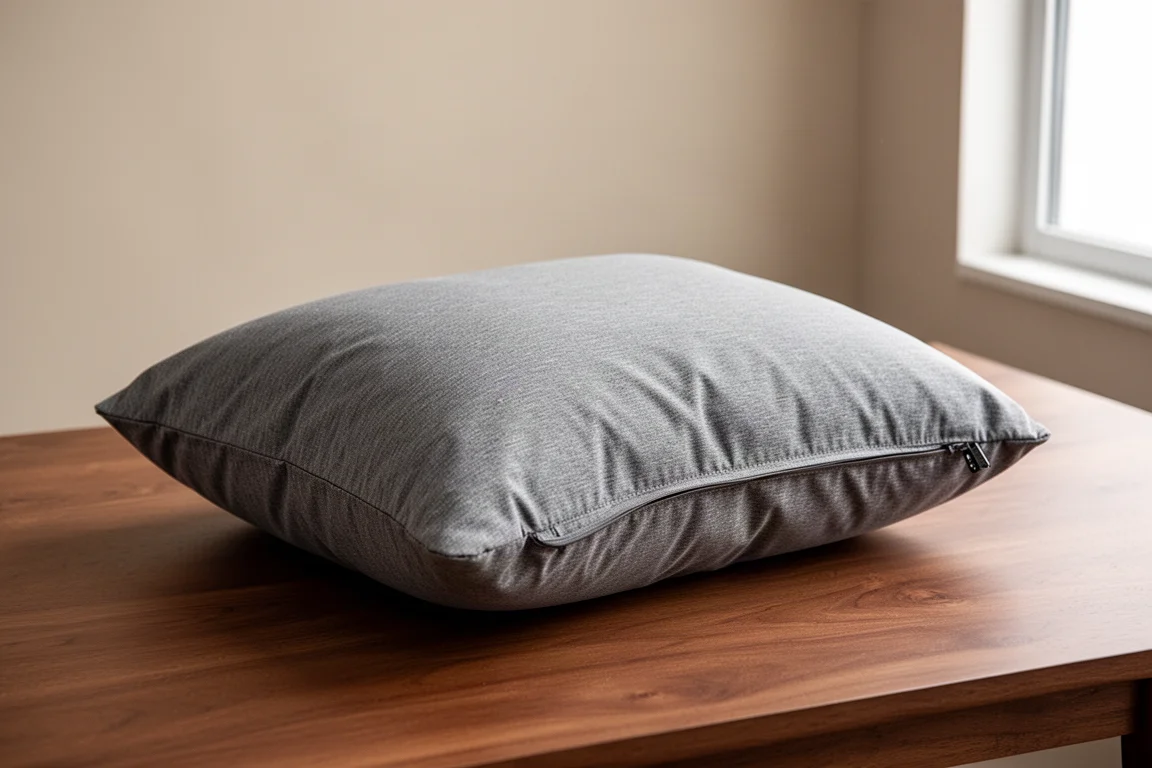
If one item on this list delivers the most comfort per dollar, it is the camp pillow. It is remarkably comfortable, to the point where it was the single most appreciated piece of gear over a season of trips. The blunt version of the advice: if you buy nothing else, buy the pillow.
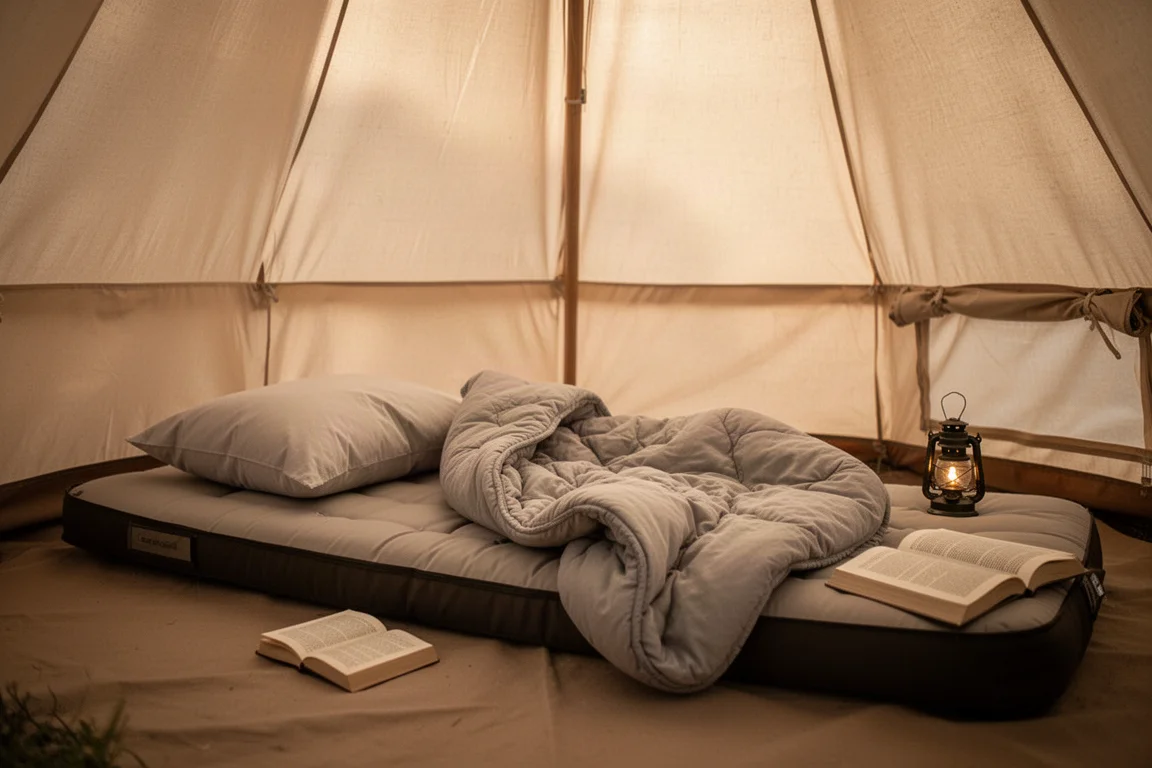
It works alongside the Hest bed roll, and it also fits naturally into the Born Outdoor Badger Bed setup, so it is not tied to a single sleep system. For anyone who has spent a night on a rolled-up jacket, the difference is obvious the first time you use it.
Born Outdoor Badger Bed: An All-in-One Bed Roll
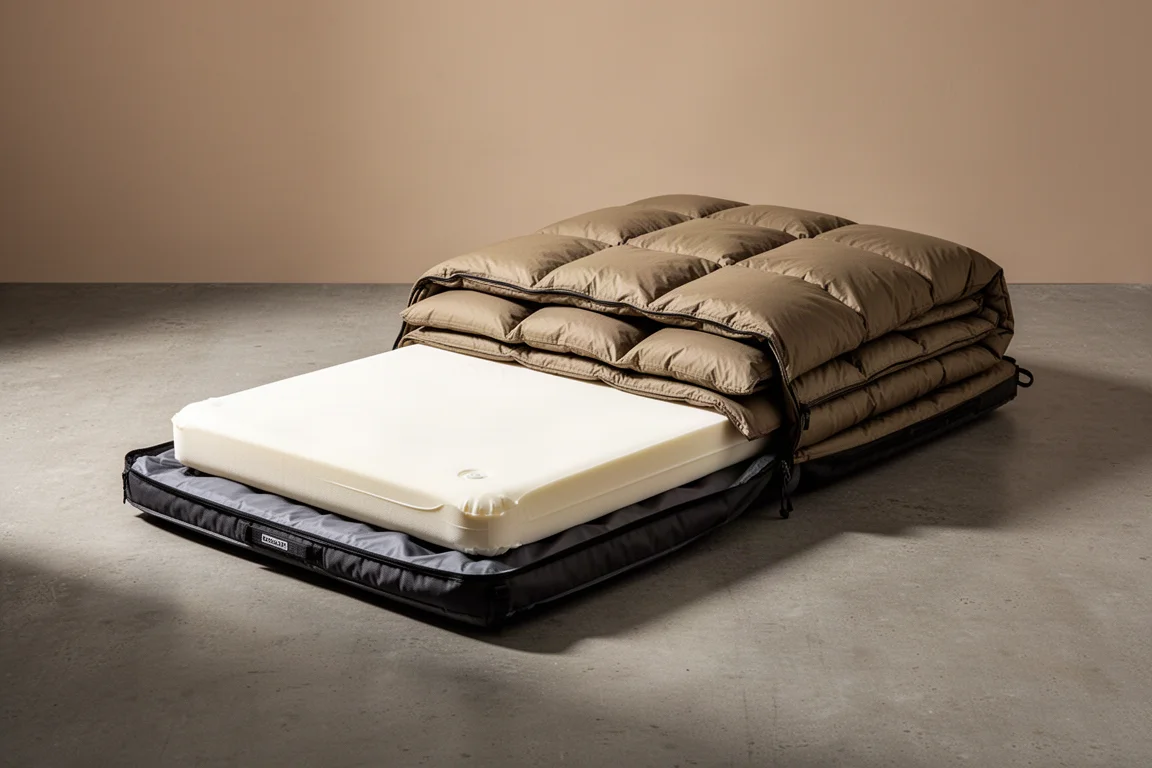
The Badger Bed is an all-in-one system where every layer is designed to work together. The outer shell fabric connects directly to a burly, heavy-duty base, which means you can lay it straight on the ground with a tarp over you for a more rustic night, drop it into the bed of a truck for overlanding, or set it up inside a tent.
On top, a stretch cover adds a degree of water resistance, which helps manage condensation. Rather than sliding into a sleeping bag, you get two down-fill blankets that connect into the body of the bed roll, so nothing shifts out of place overnight. There is also a flat sheet and a cover for the pad, which together produce something that genuinely feels like a bed rather than a compromise.
It is an expensive proposition, and it takes up space, but the modularity is the point: you can assemble the pieces that suit your trips and leave the rest. The pad inside is the Therm-a-Rest Mondo, and the pillow shown with it is the Hest camp pillow.
Therm-a-Rest Mondo: The Pad Inside the Badger Bed
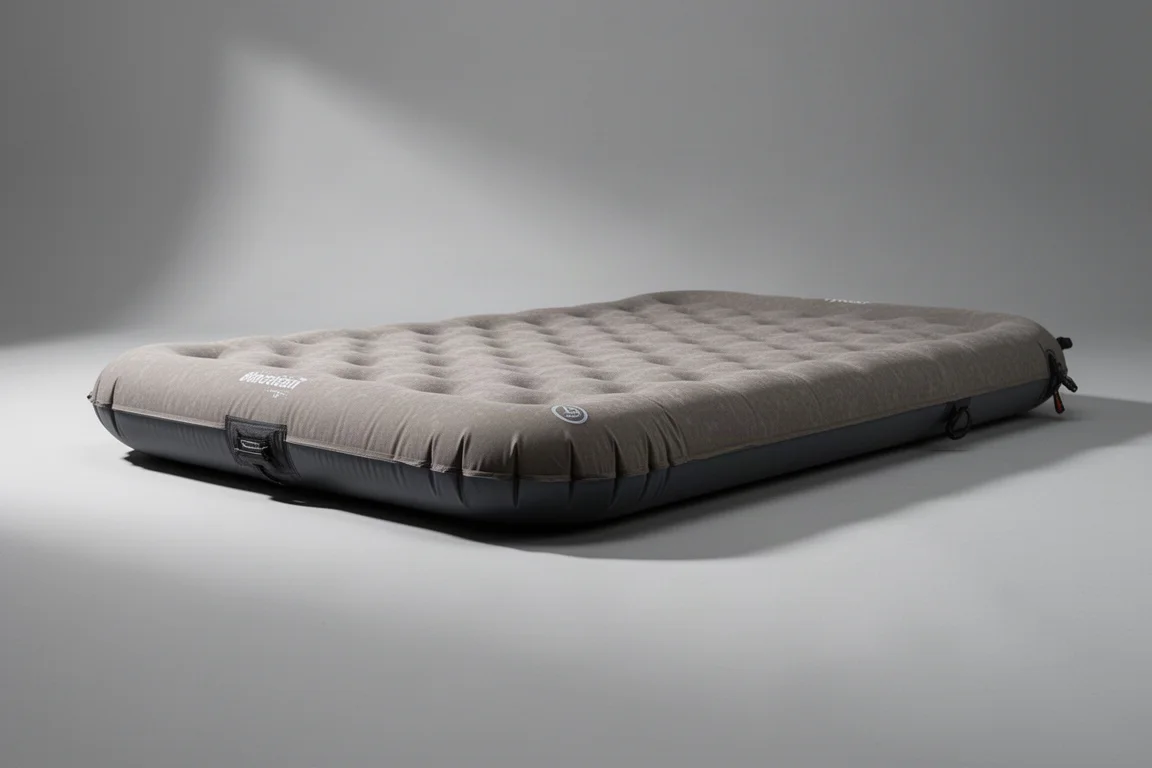
The Mondo is the foundation of the Badger Bed setup. It is an air-and-foam pad, roughly four inches thick, in the same comfort class as the thickest foam mats on the market, and it is what makes the whole system feel substantial under you.
On its own it is an excellent choice for anyone who wants a plush, stable sleeping surface without going the full all-foam route. It pairs well with a comforter or a quilt, and it is comfortable enough that you stop noticing it, which is the highest compliment a sleeping pad can receive.
UGQ 30° Queen Down Comforter: Oversized Warmth for Two
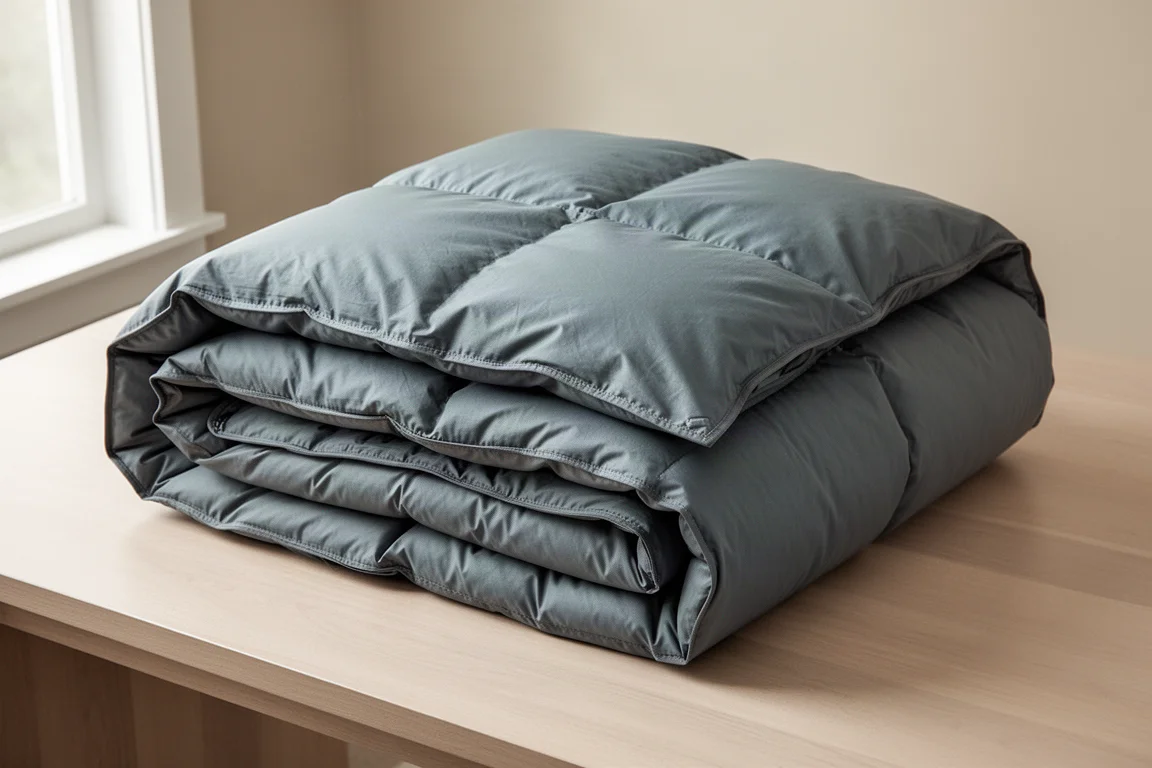
For couples who prefer one large sleeping surface over two separate bags, this queen-size down comforter is a strong answer. It is rated to 30 degrees, lightweight and packable because of the down fill, and the fabrics are very soft against the skin.
The size is the real advantage. Used over a double sleeping pad, it covers both sleepers and traps warmth between them, which is warmer and more comfortable than two individual bags. In a rooftop tent it spans side to side and covers the full footprint of the sleeping area.
This is an investment piece, and the quality reflects that. UGQ products are built to last for years, which changes the math if you camp often. For warmth, comfort and packability together, it is a meaningful upgrade to the sleep experience.
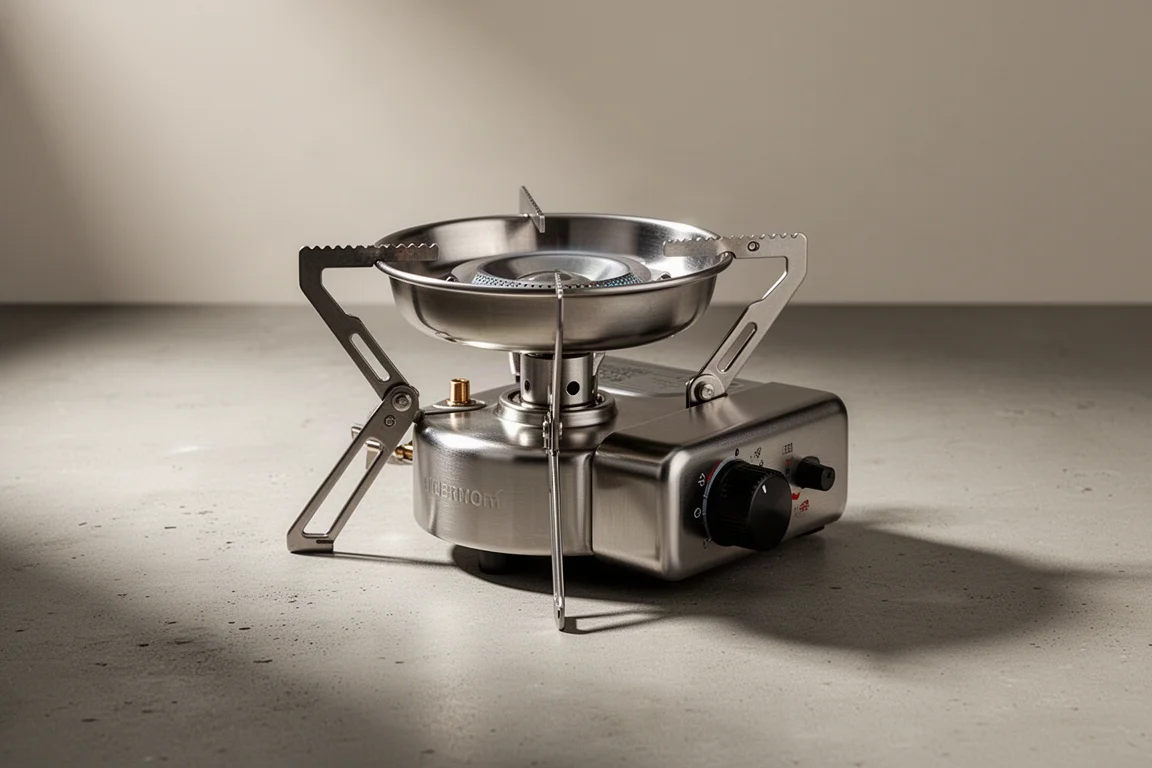
Fire Maple Saturn X: A Compact Single-Burner Stove
Not every trip needs a big two-burner stove taking up half the cargo area. The Saturn X is small in size but has a large burner with plenty of output, which makes it far more capable than its footprint suggests. Any pot you want to use goes straight on for boiling water.
The flexibility comes from the accessories. Add the grill pan and the same stove handles breakfast foods, meats, stir fries and more, which covers most of what a typical camp meal requires. It is a neat solution for anyone who wants simple cooking without the bulk of a classic Coleman-style stove.
Scotty Grill: Flat-Packing Versatility for Camp Cooking
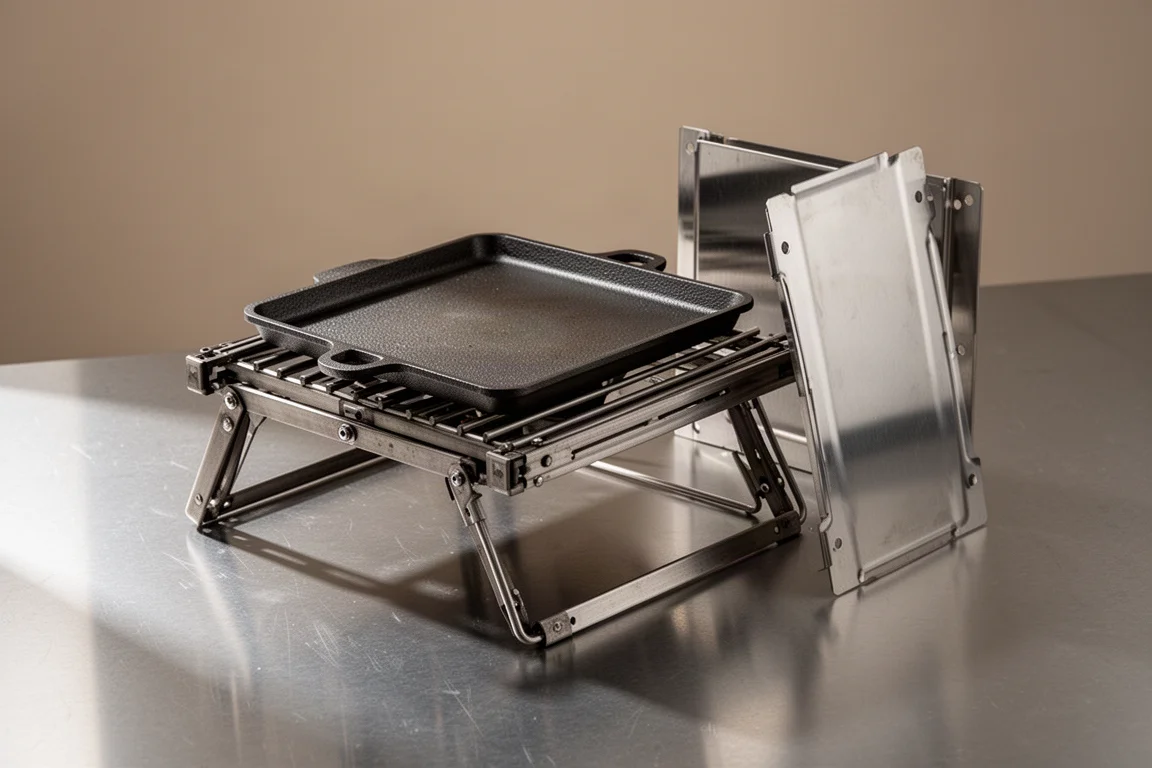
The Scotty Grill has become a genuine favourite, used at home two or three times a month as well as on trips. It completely disassembles and packs flat, which makes it easy to bring along, and it is compact enough that the decision to cook on it rather than over a fire is an easy one.
Versatility is where it shines, and the accessory range keeps growing. There is a stainless steel grill plate, a cast iron grill plate that holds a more consistent heat across the surface, and a pizza stone. With the cap accessory in place, you can make personal-size pizzas in camp, which is a genuinely fun option to have.
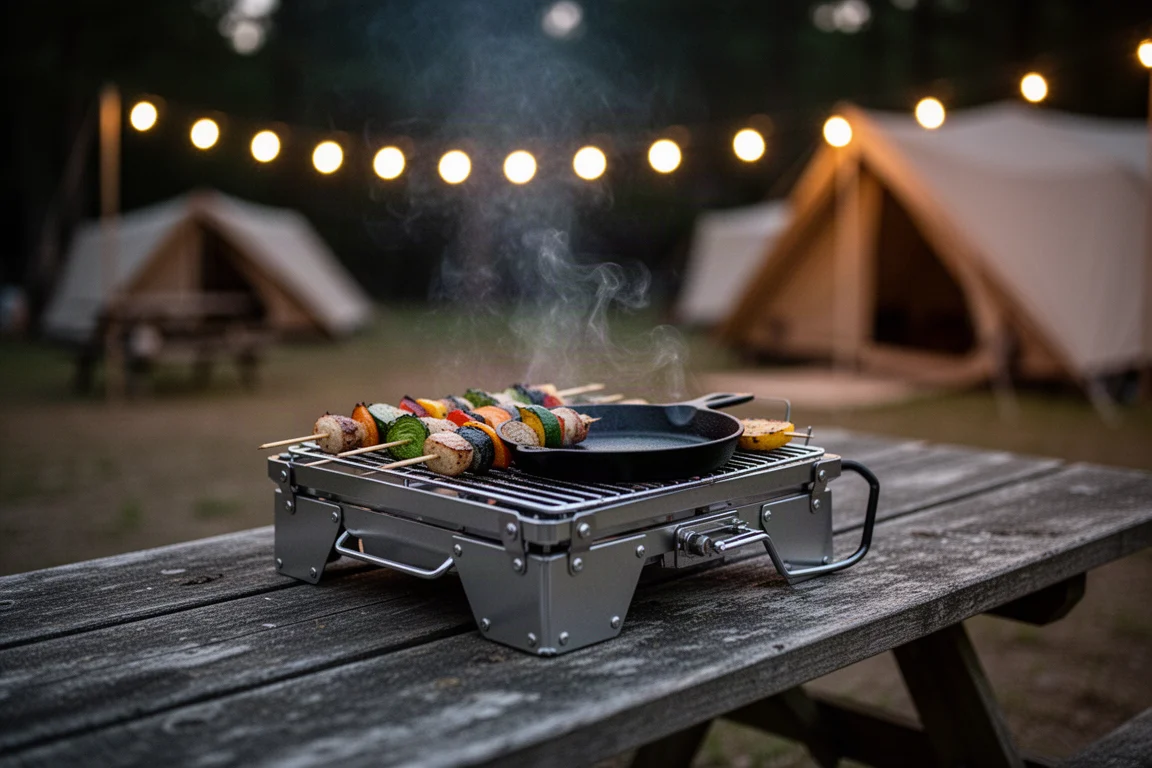
The practical upshot is that hot dogs, steaks, burgers, kebabs and vegetables are all straightforward, without a bulky grill occupying space you would rather use for something else. It is a small, capable piece of kit that earns its place in the vehicle.
Conclusion
The right order of upgrades depends on how you camp. If you carry rechargeable gear and want backup at home, start with a power station: the DJI Power 1000 leads on sustained AC output at 2,200W, while the EcoFlow Delta 2 counters with six USB ports and a 1,800W inverter. Add the Set Power MC 15 and you can leave ice behind entirely for around $150.
If comfort is the priority, build the sleep system outward. The Hest camp pillow is the cheapest meaningful improvement, the Hest bed roll and synthetic comforter create a bed-like base for summer, and the Born Outdoor Badger Bed with its Therm-a-Rest Mondo pad is the all-in-one option for anyone who wants the full setup. For couples, the UGQ 30° queen comforter covers a double pad or a rooftop tent in one piece.
Finally, the camp kitchen. The Fire Maple Saturn X replaces a bulky two-burner with a compact, high-output single burner, and the Scotty Grill packs flat and covers everything from steaks to personal pizzas. Pick the area where your current setup frustrates you most, upgrade that first, and the rest of the trip takes care of itself.
Further reading
Related Reviews
Camping Gear
3FUL Ultralight Ground Sheet Review: A Two-Person Footprint Worth Packing
A 6.7 oz two-person ground sheet in ripstop silnylon, priced around $30. Here is what it protects, what it does not do, and who should pack it.
Camping Gear
Backcountry Light Dual-Function Tarp and Floor Review: A Footprint First
A dual-purpose tent floor and tarp that keeps falling rain off you, but cannot block wind. Here is where it works and where it does not.
Camping Gear
Best 2-Person Camping Mattresses for Couples: 10 Options Compared
A practical comparison of ten two-person camping mattresses, covering self-inflating pads, air pads and air mattresses for couples.