Kitchen Appliances
Best Budget Coffee Makers Tested: 15 Machines From $20 to $150, Compared
We compared 15 drip coffee makers on brewing speed, water temperature, capacity honesty, pour design, and extraction quality to find the best value.
Introduction
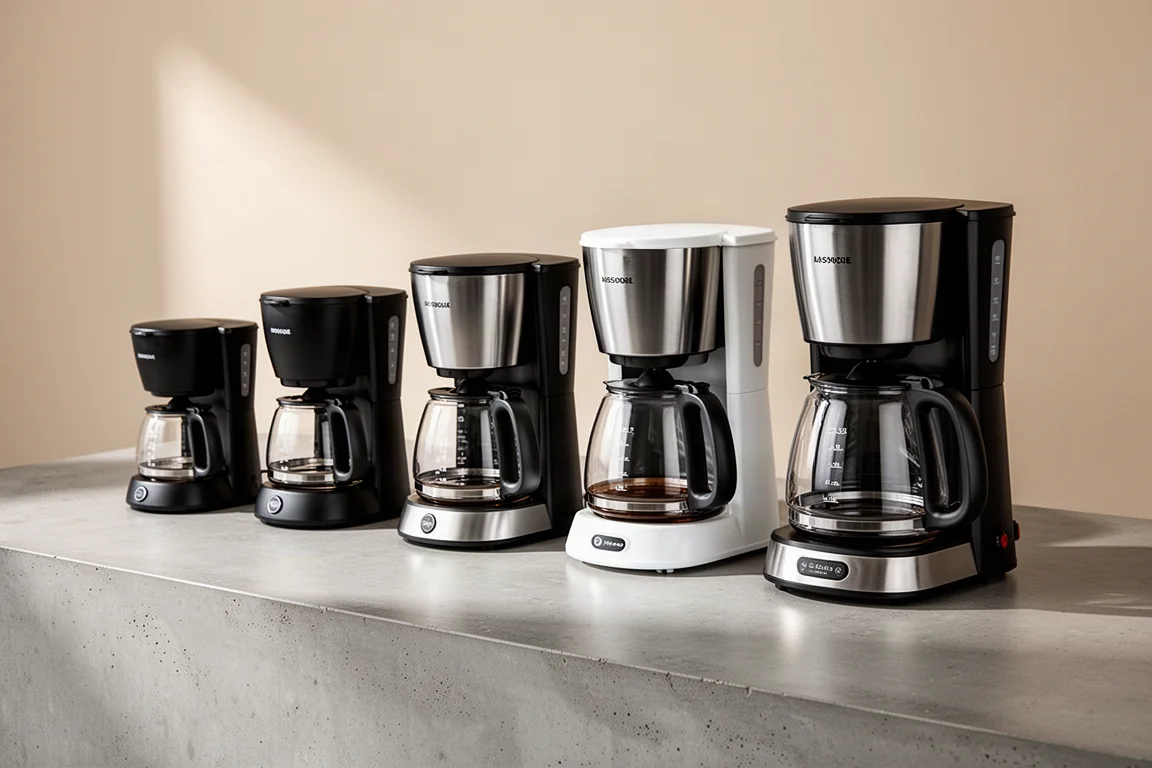
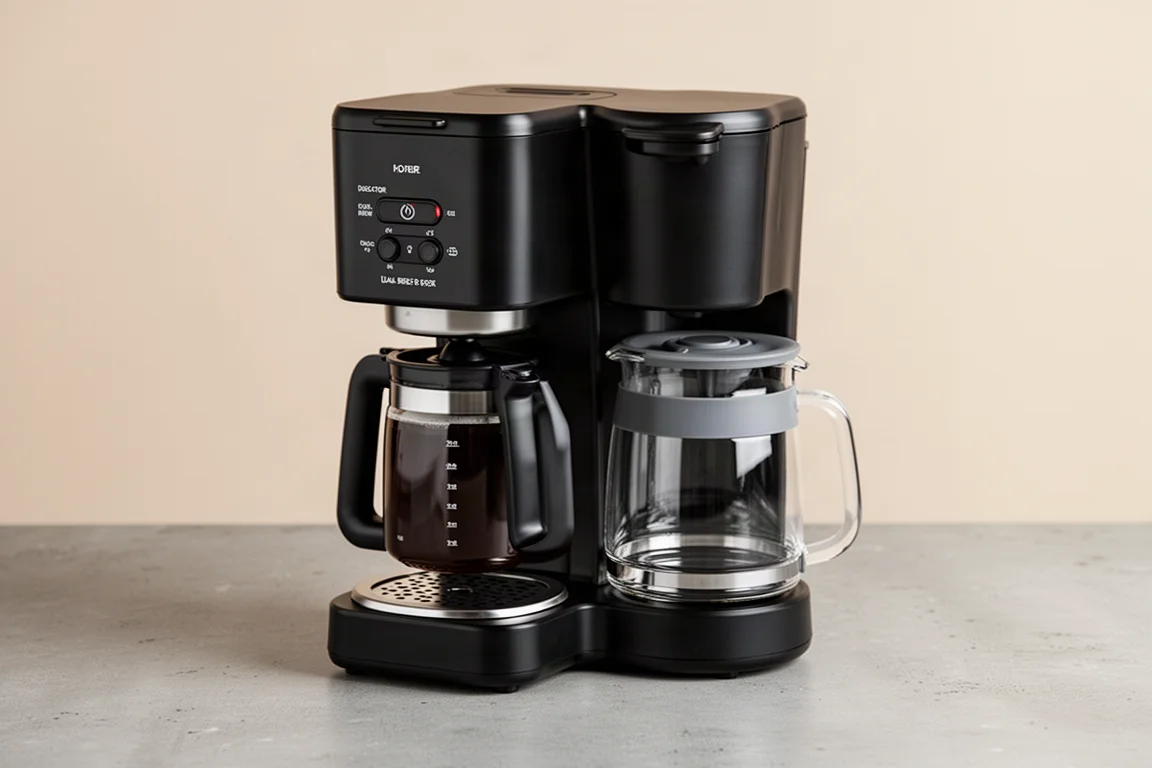
Does a $20 coffee maker really brew worse coffee than a $150 one? To find out, we put 15 drip coffee makers through the same battery of practical tests: real water capacity, brew time, water temperature right after brewing and again an hour later, pour spout behavior, and extraction efficiency measured with a total dissolved solids meter.
The results were genuinely surprising. Some of the cheapest machines held their own, several brands overstated their cup capacity, and a handful of designs turned pouring coffee into a cleanup job. Here is what the testing revealed.
How the Machines Were Tested
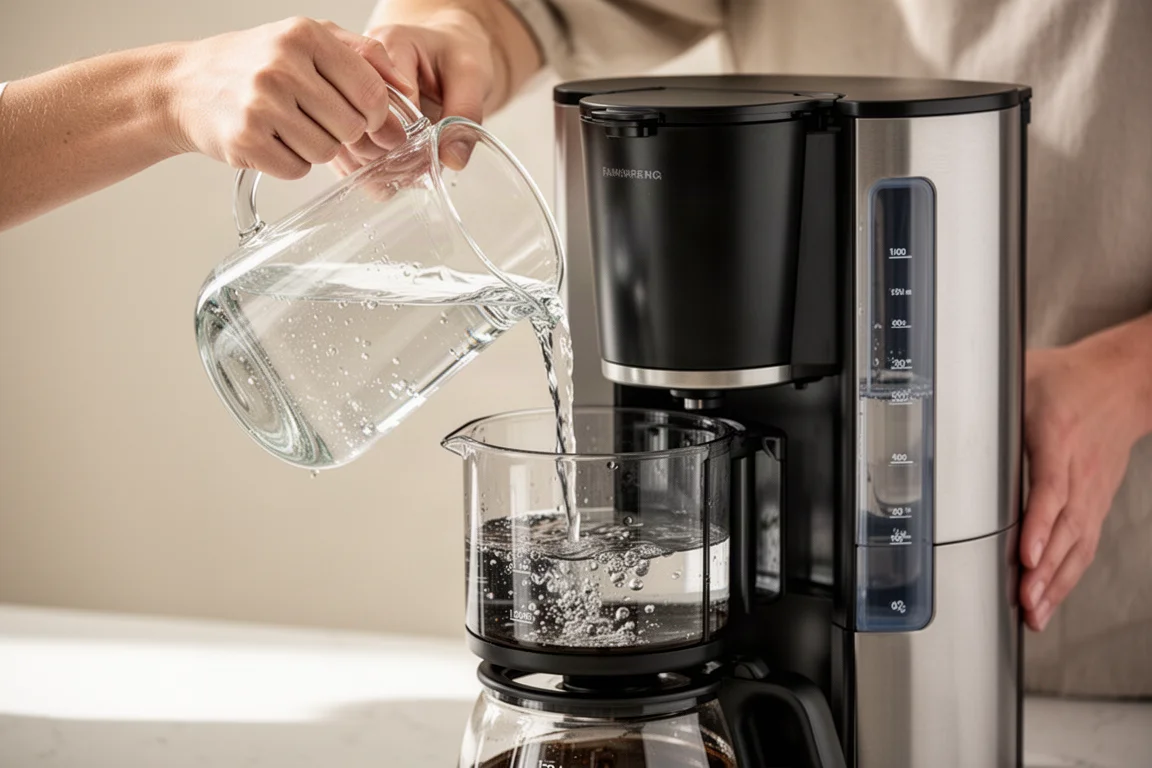
Every coffee maker received the same treatment: 47.2 oz of water measured by weight to check true cup capacity (the coffee industry standard is 6 oz per cup, not 8), a timed brew cycle, a water temperature reading at the end of brewing and again after one hour on the warming plate, and an aggressive pour test to see which carafes drip and which stay clean.
For the extraction test, each machine brewed 48 oz of water with exactly 73 g of grounds through a paper filter, and the resulting coffee was measured for dissolved coffee solubles. A higher reading means the machine draws more flavor from the same grounds, which matters because coffee is expensive. A more efficient brewer stretches your grounds further.
The Water Purity Check
Distilled water started at zero parts per million, and after passing through every single machine, the water still read zero PPM. In other words, none of these coffee makers added measurable material to the water, which is reassuring at any price point.
The Budget Field: $20 to $40
Proctor Silex 10-Cup ($20)
The cheapest machine in the test is a 10-cup model with auto pause and pour, built-in cord storage, a lighted power indicator, and dishwasher-safe carafe and brew basket. It is a light machine at just over 3 lb.
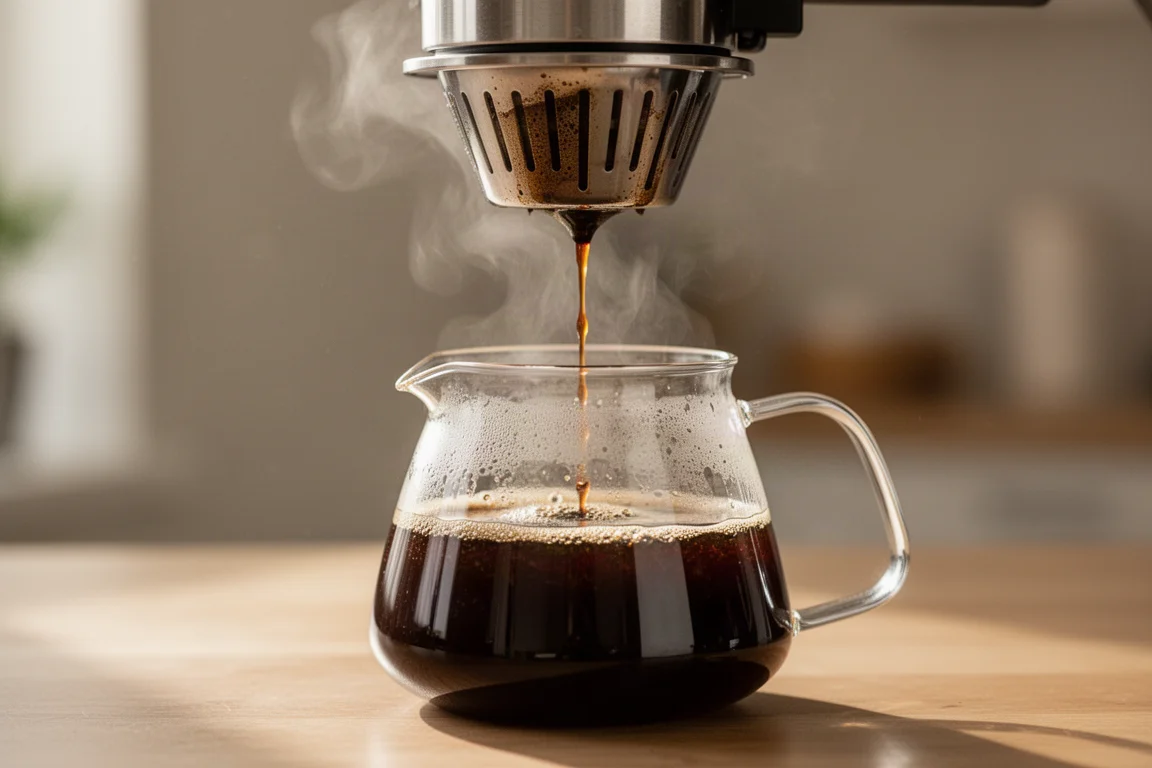
With 47.2 oz of water on board, the carafe landed at the 10-cup mark, which works out to only eight 6-oz cups, so it runs two cups short of its rating. Performance was respectable for the money: a 965 W heating element finished the brew in about 7.5 minutes at 177.6 degrees, adequately hot. The downsides are the cover getting in the way during the final pour and a carafe that made quite a mess in the fast-pour test.
Better Chef 12-Cup ($28)
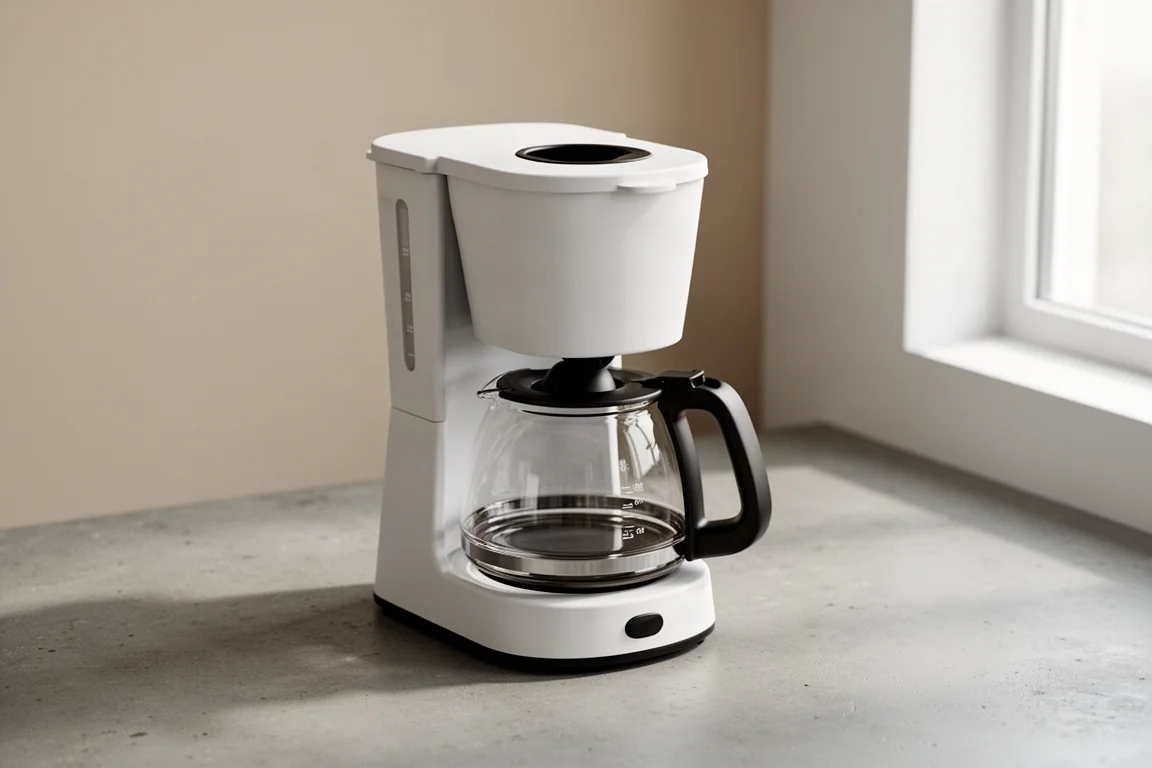
The Better Chef adds a swing-out filter basket and a wider water fill mouth, though the spout still spills if you pour too quickly. It weighed 2.76 lb, the lightest of the group.
It finished in the same 7.5 minutes as the Proctor Silex but at 169 degrees, roughly 8 degrees cooler, on a slightly weaker 935 W element. Capacity landed between the 9 and 10-cup marks with the same water load, and the fast-pour test produced an even bigger mess than the Proctor Silex.
Mueller 12-Cup ($30)
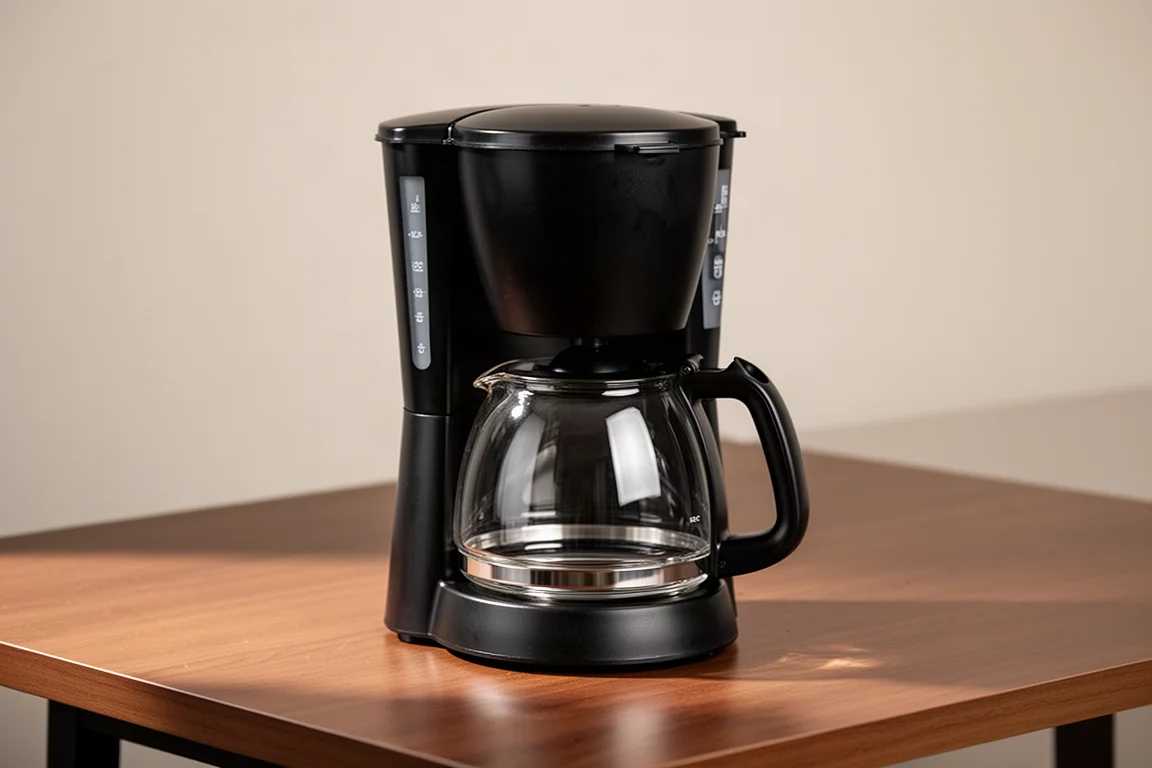
The Mueller stands out with a durable permanent filter, a water level window, and an auto keep-warm function that powers down after 2 hours.
It took an extra minute to brew, finishing near 8.5 minutes, but produced the hottest water so far at 181.9 degrees on a 950 W element. Capacity measured just below the midpoint between the 8 and 10-cup marks. Unfortunately the spout leaks when pouring quickly, and it performed worse than both cheaper machines in that test.
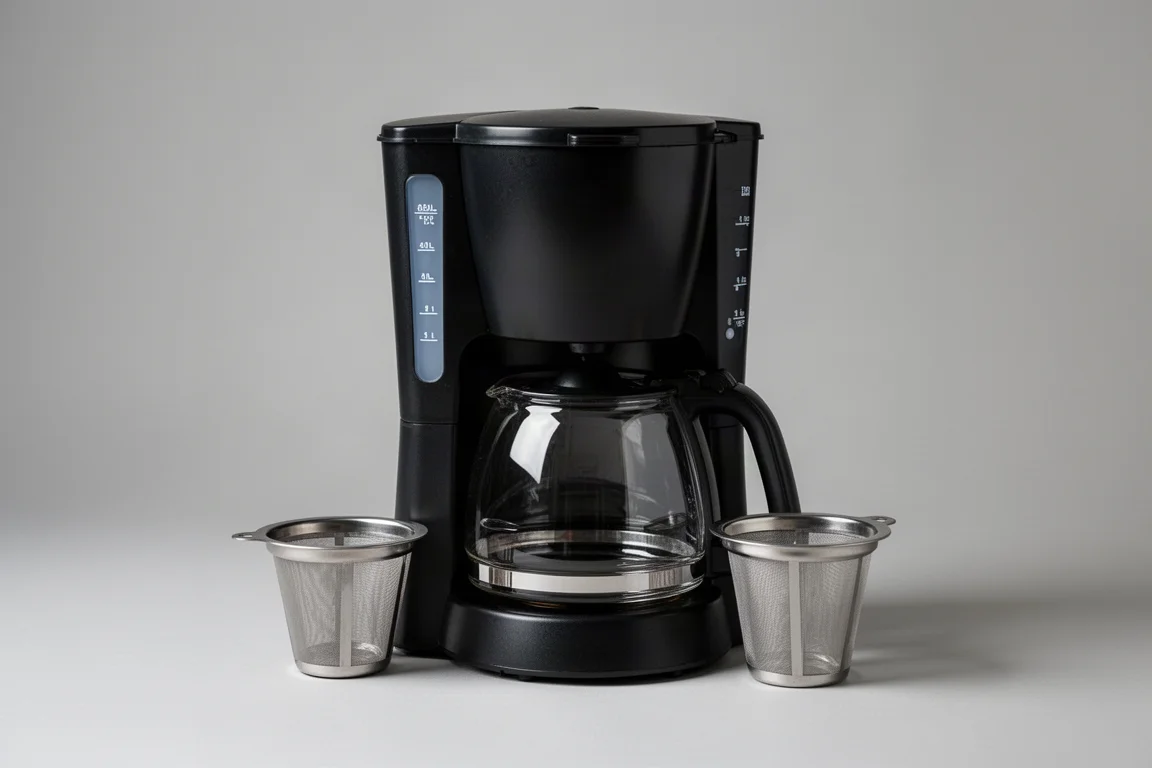
Amazon Basics 12-Cup ($30)
At around $30, the Amazon Basics 12-cup offers a reusable filter, a lighted on/off switch, and a visible water window. It weighed 2.92 lb and its capacity split evenly between the 8 and 10-cup marks.
It runs the weakest element in the group at 905 W, finishing in about 7 minutes 50 seconds at 171.1 degrees, 10 degrees cooler than the Mueller. But the carafe is a genuine bright spot: in the aggressive pour test it was very well designed with no spills or drips at all.
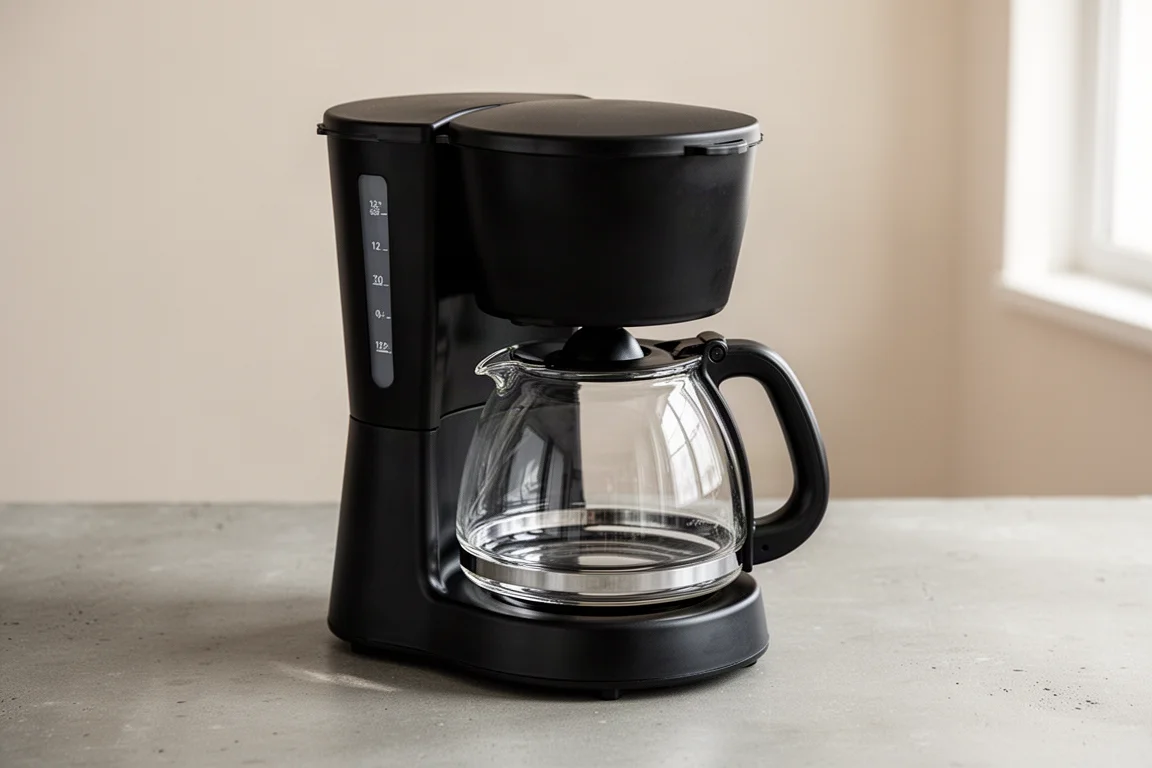
Black and Decker 12-Cup Programmable ($35)
The Black and Decker is a very popular choice, with 20,000 units sold in the past month, and it is the least expensive programmable machine we could find. It offers digital controls with quick touch programming and a 2-hour auto shut-off, and it is made in Mexico.
It posted the most powerful element of the budget field at around 1,000 W, brewed fast at 7 minutes 40 seconds, and delivered the hottest water yet at 183.2 degrees. Capacity sat between the 8 and 10-cup marks, and after an hour on the warmer it was actually 5 degrees hotter. The pour was much better than the cheapest brands, with only a small dribble. If value is the priority, this is the machine to beat.
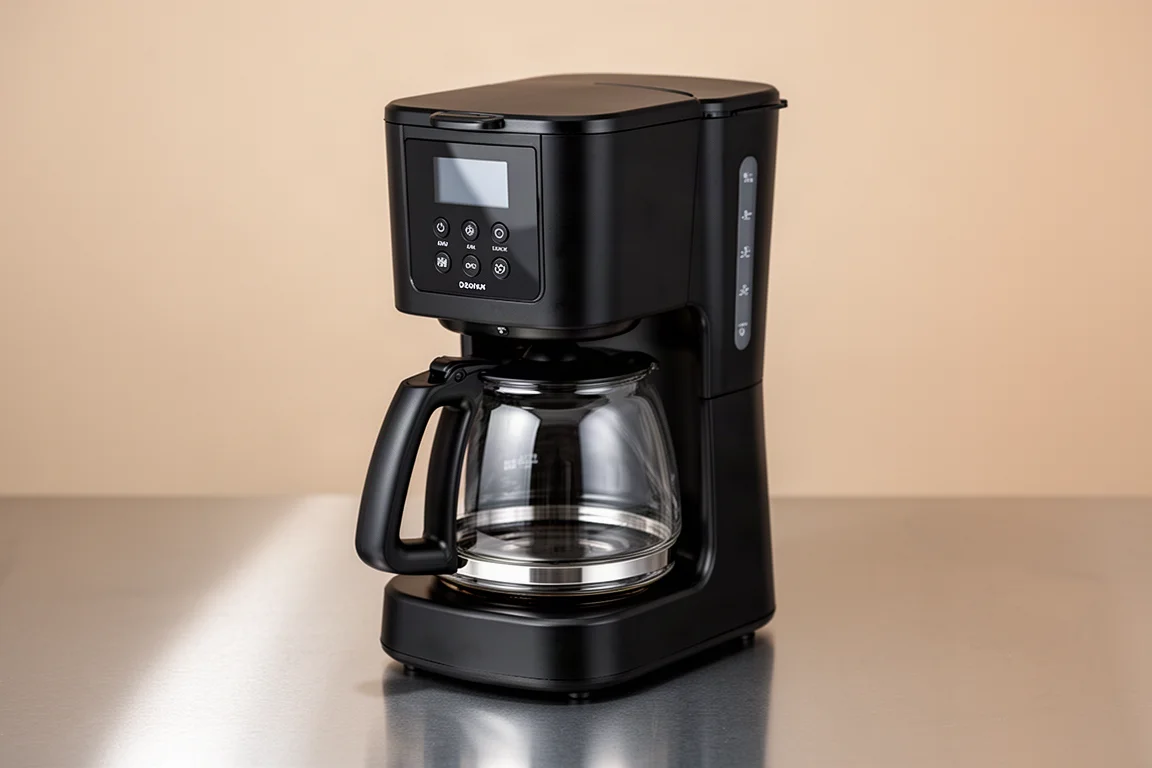
Mr. Coffee 12-Cup ($35)
The Mr. Coffee is the same price as the Black and Decker but cannot be programmed. It has an illuminated on/off switch and cord storage.
Its real talent is carafe design. The water opening was the best of the budget machines so far, the lid does not need to be snapped shut, and it poured with no dribbles or spills in the aggressive test. Brewing took 8 minutes 10 seconds at 177.8 degrees on a 940 W element, with capacity around 8.5 cups.
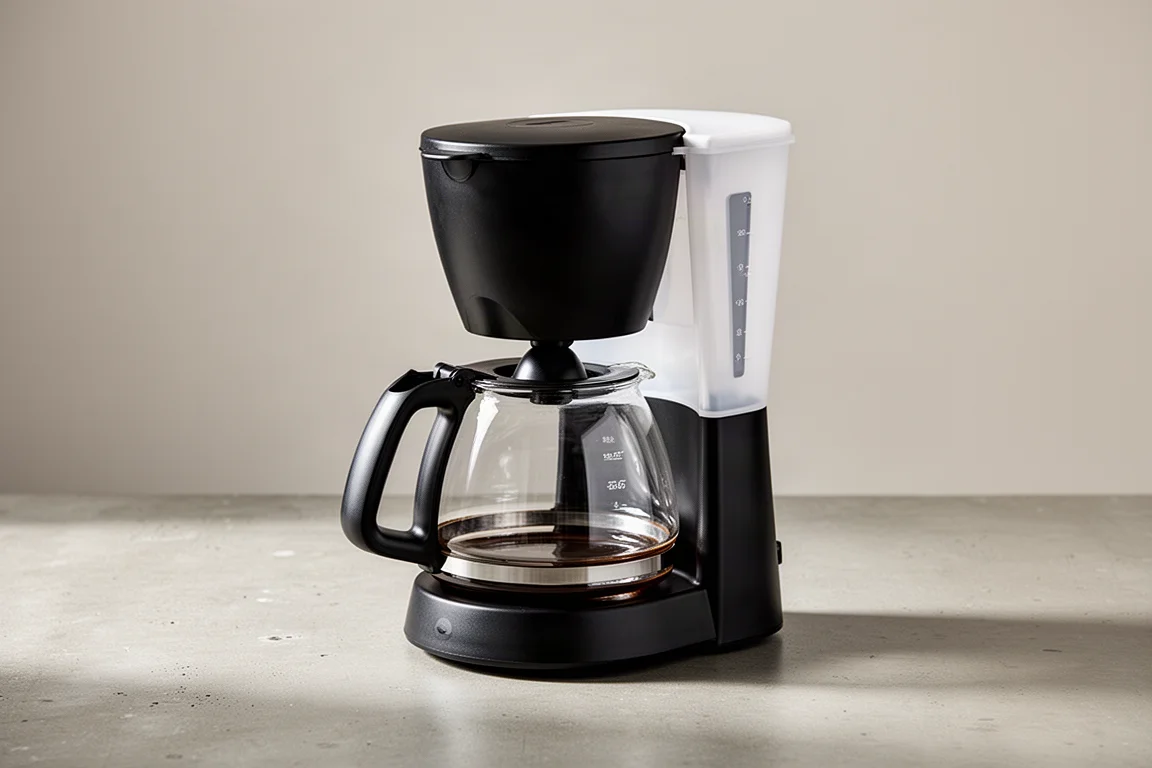
Taylor Swoden Programmable ($40)
The Taylor Swoden is a 950 W programmable machine with a self-clean function, a regular or bold brew strength setting, and a showerhead design that evenly saturates the grounds.
It brewed in the same 8 minutes 10 seconds as the Mr. Coffee at 176 degrees. Capacity was around 8.5 cups. The water fill zone is tight, and the carafe struggled at the start of the aggressive pour, making a mess before recovering. Overall it is a feature-rich pick, but execution is uneven.
Mid-Range Picks: $43 to $70
Krups 10-Cup ($43)
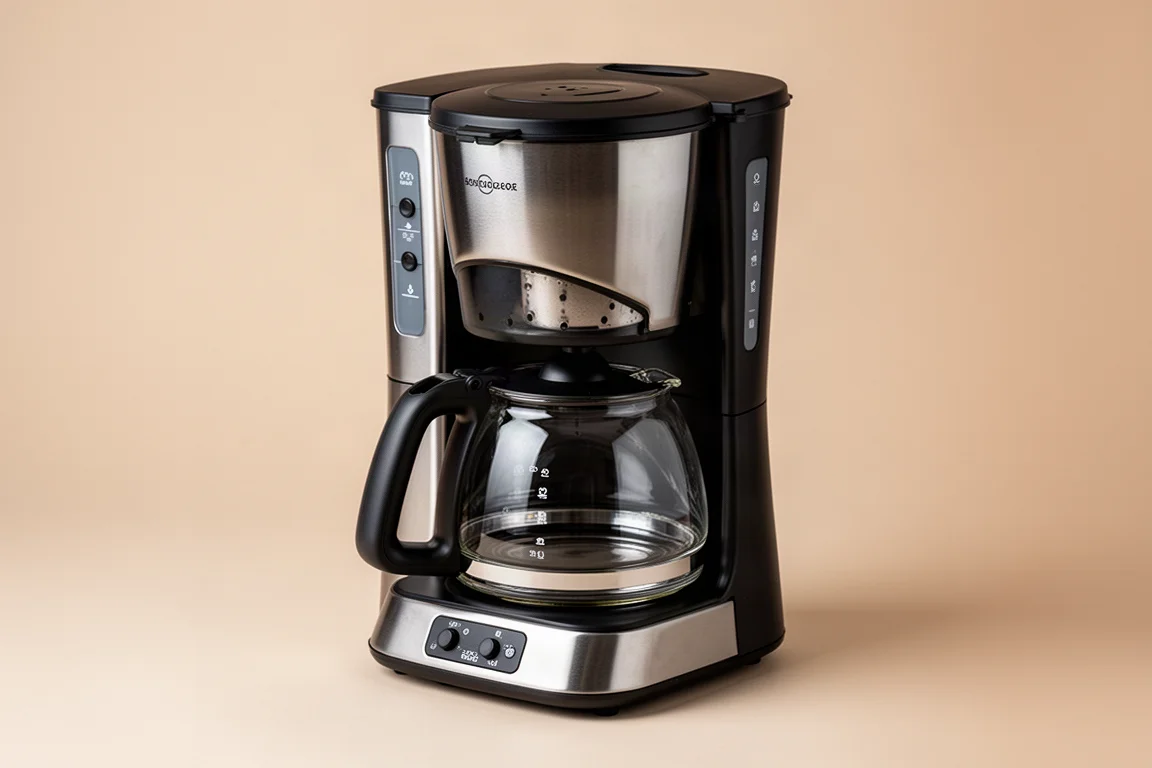
Most machines here brew 12 cups, but the Krups makes 10. It claims 900 W of power, powers down after 2 hours, and includes a reusable filter. It is also the heaviest machine so far at 4.21 lb.
It was the slowest brewer at that point, finishing in 8 minutes 50 seconds on the weakest element yet at 895 W, but the water came out hot at 179.6 degrees, and after an hour on the warmer it had climbed to 185.5. The water fill space is narrow at 2.5 inches, and the pour test spilled water onto the table.
Hamilton Beach Front-Fill ($50)
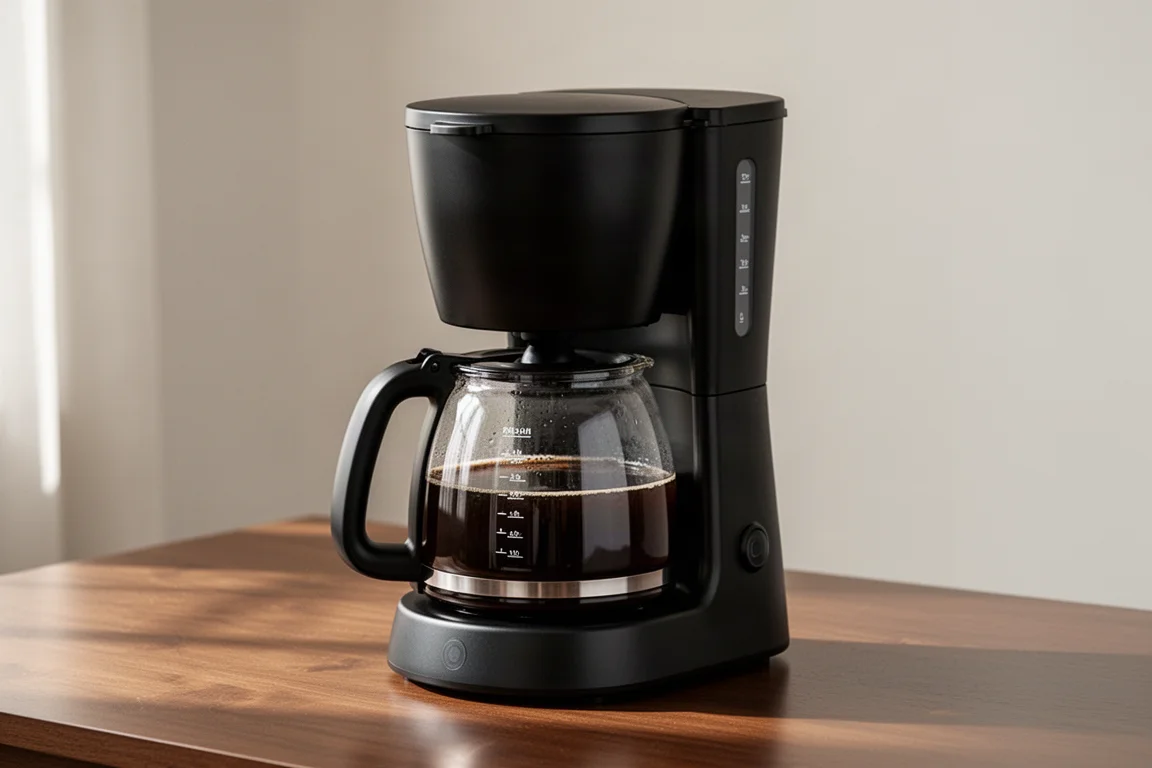
The Hamilton Beach is built for convenience, with easy touch programming, wake-up-ready coffee, a water view window, and a front-fill design that lets you load water without moving the machine.
It hit the 9-cup mark with the standard water load, has the most user-friendly water fill area in the test, and needs no force to close the cover. Performance was strong too: 970 W, a 7 minute 50 second brew, and 178.7 degrees. Most importantly, it posted the best extraction result of any filtered machine at 655 PPM, drawing more flavor from the same grounds than anything else, and its plastic-banded carafe poured with zero water loss.
Braun 14-Cup ($65)
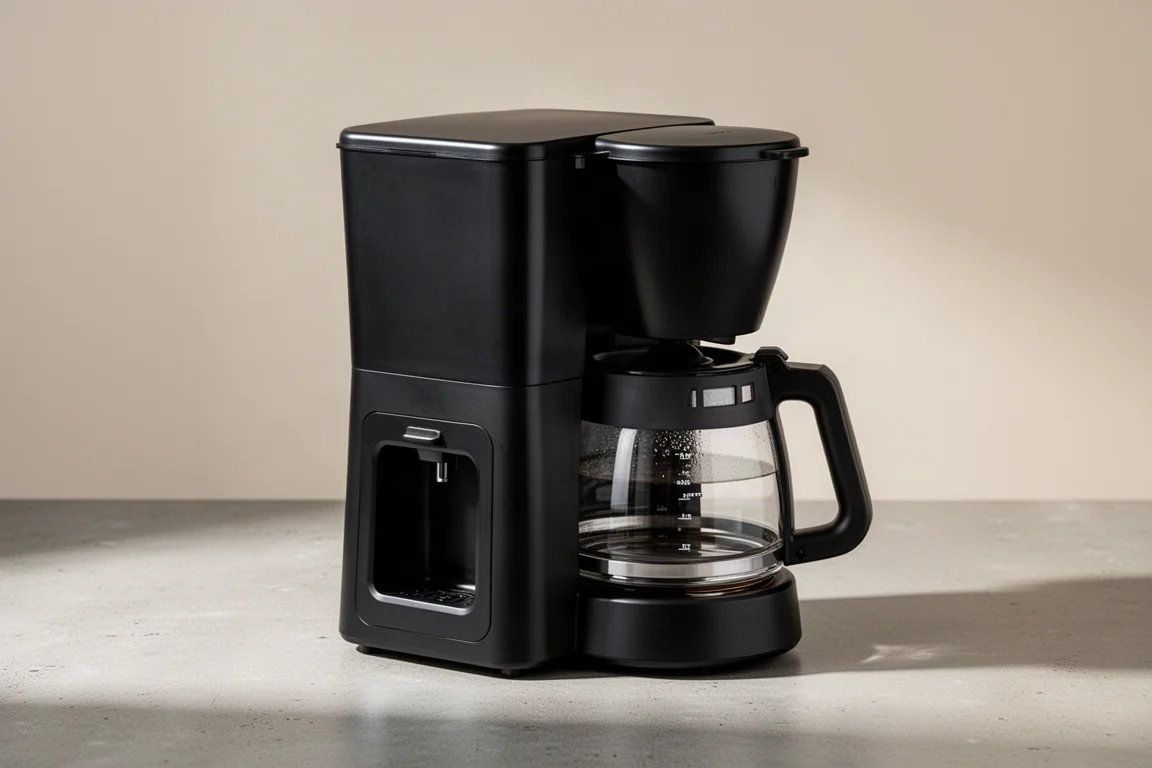
The Braun claims a 1,200 W heating element, pure flavor technology, and brewing 20% faster than rivals, all in a 14-cup body. It is the heaviest machine in the group at 6.3 lb.
The claims mostly held up: its measured element drew 1,175 W, it delivered the fastest full brew at 7 minutes 15 seconds, and the water was the hottest yet at 185.2 degrees. But the 14-cup label is optimistic, measuring only 12.3 real 6-oz cups, and the carafe pours about as messily as the Proctor Silex.
Ninja 12-Cup ($70)
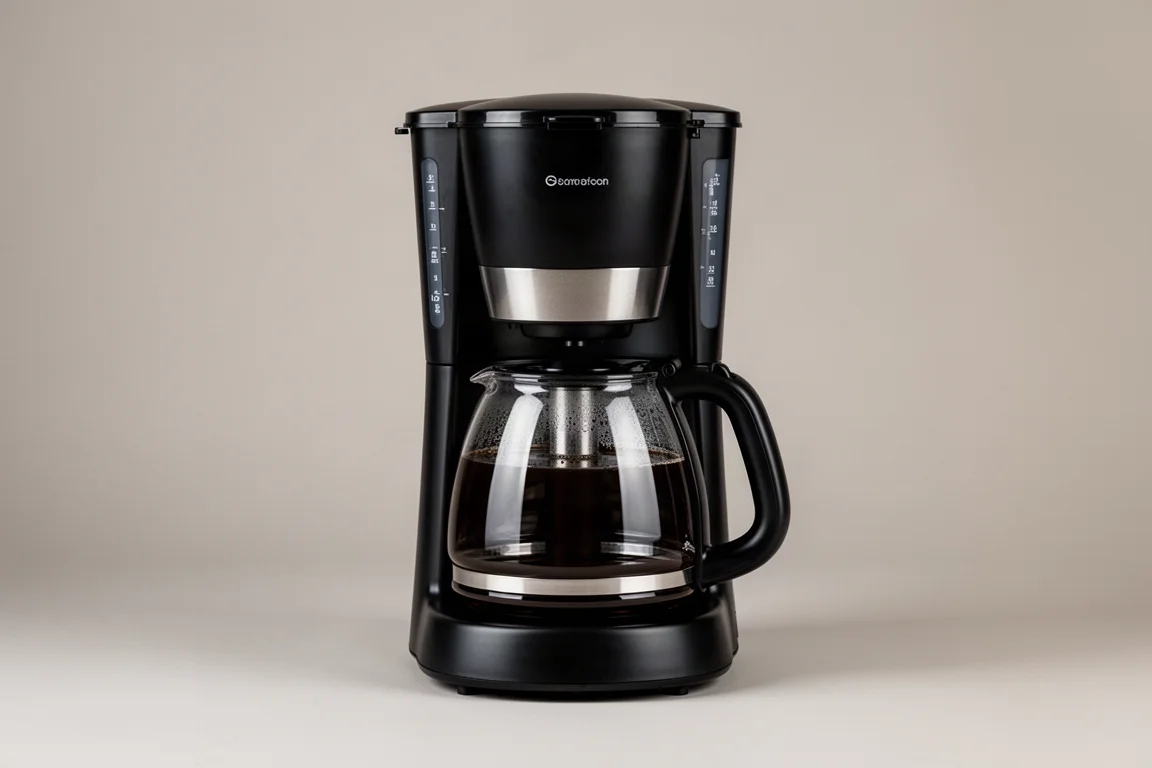
The Ninja offers two brewing styles, an adjustable warming plate, even saturation with temperature control, and 24-hour programmability.
It has the second most powerful element at 1,140 W, yet took the longest brew time of the conventional machines at close to 9 minutes. The payoff is temperature: 191.1 degrees, the hottest of any machine, and it stayed very hot an hour later at 185.9. There are no water measurement marks, but filling is as easy as the Hamilton Beach. Extraction was excellent at 638 PPM, second only to the Hamilton Beach, and the twist-and-lock carafe poured with no drips at all. Capacity was also the most honest of the 12-cup machines at 11.5 real cups.
The Heavyweight Tier: GE, Cuisinart, Bunn, and Makita
General Electric ($80)
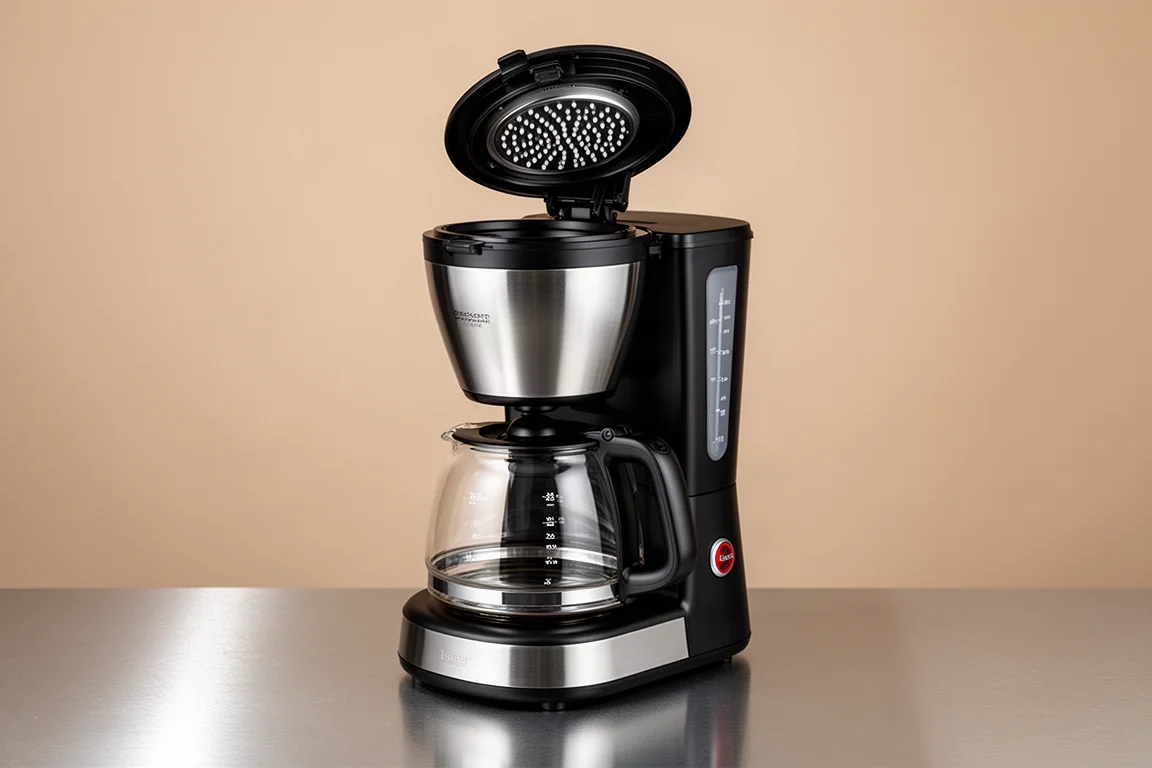
The GE claims a powerful 1,500 W heating element, regular and bold brew options, a wide showerhead for even water dispersal, and programmability.
The measured element hit 1,190 W, the most powerful in the test, and it brewed the fastest of the full-size machines at just over 7 minutes, with 187.2 degree water, second hottest overall. It held 185.9 degrees after an hour. The compromises are practical: the fill area is cramped and the cover gets in the way when pouring out the last few ounces. Still, its all-around performance earned it the top overall score.
Cuisinart 14-Cup ($100)
The Cuisinart is built from BPA-free plastic with adjustable auto shut-off from zero to 4 hours, regular and bold brew settings, and full 24-hour programming.
Its element measured around 1,150 W and it finished in 7 minutes 38 seconds at 183.2 degrees, holding within a degree an hour later. The water fill area offers an extra inch of room compared to the GE and the cover stays out of the way. Extraction was strong at 638 PPM, tying the Ninja. Two weaknesses: the snapped-on carafe cover does not seal well, making it a leaker, and the 14-cup capacity measures out to only 12.2 real cups.
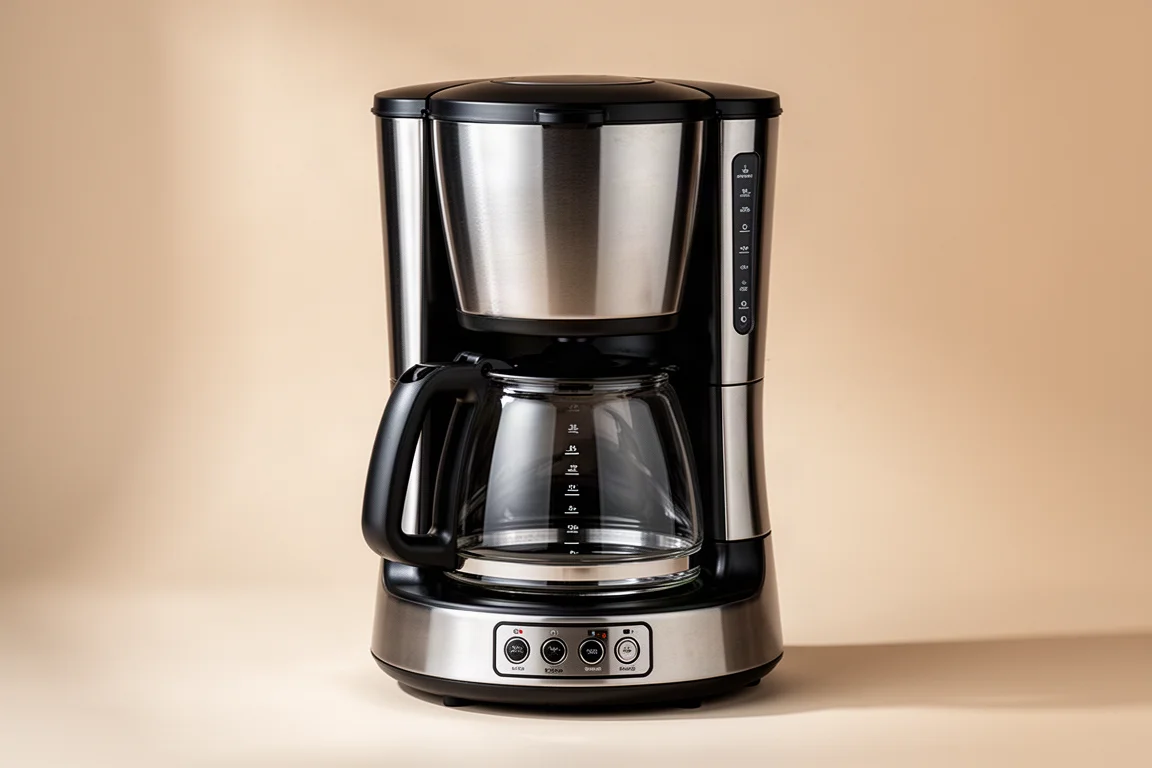
Bunn 10-Cup ($120)
The Bunn claims to be the fastest 10-cup home coffee maker, brewing in about 4 minutes, with the cleanest pour on the market thanks to a proprietary lid and spout design. It is designed and assembled in the USA.
Setup takes patience: you must prime the internal tank and wait 15 minutes for it to heat the first time. After that, it is a different animal entirely, finishing a brew in only 2 minutes, by far the fastest time recorded, at a hot 184.8 degrees. The pour claim checked out too, with no leaks or spills. The trade-off is heat retention: it dropped 12 degrees after an hour on the warmer.
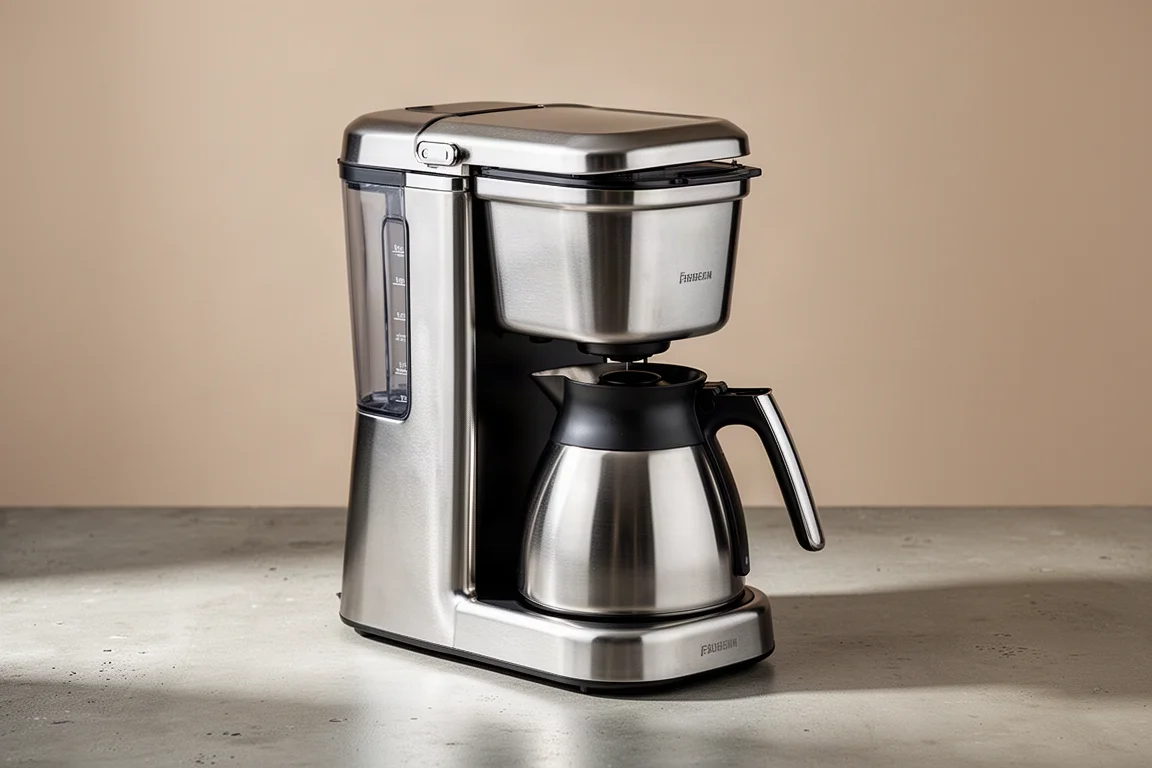
Makita Cordless Coffee Maker ($150)
The most expensive machine here is also the strangest: a cordless coffee maker that runs on Makita 12, 14.4, or 18 V power tool batteries. Battery and charger are not included. It uses a permanent drip filter, no paper filters needed, and brews up to three cups on a single 5 Ah battery charge, with a claimed 5 minutes per 5 oz cup.
It actually exceeded its claim, producing a full 9 oz per brew, and finished in 5.5 minutes, which is impressive for battery power. Water temperature was 173.5 degrees, on the cool side. It weighed 4.58 lb with a 5 Ah battery attached. One testing note: its permanent filter likely gave it an unfair extraction advantage at 663 PPM, the highest reading of all.
What the Numbers Actually Show
Temperature separated the field more than anything else. The Ninja led at 191.1 degrees, followed by the GE at 187.2 and the Braun at 185.2. The cheapest machines clustered in the high 160s to high 170s, which is warm enough but not ideal. Extraction told a similar story: machines in the 630s PPM range produced noticeably stronger coffee than those stuck in the low 600s, and design, not price, drove the difference.
Capacity honesty was another finding worth noting. The Braun and Cuisinart, both sold as 14-cup machines, measure 12.3 and 12.2 real 6-oz cups. The Ninja was closest to its rating at 11.5 cups, with the GE at 11.1.
Final Verdict: Which Coffee Maker Should You Buy?
The General Electric took the top overall score thanks to strong all-around performance, useful features, and the most powerful heating element measured. The Ninja finished a close second, actually outperforming the GE in most individual categories, held back only by its long brew cycle.
If value is what matters, the Black and Decker at around $35 is the standout. It performed well in nearly every category, and as the least expensive programmable machine in the group, it is the easy pick if you want to wake up to hot coffee. And if you need coffee where there is no outlet at all, the Makita cordless machine earned its premium with genuinely impressive battery-powered performance.
Conclusion
Price and coffee quality are only loosely connected here. The $50 Hamilton Beach out-extracted the $65 Braun, and the $35 Black and Decker beat machines twice its price on temperature. Match the machine to what you actually need: programmability on a budget, the fastest possible brew, honest capacity, or a clean-pouring carafe, and you can spend well under $100 and still get great coffee.
Further reading
Related Reviews
Kitchen Appliances
Arboleaf Smart Kitchen Scale Review: Connected Cooking Made Simple
A Bluetooth-enabled kitchen scale that syncs with a nutrition-tracking app, offering real-time weight monitoring and recipe guidance for home cooks.
Kitchen Appliances
Best Air Fryer Toaster Ovens Under 100: Five Practical Options for Budget-Conscious Kitchens
Five air fryer and toaster oven combinations that deliver real cooking performance without breaking the bank, each with distinct strengths for different kitchen needs.
Kitchen Appliances
Best Air Fryer Toaster Ovens: Three Top Picks for Multi-Function Cooking
Three high-performing air fryer toaster ovens tested for versatility, ease of use, and real-world cooking results. Find the right fit for your kitchen.