Lawn & Garden
Best Battery-Powered String Trimmers 2026: Nine Brushless Models Compared
Nine cordless string trimmers tested side by side for cutting speed, vibration, line capacity, run time, and charge time. Here's how they stack up.
Introduction
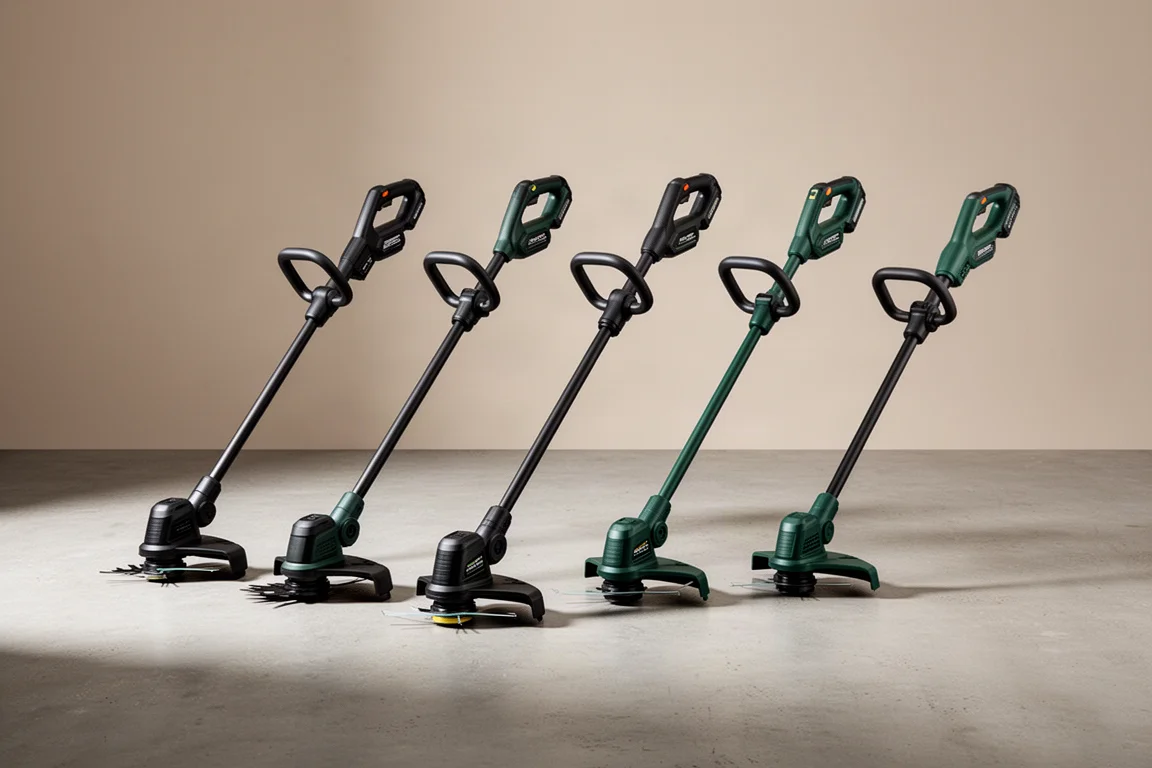
Battery-powered string trimmers have improved enormously in the last few years, and many now rival gasoline models in outright cutting power. To find out which ones are worth your money, we compared nine brushless cordless trimmers from Worx, Cat, Ryobi, Kobalt, Husqvarna, EGO, Milwaukee, Makita, and DeWalt across cutting speed, noise, weight, vibration, trimmer line capacity, run time, and charging speed. Several of these trimmers actually cut faster than a comparable gas trimmer, which is exactly the kind of progress that makes cordless equipment genuinely worth considering this year.
How We Evaluated the Lineup
Each trimmer was put through the same set of tests: an 8-by-24-foot patch of thick grass to measure cutting speed, a noise reading from 20 inches away, front and rear weight checks, vibration measurement without trimmer line installed, trimmer line capacity and reload effort, bump-feed behavior with shortened line, time to reach full RPM, total run time on a fresh charge, and battery recharge time. Where brands claimed performance numbers, we noted them, but the rankings below are based on what each trimmer actually delivered.
Budget Picks: Worx 40V and Cat 60V
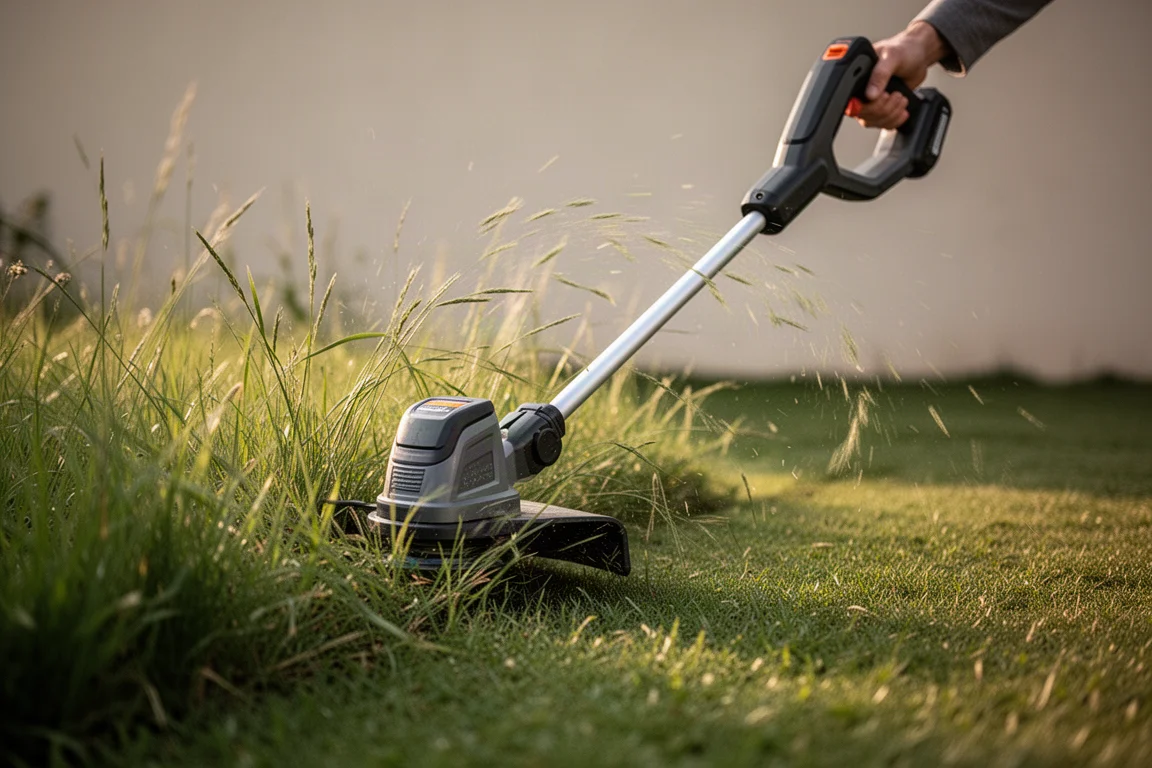
At $179 for the trimmer, battery, and charger, the Worx 40V 15-inch string trimmer is the most affordable model in this comparison. It uses a brushless motor with a 4Ah battery, which the brand claims runs 50% longer and delivers 25% more power than standard brushed motors. It was also the quietest trimmer tested at 74 dB, the lightest at 9.31 lb total, and it lasted just over 29 minutes on a charge, one of the longer run times recorded. The easy-load spool head holds around 12 feet of 0.095 line. The trade-offs: it took 2.5 seconds to reach full RPM, the slowest in the lineup, it struggled and bogged down in thick grass, and it needed eight bumps to feed 2-inch line and could not feed line shortened to 3/4 inch.
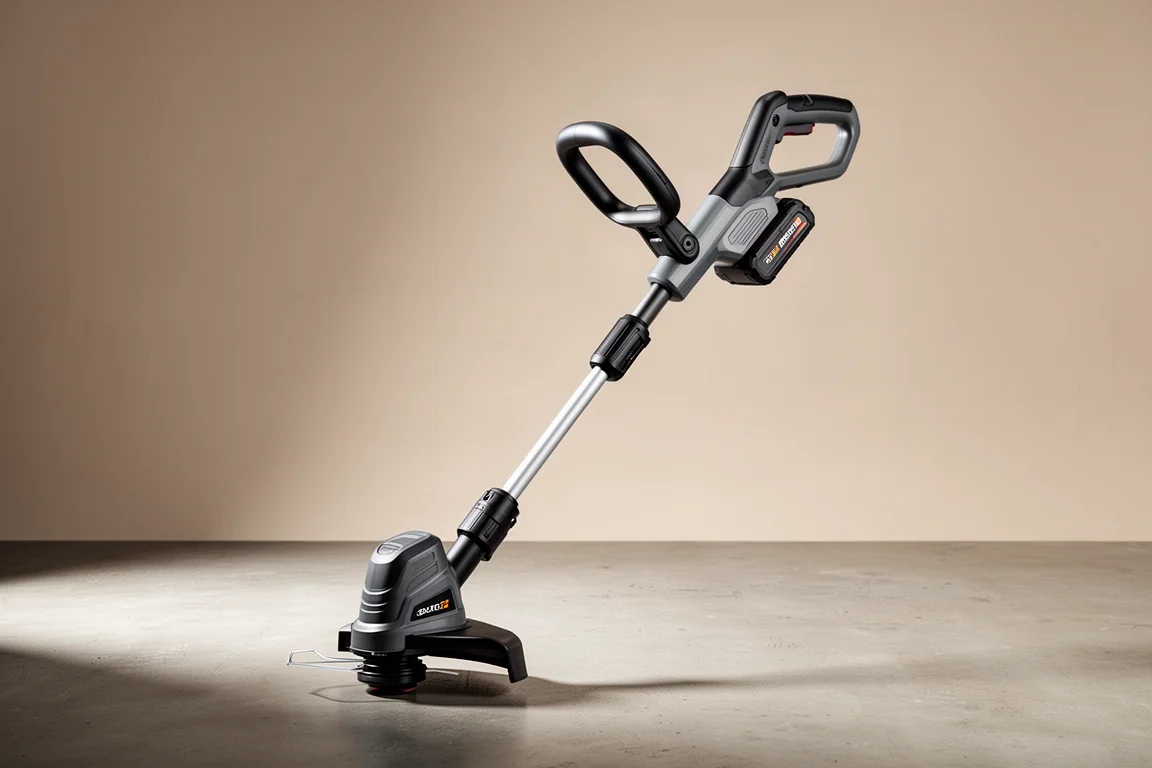
The Cat 60V 15-inch brushless trimmer costs $200 as a kit and pairs a 2.5Ah battery with an eco mode to conserve charge. Cat claims 40% more power and 10% longer run time than standard brushless motors, and it posted the second-highest no-load RPM at around 6,029. It is also the smoothest trimmer in the lineup at just 6 to 7 mm/s of vibration, and it finished in 2 minutes 19 seconds in the grass test. Its weak points were a soft start at 1.9 seconds, a 15-inch cut that slowed things down, and trouble dispensing line shortened to 3/4 inch even after a dozen attempts.
Mid-Range Contenders: Ryobi, Kobalt, and Husqvarna
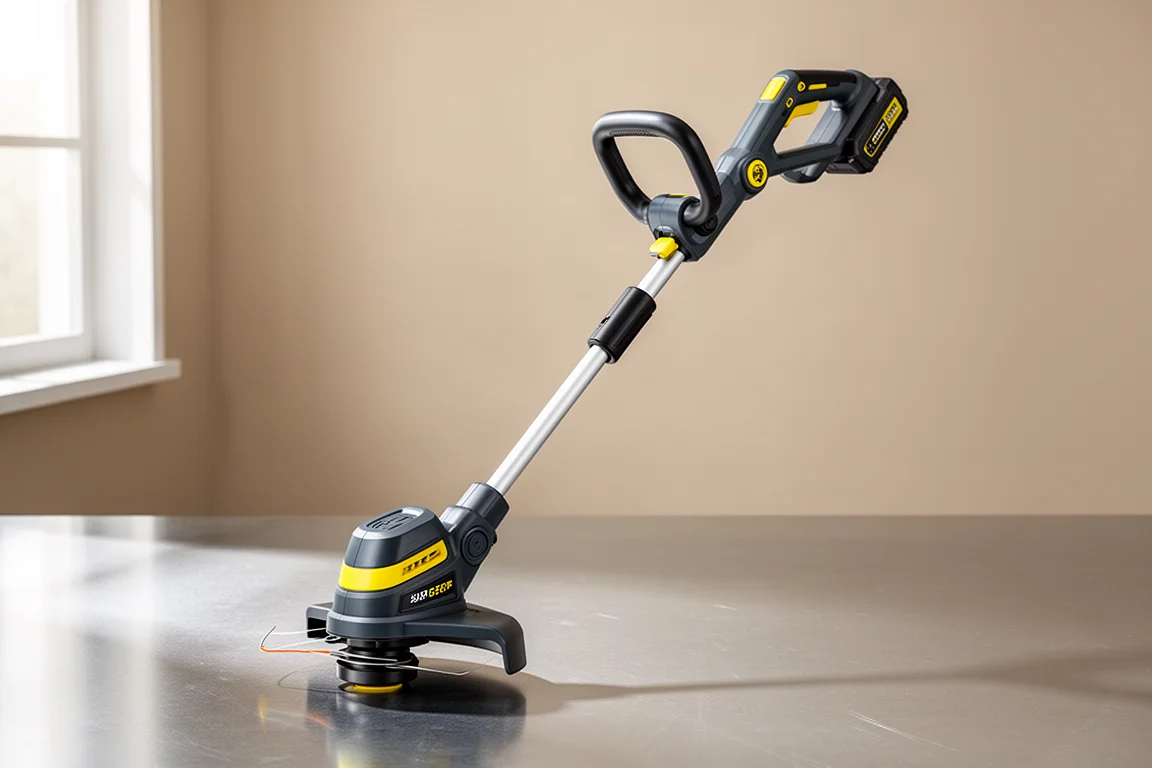
The Ryobi 40V trimmer, at $259 with battery and charger, punched far above its price in the cutting test. It has a two-speed transmission, an adjustable 14 to 16-inch line length, and a claimed line reload in under 60 seconds, which our 10-second reload confirmed as the fastest in the group. It finished the grass test in 1 minute 57 seconds, second fastest overall, and reached full RPM in just 1.3 seconds. It is also the lightest at the front at 3.63 lb. The downsides are significant, though: it vibrated heavily at around 40 mm/s, it was loud at 96.3 dB, it holds only about 15.5 feet of line, and it could not feed line shortened to 3/4 inch.
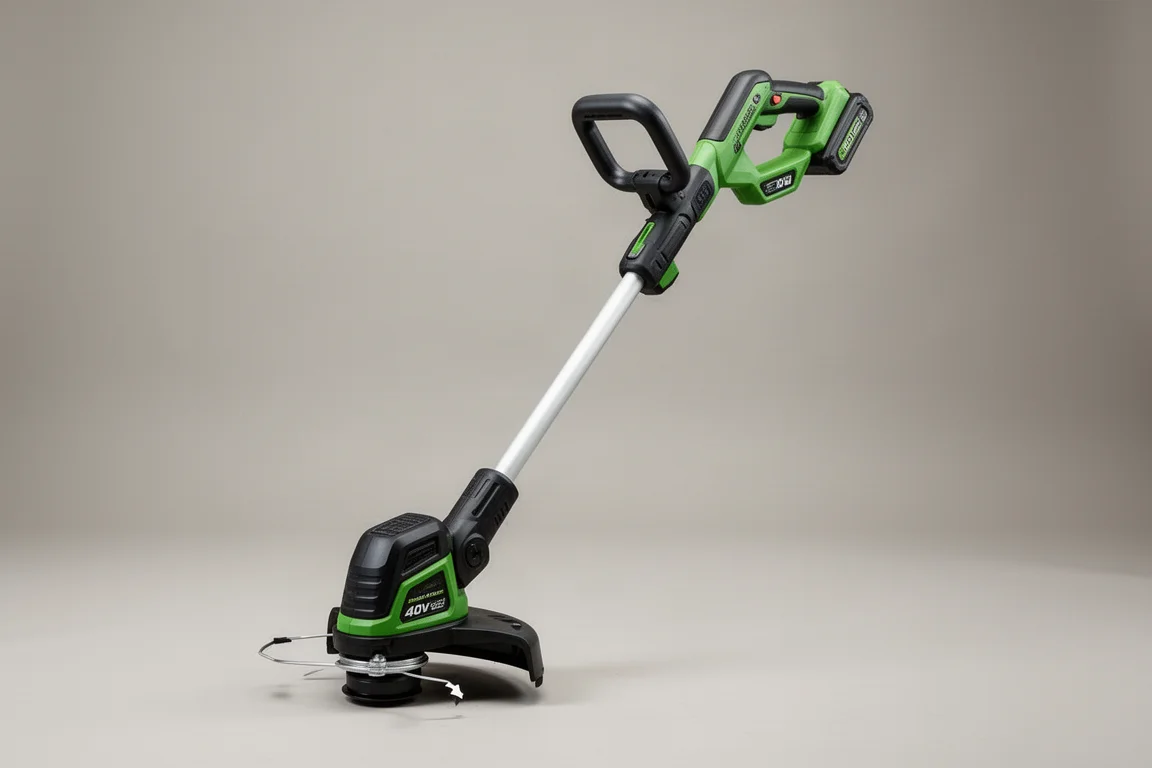
Kobalt’s 80V entry is $319 for two batteries (2Ah and 2.5Ah), a charger, and the trimmer. It has a 17-inch cut, a two-speed transmission, and a claimed one-hour charge for the smaller battery. It finished the cutting test in 1 minute 59 seconds, held a relatively high 5,876 RPM, and ran close to 25 minutes on the 2.5Ah pack. Vibration was moderate at 12 to 13 mm/s and noise was a reasonable 76.5 dB. It reached full RPM in 1.5 seconds and dispensed 2-inch line on the first bump, but 3/4-inch line was too short for it to feed.
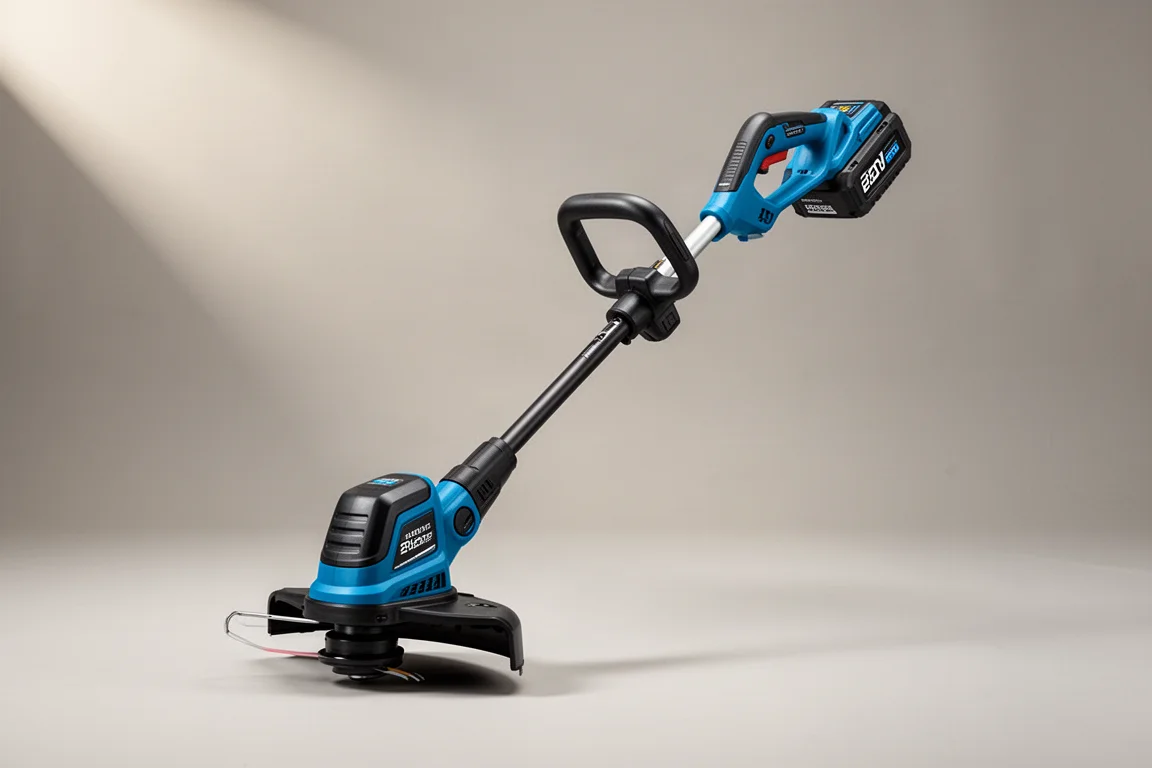
The Husqvarna 40V 16-inch straight shaft trimmer is $320 as a kit and stands out for endurance. It has a boost button that delivers 20% more power on demand, a reversible motor direction, and a 4Ah battery that lasted the longest of any trimmer tested at around 35.5 minutes. It weighs a light 9.81 lb, and it was one of only three trimmers that could dispense line shortened to 3/4 inch, managing it in just three bumps. However, it was the slowest cutter in the group at 2 minutes 40 seconds, losing noticeable RPM in thick grass, and its 2-hour 35-minute recharge time is among the slowest here.
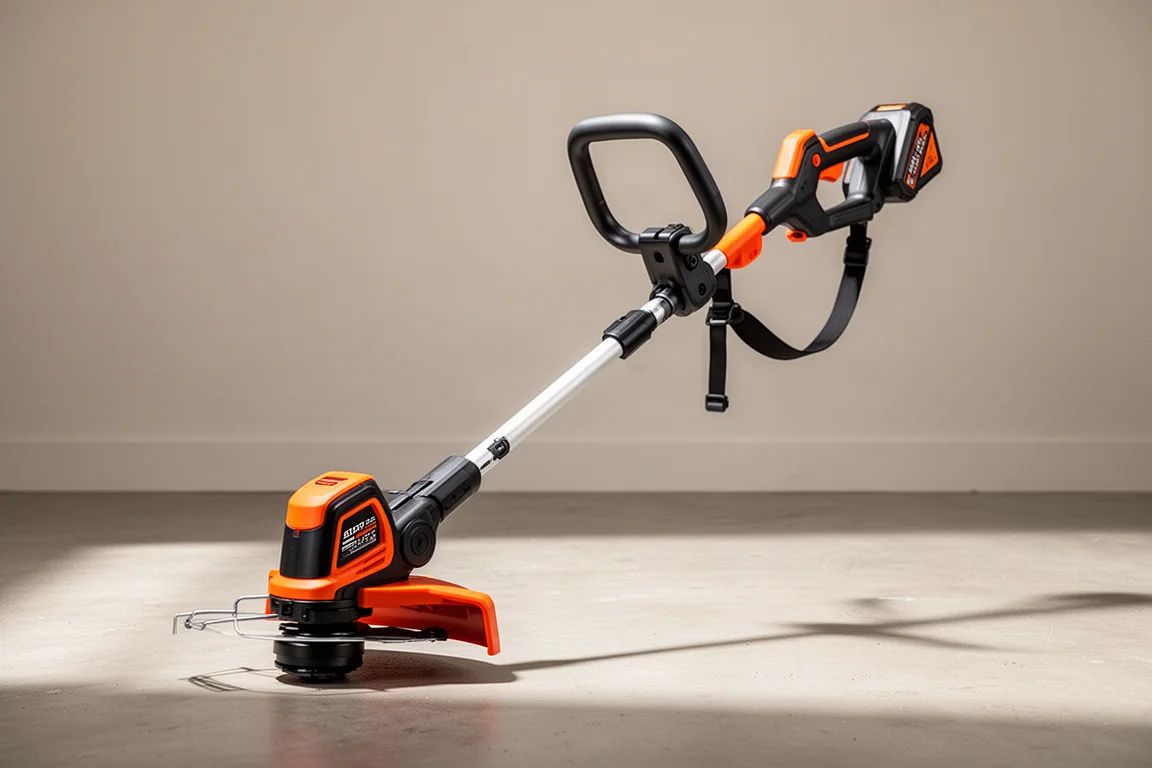
Heavy Hitters: EGO and Milwaukee
The EGO 56V 16-inch trimmer, at $349 with a 4Ah battery, charger, and shoulder strap, earned strong marks across nearly every category. It was the fastest cutter in the lineup until the very top, clearing the test patch in just 1 minute 20 seconds, and it held high RPM effortlessly in thick grass. Its power-load head winds line automatically and holds a generous 23.5 feet. Reaching full RPM in only 0.8 seconds, it is also the third most responsive trimmer here. Vibration was low at around 10 mm/s and the 47-minute recharge was the fastest tested. The main drawback is weight: at almost 14 lb total, it is the second heaviest trimmer in this comparison.
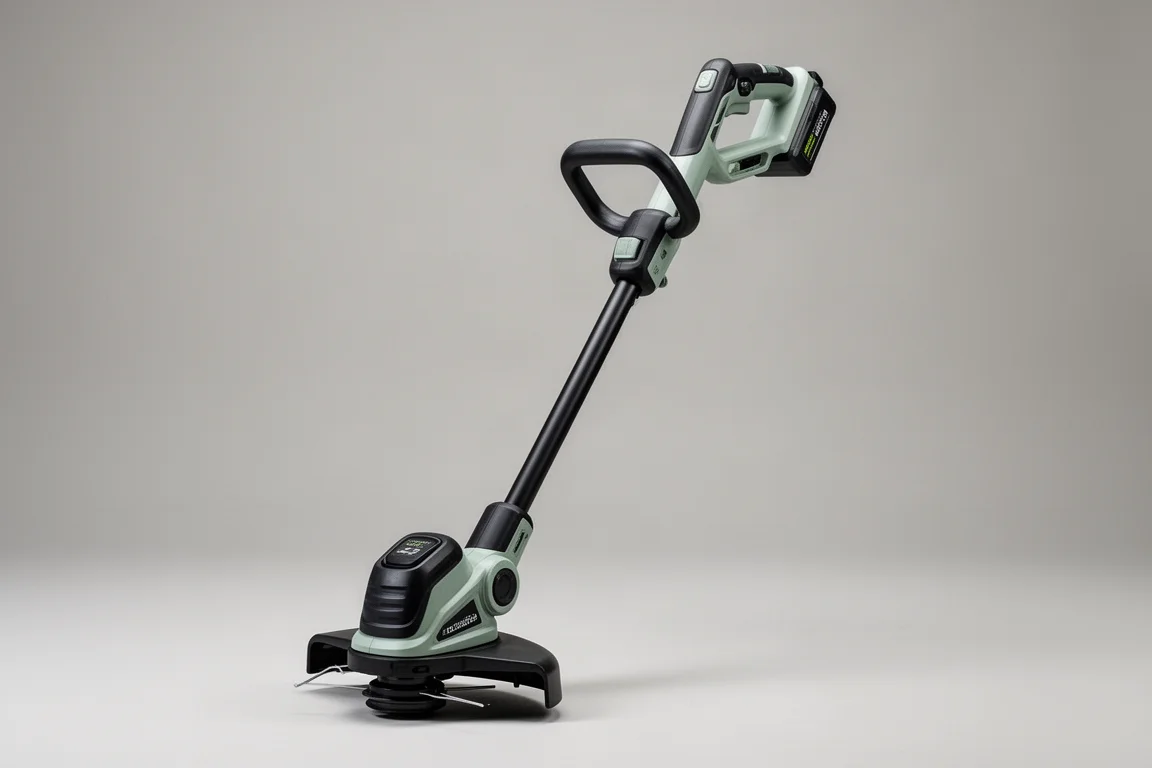
The Milwaukee 17-inch dual battery straight shaft trimmer is $400 for the tool only, batteries and charger not included. Optimized for 8Ah batteries, Milwaukee claims 2.5 horsepower, up to 6,200 RPM, full throttle in under one second, and line support from 0.080 to 0.105. Every claim held up in testing: it posted the highest constant no-load RPM at 6,190, hit full speed in a blistering 0.2 seconds, and finished the grass test in 1 minute 3 seconds, faster than the gas trimmer used as a benchmark. It also holds the joint-largest 30 feet of line, fed 3/4-inch line in three taps, and its debris shield at nearly 12.5 inches wide offered the most protection of any trimmer here. Be prepared for the bulk, though: 16.41 lb total makes it the heaviest in the lineup, it was the loudest at 99.1 dB, and the test run time was about 21 minutes once both batteries were charged.
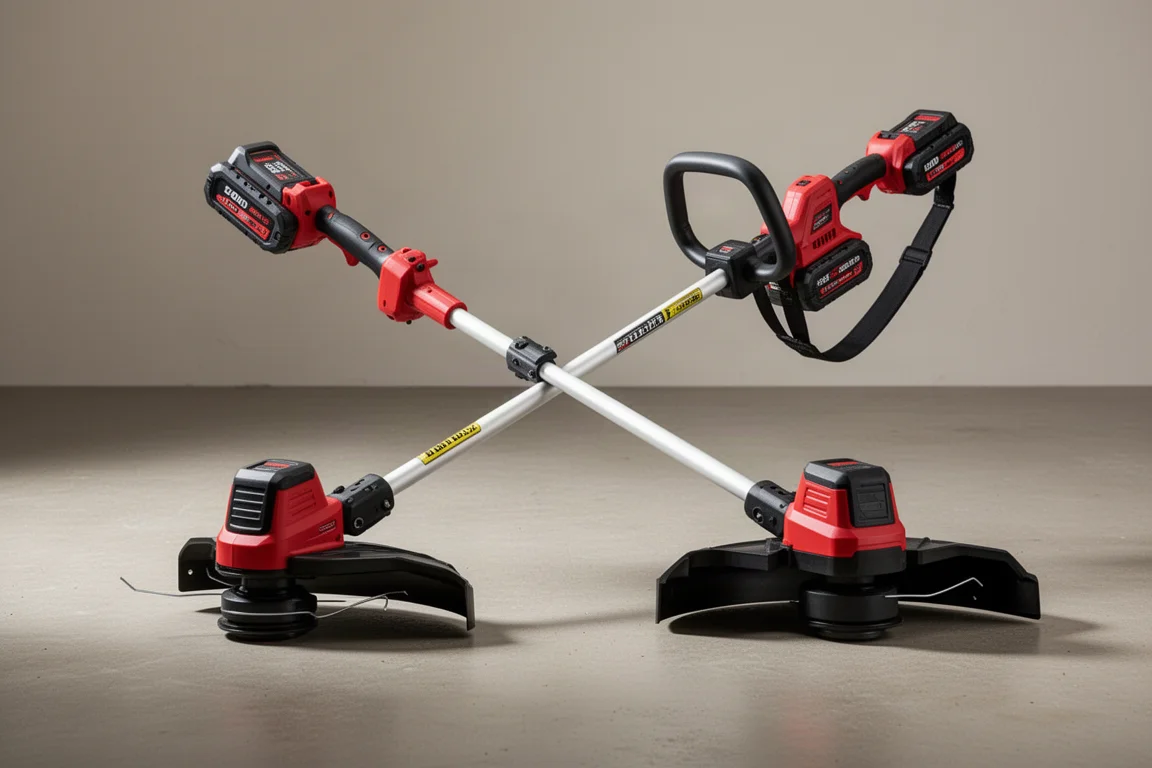
Strong Performers with Trade-Offs: Makita and DeWalt
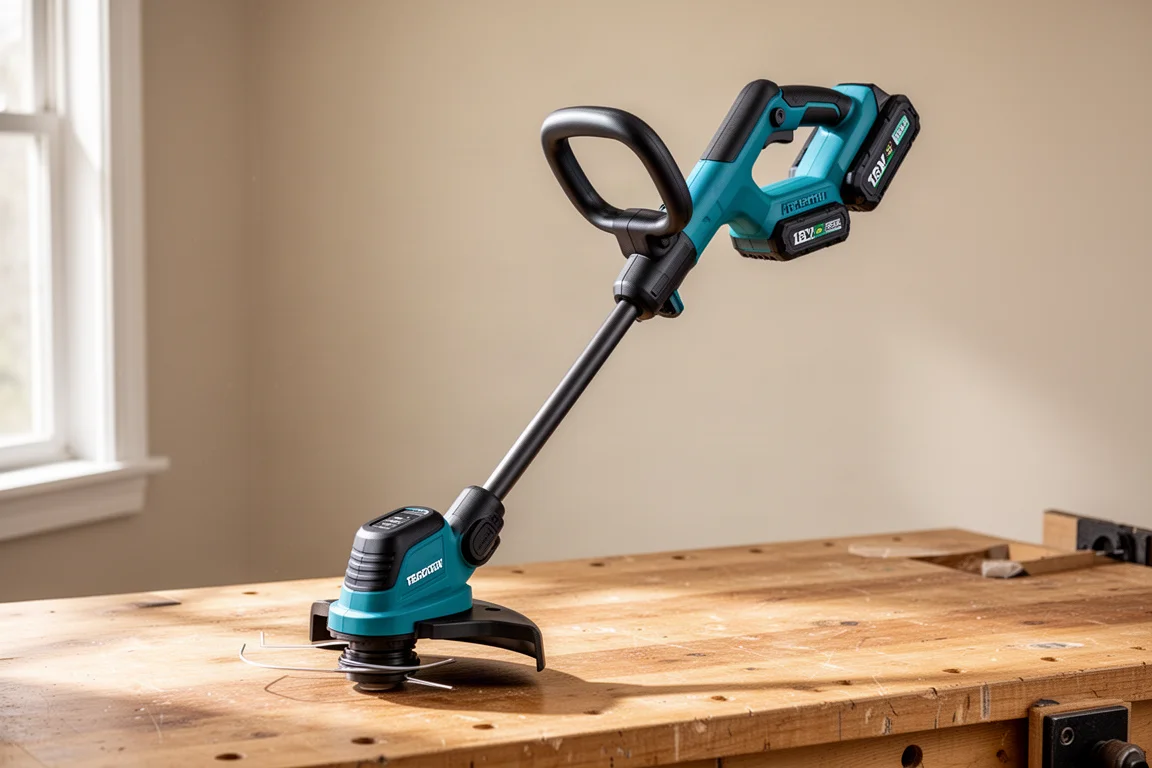
The Makita 36V (dual 18V battery) 17-inch trimmer is $439 for the tool alone. Makita claims power equivalent to a 30cc gas trimmer, and the kit includes safety glasses, three speeds, a variable speed trigger, and a steel drive shaft for less vibration and longer life. It reached full RPM in close to one second, weighed a reasonable 13.61 lb, and cut the test patch in 1 minute 46 seconds. Unfortunately, it lacks a quick-reload head, holding only about 17 feet of line, which means roughly twice as many reloads as the capacity leaders, and it vibrated noticeably at around 25 mm/s. Its narrow 7-inch debris shield also offers the least protection here.
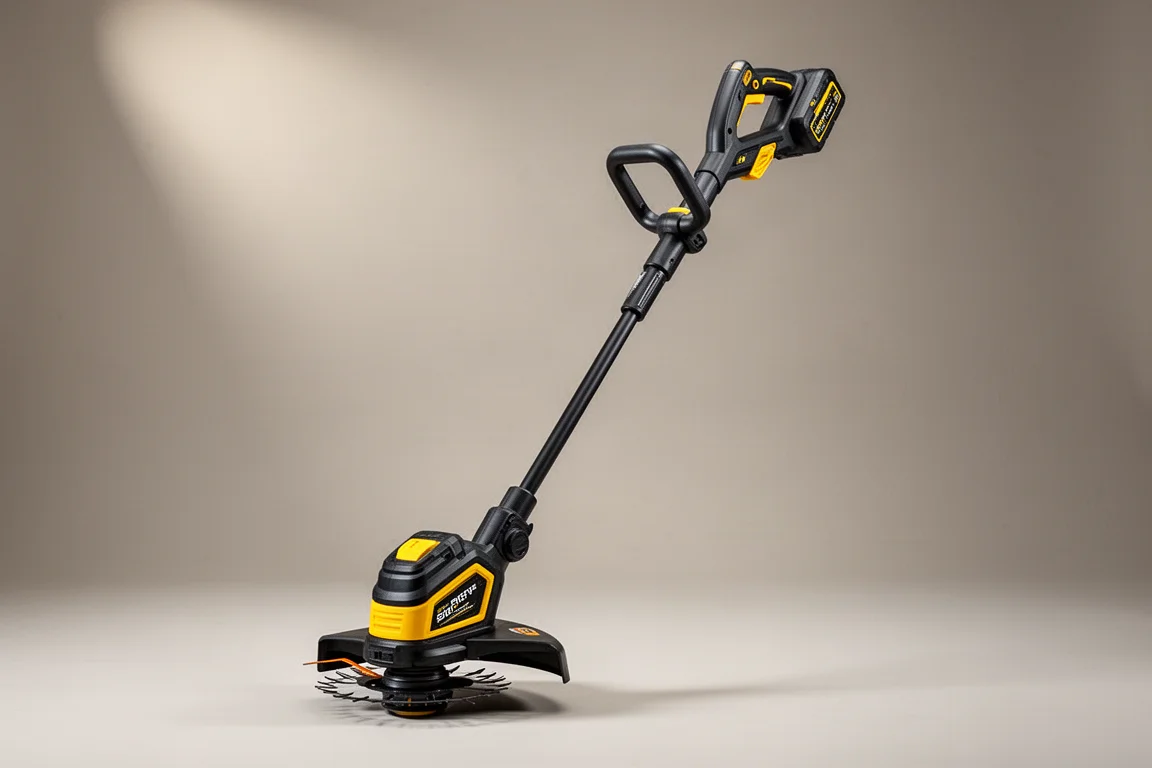
The DeWalt 60V trimmer, $449 for the tool only, runs on a 60V max battery with three speeds, a charge indicator, and a shoulder strap. DeWalt claims peak power 18% greater than a 36cc gas trimmer and a 70% quieter operation, and it supports line up to 0.105. With a 9Ah battery, it finished the cutting test in 69 seconds, second only to the Milwaukee, hit full speed in just 0.5 seconds, and holds the joint-largest 30 feet of line via a speed-feed head. It can even dispense line shortened to 3/4 inch, though it needed a restart after the first ten taps failed. Its quirks: it spins at only about 5,100 RPM, roughly 700 RPM below the pack, which the wide 17.5-inch swath design likely accounts for, it vibrated at 33 to 34 mm/s, its narrow debris shield offers little protection, and the tested charger took 2 hours 18 minutes.
Trimmer Line Capacity and Reload Speed
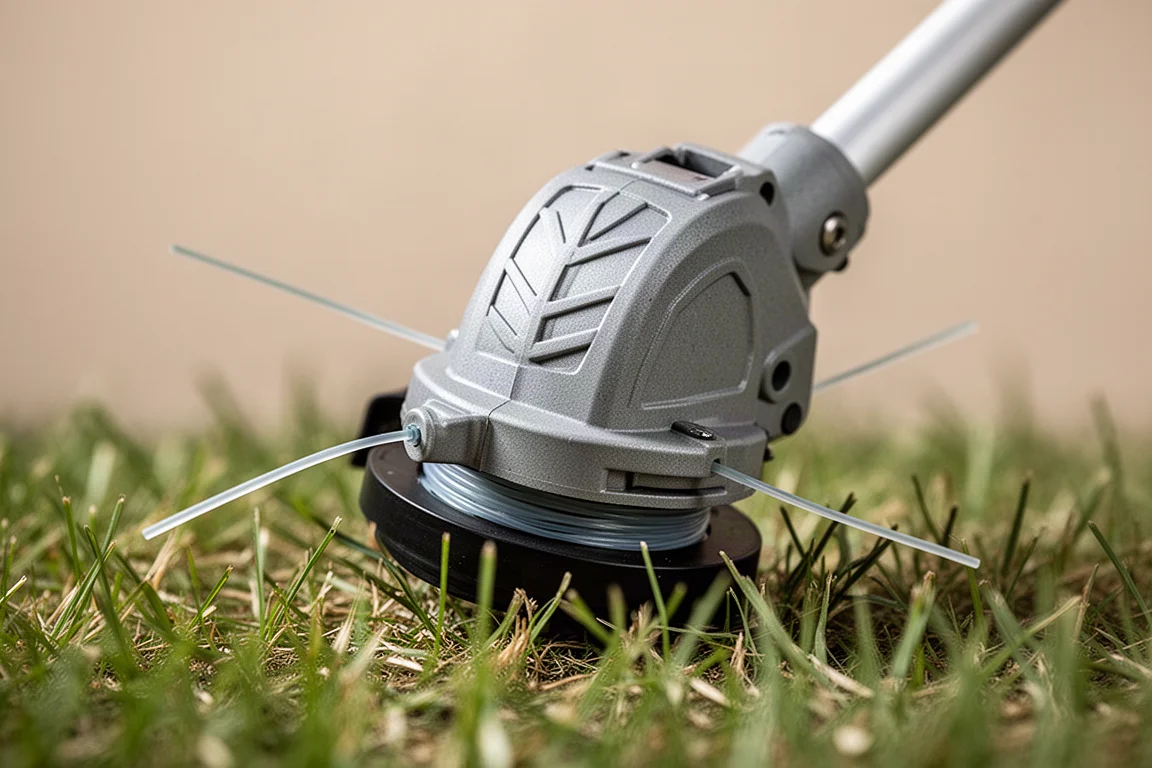
Line capacity quietly decides how often you stop working. The DeWalt and Milwaukee lead the field at 30 feet each, with the EGO close behind at 23.5 feet thanks to its excellent power-load winding feature. The Husqvarna holds close to 20 feet, the Cat about 16, the Makita around 17 without a speed-feed head, the Ryobi 15.5, and the Worx 12. On reload convenience, the Ryobi’s 10-second reload was the standout, while the Makita’s manual wind system costs the most time and effort over the life of the tool.
Noise, Weight, and Vibration
There is a clear pattern here: the less expensive trimmers are generally quieter and lighter, while the powerful 60V and dual-battery models are heavier and louder. The Worx (74 dB), Kobalt (76.5 dB), and Cat (78.2 dB) are the quietest, while the Milwaukee (99.1 dB), DeWalt (92.4 dB), and Ryobi (96.3 dB) are the loudest. On vibration, the Cat is the smoothest at 6 to 7 mm/s, followed by the Worx at 9 to 10 and the EGO at around 10, while the Ryobi and DeWalt vibrate the most. Notably, trimmers with narrower debris shields also tended to vibrate more.
Run Time and Charging
Most trimmers delivered at least 20 minutes of continuous full-throttle run time, which realistically stretches two to three times longer in typical residential use. The Husqvarna led at around 35.5 minutes, followed by the Worx at just over 29. The Makita was shortest at under 10 minutes on its highest speed setting. On charging, the EGO’s 47-minute recharge was the fastest, with the Makita (49 minutes) and Cat (50 minutes) close behind; the Worx was slowest at 4 hours 15 minutes.

Which String Trimmer Should You Buy?
The Milwaukee is the best overall string trimmer in this comparison, combining the fastest cutting, quickest throttle response, biggest line capacity, and the widest debris shield. The EGO is the most well-rounded kit pick, earning strong marks in nearly every category with the fastest charger included. The DeWalt is nearly as fast as the Milwaukee with equally generous line capacity, just a couple of steps behind in RPM and refinement.
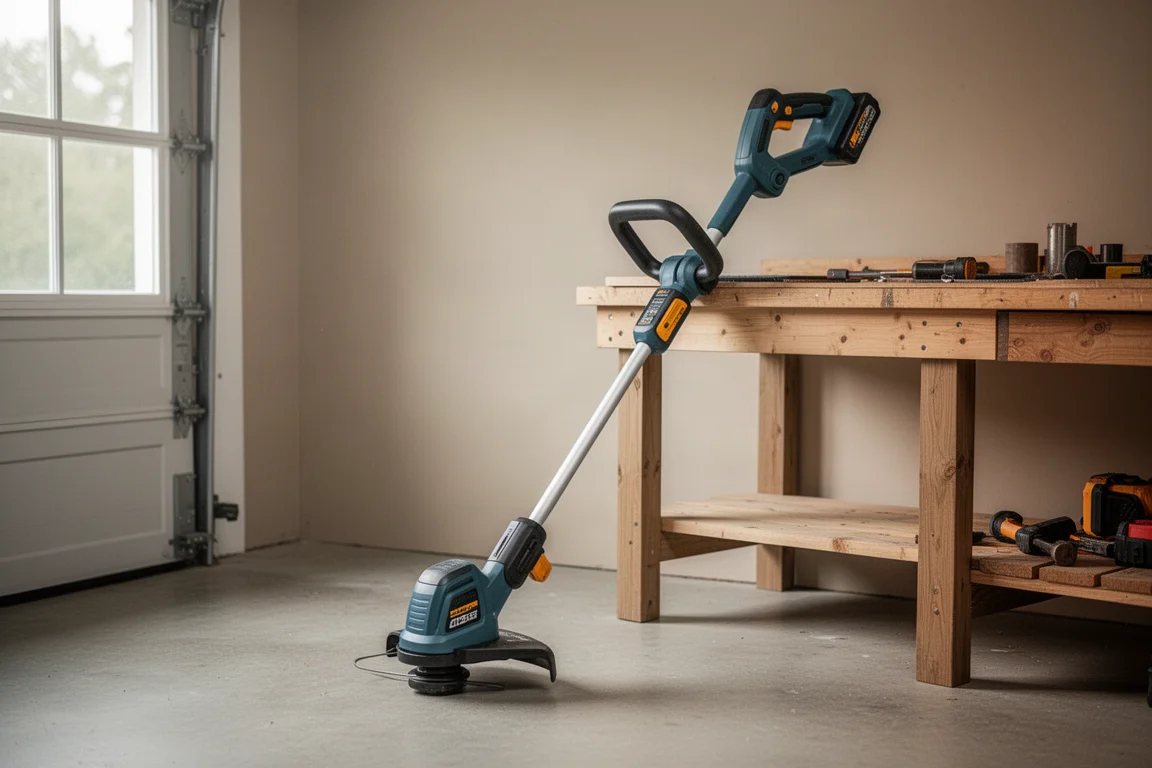
If you want maximum capability and already own compatible batteries, the Milwaukee and DeWalt tool-only purchases make sense. If you need a complete kit out of the box, the EGO is the strongest value among the premium options. Budget shoppers with lighter workloads should look at the Cat for smoothness and quiet operation, or the Worx if lowest price and longest-in-class run time for the money matter most. For occasional residential trimming, almost any trimmer here will do the job; for larger properties or thick growth, spend up.
Conclusion
Battery-powered string trimmers have reached the point where many make gasoline trimmers genuinely obsolete for typical homeowners. The Milwaukee, EGO, and DeWalt proved that cordless tools can outcut gas, and even the budget models deliver years of useful service if their limits match your yard. Match the trimmer to your property size and existing battery platform, and any of the top picks here will serve you well.
Further reading
Related Reviews
Lawn & Garden
Best Cordless Lawn Mowers 2026: Ten Flagship Models Compared
We compare ten flagship cordless mowers from top brands to help you find the best value, mid-range, and premium option for your lawn.
Lawn & Garden
Hart Goes Big: New 40V Riding Mower, Self-Propelled Mower, and a Carbon Fiber Trimmer
A fresh wave of battery-powered lawn gear led by a new Hart electric riding mower, plus the walk-behind mower and carbon fiber string trimmer that round out the 40V line.
Lawn & Garden
Best Battery-Powered Lawn Mowers 2026: Three Flagships Compared
Flagship self-propelled battery mowers from Ego, Echo, and Greenworks tested for power, runtime, and value to help you find the right fit for your lawn.