Yard & Garden Tools
Best Battery Pole Saw: 10 Brands Tested for Speed, Torque, and Reach
Ten battery-powered pole saws from Sun Joe to Milwaukee go head to head in cutting speed, hardwood torque, noise, and balance tests.
Introduction
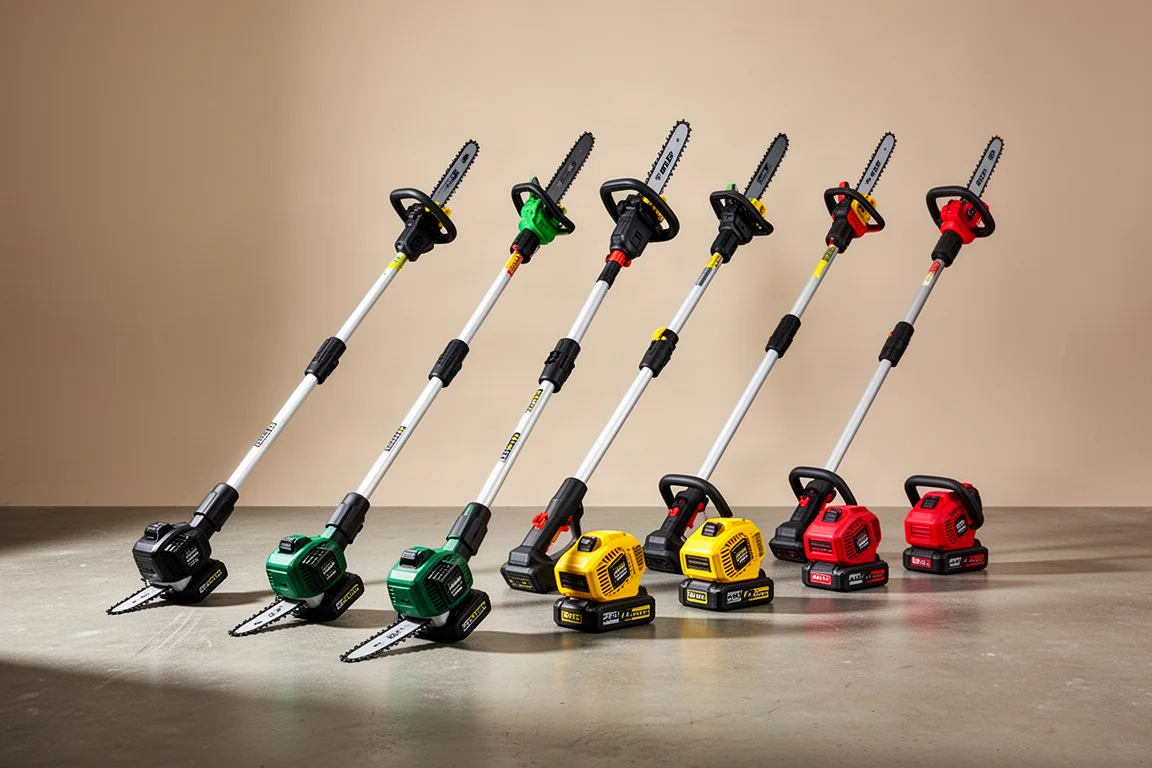
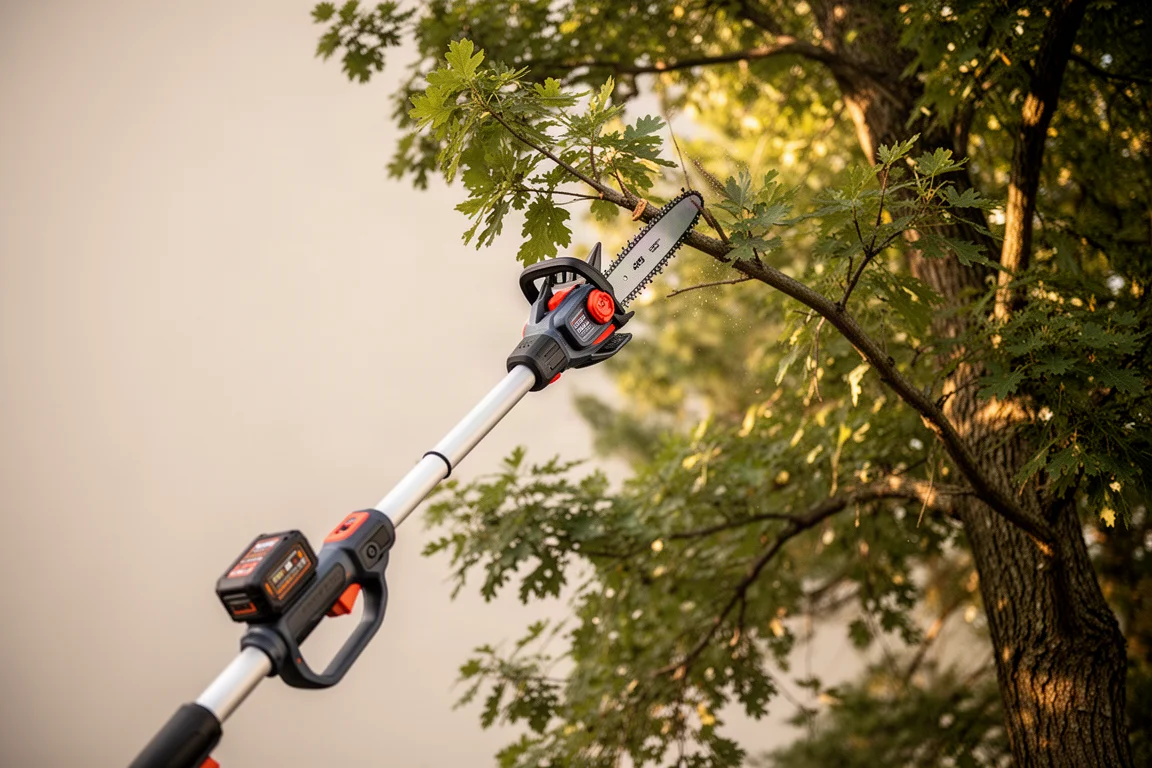
Trimming overhead branches is one of those jobs where the right tool changes everything. A battery-powered pole saw is far more efficient than wrestling a ladder and a hand saw, but not all pole saws are created equal. We compared ten brands across cutting speed, hardwood torque, noise, build quality, and balance to find out which one deserves your money.
How We Tested
Each saw faced three rounds of evaluation. First, a speed test cutting through a pressure-treated 4x4 with three timed passes per saw. Second, the same test repeated with only 2.5 lb of downward pressure near the end of the bar, which simulates real overhead trimming where you cannot lean into the cut. Third, a hardwood torture test cutting through a 5.5-inch diameter piece of hedge apple, one of the densest woods around. We also measured noise levels, chain speeds, pole sag, and front-end weight to judge balance and ergonomics.
Budget Picks Under $130: Sun Joe and GreenWorks
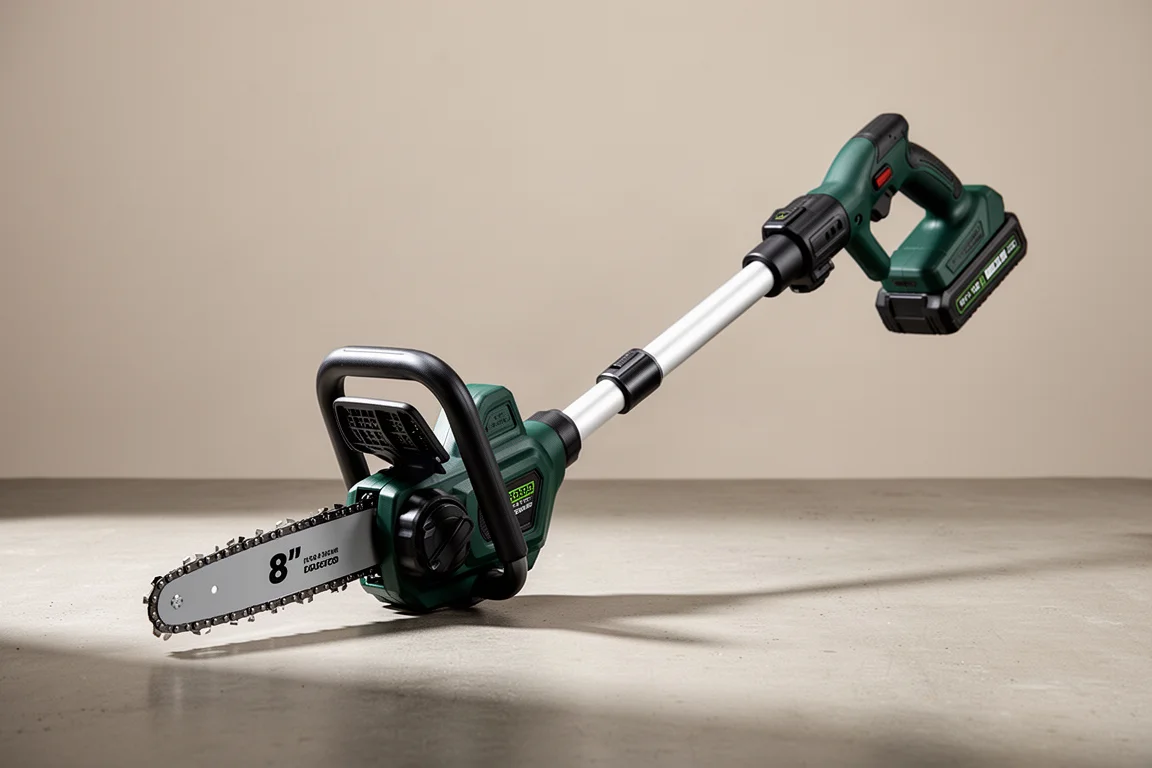
At $105, the Sun Joe is the least expensive saw in the lineup. It includes a 24-V 2-A battery, charger, and bar and chain oil, with an 8-inch auto-lubricating bar, up to 40 minutes of run time, a multi-angle head that adjusts from 0 to 30 degrees, and 14 ft of overhead reach. The telescoping pole extends from 3.7 to 7.2 ft, chain tensioning is tool-free, and noise is low at 77.4 decibels. The trade-off is a very slow chain speed of 2,750 RPM, which averaged about 11 seconds per 4x4 cut and slowed further under light pressure.
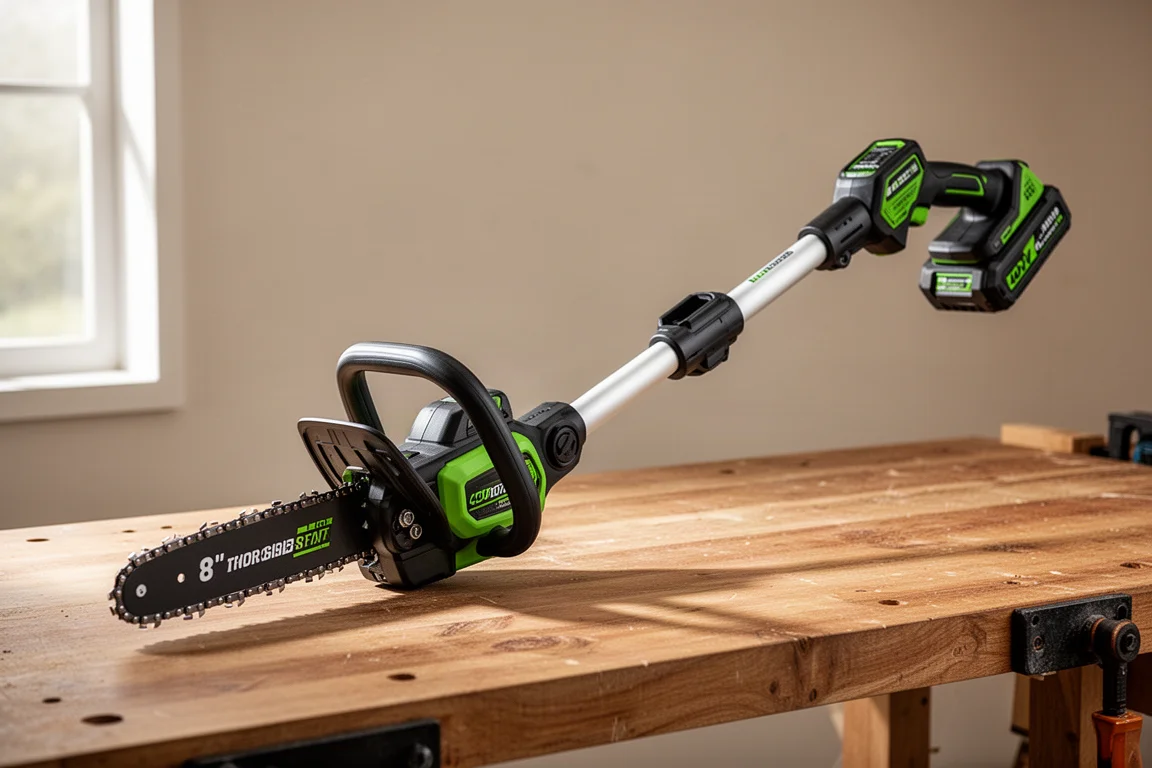
At $125, just $20 more, the GreenWorks steps up to a 40-V battery and charger, the same 8-inch bar, a three-piece aluminum shaft extending to 8 ft, and an automatic oiler. Its 4,015 RPM chain speed made it more than twice as fast as the Sun Joe, averaging 5 seconds on the 4x4 and holding up well under light pressure. The pole does sag a bit when fully extended, and you will need a screwdriver for chain tension, but the performance for the price is impressive.
The $140 to $169 Range: Black & Decker and Craftsman
The Black & Decker kit costs $140 and includes a 1.5-A battery, an in-line power head for easy maneuvering, an 8-inch bar, and up to 10 ft of overall length. Its bar-and-chain mounting with two bolts and two metal pins feels more durable than the budget models, but there is no automatic oiler, so you must oil the chain manually. At 1,750 RPM it is the quietest saw here at 75.7 decibels, and also one of the slowest, averaging 10.9 seconds per cut. Its 112-inch fiberglass pole is the longest of the group but sags 5.5 inches.
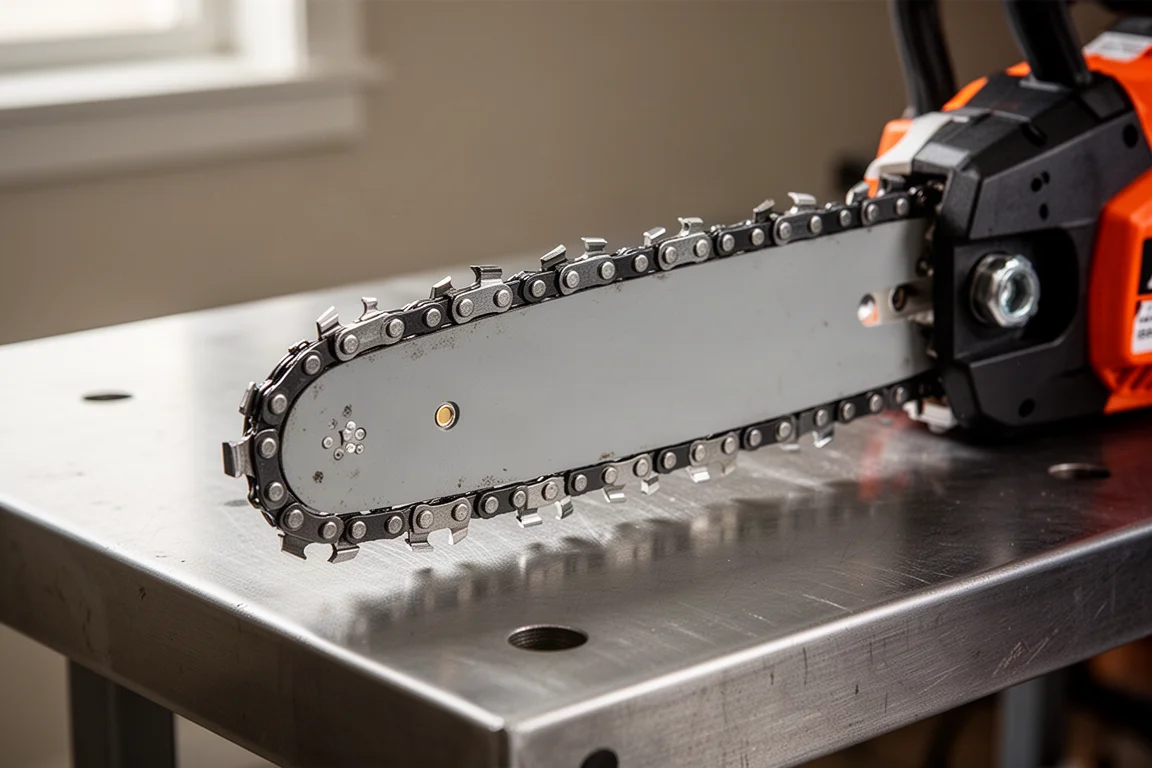
The Craftsman kit runs $169 with a 4-A battery, charger, and saw. It is a 20-V system with an 8-inch bar, no automatic oiler, up to 14 ft of reach with the extension pole, and an angled head for cutting precision. At 2,150 RPM and 79.1 decibels, it needed substantial downward pressure to make progress, averaging 7.7 seconds per cut and slowing to 9.5 seconds under light pressure.
Mid-Priced Contenders: DeWalt, Ryobi, and Worx
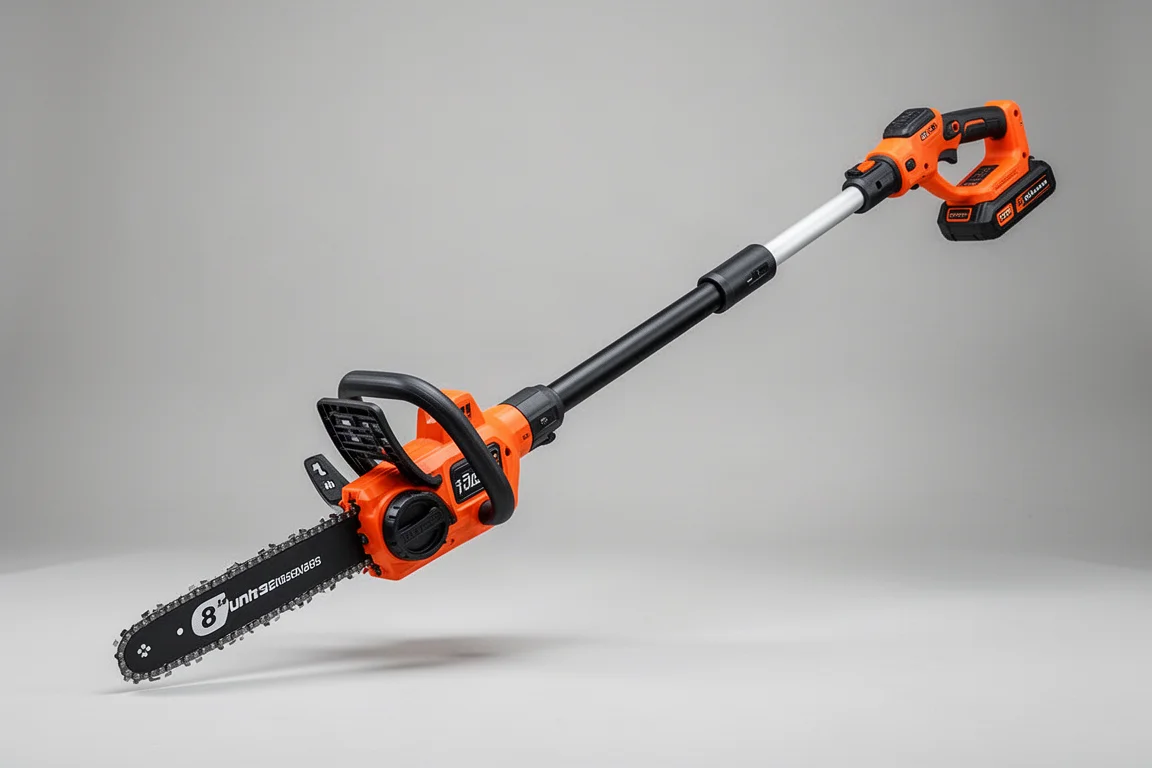
The DeWalt sells for $160 as a tool-only purchase, or around $220 as a kit with battery and charger. Its high-efficiency brushless motor delivers up to 96 cuts per charge on a 20-V system, with an 8-inch bar, automatic oiling, 15 ft maximum reach, and handy tree hooks for clearing pruned branches. The all-metal bar assembly is the most durable design in the test. It averaged 4.3 seconds on the 4x4, led the mid-pack under light pressure at 5.5 seconds, and cut the hedge apple in 15.1 seconds. If you already own DeWalt batteries, this is an easy recommendation.
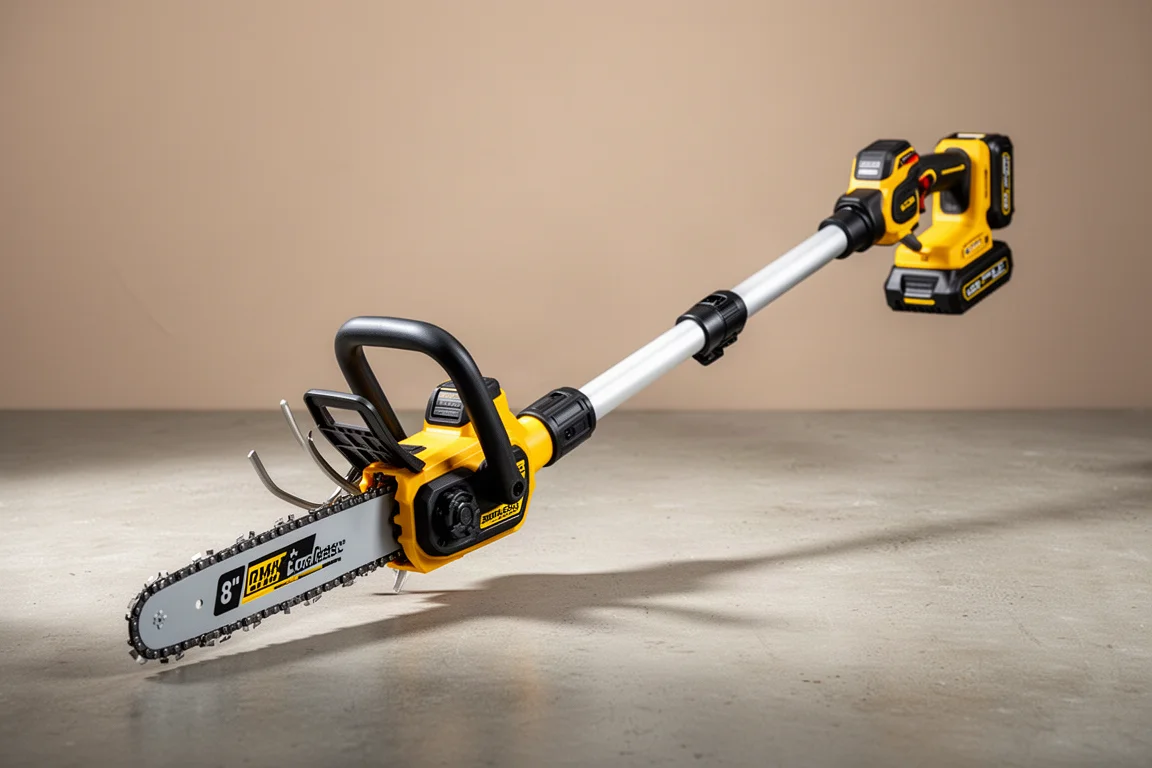
The Ryobi kit costs $199 and brings a 40-V 2-A battery, a shoulder harness, a larger 10-inch bar and chain, automatic oiling, and extension from 6.5 to 9.5 ft. It averaged 6.3 seconds on the 4x4, matched that in the light-pressure round, and cut the hardwood in 16.3 seconds. The in-line motor and angle head make precise cuts easier, though the build is not as robust as the DeWalt.
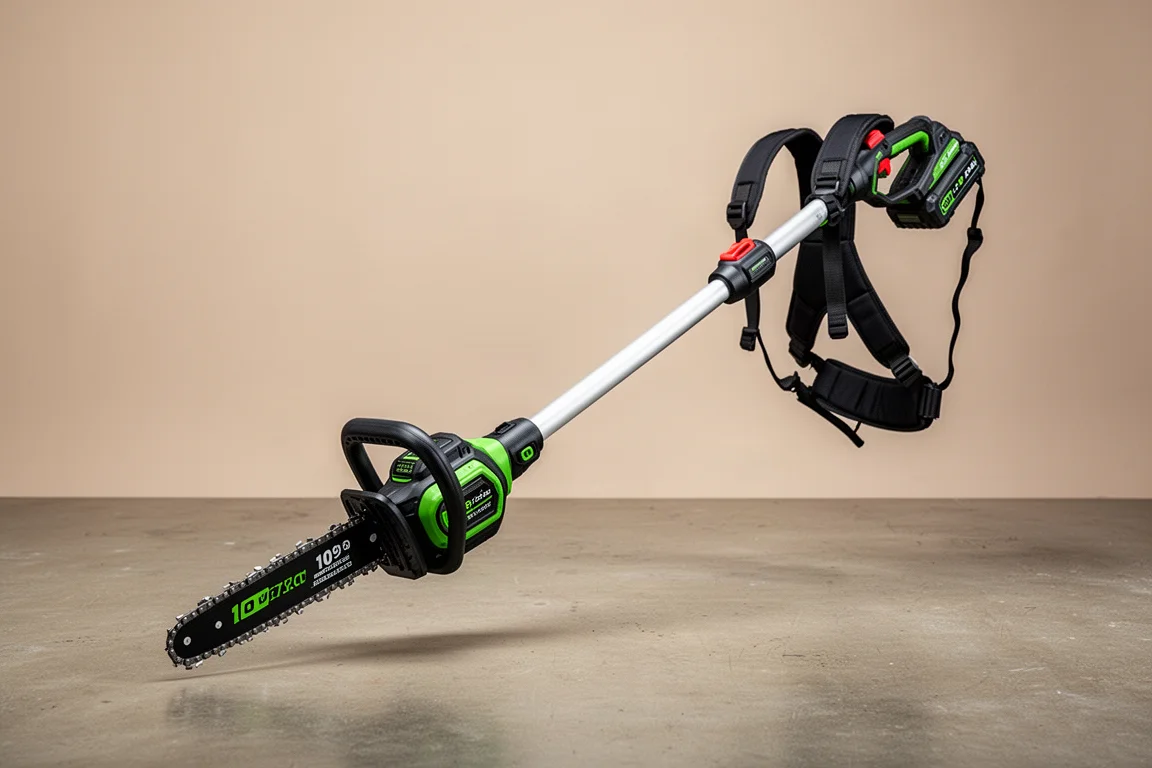
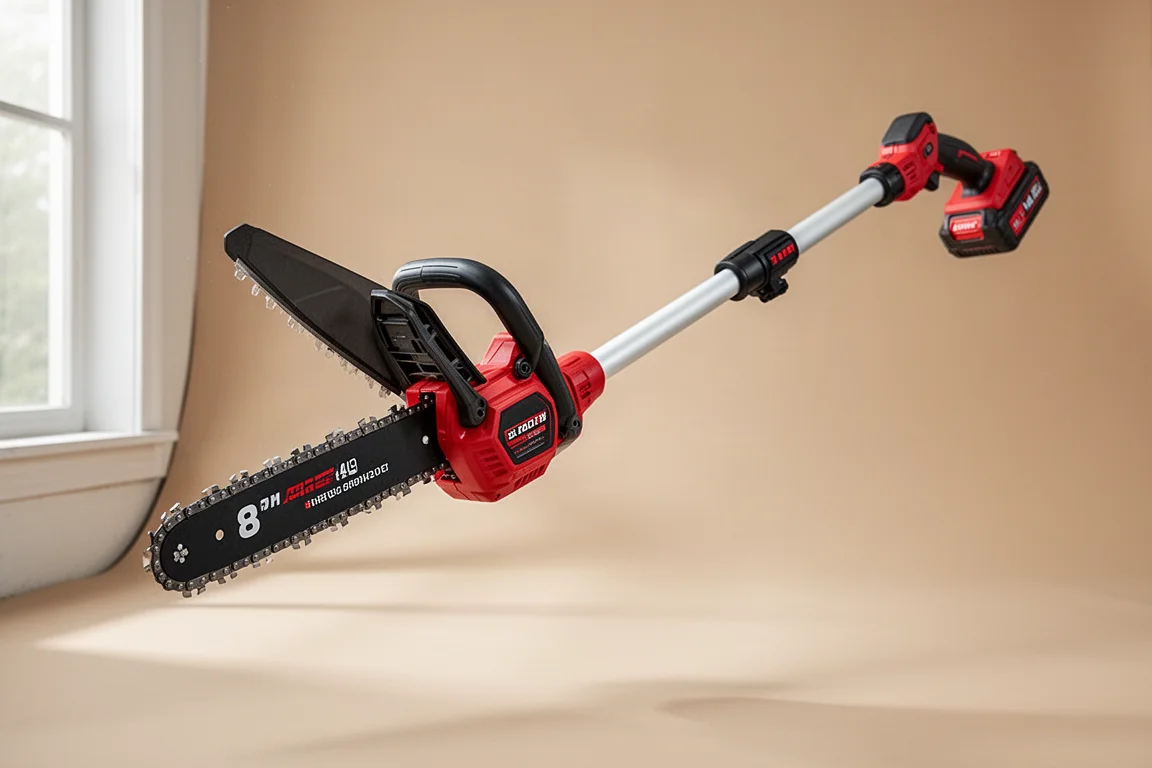
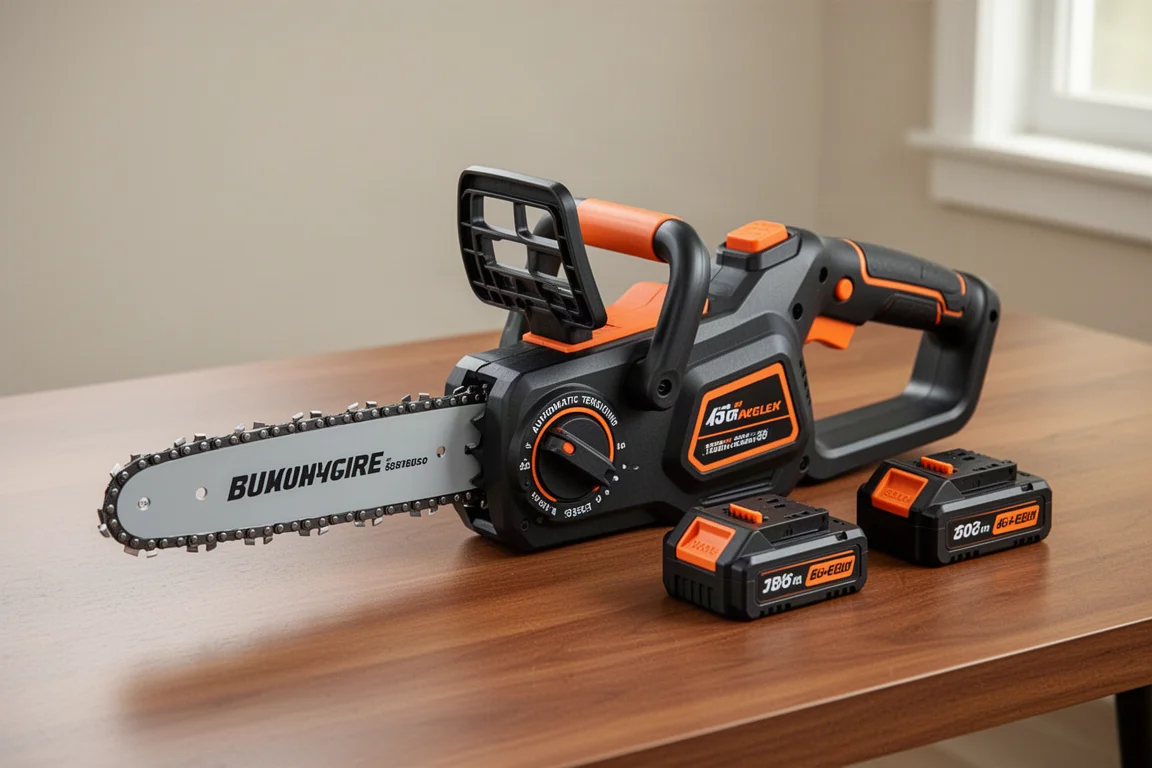
The Worx dual-purpose chainsaw and pole saw combination costs $238 and includes both a 2-A and a 4-A 20-V battery. At only 10 lb it is easy to maneuver, and the automatic tool-free chain tensioning works well. With just 1,640 RPM it is the second quietest at 76 decibels, but the motor makes plenty of torque, which carried it to a 5.3-second average when pressed hard. Under light pressure, however, it dropped all the way to last place at 15.3 seconds, and its long 116.5-inch pole sags badly at 12.5 inches.
Premium Picks: Oregon, EGO, and Milwaukee
At $297 for the saw, 4-A 40-V battery, charger, and even a quart of premium bar oil, the Oregon punches well above its price. The motor sits near the base of the handle, lightening the cutting head, and the tool-free extendable shaft reaches 110 inches with only half an inch of sag, by far the best pole strength and balance tested. Its 6,555 RPM chain speed made the 4x4 cuts in around 3.4 seconds and led the light-pressure round. The high chain speed comes at the expense of some torque, and at 99 decibels it is by far the loudest saw here, so hearing protection is a must.
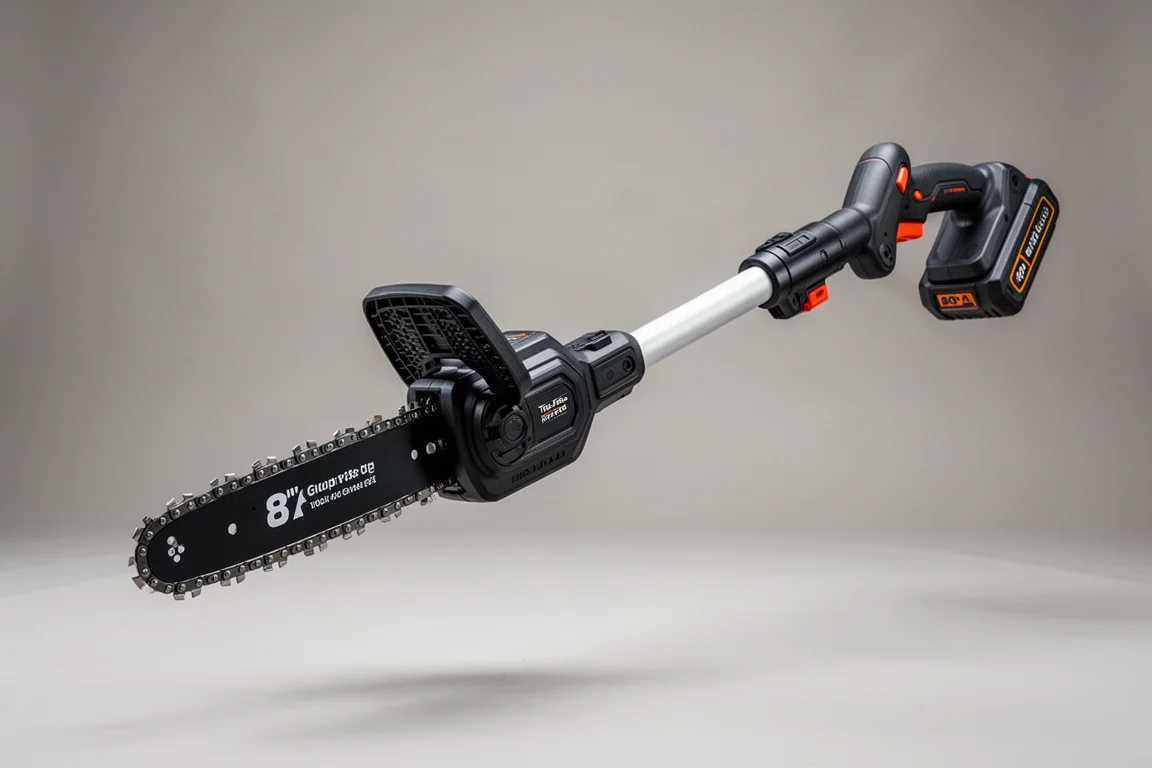
The EGO, at $349, features a 2.5-Ah 56-V battery, a 10-inch Oregon-made bar and chain, a high-efficiency brushless motor, low and high speed settings, and automatic oiling. Its 6,750 RPM sprocket produced the fastest 4x4 cuts of the day at 2.78 seconds on average and won the light-pressure round at 2.7 seconds. On dense hardwood it stalled repeatedly and vibrated badly before managing 11.2 seconds. At only 69 inches long it is short, but a roughly $65 extension is available, and its 11 lb front-end effort is the lightest of the group.
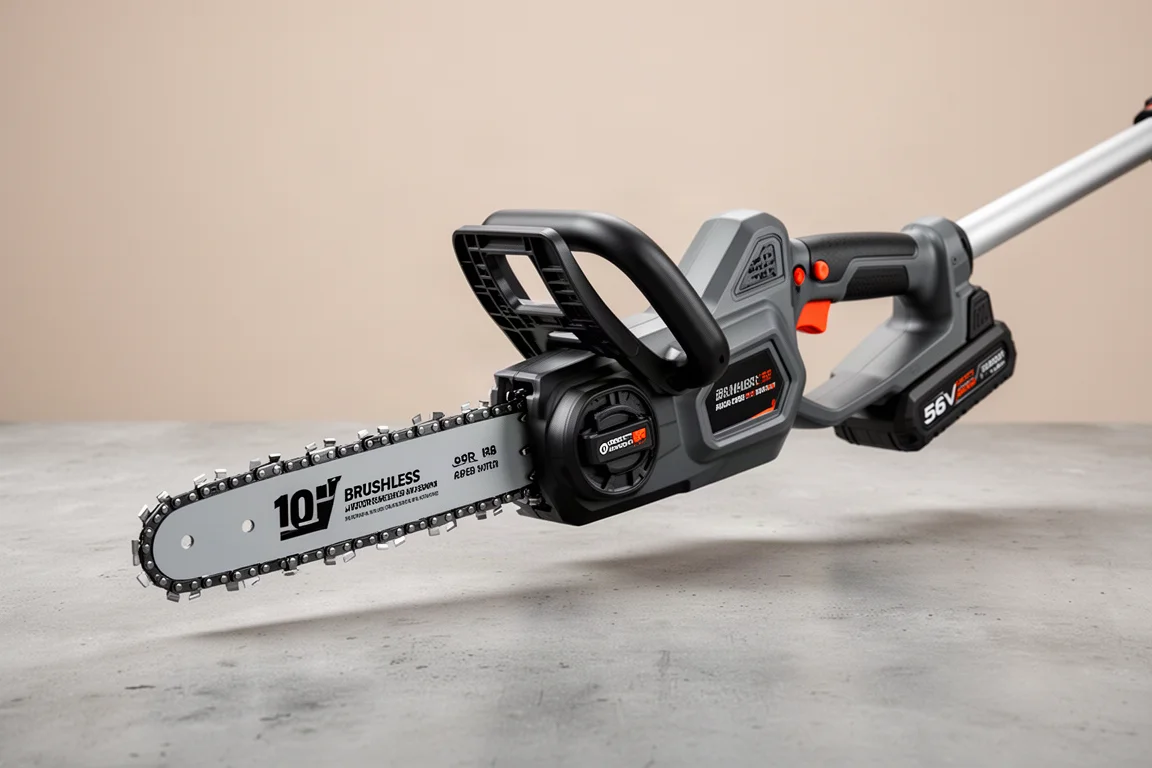
The Milwaukee tops the lineup at $369, including a high-output 18-V 8-A battery, brushless motor, brush hook, automatic oiler, and a 10-inch Oregon-made bar and chain. It spins at 4,620 RPM, slower than the leaders, but makes the most torque, and that torque won the hardwood test outright at 8.41 seconds while also taking the overall 4x4 lead at 2.32 seconds. It is a short 67 inches, with an extension available for around $120. Note that the power head is made in Mexico rather than China like most of the lineup.
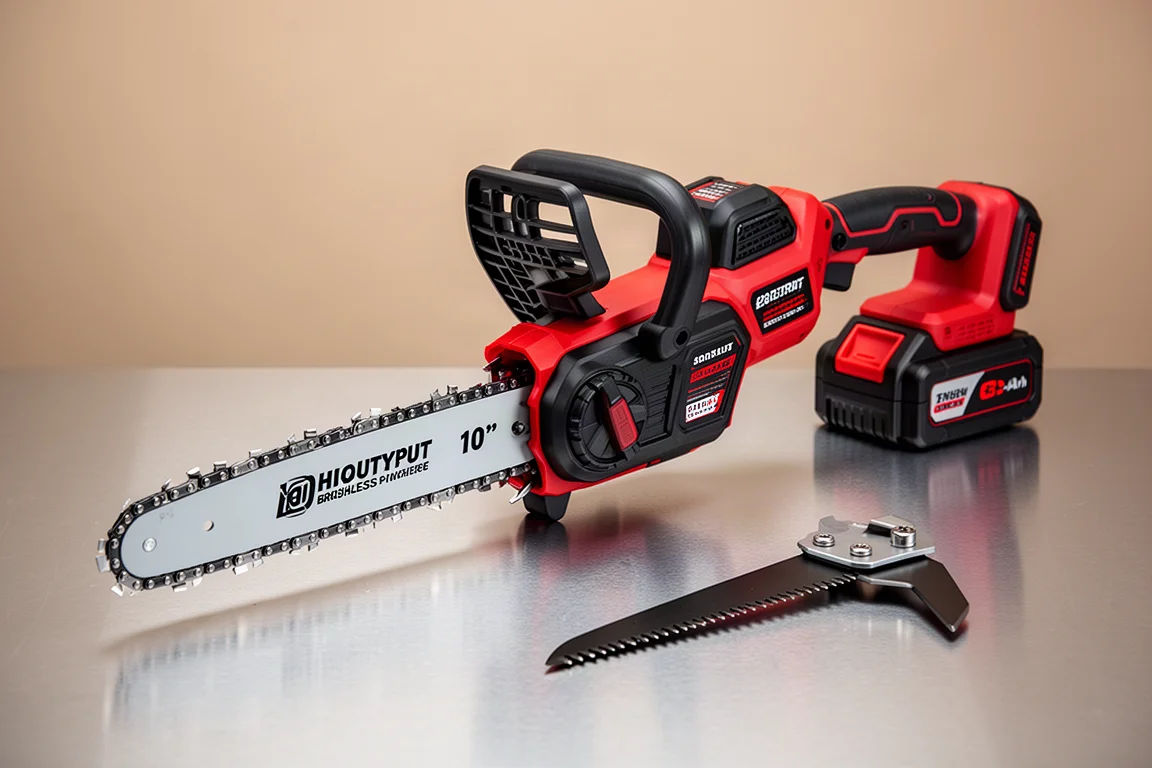
Hardwood Torque Test: Hedge Apple
Soft 4x4s flatter fast chain speeds. Dense hedge apple exposes the difference between speed and torque. The Milwaukee’s torque dominated at 8.41 seconds, followed by Oregon at 10.24 seconds, EGO at 11.2, Worx at 14.55, and DeWalt at 15.1. At the other end, the Sun Joe needed 41 seconds, the Black & Decker 42.8, and the Craftsman 27.5. The Ryobi’s balance of torque and RPM earned second place early on at 16.3 seconds before the premium saws took over.
Balance, Pole Strength, and Reach
Balance matters more than most buyers expect. Saws with the motor near the handle, like the Oregon, GreenWorks, and Sun Joe, are far easier to hold extended. The Oregon required only 21 lb of front-end force with 0.55 inches of sag per foot of pole, the best in the test. The Worx, with the motor at the pole’s end, required a punishing 41 lb and sagged more than 20 times as much as the Oregon. The EGO and Milwaukee are the lightest to hold at 11 and 12 lb but also the shortest, and both need a paid extension for serious reach.
Buying Advice
If budget is the priority, the GreenWorks is the standout, performing extremely well at its $125 price. If you want quality and already own DeWalt batteries, the DeWalt is a strong mid-priced choice. For the best all-around saw right out of the box, the Oregon offers the best combination of price, balance, and capability. If money is no object, the EGO and Milwaukee are excellent premium options, but plan on buying an extension for either.
Conclusion
Every saw here can trim branches, but the tests separate them clearly. The Milwaukee and EGO lead on raw cutting speed, the Oregon wins on balance and overall value, the DeWalt and GreenWorks shine in their price brackets, and the Sun Joe, Black & Decker, and Craftsman make sense only for light, occasional trimming. Match the saw to how often and how high you cut, and any of the top picks will serve you well.
Further reading
Related Reviews
Yard & Garden Tools
WORX WG324.9 20V 5-Inch Pruning Saw Review: A Compact Cutter That Earns Its Spot
After clearing overgrown branches from two trees on a three-acre property, this lightweight pruning saw proved far more capable than its size suggests.
Yard & Garden Tools
Best Homeowner Battery Hedge Trimmers: Makita, DeWalt and Milwaukee Compared
Three homeowner-grade battery hedge trimmers put to the test on hedges and thick vines, with clear strengths and trade-offs for each.
Yard & Garden Tools
CC Cordless Leaf Blower Review: A Makita-Style Value Pick With a Surprise Feature
A lightweight cordless leaf blower with two batteries and chargers in the box, Makita LXT battery compatibility, turbo mode, cruise control, and an unusual electronic brake.