Battery Chargers
Best Battery Chargers and Maintainers: Budget vs Premium, Tested Head to Head
A price comparison of battery chargers and maintainers, testing dead-battery charging, spark-free connection, float voltage, and heat. The NOCO Genius 1 and Genius 5 come out on top.
Introduction
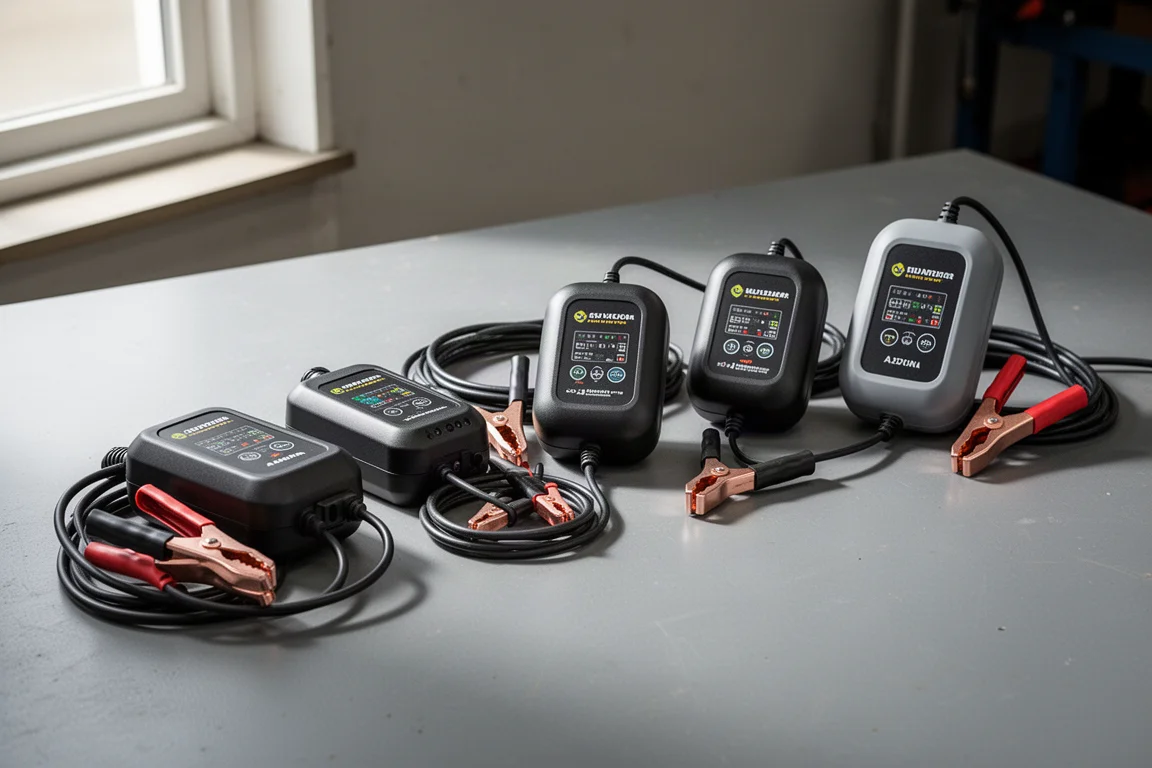
Is a $10 battery charger just as good as one that costs $90? To find out, a wide range of chargers and maintainers was put through the same gauntlet: reviving a completely dead battery, charging a badly drained one, maintaining a proper float charge, staying cool, and staying safe around sparks. The results split the field cleanly into chargers worth buying and chargers worth avoiding.
How We Compared the Chargers
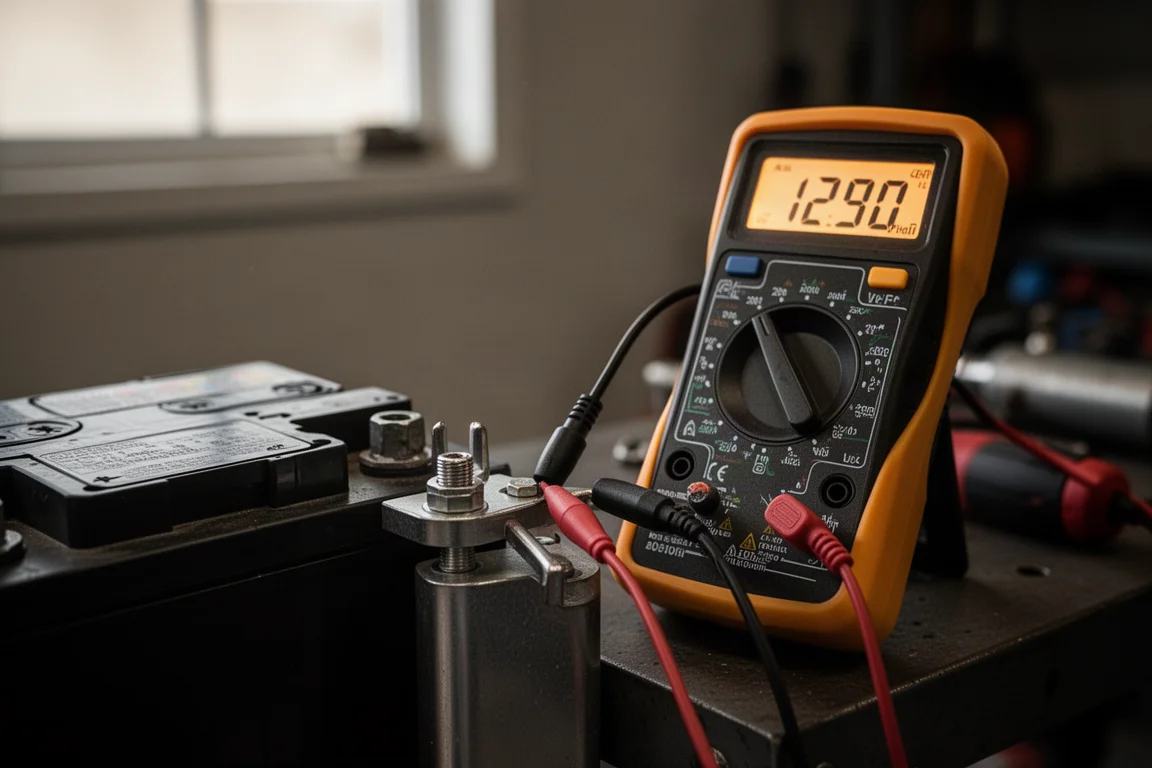
Each charger was tested with calibrated instruments: a multimeter for voltage readings and an energy use meter plugged into a 120-volt outlet to confirm exactly when charging actually begins. Battery posts were cleaned before every test so every unit made good contact, and each charger was weighed, since weight is often a rough indicator of build quality.
The tests covered four areas: whether the charger can start charging a completely dead battery, how aggressively it charges a badly drained battery, how well its float mode avoids overcharging, and how it behaves on safety, including sparks at the connection point and reverse polarity protection.
Dead Battery Challenge: Which Chargers Wake a Fully Drained Battery
This is where the field separates dramatically. Only two chargers in the entire test could begin charging a battery that was completely dead: the NOCO Genius 1 and the NOCO Genius 5. Both engaged a force mode, activated by pressing and holding the mode button, and started charging from roughly one volt, or even lower with force mode.
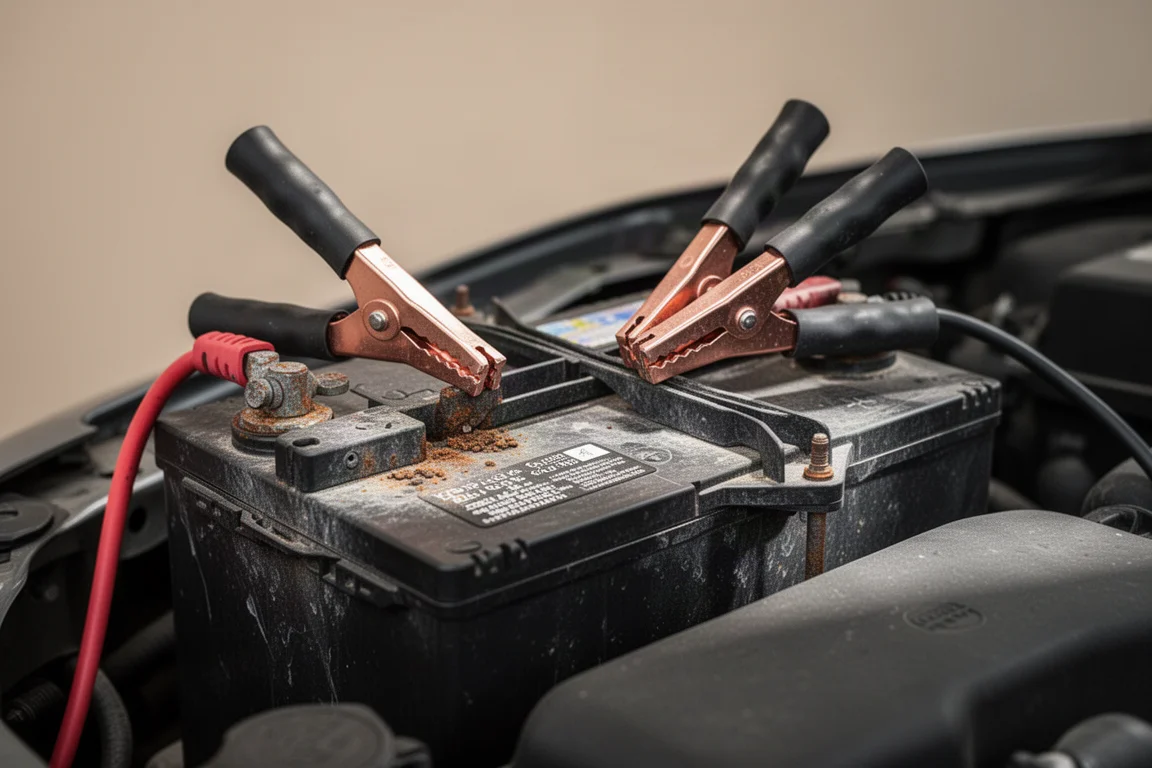
The more expensive options did not automatically win here. The Battery Tender powered up but could not detect or charge the dead battery. The CTEK also could not detect a fully dead battery. Budget units from MotoPower, Gooloo, Black & Decker, and others similarly refused to start, often showing standby with zero watts of output.
Charging a Badly Drained Battery
When a healthy but badly drained battery was dropped to around one volt and allowed to recover, the picture improved for most brands. The Next Peak-style 6-amp unit, NOCO Genius 1, Hulkman, Eco-Worthy, and NOCO Genius 5 all began charging at one volt or less. The CTEK started around two volts but was notably more ambitious at low voltages, already delivering over 20 watts at three volts and over 50 watts at ten volts.
Several chargers met or exceeded their rated output. The 6-amp NOCO Peak produced around 91 watts, better than its 6-amp rating. The NOCO Genius 1 peaked around 13.3 watts, just over its 1-amp rating. One caveat worth noting: the 1.75-amp Next Peak unit defaults to 6-volt mode, so you have to remember to manually switch it to 12 volts, an awkward design that stopped charging partway through until corrected.
Float Charge and Overcharging
Float mode matters for long-term battery health: a charger should top off the battery and then hold it near a safe voltage without overcharging. Roughly half the chargers achieved a float of around 13.6 volts or less, which is appropriate for a 12-volt flooded lead-acid battery.
The worst offender was the cheapest. The $10 unit indicated a full charge yet kept pushing over 15 volts, clearly overcharging the battery, and it delivered a continuous charge rather than a true float mode. That combination will shorten battery life. The 1.75-amp unit that showed a full battery at 14.8 volts was also over the safe threshold. Meanwhile, the NOCO Genius 1 and Genius 5 both settled around 13.1 to 13.3 volts and stopped supplying meaningful power once the battery was topped off, then correctly resumed charging when a load pulled the voltage down. The Battery Tender landed right on target at 13.1 volts, and the CTEK finished at a safe 13 volts.
Heat followed a similar story. The cheapest charger ran hot at around 155 degrees Fahrenheit, while several others with internal fans stayed comfortably cool.
Spark and Reverse Polarity Safety
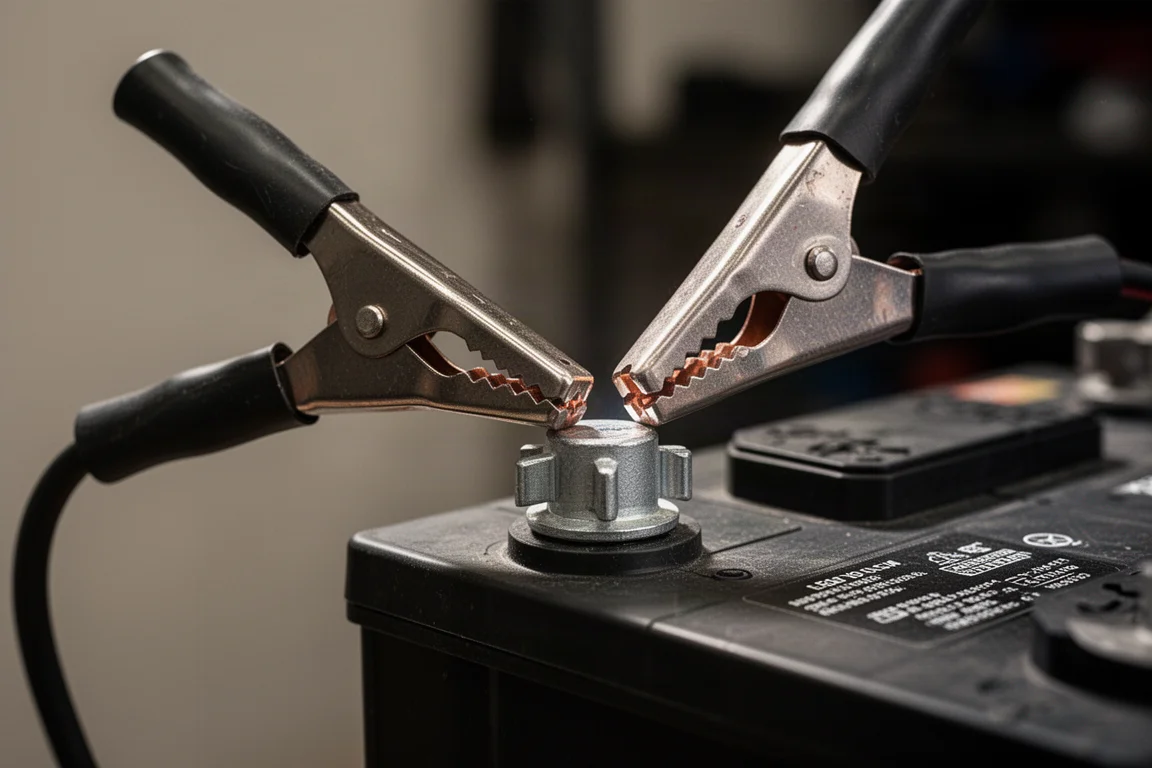
Lead-acid batteries emit hydrogen gas, so a spark at the connection point can be genuinely dangerous. Nine of the tested brands did not generate sparks, including MotoPower, Black & Decker, the NOCO Genius 1 and Genius 5, Gooloo, Battery Tender, and CTEK. The CTEK in particular delivered on its spark-free claim.
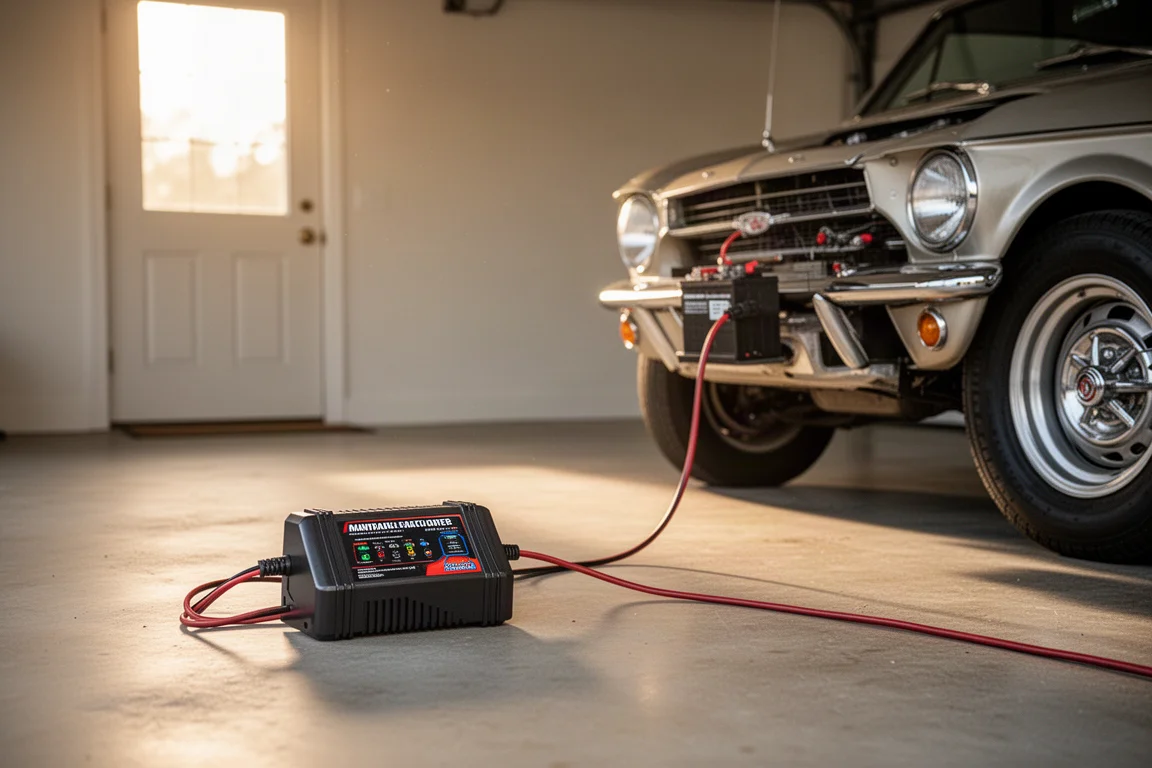
Reverse polarity protection was nearly universal. All but one charger protected against reversed clamps, and the single unprotected unit was ruined by the test connection, reinforcing that this claim should not be trusted blindly at the very bottom of the price range.
NOCO Genius 1
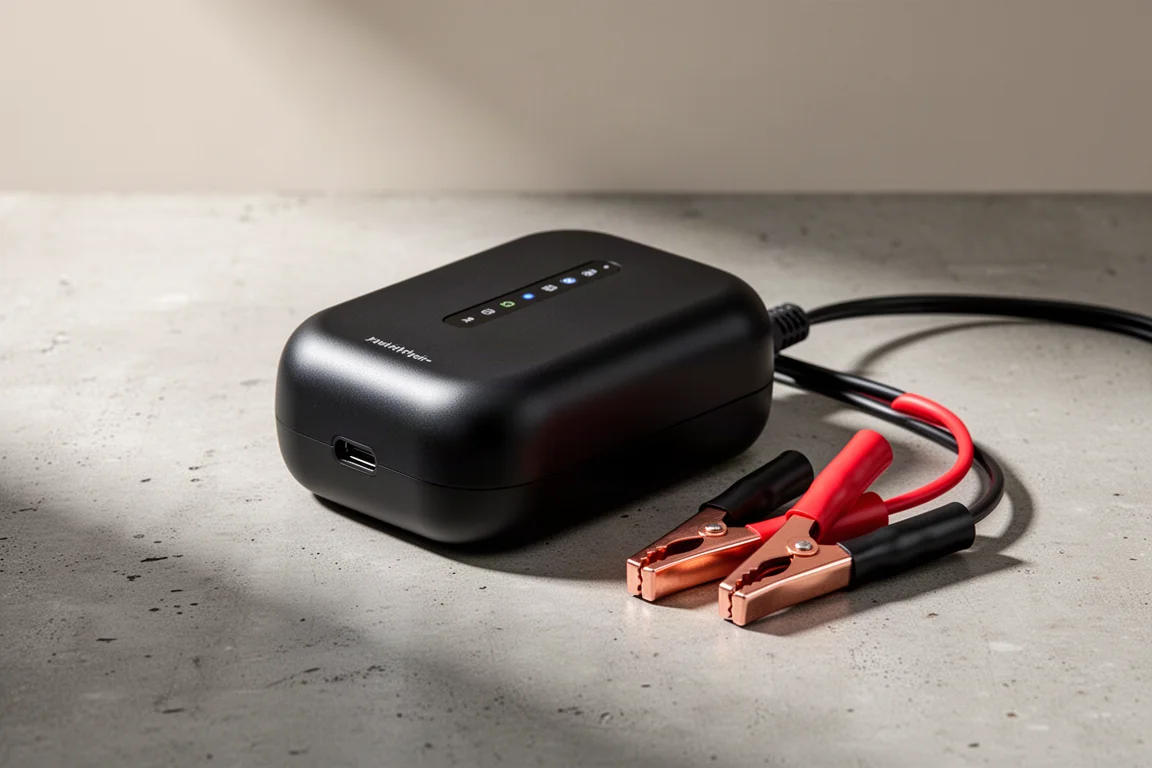
The NOCO Genius 1 is a 1-amp smart charger, maintainer, trickle charger, float charger, and desulfator. It is claimed to be 35% smaller and deliver over 35% more power than the previous NOCO G750, and it can charge batteries as low as one volt, with force mode reaching down to zero volts. It drew very little standby power and was the first charger to begin charging the dead battery. It suppressed sparks effectively and floated at a safe 13.1 volts.
If it is all about value and you are not chasing a fast charge, this is the standout pick.
NOCO Genius 5
The NOCO Genius 5 steps up to 5 amps for 6- and 12-volt batteries while keeping the same core feature set: maintainer, trickle charger, float charger, and desulfator, with pulse charging to detect and reverse sulfation. It handled the completely dead battery via force mode, charged from very close to one volt without it, peaked at 72 watts, floated safely at 13.3 volts, and produced no sparks.
If choosing just one charger, this is the strongest all-around pick: it can revive a fully dead battery and charges significantly faster than the 1-amp model.
Battery Tender 4A
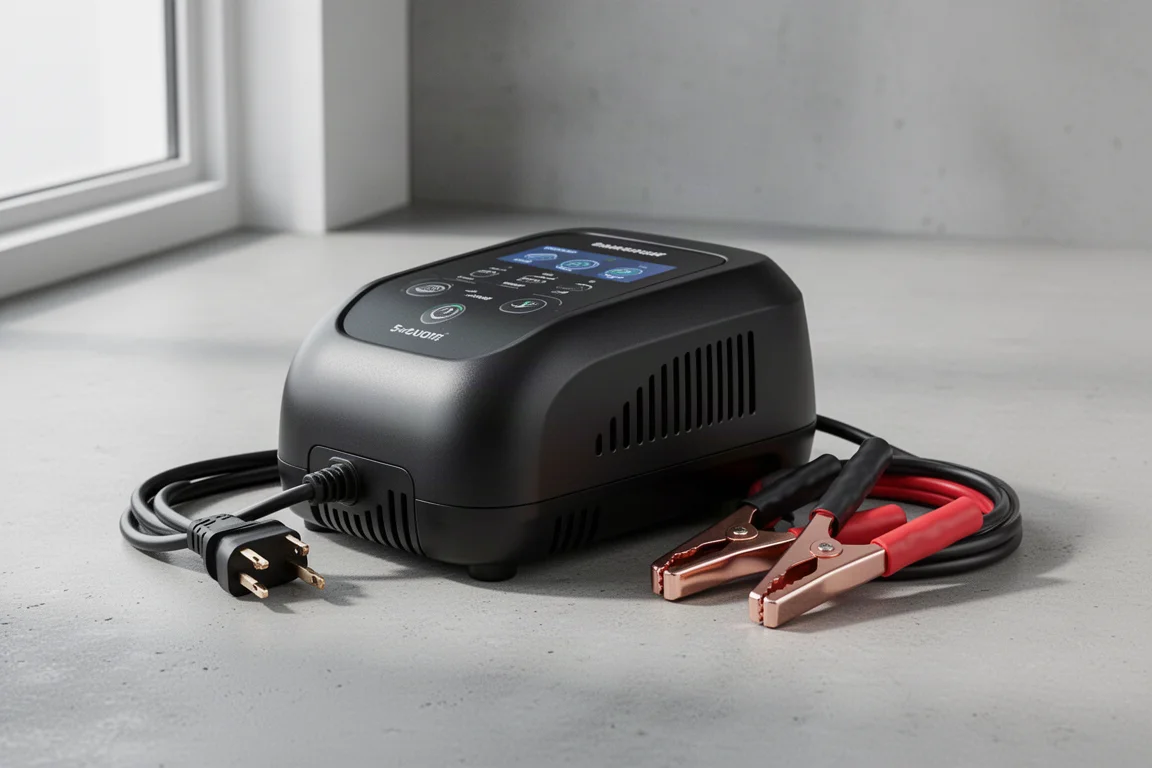
The Battery Tender is a 4-amp charger and maintainer, switchable between 12 and 6 volts, with 11 feet of combined reach. It fully charges the battery and then automatically switches to float mode. It could not start a completely dead battery, but on a drained battery it began around three volts, peaked at roughly 63 watts, floated at a correct 13.1 volts, responded well to voltage drops, ran the coolest in the test, and produced no sparks.
CTEK
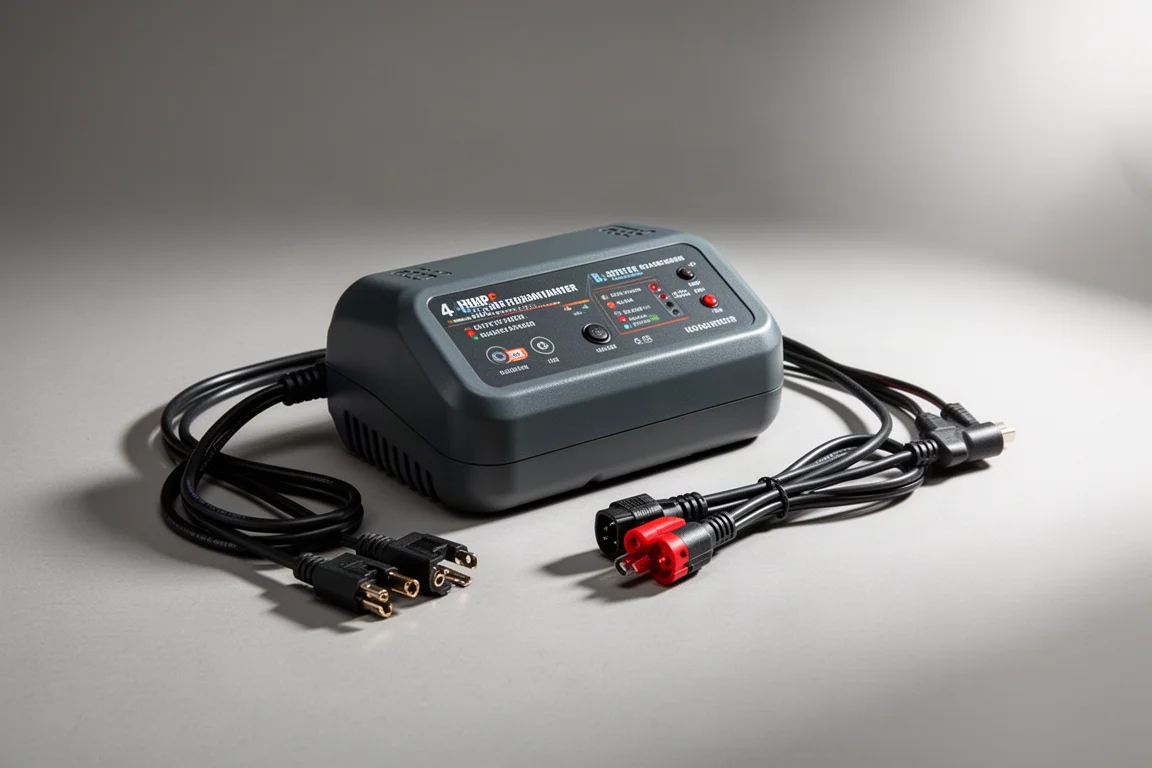
The most expensive charger tested is CTEK’s fully automatic 4.3-amp charger and maintainer, described as splash, dust, spark, and shockproof, with a recommendation to recondition the battery once per year after deep discharge. It could not detect a completely dead battery, but it was the most ambitious charger at low voltages, delivering over 20 watts by three volts and peaking around 65 watts. It floated at a safe 13 volts and delivered on its spark-free claim.
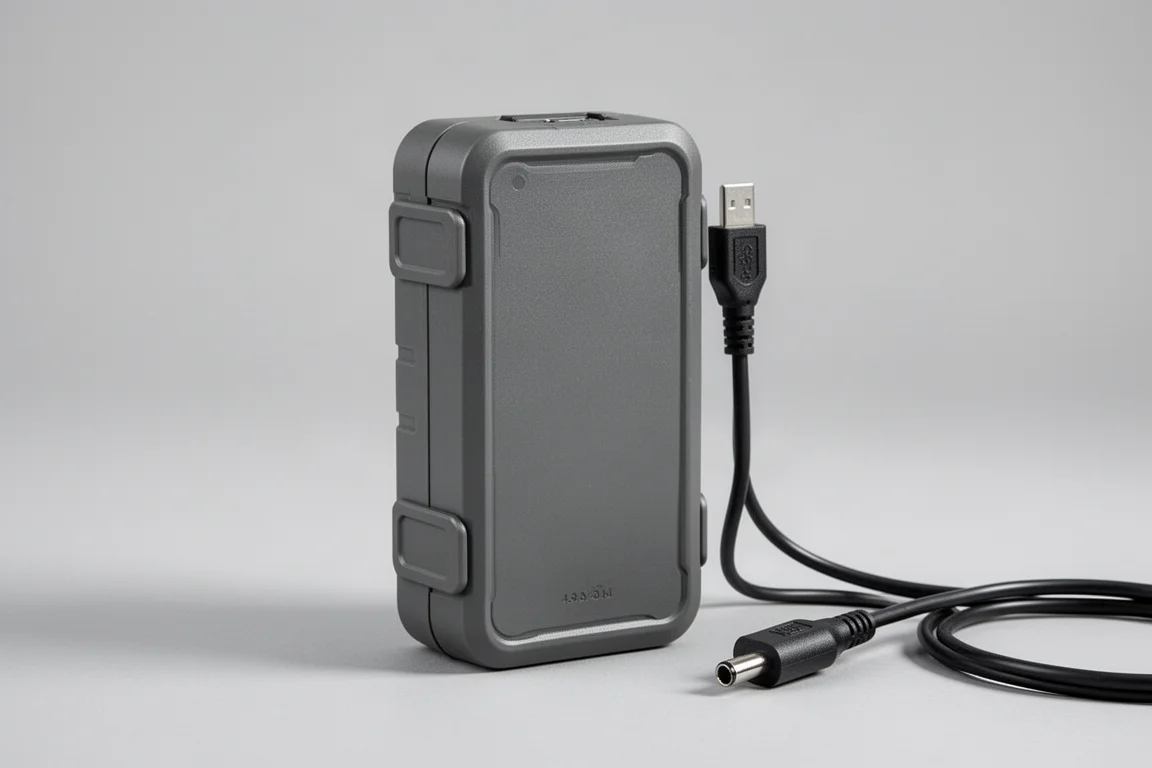
Overall Buying Advice
A few takeaways from the full comparison. Most chargers can be connected without producing a spark, all but one offer reverse polarity protection, and all met their rated output current. But only the two NOCO chargers could charge a completely dead battery, and the cheapest charger on the shelf failed nearly every safety and float test.
For pure value, the NOCO Genius 1 is the clear choice if a slow, safe charge is acceptable. If speed matters more and you never deal with fully dead batteries, a faster 5-amp unit is worth the step up. For reviving dead batteries plus faster charging, the NOCO Genius 5 is the top overall pick. The Battery Tender and CTEK are both excellent, safe chargers, but plan on jump-starting or otherwise recovering a battery before they can take over.
Conclusion
Price does not guarantee performance in this category. The cheapest charger was the least safe and overcharged the battery, while a modestly priced 1-amp NOCO outperformed units costing twice as much. Match the charger to your situation: value and safe float for maintaining a healthy battery, or the Genius 5 if dead batteries and speed are part of your reality.
Further reading
Related Reviews
Battery Chargers
NOCO Genius 5 Review: A Versatile Smart Charger for Everyday Battery Care
A practical look at the NOCO Genius 5 battery charger, covering its charging modes, safety features, and how it handles everyday vehicle battery maintenance.

Battery Chargers
Olight Ostation 2 Pro Review: Smaller, Smarter, and Now It Handles AAA
Olight's second-generation 3-in-1 battery hub adds AAA support, a touchscreen, and magnetic flashlight charging while shrinking the footprint by 25%.
Battery Chargers
Olight O Station 2 Pro Review: A Smarter Way to Manage AA and AAA Batteries
A touchscreen charger, tester, and battery organizer that removes the guesswork from keeping AA and AAA rechargeables topped off.