Backpacking Food
Best Backpacking Meals 2026: Eight Trail-Tested Picks Ranked by Calories Per Ounce
Eight freeze-dried backpacking meals compared on protein, fat, sodium, water use, and the calories-per-ounce ratio that decides what actually earns pack space.
Introduction
Freeze-dried trail meals have quietly become one of the most competitive corners of backpacking gear. Pouches that once tasted like salted cardboard now carry real protein, real fat, and enough calories to justify the space they occupy in a pack. For anyone who has spent a season living on instant rice and cold-soaked couscous, the current lineup is genuinely worth re-examining.
The eight meals below are the ones that keep earning a place in a resupply box. They are not ranked by marketing budget or by novelty. They are ranked by the things that matter at the end of a long day: how many calories arrive per ounce of carried weight, how much protein and fat come with them, how the sodium sits, how much water they demand, and whether they rehydrate reliably every single time.
A note on how this list works. One meal sits clearly at the top, and it is the one worth carrying for multiple nights on a three-day trip. The rest are strong alternates, each with a specific reason to choose it: lower sodium, a vegan option, a lighter water requirement, or simply a flavor profile worth rotating in so dinner does not become a chore.
What Matters in a Backpacking Meal
The single most useful filter is calories per ounce. A practical benchmark is 100 calories for every ounce of pouch weight, and everything on this list clears that bar comfortably. That ratio matters more than almost any other number, because packaging and water weight are the two costs a hiker pays twice: once in the pack and again in the trash carry-out.
Beyond raw calories, four figures shape how a meal actually performs. Protein and fat determine whether dinner leaves you full and gives tired muscles something to work with overnight. Sodium is a balance rather than a target: enough to replace what a long day of sweating takes out, but not so much that you wake up feeling bloated and waterlogged. Water requirement is the sleeper issue, and it matters most in dry country where every ounce of stove water is another ounce carried up the climb.
Texture is the last variable, and the hardest to predict. Some pouches come out creamy and consistent every time, while others produce noodles that stay chewy or rice that never quite softens. A meal that rehydrates reliably is worth more on night three than one that tastes better on night one. The picks below reflect all of these factors together, not any single number in isolation.
Backpacker’s Pantry Pad Thai with Chicken
This is the veteran of the group, a pouch that has been in circulation long enough to feel like trail furniture. The practical advantage is availability: it turns up in outfitters, grocery aisles, and gear shops in a way that most niche brands simply do not, which makes it a reliable fallback when a resupply plan changes at the last minute.
Its standout number is sodium. At roughly 510 mg per pouch, it sits at the low end of this entire lineup, which is a real benefit for anyone who prefers a lighter salt load and does not want to feel bloated the next morning. The pad thai flavor profile is a familiar one, with rice noodles and a mild peanut-forward sauce that most palates accept easily.
Good To-Go Pad Thai
Good To-Go’s take on pad thai covers similar ground with a slightly different character, and it is the sort of meal that earns loyalty through repetition rather than novelty. It has become a sentimental favorite for hikers who like to mark a milestone with a better-than-average dinner, which says something about how it eats after a hard day.
Portion size is worth checking before ordering. This line is commonly offered in larger sizes, and choosing the bigger pouch makes more sense than carrying two small ones if you know your appetite runs high late in a trip. The pad thai format rehydrates into a soft, saucy noodle dish rather than a dry one, which suits cold or wet evenings.

AlpineAire Grilled Chicken with Spinach Alfredo Pasta
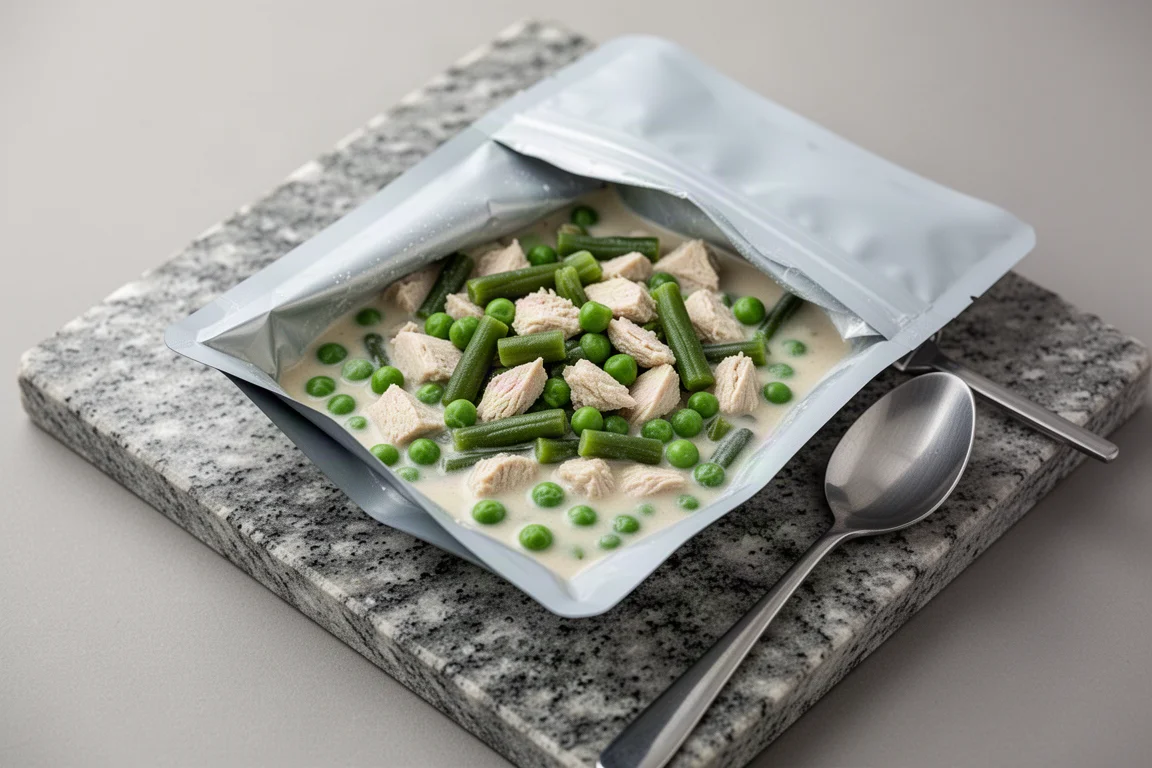
AlpineAire has been making trail food for a long time, and the grilled chicken with spinach alfredo pasta shows that experience. It is a creamy, savory pasta pouch with chicken and spinach folded through, and it lands in the comfort-food category rather than the adventurous one. That is exactly what many hikers want from a dinner at altitude.
The appeal here is the combination of a rich sauce and a vegetable element, which breaks up the monotony of yet another noodle-and-cheese dinner over consecutive nights. It also serves as a useful rotation meal: carrying the same pouch every night wears thin quickly, and swapping in a different sauce profile keeps appetite up when it otherwise starts to fade.
For anyone building a resupply around a handful of pasta meals, this is a sensible one to slot in as the variation night rather than the anchor.

Peak Refuel Chicken Alfredo Pasta: The Top Pick
This is the meal that wins on nearly every metric that matters, and it is the one worth carrying twice on a three-day trip. The headline number is protein: 53 g per pouch, an unusually high figure for a single trail dinner, and enough to make a real difference in how full and recovered you feel the next morning. Only one other meal on this list pushes past it, and that one gives up ground elsewhere.
Fat comes in at 48 g, which is the highest in this group by a wide margin. That fat load is what makes the pouch feel like a genuine meal rather than a snack, and it is the reason it satisfies on cold nights when appetite runs higher than expected. Sodium sits at 820 mg, moderate by trail standards and notably lower than several competitors that run past 2,000 mg.
The ratio is where it separates from everything else. The pouch weighs 4.9 oz, just under five ounces, and delivers 870 calories. Nothing else here comes close to that combination of low carried weight and high energy density, which is the entire argument for paying more for a freeze-dried meal in the first place.
Preparation is equally consistent. It needs only 8 oz of water, which is a genuine advantage on dry stretches where every extra ounce of stove water is carried on your back. It rehydrates into a creamy, evenly cooked pasta every time, without the crunchy noodles or underdone chicken that plague lesser pouches. For hikers who route through desert or high, dry country, that low water demand is arguably as valuable as the calorie count.
Trailtopia Ginger Chicken Stir Fry with Rice
Trailtopia occupies a smaller niche, and the ginger chicken stir fry with rice is the pouch that earns it attention. It is a ginger-forward dish with chicken and rice, and it stands apart from the pasta-heavy options that dominate most resupply shelves. Ginger has a way of cutting through palate fatigue, which makes this a strong choice deep into a long trip.
Availability is narrower than the big national brands, and it is most commonly found at larger outdoor retailers rather than in small town grocery stores, so it rewards a little planning. The main figure to know is sodium, which runs above 2,000 mg per pouch. That is at the high end of this group and worth factoring in if you are sensitive to salt or already eating salty snacks through the day.

Farm to Summit Three Bean Chili and Cornbread
This is the outlier of the group and one of the most interesting pouches available. It is a fully vegan three-bean chili paired with a cornbread crumble, and it delivers a serious calorie load without any meat at all. For vegetarian and vegan hikers, or anyone who simply wants a break from chicken and pasta, it solves a problem that most trail food lines handle poorly.
The cornbread element is the detail that makes it work. Rather than a plain bowl of beans, the crumble adds texture and a slightly sweet contrast against the spiced chili, which keeps the meal from reading as one-note. It is a smaller, more specialized brand, so it is less likely to appear on a random outfitter shelf, but it is worth seeking out and worth carrying as the meal you actually look forward to.
Because it is meat-free, it also travels well in hot conditions where a creamy dairy-based pouch can feel heavy. Pack it as the mid-trip dinner when appetite tends to sag.

Pinnacle Foods Creamy Tuscan Chicken
Pinnacle Foods makes the highest-protein meal in this entire lineup with its creamy tuscan chicken. If protein is the number you care about most, this is the pouch that beats the top pick on that single metric, and it does so with a creamy, herb-forward sauce that reads as a more sophisticated dinner than the standard alfredo rotation.
The trade-off is that it does not match the top pick across the board. Where the alfredo wins is in the combination of protein, fat, calorie density, and low water use all at once, and this meal gives up some of that balance in exchange for the protein headline. That makes it an excellent second pouch to alternate with rather than a replacement, especially on trips long enough that variety starts to matter as much as raw numbers.

Peak Refuel Chicken Pesto Pasta
This is the natural companion to the top pick and the usual second choice from the same brand. It is a pesto pasta with chicken, and its defining advantage is water: only about 5.3 oz is needed to rehydrate the pouch, which is remarkably low and even less than the alfredo requires. On a dry stretch, that is a meaningful saving.
It does carry slightly less protein than the alfredo and weighs a touch more, so it does not take the top spot on pure numbers. What it offers instead is a different flavor profile from the same reliable rehydration behavior, which makes the pair an easy two-meal rotation for a multi-night trip. Buy both, alternate nights, and dinner stops being a decision.
Buying Advice: Matching a Meal to Your Trip
The right way to build a meal plan is to start from the trip rather than the menu. On a three-day outing, the practical approach is to carry your best-performing meal for two of the three dinners and use the third night to test something new. That keeps the reliable calories coming while still letting you discover the next pouch worth buying in bulk.
Water availability should drive the shortlist more than most hikers expect. In desert and high alpine sections, pouches that rehydrate with 8 oz or less are worth a premium, because every ounce of stove water is an ounce you carried uphill. In wet, green country where water is everywhere, that constraint loosens and you can choose purely on taste and macronutrients.
Sodium deserves a deliberate look rather than a default. If your snacks and drink mixes are already salty, a dinner at 2,000 mg or more will push your daily total higher than you want. If you sweat heavily and cramp easily, the higher-sodium pouches can be exactly right. Read the panel against the rest of your food bag, not in isolation.
Finally, buy a small variety rather than a case of one thing. Palate fatigue is real, and the meal you loved on night one can become the meal you dread by night four. A rotation of two or three proven pouches, plus one experiment per trip, is the pattern that keeps hikers eating well all season.
Conclusion
The short answer is that one meal does most of the work. The Peak Refuel chicken alfredo pasta pairs 53 g of protein and 48 g of fat with 870 calories in a pouch that weighs under five ounces and needs only 8 oz of water, and that combination is hard to beat for the weight you carry. It is the pouch to buy twice for a three-night trip.
Everything else on this list has a specific job. Backpacker’s Pantry pad thai is the widely available, lower-sodium standby. Farm to Summit covers vegan hikers with a genuinely good chili and cornbread. Pinnacle Foods wins on protein alone. Trailtopia brings ginger and variety, and the Peak Refuel chicken pesto pasta delivers the lowest water demand of the group.
Choose by the numbers first, then by flavor, then buy enough variety to keep dinner interesting. That is the whole formula, and it holds up whether you are out for a weekend or a full season.
Further reading
Related Reviews
Backpacking Food
Best Backpacking Food for Thru-Hikes: 7 Options That Stay Appetizing
Seven trail-tested foods that hold their appeal over a long thru-hike, from calorie-dense breakfasts and easy snacks to cold-soak lunches and electrolyte drink mixes.
Backpacking Food
Weird Backpacking Food Worth Trying: 11 Trail Snacks and Meals That Earn Their Weight
Eleven unusual backpacking foods, from tinned spicy mussels and fermented crackers to chocolate-covered banana chips, judged on weight, calories, prep time and flavor.
Backpacking Food
Backpacker's Pantry Dehydrated Meals: 13 Backpacking Dinners Compared
Thirteen Backpacker's Pantry dehydrated meals compared on flavor, texture, portion size, and variety, with clear picks for different trip styles.