Coffee Equipment
Best Automatic Coffee Makers: Six Models Tested for Brewing Quality and Design
We tested six automatic coffee makers across temperature stability, extraction, and user experience to help you find the right brewer for your needs.
Introduction
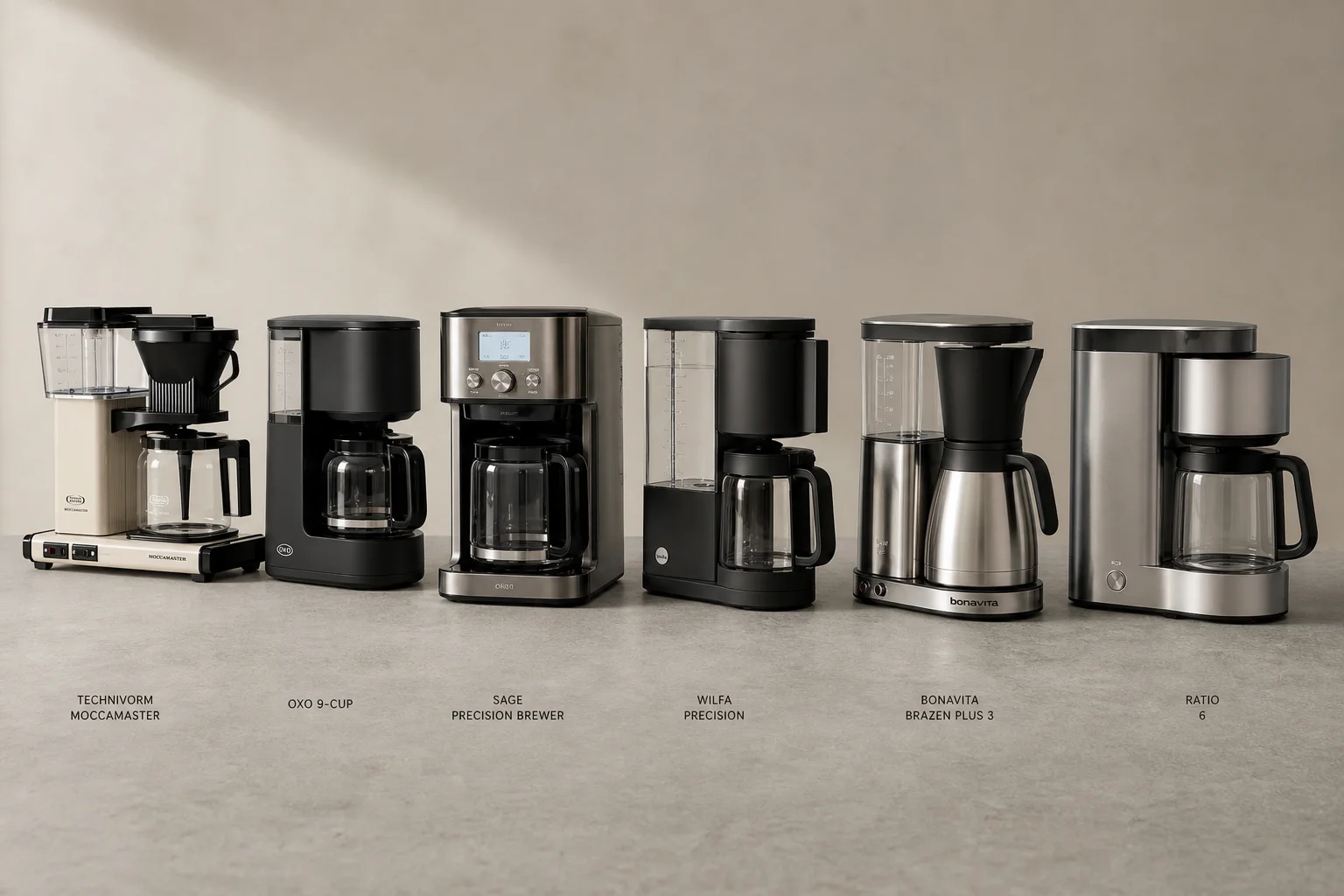
Automatic coffee makers promise convenience without sacrificing quality. But do they deliver? We tested six popular models across temperature stability, extraction consistency, and real-world usability to help you choose the right brewer for your kitchen.
Testing Methodology
To compare these brewers fairly, we conducted several standardized tests. Temperature measurements were taken at the shower head of each machine to track water temperature throughout the brew cycle. Extraction testing used identical coffee, grind size, and water amounts across all machines to measure how effectively each brewer pulls flavour compounds from the grounds. We also measured brew time, tank accuracy, carafe design, and conducted a blind tasting to evaluate the final cup.
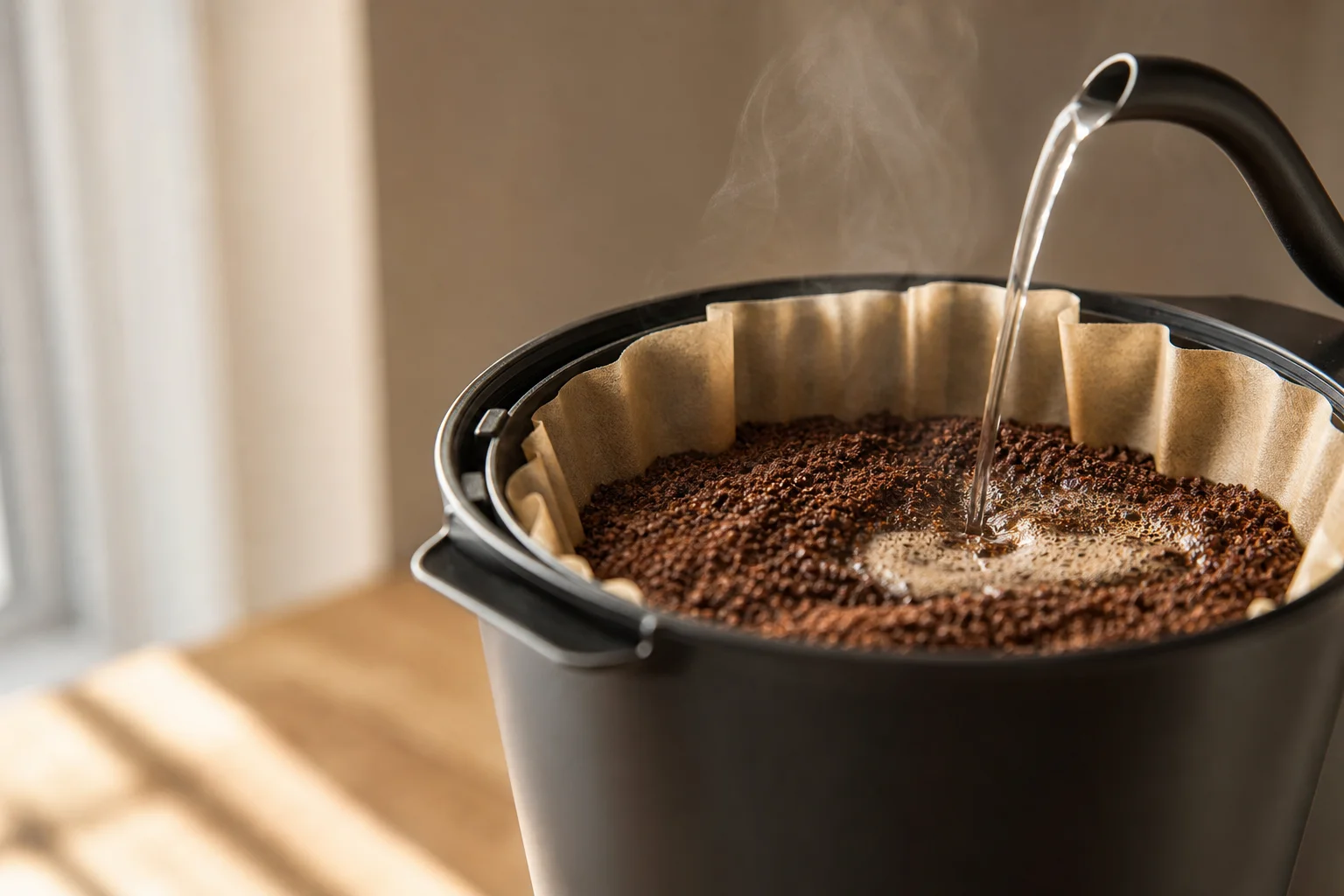
This approach reveals not just how each machine performs technically, but also how those differences translate to the coffee you actually drink.
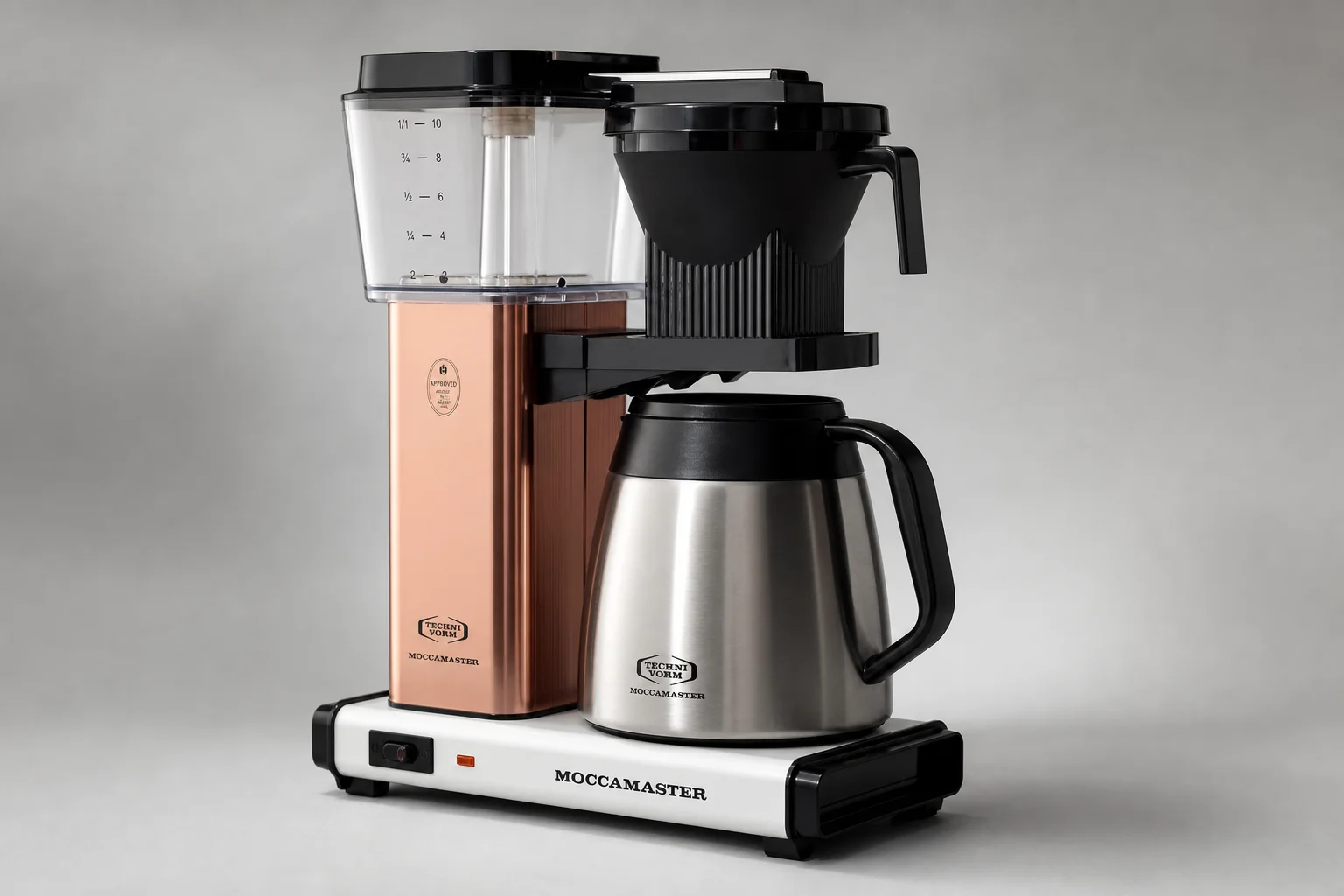
Technivorm Moccamaster
The Technivorm Moccamaster uses a heat-loop displacement system where cold water is heated and steam pressure pushes it over the coffee. This simple, proven technology has remained largely unchanged for decades.
Water exits the shower head at approximately 97-98°C, reaching that temperature gradually over about 30 seconds. The Moccamaster achieved high extraction in our tests, likely due to the forceful water delivery creating beneficial agitation in the coffee bed. Brew time runs around 3.5 minutes.
The design is minimalist: an on-button and little else. There is no temperature control, no timer, no adjustable settings. This simplicity is either a strength or a limitation depending on your perspective. The carafe design is functional but somewhat awkward to pour from, retaining about 1 gram of coffee residue.
At £230 in the UK, the Moccamaster carries a brand premium, but it makes consistently good coffee and has earned its reputation through decades of reliable performance. It appeals to those who value timeless design and straightforward operation over feature richness.
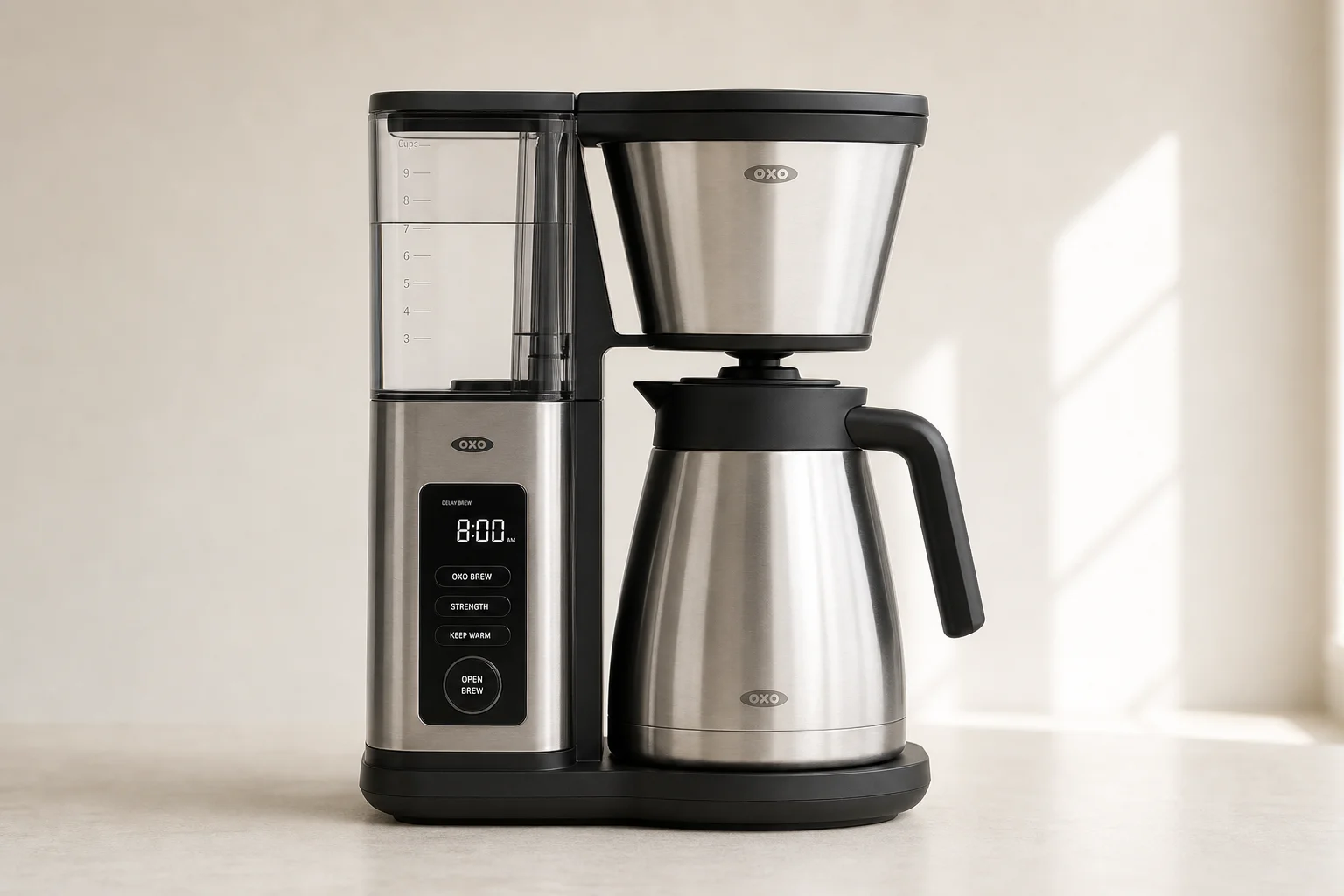
OXO 9-Cup Coffee Maker
The OXO uses similar displacement heating technology to the Moccamaster but executes it differently, with distinct bloom and brew phases visible in temperature data. This results in a much slower brew cycle of approximately 5.5 minutes compared to the Moccamaster’s 3.5 minutes.
The longer contact time produces the second-highest extraction in our testing. Temperature remains very stable throughout the cycle, hovering in the mid-to-upper 90s Celsius. The machine includes a clock for delayed start and two brew settings for different coffee volumes, which is a thoughtful touch at this price point.
Build quality feels solid with metal where it matters and plastic used pragmatically elsewhere. The thermal carafe pours well, though it retains about 15 grams of coffee residue. At $210, the OXO offers excellent value, delivering reliable brewing and useful features without unnecessary complexity.
This brewer is available only in North America, but if you’re in that market and budget-conscious, it deserves serious consideration.
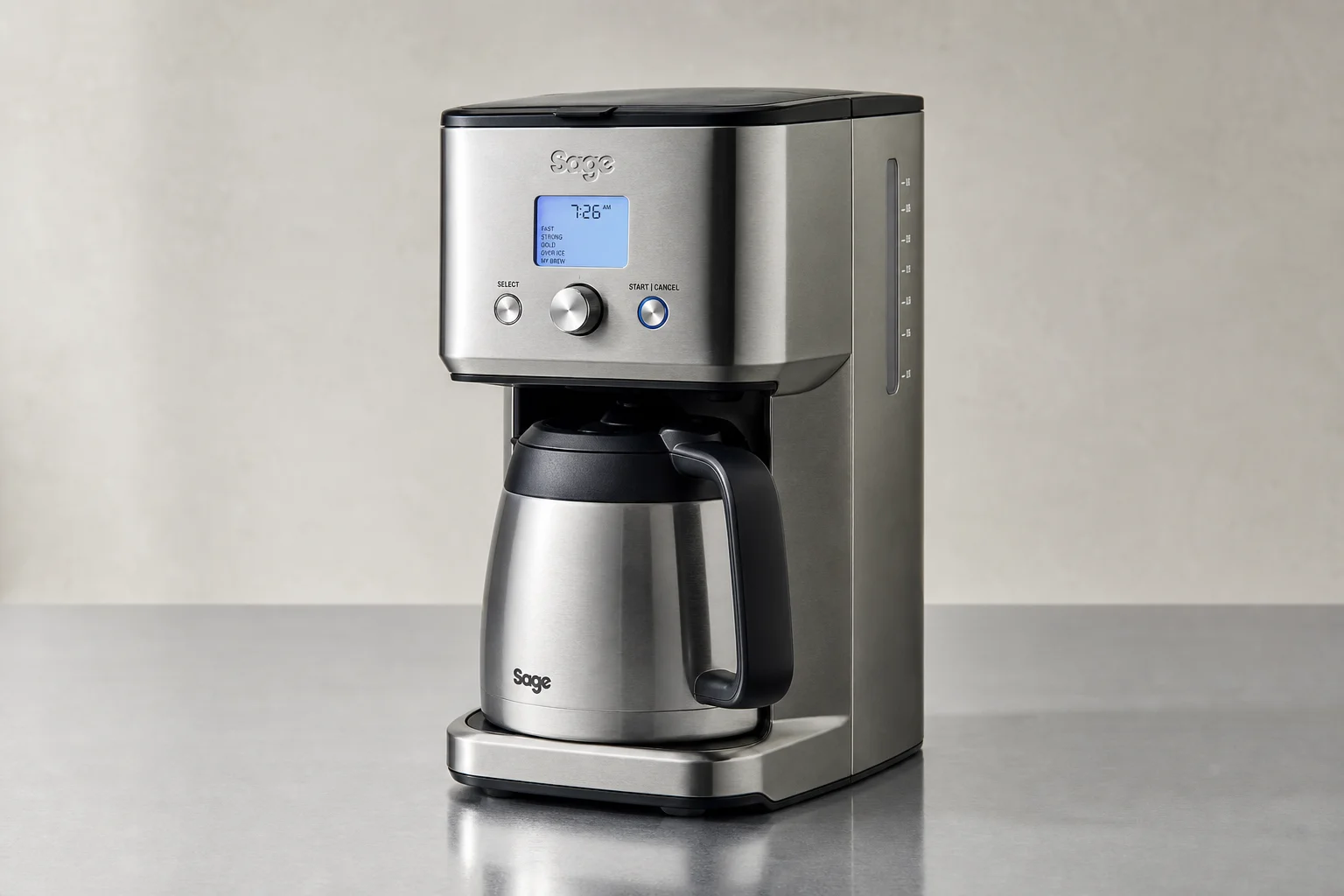
Sage Precision Brewer (Breville in the US)
The Sage Precision Brewer is a pumped machine offering extensive customization. You can adjust brew temperature, bloom time, bloom volume, and flow rate. It includes both conical and flat-bed basket options and preset brewing modes.
Temperature stability is excellent in the mid-to-upper 90s Celsius range. However, this brewer extracted slightly less from the same grounds compared to others in the group, though this is easily corrected by grinding finer. Brew time is the fastest at just under 3.5 minutes.
The machine is feature-rich, which appeals to those who enjoy dialling in their brewing parameters. However, we discovered a significant issue: the water tank markings are inaccurate by approximately 10 percent across multiple fill levels. At 450ml marked, it actually holds 510g of water. This inconsistency undermines confidence in following the machine’s own guidance.
The thermal carafe retains about 14 grams of coffee and pours cleanly. At £250 in the UK, this is a capable machine for those who want control, though the tank accuracy issue is disappointing at this price point.
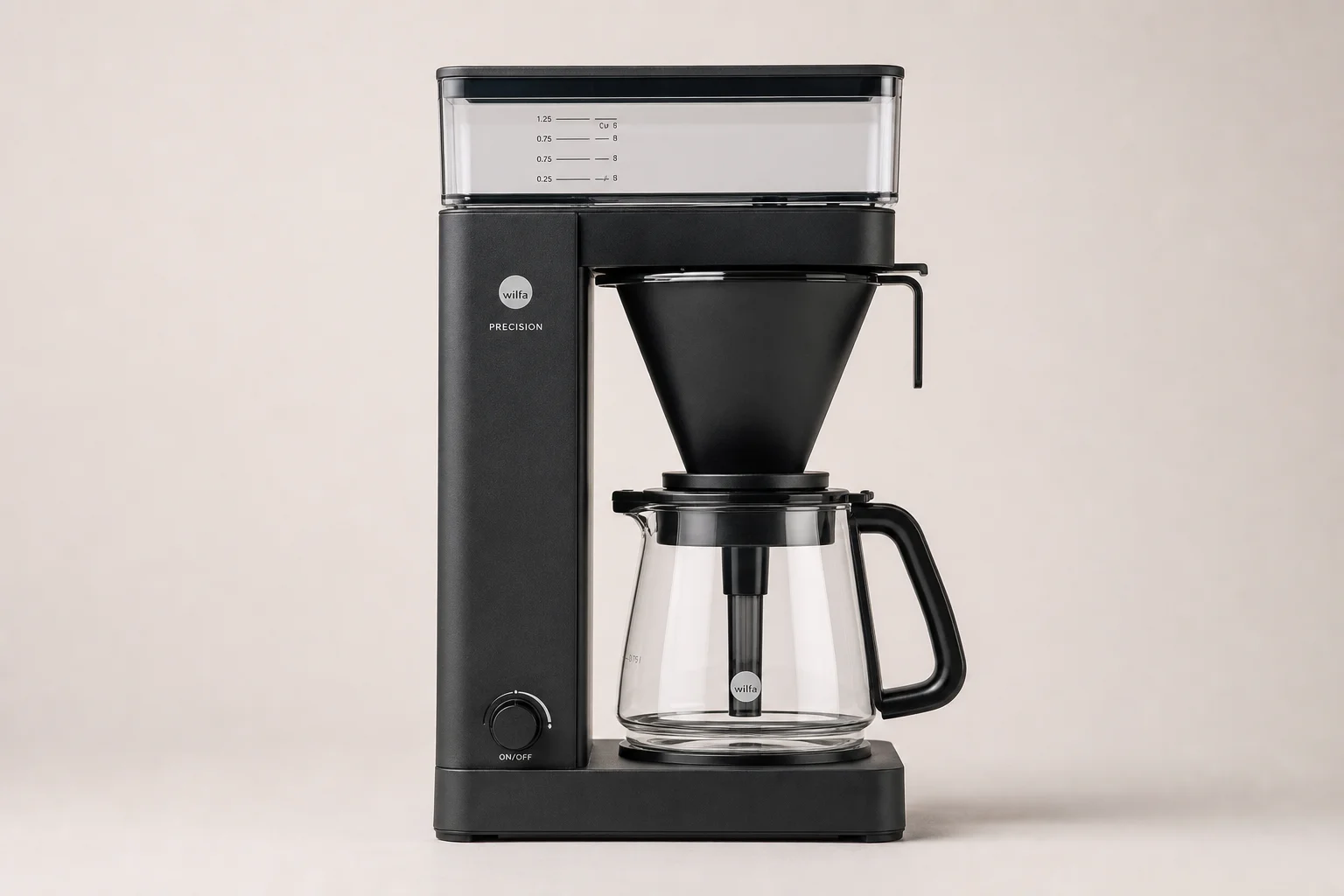
Wilfa Precision Coffee Maker
The Wilfa is a pumped brewer with a striking minimalist design that immediately stands out. It features a detachable water tank, a rarity among automatic brewers that makes filling far more convenient than machines tucked under kitchen cabinets.
Temperature data shows a thoughtful approach: the machine starts hot to quickly bring the coffee bed up to temperature, then runs slightly cooler during the main brew phase. A flow restrictor at the base of the cone allows compensation for different grind sizes. Brew time is approximately 3.5 minutes with very good extraction.
The glass carafe is a deliberate choice that eliminates heat retention but makes pouring easier, with only 1 gram of residue. The trade-off is that pouring requires a bit of care to avoid splashing, and the carafe needs a gentle shake to fully empty.
At £285, the Wilfa is expensive but justified by its thoughtful design, accurate water tank, and excellent brewing performance. It appeals to those who value aesthetics and usability alongside coffee quality.
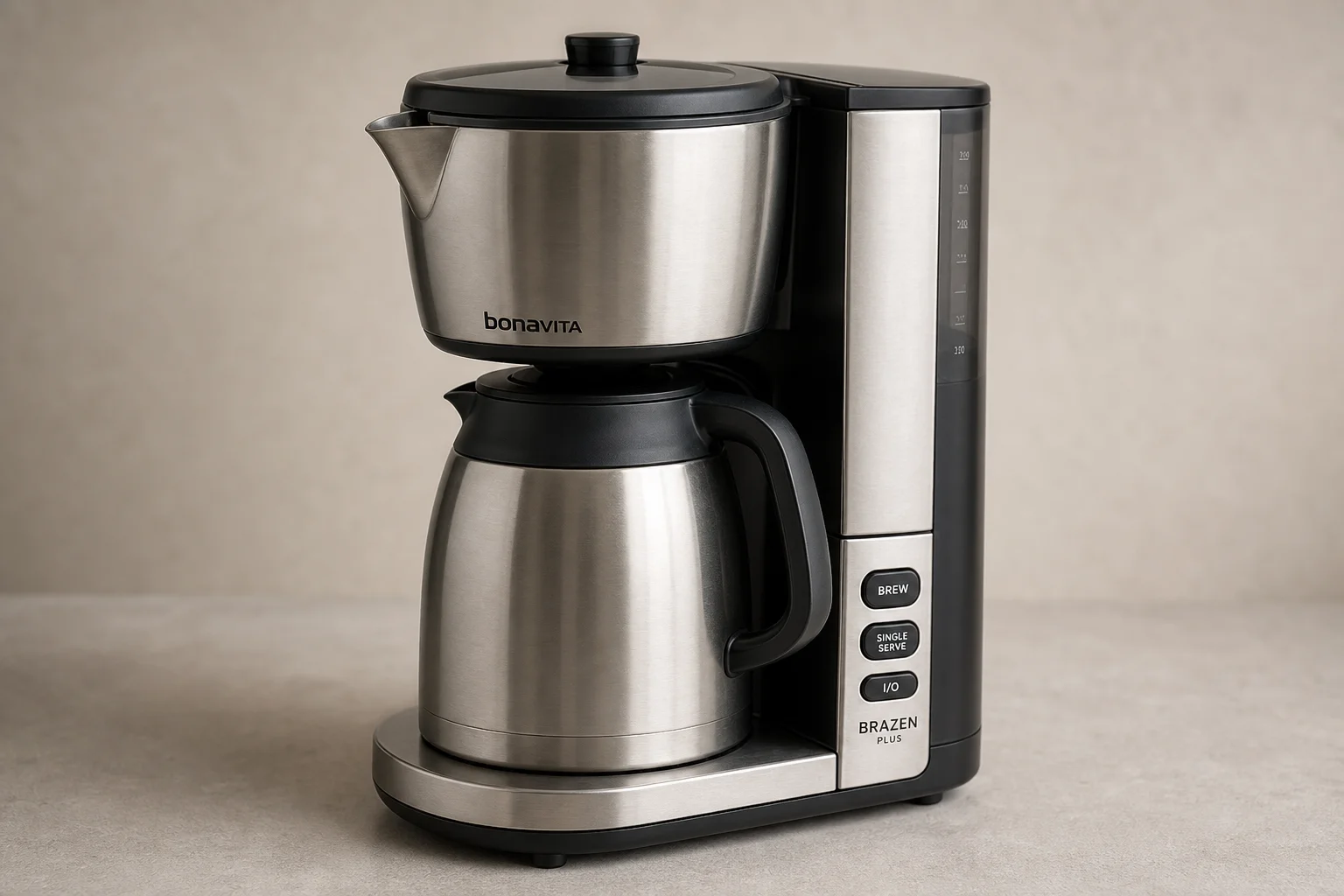
Bonavita Brazen Plus 3
The Bonavita uses a different heating approach: the entire water tank is heated to your desired temperature, then a valve opens to release water over the coffee through a spray head. This is a more brute-force method but offers straightforward temperature control.
We tested it at the default 90°C setting. Temperature data shows it overshoots slightly above 90°C initially, then declines toward the end of the brew cycle, which is actually desirable. Brew time is around 4 minutes with solid extraction.
The design is unconventional and divisive. It feels large and top-heavy, with a kettle-like appearance that some find awkward. The styling includes multiple lines and textures that don’t appeal to everyone. However, it does offer useful features like bloom time adjustment and altitude compensation for different elevations.
At £150, it is the cheapest option here. The buttons and materials feel less premium than pricier competitors, but the coffee quality is good and the feature set is respectable for the price. The main hurdle is aesthetic acceptance.
Ratio 6
The Ratio 6 uses displacement technology without a pump, brewing gently over approximately 4.5 minutes. Despite the slow flow, it achieved the highest extraction in our testing, likely due to a heat-shield component at the top of the brew basket that maintains temperature throughout the cycle.
Temperature stability is impressive, with a clear bloom phase followed by consistent brewing. The machine is beautifully designed with premium all-metal construction available in multiple finishes. It is visually striking and feels substantial.
However, the user experience reveals frustrations. The water tank markings are significantly inaccurate: a “cup” varies from 171g to 235g depending on which line you fill to. This is unacceptable and makes it difficult to follow the machine’s own guidance. The carafe design is problematic, with a button-operated stopper that frequently fails to seal properly, causing coffee to run down the front during pouring. The lid can trap water inside, which is unhygienic.
Assembling and disassembling the brew basket stack is awkward, and the rubber component flicks back at you after brewing. At £375, these usability issues are particularly frustrating given the premium price and excellent brewing performance.
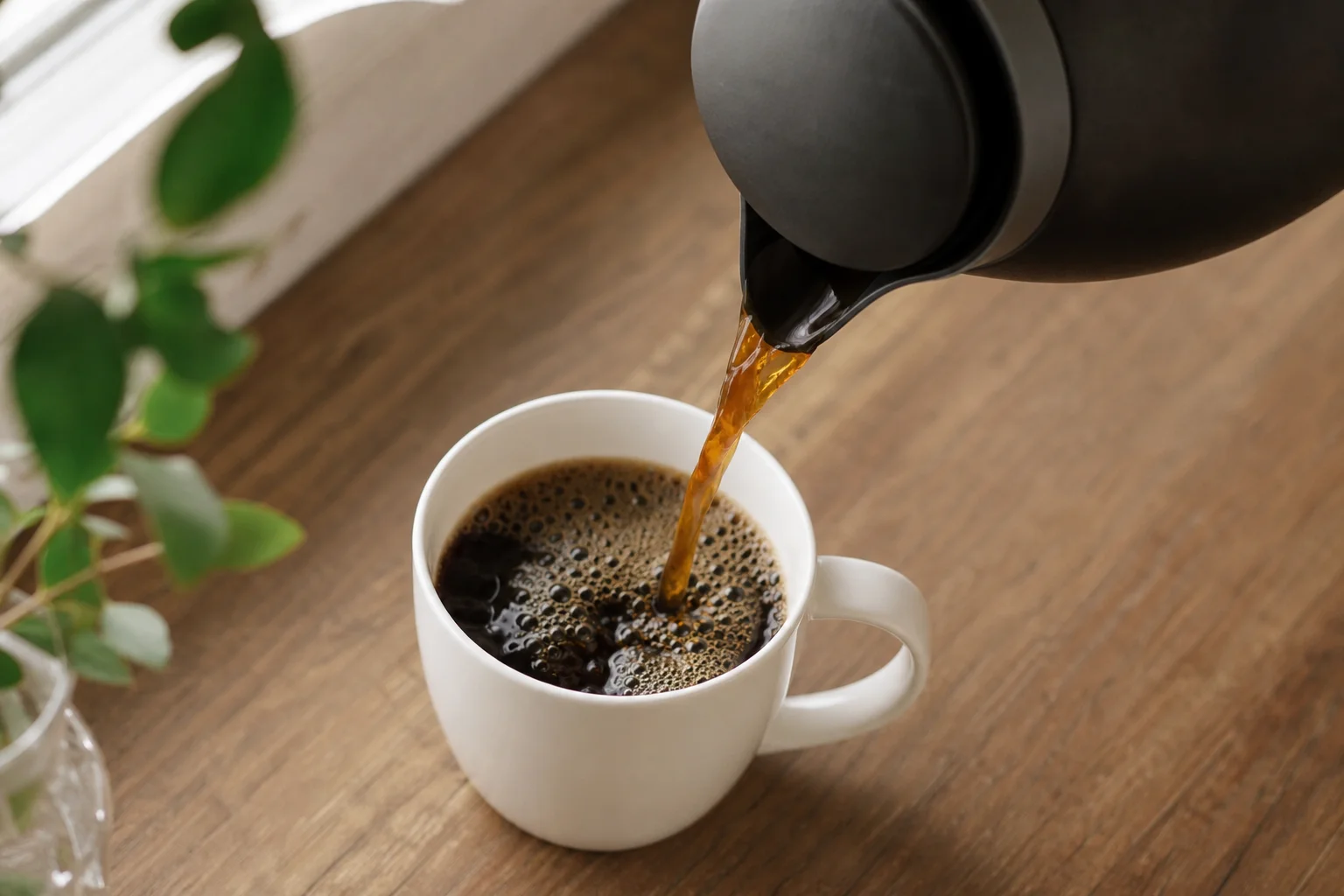
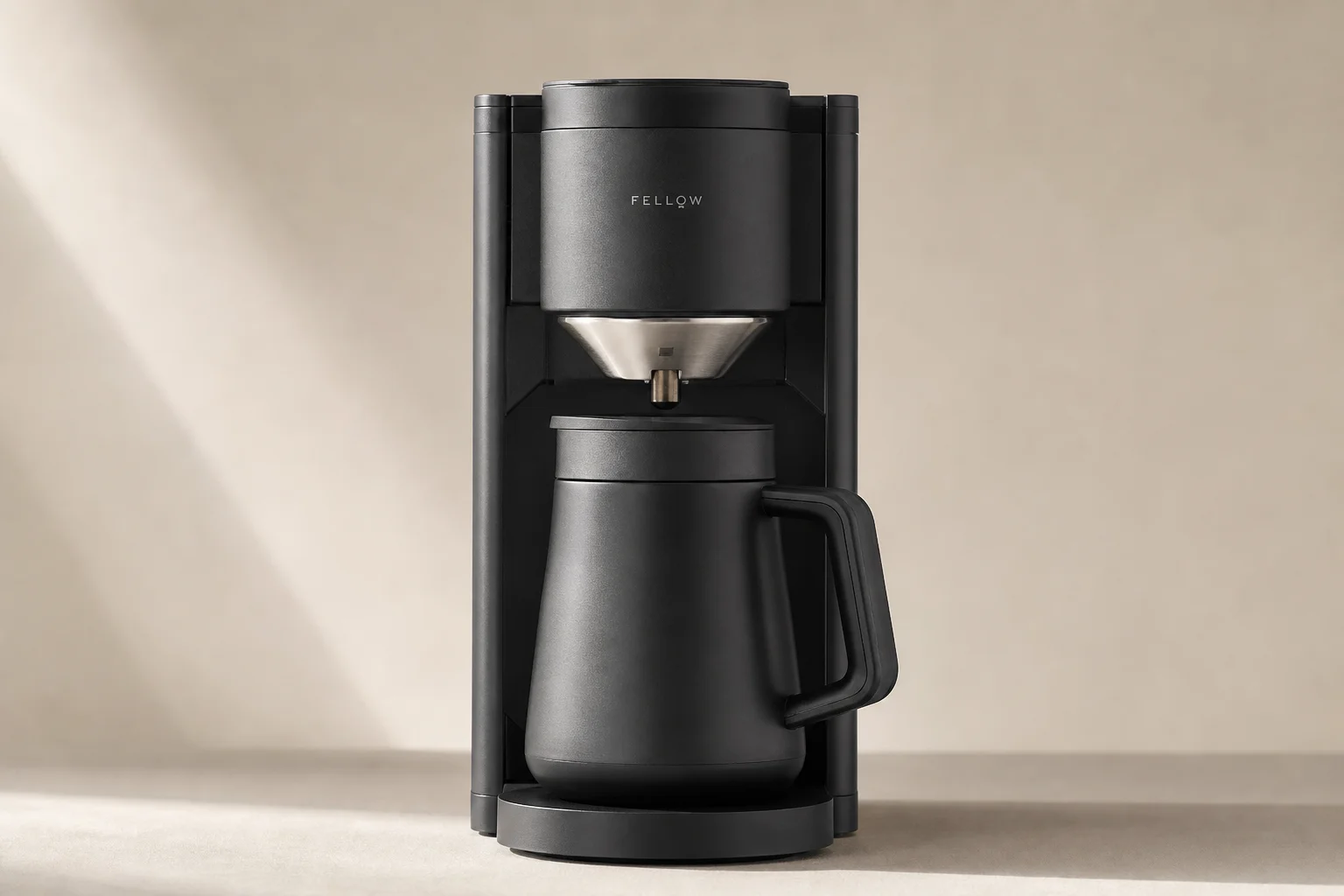
The Ratio 6 makes exceptional coffee but falls short in practical daily use. The design issues feel like missed opportunities, as many could be easily fixed.
Carafe Design and Retention
We measured how much brewed coffee remains trapped in each carafe after pouring. The Wilfa’s glass carafe excels with only 1 gram retained. The Technivorm and Bonavita both perform well. The Sage and OXO retain around 14-15 grams, which is noticeable but manageable. The Ratio’s carafe design, with its problematic stopper mechanism, retains 6 grams but requires awkward manipulation to achieve even that result.
Carafe quality significantly impacts the daily experience of using these machines. A poor pour or excessive retention becomes frustrating over hundreds of uses.
Blind Tasting Results
We conducted a blind tasting of coffee from all six brewers using identical beans and grind settings. The differences were subtle but consistent with extraction measurements. The Ratio and Bonavita produced the fullest, most textured cups. The Sage produced a noticeably lighter cup, correlating with its lower extraction. The Moccamaster, OXO, and Wilfa all produced well-balanced, sweet cups with good body.
The key takeaway: all six brewers produce good coffee. The differences are real but not dramatic. If you already own one of these machines, upgrading for coffee quality alone is not justified. The decision should rest on design, features, usability, and price.
Recommendations
Best Value: The OXO 9-Cup at $210 offers excellent brewing, useful features, and solid build quality. If you are in North America and budget-conscious, this is the strongest choice.
Best Extraction: The Ratio 6, Wilfa, and Bonavita all excel at pulling flavour from coffee. If extraction is your primary concern, any of these three will satisfy you.
Most Features: The Sage Precision Brewer packs the most adjustability and control. Choose this if you enjoy dialling in brewing parameters, but be aware of the tank accuracy issue.
Best Design: The Wilfa, Ratio, and Moccamaster are the strongest from a visual and tactile perspective. The Wilfa offers the best balance of aesthetics and usability.
Best Budget Option: The Bonavita Brazen Plus 3 at £150 delivers respectable brewing and features at the lowest price, though the design is polarizing.
Conclusion
These six brewers represent different philosophies: simplicity, value, features, design, and premium construction. None is objectively “best.” Your choice depends on what matters most to you: coffee quality, aesthetics, features, ease of use, or price. All six produce good coffee. The real differences lie in how they fit into your daily routine and kitchen.
Consider your priorities, test if possible, and choose the machine that aligns with how you actually use it. A brewer you enjoy using every morning will always outperform a technically superior machine that frustrates you.
Further reading
Related Reviews
Coffee Equipment
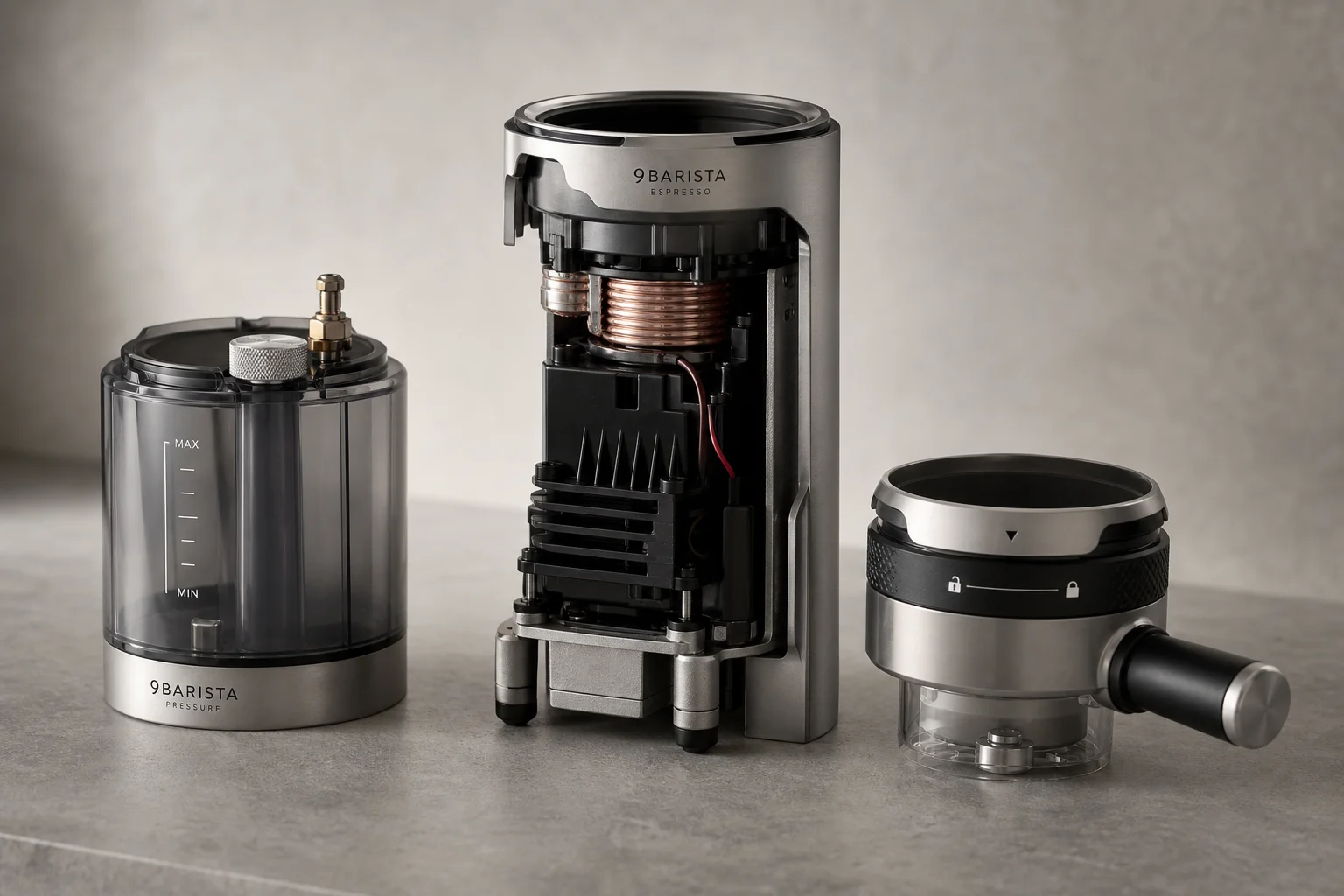
9Barista Espresso Machine Review: Stovetop Espresso for Single-Cup Enthusiasts
A cleverly engineered stovetop espresso maker that generates nine bars of pressure without electricity. Excellent coffee quality, but requires patience and suits solo drinkers only.
Coffee Equipment
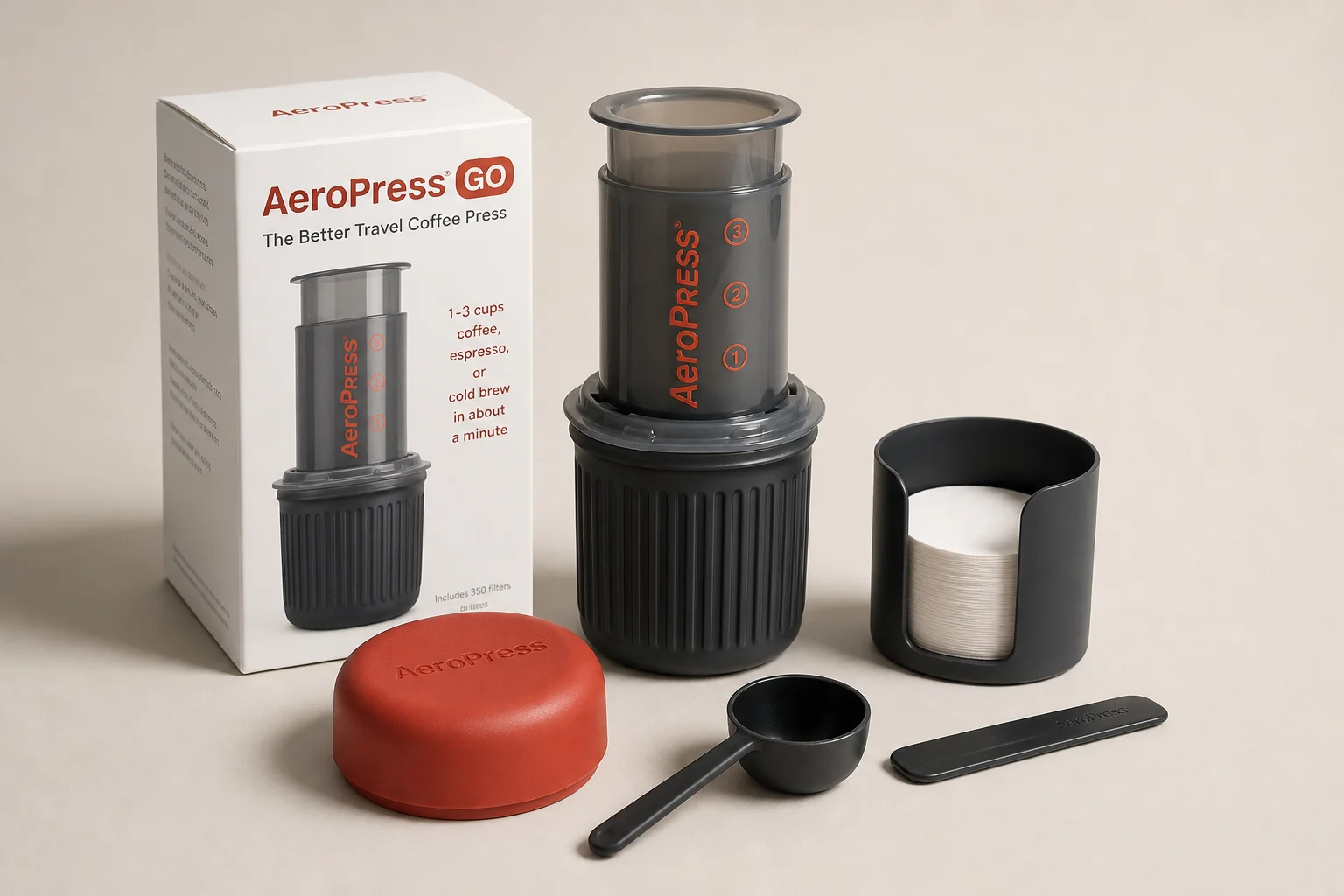
Aeropress Go Review: A Compact Travel Brewer That Solves One Specific Problem
The Aeropress Go shrinks the original design and adds an integrated cup, but it may not address the travel challenges most coffee enthusiasts actually face.
Coffee Equipment
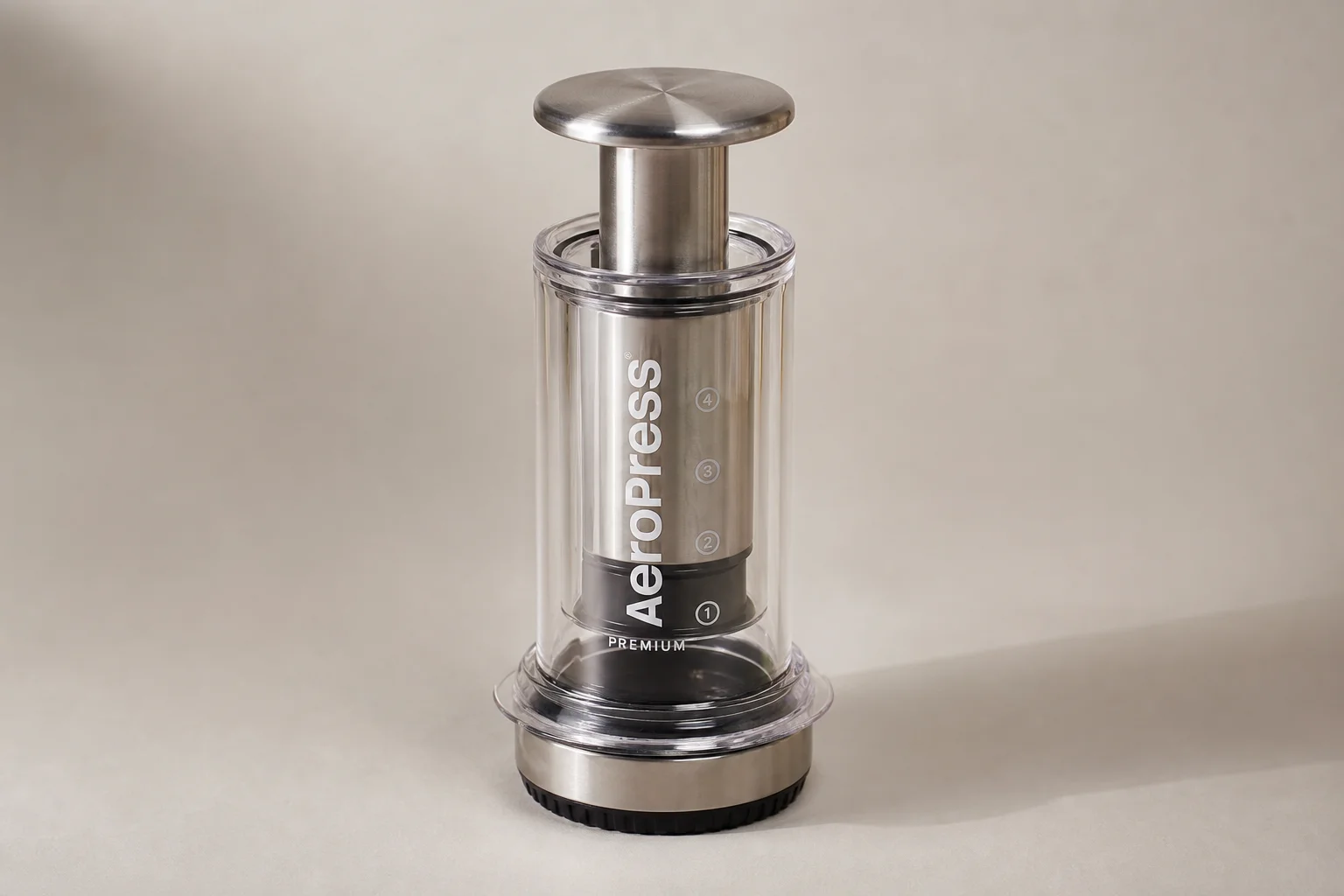
AeroPress Premium Review: Premium Materials, Practical Trade-offs
The AeroPress Premium brings glass and metal construction to a beloved brewer, but trades portability and durability for a more refined feel. Here's what changes in the cup and what matters before you buy.