Ski Gear
Best All-Mountain Skis: Eight Standout Shapes Worth Considering
A tested look at eight all-mountain skis, from playful freestyle shapes to metal-laminate frontside options, with clear notes on who each one suits.
Introduction
Every season brings a long run of test days across a wide spread of resorts, and this one covered the full range of conditions, from rain-soaked early-season groomers to dry, grippy Utah chalk and deep snow in Jackson. All-mountain skis between roughly 90 and 104 millimeters underfoot were a major focus, and a handful of shapes separated themselves from the rest.
Some of those shapes are genuinely new constructions. Others are carryovers that simply keep performing against everything that arrives next to them. This roundup covers eight skis that stood out, with notes on the terrain and the riding style each one suits best.
How We Evaluated These Skis
Consistency matters more than volume. When several pairs of skis in the same category are skied on the same day, in the same conditions, the differences between them become far easier to feel and to describe. That side-by-side approach is what makes it possible to say something useful about a 96 millimeter ski versus a 104, or about a ski with two sheets of metal versus one with none.
Tune is the other variable worth understanding. A ski sharpened too aggressively can feel catchy and nervous in soft snow, hooking the moment it is tipped on edge. A dull edge on hard snow feels just as unpredictable. Every ski in the test fleet gets the same shop tune before it is compared with anything else, because a poor tune can make a genuinely good ski feel like a bad one, and that is an easy mistake to make when judging a single run.
The rest comes down to a simple distinction. How a ski performs is objective: edge grip, stability at speed, and flotation in soft snow can all be measured against another ski. Which of those traits you personally prefer is subjective. Keeping the two separate is what makes a recommendation actually useful.
Blizzard Rustler 10
The new Rustler is the most significant redesign in this group. The previous generation ran a band of metal through the middle of the ski, which created a noticeable hinge point in front of the toe piece and behind the heel. The new version moves that metal along the sides and runs it all the way to the tip and back to the tail, so the flex is rounder and more even.
In practice, the low-speed accessibility riders liked about the old ski is still there, but there is far more top end to step on. At 104 millimeters underfoot, the Rustler 10 does not ski like a ski that wide. It holds an edge on groomers, pivots easily in bumps and trees, and stays composed in variable snow. Riders who want the most accessible version will prefer the narrower Rustler 9, which sees the largest improvement of the three widths, while the Rustler 11 changes the least from the outgoing model. The Shiva covers the same shapes in a women’s build.
Set against a softer, more soft-snow-leaning ski in a similar width, the Rustler feels considerably more planted and much more capable on hard snow.
View more details for Blizzard Rustler 10
Elan Playmaker 101
The Playmaker line is new, developed through more than a year of prototype testing, and it fills a gap in the Elan range that the Ripstick never covered. The construction borrows from the Ripstick but uses a single carbon rod instead of two, and that difference shapes the whole personality of the ski.
At low edge angles the Playmaker 101 is loose, playful, and easy to smear around. Tip it up hard and it locks in with an edge hold that feels out of character for a ski this friendly, which is exactly what the design team was chasing. The 101 is the width that makes the most sense for most riders, though the narrower 91 is there for anyone who spends more time on groomers and in the park.
It sits in the same conversation as the K2 Bent 100, the ski that effectively defined this category of playful but genuinely capable all-mountain shapes, and it is the closest direct answer to it that we have skied.
Armada Declivity 92
The Declivity 92 has quietly become a benchmark for a certain kind of skier. Two sheets of metal give it real power and a high ceiling, but turn initiation is easy enough that it never feels like work, and it does not leave your legs wrecked after a full day.
That combination is why so many people who build skis for other brands name it as a personal favorite, and why it keeps getting used as the reference point when a new 90 millimeter all-mountain ski is developed. It is not a soft, playful twin tip, so riders who want a loose freestyle feel should look elsewhere. For anyone who wants grip, stability, and a ski that stays fun from first chair to last, it is hard to beat at this width.
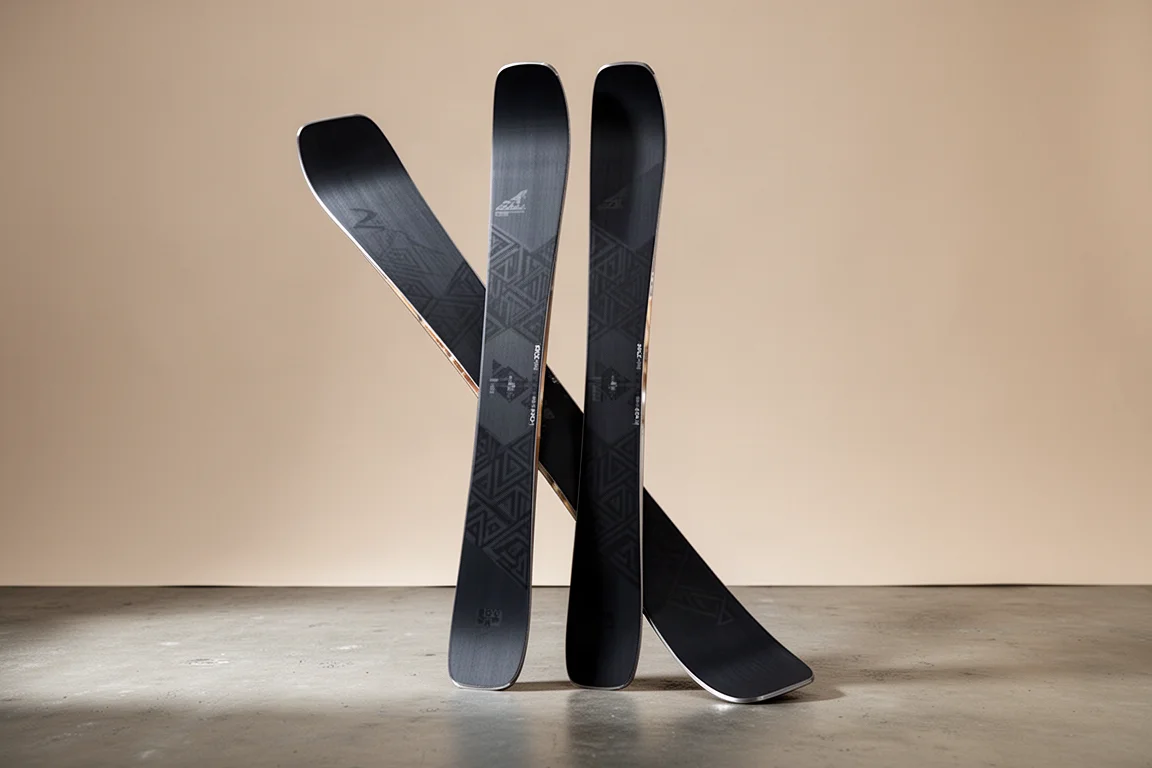
Atomic Ripstick 96 Black Edition
Some skis earn a reputation slowly and then hold onto it. The Ripstick 96 Black Edition has been a reference point in the all-mountain category for a while, and nothing this season displaced it. It is a 96 millimeter ski that does not feel like one, easy to steer and predictable across a wide range of conditions, and it stayed competitive on the days it was skied directly against newer designs.
That consistency is the point. A ski that keeps showing up near the top of its category is not there by accident, and for riders who want one pair that covers groomers, bumps, and soft snow without demanding much from them, this is the shape to beat.
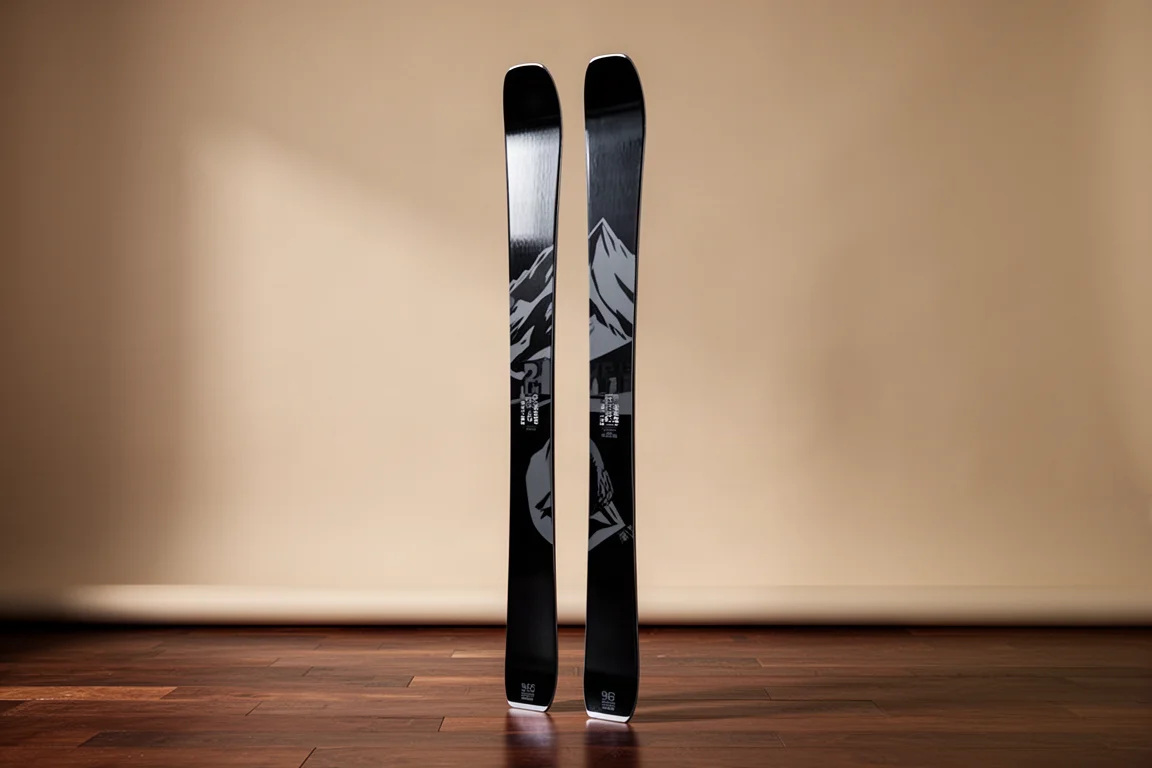
Volkl Revolt 96
The Revolt 96 is new, and it is honest about what it is. The flex is on the softer, more playful side, it is easy to ski at low speeds, and it is comfortable on side hits, in the park, and in soft snow. It is also the most one-dimensional ski here. At high speed on hard snow it is the least capable of this group, and it clearly wants to be in the park or in soft snow rather than on a firm groomer.
For the right rider that trade-off is not a problem at all. If you want a playful ski that is fun at low edge angles and easy to throw around, it delivers. There is also a wider Revolt 114 in the line for deeper days.
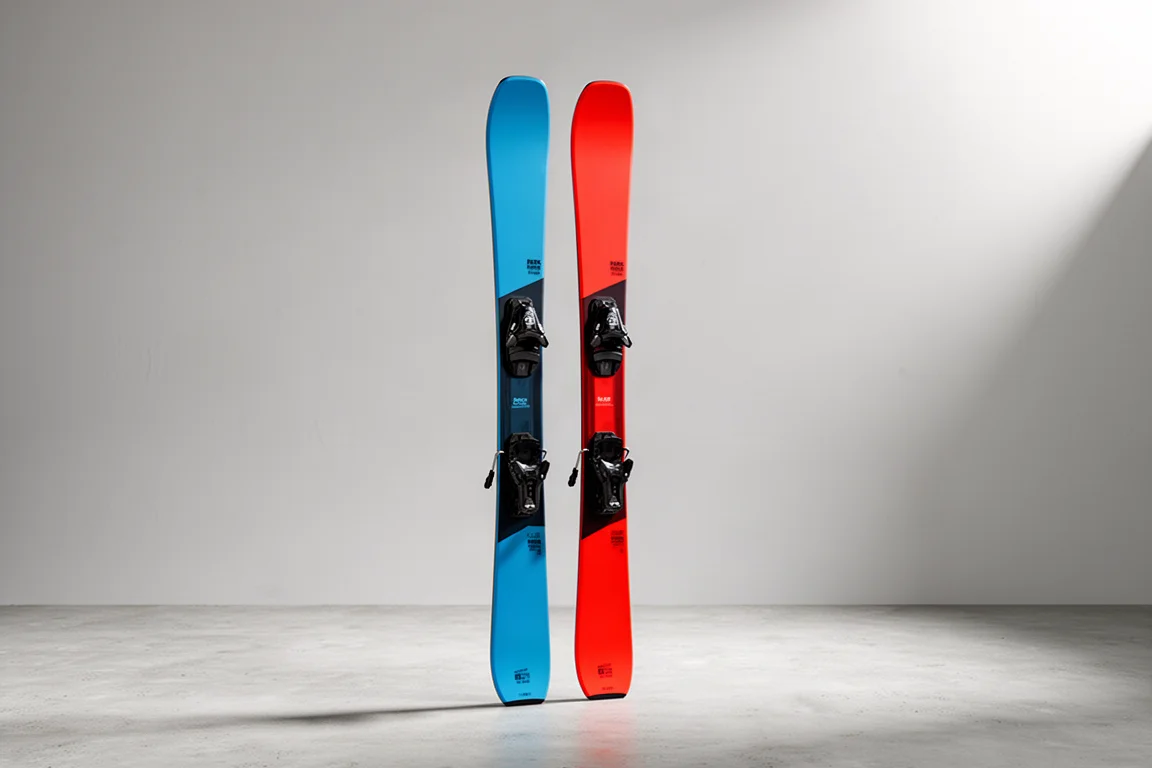
Nordica Unleashed 98
The Unleashed 98 is one of the more underrated skis in this category. It has a kicked-up tail, so it keeps some freestyle personality, but it carries noticeably more hard-snow performance than the softer freestyle-leaning options in the same width range. That combination makes it a genuine every-day ski for a rider who wants one pair to do everything.
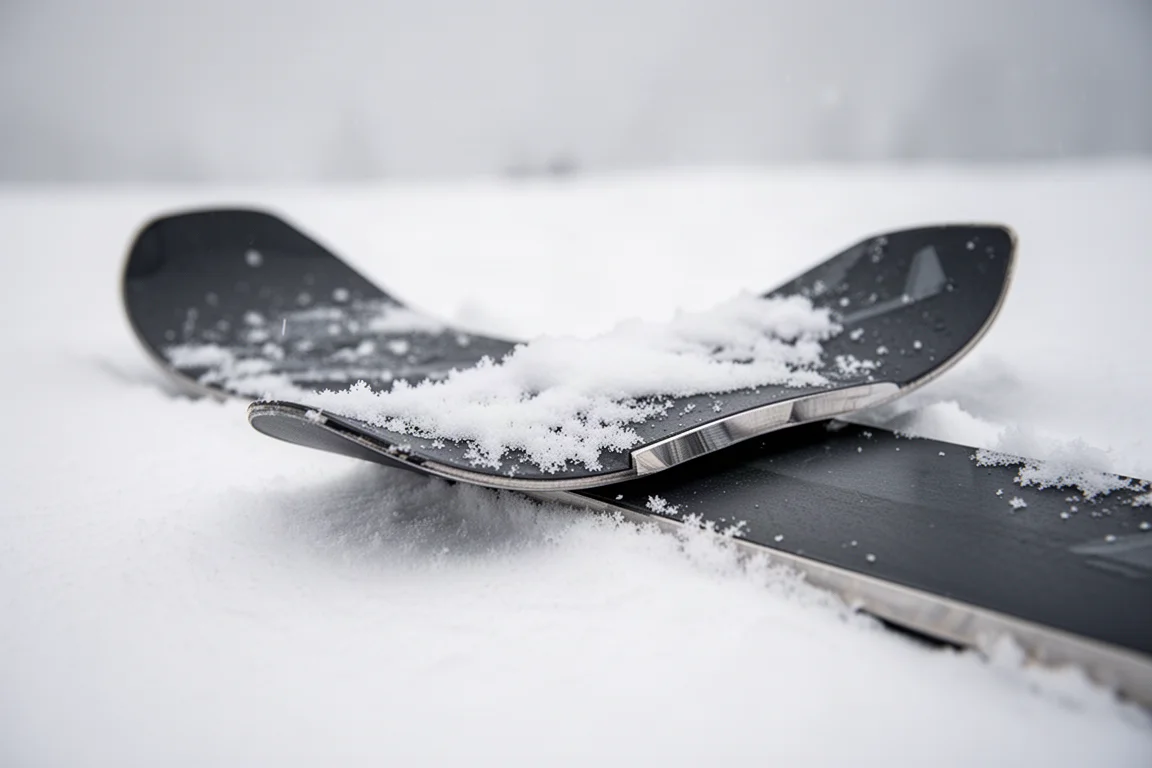
In side-by-side testing the difference was stark. Where the softer, park-oriented shapes go vague once the snow firms up, the Unleashed 98 keeps gripping and stays predictable. Several of our testers treat it as a default daily driver, the pair that lives in the truck through the entire season.
Salomon Stance 96
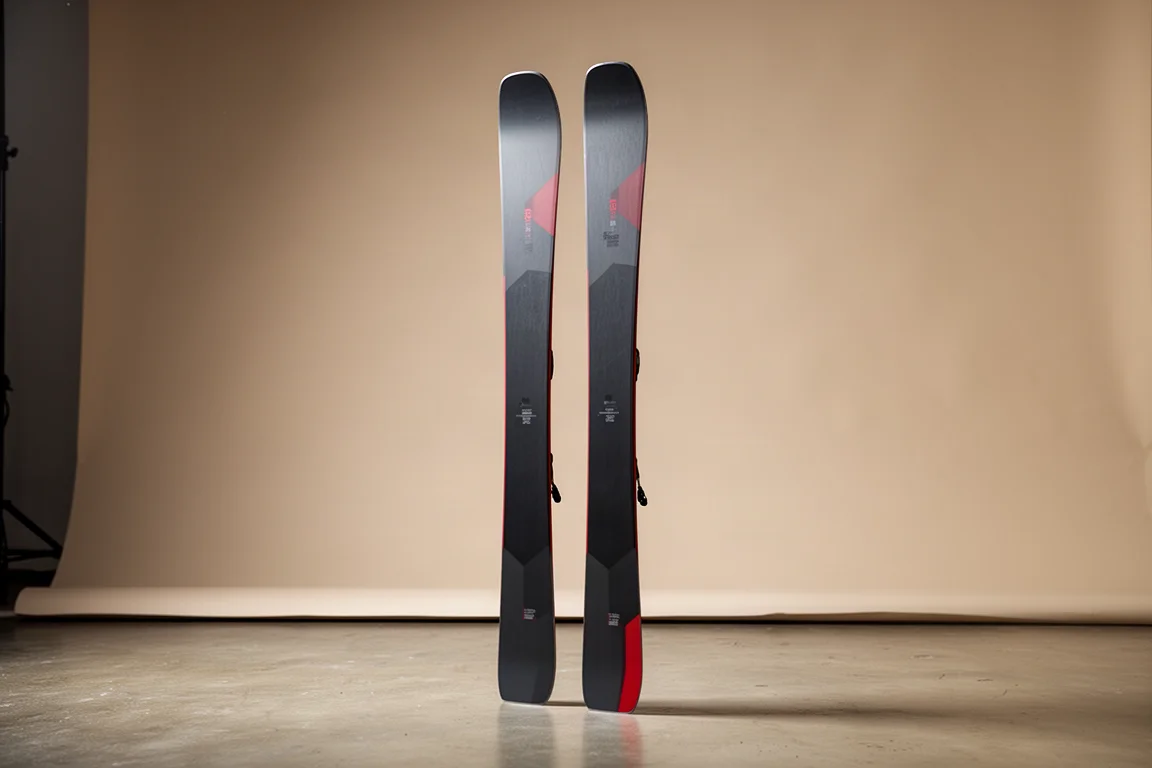
The Stance 96 gets a new construction this season, which is a rare move. Skis usually run several years on a shape before anything structural changes, and the fact that Salomon responded this quickly to rider feedback says something about how the original was received. It was a powerful ski, and for a lot of people that power made turn initiation harder work than it needed to be.
The updated build is significantly more accessible at lower speeds and easier to get on edge, without giving anything up at the top end. On long, empty morning groomers it never ran out of speed limit. It also does not overlap with the QST line, which leans much further toward soft snow and off-piste terrain.
View more details for Salomon Stance 96
Nordica Steadfast
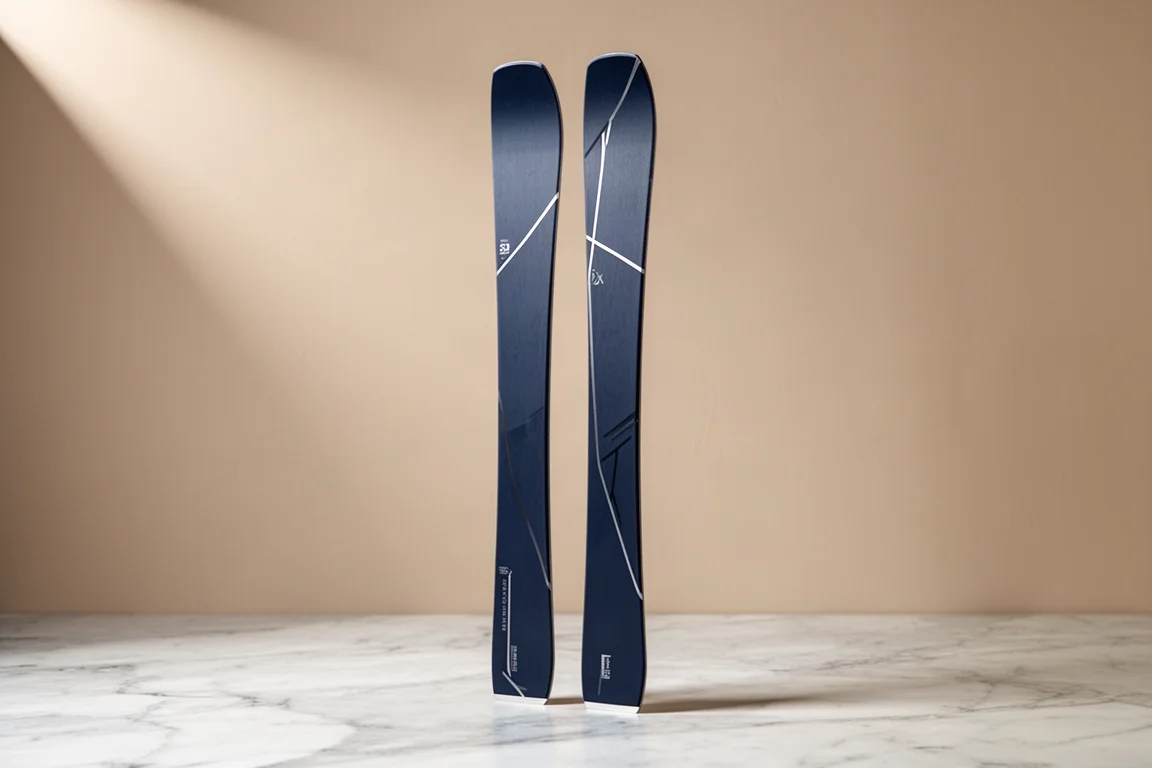
The Steadfast is the outlier here, and a useful one. It is a frontside-oriented ski built with a dual core that alternates wood and metal, and unlike some metal-laminate skis it does not feel hinged. The flex is even, the balance point is obvious, and it is easy to feel when your weight is in the right place.
That makes it a strong choice for an intermediate or advancing skier who wants to build confidence on groomers and actually learn to carve. Two sheets of metal usually signal a demanding ski, and the Steadfast is surprisingly approachable for that construction. It is happiest on piste, and riders whose priority is soft snow and trees should look elsewhere in this roundup.
Overall Buying Advice
Start with where you actually ski, not with what sounds impressive. A playful, freestyle-leaning ski in the low 100s is a great time in soft snow and in the park, and a poor choice if most of your days are on firm, scratchy groomers. A metal-laminate frontside ski is the opposite trade-off.
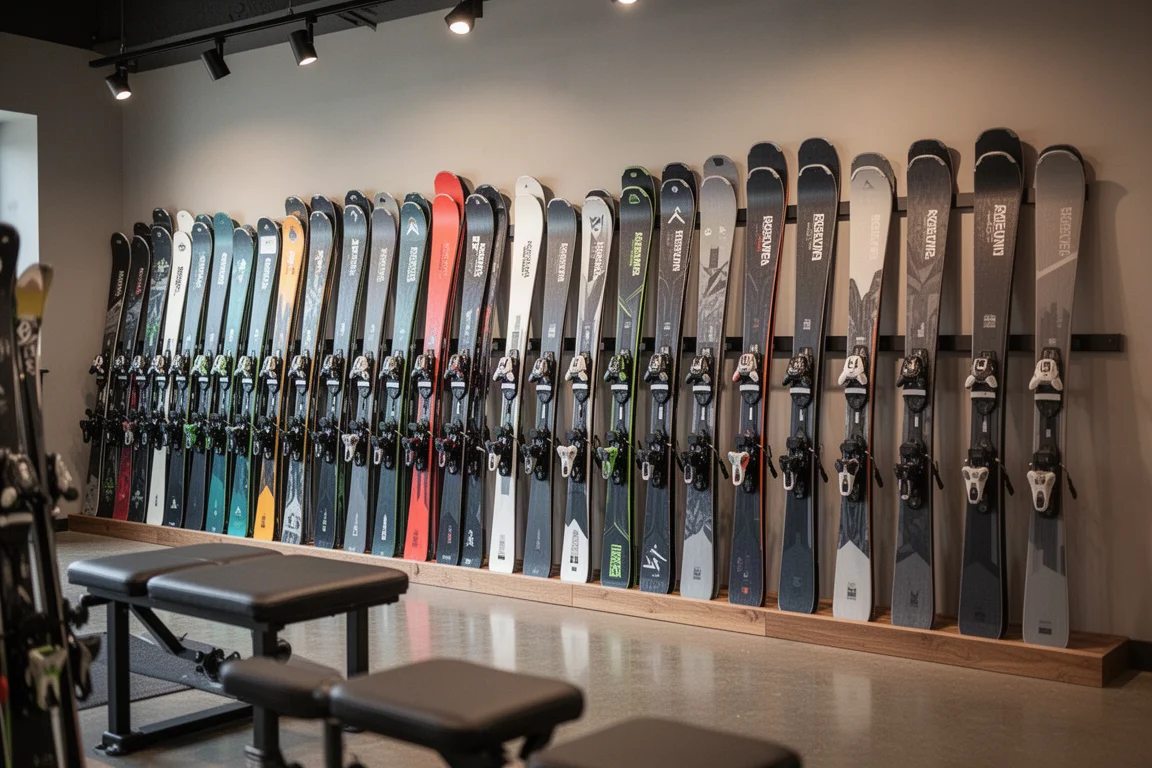
Within the all-mountain category, width is a useful filter. Something in the mid to high 90s will handle groomers and firm conditions with more composure, while a shape in the low 100s adds float and versatility at the cost of a little edge grip on hardpack. If you are comparing two skis that look similar on paper, look at what is actually inside them. Metal content and core construction explain most of the difference in how a ski grips, how stable it feels at speed, and how tiring it is after a full day.
It also helps to know that a ski being easier to ski is not the same as a ski being less capable. Modern all-mountain shapes are trending toward more accessible flexes without giving up performance, and that is a genuine improvement rather than a compromise.
Conclusion
The all-mountain category is crowded, and the eight skis here are not interchangeable. The Blizzard Rustler 10 and the Elan Playmaker 101 are the two genuinely new designs that moved the needle most, one by making a wider ski easier to live with, the other by nailing the playful-yet-capable brief. The Armada Declivity 92, the Atomic Ripstick 96 Black Edition, and the Nordica Unleashed 98 are the shapes that keep proving themselves against everything new. The Volkl Revolt 96 and the Nordica Steadfast sit at opposite ends of the spectrum, one built for park laps and soft snow, the other for confident carving on piste. The Salomon Stance 96 rounds things out as a powerful ski that became noticeably easier to ski.
Match the ski to the terrain you ride most and the style you actually ski, and the decision gets a lot simpler.
Further reading
Related Reviews
Ski Gear
2023 Blizzard Hustle vs Rustler: Six Freeride Skis Compared
Blizzard's 2023 Hustle collection rebuilds the Rustler shape with a lighter core and no metal. Here is how all six skis differ, and which one suits your riding.
Ski Gear
2023 Skis of the Year: Atomic Maverick 88 TI, Salomon QST 106, and Look SPX 12 Pro
Three standout ski picks for all-mountain carving, powder days, and reliable binding performance, with practical buying notes for 2023 models.
Ski Gear
2025 Nordica Enforcer 104 Review: A Directional Charger Replaces the 104 Free
The 2025 Nordica Enforcer 104 drops the Free name and the twin-tip personality, gaining weight, stiffness and composure in rough snow. Here is what changed and who it suits.