Ski Gear
Best All-Mountain Skis 2026: Six Picks for Carving, Crud, and Confidence
Six all-mountain skis compared by turn initiation, stability, and forgiveness, with practical notes on width, length, and value.
Introduction
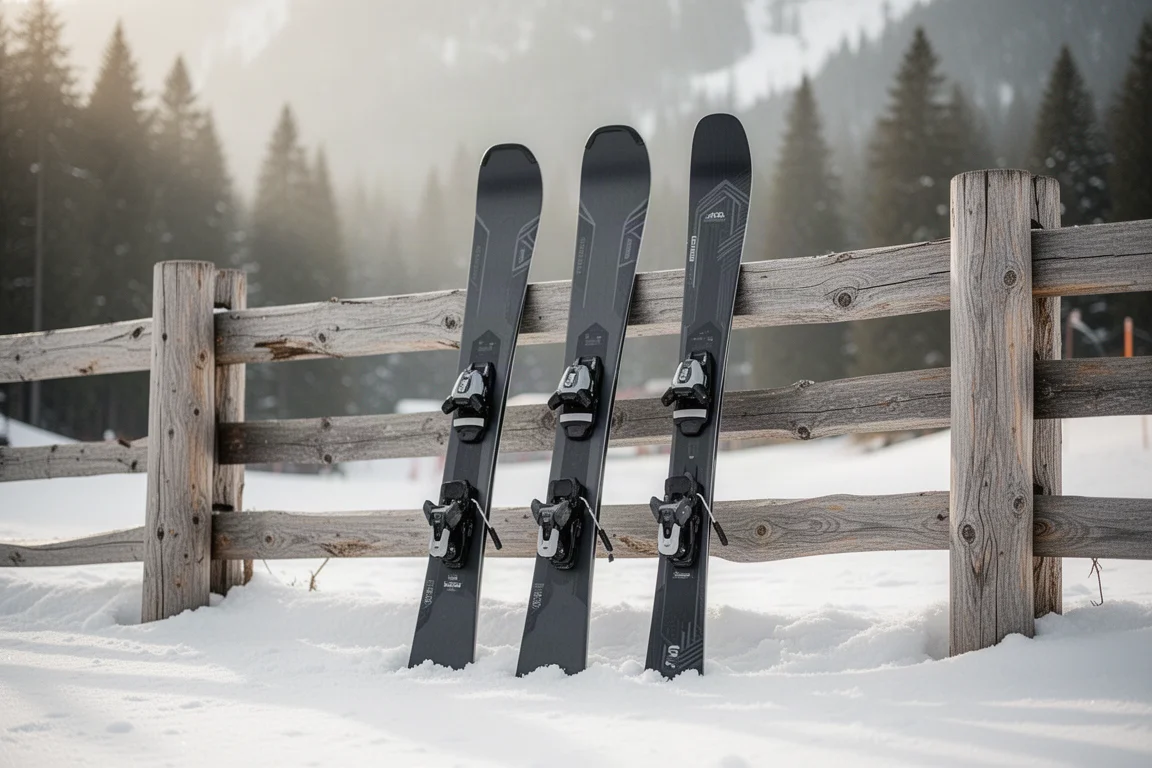
All-mountain skis in 2026 come in a wider range of personalities than their waist widths suggest. Two skis with nearly identical dimensions can behave completely differently the moment you tip them onto an edge. One eases into the turn and lets you shape the rest of the arc. Another snaps into the turn almost on its own.
Neither approach is wrong. They simply suit different riders, different snow, and different home mountains.
This guide covers six skis that span the useful part of that spectrum: a balanced benchmark, a fast-initiating carver, a playful freeride shape, a heavy crud cutter for wet coastal snow, and two forgiving options for skiers who want a versatile single-ski quiver.
How to Choose an All-Mountain Ski
Waist width is the first thing most skiers look at, and it does matter. A wider ski gives you more platform to work with underfoot, which usually translates into a more forgiving, more balanced feel through the turn. A narrower ski gets onto edge faster and rewards precise pressure.
The second factor is how the ski starts a turn. Some shapes require deliberate input: you roll the ski over, apply pressure, and feel the arc build progressively. Others initiate from a very light touch and then carry you through the rest of the turn. The first style gives you more control over turn shape. The second makes it easier to link turns quickly, which can be genuinely useful for a rider working on carving technique.
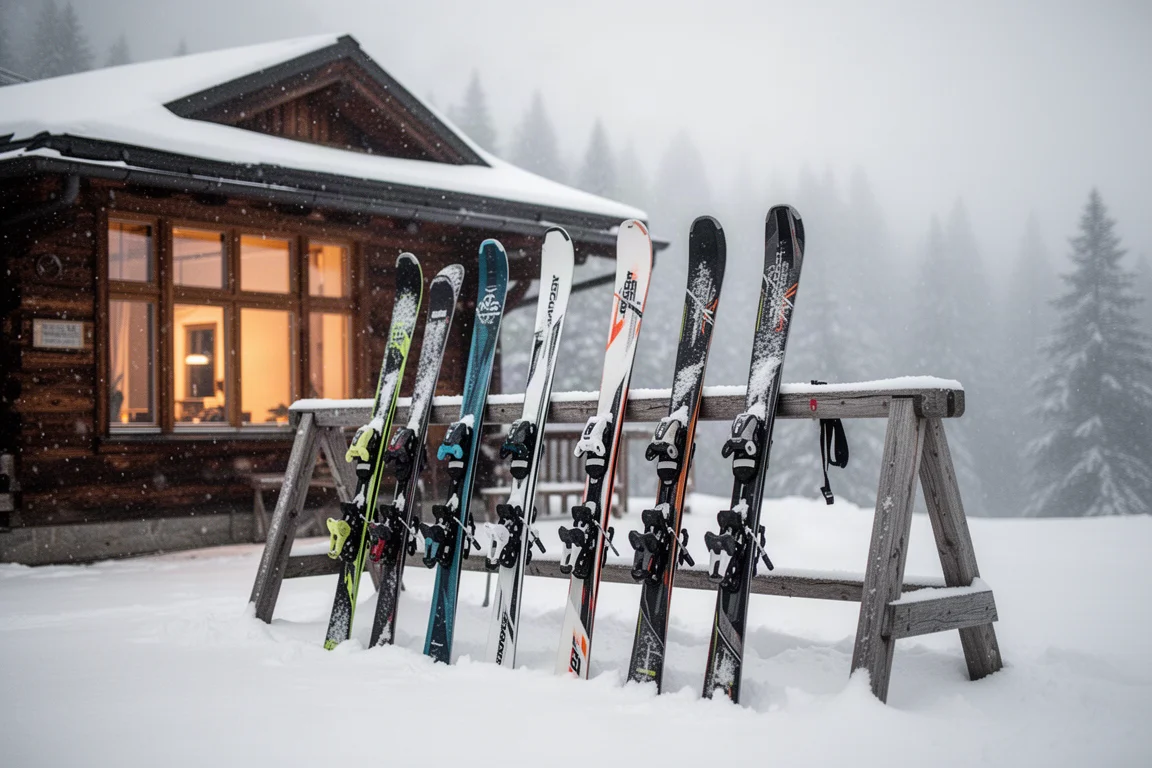
Length is the other variable worth reconsidering. Older skis were often bought long, and lengths in the 190s to 200s were common for taller, heavier skiers. Modern shapes are shorter for the same rider, partly because of rocker profiles and deeper sidecuts. Sizing down is normal rather than a compromise.
The last consideration is how much ski you want to manage. Heavier, stiffer builds cut through chop and crud with authority, but they demand more input and feel less forgiving when you are tired or when you are skiing with family on easier terrain.
Fischer Ranger 90: A Balanced All-Mountain Benchmark
The Ranger 90 is a reference point for what a well-rounded all-mountain ski should feel like. Turn initiation is quick and low-effort: it does not take much forward pressure to get the ski rolling onto its new edge. What separates it from more aggressive carvers is what happens next. The ski still gives you consistent resistance through the rest of the turn, so you stay in control of the arc rather than being pulled through it.
That balance is why it works across such a wide range of conditions. The shape is wide enough to give you something to work with underfoot, but it does not feel like a burden when the snow firms up or when you spend the day on groomers.
Riders who like to savor a turn, shaping it from initiation through finish, tend to get along with this kind of feel. It rewards a smooth, progressive edge change rather than a sudden jab of pressure.
View more details for Fischer Ranger 90
Atomic Redster Q9.8: Fast Turn Initiation for Improving Carvers
The Redster Q9.8 sits at the opposite end of the initiation spectrum. It takes very little input to start a turn. A light touch of pressure and the ski is already rolling into the arc, to the point where it can feel close to autopilot.
For an intermediate skier working on carving, that is not necessarily a bad thing. Removing one step from the process, namely the deliberate effort of getting the ski to turn, can free up attention for edge angle, balance, and body position. It can genuinely help a developing skier reach the next level.
The trade-off appears as you improve. Skilled skiers control turn shape by feathering pressure at initiation, and a ski this eager can occasionally start a turn when you only meant to adjust. It can also misread secondary pressure in the second half of a turn and begin an arc you did not ask for. The result is less control over the exact shape of each turn.
That does not make it a bad ski. It makes it a specific one. If you want maximum control over every arc, look elsewhere. If you want a ski that helps you commit to a turn while you build technique, this is a reasonable place to start.
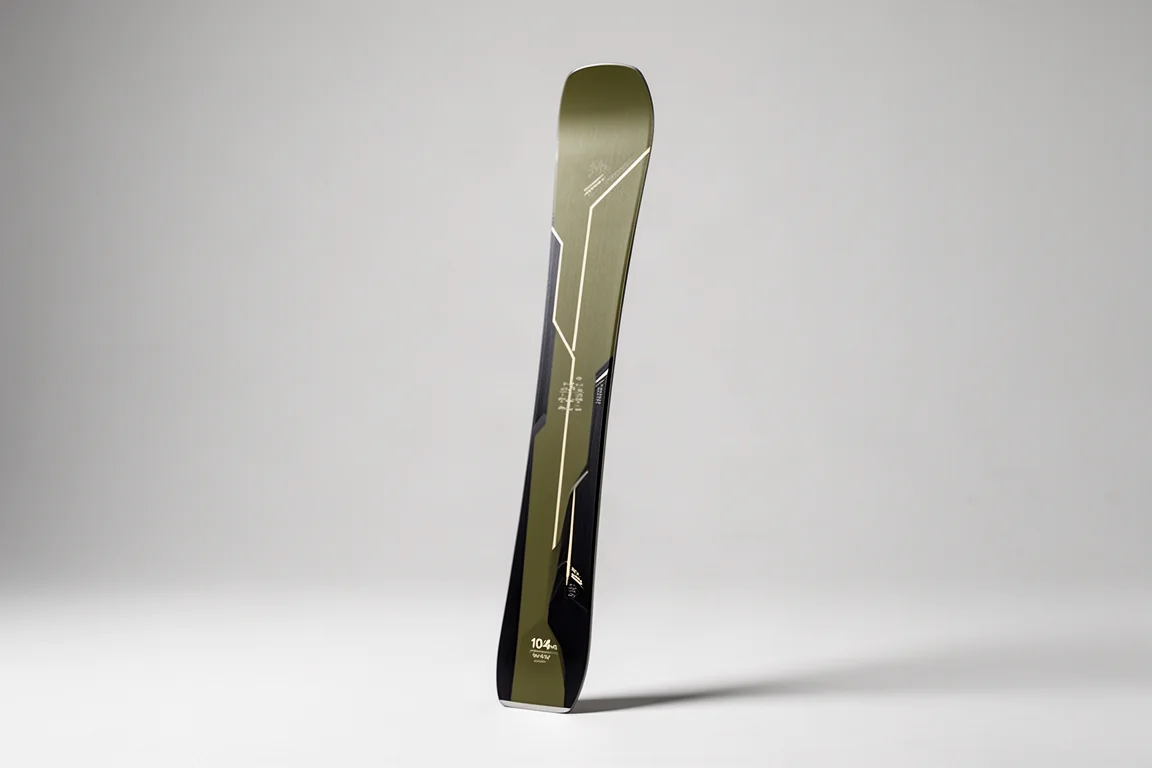
Peak 104: Playful Freeride Character
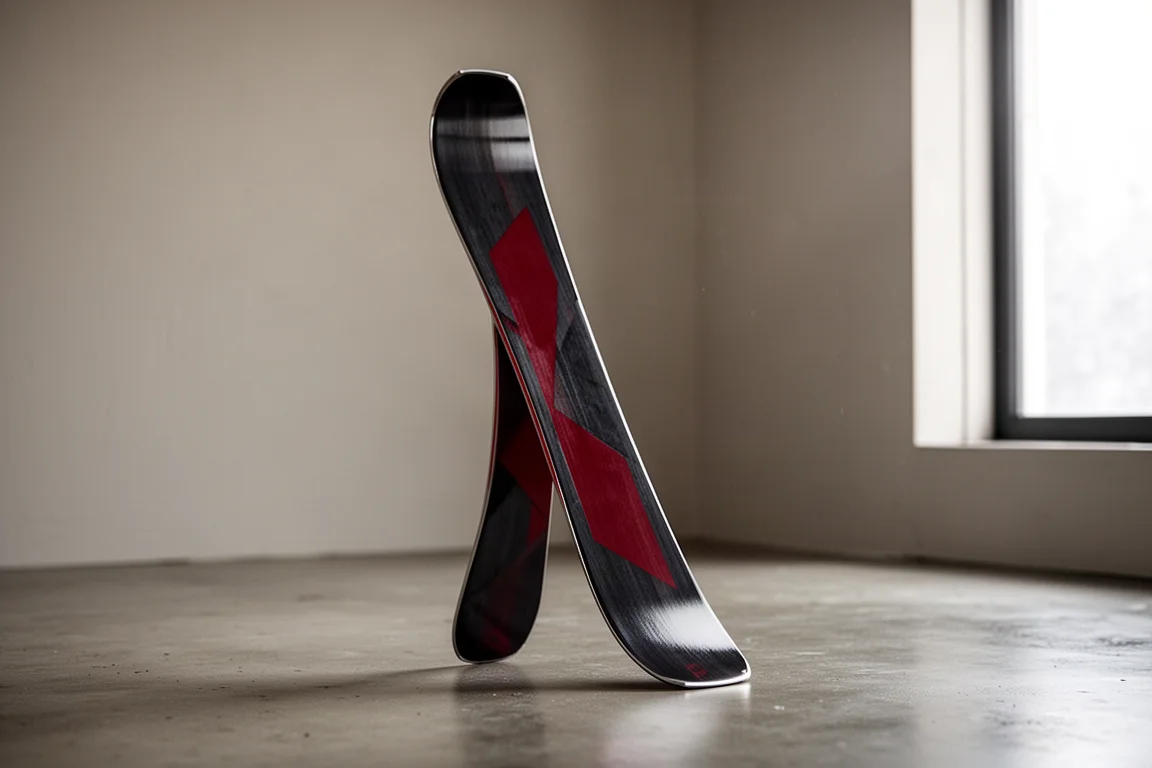
The Peak 104 is a playful, freeride-leaning shape with a flex that holds up well. Stiffness is not a problem here: it supports a confident, energetic ride without feeling punishing underfoot.
Peak’s pricing is worth watching. The Peak 88 has been listed at $499, and the wider widths have been priced around $750. A two-pair bundle at roughly $999 has appeared at times, though that particular offer is no longer listed. If you like the feel of the Peak lineup and want to cover two different conditions, keeping an eye on bundle pricing is worthwhile.
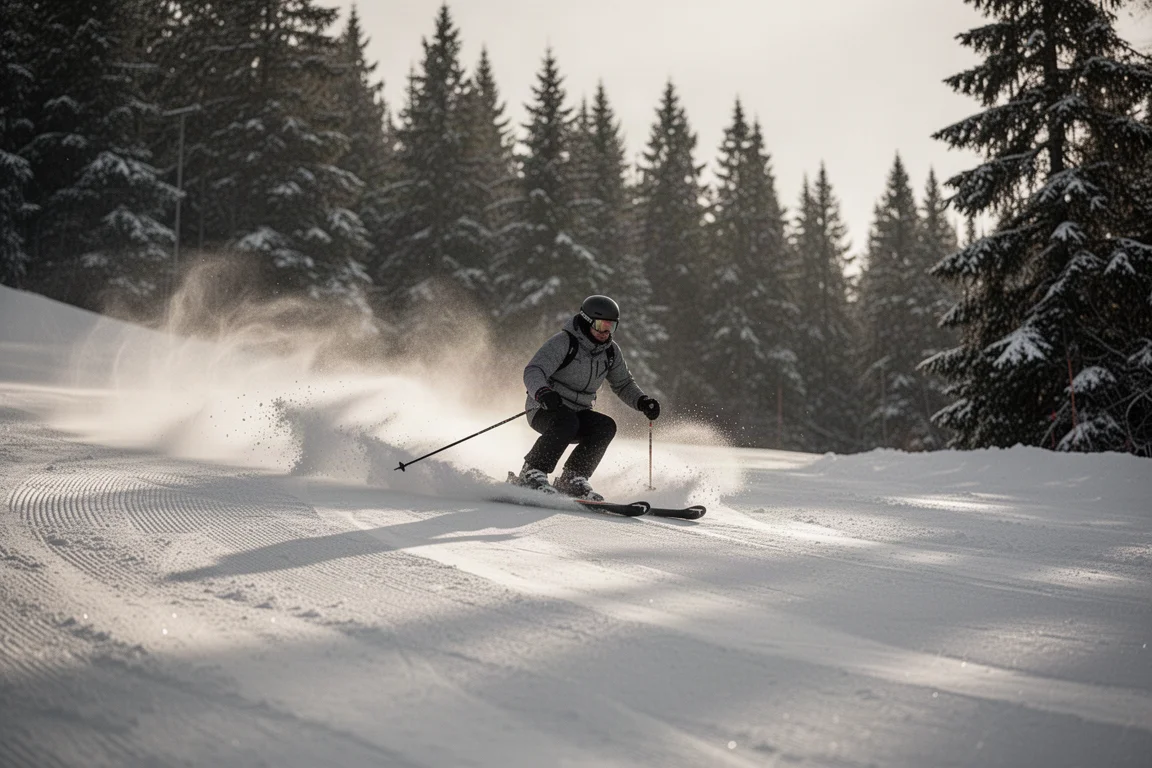
The 104 works best as a ski you can push around a bit. It is not built to be a demanding, locked-in carver, and it does not need to be. Treat it as a versatile, lively option for soft snow and mixed terrain.
Volkl Mantra M6: A Crud-Cutting Option for Coastal Snow
The Mantra M6 is thick and heavy, and that is the point. In coastal snow conditions, the kind of wet, cut-up, variable surface common in the Pacific Northwest, it works as a dependable crud cutter. It is a safe bet when you want a ski that stays composed after the snow has already been chopped up.
That stability comes with a cost. This is not the most forgiving ski in the category, and the effect is amplified in longer lengths. A 191cm build in particular asks for a strong, committed skier with recent mileage. Riders returning after a long break, or those who mostly ski with family on easier terrain, may find it more ski than they want to manage.
If you already like heavier, beefier skis and you want something that holds a line through rough snow, it deserves a look.
Atomic Maverick 95 TI: The Versatile All-Rounder
The Maverick 95 TI is easier to redirect and change direction than a heavy crud cutter, which makes it a friendlier choice for a wide range of skiers. Its Horizon Tech construction helps when you venture off the groomed runs, so a powder day does not leave you stuck on the sidelines.
Carving response is a strong point as well. The ski holds a clean arc on groomers and feels responsive edge to edge, which is exactly what you want from a single-ski quiver.
For a taller, heavier skier stepping back into the sport after years away, the 188cm length is a sensible match. It is not the most forgiving ski on this list, but compared with a 191cm heavyweight, it is noticeably easier to steer and more comfortable on blue-square terrain.
Pricing is another argument in its favor. A current pair has been listed around $707 with Strive bindings, and prior-year pairs with the same construction, differing only in topsheet, have appeared near $300 without bindings. Adding a set of bindings at around $150 can put a complete setup under $500, which is a meaningful saving for a ski that has not changed underneath.
Atomic Maverick 88 TI: A Narrower Option for Bigger Skiers
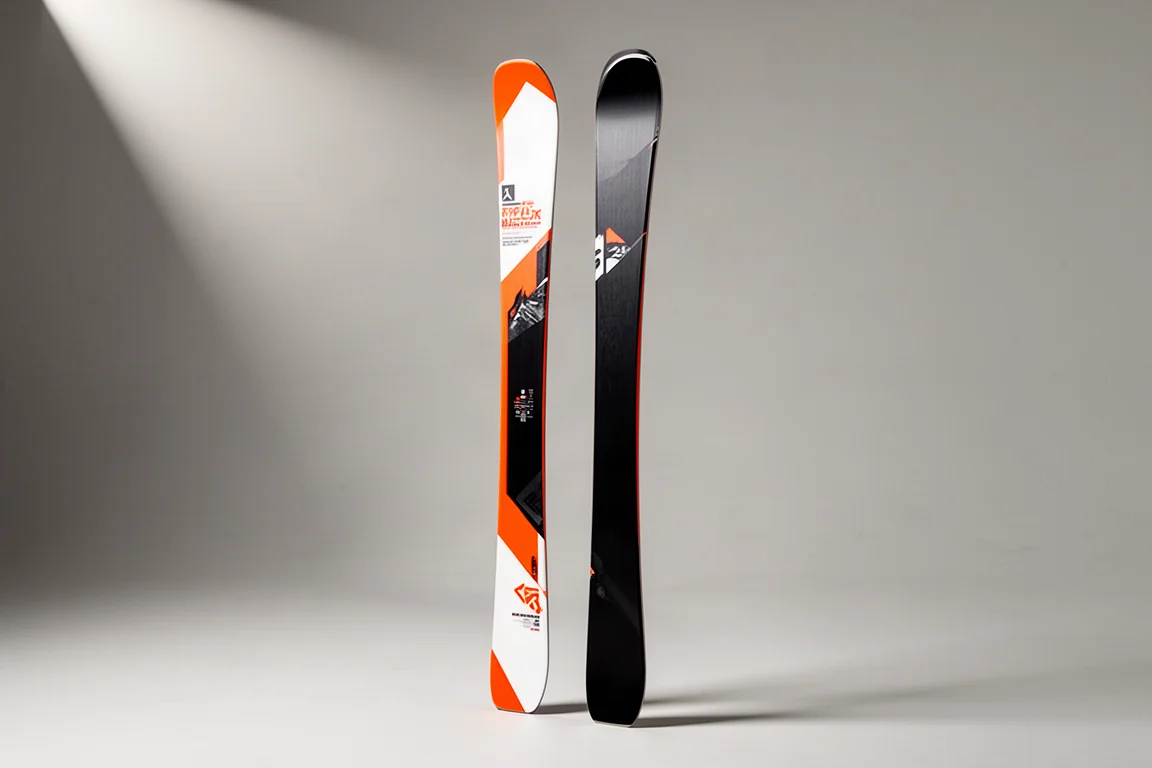
The Maverick 88 TI is the narrower sibling in the same family, and it has a strong following among larger skiers who want a carving-focused all-mountain ski. The narrower waist gets onto edge quickly and rewards a confident, directional style.
Compared with the 95 TI, it gives up some width underfoot. That makes it a better match for firm groomers and a less obvious choice for deep days, but for a bigger skier who spends most of their time carving on piste, the narrower platform can be the more natural fit.
Buying Advice: Matching the Ski to the Day
The most useful question is not which ski is best overall, but which ski is best for the snow you actually ski. Coastal, wet, cut-up snow rewards a heavier crud cutter. Firm groomers and a focus on carving technique reward a narrower, quicker shape. Mixed conditions and a bit of everything reward a balanced all-mountain width.
If you are building a one-ski quiver, prioritize forgiveness and versatility over maximum stability. A ski that is easy to redirect will keep you skiing longer and with better technique, which matters more than a small gain in high-speed composure. If you already own a demanding ski and want something for relaxed family days, the reverse applies.
Season timing is worth planning around. Skis are not typically bought in summer, but that is exactly when pricing tends to be softest, and prior-year models with unchanged construction are often the best value in the category.
Conclusion
These six skis cover the realistic range of all-mountain riding. The Fischer Ranger 90 remains a balanced benchmark for riders who want to shape their own turns. The Atomic Redster Q9.8 is a useful teaching tool for developing carvers, as long as you accept its eagerness. The Peak 104 brings a playful freeride feel at a friendlier price. The Volkl Mantra M6 is the crud cutter for wet coastal snow, provided you have the strength for it. And the Atomic Maverick 95 TI and 88 TI offer two versions of the same forgiving, versatile idea, one wider and one narrower.
Match the ski to your home mountain, your ability, and the terrain you ski most often, and any of these will serve you well.
Further reading
Related Reviews

Ski Gear
2023 Blizzard Hustle vs Rustler: Six Freeride Skis Compared
Blizzard's 2023 Hustle collection rebuilds the Rustler shape with a lighter core and no metal. Here is how all six skis differ, and which one suits your riding.

Ski Gear
2023 Skis of the Year: Atomic Maverick 88 TI, Salomon QST 106, and Look SPX 12 Pro
Three standout ski picks for all-mountain carving, powder days, and reliable binding performance, with practical buying notes for 2023 models.

Ski Gear
2025 Nordica Enforcer 104 Review: A Directional Charger Replaces the 104 Free
The 2025 Nordica Enforcer 104 drops the Free name and the twin-tip personality, gaining weight, stiffness and composure in rough snow. Here is what changed and who it suits.