Skiing
Best 88 to 92 mm All-Mountain Skis: Ten Options Compared
A practical comparison of ten all-mountain skis in the 88 to 92 mm waist range, covering construction, weight, turn shape, and the type of skier each one suits.
Introduction
The 88 to 92 mm waist range is the busiest part of the all-mountain market, and it is easy to see why. These skis are narrow enough to hold an edge on firm groomers and wide enough to stay afloat when the snow softens, which makes them a sensible single-ski choice for a lot of people.
The catch is that waist width tells you almost nothing about how a ski actually behaves. Within a few millimetres, this category spans a 13 metre turn radius twin tip at one end and a race-inspired carver at the other, with weights running from roughly 1,600 g to nearly 2,000 g. Two skis can share the same waist width and feel like they belong to different sports.
This guide looks at ten skis in that range and explains what each one does well, where it asks more from the skier, and which type of skier tends to get the most out of it.
What to Look For in an 88 to 92 mm All-Mountain Ski
Four things separate the skis in this category.
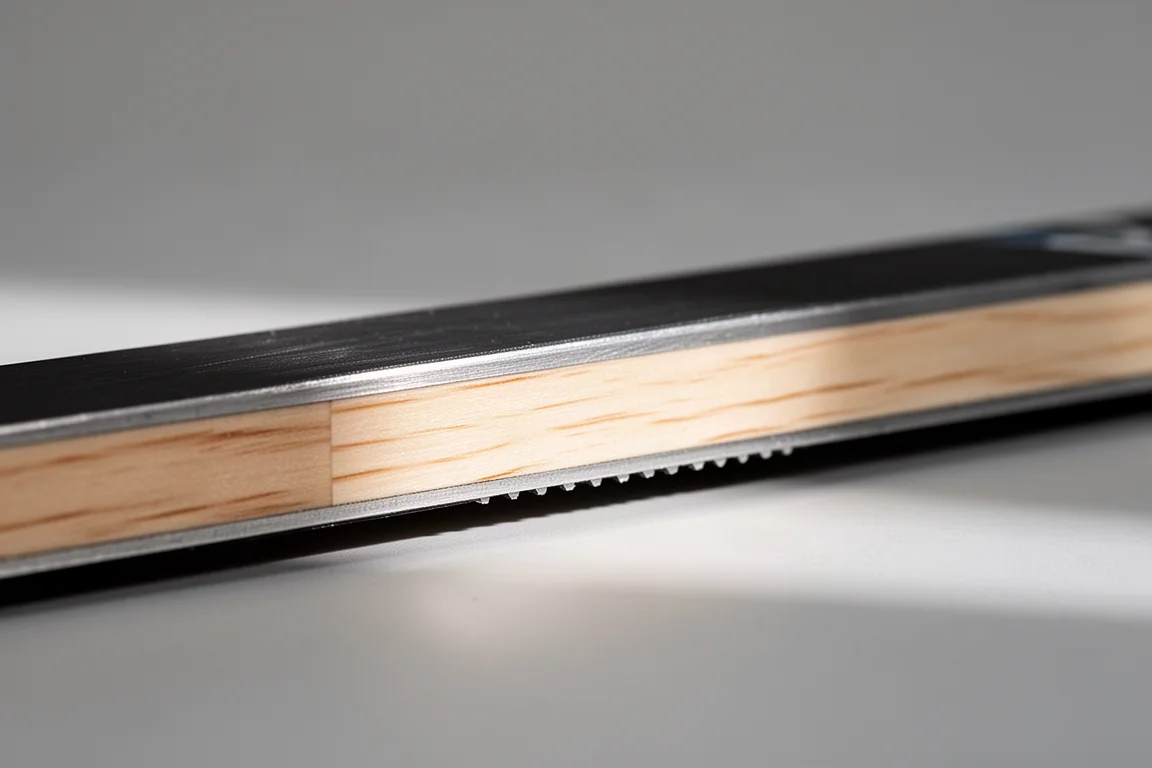
Construction sets the baseline. Skis built with metal laminates tend to feel damp, planted, and strong at speed, while carbon-focused builds usually cut weight and make the ski easier to bend. Neither approach is better, but they produce very different rides at the same waist width.
Weight matters more than most buyers expect. The lightest ski here is the Elan Ripstick 88 at 1,595 g, and the heaviest is the Blizzard Brahma 88 at just under 2,000 g in a 177 cm. A heavier ski generally holds up better in cut-up snow and at high speed, while a lighter ski is easier to move around in trees, moguls, and tight terrain.
Turn radius shapes the personality. The Black Crows Mirus Cor sits at 13 m, which is closer to a slalom ski than an all-mountain ski, while the longest shapes in this group stretch to around 18 m. A short radius makes a ski feel eager and quick. A long radius rewards a skier who wants to stand on the ski and let it run.
Rocker and taper decide how much edge you actually get. Early taper pulls the widest point of the ski back from the tip, which shortens the effective edge and makes the ski easier to pivot and smear. Long camber with minimal taper does the opposite, delivering more grip and a more locked-in feel.
The useful question is not which ski is best, but how much input you want to put in for the reward you get back. A forgiving ski flatters a tired skier at the end of the day. A demanding ski gives a strong skier more precision and energy than anything softer can. Most of the trade-offs below come down to that single balance.
Black Crows Mirus Cor: Short-Radius Fun for Playful Skiers
The Mirus Cor is the outlier of this group. At 87 mm underfoot and 1,830 g in a 178 cm, it pairs a poplar wood core with a small metal plate underfoot, then wraps it in a shape that has very little to do with the rest of the category.
The numbers tell the story: a 13 m turn radius, which is the shortest here by a clear margin, a deeply spooned shovel, barely any camber, a generous amount of tail rocker, and a swallow tail. It is the only true twin tip in the group, and it behaves like a wide slalom ski with a freestyle habit.
That makes it extraordinarily fun for short, high-energy carves, and it is happy enough in the park to slide a rail or hit a jump on the way down. The tail rocker and the soft extremities give it a surfy, smearing quality in trees that keeps it from feeling harsh.
The limits are real, though. There is not much torsional stiffness in the extremities, so the edge gives up somewhere around 30 to 40 mph, and it is not a directional ski. The tail washes rather than drives. At around $1,000 it is also one of the more expensive options here, and the price reflects a popular brand as much as the materials. As a one-ski quiver it is a hard sell unless you already know this is the shape you want. As a second or third ski for someone who wants something genuinely different, it is hard to beat.
Salomon QST 92: The Most Well-Rounded Option
If there is a default answer in this category, the QST 92 is it. Nothing about it chases a headline number, and that is exactly the point. It is quite good at everything rather than the best at any one thing.
The build is straightforward: a full poplar wood core with carbon and flax in the shovel and tail, plus a slightly beefier sidewall underfoot that adds torsional stiffness, damping, and edge grip where it counts. The shape does more work than the materials. A pronounced early taper brings the widest point of the ski back from the tip, and the same idea carries into the tail, which produces a 15 m turn radius in the 176 cm.
That combination makes it one of the best bump and tree skis in this group despite sitting at the wider end of the category. It initiates turns almost instinctively, has excellent snap and rebound out of the tail, and handles everything from hardpack to soft snow without complaint. At 1,760 g it is neither the lightest nor the heaviest ski here.
The trade-off is a speed limit, most noticeable when you are carving hard on firm snow. It is also not an expensive ski, which makes the value case easy. It is offered in longer lengths as well, so taller or heavier skiers have somewhere to go.
Nordica Enforcer 88: Power and Composure at Speed
The Enforcer 88 is the first of the metal-laden directional skis in this roundup, and it sets the tone for the group. A dense performance wood core is paired with two full sheets of metal, which produces a stiff flex and a lot of power.
At 172 cm it weighs 1,925 g, and the 179 cm is almost certainly over 2,000 g. Turn radius is 15.5 m in the 172 and 16.5 m in the 179, which is shorter than several of its direct rivals in the metal category.
That shorter radius is the reason the Enforcer 88 feels as lively as it does. It comes across the fall line easily and finishes a turn with a snappy, energetic release, while still offering no real speed limit. There is more tip rocker than you would expect for an 88 mm ski with two sheets of metal, and much less tail rocker, so the ski stays planted behind the foot.
It carves exceptionally well, handles soft snow and off-piste terrain without being punishing, and rewards a strong skier. It is not an easy ski, and it is not meant to be. It suits a genuinely good skier who wants a powerful all-mountain tool rather than a forgiving one.
View more details for Nordica Enforcer 88
Blizzard Brahma 88: The Strongest Ski in the Category
The Brahma 88 has built a reputation over many seasons as one of the strongest all-mountain skis in this width, and the current version holds that line. A TrueBlend wood core is combined with roughly two and a half sheets of metal, which is more metal than any other ski in this comparison. You can see the layers in the sidewall.
At 177 cm it weighs just under 2,000 g and carries a 16 m turn radius, though it skis like something longer. It is the stiffest ski in this group. It needs speed before it really engages, and in a 189 cm it wants a straight line and a lot of commitment.
What keeps it from being purely punishing is a slightly rounded tail, which adds a small amount of forgiveness to an otherwise uncompromising build. The result is a burly ski for a strong, aggressive skier who skis fast and straight through variable snow. It is also a proven choice for race-league use, where it has won with a race plate mounted on it.
Elan Ripstick 88: Light, Forgiving, and Intuitive
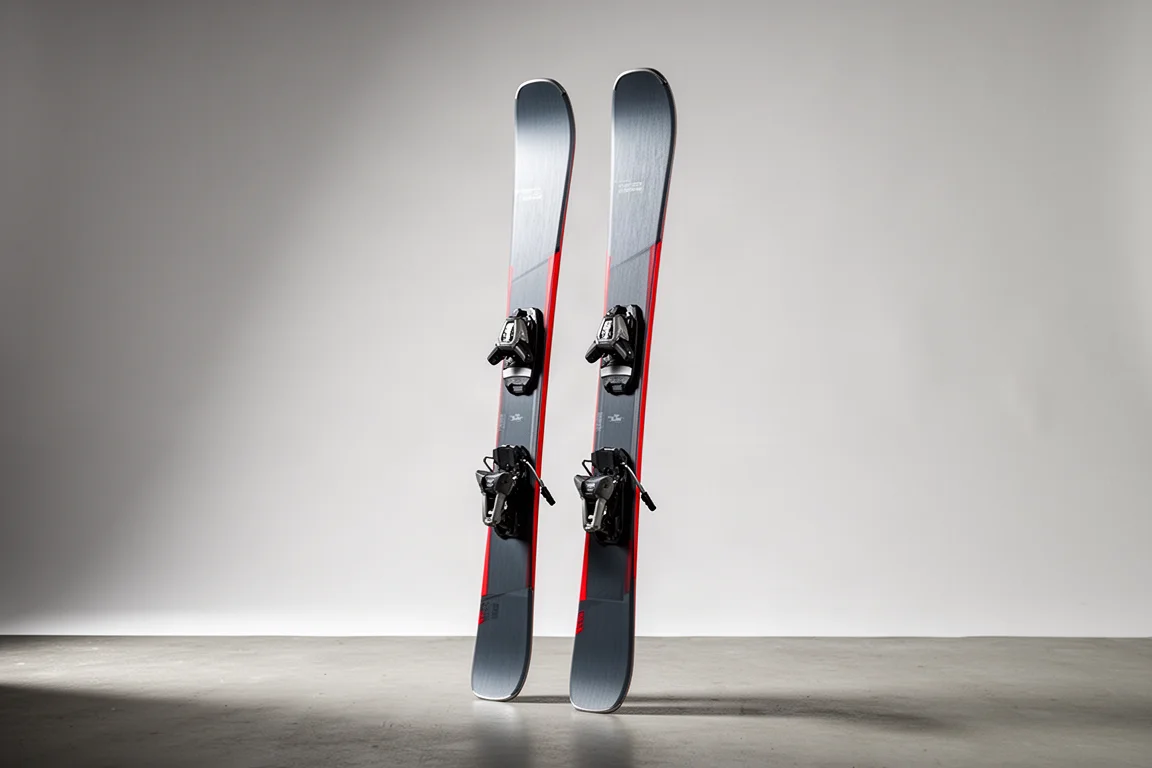
At 1,595 g, the Ripstick 88 is the lightest ski in this comparison, and it makes no attempt to hide it. A Tubelight wood core is paired with carbon rods rather than metal, and because the carbon runs in three dimensions rather than as a flat sheet, it damps vibration far better than its weight suggests.
The flex is soft, particularly in the shovel, and the Amphibio profile puts more camber along the inside edge of each ski and more rocker along the outside edge. The effect shows up most clearly in turn transitions, where the ski feels like it has already started the movement for you. It is one of the most intuitive skis in this group to initiate a turn on.
That softness is a benefit for lighter and less aggressive skiers, and it makes the ski extremely forgiving in bumps. Mistakes are easy to recover from. The same traits become limits for heavier or very aggressive skiers: the ski can be deflected in variable, cut-up snow, and the tail is not especially supportive if you get behind it.
For a lighter skier who wants easy, low-effort turning, the Ripstick 88 is a compelling package, and the low weight makes it a reasonable candidate for a light resort touring setup with a hybrid binding. It is simply not built to be driven hard at speed.
K2 Mindbender 89 TI: An Energetic, Springy Ride
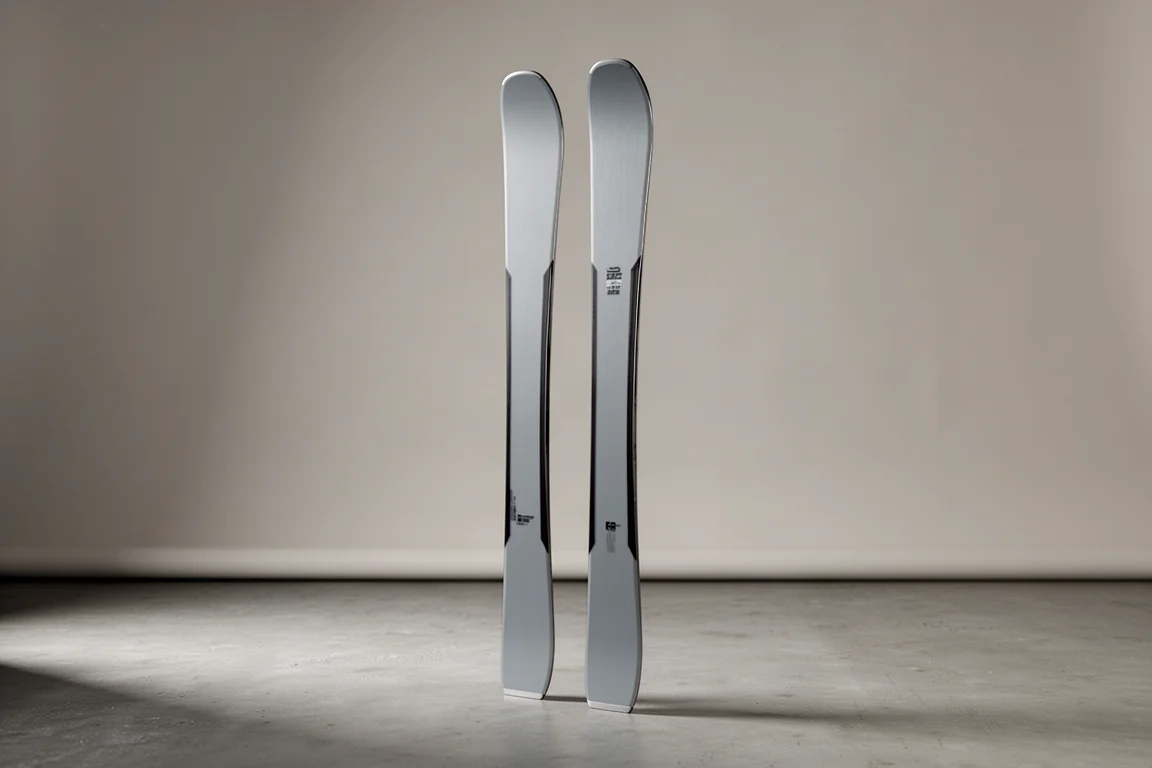
The Mindbender 89 TI sits in the middle of this group in weight, at just under 1,900 g in a 176 cm, but it does not feel like a middle-of-the-road ski. An Aspen wood core is combined with a Titanal Y-beam, which means metal runs along the edges in the forebody, spans the full width underfoot, and expands into a broader, more bulbous section in the tail.
That tail is the defining feature. It kicks out of a turn with enough energy that you need to be balanced and ready for it, and it is a big part of why the ski feels so engaging. The shovel is a little softer, which helps versatility and keeps the ski manageable off trail.
Turn radius is roughly 15 m in the shorter length and 16.6 m in the 182 cm. The ride is quiet and largely vibration-free, and the even flex pattern works well in bumps. It suits an aggressive all-mountain skier who spends most of the day on groomers but still heads off trail regularly.
Dynastar M-Cross 88: A Modern Build with a Playful Side
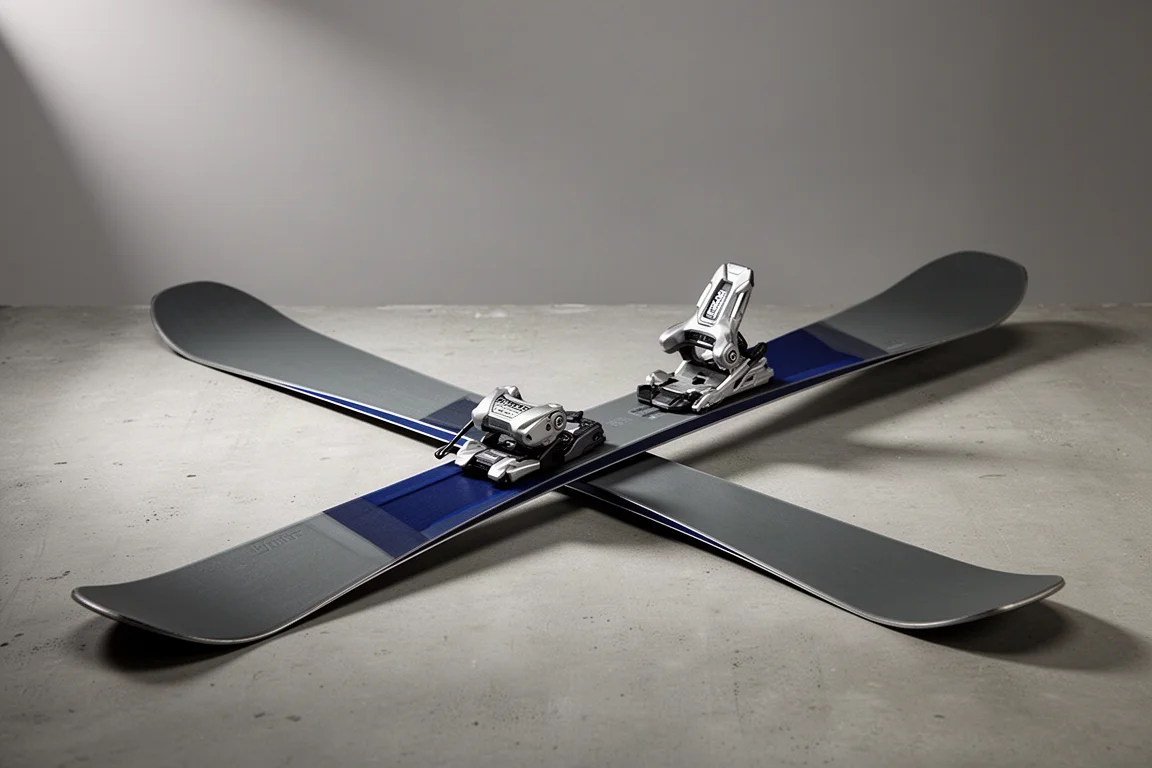
The M-Cross 88 uses one of the more sophisticated builds in this category. The Hybrid 2.0 core laminates wood horizontally and joins the upper layers through milling and pressure rather than adhesive, then surrounds the assembly with injected polyurethane. Polyurethane sounds unglamorous, but it contributes a smooth, powerful feel that is hard to achieve otherwise, and it is a material Dynastar relies on across its M series.
Metal is used selectively rather than as a full sheet: two layers underfoot for strength and power, with a top laminate extending into the tips and tails. The shape is just as distinctive, with a 135 mm tip, an 88 mm waist, a 117 mm tail, and a 14 m turn radius in the 176 cm. A wide shovel, long rocker, minimal tail rocker, and very little taper add up to a long effective edge with a playful entry.
The result is a directional ski that is genuinely easy to ski and impressively smooth, with the best float of any 88 mm ski in this group. It handles spring snow and variable conditions without complaint, and it stays agile because the big difference between tip and tail width lets the tail swing around easily. It is also noticeably more approachable than its stiffer, more powerful sibling in the same series, which has a firmer tail and a longer turn shape.
Head Kore 87: Lightweight Stiffness
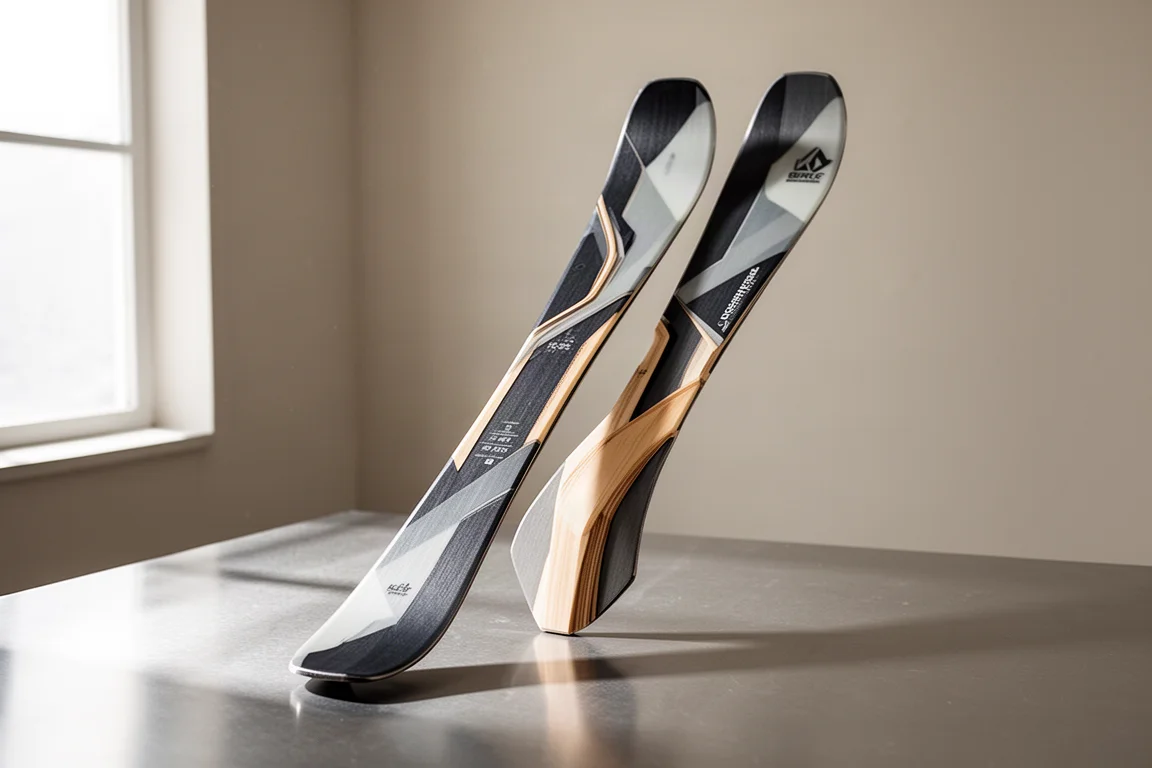
The Kore 87 is one of the more interesting skis here because it pairs a low weight with a genuinely stiff flex. At 1,690 g in a 177 cm, it has an unusual weight-to-stiffness ratio, and it ranks among the stiffest skis in this comparison despite carrying far less mass than the metal-laden options.
The build uses a Karuba wood core with chamfered three-dimensional carbon and graphene. The result is precise and direct: the ski goes where you tell it to go. It is also stiffer than the wider 93 and 99 versions in the same series, which makes it more demanding in some ways, but the narrower 87 mm waist and lower weight make it easier to bend and manipulate, and noticeably quicker edge to edge.
A rounded early taper in the shovel lets the ski skid and smear just enough to stay manageable, and the light weight means it is easy to move laterally even when you are tired. It is a strong choice for an all-mountain skier who wants a light ski for trees, moguls, quick turns, or simply carrying to and from the lift.
For heavier or particularly aggressive skiers, the extra material in the wider versions of the same series makes more sense. For everyone else, the 87 delivers much of the same precision with less effort.
Stöckli Stormrider 88: Precision with Forgiveness
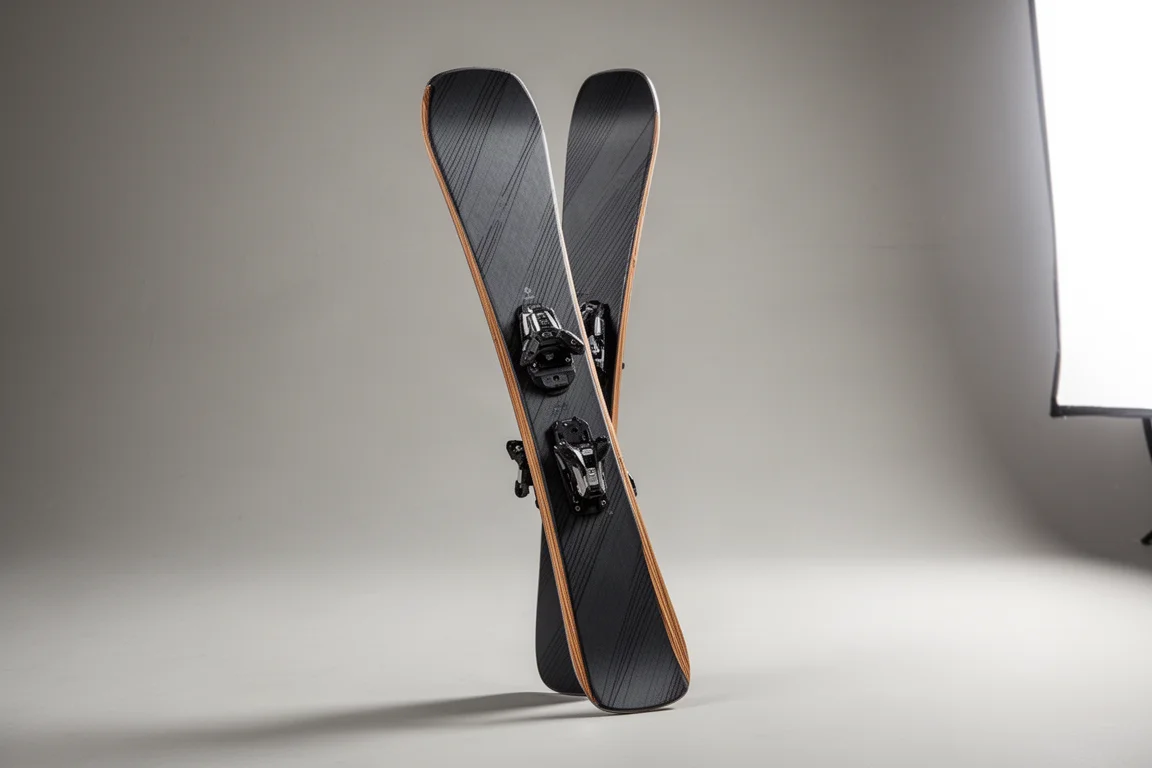
The Stormrider 88 was updated by lightening the wood core, shedding roughly 100 g per ski to land around 1,700 g. That puts it among the lighter skis in this group and changes its position in the category. It is no longer one of the strongest skis here, and it is a better product for it.
The Titanal top sheet and rubber damping remain, and the vibration damping is still exceptional. What the ski does better than almost anything else is combine precision with forgiveness. It has minimal rocker, minimal taper, and essentially no tail rocker, so the effective edge is long and the ski holds a line cleanly. At the same time it is smooth, easy to ski, and not punishing.
The trade-off is high-speed composure. Being light, it can get deflected when you push it hard through variable snow, and it will not plow through chop the way a heavier metal-laminate ski will. It suits an intermediate skier who wants a genuinely high-end, precise all-mountain ski, and it also works well for lighter advanced and expert skiers who value precision over brute force.
Kästle MX 88: Race-Like Precision
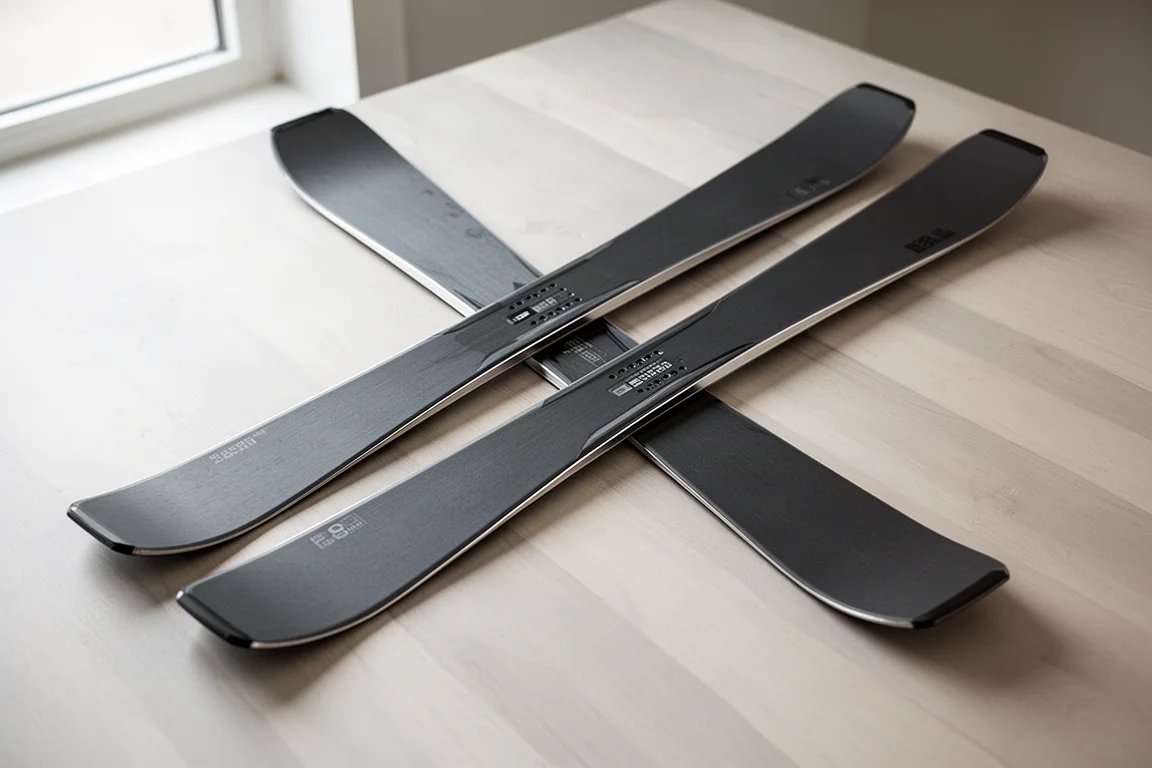
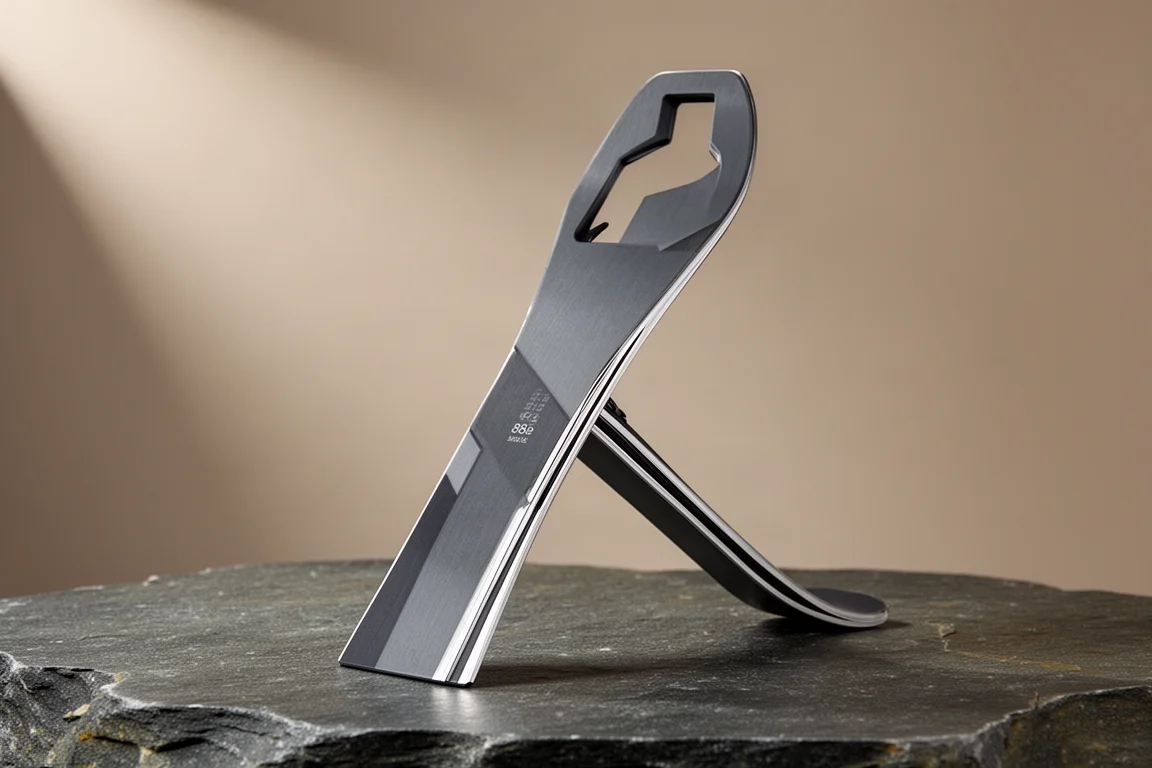
The MX 88 is the most race-like ski in this roundup. A dense poplar and beech wood core is combined with two sheets of metal, and the tip uses a Hollowtech cutout that removes material to reduce swing weight, improve turn initiation, and cut tip chatter.
The shape reinforces the intent. There is barely any tip rocker, no early taper at all, and effectively no tail rocker, with metal running all the way to the end of the ski. That maximizes the effective edge and produces a huge amount of torsional stiffness. The way it finishes a turn is genuinely beautiful, and it holds firm snow with complete confidence.
Those same qualities narrow the audience. This is a lot of ski for most people, and it comes with a cost both in performance demands and in price. It rewards a strong skier with a race background or race-like technique who spends the day carving at speed on groomers. The same brand also offers the ZX 92, which takes the opposite approach with a much softer flex, more tip rocker, and far more taper, and the two make an unusually complementary pair.
For the right skier, the MX 88 is a superb tool. For everyone else, the demands are real, and there are more forgiving ways to spend the same money.
Overall Buying Advice
Start with how you actually ski rather than with a spec sheet.
If you want one ski that does everything reasonably well and you are not sure what to buy, the Salomon QST 92 is the safest pick here, and it is not expensive.
If you are a strong skier who wants power, composure at speed, and no real ceiling, the Nordica Enforcer 88 and the Blizzard Brahma 88 are the two most capable options, with the Enforcer offering the friendlier turn shape and the Brahma offering the most stiffness and strength.
If you are lighter, less aggressive, or simply want a ski that is easy to bend and forgiving in bumps, the Elan Ripstick 88 and the Head Kore 87 are the two clearest choices, and they trade softness for weight in different ways.
If you want something playful, the Black Crows Mirus Cor, the Dynastar M-Cross 88, and the K2 Mindbender 89 TI all bring energy and quickness, though they aim it in different directions: short-radius carving, smooth directional playfulness, and a springy tail respectively.
If precision is what you are after, the Stöckli Stormrider 88 and the Kästle MX 88 both deliver it, at different levels of demand and price.
Conclusion
The 88 to 92 mm all-mountain category is not one category at all. It is a handful of distinct philosophies that happen to share a waist width.
The Mirus Cor proves that a ski in this range can be a pure short-radius toy. The QST 92 proves that a ski in this range can be almost universally agreeable. The Brahma 88 and the MX 88 prove that it can also be a serious, demanding, high-performance carver.
Pick the philosophy that matches how you ski, and almost anything in this roundup will serve you well.
Further reading
Related Reviews
Skiing
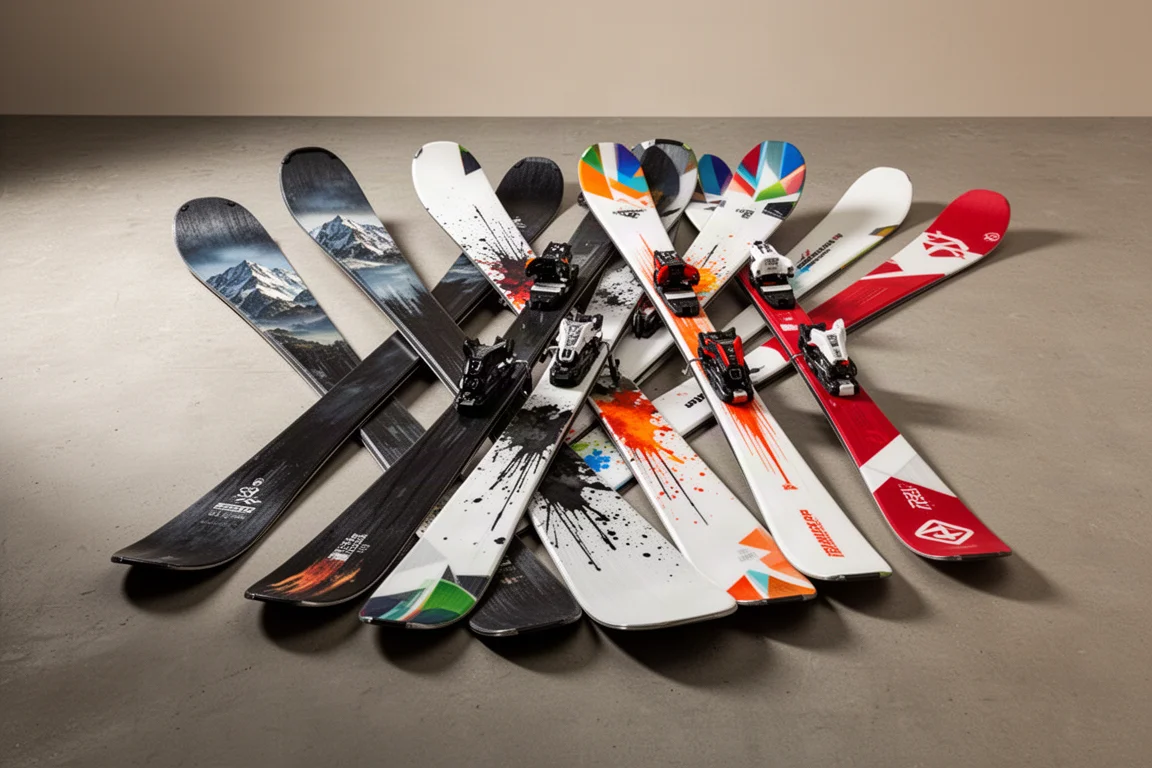
2027 Ski Top Sheets: The Best-Looking Skis of the New Season
A fun, opinionated look at the 2027 ski lineup and the top sheets that stand out most, from the Nordica Enforcer 104 to the Rossignol Sender series.
Skiing
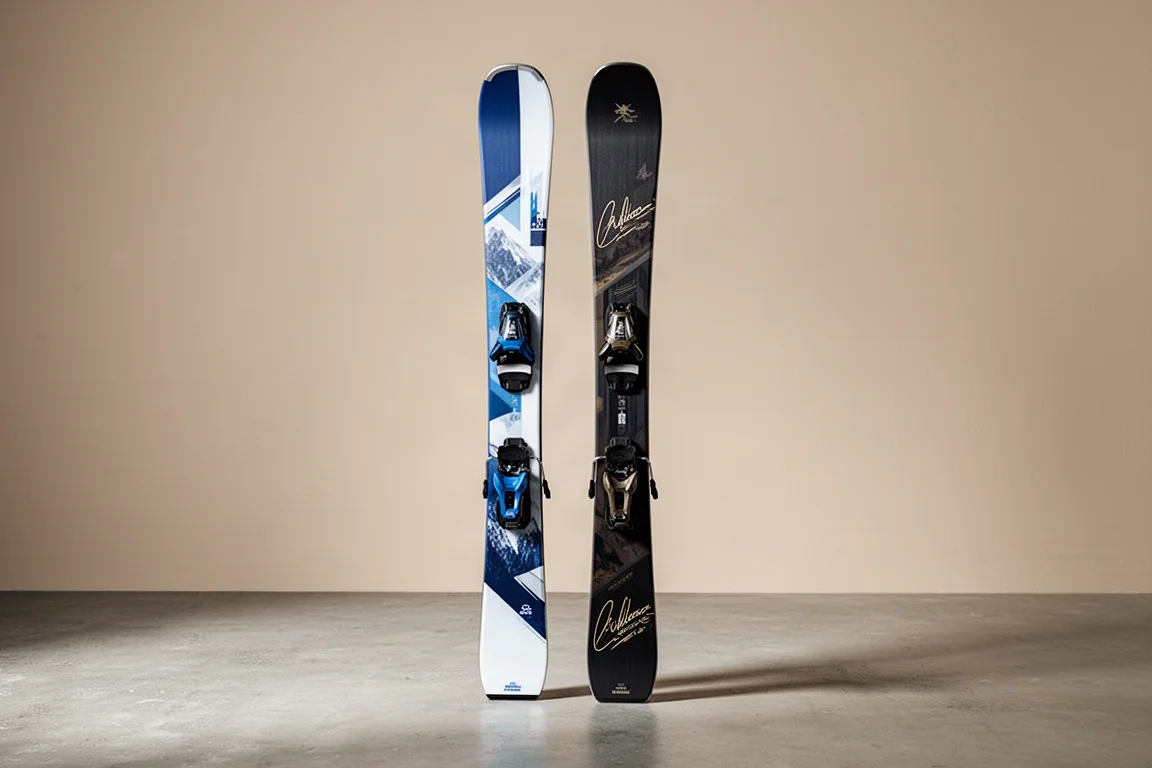
Armada Declivity 92 vs Peak 88: Two All-Mountain Skis, Two Very Different Characters
A staff-favorite carving machine and an approachable Bode Miller signature ski, compared for different levels of skier.
Skiing
Atomic 100mm Ski Line Compared: Maverick 100 TI, Bent 100, and Backland 100
Atomic's three 100mm skis share a similar outline, so the real choice comes down to construction, weight, and terrain. Here is how the Maverick 100 TI, Bent 100, and Backland 100 differ.