Plumbing Tools
Best 2-Inch Ratcheting PVC Cutters Compared: Husky, Ridgid, Waterline and Pasco
Four 2-inch ratcheting PVC cutters tested side by side on Schedule 40 pipe, with clear winners on straight tracking, blade changes and build quality.
Introduction
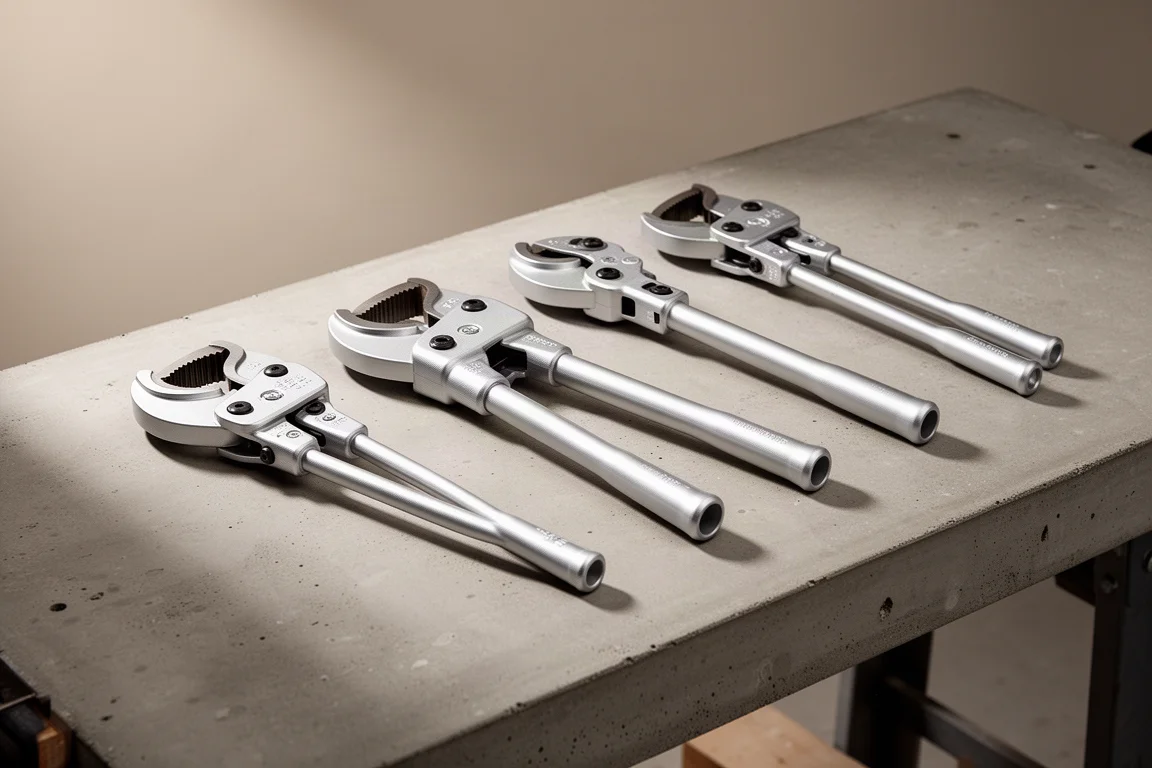
We spent about three weeks cutting Schedule 40 pipe with four 2-inch ratcheting PVC cutters: the Husky, the Ridgid, the Waterline, and the Pasco 4654. The goal was simple: find out which one produces clean, straight cuts reliably, and which ones fight you on the way there. Ratcheting cutters promise fast, effortless cuts on larger pipe, but they can drift off course, bite into themselves, or struggle on end cuts. Here is how each one behaved in real use.
Husky 2-Inch Ratcheting PVC Cutter
The Husky is built from all-aluminum construction with a curved handle that offers a genuinely good grip. A handle lock slides out of the way during use, and the blade change system is one of its best features: slide the pin aside, the blade pops off, and it pops right back on. That is a small time-saver that adds up on a busy job site.
The cradle shape is slightly different from the other cutters in this group, and it showed. The Husky held the pipe the straightest of the four, and the cuts came out clean and square with only a slight lip to feel on close inspection.
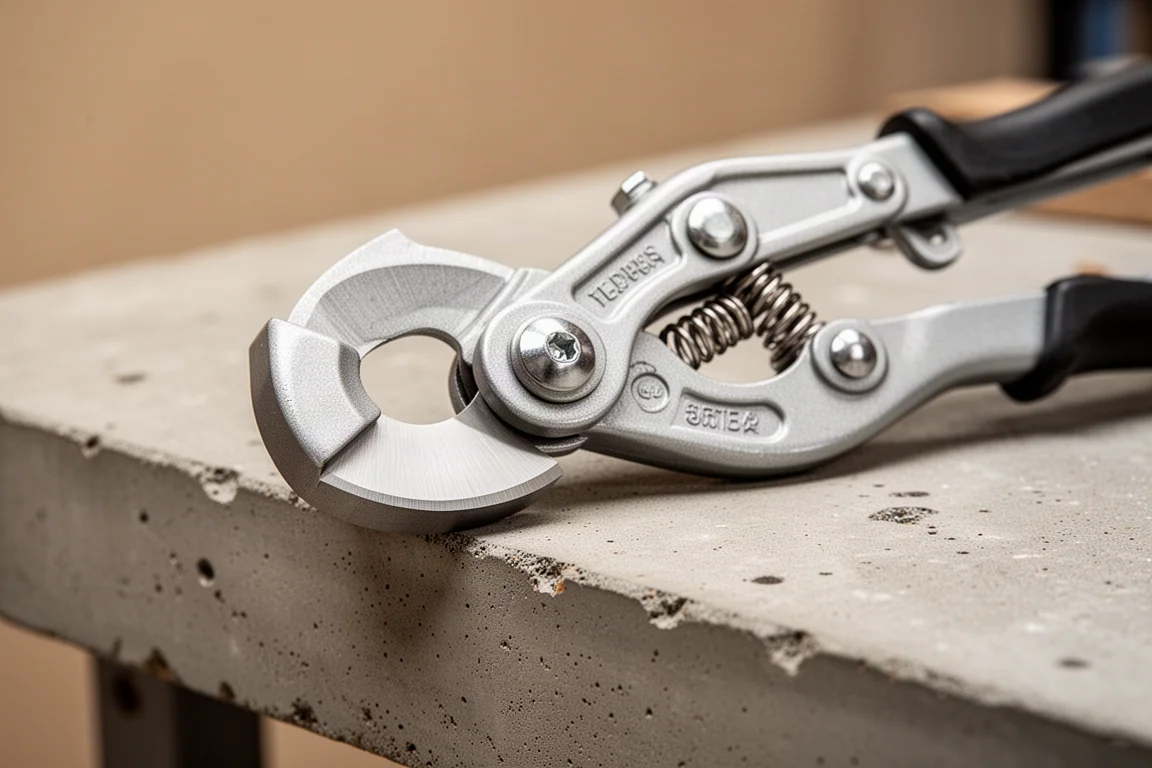
It is not perfect. The spring-loaded mechanism does not always open all the way, so you may need to work the spring a bit to get it back into position, and it does not always close fully either. On end cuts, the weakest point of any ratcheting cutter, it still performed respectably. Scoring pipe is not its strength: like the others, it spirals offline too easily, and a swing cutter is the better tool for that job.
Ridgid 2-Inch Ratcheting PVC Cutter
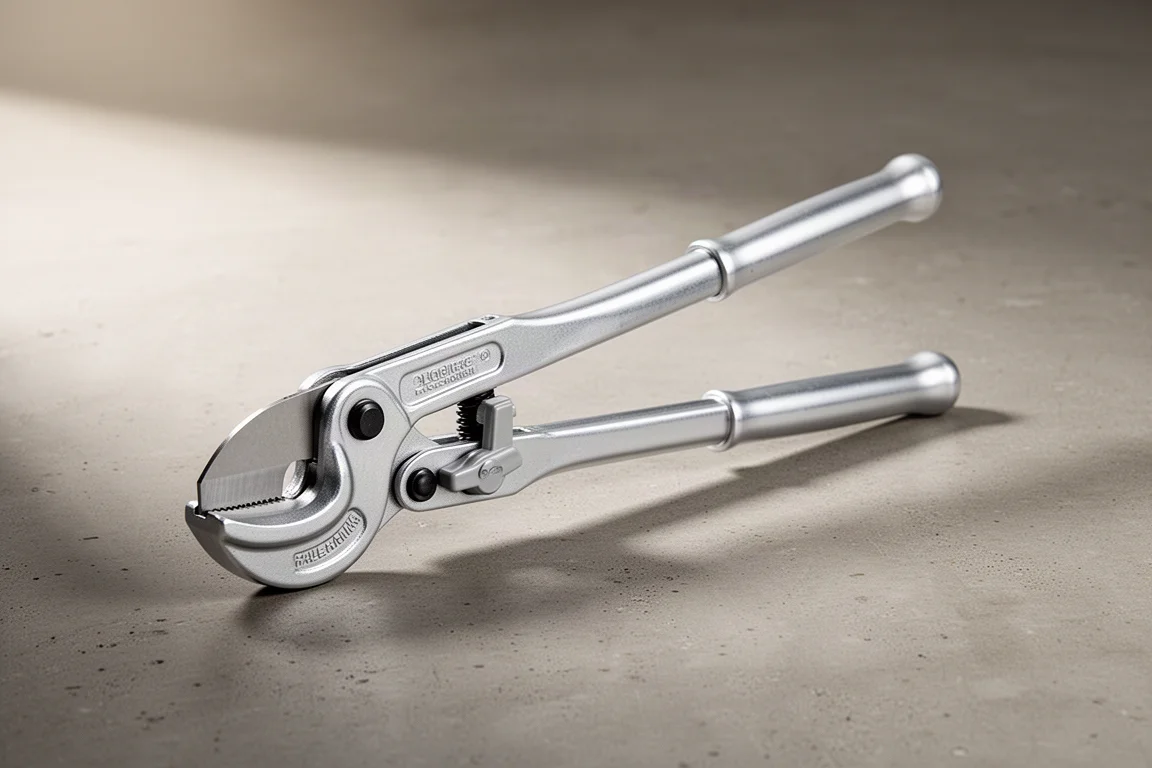
The Ridgid also uses all-aluminum construction and matches the Husky on quick blade changes: pop the pin out and the blade comes right off. It has a similar sliding handle lock and a flat blade instead of a pierce point, which means you have to be slightly more careful because the flat blade can crack the pipe more easily if you rush.
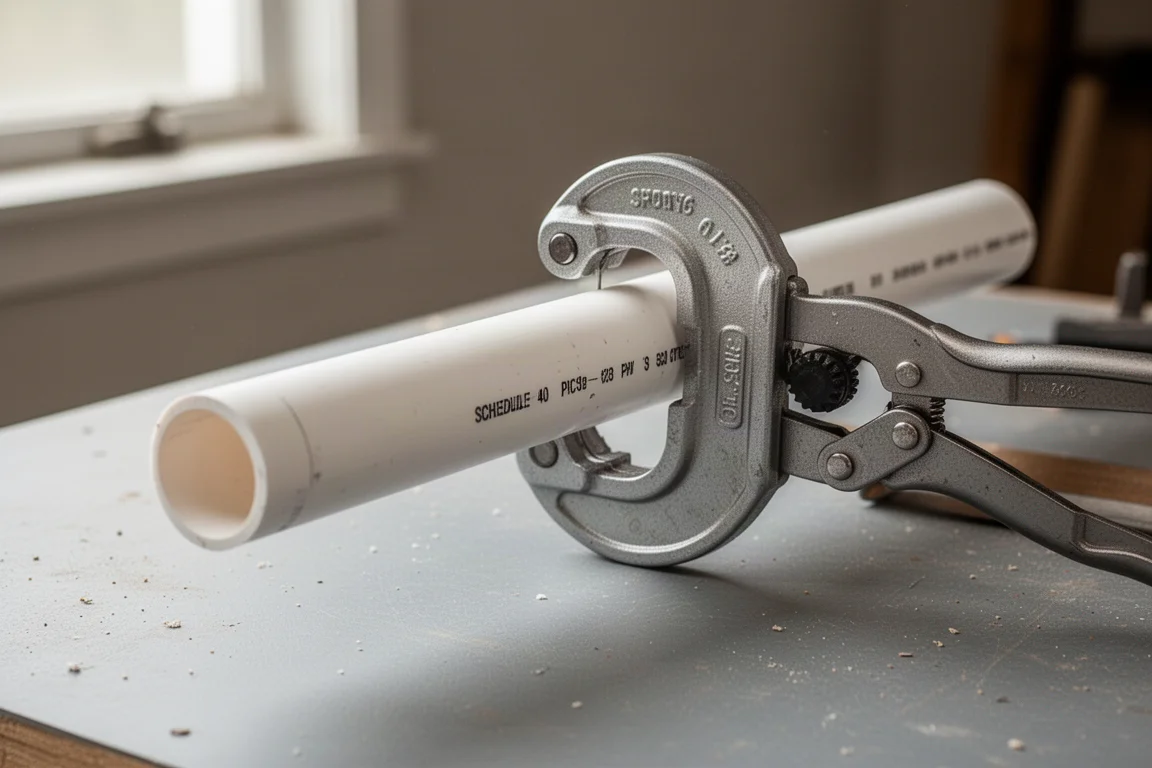
In practice, this was the most reliable cutter of the group. It starts a little slow but settles into the cut quickly, and it consistently produced clean, good-looking cuts on 2-inch Schedule 40. It does tend to bend the pipe a bit more during cutting, but that did not translate into a worse result.
The main caveat is the same one that applies to all ratcheting cutters: avoid trying to make tiny end snippets. As long as you are cutting a couple of inches into the pipe, the Ridgid delivers good cuts every time. That consistency is why it takes the top spot here.
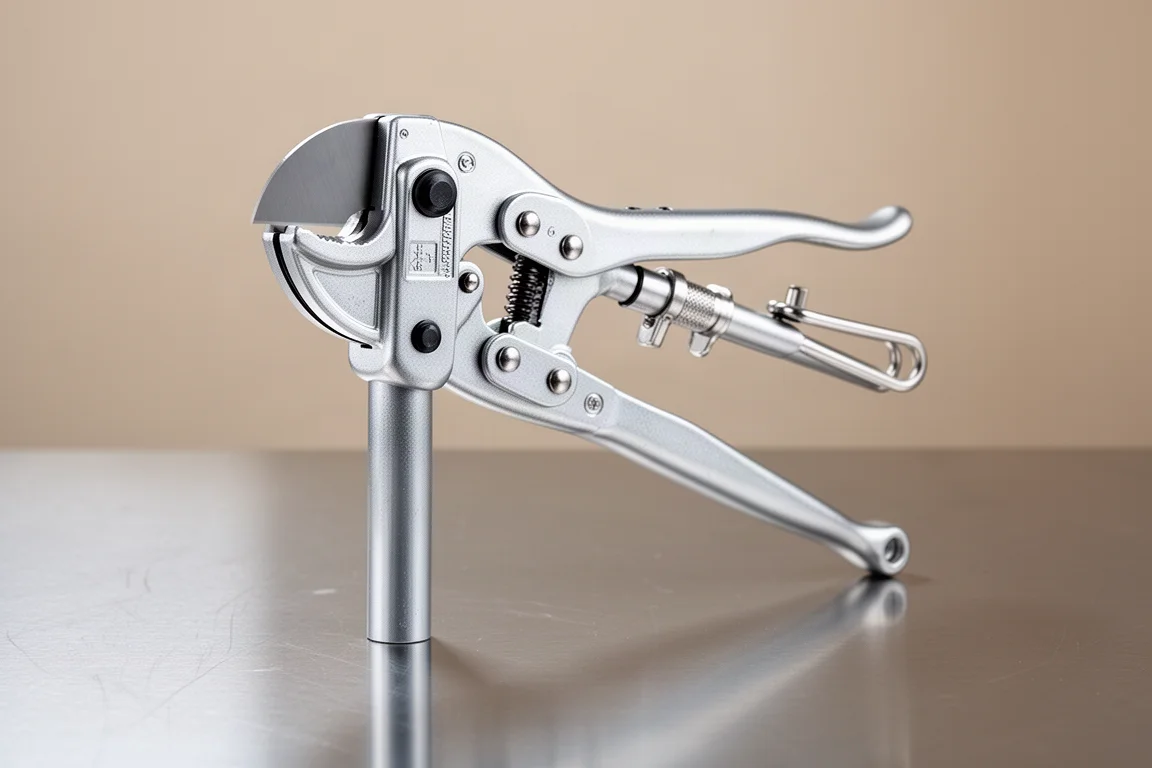
Waterline 2-Inch Ratcheting PVC Cutter
The Waterline uses all-aluminum construction with a pierce point blade ground on both sides, a handle latch, and a spring-loaded action. One of its notable traits is the build: it is a two-piece design, with one cast piece plus a solid handle, where the competing cutters use three pieces consisting of top and bottom clamshells plus a separate handle. All the linkage is metal, and it feels robust.
It cuts well on smaller pipe and generally tracks straight on inch-and-a-half pipe and below. On full 2-inch pipe, however, it has a real problem: when making a straight cut, the blade wants to bite into itself, and once it does, the cutter gets stuck. Consistently getting one clean, straight-tracking cut out of five was not possible on 2-inch pipe.
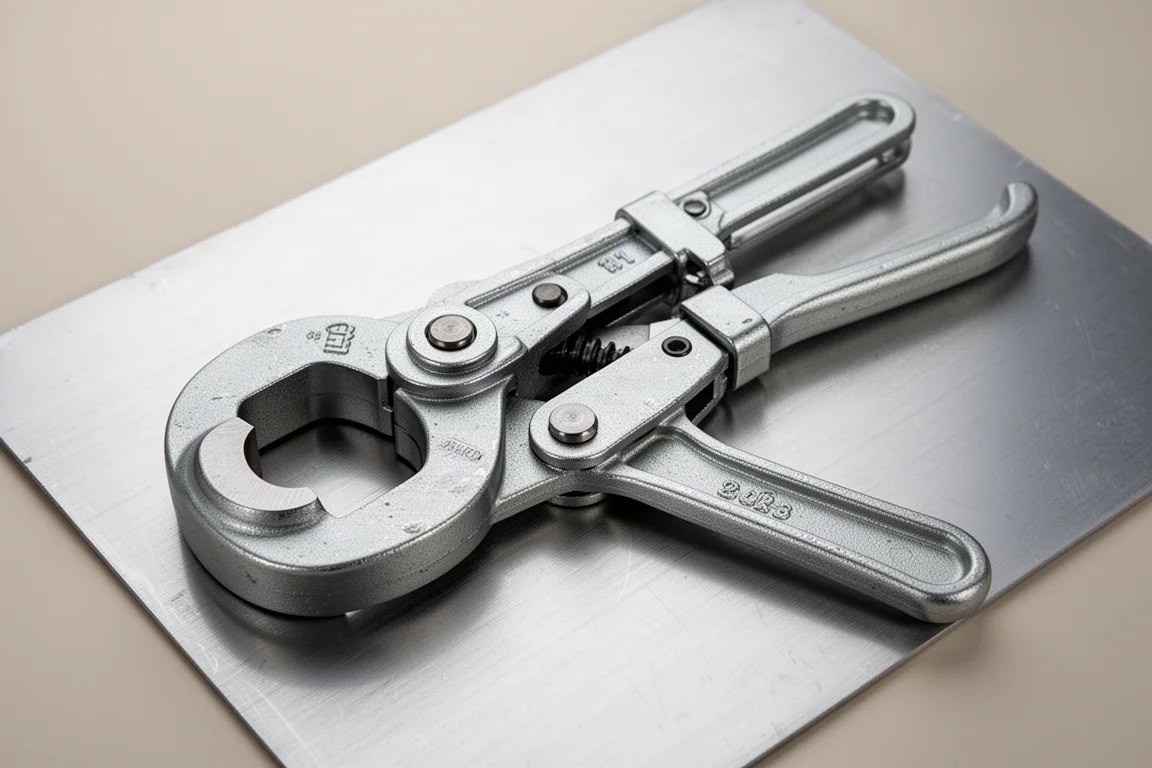
Scoring the pipe first helped a little, but the Waterline is not good at scoring either, so the workaround still leads to wasted time and material. For 1.5-inch pipe and smaller, it is no problem at all. For 2-inch work, it is frustrating.
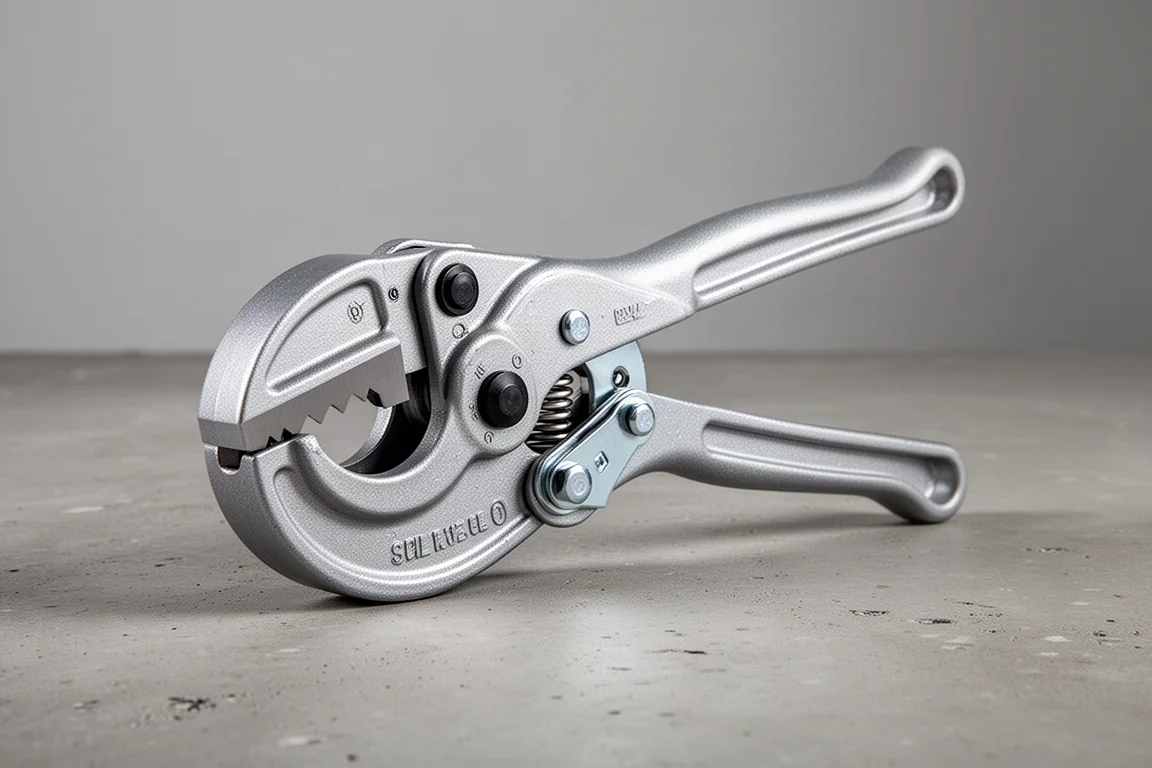
Pasco 4654
The Pasco 4654 is essentially the same tool as the Waterline. The only difference is that the Pasco version has a handle latch, and the same tool is also sold under the Crescent brand at Home Depot. It uses a manual open rather than a spring-loaded action, and like the Waterline it is an all-metal, two-piece design that feels sturdy in the hand.
Because it shares its cutting geometry with the Waterline, the same strengths and weaknesses apply: solid performance on smaller pipe, and a tendency on 2-inch pipe for the blade to bite into itself during straight cuts. If you find either version, expect the same real-world behavior.
Which One Should You Buy?
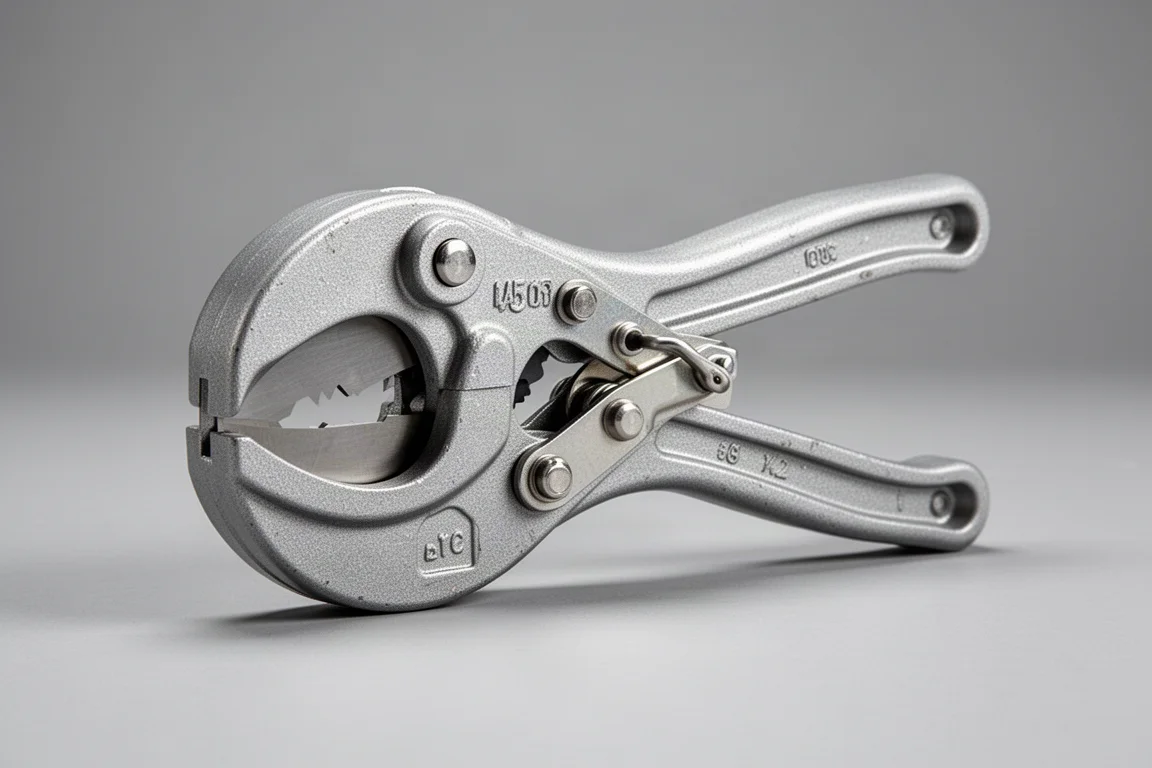
For most people cutting 2-inch Schedule 40 regularly, the Ridgid is the easy pick. It had no issues, cut well, and produced good cuts consistently as long as you avoid tiny end snippets and score-free scoring attempts. The Husky is a strong runner-up with the best grip, the easiest blade change, and the straightest pipe hold, held back only by its finicky spring action.
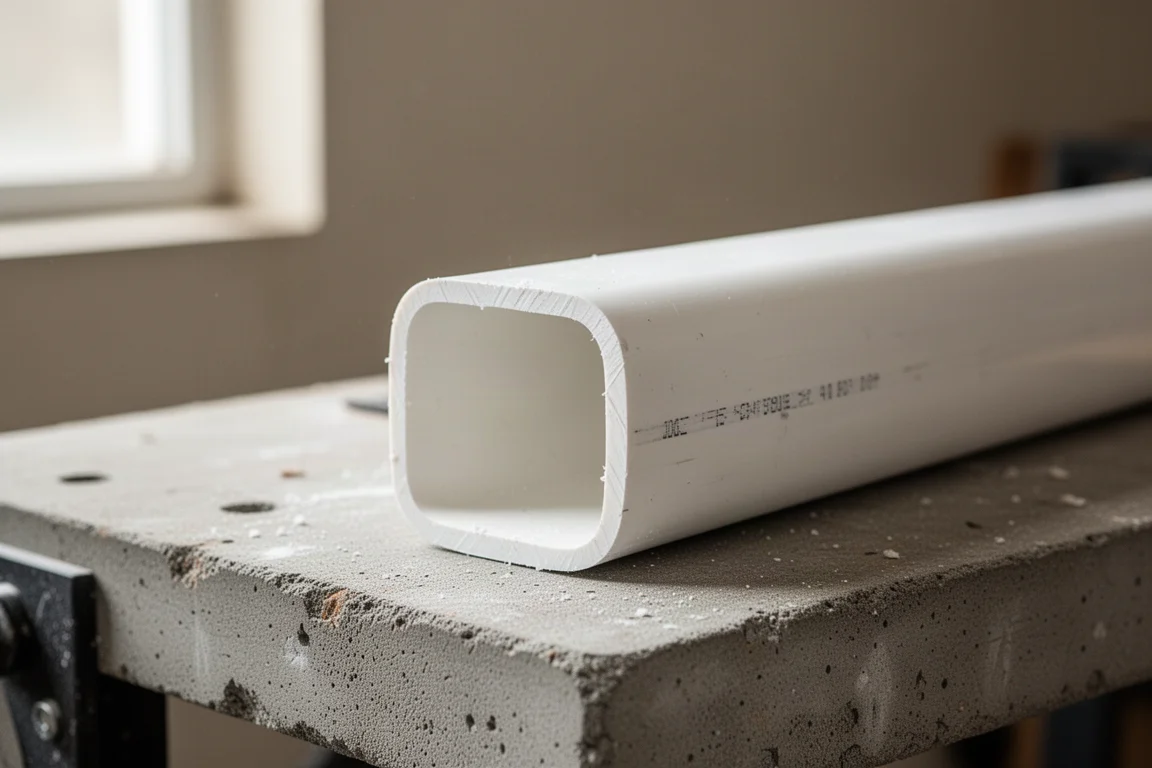
The Waterline and Pasco 4654 make sense if your work is mostly 1.5-inch pipe and smaller, where they cut without complaint. Their robust two-piece metal construction is appealing, but on full 2-inch pipe the self-biting issue is a genuine limitation. And if scoring pipe is part of your workflow, none of these are the right tool; a swing cutter will serve you far better.
Conclusion
After three weeks of cutting, the Ridgid stands out as the most dependable 2-inch ratcheting PVC cutter of the group, with the Husky close behind thanks to its grip, blade changes and pipe hold. The Waterline and Pasco 4654 remain solid choices for smaller pipe, but their trouble tracking straight on 2-inch cuts keeps them out of the top spot. Match the cutter to the pipe size you actually work with, and you will be happy with the result.
Further reading
Related Reviews
Plumbing Tools
Best PEX A Tools and Fittings: Four Options for Faster Plumbing Connections
From expansion systems to push-to-connect fittings, here are the four tools and fittings worth knowing for PEX A plumbing work.
Plumbing Tools
Best PEX Cutters Tested: 5 Ratcheting Cutters Compared
Five PEX cutters put through real cuts on PEX B and Schedule 40 PVC, with clear strengths, weak spots, and an overall favorite.
Plumbing Tools
Best PEX and PVC Pipe Cutters: Four Ratcheting Options Compared
Four pipe cutters tested on PEX, PVC, and non-metallic conduit, from a simple affordable design to a precision ratcheting model worth the upgrade.