Ski Gear
Best 100mm All-Mountain Skis for 2026: 8 Standout Models Compared
A practical comparison of eight 100mm all-mountain and freeride skis, with construction notes, on-snow strengths, and buying advice.
Introduction
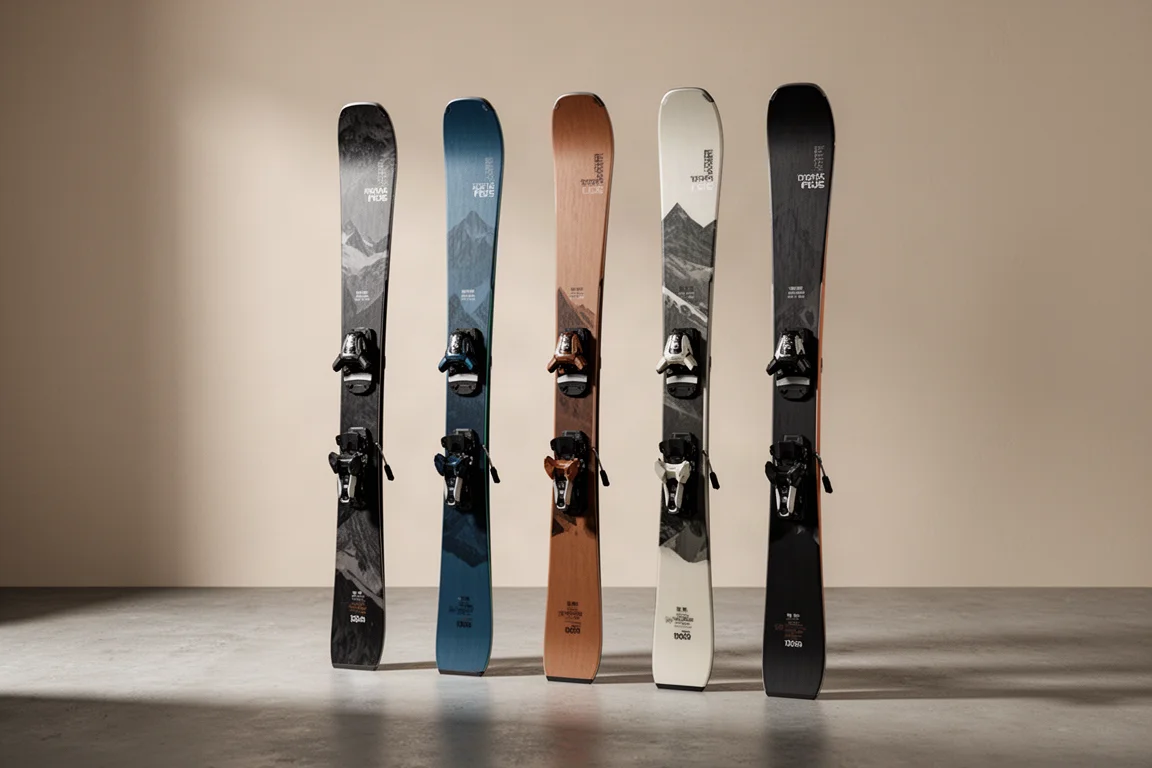
A 100mm waist is one of the most versatile widths in skiing. It offers enough surface area for soft snow without feeling unwieldy on groomers. The category includes everything from lightweight freeride shapes to metal-laminate carving skis. We compared eight models that stood out for their construction and on-snow character.
How We Evaluated These 100mm Skis
We looked at core materials, metal and carbon layups, rocker profiles, taper, turn radius, and measured weight. On snow, we considered how quickly each ski initiates, how well it holds an edge, how much energy it returns, and how manageable it feels in trees, bumps, and open terrain. We also noted who each ski suits best.
The best choice depends on whether you prioritize float, carving power, lightweight agility, or a mix of all three. Several skis here share similar materials, yet they feel completely different on snow. That is why shape and flex matter as much as the spec sheet.
DPS Wailer 100: A Narrow Powder Ski That Does the Work
The Wailer 100 revives a familiar name with a new hybrid core. It uses a full poplar wood core with carbon strips embedded in fiberglass laminates above and below the core. That construction is less complex than the dual carbon layup found in the DPS Kaizen, and it gives the Wailer a more playful, approachable feel.
The ski has a 15 m turn radius, which is unusually short for a 100mm-wide ski. DPS achieves that with a heavily tapered shape, a long tip rocker, and a lower tail rocker. The effective edge is short, so the ski is easy to turn and does a lot of the work for you. It floats remarkably well for its width. There is also a good amount of camber, which stores energy and makes the Wailer feel more energetic than the Kaizen. The Kaizen remains damper and more sturdy. The Wailer 100 is best for skiers who want a narrow powder ski that feels intuitive and forgiving in soft snow. Weight is around 2,000 g before the binding plate.
Kästle ZX 100: Lively, Metal-Free Maneuverability
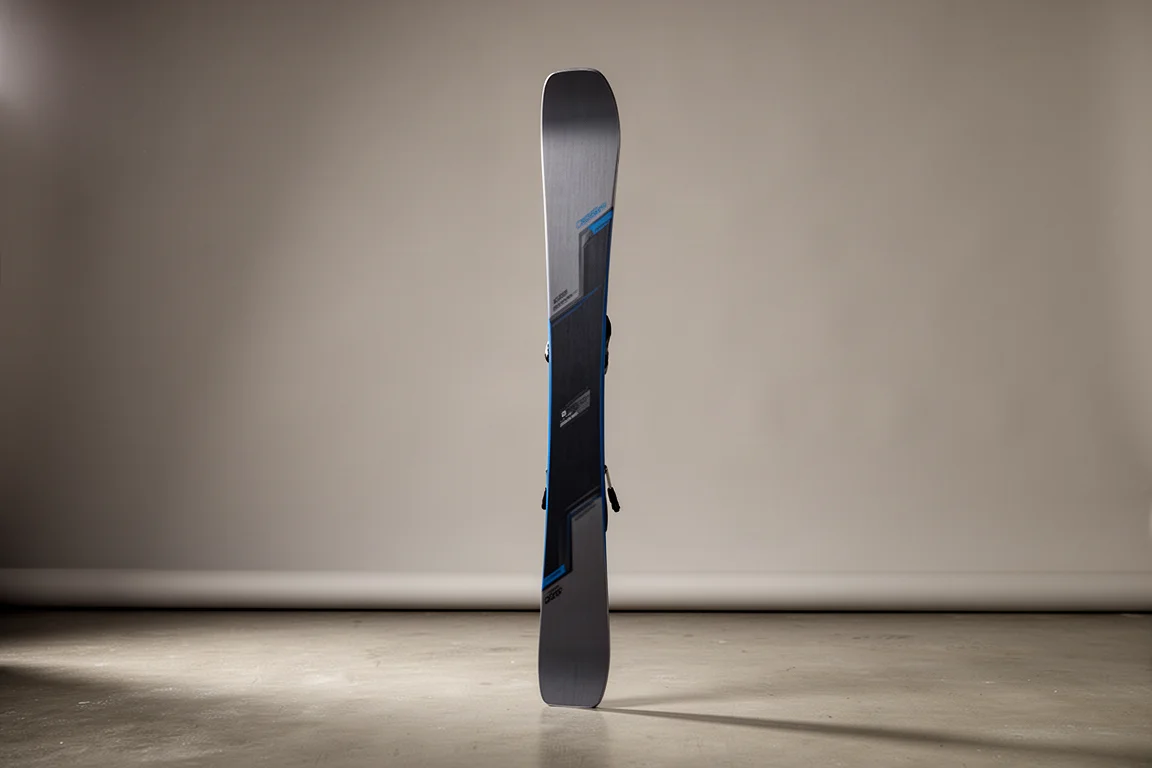
The ZX 100 shares shaping cues with the Kästle Paragon but removes the metal. Instead, it uses a poplar and beech wood core with fiberglass to keep the ski lively and stable. The result is a more intuitive and forgiving ski than the Paragon, with excellent maneuverability in trees.
The tip rocker is pronounced while the tail is flatter and more directional. That combination gives the shovel a floaty, drifty feel and the tail responsive grip. Kästle also adds hollowtech in the tip to reduce swing weight and early taper to reduce catchiness in deeper snow. At 1920 g, the ZX 100 is light enough for directional backcountry use, but it still feels strong. It suits skiers who make short, skidded turns and want a mobile ski that can drift in soft snow without losing tail support.
Elan Ripstick 102: Lightweight, Mobile, and Touring-Friendly
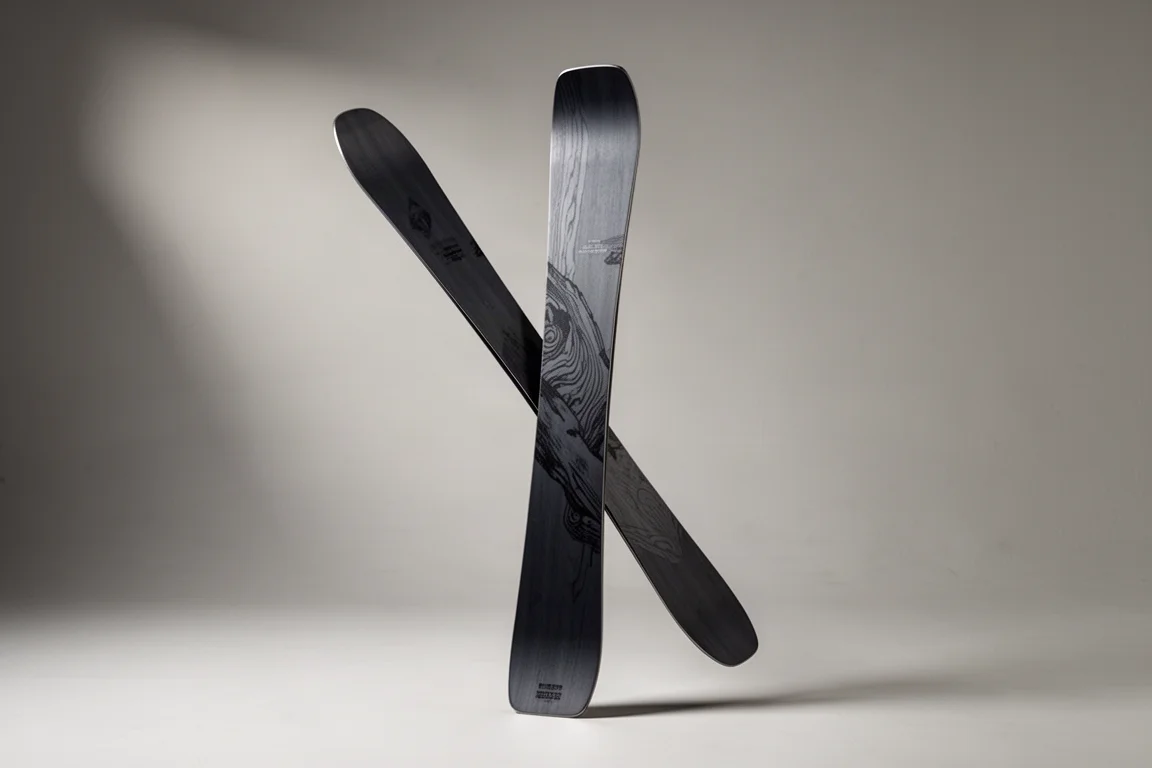
The Ripstick 102 is a new width for Elan, slotting between the 96 and 108. It uses the tube light wood core and carbon rods along the sidewall, with a 360-degree carbon application that gives the ski a distinct energy and feedback. Elan removed the vapor tip technology and replaced it with a layer of flax. That change makes the shovel thinner and more flexible than the previous 106, which improves turn initiation, swing weight, and torsional flex.
The trade-off is that heavier or very aggressive skiers may push through the tip more easily, especially on firm snow. Lighter and average-weight skiers will find it rewarding. The Ripstick 102 is asymmetric, with a right and left ski and an amphib rocker profile. The inside edge has more camber while the outside edge has more rocker, which helps the pair track smoothly as a unit. It weighs about 1,800 g in a 182, and skin clips confirm its touring capability. It is agile, floaty in trees, and very flickable.
Riders who want a bit more underfoot stability can look at the Ripstick 102 Black Edition. It adds two strips of unidirectional carbon in the middle of the ski, placed under the core, and a carbon laminate under the binding zone. Moving carbon closer to the snow increases smoothness and edge grip without changing the shovel flex much. The Black Edition is not a completely different ski, but it offers a more robust feel for skiers who want the agility of the 102 with extra torsional stiffness underfoot.
Rossignol Sender Soul 102: Versatile, Smooth, and Sturdy
The Sender Soul 102 is new for 2025. It combines a poplar wood core with titanal and an air tip in the tips only. Rossignol draws on the Soul 7 and the Sender Free 110, and the result is a smooth, even flex with good pop. The ski has more tail rocker than the previous Sender Soul 104.
Tip rocker is moderate, and there is a good amount of camber. The long, low tip and tail rocker provide enough effective edge to hook up on firmer snow while coming alive in softer conditions. Early taper is modest, and the tip is more traditional, which makes the ski turny in deeper snow. It is a versatile choice for both coasts. In testing, it performed well on a dense, wet snow day, floating better than expected and holding up in rough conditions. The 180 length was surprisingly sturdy, with thick vertical sidewalls and a thick core profile. It is one of the most well-rounded skis in this width and a strong option for a one-ski quiver, especially for skiers who travel west once a year.
View more details for Rossignol Sender Soul 102
Head Kore 99: Lightweight Energy With a Stiff Backbone
The Kore 99 pairs a lightweight karuba wood core with two full sheets of carbon. The top sheet of carbon is curved, and that multidimensional layup increases stiffness and energy. Damping layers and a top sheet have been added over the years to make the ski more user friendly. At 1670 g, it is one of the lightest skis here, yet it is very stiff.
The 177 length is surprisingly capable, and sizing up is not necessary for most skiers. On trail, the Kore 99 carves with tremendous power and energy. It is more powerful than almost anything else in this group, though the Völkl Mantra 102 may have more raw power. The trade-off is that it demands an active pilot. In bumps and trees, it is difficult to push through and does not offer the playful performance of a softer ski. It is also amenable to lower edge angles and lighter skiers because it is light, but strong skiers who can load the edge will be rewarded. The shape is traditional with a 17 m turn radius in the 177, and it turns on a dime. Off trail, it requires deliberate input.
View more details for Head Kore 99
Black Crows Justice: A Carving Ski in a Wider Body
The Justice is a distinctive ski. It has a poplar wood core, an H-shaped metal laminate with arms in the front and back, and an aluminum tail insert. The build resembles a carving ski, but the body is wider. What sets it apart is the profile: long and gradual tail rocker, good tip rocker, and a progressive shape for such a sturdy construction.
The flex is stiff, yet the rocker makes the ski incredibly energetic. It is stated at a 20 m turn radius in this length, but it feels shorter. It is one of the best turners in the category. You can access the entire side cut, flex it, and use the rocker to make shorter carved turns. The tail delivers exceptional rebound. On firm snow and ice, it holds confidently. In soft snow, the rocker provides proper flotation. It is mobile in trees, though not a favorite bump ski. The more you tilt it, the tighter the radius and the more grip you get. Flatter skiing makes it more maneuverable. It is stiff and requires engagement, with a thick core and full metal underfoot. For skiers who want a 100mm ski that is 100 percent engaging and incredibly versatile at a high level, the Justice is a compelling choice.
On technical side-country terrain, the Justice is predictable and floats well. It can stop on a dime on wind-scoured snow. It is not a lazy ski, but it rewards strong input with composure and energy.
Völkl Mantra 102: The Widest Carving Specialist
The Mantra 102 has a reputation as one of the best carving skis in the wide all-mountain class. It uses a multilayer wood core with poplar and beech, a tailored titanal frame, and tailored carbon tips. The upper titanal frame has two arms that connect at the tip and tail plus one sheet in the middle. The pieces overlap but do not connect, which allows flex in the mid portion while maintaining metal-backed stability.
The core is thick and robust, and the ski is stiff. The profile is flat with little rocker underfoot and longer, lower rocker in the tips and tails. Völkl’s 3D radius lets you access three turn shapes, with the shortest in the middle. At 2250 g in the 184, it has heft. On groomers, crud, and chop, it is pure confidence. Speed is a nonissue, and it romps over variable snow without flinching. It prefers a carve turn and is not a soft-snow floater. The 177 length was more enjoyable for lighter or less aggressive skiers. This is a ski for someone with the leg strength and skill to maximize its top end.
Stöckli Storm Rider 102: Smooth, Quiet, and Powerful
The Storm Rider 102 is Stöckli’s widest ski and a carryover model. It uses a blend of poplar and lightweight paulownia in the wood core with two sheets of metal, each layer featuring rubber dust. At 2100 g in the 191, it is relatively light for a metal-laminate ski of this size.
The flex is smooth and powerful, and the ski is stable at speed. It prefers a longer turn, with a 22.3 m turn radius. It has less camber than many skis here and more taper. The tail is very square and race inspired, which looks unusual on a freeride ski. The top sheet is metal, which creates a direct connection and a very quiet, damp ride. Vibrations must pass through the rubber dust, two sheets of metal, the binding, and the boot before you feel them. The sweet spot is larger than on many comparable skis. It needs room to run and suits a skier who can power a ski without overpowering it. The main consideration is the premium price.
Buying Advice: Matching a 100mm Ski to Your Terrain
Choosing a 100mm ski comes down to terrain and style. If you want a ski that does the work in soft snow, the DPS Wailer 100 and Kästle ZX 100 are strong options. They favor shorter turns and playful float. The Elan Ripstick 102 is the lightest and most touring-friendly ski here, with a soft shovel that rewards lighter skiers. The Rossignol Sender Soul 102 is the most versatile all-rounder, with enough backbone for firm snow and enough rocker for soft days. The Head Kore 99 is a lightweight powerhouse for strong skiers who want energy and edge grip. The Black Crows Justice and Völkl Mantra 102 lean toward carving performance. They are stiff, stable, and fast, but they demand engagement. The Stöckli Storm Rider 102 is the quietest and most damped option, with a premium price to match. Match the ski to the snow you actually ski most often, and consider whether you want a ski that is easy and intuitive or one that rewards aggressive input.
Also think about length. Several of these skis perform well in shorter lengths, including the Head Kore 99, while the Stöckli Storm Rider 102 and Völkl Mantra 102 benefit from space and speed. If you split time between groomers and soft snow, prioritize a model with a balanced rocker profile and enough effective edge. If you spend most days in trees and bumps, look for lighter weight and quicker turn initiation.
Conclusion
These eight skis show how broad the 100mm all-mountain category has become. Construction, rocker, and flex shape matter more than a single number. The best ski for you is the one that matches your weight, terrain, and how much input you want to give. Use the notes above to narrow the list, then choose the model that fits the way you actually ski.
Further reading
Related Reviews
Ski Gear
2023 Blizzard Hustle vs Rustler: Six Freeride Skis Compared
Blizzard's 2023 Hustle collection rebuilds the Rustler shape with a lighter core and no metal. Here is how all six skis differ, and which one suits your riding.
Ski Gear
2023 Skis of the Year: Atomic Maverick 88 TI, Salomon QST 106, and Look SPX 12 Pro
Three standout ski picks for all-mountain carving, powder days, and reliable binding performance, with practical buying notes for 2023 models.
Ski Gear
2025 Nordica Enforcer 104 Review: A Directional Charger Replaces the 104 Free
The 2025 Nordica Enforcer 104 drops the Free name and the twin-tip personality, gaining weight, stiffness and composure in rough snow. Here is what changed and who it suits.