Fountain Pens
Benu Astro Gem Review: Two Faceted Fountain Pens With Real Personality
The Benu Astro Gem Eos and Pallas bring faceted, glitter-flecked acrylic, reliable Schmidt steel nibs, and a bold design language that is not for everyone but genuinely fun.
Introduction
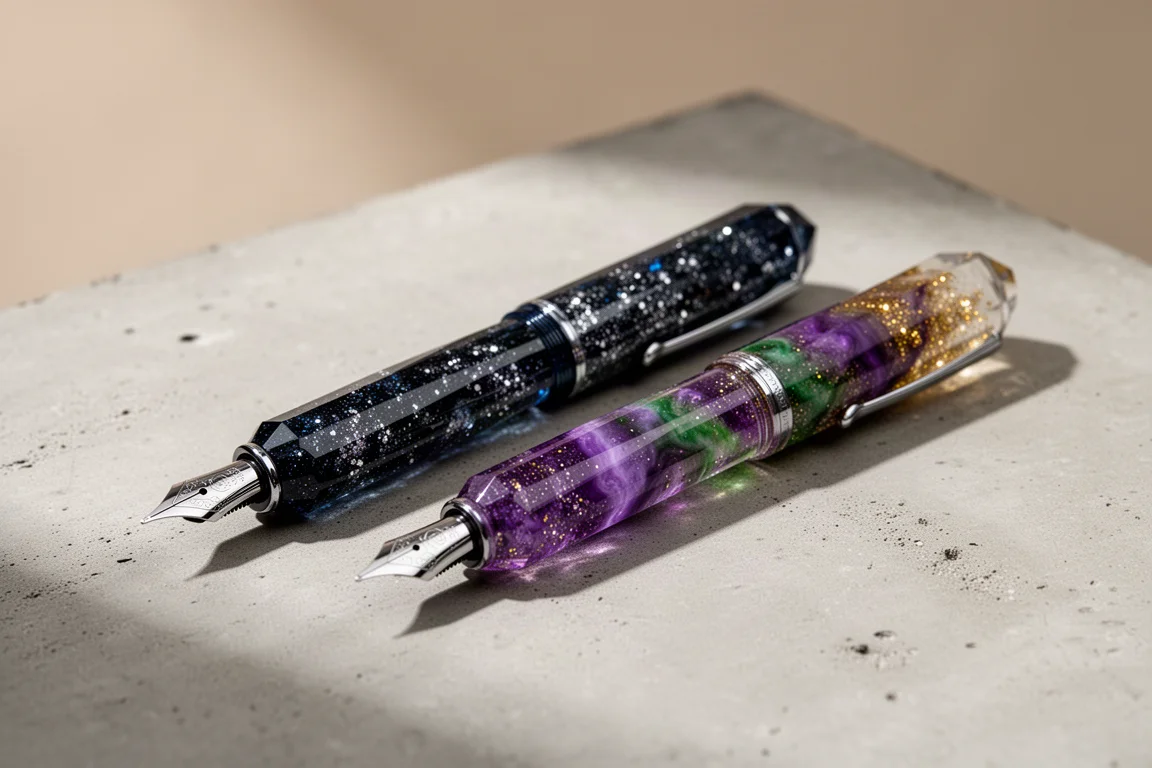
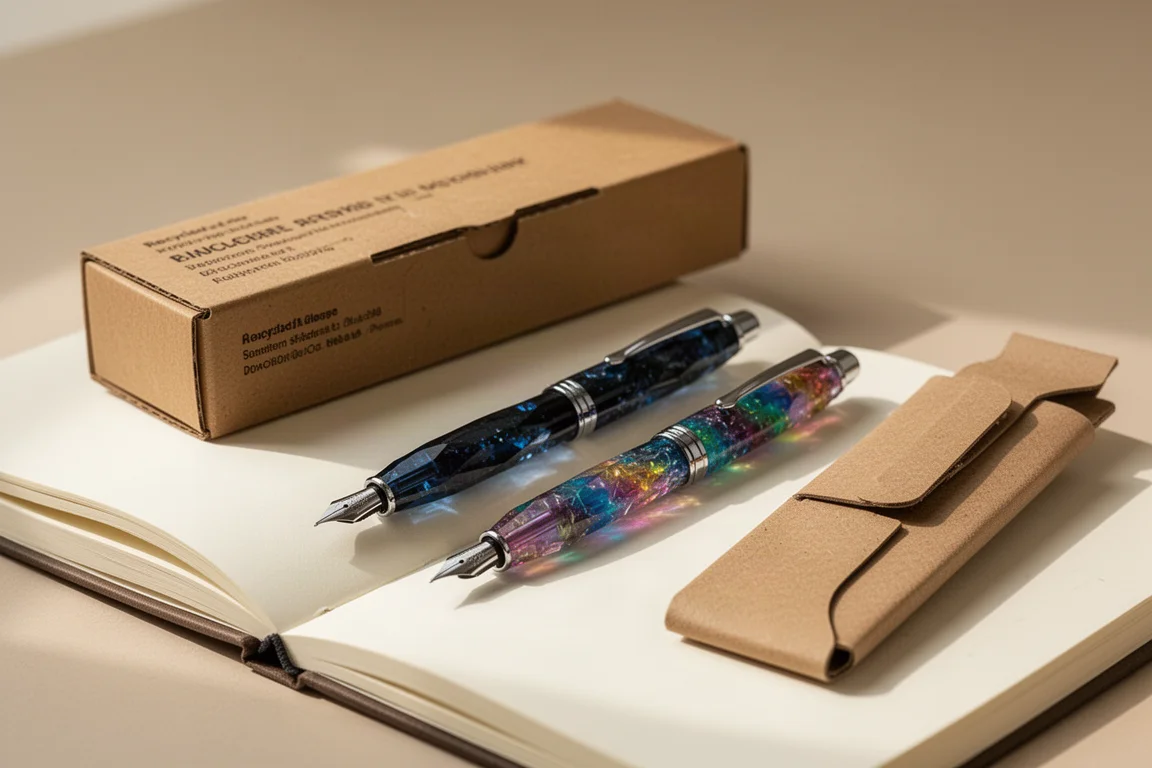
Benu is a brand that does original things, and the Astro Gem line is a good example of that. These are fountain pens inspired by asteroids, with faceted acrylic bodies, glitter-flecked materials, and unusual shapes that make them instant conversation starters. They are not for everyone, and that is part of the appeal. The packaging itself sets the tone: a recyclable cardboard box, paper padding, a cardstock pen sleeve, and a standard international long cartridge included in the box. There is minimal waste here, which is genuinely appreciated.
The line includes models such as the Astro Gem Eos, a deep blue-black pen with silver sparkles, and the Astro Gem Pallas, a nebula-like finish with gold and golden-green flecks inspired by the oddly shaped, edgy, uneven Oumuamua asteroid. Both use the same core hardware: screw-on caps that can be posted, acrylic resin bodies, and a Schmidt number six steel nib in fine, medium, or broad. The MSRP is $175 US, with the street price likely a bit lower.
Design and Materials
The defining feature is the faceting. The cap and barrel are cut into flat planes that catch the light as the pen rotates, and the effect is elevated further by the sparkle suspended inside the resin. The Eos looks almost solid black at first glance, but closer inspection reveals black, purple, and blue tones layered together. The Pallas is lighter and more colorful, with a nebula-like swirl of violet, green, and gold glitter.
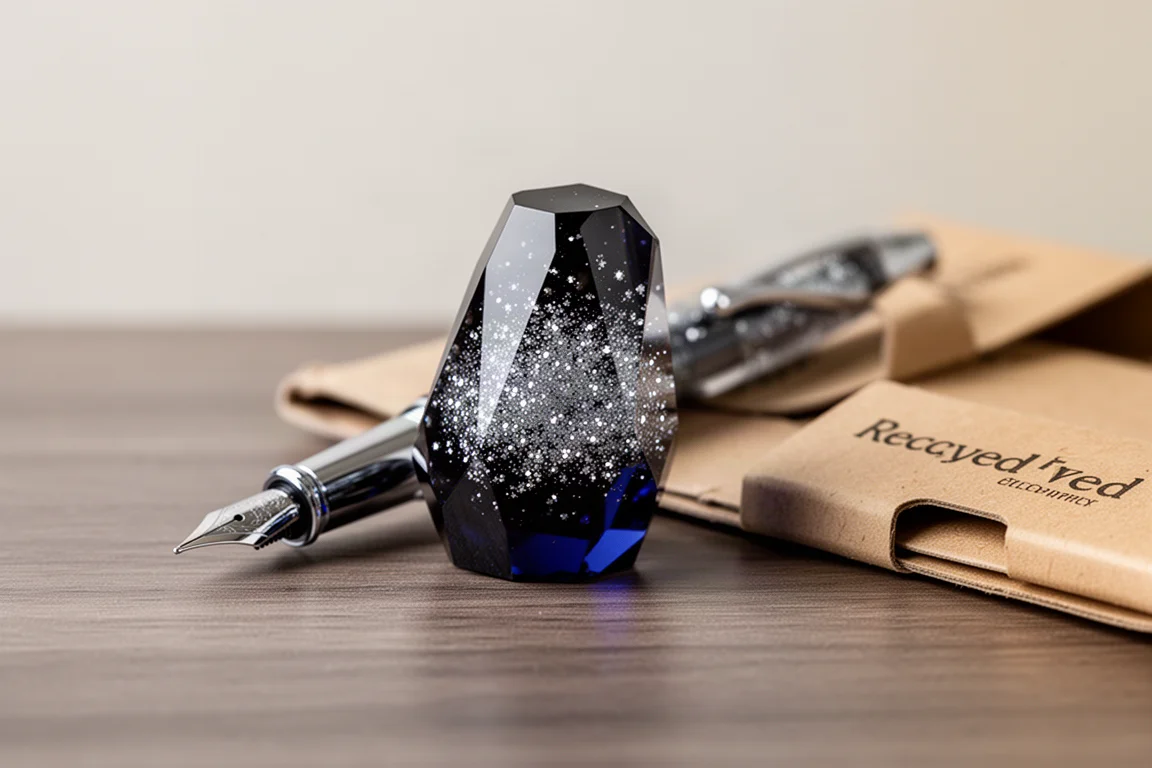
One detail worth calling out: the facets on the cap and barrel line up very well on both pens. Because the cap diameter is slightly larger than the barrel, this is not always easy to achieve, and the alignment here is an impressive sign of attention to detail. The finial is the same material as the cap, the clip is spring loaded and works nicely, and the barrel tapers down toward a narrower end, giving the pen a balanced look despite the unusual geometry. Compared with a classic pen like the Pilot Metropolitan, the Astro Gem is roughly the same length but noticeably girthier, and posting the cap makes it even bigger.
The Benu Astro Gem Eos
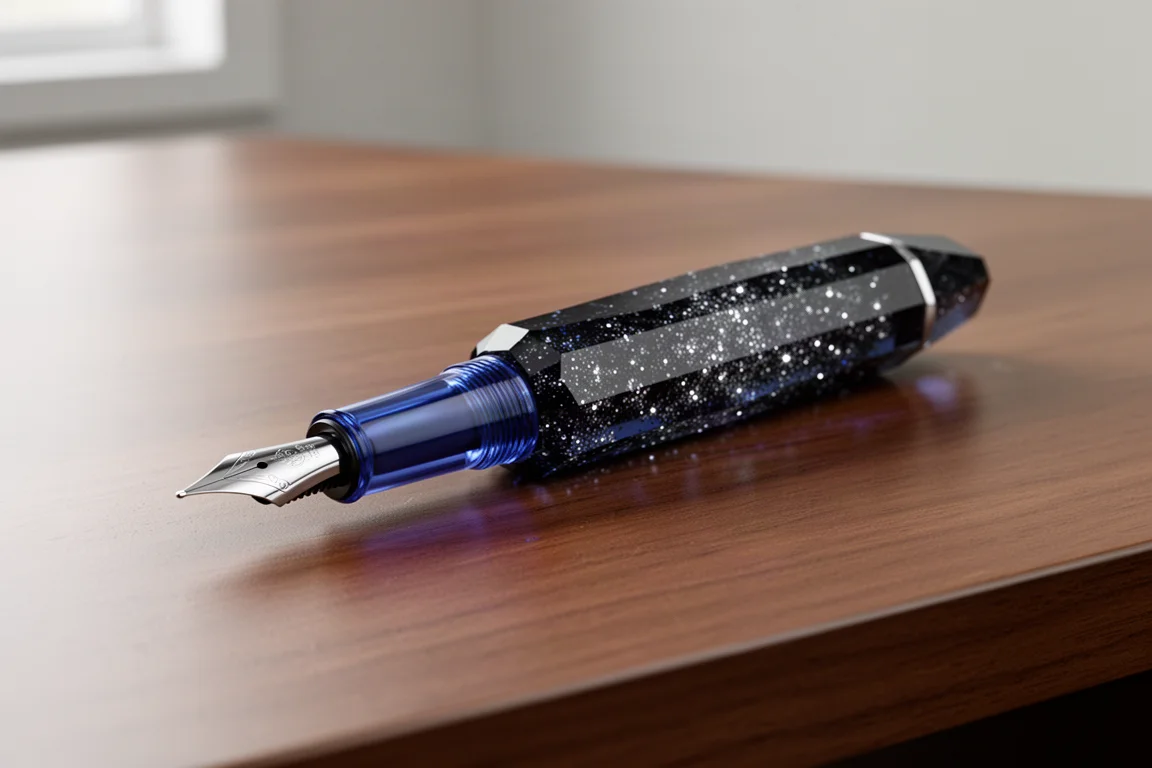
The Eos is the darker of the two finishes, a blue-black acrylic with silver-colored sparkles throughout. The blue shows up more strongly in person than on camera, and the combination of facets and glitter gives it depth that a flat glossy pen simply does not have. It ships with a Schmidt converter and takes standard international long cartridges, not just the short ones, which is a practical touch.
If your taste runs toward understated pens, this may still read as bold, but among the two it is the more restrained option. The translucent blue grip section is a nice touch as well, letting you see hints of the ink inside.
The Benu Astro Gem Pallas
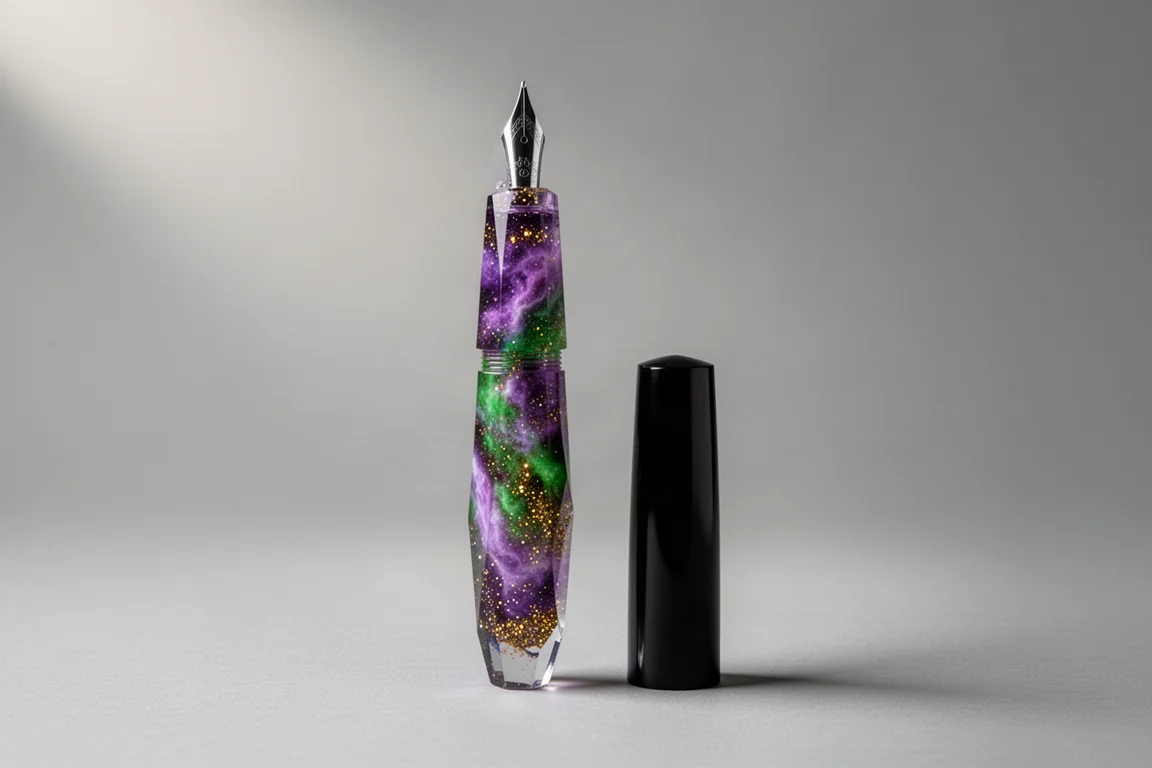
The Pallas leans fully into the asteroid inspiration. Its form echoes the edgy, uneven shape of the Oumuamua asteroid, and the finish looks something like a nebula, with multicolored resin and gold plus golden-green glitter. The grip section on this model is black rather than translucent.
As with the Eos, the facets align well between cap and barrel, and the taper of the barrel keeps the overall silhouette balanced. Of the two, the Pallas is the one that most reliably starts conversations based on looks alone.
Nib and Writing Performance
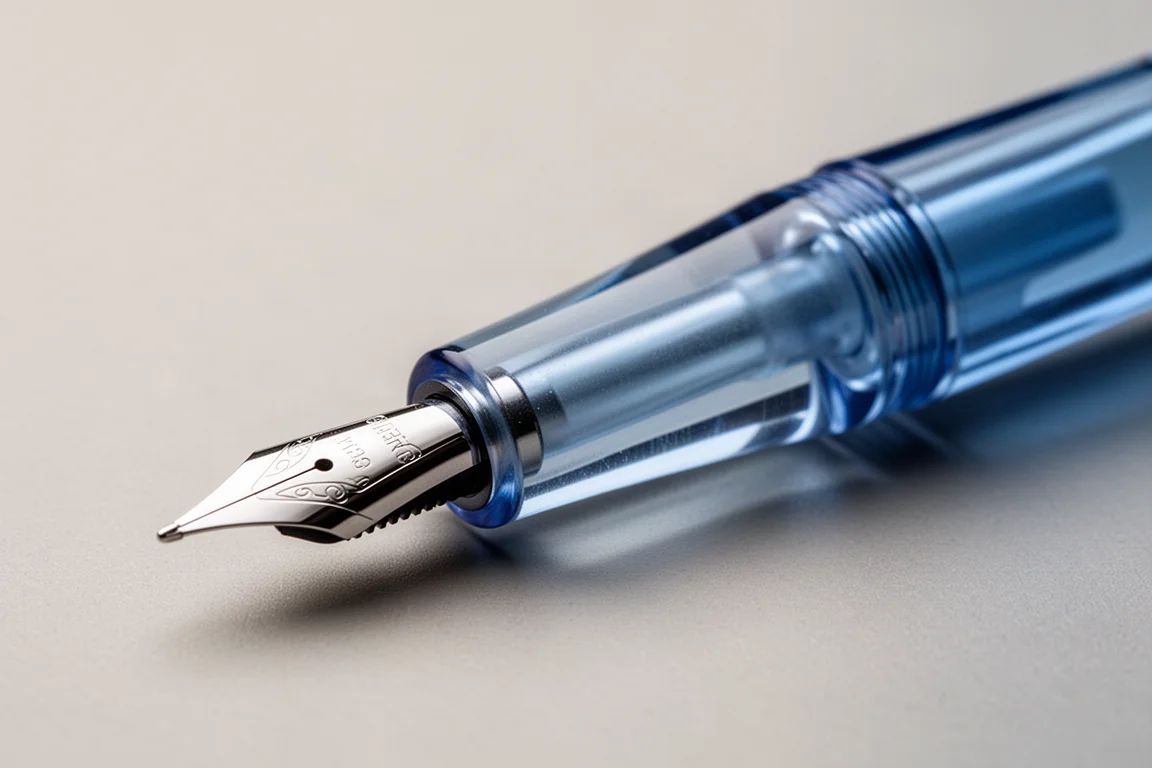
Both pens use a Schmidt number six steel nib with a plastic feed, and Benu has adopted the larger number six size across its range, which adds a bit more visual presence than the number five nibs the brand started out with. The nib is in good proportion with the pen, and it is a simple, unassuming, reliable steel writer. The Schmidt converter that comes with it screws shut in one smooth turn, which has no practical function but is satisfying nonetheless.
In normal writing, both samples performed well. The nibs are fairly wet rather than dry, reasonably smooth, and do exactly what they are supposed to do. With a sheening ink, there was an occasional skip or hard start, and pushing the nib toward flex caused quick railroading, which is expected since it is not advertised as a flex nib. Reverse writing gets scratchier, but a few words are doable.
The grip section is long, with some threads you can faintly feel and a small step down where it flares out. Neither was annoying in practice, thanks to how far back your fingers sit. Posted, the pen is very secure but a bit bulky near the end, so it is best used unposted.
What We Like
The materials and facets are the headline. These are interesting lookers with a lot going on, and the aligned facets show genuine manufacturing care. The Schmidt nibs are dependable writers, and the fact that they run fairly wet rather than dry is a plus. The choice of standard international long cartridges, the included converter, and the fully recyclable packaging all add practical value. Finally, these are true conversation starters; hand one to someone and the questions start immediately.
What to Consider Before Buying
At $175 MSRP, you are paying for a steel nib on a cartridge-converter pen. That is not super inexpensive, and the price is the main thing to weigh. What you get in return is something that looks genuinely distinctive, is well made, and is not produced in enormous batches. Whether that trade-off is worth it depends entirely on your taste for bold, faceted, glittery pens.
If you prefer classic, understated designs, Benu is probably not your brand, and that is fine. But if you want a large, comfortable writer with real visual personality, both the Eos and Pallas deliver.
Conclusion
The Benu Astro Gem Eos and Pallas are fun, well-made fountain pens with standout materials, well-executed faceting, and reliable Schmidt steel nibs. They are not cheap, and they are not trying to be conventional. For writers who enjoy pens with character, they are easy to recommend.
Further reading
Related Reviews
Fountain Pens
Best Budget Fountain Pens Tested: 9 Pens, One Clear Winner
A hands-on comparison of nine affordable fountain pens for everyday writing, calligraphy, and sketching, with a clear standout for flexible nib fans.
Fountain Pens
Aurora Optima Review: An Italian Piston Filler That Punches Above Its Price
A 14k gold nib, ebonite feed, and a beautifully deep oraloid body make the Aurora Optima one of the most rewarding piston fillers around.
Fountain Pens
Cross Bailey Light Review: The Entry-Level Fountain Pen Worth Keeping at the Office
A plastic-bodied Cross with a metal clip, snap cap, and famously smooth extra fine steel nib. Around $15, available almost everywhere, and easy to recommend.