Snowboard Bindings
Bent Metal Logic Binding Review: Soft, Playful, and Built for Jibbing
A practical look at the Bent Metal Logic binding: tool-free adjustability, an extremely soft highback, and the ride feel you can expect from a playful freestyle setup.
Introduction
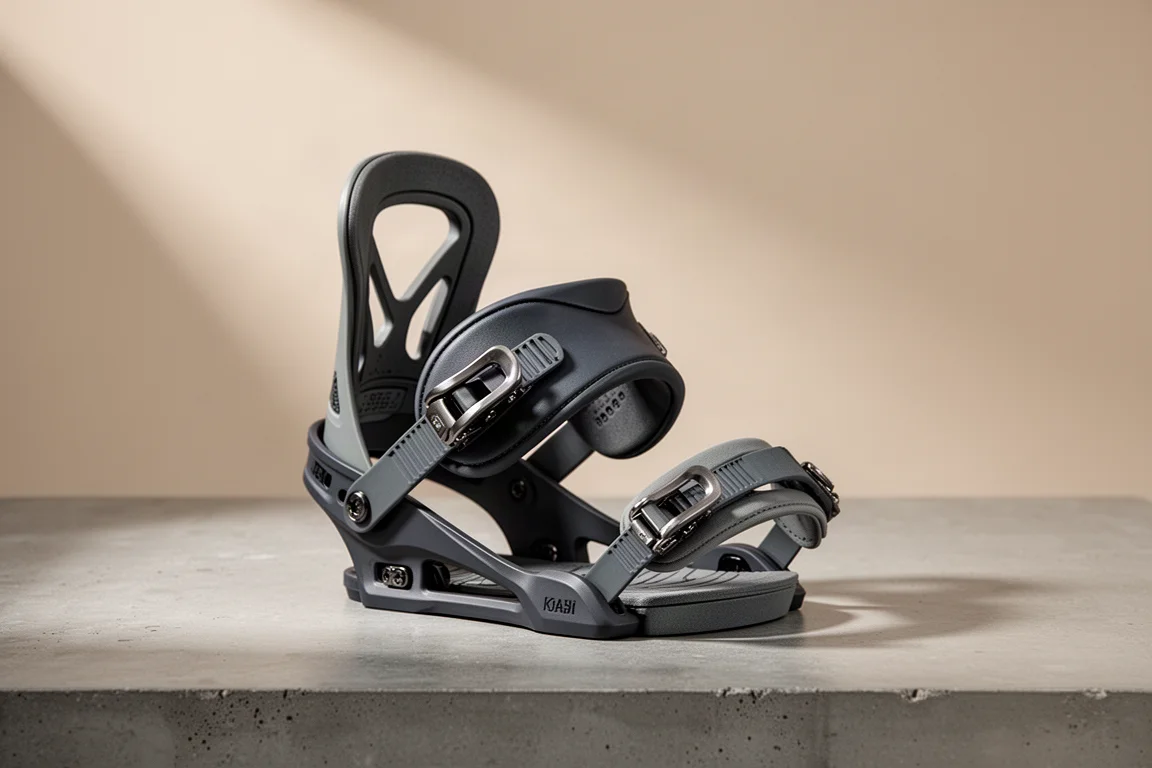
The Bent Metal Logic makes its priorities clear within the first few turns. It sits firmly on the softer end of the freestyle binding spectrum, and everything from the highback contour to the strap construction is tuned to keep the ride loose, forgiving, and communicative rather than locked in and powerful.
This binding was ridden on a Telos Mike Ranquet snowboard paired with K2 Thraxis boots, on a warm bluebird day that served up slush, chop, chunder, smooth groomers, and a few firm, icy patches for good measure. That mix is a genuinely useful test bench for a soft binding, because it exposes both how the hardware behaves when conditions are inconsistent and how much vibration actually reaches your feet.

What stands out most is how much of the ride you feel. There is very little between you and the snow, which is exactly the point of a binding built this way. Riders who value feedback and playfulness over dampening and drive will find the Logic makes sense immediately.
Who the Bent Metal Logic Is For
This is a binding for the playful rider. If your day revolves around pressing, buttering, and jamming around the mountain, the Logic’s soft flex works with you rather than against you. It never asks you to fight it, and it stays forgiving when you are not perfectly balanced.
It is not a binding for riders chasing power transfer. The flex is soft enough that when you drive into it, much of your input goes into the binding instead of the board. If your priority is edge-to-edge drive at speed or a planted, damp feel underfoot, this is not the tool for the job.
Main Strengths
The strongest argument for the Logic is adjustability. Almost everything on the binding can be changed without extra hardware, which makes it easy to dial in for different boots and different preferences. Just as importantly, the changes are simple to make with cold hands on a chairlift.
The second argument is feel. Soft bindings live or die on how naturally they flex, and the Logic flexes in a way that keeps the board lively underneath you rather than deadening it.
Adjustability and Fit
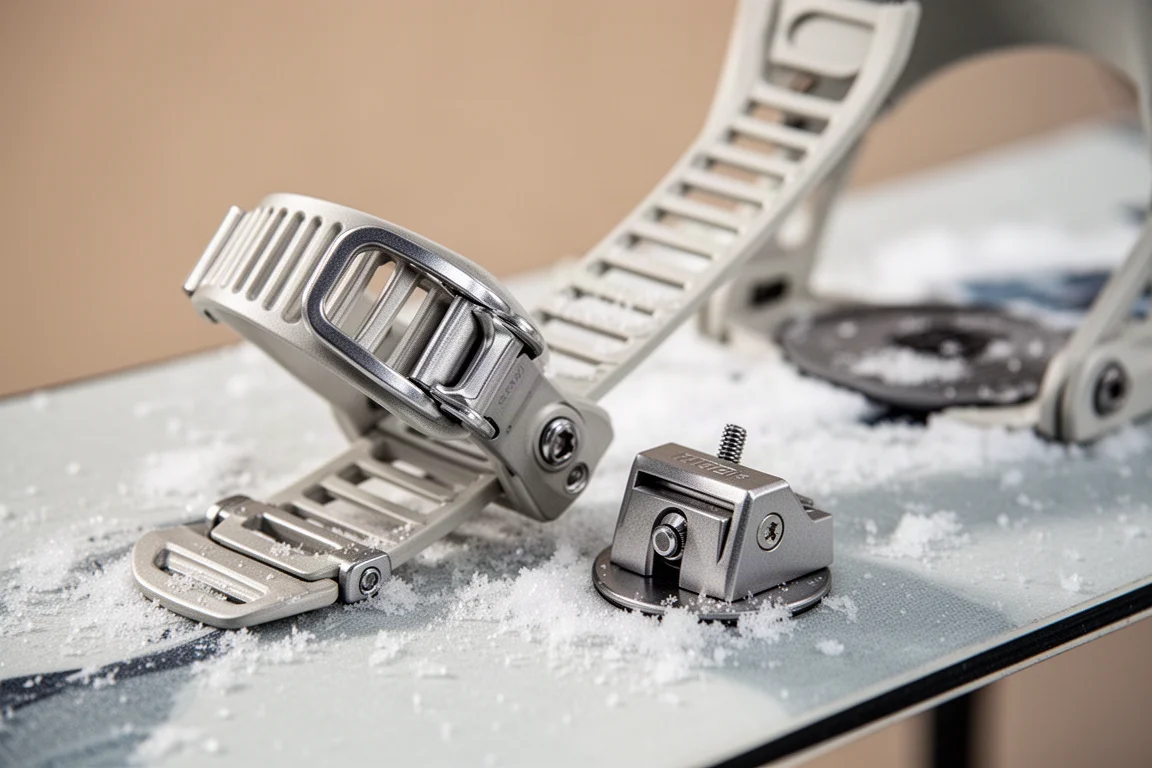
Twist cams on both the toe and heel strap let you lengthen or shorten each strap to match your boot. The toe strap adds a dual pin placement system: push it down and move it either forward or backward to lock it into position.
The drive plates are interchangeable across the entire Bent Metal binding range, so plates can be moved between bindings if you own more than one pair.
Forward lean is handled by a heel block that you twist, with eight adjustment positions, and it can be set at an angle or flat depending on how you want it. Inside the highback there are three rotation placements, and that same area houses the screws used to lengthen or shorten the heel cup so you can center your boot properly on the baseplate.
Straps, Highback, and Overall Flex
The toe strap uses a minimal cutout, which suits pointy-tipped boots better than wider, boxier shapes. If your boots are on the rounder side, that cutout helps the strap sit cleanly across the toe.
The heel strap is a two-piece design with no added material, so there is no padding built into it at all. Every bit of cushioning comes from your boot. It is soft, rubbery, and malleable, and you feel that give the instant you lock it in. It flexes noticeably, and it does not deliver much drive.
The highback is fully rounded and shaped to cup the back of the boot, with a lot of contour around the spine of the boot. It is one of the softest highbacks you can strap into, and when you drive into it you feel everything.
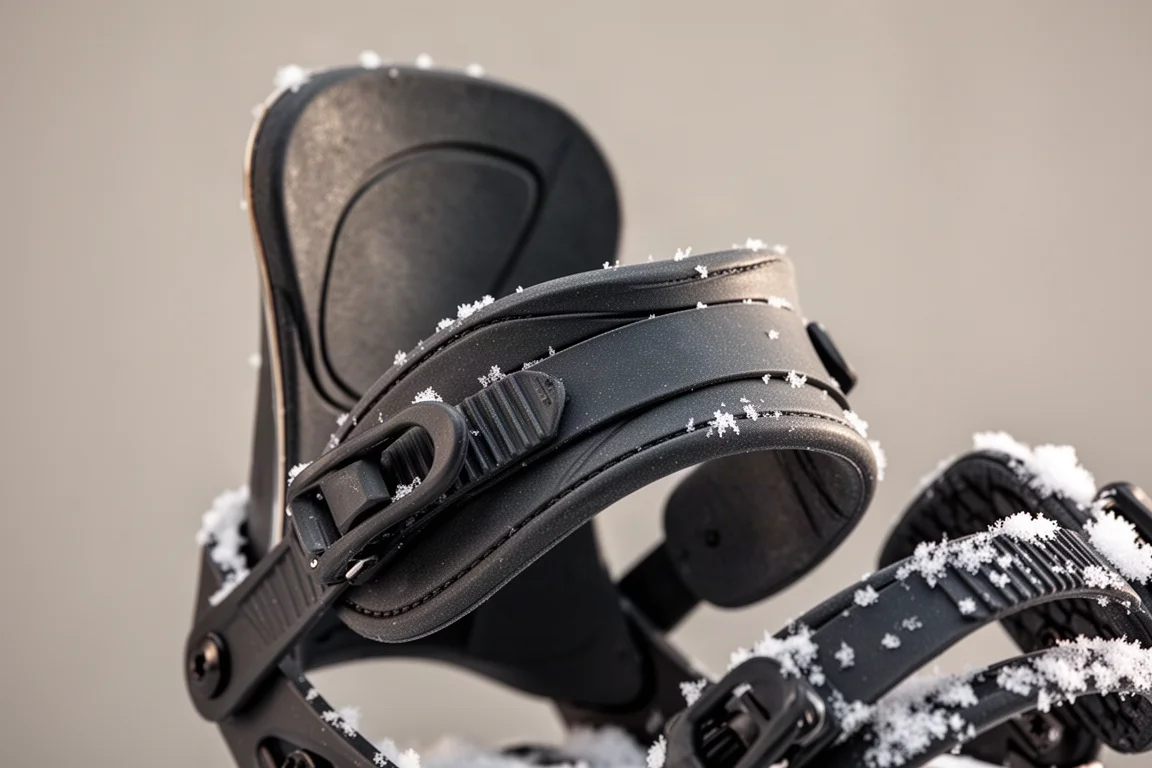
Add the mini disc, which allows a lot of lateral play, and the forgiving straps, and the result is a binding that flexes rather than transmits. Overall it is a slightly stiffer jib binding, but it never drifts into middle-of-the-road territory. It is soft, lively, and consistently playful.
Things to Consider Before Buying
Dampening is minimal. Vibrations from the board travel straight up through the binding, and on firm, icy patches that becomes obvious. It is the trade-off for a flex this soft and this communicative, but riders who spend most of their time on hardpack should factor it in.
The ratchets deserve a closer look too. The heel ratchet has a one-finger quick release tab, but the toe ratchet does not, so releasing the toe means pushing down on the front. They climb well, stay locked in, and release easily enough, but feeding the ladder in is stiff when the binding is new. That eases with break-in, though it is worth expecting a short adjustment period out of the box.
Finally, if power and drive are what you want from a binding, the Logic simply will not provide it. That is not a flaw in the design so much as a clear statement of intent.
Buying Advice
If you want a soft, lively binding for pressing, buttering, and playful riding, the Logic delivers exactly that, and its adjustability makes it easy to set up for your boots and your stance. Riders who split their time between park laps and high-speed carving are better served by something stiffer.
Worth comparing if you are shopping in this flex range: the Now Brigade, the Rome Crux, and options in the K2 lineup.
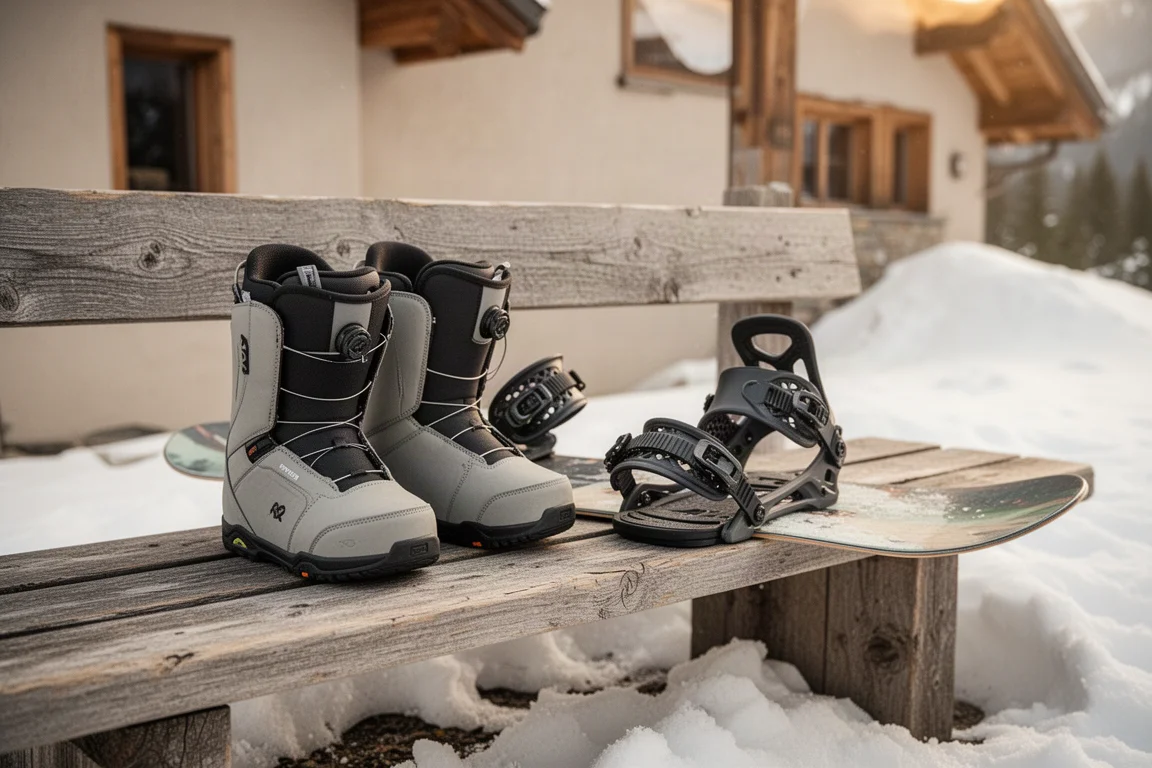
Fit matters as much as flex here. The minimal cutout on the toe strap favors pointy boot shapes, so if your boots are wider and boxier, check how the strap sits before committing. And because the heel strap carries no padding of its own, a plusher boot will make the whole setup feel more comfortable from the first lap.
Conclusion
The Bent Metal Logic does one thing exceptionally well: it stays soft, playful, and forgiving, with a level of tool-free adjustability that few bindings in this flex range can match. Riders who want to feel the terrain and the board underfoot will find a lot to like. Riders who want drive and dampening should look elsewhere.
Product link
View more details for Bent Metal Logic
This product is mentioned in the review. Check the specifications, options, and compatibility before buying.
View more details for Bent Metal LogicFurther reading
Related Reviews
Snowboard Bindings
2024 Union Ultra Snowboard Bindings Review: A Cushy, Freestyle-Focused Favorite
Two seasons on the 2024 Union Ultra: a lightweight, tweakable freestyle binding with standout comfort, a damp molecular bushing, and thoughtful hardware fixes.
Snowboard Bindings
32 Team Phase Binding Review: A Fast Entry Binding Built for Freestyle Laps
The first binding from 32 uses the Phase chassis for quick step-in entry with a softer, freestyle-leaning flex. Here's how it performed on the snow.
Snowboard Bindings
Arbor Cypress Snowboard Binding Review: A Laid-Back Cruiser That Can Charge
A closer look at the Arbor Cypress binding's adjustability, strap feel, and that oddly tall highback before you decide to buy.