Snowboard Boots
Battalion Salsa Lace Snowboard Boot Breakdown: Build, Fit, and Features
A close look at Battalion's first-year lace snowboard boot: TPU reinforcement, a deep-heel-hold liner, and what to know before buying.
Introduction
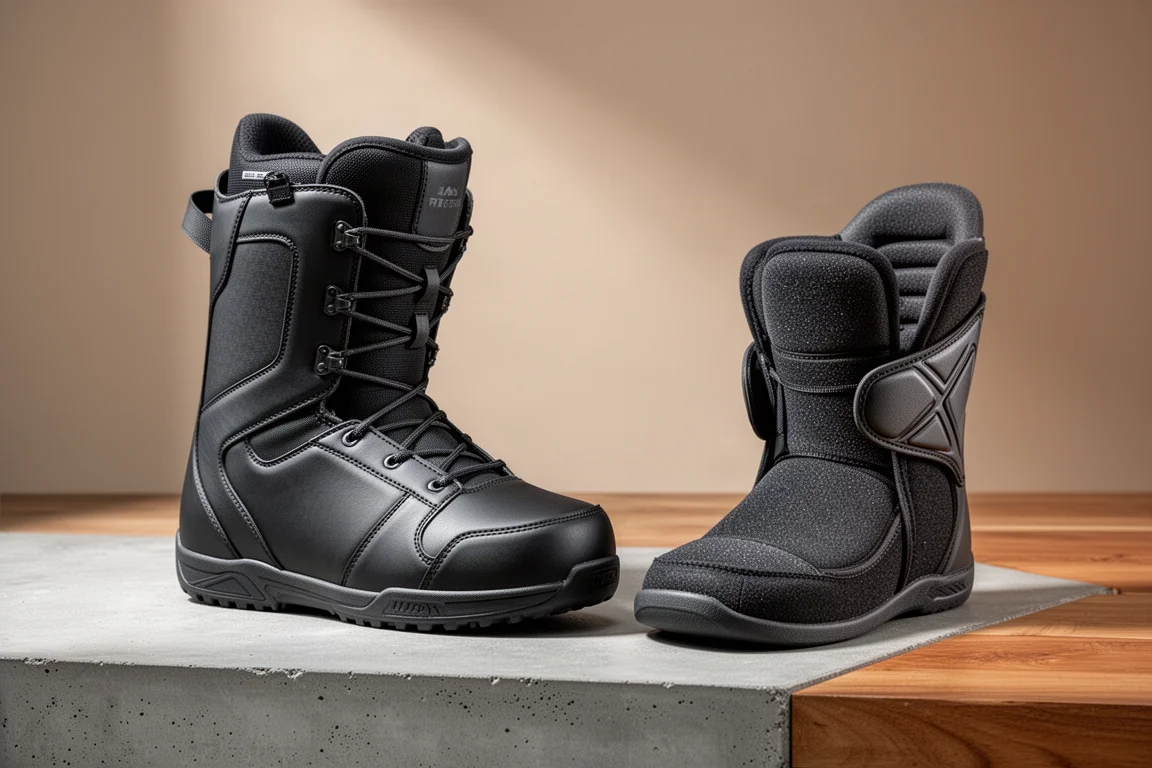
Battalion is a newer name in snowboard boots, and the Salsa Lace is its first-year lace boot. It does not feel like an afterthought. The brand clearly invested in design and R&D here, and the result is a boot with genuinely solid construction, thoughtful reinforcement, and a liner built around one specific strength: heel hold.
This is a feature breakdown rather than a full performance review. The honest truth about boots always applies: the best boot is the one that fits your foot and fits your needs. If you can, visit a local snowboard shop, try on as many pairs as possible, and get properly sized before buying. If you have to shop online, make sure you know your size and buy from a reputable retailer that accepts returns.
Shell Construction: TPU Where It Counts
The Salsa Lace uses a TPU toe box and a TPU back spine, and these two pieces do most of the heavy lifting in the shell. The TPU toe box shrugs off the scuffing and cuts that happen when you rest your heel edge on the boot, and it gives the whole boot a firmer, more durable feel. There is no excess give in the shell; it is noticeably hard and firm and should not break down easily.
The TPU back spine adds rigidity and response at the heel, providing rebound and resisting the creasing you often see in softer boots. TPU also creates scuff points around the outside and gives the ratchets durable contact points to dig into.
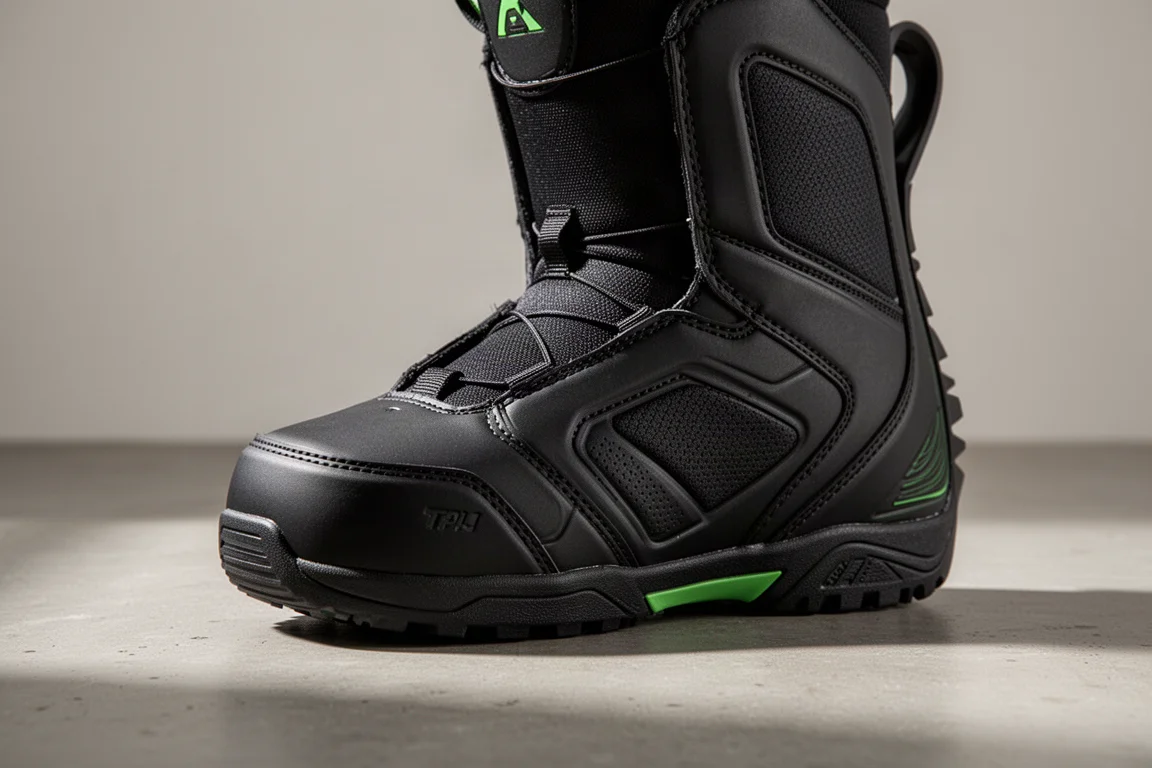
An articulated cuff adds some give where you need it, so the boot flexes into rather than fights you. Expect a visible flex point at the cuff articulation. Flex itself is subjective: this is the softest boot Battalion is making this year, yet it is still surprisingly stiffer than you might expect. Heavier riders will naturally flex any boot more than lighter riders, so factor in your height, weight, athleticism, and personal preference when judging whether the flex suits you.
Rubber Outsole and Underfoot Dampening
Underfoot, you get a rubber outsole that adds a layer of dampening, backed by foam in the midsole that helps with impacts. There is additional foam under the toe, covering essentially the three points where your foot presses most inside the boot. This kind of dampening works well and helps reduce the chatter and micro-vibration you can feel through firm boots on hard snow.
Lacing, Locks, and the Power Strap
The lace locks are deep, built for a rounded lace, and exceptionally tight. These are super well built, and you can really leverage into them to pull the lacing snug; it stays locked in place. Flat laces are not the intended pairing here, so keep that in mind.
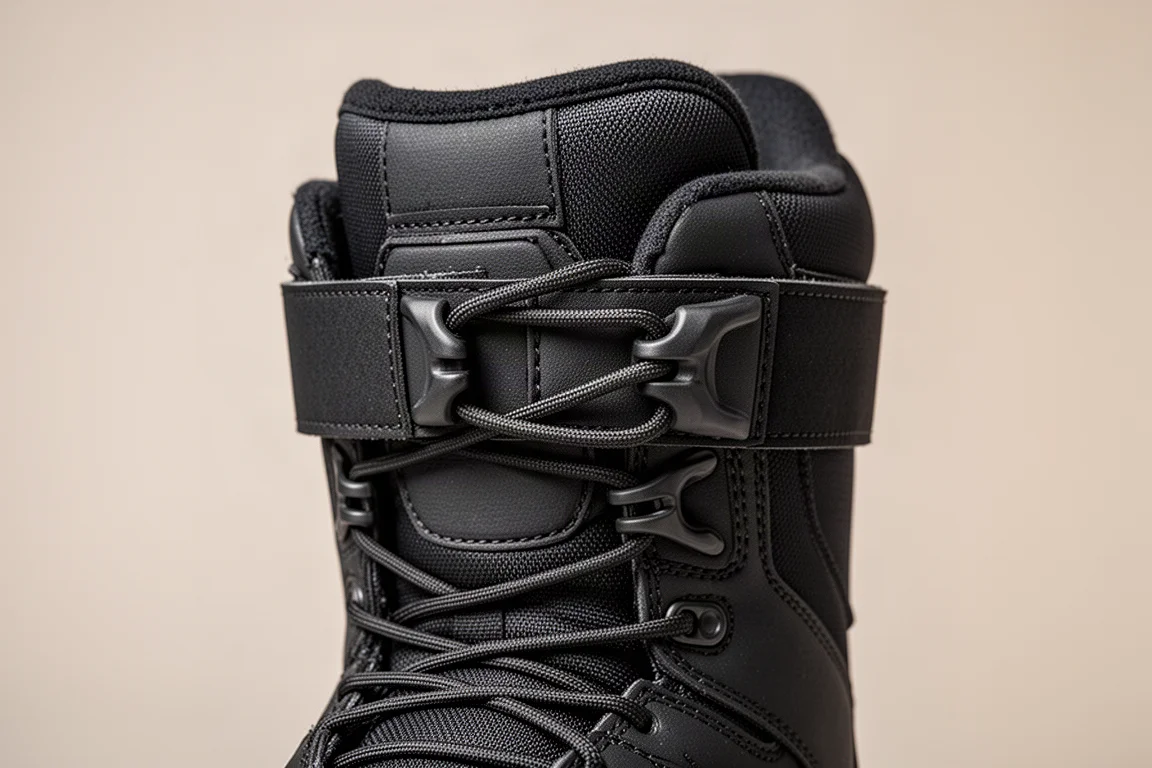
One of the signature features is a power strap over the top of the boot. Crank it down and it keeps the top of the boot tight, adding noticeable response when you flex into the boot. This is a real differentiator: the Boa version of this boot does not have the power strap, so it is the main functional difference between the two variants.
Inside, there is an internal harness sewn high up into the shell, which locks you down into the heel pocket. It uses a quick-tab release and a standard slide-and-lock system with a push pin. Nothing revolutionary, just proven hardware that works.
The Liner: Heel Hold Is the Headline
The liner uses a butterfly wrap with hard, aggressive foam designed to create heel hold. Combined with a really deep heel pocket, this thing will lock down your ankles and keep you firmly planted in the boot. If you have struggled with heel lift in other boots, this liner is worth a close look.
There is soft orange foam around the ankle bones to give them a little extra room, and neoprene at the toe for riders with longer toes who need a bit of extra space. The liner is fully heat moldable, so a proper heat-mold session can refine the fit further.
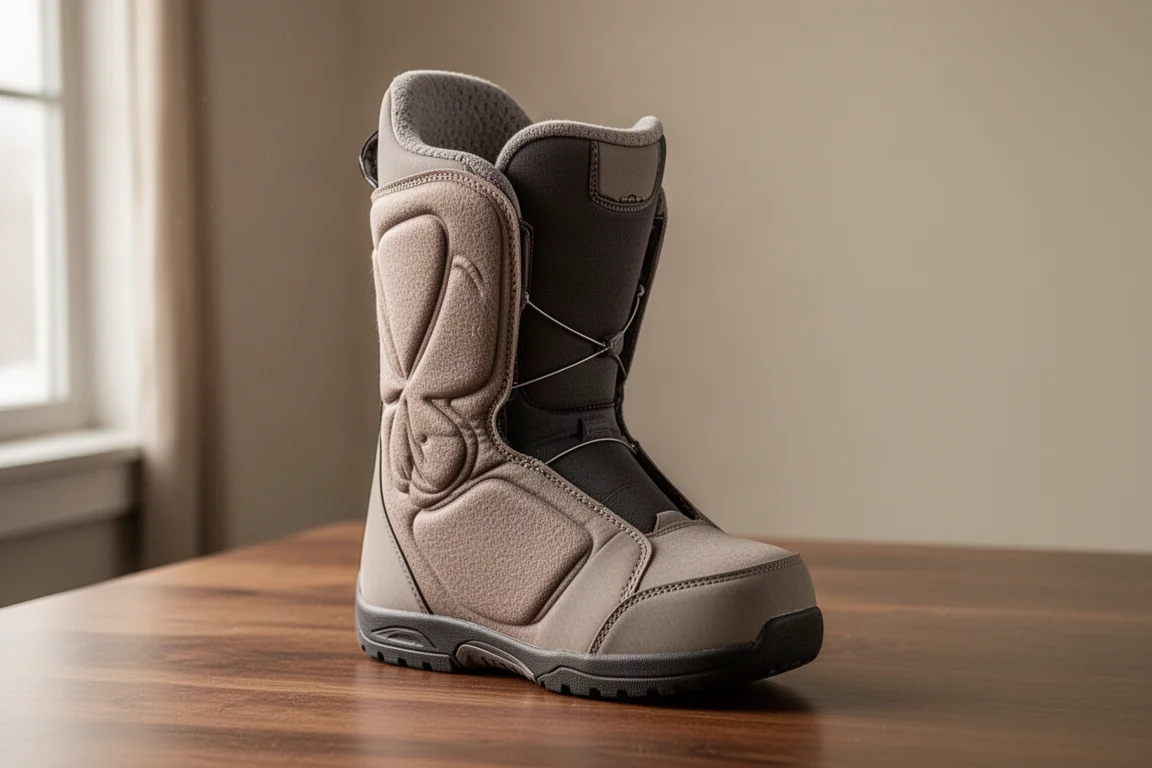
One thing to be aware of: there are large seams at the liner’s flex point and another big seam down the back. Some riders may feel the seam at the flex point inside the boot; the rear seam is less likely to be noticeable. Otherwise, the bottom of the liner is solid and normal, and overall it is a very well-designed liner with Velcro to keep it clipped in place.
The stock footbed is the weak point. It is cheap and offers little real support. Plan on replacing it with a quality aftermarket or custom insole; you will be much happier, and it will optimize how the whole boot fits.
Shell and Liner Dimensions
For reference, these measurements come from a size 8. The shell heel height in the back is about 10 and three-quarter inches, cut up, with the tongue at about 9 and three-quarter inches and the sides slightly higher. The liner measures around 11 and a half inches at its highest point, roughly 9 and three-quarters on the sides, and closer to 10 inches at the front. It is a slightly higher liner overall.
Width comes in around 4 inches at the widest point of the liner, which is fairly wide, with a medium, average overall fit that is neither narrow nor super wide. In the forefoot it compares closely to Ride and K2 boots in width. That means riders with particularly wide feet may find it a bit snug in the forefoot, while most average-width feet should feel at home.
Fit, Width, and Sizing Notes
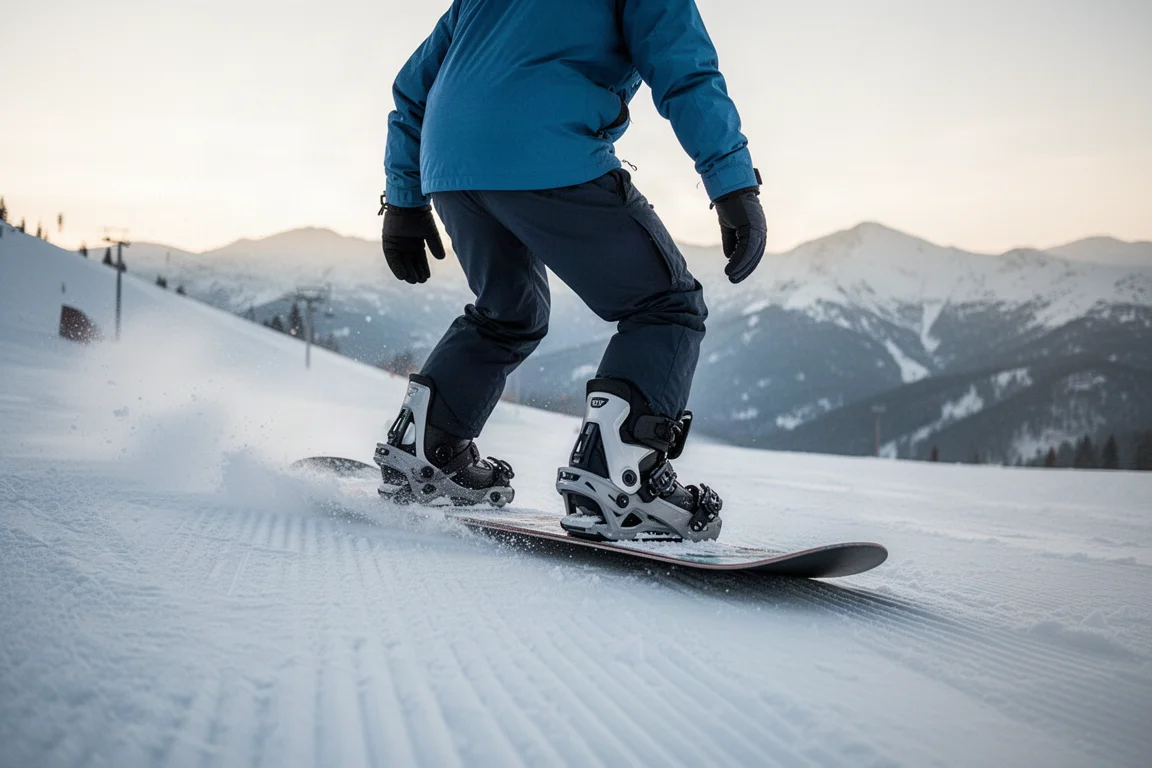
The deep heel pocket makes this a strong candidate for riders with narrow ankles who constantly worry about heel lift. Between the butterfly wrap, the high-sewn internal harness, and the heat-moldable liner, the Salsa Lace is engineered to keep your heel planted. As always, flex and fit feel different depending on your weight, proportions, and how you ride, so if you can get the boot on your foot before buying, do it.
Buying Advice
If you are set on the Salsa Lace, a few practical steps will get you the best result:
- Get properly sized first, ideally at a local shop, before ordering online.
- Budget for an aftermarket or custom insole; the stock footbed is the one part worth replacing immediately.
- Consider a heat mold to tune the fit, especially around the heel pocket.
- If you want maximum top-of-boot response, note that this lace version has the power strap that the Boa version lacks.
Conclusion
For a first-year boot, the Battalion Salsa Lace is impressively well built: TPU reinforcement in the toe box and back spine, tight and durable lace locks, a responsive power strap, and a liner whose deep heel pocket is the standout feature. Watch for the liner seams and swap the stock footbed, and this boot makes a compelling case for riders who want a firm, secure lace boot with real heel hold.
Product link
View more details for Battalion Salsa Lace
This product is mentioned in the review. Check the specifications, options, and compatibility before buying.
View more details for Battalion Salsa LaceFurther reading
Related Reviews
Snowboard Boots
32 Team Two Double Boa Review: 32's Highest-End Women's Snowboard Boot
A closer look at 32's top-tier women's snowboard boot, from the 3D molded toe box and double Boa lacing to the Performance Fit liner and heat-reflective footbed.
Snowboard Boots
Bataleon Acid BOA Snowboard Boot Review: A Serious First Entry from a Board Brand
Bataleon's first snowboard boot, designed by a former Burton boot designer, brings a stiff flex, dual BOA closure, and a heel hold system worth a closer look.
Snowboard Boots
Battalion Acid Boot Review: A Stiff, Aggressive Boot Built to Last
The Battalion Acid Boot is the brand's highest-end offering, built with seamless construction, TPU reinforcement, dual BOA lacing, and a heat-moldable liner. Here is what to know before buying.