Snowboards
Bataleon Disaster Review: A Soft-Flex Jib Board with Skate-Like Pop
The Bataleon Disaster pairs low camber with 3BT and Sidekick for a catch-free, press-friendly ride that rewards smooth style over hard charging.
Introduction
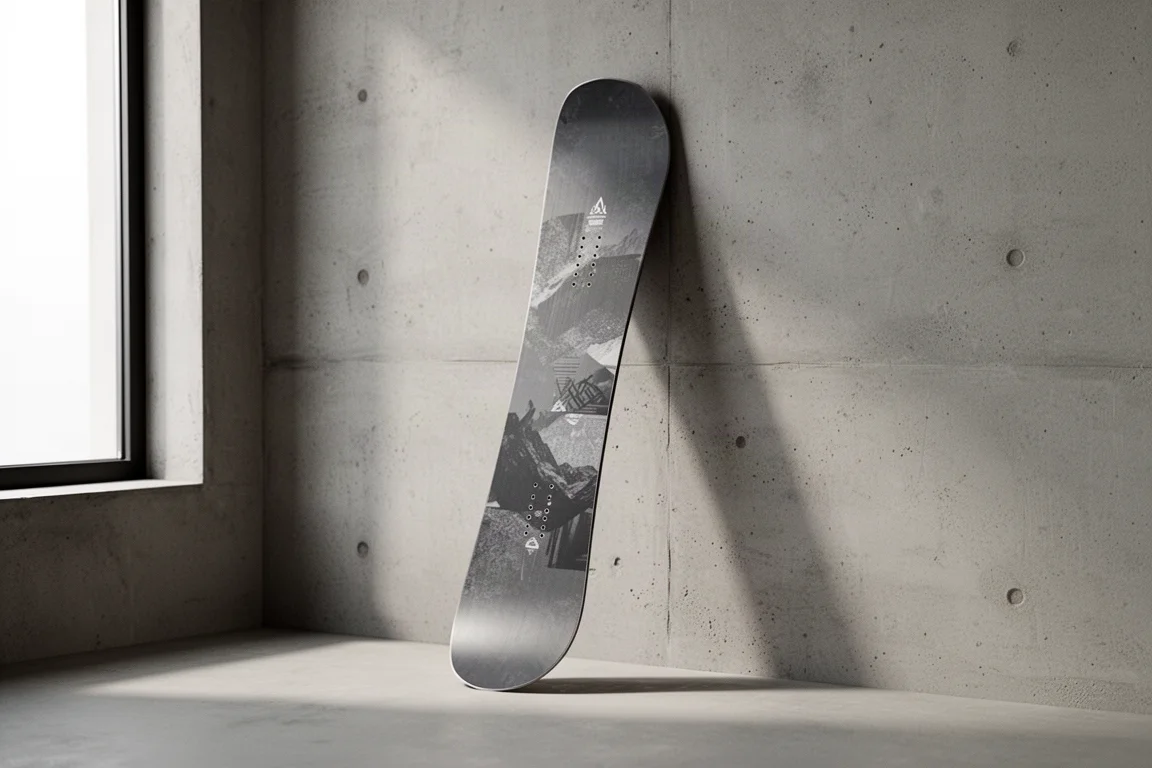
The Bataleon Disaster is a soft-flex freestyle board built around Bataleon’s low camber profile with 3BT and Sidekick. Low camber feels like a well broken-in traditional camber, which gives the board a skate-like pop rather than the aggressive drive of a full camber deck. The 3BT and Sidekick base shaping spoons out the tips, making it easier to enter and exit turns and helping the board funnel snow away more smoothly.
It is available in 144, 148, 151, 153 Wide, 154, 156 Wide, and 157. The test board was ridden at Copper Mountain on a sunny bluebird day with low to average temperatures, occasional wind gusts, chopped chunder, a couple of inches of leftover powder, perfect corduroy, and a little ice, paired with Rome Black Label bindings and K2 boots.
Who This Board Is For
This is a board for the jib rat who likes snap. If your days revolve around rails, side hits, butters, and playful cruising between features, the Disaster fits that brief almost perfectly. If you are looking for a hard-carving charger, this is not it.
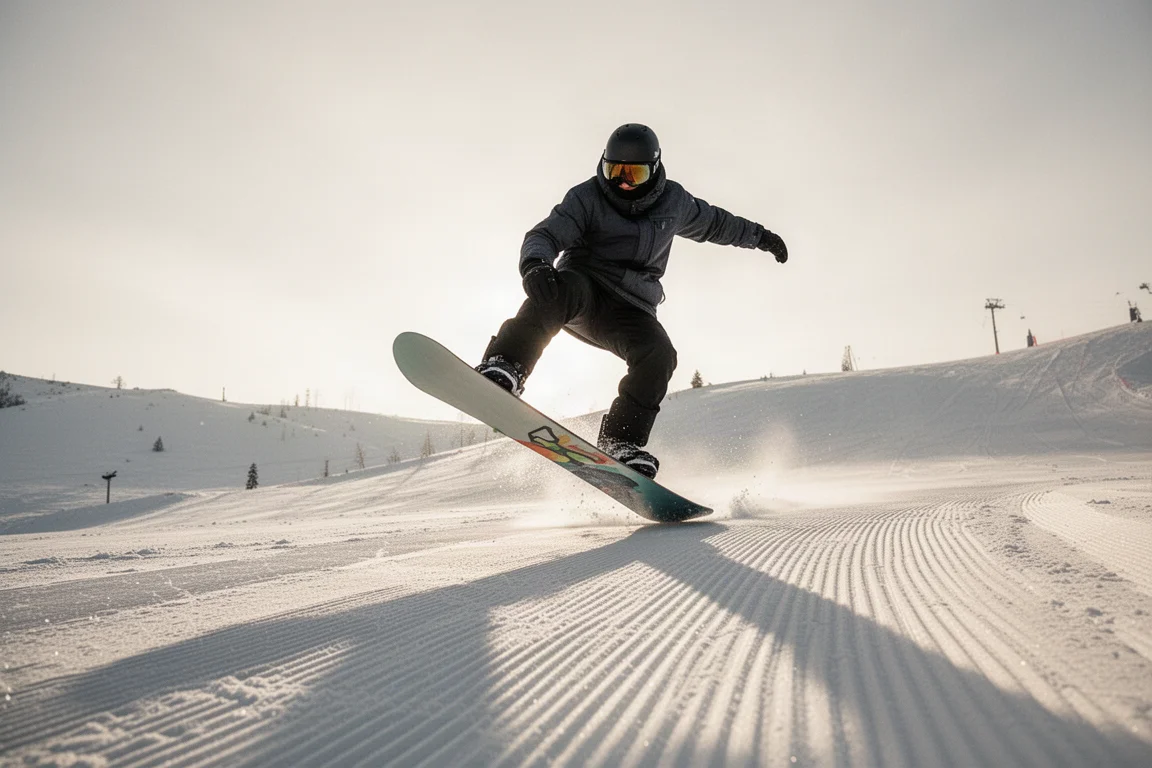
One sizing note worth flagging: a 200-pound rider on the 151 is well over the weight limit, and a 154 would have been the better fit. Sizing up is worth serious consideration if you are a heavier rider, since pushing past the recommended range takes away from how the flex is meant to behave.
Flex, Pop, and Jump Performance
The flex is soft. It is not a full-blown jib noodle, sitting one step above a true jib board and one step below a middle-of-the-road park board. The tips and tail are playful and press easily, while the stiffer center adds stability underfoot. That said, chatter from the tips does resonate back underfoot, and this is a lively board that rewards riding with your knees bent.
Because of the low camber, it does not feel like a traditional camber board you have to load up. You roll back on the tail and it springs, more like a skateboard than a hard-charging camber deck. It is not the snappiest board out there: what you put in, you get slightly less out of, so a bit more speed and muscle helps. It will send a cat track gap or a side-hit ollie over a fallen skier, but on bigger jumps the tail washes out if you load it hard, so keep it to smaller features.
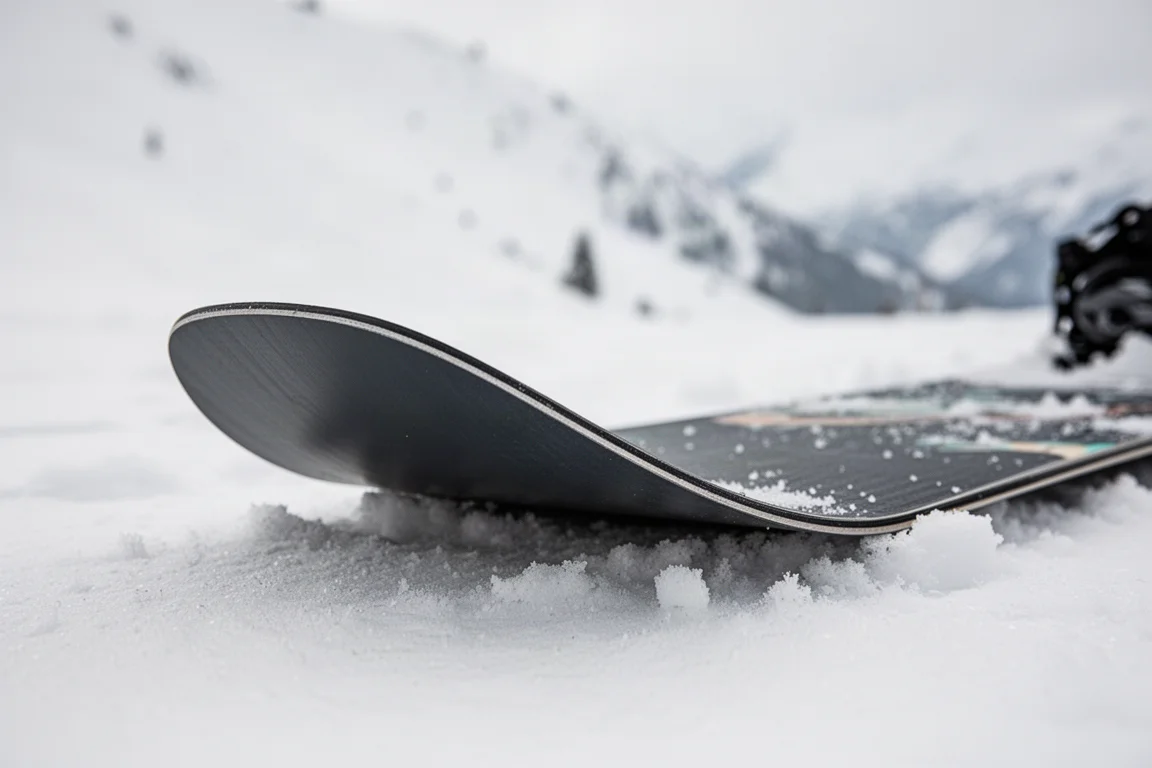
Compared to last year’s version, this one is noticeably stiffer, with a little more rigidity that helps spring, snap, rebound, and performance in choppy terrain. It is the right direction for this board and it rides much better as a result.
Buttering and Jibbing
This board is a butter machine. The tips are so soft that when you leverage your weight out over the nose or tail past the insert pack and push in, the board dramatically flexes. You barely need any effort to get it to butter, and you actually have to tone it down, because manhandling it will make you wash out.
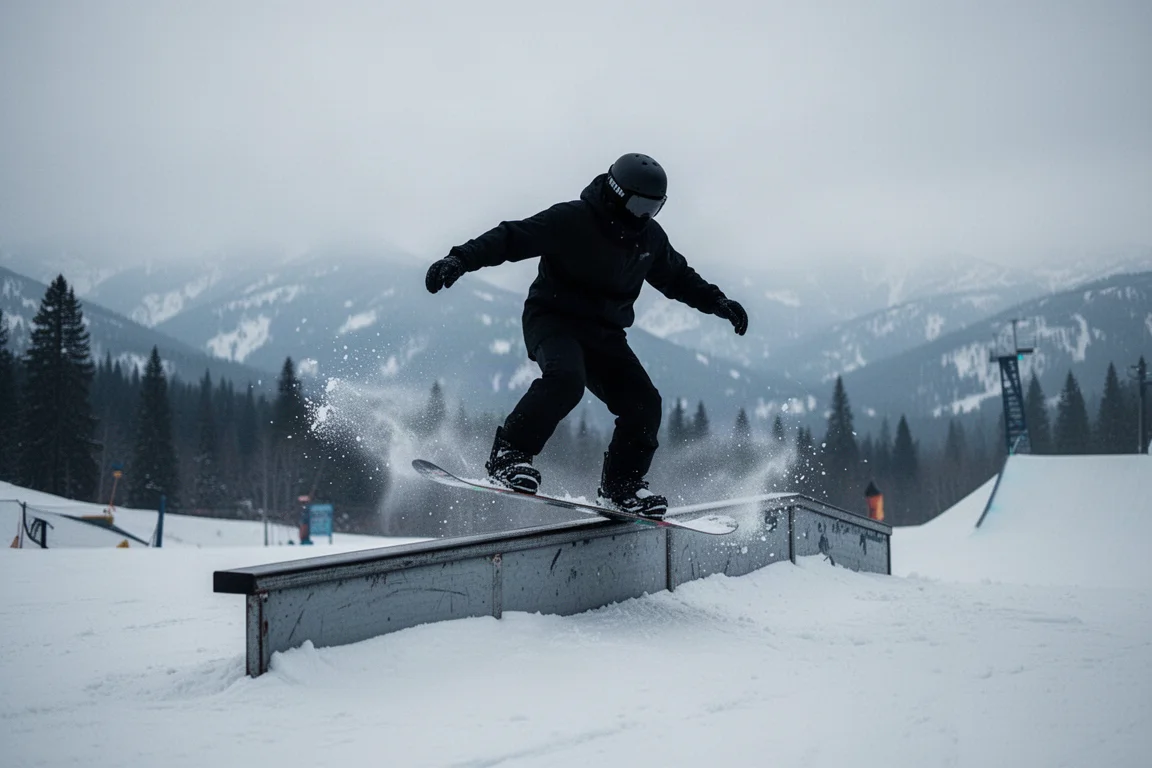
The 3BT and Sidekick shaping helps keep it catch-free when swiveling on the nose or tail. For jibbing, the flat center section of the 3BT is where you want to aim to lock into a nose or tail press, and it lets you really push in. The board flexes hard sideways but does not fully clap out, though if you disaster too hard you may feel your feet slapping the side of the rail. If you already know how to jib, you will be fine, and there is a bit of snap in there that is genuinely nice.
Edge-to-Edge Transitions and Carving
The Disaster is quick edge to edge, with a very smooth, fast transition from toe to heel. This is honestly where the board excels: medium mellow carves feel great. Push too hard, though, and the tail washes out. Deep, hard carves are not happening here; you will just end up skidding the turn. That is not what this board is designed for, and accepting that makes it far more fun to ride.
Comparable Boards and Binding Recommendations
If the Disaster is not quite right, comparable boards worth looking at include the Salomon Sleepwalker, the K2 World Peace, and the Rome Gangplank. These all sit in the same playful, soft-flex freestyle space and are natural cross-shop options.
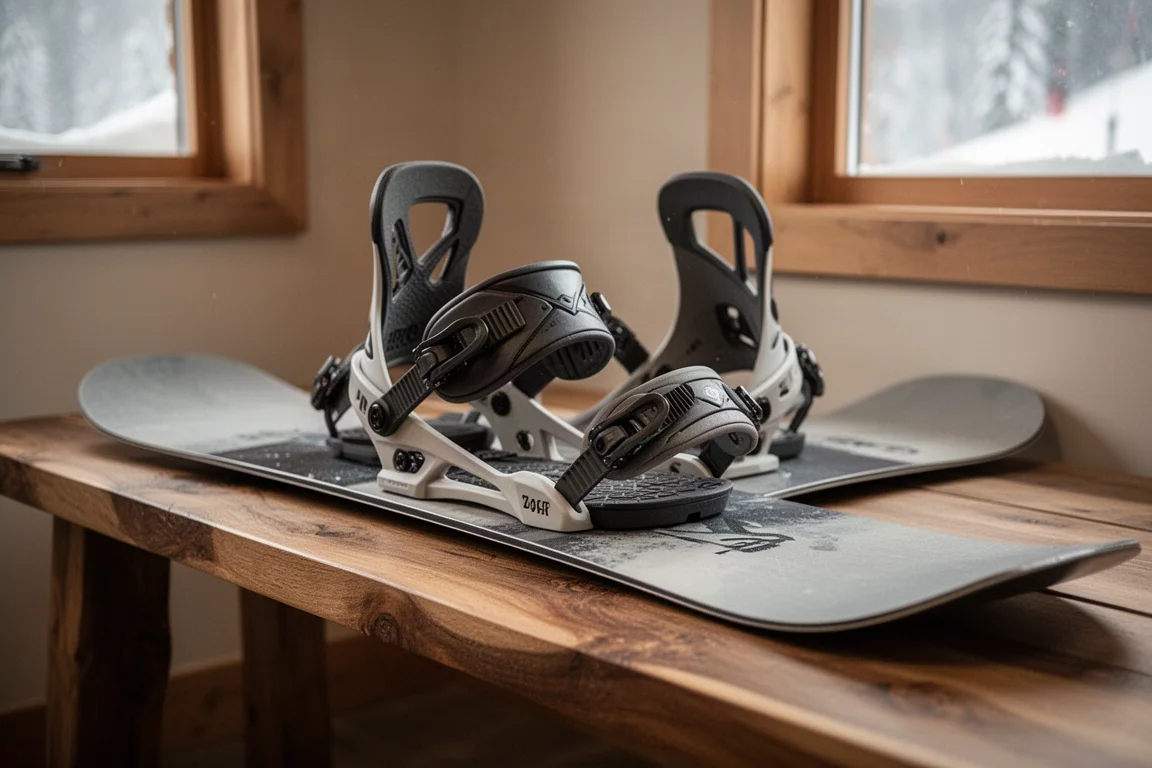
For bindings, the recommended pairings are the Bataleon Blaster Asym, the Bent Metal Joint, and the Ride C-6. Any of these suits the board’s playful flex and jib-oriented character well.
Conclusion
The Bataleon Disaster is a confident choice for riders who live for butters, presses, and small side hits, and the added stiffness this year makes it ride noticeably better all over the mountain. Just respect its limits: keep jumps small, keep carves mellow, and size appropriately for your weight. If skate-style freestyle riding is your thing, this board will make that style feel effortless.
Product link
View more details for Bataleon Disaster
This product is mentioned in the review. Check the specifications, options, and compatibility before buying.
View more details for Bataleon DisasterFurther reading
Related Reviews
Snowboards
32 Middle Earth Scott Stevens Pro Model Snowboard Review: A Park Board With a Reversed Flex
A medium traditional camber park board with carbon V reinforcement that is stiffer in the tips and more playful between the feet. Here is how it rides and who it suits.
Snowboards
32 Snafu Review: A Directional All-Mountain Freestyle Board with Serious Pop
The 32 Snafu pairs a directional camber-rocker profile with a stiffening tail for powerful carves, big ollies, and a surprisingly damp ride.
Snowboards
32 XXX Pat Fava Pro Snowboard Review: A Stiff Camber Beast for Hard-Charging Riders
A full-width traditional camber deck that rewards aggression with stability and edge power, but demands effort everywhere else.