Ski Gear
Bargain Ski Deals: 16 Carryover Skis Worth Buying Before They Sell Out
A practical guide to 16 carryover all-mountain and freeride skis, covering what changed between model years, what each build suits, and the listed prices to weigh before buying.
Introduction
The best value in ski gear is rarely found on the newest wall. When a manufacturer leaves a model’s construction alone and changes only the topsheet, the outgoing build and the incoming build ski the same. What changes is the price.
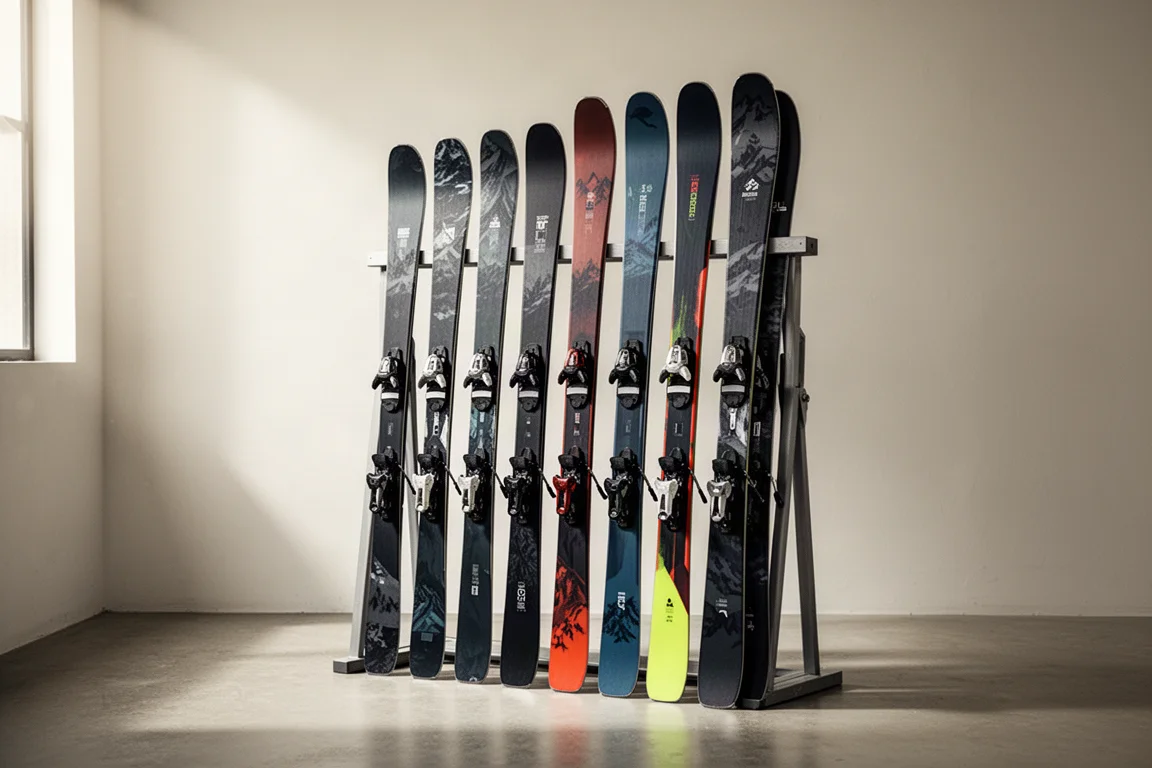
This guide covers 16 skis currently sitting at carryover pricing, from narrow all-mountain daily drivers to wide freeride boards. A few are true carryovers where nothing but the graphic moved. Others are recent builds that received meaningful updates and are now discounted. In every case the ski on offer is a modern, premium construction rather than a stripped-down budget model, which is what makes the pricing interesting.
How to Read These Deals
Four things are worth checking before you commit to a carryover ski. First, whether the build actually changed. A new topsheet on an unchanged core, laminate, and sidewall means you are buying the same ski for less. A genuine construction update changes the calculus, and you may decide the newer version is worth the premium.
Second, the construction itself: wood core, metal laminates, and sidewall type. These determine weight, dampness, and how hard the ski is to bend.
Third, shape and flex relative to where you actually ski. A flatter tail and a firm flex suit strong, aggressive skiers who want a powerful finish to the turn. More rocker and taper suit riders who want the ski to smear and float. Neither approach is better; they are different tools for different riders.
Fourth, price against the newest version, and whether your length is still available. Carryover stock is finite, and the most popular sizes go first. The prices listed below are the carryover prices. Stackable seasonal discounts and loyalty credits can push the effective cost lower, and mounting and shipping offers are often part of these promotional windows. Bindings typically add $150 to $175 depending on the model, so the size of the discount matters most on the skis where it comfortably covers that cost.
Dynastar M-Pro 90 and M-Pro 99
The M-Pro pair is a clean example of a true carryover. The construction is unchanged between model years, so what you are buying is the same ski with a different graphic and a different sidewall colour. The two graphics are close enough that telling the model years apart takes real effort.
Both skis share a versatile tip shape, a flatter tail than many peers, and a strong, powerful feel. They turn easily for their class and finish a turn with a firm kick. Most riders will get the most from them at advanced to expert level, though an intermediate with solid technique can handle them comfortably.
Dynastar M-Pro 90
The 90 is offered in both men’s and women’s versions and is the narrower, more agile option of the two. At $359.95 it is one of the lower entry points into a genuinely capable all-mountain ski in this roundup.
Dynastar M-Pro 99
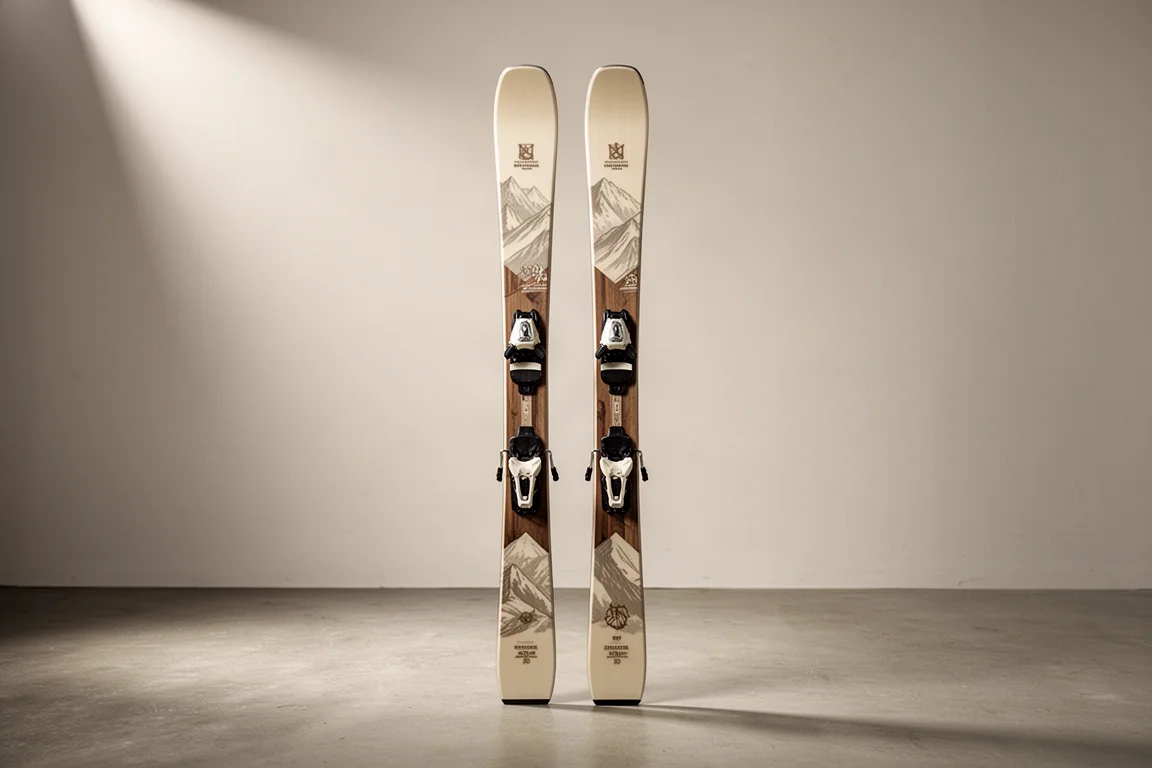
The 99 adds width for softer snow and crud while keeping the same shape philosophy and the same powerful character. It is listed at $419.95, and with the current discount it lands under $400.
Salomon QST Lux 92, QST 92, and QST Lumen 99
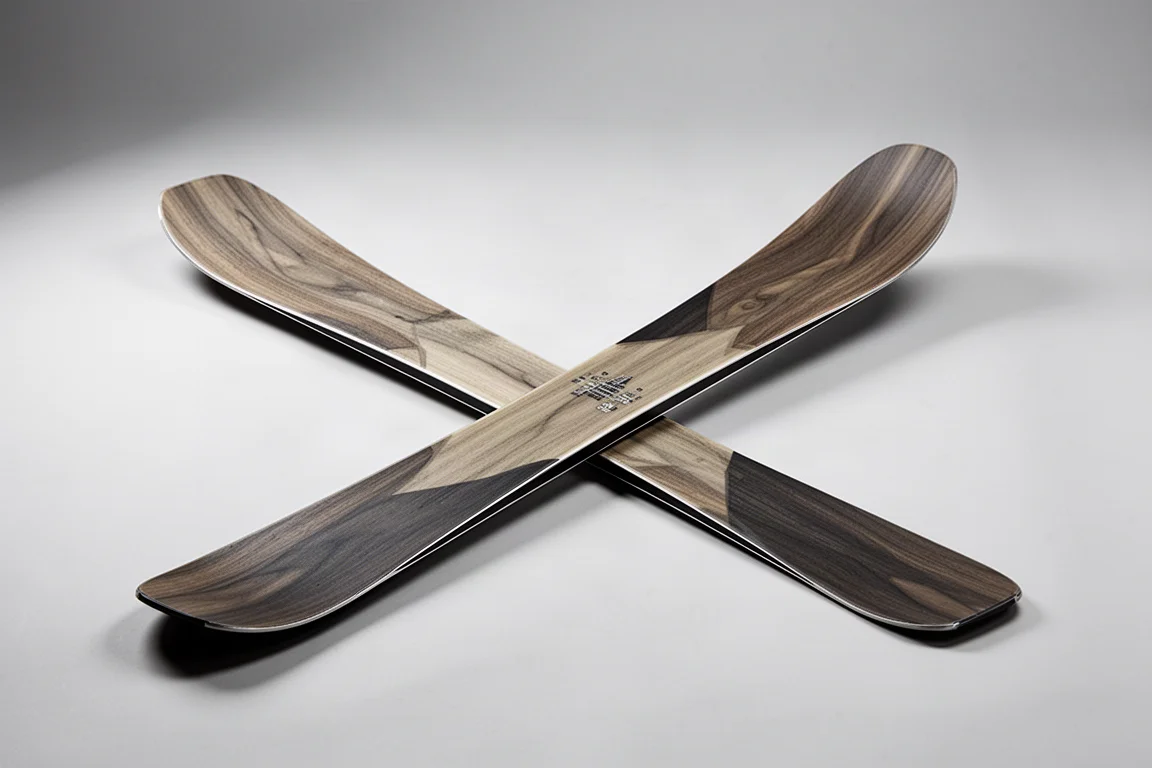
The QST line was updated with more rocker and more taper, which pushes it further toward the surfy, versatile character the line is known for and separates it slightly from the Stance models. The build pairs a poplar wood core with carbon and flax laminates and a windowed construction.
The women’s Lux 92 is a direct twin of the men’s QST 92, so the decision between them comes down to sizing and fit rather than performance. The Lumen 99 is the wider women’s option in the group. All three have a slightly sturdier feel underfoot than many skis at this price point.
Salomon QST Lux 92
At $299.95 the Lux 92 is the standout value here. It is a genuinely versatile ski with no missing technology, and it works as a one-ski quiver for riders who want something that behaves well in most conditions.
Salomon QST 92
The men’s QST 92 matches the Lux 92 on both price and construction at $299.95. It is the ski to reach for when you are unsure what you want: a dependable all-rounder that covers a wide range of terrain and snow.
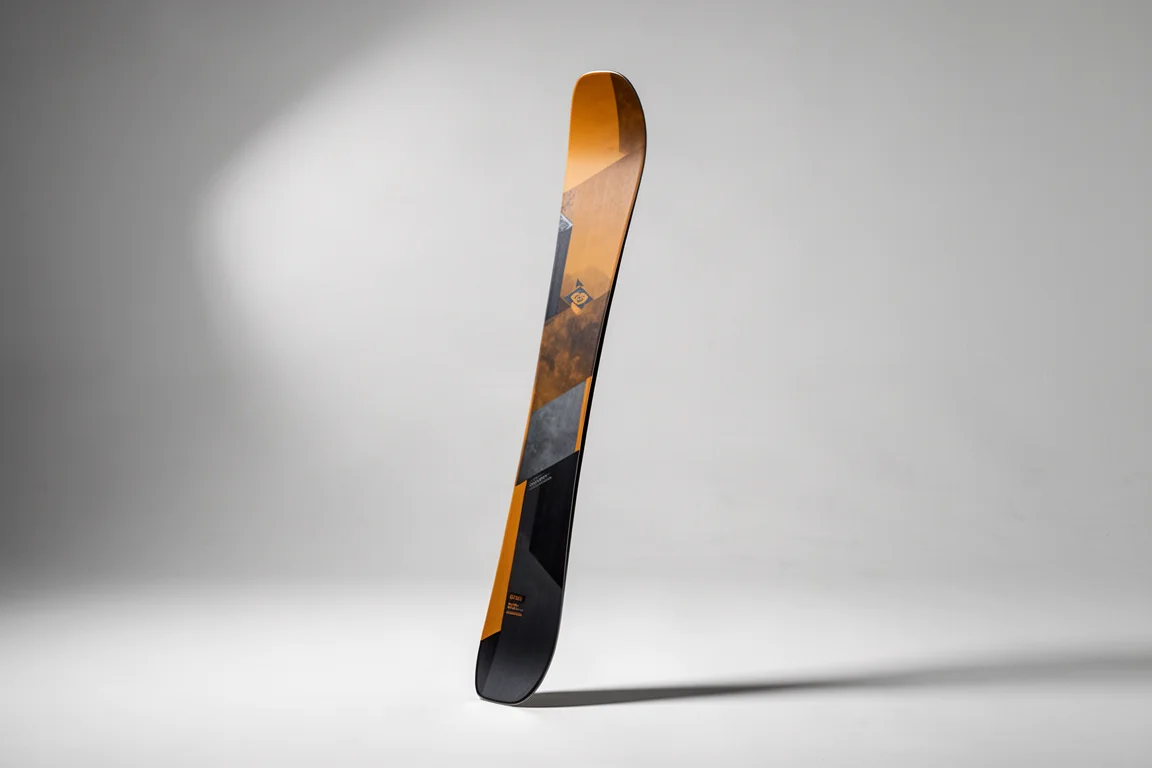
Salomon QST Lumen 99
The Lumen 99 steps up in width and in price to $359.95. The difference between it and the 92 is largely width, which makes it the better pick if you spend more of your season in softer snow.
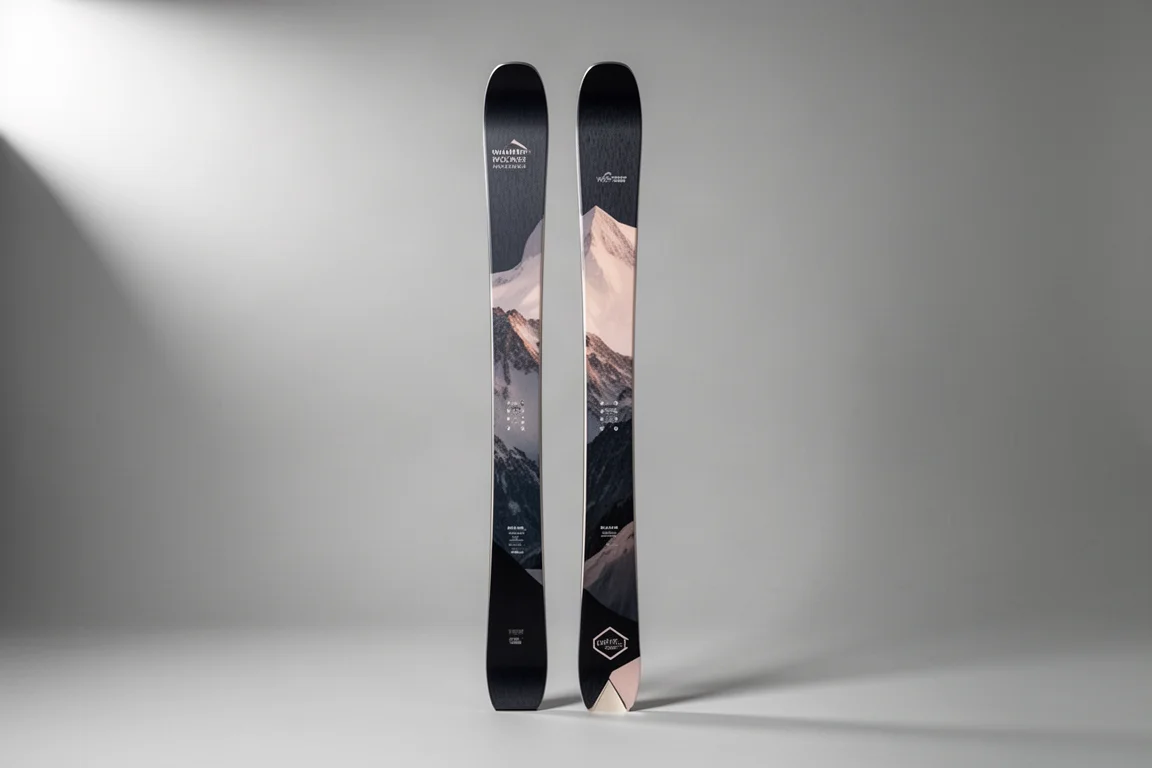
Salomon Stance 96
The Stance 96 sits apart from the QST models above, in both price and character. The only change between model years is the colour, which makes it an easy recommendation if you want a strong all-mountain ski without paying for the newest graphic. At $419.95 the discount roughly covers the cost of a binding.
View more details for Salomon Stance 96
K2 Mindbender 88 Ti W, 99 Ti, and 108 Ti
The Mindbender line is not a pure carryover. The shape was tweaked, the metal construction was revised, and a full sidewall was added across the range. That means these are updated builds at discounted prices rather than last year’s ski in a new colour, which is a different kind of value.
K2 Mindbender 88 Ti W
The 88 Ti W is the narrowest and most frontside-oriented model in the group at $389.95. It is the natural pick for a woman looking for an all-mountain ski that stays composed on groomed terrain.
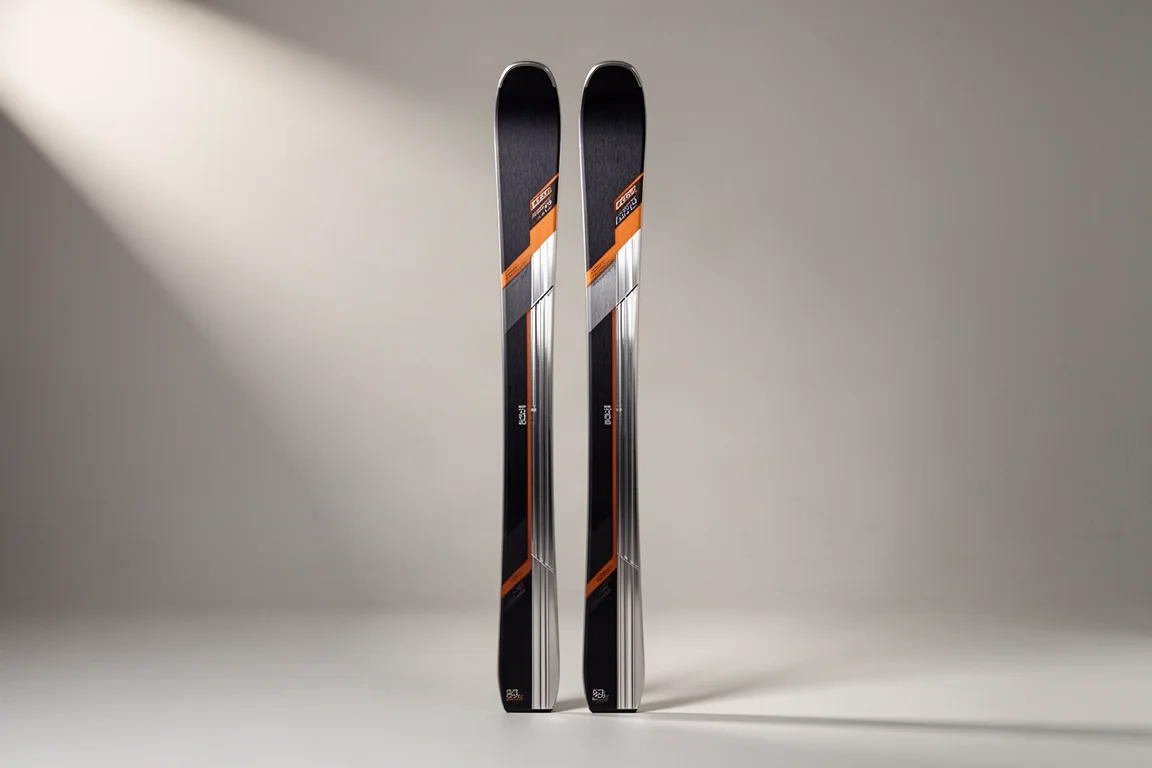
K2 Mindbender 99 Ti
The 99 Ti is the smoothest and most stable ski in the range. It carries some weight, which is exactly what gives it that calm, planted feel, and the newest version was pushed a little further toward freeride without losing the characteristic smoothness. It is listed at $419.95.
K2 Mindbender 108 Ti
The 108 Ti takes the same platform wider, with more of a freeride rocker profile for soft snow and bigger terrain. It is the most expensive of the three at $449.95.
Elan Ripstick 88, 96, and 106
The Ripsticks are the purest carryover in this guide. Nothing changed except the paint, which means the ski you are looking at is the same build as the current model at a lower price. The line has a wide following for good reason: it is approachable enough for a competent intermediate and still rewarding for an expert.
Pricing sits a little higher than the Salomon group. The 88 is $449.95, the 96 is $487.95, and the 106 is $524.99. After the current discount the 88 lands under $400, and with loyalty credits applied the 96 can also come in under $400, which is notable for a current build.
Elan Ripstick 88
The 88 is the most versatile width in the family and the easiest to live with as a daily ski. At $449.95 it is a reasonable entry into the line.
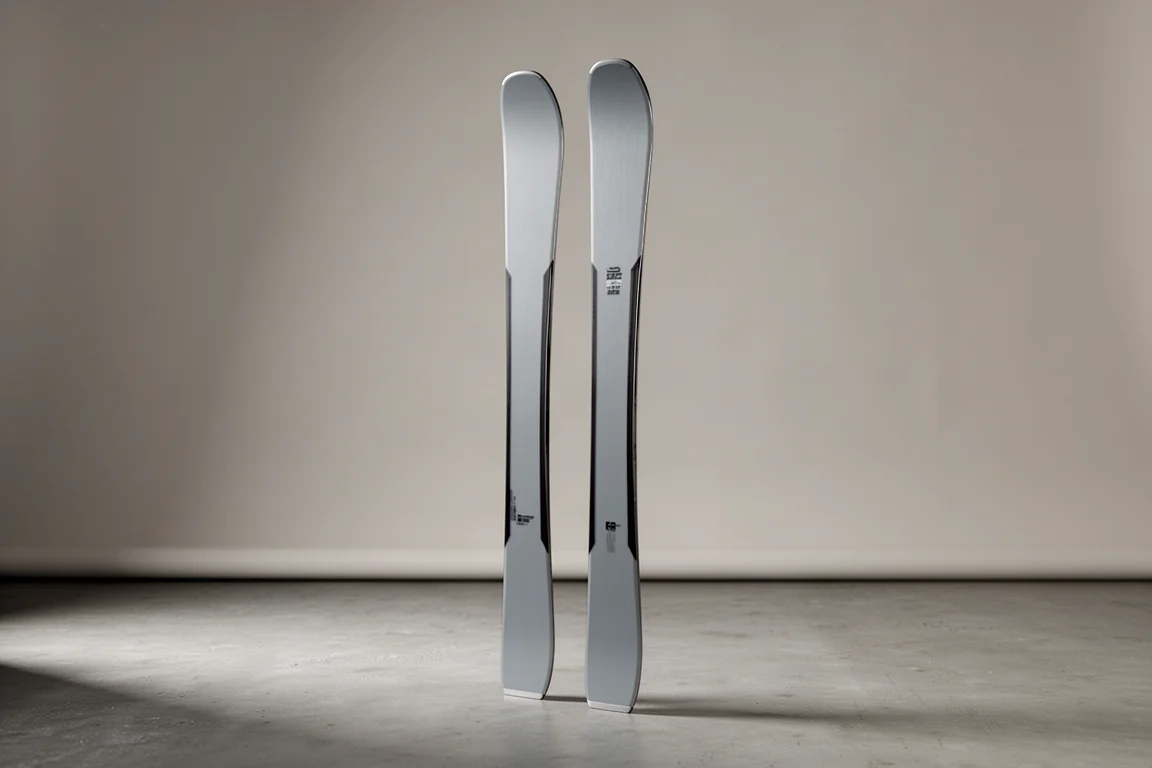
Elan Ripstick 96
The 96 is the middle of the range and the one to look at if you want a single ski for most days. It is a current build at $487.95, and stacked discounts can bring it under $400.
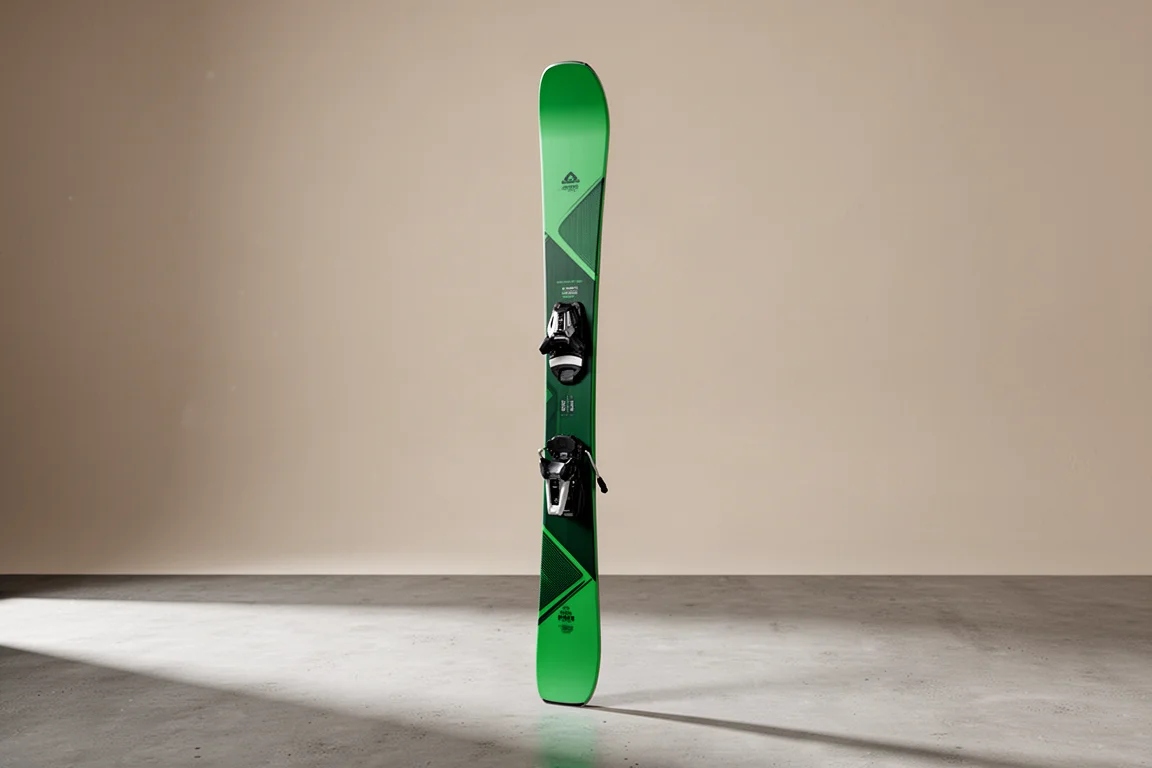
Elan Ripstick 106
The 106 is the widest and most soft-snow-focused of the three at $524.99. It suits riders who want float without giving up the line’s easy handling.
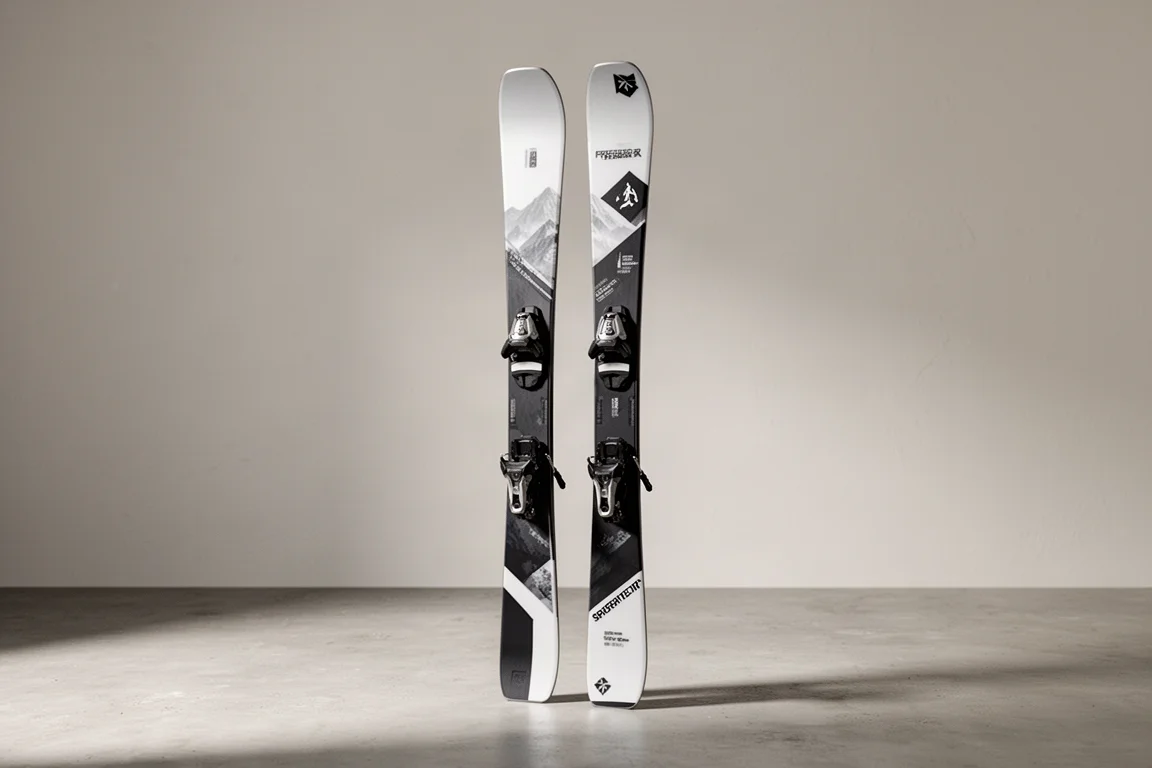
Blizzard Bonafide 97
The Bonafide 97 is a premium, on-trail-leaning all-mountain ski built around a TrueBlend wood core. It is a touch heavier than the lightest skis here and carries slightly less tip rocker, which gives it a planted, directional feel. The newest version is marginally lighter with a small change to the tip rocker profile, but skied back to back the difference is very hard to detect.
At $599.95 it is the most expensive ski in this roundup, and still a meaningful saving against a top-tier model whose newer equivalent sits much closer to four figures.
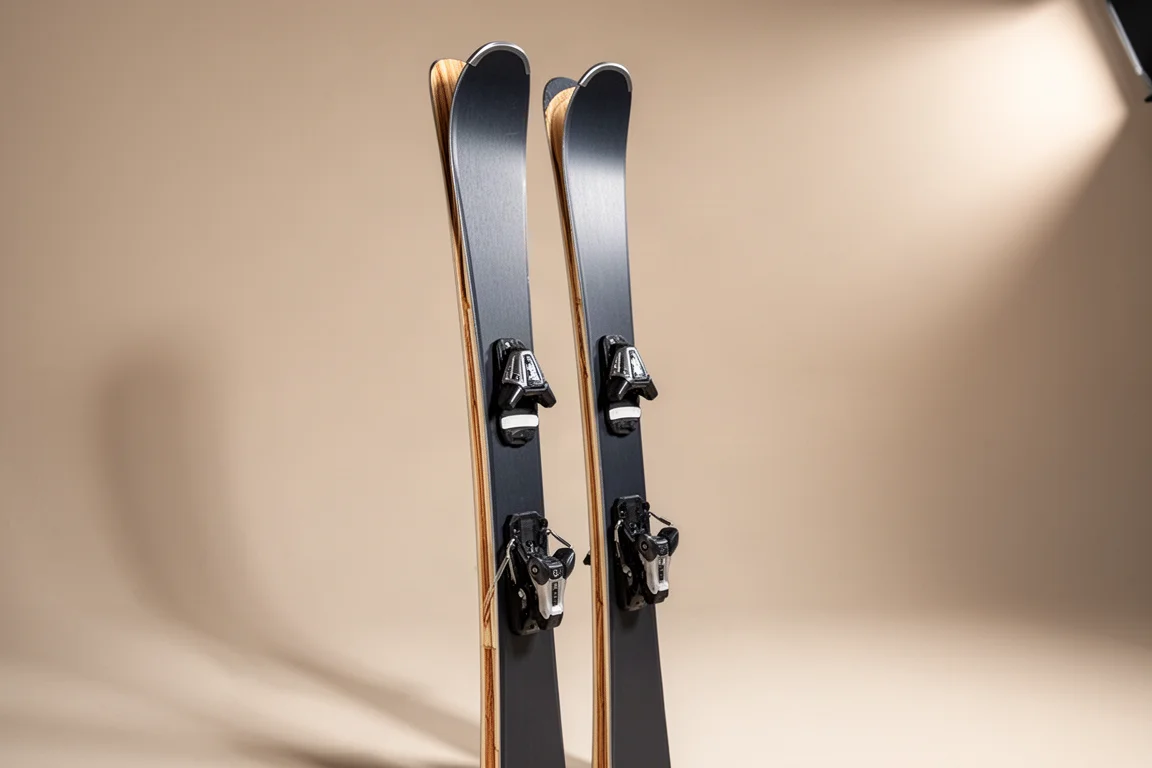
Atomic Maverick 100 Ti
The Maverick 100 Ti is the top of the line in its catalog, and it uses a Horizon Tech construction with two sheets of metal while staying remarkably light. That combination is what makes it stand out: it feels livelier and less planted than the heavier metal skis in this group, and it is easy to throw around.
The changes between model years are cosmetic only. It is listed at $449.95 and available in a 180cm length.
Armada Declivity 102
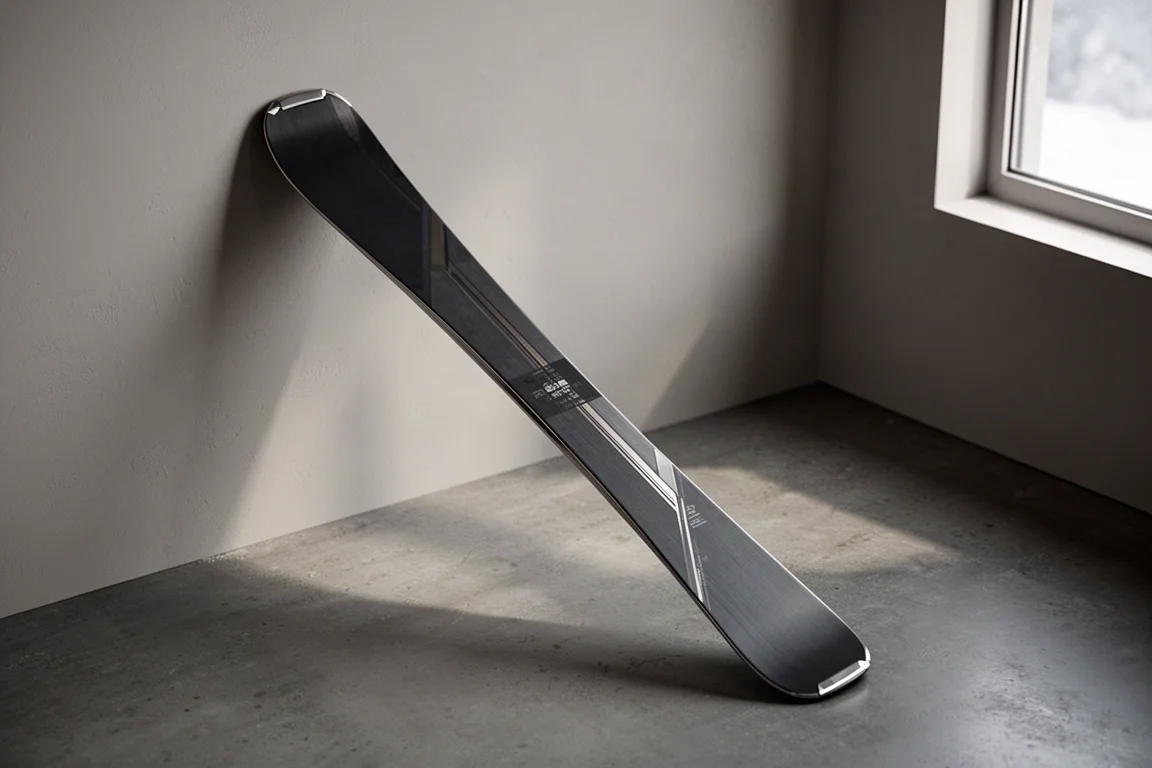
The Declivity 102 does not change at all beyond a graphics update. It is a wider all-mountain ski with a surfy, smear-friendly shovel and a defined kick at the end of the tail, so it works whether you prefer to pivot and drift or carve. It has quietly become a favourite among testers, and at $449.95 it is well under half the price of the wider 108 Ti in the same family.
Rossignol Sender 106 Ti Plus
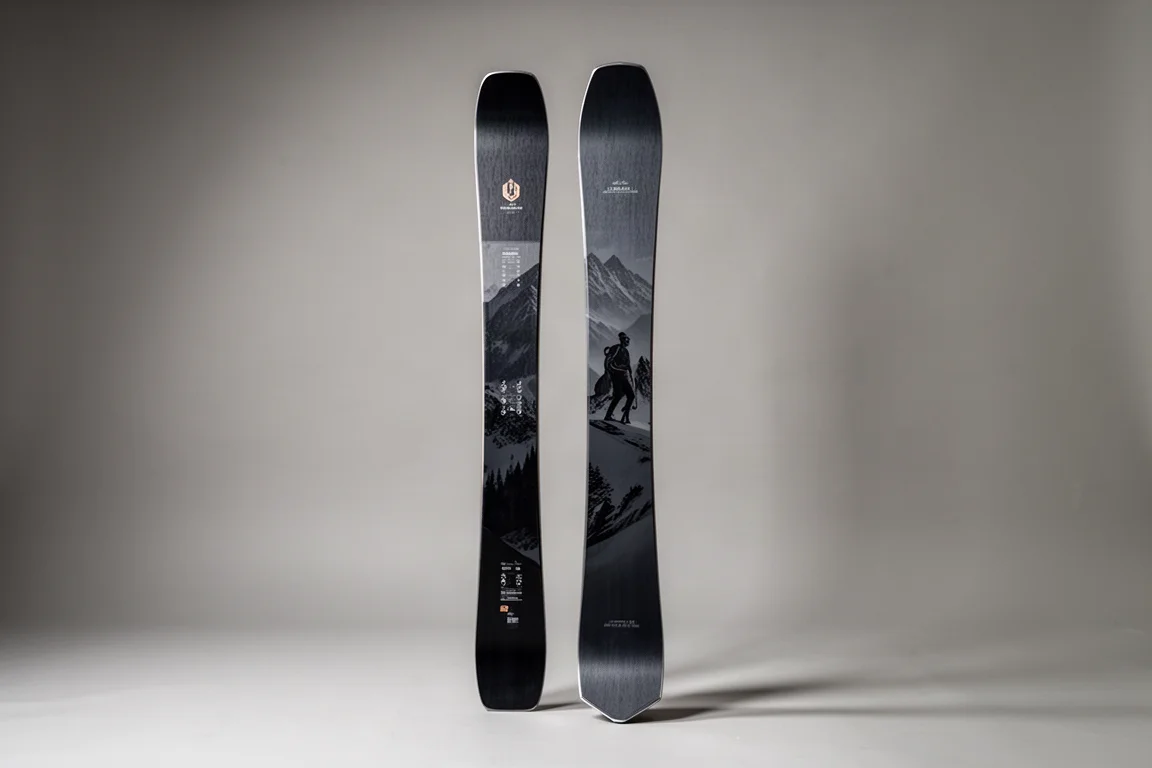
The Sender 106 Ti Plus is a rebadged version of a ski that previously sat in a different line. The construction is essentially unchanged: a big-mountain build with two sheets of metal. Lengths run 180, 187, and 194.
It is stable underfoot with no real speed limit, yet it does not feel locked into a turn, and its directional tail shape cuts cleanly through crud on the back side of the turn. It is listed at $479.95.
Buying Advice
Start with the skis that have not changed. If the build is identical and only the graphic moved, the carryover version is the same ski for less, and that is the simplest decision in this guide. The Dynastar M-Pro pair, the Elan Ripsticks, the Atomic Maverick 100 Ti, the Armada Declivity 102, and the Salomon Stance 96 all fall into that category.
Where the construction did change, weigh the discount against the update. The Mindbender line and the QST line both received real revisions, and the discounted versions are still modern builds, so the savings are genuine even if the ski is not identical to the newest model.
Then match width to your reality. A 92mm waist is a sensible daily driver for most riders in mixed conditions. Something in the 96mm to 102mm range gives up little on groomers and gains meaningful float. Beyond 106mm you are choosing a soft-snow bias. Finally, check that your length is still in stock, and factor in the cost of a binding, which typically adds $150 to $175.
Conclusion
The appeal of carryover skis is straightforward: same build, lower price. The QST Lux 92 and QST 92 at $299.95 are the sharpest values in the group, and the Ripstick 96 stands out as a current build that can be had for well under its list price with stacked discounts. If you want a premium, planted all-mountain ski, the Bonafide 97 and the Sender 106 Ti Plus are the most capable options here, and both come in well below what their newest equivalents command. Whatever you choose, confirm your size is available before you hesitate.
Further reading
Related Reviews
Ski Gear
2023 Blizzard Hustle vs Rustler: Six Freeride Skis Compared
Blizzard's 2023 Hustle collection rebuilds the Rustler shape with a lighter core and no metal. Here is how all six skis differ, and which one suits your riding.
Ski Gear
2023 Skis of the Year: Atomic Maverick 88 TI, Salomon QST 106, and Look SPX 12 Pro
Three standout ski picks for all-mountain carving, powder days, and reliable binding performance, with practical buying notes for 2023 models.
Ski Gear
2025 Nordica Enforcer 104 Review: A Directional Charger Replaces the 104 Free
The 2025 Nordica Enforcer 104 drops the Free name and the twin-tip personality, gaining weight, stiffness and composure in rough snow. Here is what changed and who it suits.