Kitchen Appliances
Balmuda Steam Toaster Review: Five Modes, Steam Technology, and a Very Premium Slice of Toast
A hands-on look at the Balmuda Steam Toaster's five modes, from toast and cheese toast to baguette, croissant, and classic oven modes.
Introduction
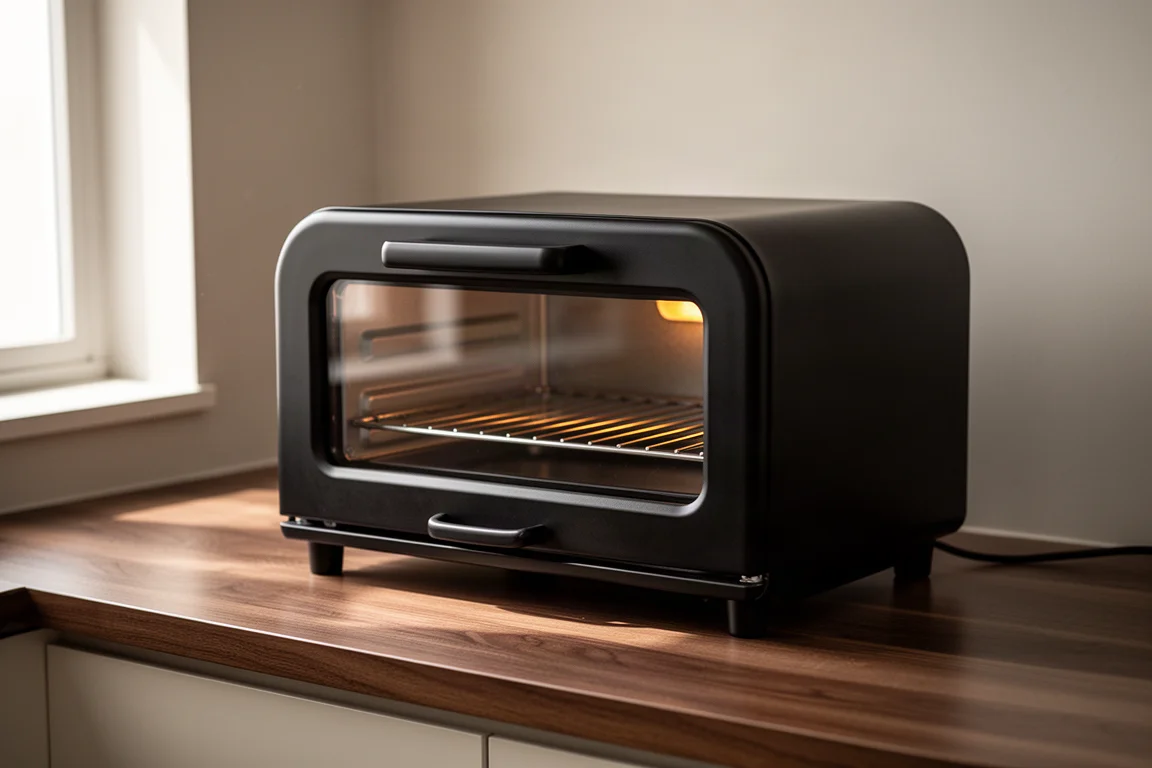
Some kitchen gadgets look ordinary. The Balmuda Steam Toaster is not one of them. With its compact retro-inspired body and a very different approach to making toast, it immediately stands out on a countertop. It promises to reinvent one of the simplest jobs in the kitchen, and it does so by adding something unusual: water.
This review walks through all five of its modes, including toast, cheese toast, baguette, croissant, and a classic oven mode, and looks at where it genuinely performs and where it asks a lot of you for the money.
First Impressions and Design
Straight away, this is unlike any toaster most people will have seen. The design draws comparisons to a cross between a 1950s television and something out of a retro sci-fi show, and it earns affectionate descriptions like the poshest easy bake oven around. It looks quality, it feels smooth, and it is unapologetically trendy.
The headline feature is steam technology. You add a small amount of water before each cook, and the toaster releases steam into the oven cavity. That steam coats the bread’s surface with a thin layer of moisture, which is sealed inside as the bread bakes moderately. Only then does the final toasting process begin. The idea is simple: bread that is wet cannot brown, so the steam phase locks in moisture before the exterior crisps.
One practical note: the included manual is genuinely helpful. The first half is printed in Japanese, but the second half is in English, with diagrams, step-by-step instructions, and actual recipes. That level of detail matters here, because the modes are very specific about timing, temperature, and even how to cut your bread.
Toast Mode
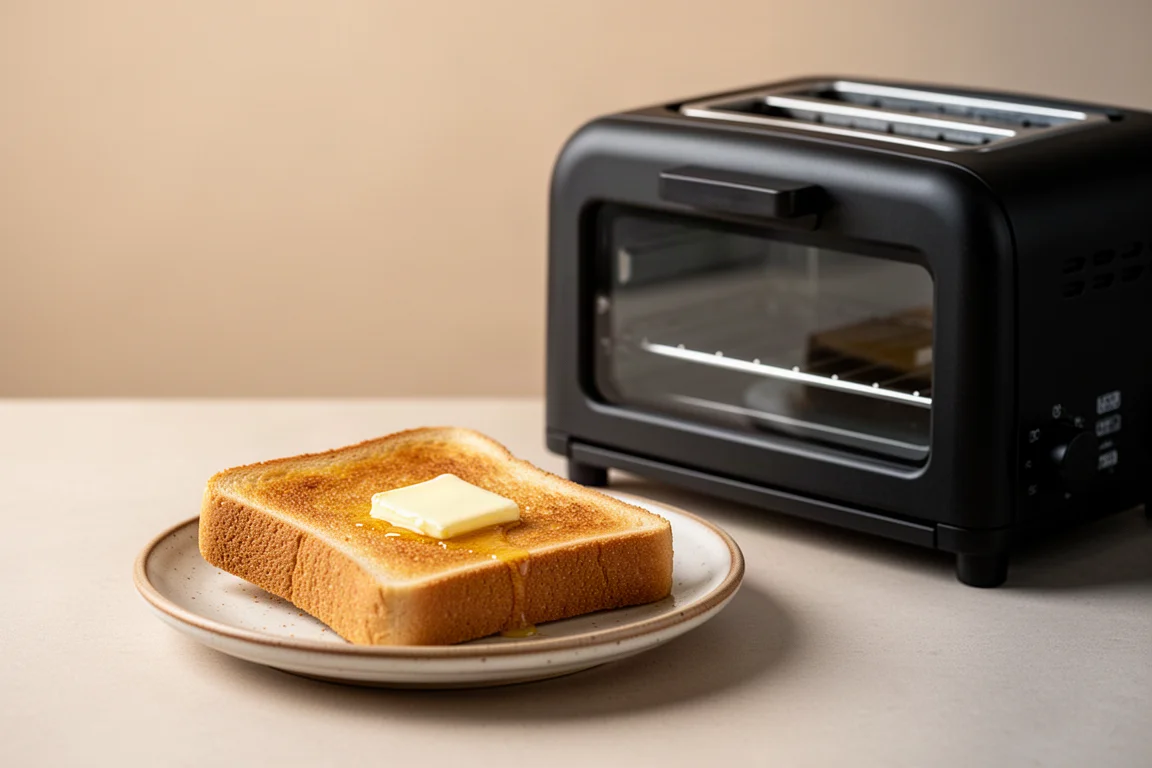
Toast mode is designed for sliced bread, bagels, and English muffins, with an optimum temperature and baking time preset. You can adjust the baking time to reach your preferred shade.
The routine is worth following exactly. Add water, cut a deep cross into the bread, butter it thinly before toasting, then bake in toast mode for three minutes. When the beeper sounds, put a piece of butter on the toast and use the remaining heat inside the toaster to melt it.
The results are impressive. The toast emerges a beautiful golden colour, very crispy outside yet moist in the middle. It is rare to find a slice that is this crisp without becoming rock solid inside. The buttered top develops the texture of fried bread while the unbuttered bottom stays true toast, which makes for a genuinely unique slice. The steam seems to play a real role too: because the surface is wet, browning cannot begin until the steam has done its work, and the butter accelerates browning once the exterior starts to crisp.
For many people this alone justifies the machine: some of the best toast made automatically, with the toaster telling you exactly what to do at each step.
Cheese Toast Mode
This is the mode that raises eyebrows. What toaster has a dedicated cheese toast mode? The answer here is that the upper heater is stronger in this mode so it can cook or melt toppings properly.
The recommended approach is shredded cheese on a thick slice of toast, baked in cheese toast mode for three and a half to four and a half minutes, until the cheese bulges and turns golden brown. Honey or black pepper are suggested as finishing touches.
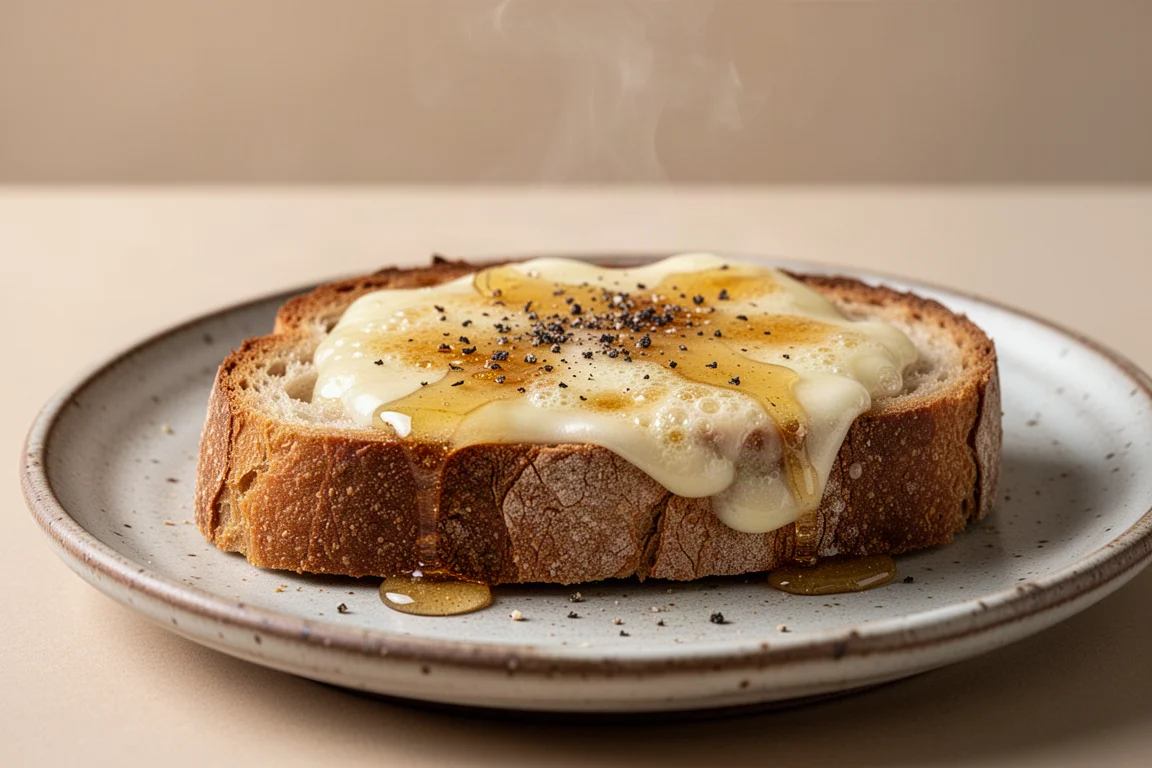
On a bougie sourdough test, the results held up. The thicker bread showed the steam effect more clearly, with a noticeably fluffier, moister middle beneath a thin layer of crunch on the outside. Usually the only moisture in cheese on toast comes from the cheese; here the bread itself stays the best part of the dish. Toasted on top, melted across the middle, steaming from within: a whole package, and a very good cheese on toast.
Baguette Mode
Baguette mode is for heating bread with a hard crust, using steam to recreate a freshly baked state. Given how well the steam worked on thicker sourdough, expectations were high.
The manual is delightfully precise here too, describing three cutting options: a block cut for a fluffy inside with a crispy crust, cross slices for crispness inside and out, or slicing along the middle for a crisp, crusty cut surface. The block cut was chosen for maximum fluff, baked for three to four minutes, and served with butter or dipped in olive oil.
The transformation is the most dramatic of the modes tested. A baguette that had been sitting around and had gone chewy came back warm, moist, and fluffy in the middle with a deliciously crusty exterior. It genuinely tasted like a restaurant loaf.
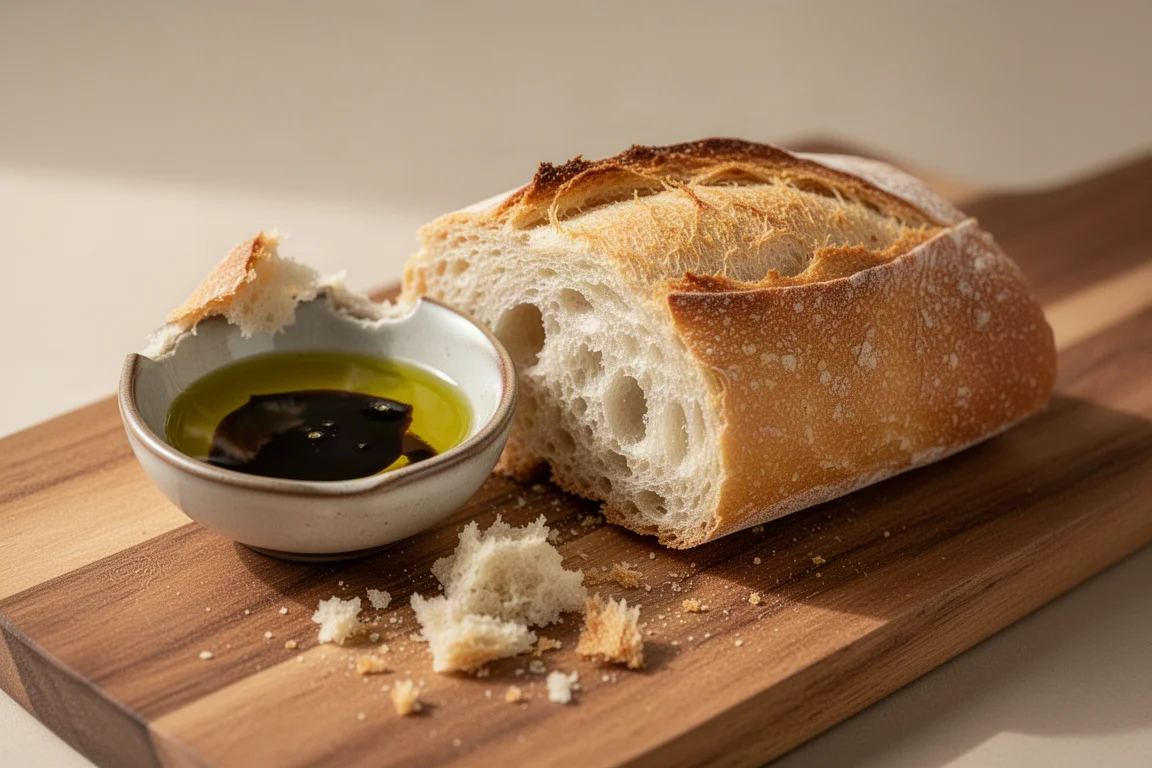
It is worth being honest about the comparison: you can get something very similar from a full oven with a bit of water. What you gain is efficiency. No heating a whole oven, and around four minutes instead of ten minutes of preheating plus cooking time. In terms of bringing bread back to life, this works about as perfectly as anything can.
Croissant Mode
Croissant mode is aimed at breads with a lot of butter and sugar, where the goal is to crisp the outside without burning it while reheating the middle. It is the sciency one of the lineup.
The test used everyday supermarket croissants with a dash of water, baked until the inside was steaming hot and the outside golden, crisp, and flaky. After heating, the pastries gained distinct crisp layers on the outside, though they shrank slightly, and the difference from a short spell in a regular oven was not dramatic on low-quality croissants.
The honest takeaway: this mode is only as good as the croissants you put in. Better bakery croissants reheated the next day would clearly benefit more. It is a revival tool, not a miracle worker, though a good filling can rescue even the humblest supermarket pastry.
Classic Oven Mode
Classic mode turns the Balmuda into a small non-fan-assisted oven with settings at 170, 200, or 250 degrees Celsius. It is quite specific but not very flexible.
Baking cookies at 170 degrees for 15 to 20 minutes worked well. They came out looking good, with one caveat: cookies positioned at the front of the oven baked noticeably differently from those at the back.
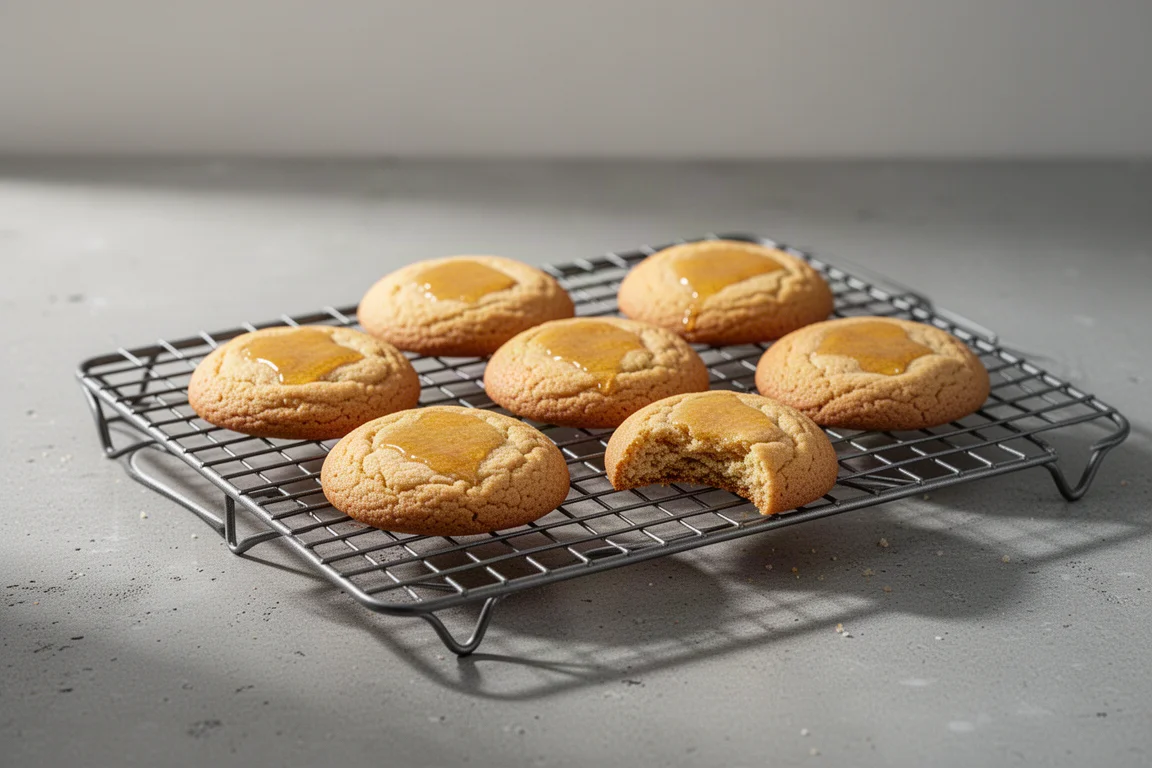
The small size works in its favour here. Because the cavity is so small, it does not need much power, and there is no preheating. The practical use case is a batch of cookie dough in the fridge, sliced off four or six at a time whenever you want them. When you want to bake more than that, the capacity becomes the problem.
Pushing It Further: Pizza on Cheese Toast Mode
Beyond the official modes, there is room for experimentation. A store-bought ready-made pizza, cut in half to fit, went onto cheese toast mode for about ten minutes with a watchful eye, on the logic that pizza is essentially cheese on bread and steam moisture plus a strong upper heater should help.
The result was genuinely better than expected. The pizza came out hot and moist with a slight bend to the base, and reached the table faster than a conventional oven could manage, short of using a microwave with far worse results. Compared with oven baking, where the base tends to be one uniform texture, this produced a crispy outside and a softer middle. There is real nuance to the result, which is a good thing.
Things to Consider Before Buying
The strengths are clear: probably the best automatic toast around, strong cheese on toast, excellent bread revival, and a bonus small-oven mode with no preheating. The steam and precise temperature control are the two keys, and the detailed manual supports all of it.
The drawbacks are just as clear. The cooking size is quite small, and not being able to fit a baking tray limits the usefulness of the oven functions. It is also another thing cluttering the kitchen. And then there is the price. The listed price is $299, around 260 pounds, which feels reasonable next to the 500-pound-class premium toasters it competes with, but it is still a very expensive toaster by any ordinary standard.
Buying Advice
This makes sense for two kinds of buyer. First, anyone who genuinely cares about the taste, smell, and texture of fresh bread and is willing to spend properly to get great toast and revived bakery items every morning. If it replaces both a grill and a toaster in one compact unit, the value case strengthens further.
If you are not actively in the market for an incredibly expensive toaster with benefits, it is a hard recommend to avoid: it is a lot of money for a single-purpose luxury. But if good toast and fresh-tasting bread matter to you and the budget is there, it does the job remarkably well.
Conclusion
The Balmuda Steam Toaster really works. The steam technology delivers toast that is crispy outside and moist inside, brings day-old baguettes back to restaurant quality, and handles toppings, pastries, and small bakes with thoughtfully designed modes. It is expensive, it is small, and it is unapologetically a luxury. For the right buyer, it is a luxury that earns its countertop space.
Product link
View more details for Balmuda Steam Toaster
This product is mentioned in the review. Check the specifications, options, and compatibility before buying.
View more details for Balmuda Steam ToasterFurther reading
Related Reviews
Kitchen Appliances
Arboleaf Smart Kitchen Scale Review: Connected Cooking Made Simple
A Bluetooth-enabled kitchen scale that syncs with a nutrition-tracking app, offering real-time weight monitoring and recipe guidance for home cooks.
Kitchen Appliances
Best Air Fryer Toaster Ovens Under 100: Five Practical Options for Budget-Conscious Kitchens
Five air fryer and toaster oven combinations that deliver real cooking performance without breaking the bank, each with distinct strengths for different kitchen needs.
Kitchen Appliances
Best Air Fryer Toaster Ovens: Three Top Picks for Multi-Function Cooking
Three high-performing air fryer toaster ovens tested for versatility, ease of use, and real-world cooking results. Find the right fit for your kitchen.