Backpacking Tents
Backpacking Tent Types Explained: Freestanding, Semi-Freestanding, Trekking Pole, and Tarp Shelters
A practical guide to the main backpacking tent categories, with two freestanding options that show how pole structure, wall design, and season rating change the way a shelter performs.
Introduction
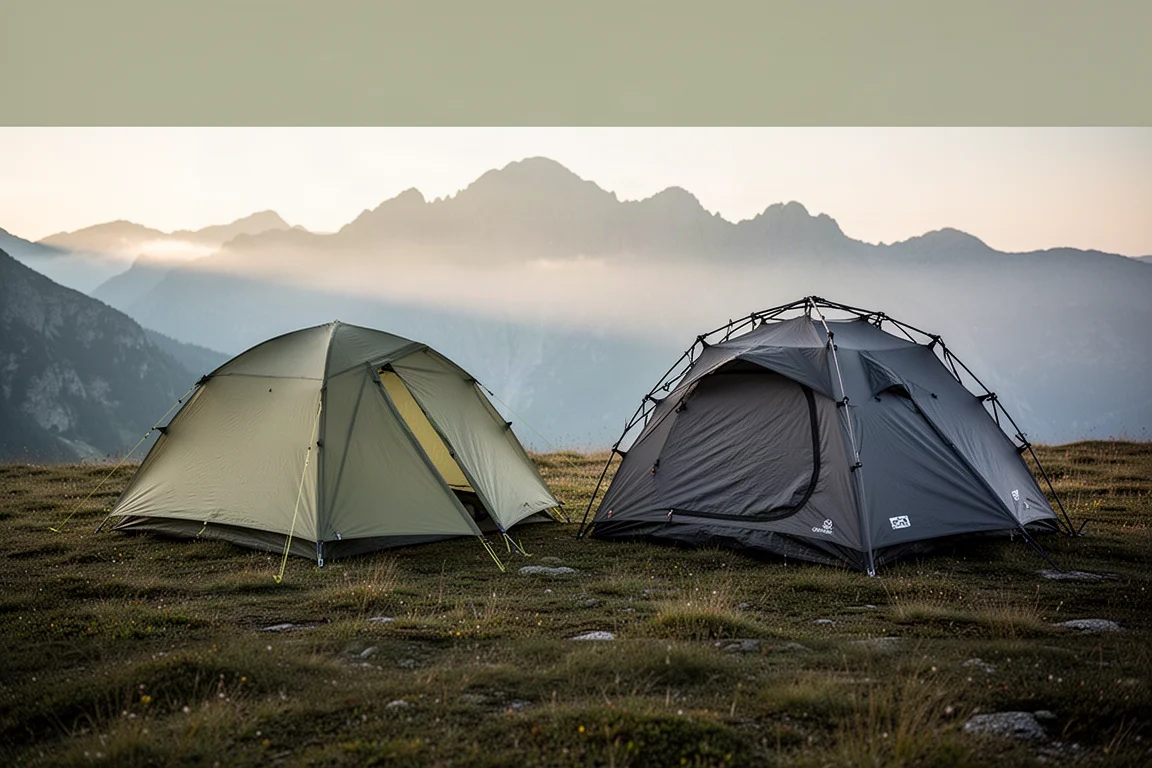
Backpacking tents are not one product category so much as a set of trade-offs. A freestanding shelter stands on its own pole structure. A semi-freestanding design leans on a few key stakes and saves weight by using less frame. A trekking pole tent depends entirely on tension and ground anchors, and a tarp shelter gives up walls in exchange for very low weight and a lot of space.
The two tents below sit at different points on that map. One is a freestanding three-season double wall tent aimed at general backpacking. The other is a freestanding four-season tent with heavier materials and more pole structure, built for conditions that push a shelter harder.
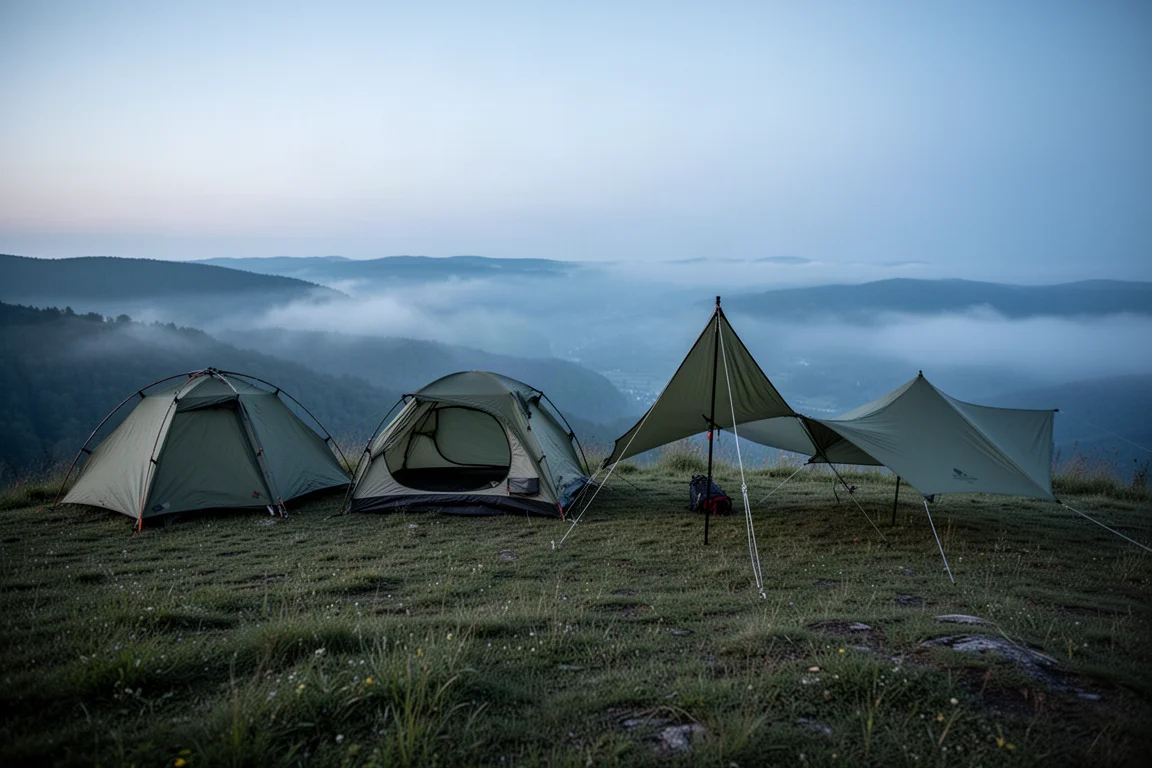
Choosing between them comes down to where and when you camp rather than which one is objectively better. The sections that follow cover how each design behaves, what it asks of you once you reach camp, and which trips it suits.
What Separates These Backpacking Tent Types
Think in conditions rather than seasons. A three-season tent covers the vast majority of general backpacking: moderate weather, ordinary campsites, and trips where you are not deliberately seeking exposure. A four-season tent adds rigidity and structure, carries more weight, and is built to handle stronger winds. If you camp on high cliffs, mountainsides, or exposed balds where wind is a regular feature, a four-season shelter can make sense even in the middle of summer.
The other axis is how the shelter stands up. Freestanding tents build their own shape from the pole structure and can be picked up and moved before they are staked. Semi-freestanding tents use less pole structure, which saves weight, but they need a couple of stakes to open up properly. Trekking pole tents and tarp shelters use no dedicated poles at all, so they depend on complete staking and ground tension.
Wall design matters too. Double wall tents pair an inner mesh wall with an outer rain fly, which keeps condensation on the fly instead of on you and your gear. That benefit generally comes with extra weight.
Big Agnes Copper Spur Platinum: A Freestanding Three-Season Tent
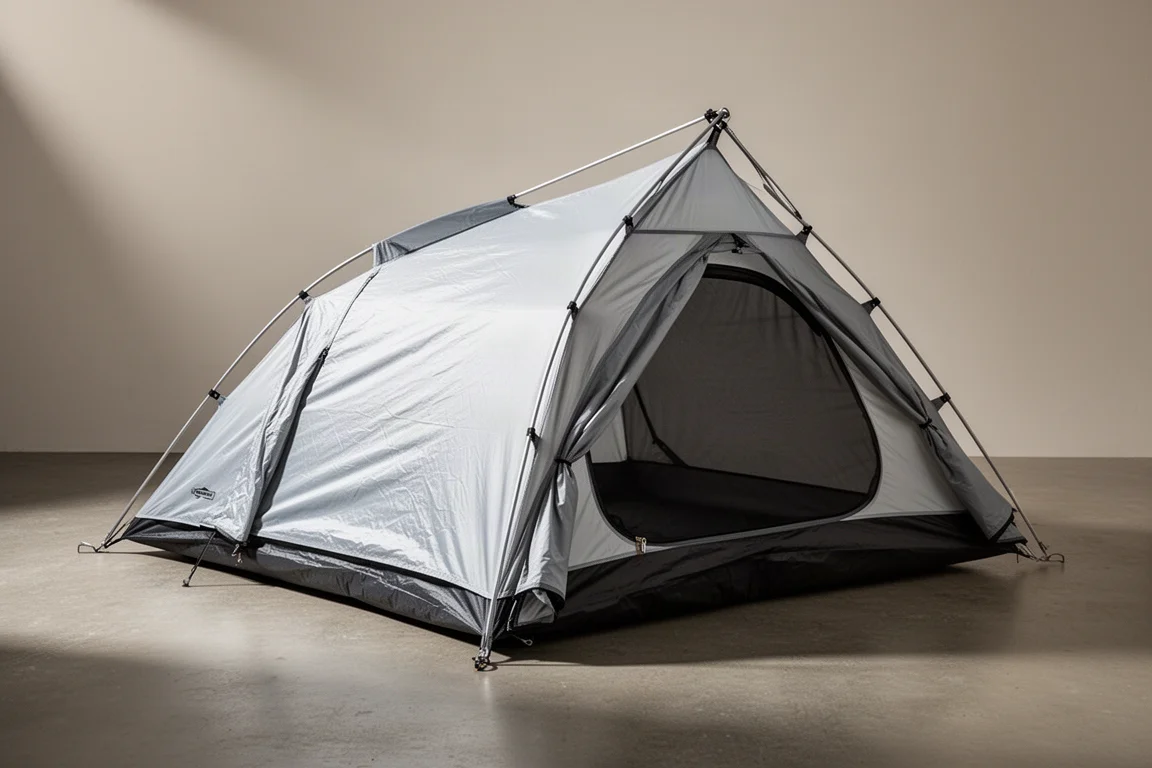
The Copper Spur Platinum is a freestanding three-season tent. Its pole structure creates the shape of the shelter, so it stands without stakes. You can pitch it, pick it up, walk it to a different spot, and set it down again if the first site turns out to be a poor choice.
It is also a double wall tent. The inner wall is a fine mesh and the outer wall is the rain fly. In cold conditions that arrangement keeps condensation on the fly and away from you, because your sleeping bag and pack press against the mesh rather than the damp outer layer.
The trade-off is weight. A freestanding design needs more pole structure to hold itself up, which generally makes it heavier than semi-freestanding and trekking pole alternatives.
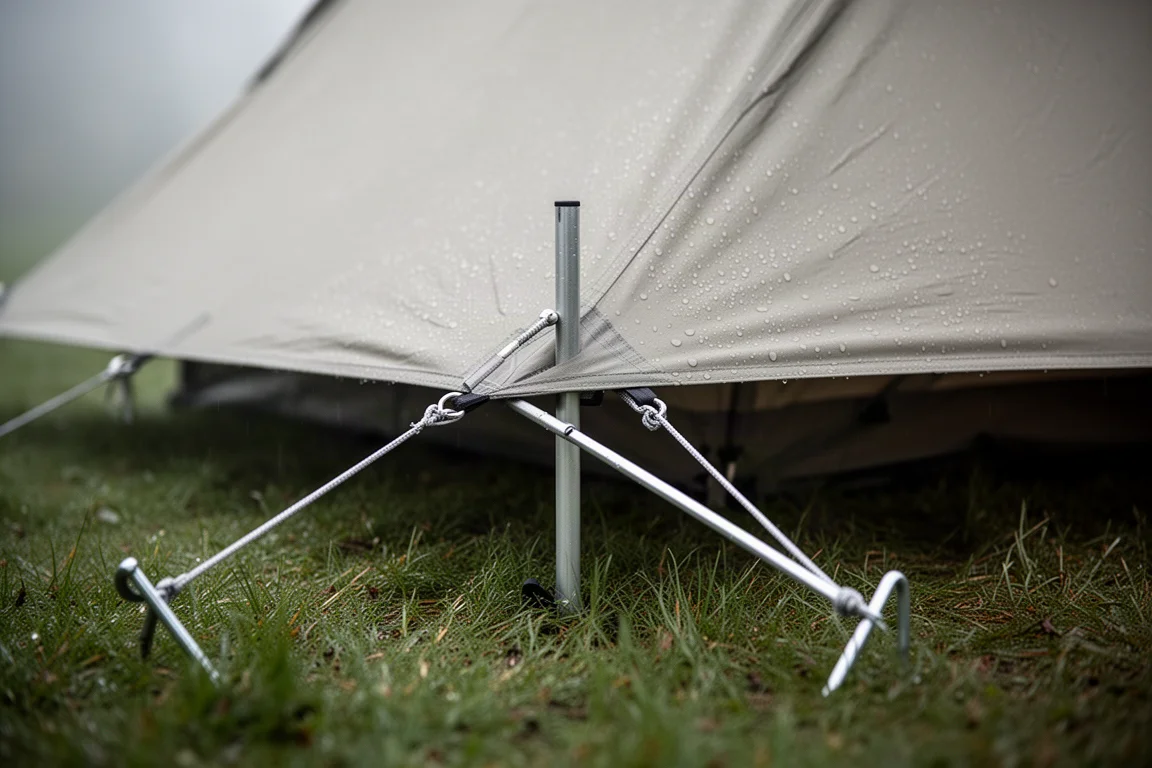
There is a vestibule for storing a backpack, boots, and other gear outside the sleeping area, and it needs to be staked out to hold its shape. Even though the tent stands on its own, staking the whole shelter down remains the sensible habit once you have settled on a site.
Nemo Kunai 2-Person Tent: A Freestanding Four-Season Tent
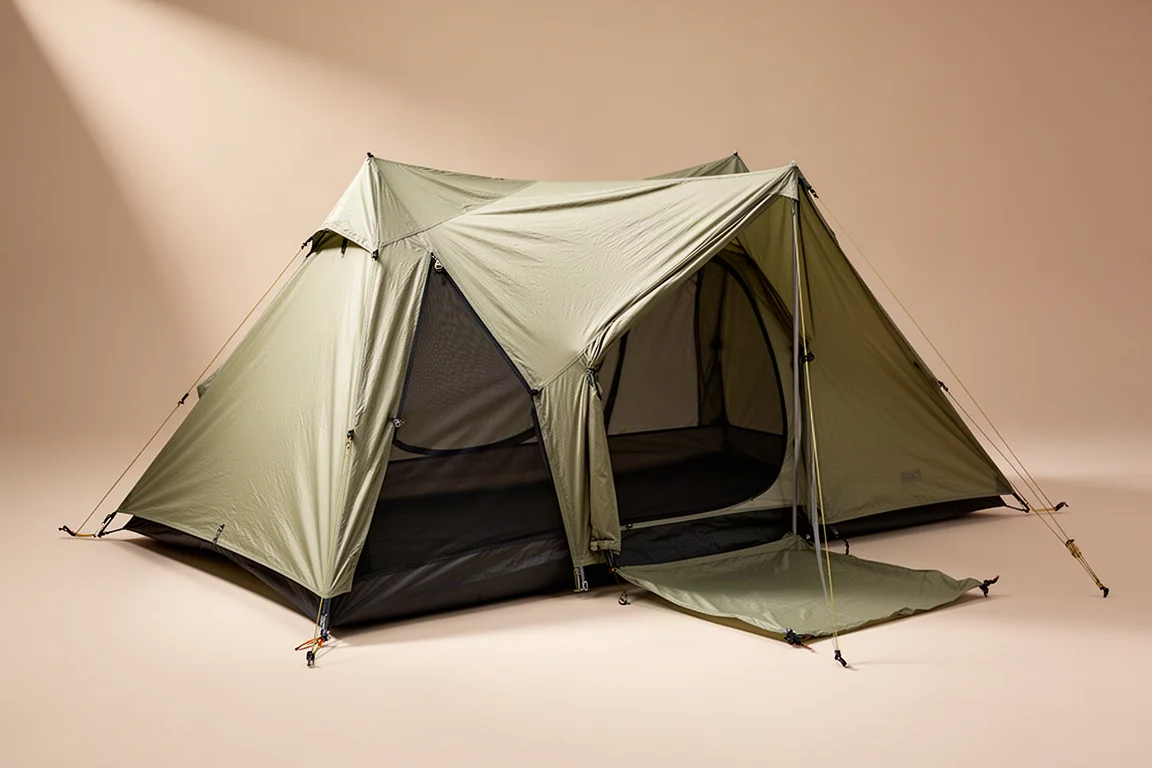
The Nemo Kunai 2-Person Tent is also freestanding, so it can be lifted and repositioned the same way. What sets it apart is its four-season build. It uses more pole structure, which lets it carry more weight, and its fabric is a thicker denier nylon.
The tent technically needs two stakes at the front end, and in practice you will want it fully staked down regardless. That is the point of a four-season shelter: it is bought for extreme weather, and a tent that shifts in high wind defeats the purpose.
The front door is a single door. Inside, the double wall construction differs from a standard mesh inner. The inner wall is a solid fabric with ventilation that can be unzipped, plus additional ventilation at the top. That solid inner layer holds in a little more heat than a mesh inner would, though the difference is modest rather than dramatic.
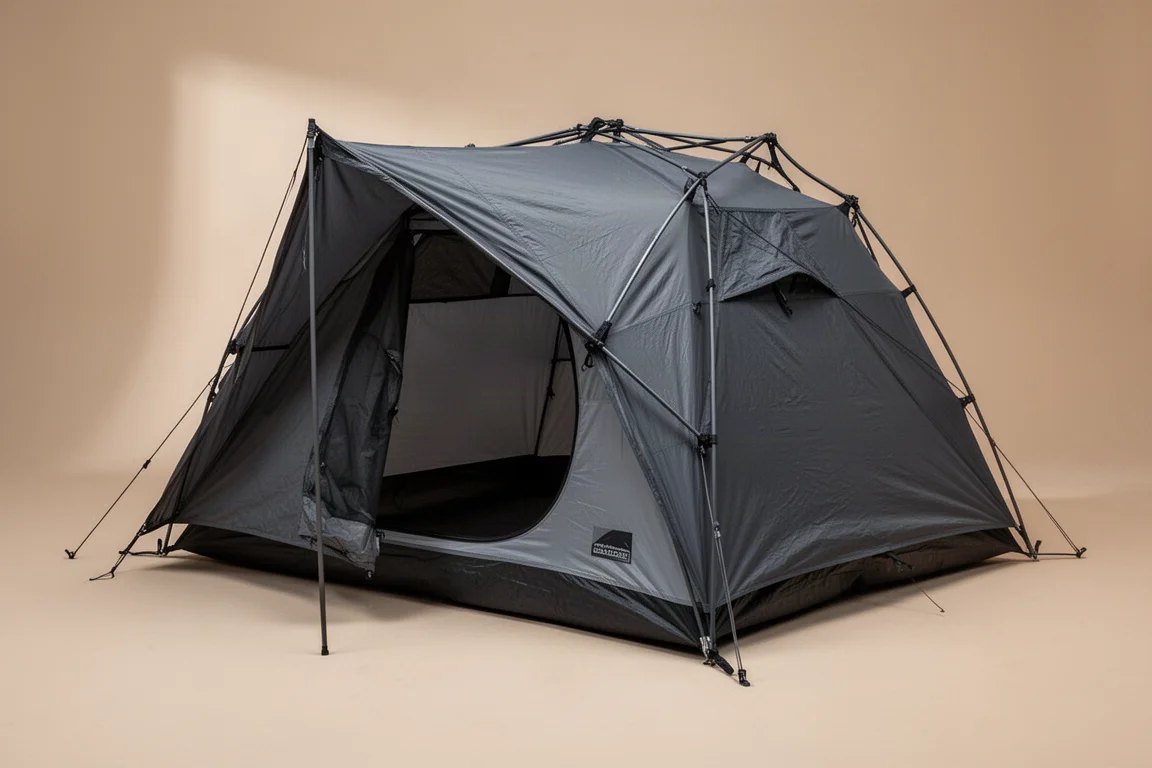
Semi-Freestanding Tents: A Middle Path
A semi-freestanding tent needs a couple of stakes to set up properly, usually at one or both ends. With those stakes in place it opens up the ends of the shelter. Without them it can still be moved around, but it is not in a usable shape. The weight saving comes from using less pole structure, for example a single pole running the length of the front instead of a full freestanding frame. Vestibules on these tents also need staking if you want to use them. In most other respects they behave like a freestanding double wall tent, with an inner mesh layer and an outer rain fly.
Trekking Pole Tents: Light, But Committed to the Ground
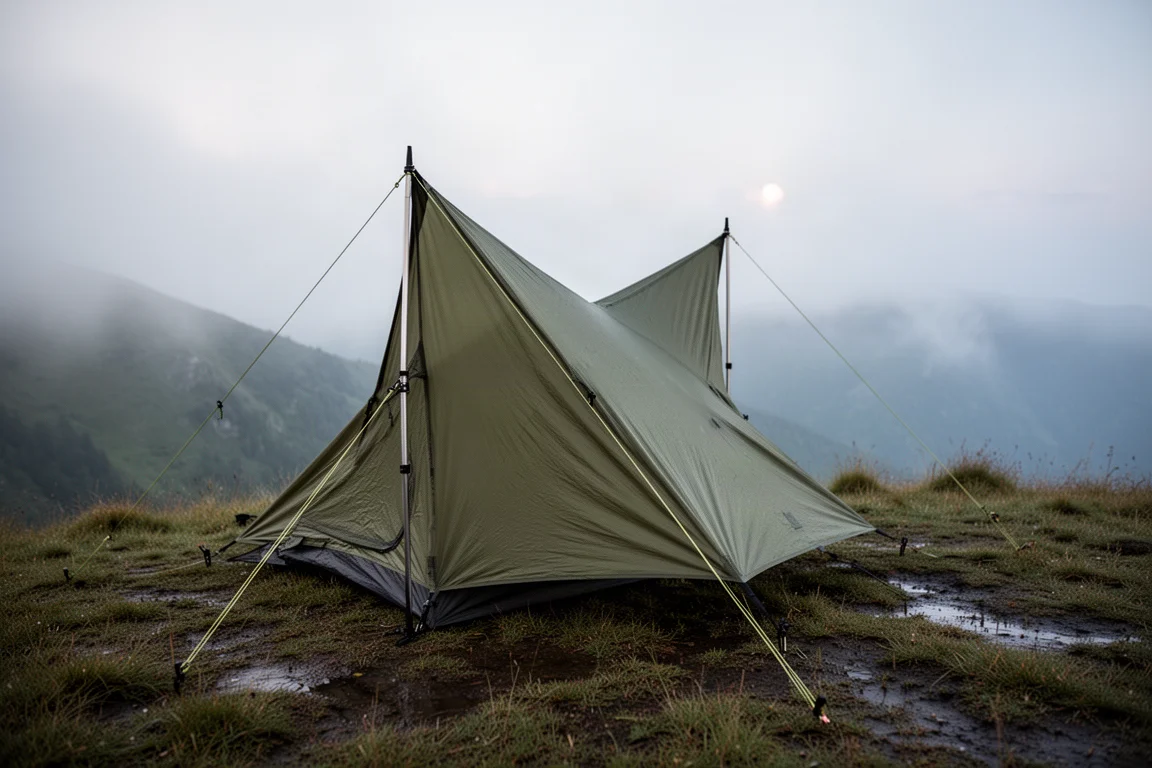
Trekking pole tents are usually single wall: one piece of material forms the shelter, held up by trekking poles or by lightweight aftermarket carbon poles. Because the tent does not ship with its own pole set, it starts out very light, and poles account for a large share of a tent’s total weight.
Setting up in rain is a genuine advantage. There is no separate mesh inner to pitch and then cover with a fly while it gets soaked. The shelter goes up as one piece, and the interior stays dry.
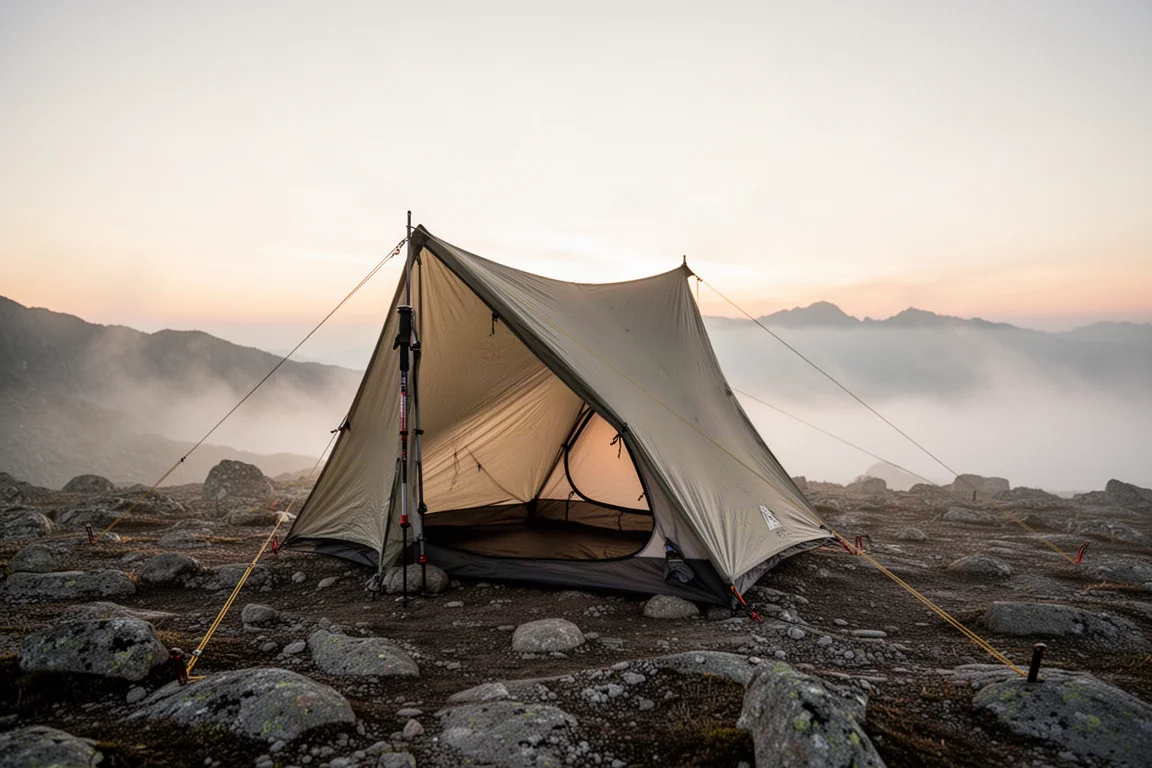
The compromises are real. A trekking pole tent has to be fully staked out, so you cannot pick it up and move it, and it typically needs more floor space because the stakes pull farther out than on a freestanding or semi-freestanding design. Pitching speed can actually be quick once the routine is familiar, but finding a large enough, anchor-friendly patch in dense terrain is the harder part.
Tarp Shelters: Room, Weight Savings, and a Big Footprint
A tarp shelter is the lightest option discussed here, at just over a pound, and its shape makes it a four-season shelter in a specific sense. Snow slides off the sloped panels, and the sides can carry the weight of snow building up around them instead of sagging down onto you.
Most tarp style tents do not include an interior at all. Some accept an inner bug net, while others are used close to cowboy camping with a ground cloth laid down. The catch is size. A shelter measuring roughly nine feet by almost eight feet needs a very large, open, clear patch of ground, which rules out tight forest sites and stealth camping. For open terrain and two people the interior space is enormous, and for one person it feels like a kingdom.
Buying Advice: Matching the Tent to the Trip
If most of your backpacking is general three-season travel, a freestanding double wall tent such as the Big Agnes Copper Spur Platinum is the straightforward choice. It stands up without stakes, it can be repositioned before you commit to a site, and the double wall keeps condensation off you on cold nights. The cost is the extra pole structure and the weight that comes with it.
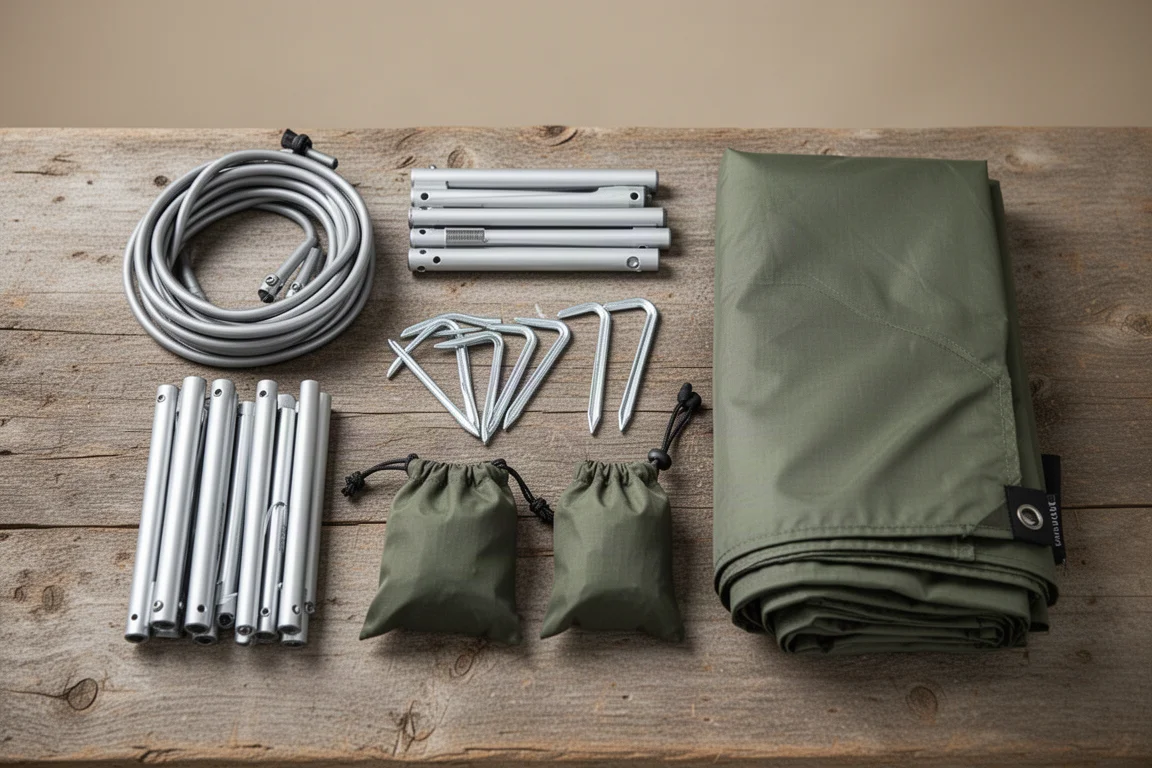
If you camp on exposed ridges and mountainsides, or in places where high winds and cold are a regular feature rather than an occasional inconvenience, the four-season Nemo Kunai 2-Person Tent is the more appropriate tool. More pole structure and thicker denier nylon mean it handles more weight and holds up better in the elements, at the cost of a heavier pack and a build that really wants to be staked down.
If weight is the priority and you are willing to accept full staking plus a larger footprint, a trekking pole tent delivers the biggest weight saving. If your trips take you into wide open country where you can always find a big clear patch, a tarp shelter gives you the most space for the least weight, but it will not work in dense forest.
Whichever design you choose, stake it down. A shelter that is only standing, not anchored, is the one most likely to end up somewhere else when the wind picks up.
Conclusion
The tent categories here are not ranked from best to worst; they solve different problems. Freestanding double wall tents prioritize convenience and condensation control. Four-season freestanding tents prioritize structure and weather resistance. Semi-freestanding, trekking pole, and tarp designs trade setup flexibility for weight savings and, in the case of tarps, a lot more room.
Match the design to the conditions you actually camp in, and the choice becomes much simpler. For general backpacking, the Copper Spur Platinum covers the widest range of trips. For exposed, wind-prone, cold-weather camping, the Kunai 2-Person Tent is built for exactly that job.
Further reading
Related Reviews
Backpacking Tents
3F UL Lanchan Pro 1 Review: A 1 lb 8 oz Single-Wall Trekking Pole Tent
A practical look at the 3F UL Lanchan Pro 1, a single-wall trekking pole shelter with a 1 lb 8 oz weight, 20D silnylon fabrics, and a roomy 90 x 31 x 49 inch interior.
Backpacking Tents
3F UL Taiji 2-Person Tent: A Convertible Backpacking Shelter Worth a Closer Look
A practical look at the 3F UL Taiji two-person tent, covering its materials, true two-person interior, fly-first pitching, and the seasonal inner swap that lets one shelter cover more of the year.
Backpacking Tents
3FUL Lanshan Twoerson Pro Review: A Light Trekking Pole Shelter That Struggled in Rain
A two-person trekking pole shelter with a 2026 redesign, pitched with sticks and put through a night of steady rain. Here is what worked, what did not, and what to check before buying.