Outdoor Gear
Backcountry Water Treatment: 7 Filters, Purifiers, and Drops Compared
A practical look at seven backcountry water treatment options, from hollow fiber squeeze filters and chemical drops to purifiers, pump filters, and boiling.
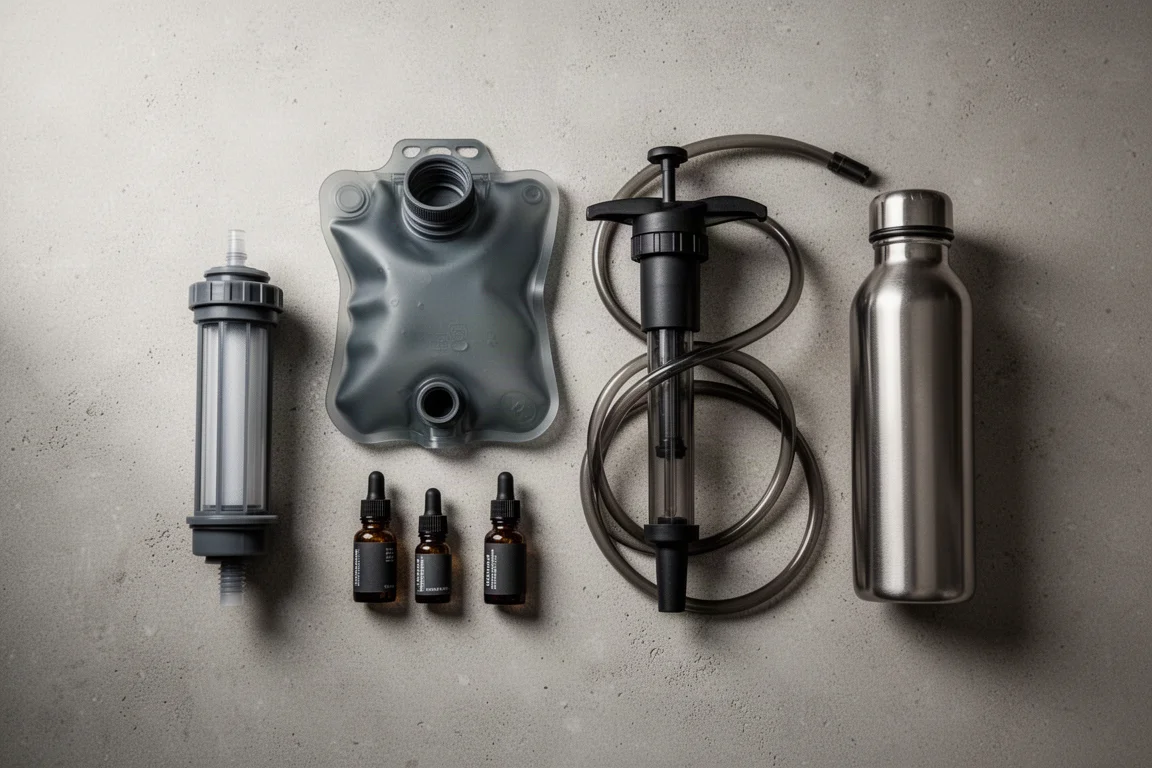
Introduction
Water is one of the most important resources you have access to in the backcountry, and knowing how to treat it is what makes it safe to drink and cook with. The source you find is not always a clear mountain stream. It can be a stagnant pool in a field, a desert canyon pothole holding rainwater, or water carrying heavy metals or a sulfur smell.
Upstream conditions are not always visible either. Contamination can come from something as ordinary as an animal that died near the water source, which adds risk well beyond the usual contaminants.
Most of the risk in backcountry water comes from bacteria and protozoa, including Cryptosporidium, Giardia, and E. coli. They are microscopic, and the reaction they cause is usually delayed, which means you often feel fine on the trail and unwell once you are home. That is exactly why treating water matters more than judging a source by how it looks.
Several common methods make backcountry water safe, and each one suits a different kind of trip. The sections below cover hollow fiber filters, chemical treatment, purifiers, pump filters, and boiling.
What Backcountry Water Can Contain
Bacteria and protozoa are the most prevalent contaminants in the water sources people collect from in the backcountry. They are microscopic, they are common, and they are the main reason a filter earns its place in a pack.
Water quality varies enormously by source. A clear alpine stream is the easy case. A stagnant pool, a rain-filled pothole in a desert canyon, or water with a sulfur smell or heavy metal content all demand more care.
What most treatment methods share is a target list of the same organisms: Cryptosporidium, Giardia, and E. coli. A hollow fiber filter traps them physically, a chemical treatment kills them, and boiling destroys them with heat. Which approach you choose depends less on effectiveness and more on weight, speed, and the water you expect to find.
Hollow Fiber Filters: Sawyer Squeeze
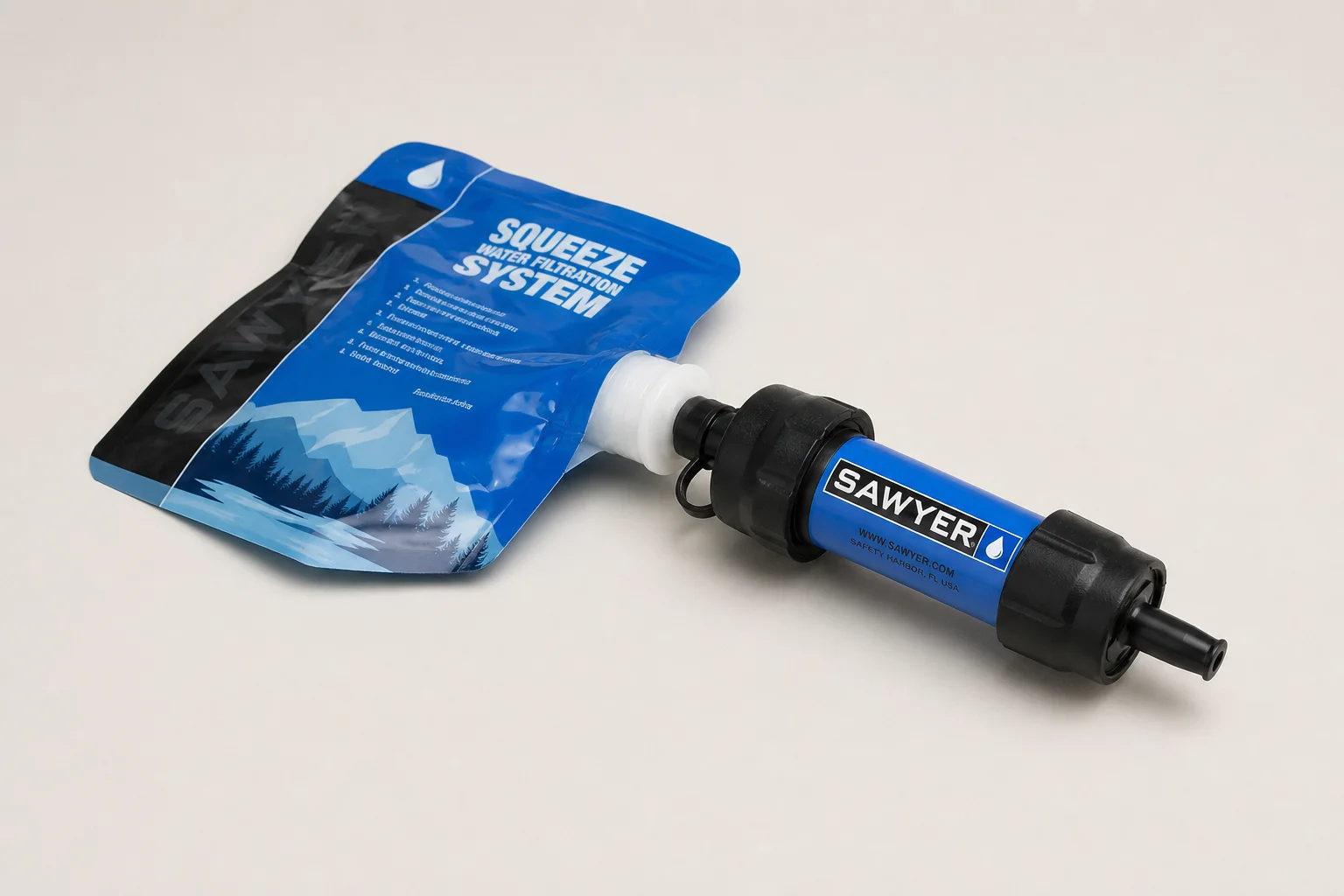
Hollow fiber filters are arguably the most popular and efficient way to filter water on the trail today. The Sawyer Squeeze is the clearest example of the format: squeeze dirty water through the filter, and clean water comes out the other side.
Inside the plastic housing is a bundle of tube-like strands with microscopic pores. On the Sawyer Squeeze those pores are 0.1 microns, so anything larger, including bacteria and protozoa, is trapped inside the strands and cannot pass through. Water that reaches the far side is clean and safe to drink.
Maintenance is simple because there are no moving parts, but it is not optional. Backflushing pushes clean water the opposite way through the filter to clear out sediment and fine material that gradually clogs the pores. The other rule is temperature. Hollow fiber filters cannot freeze, because expanding ice damages the microscopic pores and renders the filter useless. In freezing conditions, keep it in a jacket or a sleeping bag overnight.
Using one is straightforward. Thread the filter onto a dirty water bag, check that the connection is properly sealed, and squeeze. The seal deserves attention, because dirty water leaking down the side of the filter can end up on or inside your clean bottle. Holding the setup at an angle helps.
The Dirty Water Bag: CNOC Vecto
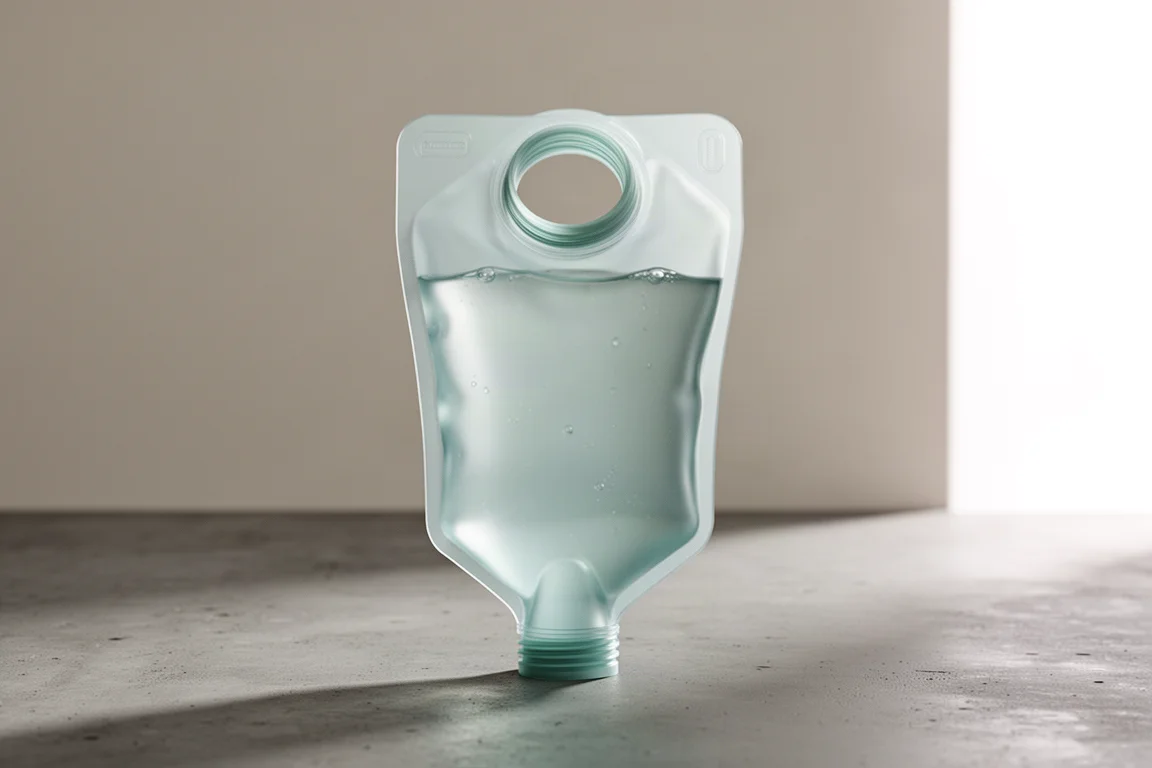
A squeeze filter is only as good as the container feeding it. The CNOC Vecto is a dedicated dirty water bag with an opening that makes it easy to capture water from a source and a threaded port at the bottom end that a hollow fiber filter screws onto.
Keeping dirty water in one container and clean water in another is what keeps the whole process hygienic. Fill the bag at the source, thread the filter on, and squeeze into your bottle. A good seal at that threaded connection is the detail that matters most, since a leak there defeats the purpose of filtering in the first place.
Chemical Treatment: Aquamira
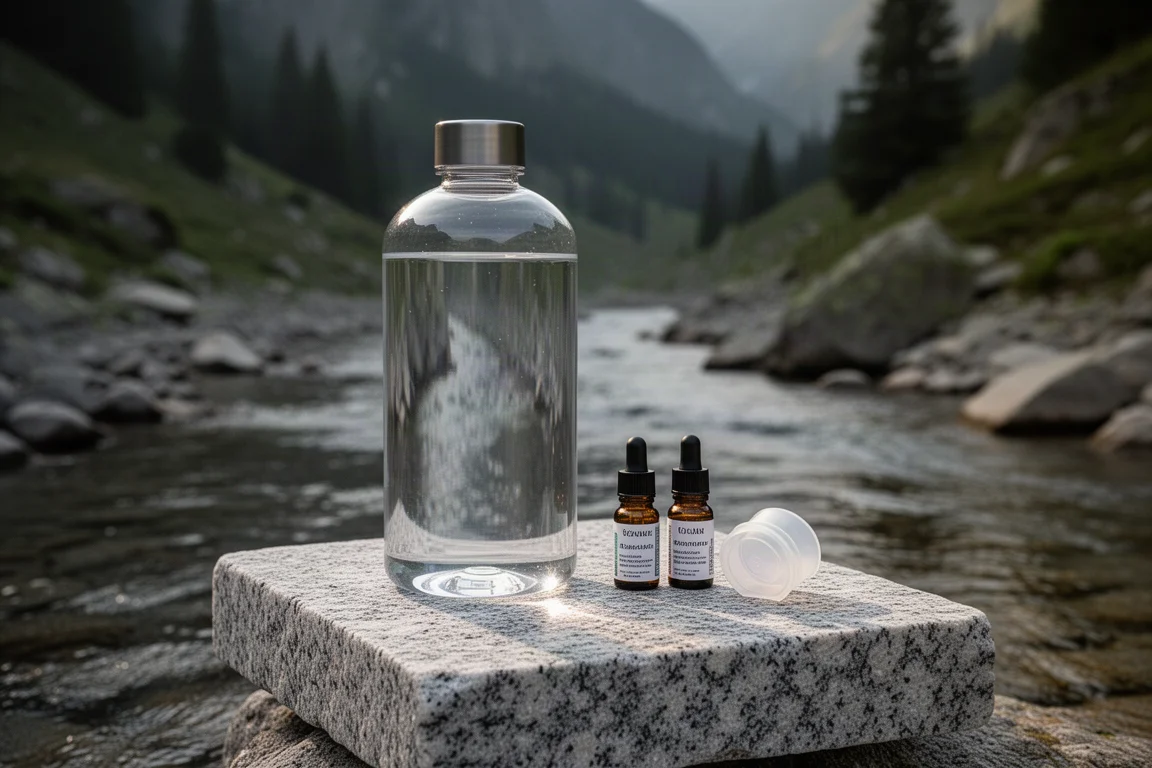
Aquamira is a chlorine dioxide treatment rather than a filter. It does not remove anything from the water; it kills the organisms that would make you sick, so they pass through your body without causing harm.
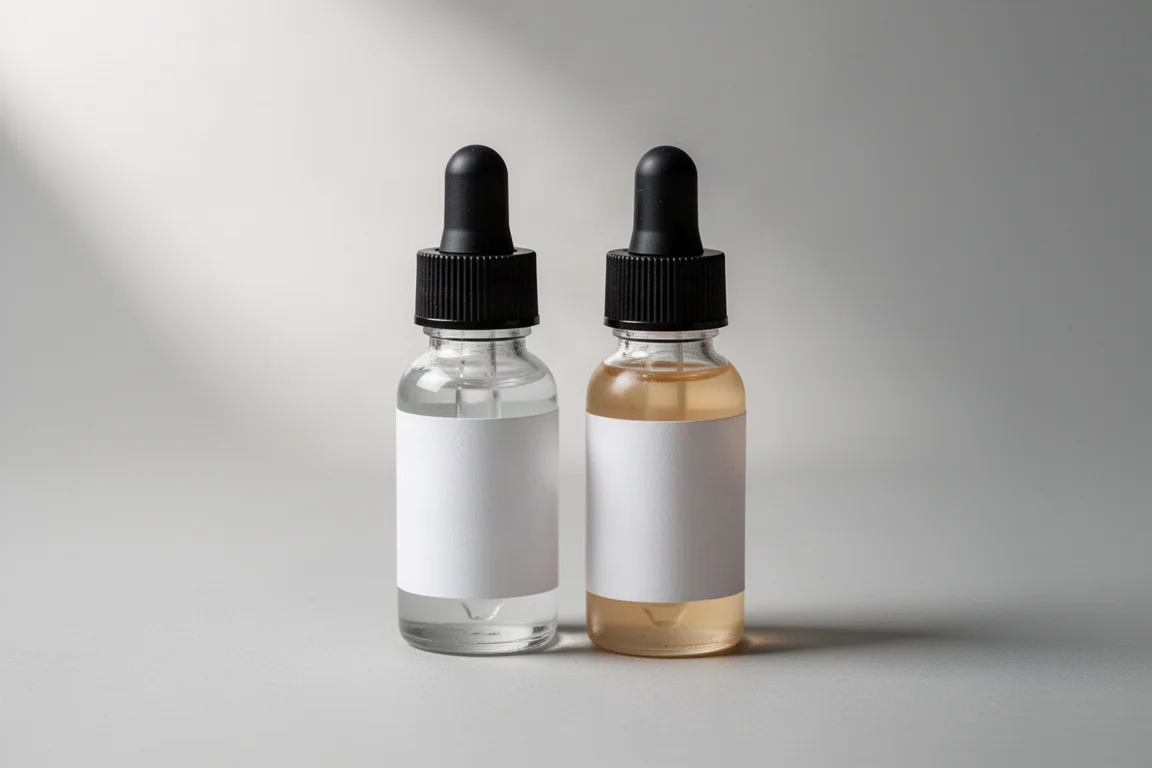
It is a two-part system. Part A is the chlorine dioxide, and Part B is a phosphoric acid activator. Mix the two in a container and let them sit for about five minutes, until the mixture turns a pale yellow-green. Then pour it into a liter of water, shake well, and wait. Fifteen minutes is enough for clear water. If the water is turbid, contains sediment, or is very cold, wait 30 minutes instead.
There is one trade-off worth knowing before you rely on it. Some people experience digestive discomfort or changes in bowel movements after treating water this way. It is safe to drink and it makes the water safe to drink, but it is a chemical treatment, and not every stomach responds to it the same way.
Hygiene around the cap matters too. If you dunk your bottle into a dirty source, wipe the threads clean before you add the treatment, so dirty water does not end up inside the bottle.
Purifiers: Grayl
The difference between a filter and a purifier is what it can remove. A hollow fiber filter essentially handles bacteria and protozoa, and that is it. A purifier goes further and removes bacteria, protozoa, viruses, and heavy metals. The trade-off is cost and lifespan: purifiers can be significantly more expensive, and the filtration media inside typically has a shorter lifespan than a hollow fiber filter.
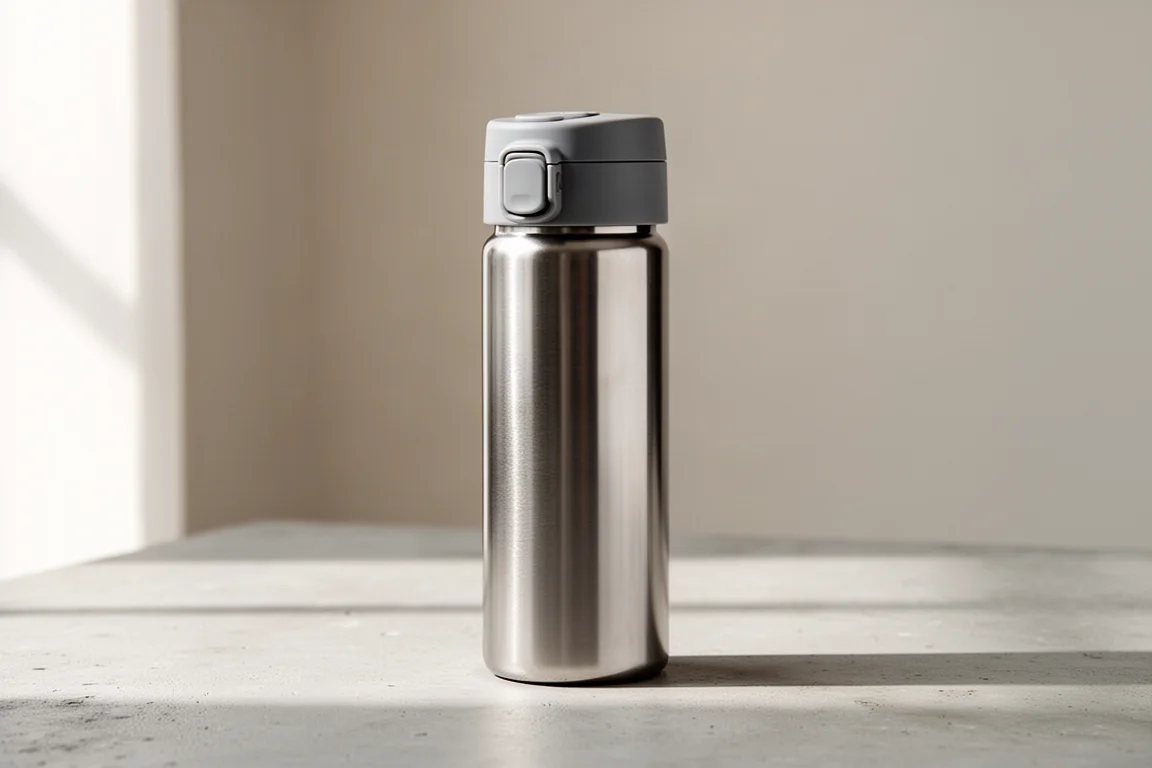
The Grayl is a two-piece press system that shows how simple the format can be. The outer piece goes into the water to collect it, and the black block at the bottom is the purifier. Pressing the inner piece down moves the dirty water from the outside to the inside, and what you are left with is clean drinking water.
Many purification systems also include an activated carbon stage. That carbon does not only purify; it improves the taste and smell of the water, which is something a hollow fiber filter does not do.
Pump Filters: LifeSaver Wayfarer
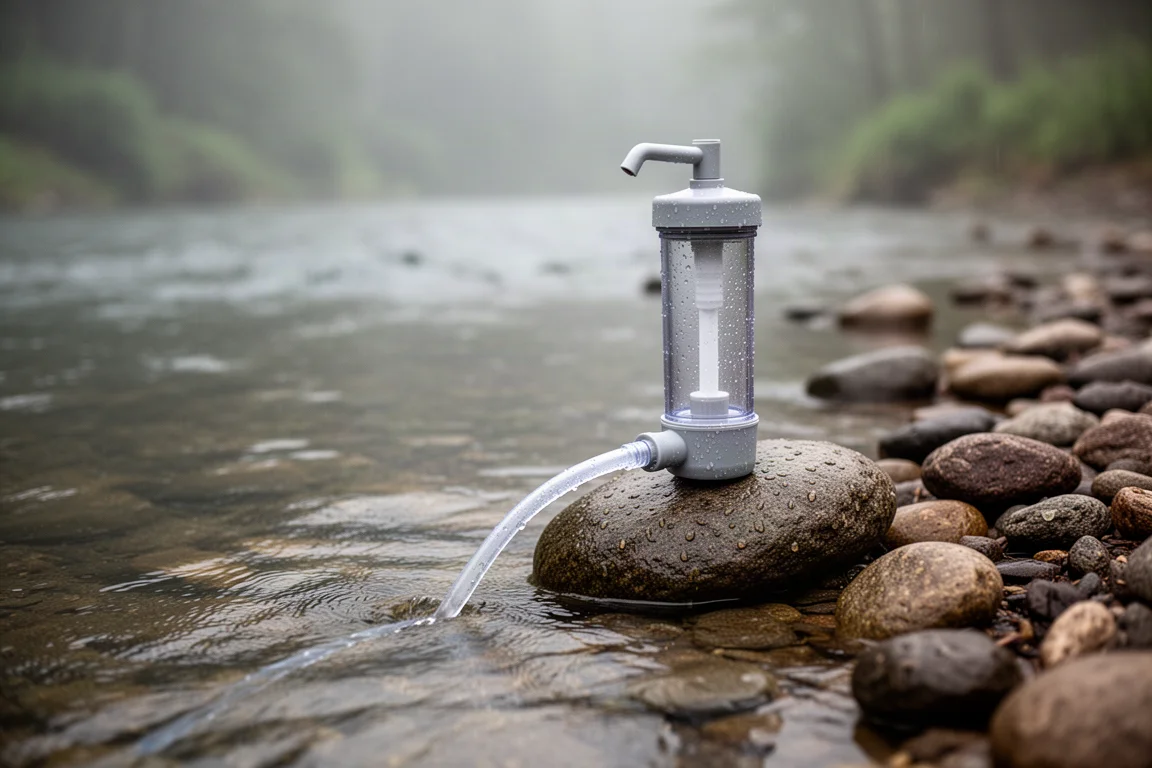
Pump filters work by forcing water through a cartridge. The outlet side goes into your bottle, the inlet side goes into the water, and each stroke pulls dirty water in and pushes clean water out. Filling a full liter this way is quick.
Not every pump filter is a purifier, but the LifeSaver Wayfarer is one, which means it removes more than bacteria and protozoa alone.
The trade-off with pump designs is bulk and complexity. They are heavier than a squeeze filter, they take up more room in a pack, and the moving parts are exactly the parts that can break. A hollow fiber filter has no moving parts, which makes it easier to maintain over a long trip.
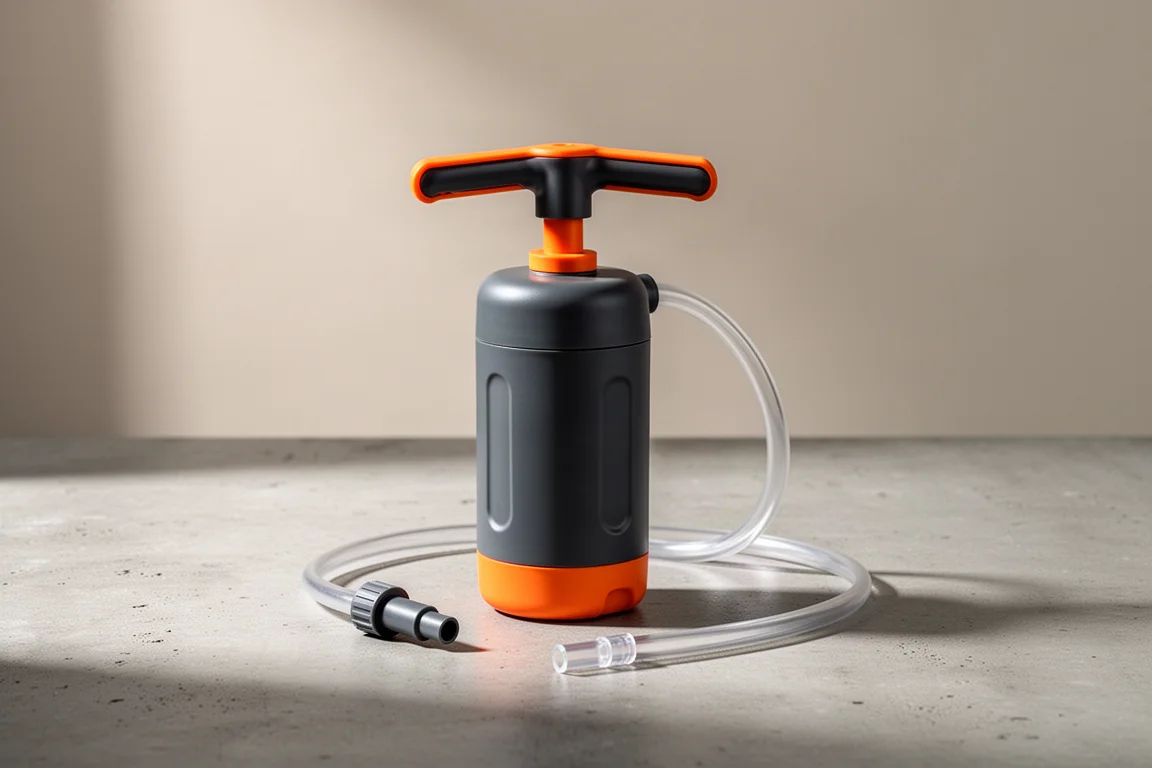
Ceramic Pump Filters: MSR MiniWorks
Some pump filters use a ceramic element instead of hollow fibers, and the MSR MiniWorks is a well-known example. Its capability matches a hollow fiber filter: it removes bacteria and protozoa, and it does not claim to remove viruses or heavy metals.
What you gain is speed, because pumping fills a bottle quickly. What you give up is weight and simplicity. Ceramic pump filters are bulky and heavy compared with a squeeze filter, and the moving parts add failure points that a hollow fiber filter simply does not have.
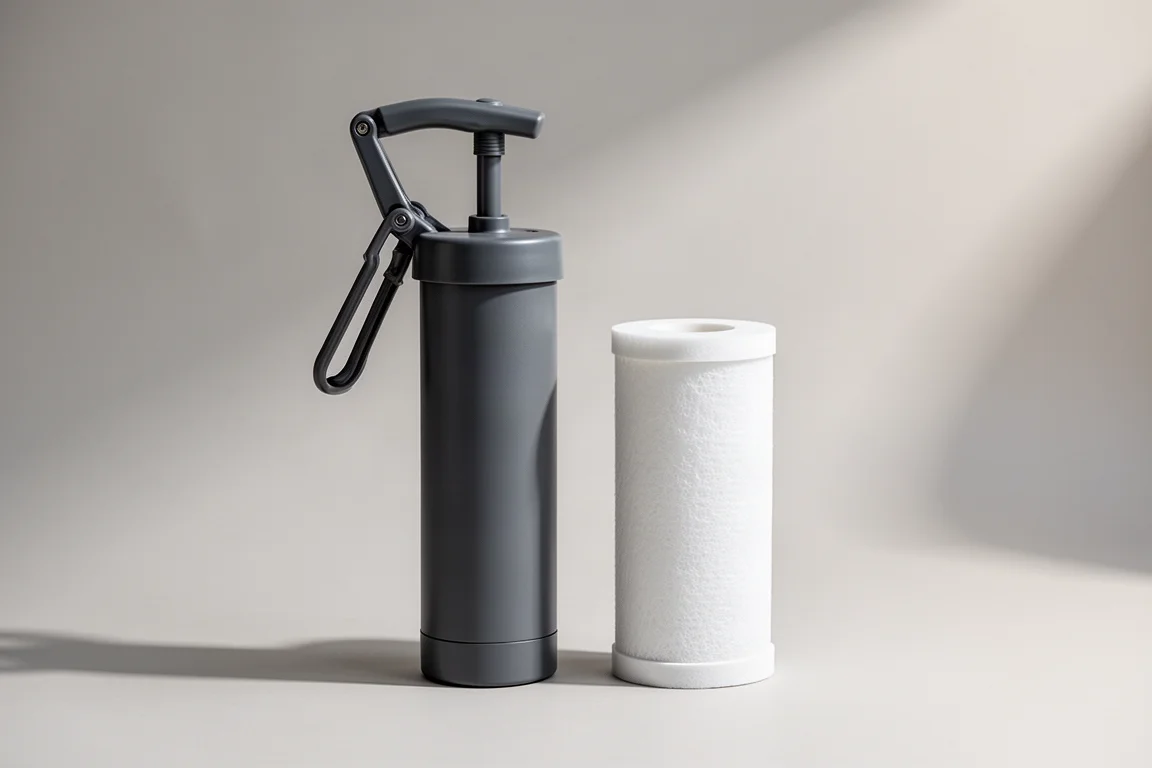
Ceramic Pump Filters: Katadyn Pocket
The Katadyn Pocket is another ceramic pump filter aimed at the same job: removing bacteria and protozoa from backcountry water. The workflow is identical to any pump, with the inlet in the source and the outlet in your bottle.
Both ceramic pumps trade weight and bulk for pumping speed, so they tend to suit the same kinds of trips. If pack weight is your priority, a hollow fiber filter will usually be the lighter answer. If you would rather pump and be done, a ceramic pump is a reasonable choice.
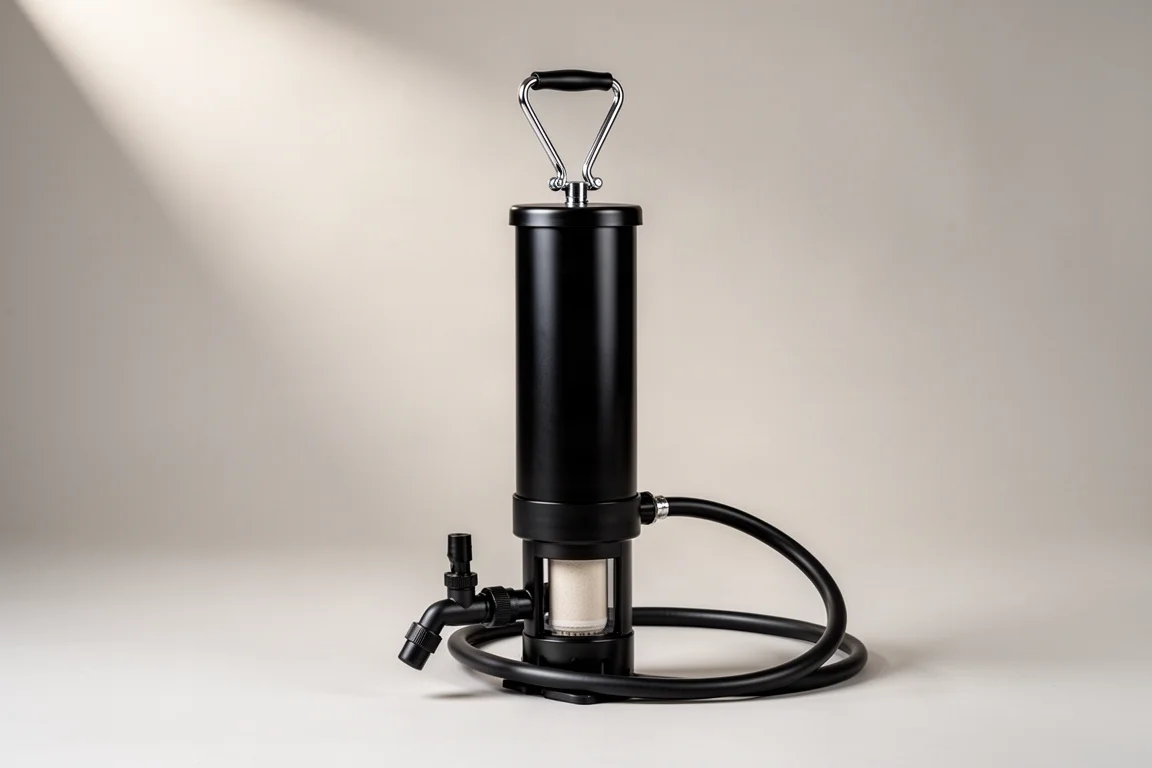
Boiling Water as a Last Resort
Boiling kills everything in the water, and that part is common knowledge. It is also the last choice among the methods here, because it is not efficient. You are relying on a stove or a fire, you burn fuel, and you spend time waiting for the water to cool before you can drink it.
The short answer on how long to boil is simple. Once the water reaches a rolling boil, everything in it that would harm you has been killed, and the water is safe to consume once it has cooled enough to drink. If you want to be more cautious, let it boil for 30 seconds to a minute.
Where boiling makes the most sense is winter camping, when you are melting snow for water. Snow is not clean. Birds and other animals can contaminate it, so melted snow should still be brought to a full rolling boil before you drink it. As a last resort, even in a survival situation, boiling is a way to make water safe.
Choosing the Right Treatment Method
Matching the method to the trip is what keeps your pack light and your water safe. For three-season backpacking where weight matters, a hollow fiber filter paired with a dirty water bag is the simplest, most efficient setup. For clear water and minimal pack weight, a chlorine dioxide treatment works well when you do not want to filter at all.
When the source itself is the unknown, a purifier earns its higher cost. Viruses and heavy metals are outside what a hollow fiber filter can handle, and that is the gap a purifier fills. For group trips, base camps, and days where you need a lot of water quickly, a pump filter is the fastest way to fill bottles, as long as you accept the extra bulk.
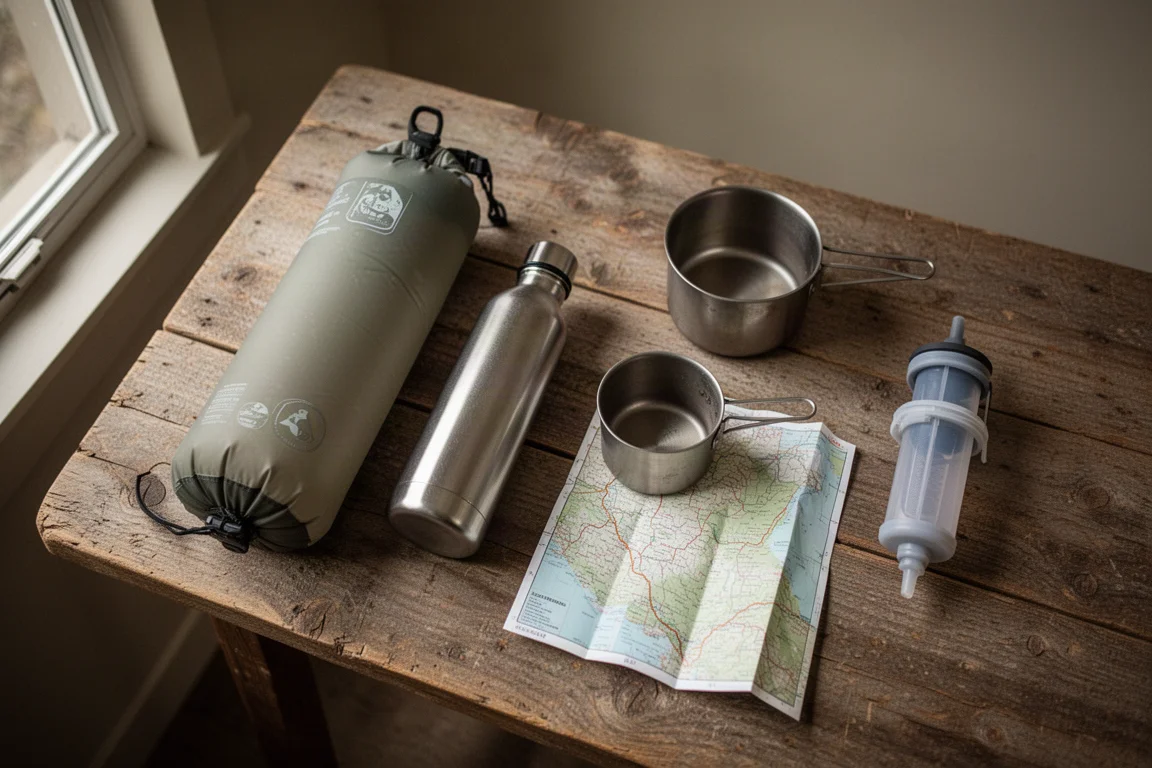
Cold weather changes the calculation. Hollow fiber filters cannot be allowed to freeze, so they need to stay in a jacket or sleeping bag overnight. Boiling, or melting snow and then boiling it, is the more dependable approach once temperatures drop below freezing.
One practical note applies to every method: the cleaner your handling, the better your results. Keep dirty water and clean water separate, seal connections properly, and wipe any threads that have touched a questionable source.
Conclusion
There is no single best way to treat backcountry water. A hollow fiber filter like the Sawyer Squeeze covers the most common contaminants with almost no weight penalty, a dirty water bag like the CNOC Vecto makes that system easier to use, and Aquamira handles clear water with nothing more than a few drops and a timer.
When the water itself is the unknown, a purifier such as the Grayl removes viruses and heavy metals that a filter cannot, while pump filters like the LifeSaver Wayfarer, MSR MiniWorks, and Katadyn Pocket trade weight and moving parts for speed. Boiling remains the dependable last resort.
Pick the method that matches your water sources, your climate, and how much weight you are willing to carry, and you can drink from the backcountry with confidence.
Further reading
Related Reviews
Outdoor Gear
Backpacking Gear Evolution: 100 Years of Technology Compared
We tested backpacking gear from 1925, 1975, and 2025 across a three-day hike in Yosemite. Here's how technology has transformed comfort, weight, and the outdoor experience.
Outdoor Gear
Best Affordable Hiking Watches: Five Rugged Options for Outdoor Adventures
Five durable hiking watches that balance ruggedness, functionality, and value for outdoor enthusiasts who need reliable GPS tracking and weather resistance.
Outdoor Gear
Best Backpack Coolers 2026: Five Practical Options for Outdoor Adventures
Five backpack coolers with distinct cooling capabilities, storage features, and design trade-offs to help you choose the right one for your outdoor needs.