Outdoor Gear
How to Treat Backcountry Water: 6 Filters and Purifiers Compared
A practical guide to hollow fiber filters, chlorine dioxide treatment, purifiers, and pump filters, plus how to match the right method to your trip.
Introduction
Water is one of the most important resources in the backcountry, and it is also one of the least predictable. The source you find may be a clear mountain stream, but it can just as easily be a stagnant pool in an open field, a desert canyon pothole holding old rainwater, or water carrying heavy metals or a sulfur smell. Conditions upstream are not always visible either, and contamination can come from a source you never see.
The main concerns in backcountry water are bacteria and protozoa, including Cryptosporidium, Giardia, and E. coli. These organisms are microscopic, and the illness they cause often has a delayed onset, showing up after you are home and your body finally signals that something is wrong. Treating your water before you drink it, cook with it, or store it is what prevents that.
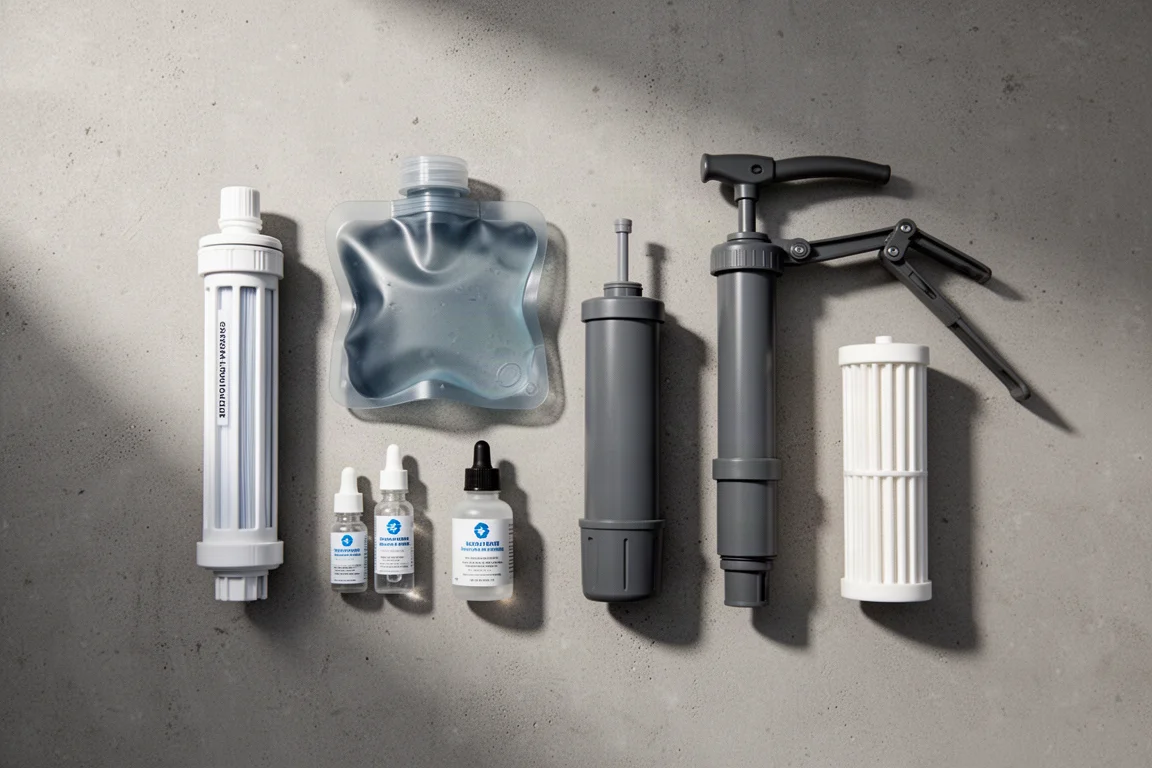
The six options below cover the most common approaches used on backpacking trips: hollow fiber filters, chlorine dioxide treatment, press-style purifiers, pump filters, and boiling as a last resort.
How to Evaluate Backcountry Water Treatment
The right choice depends less on brand than on four practical questions: what the device removes, how much maintenance it needs, how much it weighs, and how it behaves in cold weather.
Removal capability is the first split. A hollow fiber filter removes bacteria and protozoa, and that is essentially the extent of it. A purifier removes much more, including bacteria, protozoa, viruses, and heavy metals. The trade-off is that purifiers can be significantly more expensive and typically have a shorter lifespan for the total volume of water they can process.
Maintenance is the second. Hollow fiber filters have no moving parts, which makes them simple to live with, but they do need regular backflushing to clear sediment from their pores. Pump filters are fast but carry moving parts that can break.
Cold weather is the third. Hollow fiber filters must never freeze. Water expanding inside the microscopic pores can rupture them and render the filter useless, so in freezing temperatures the filter belongs in a jacket pocket or a sleeping bag overnight.
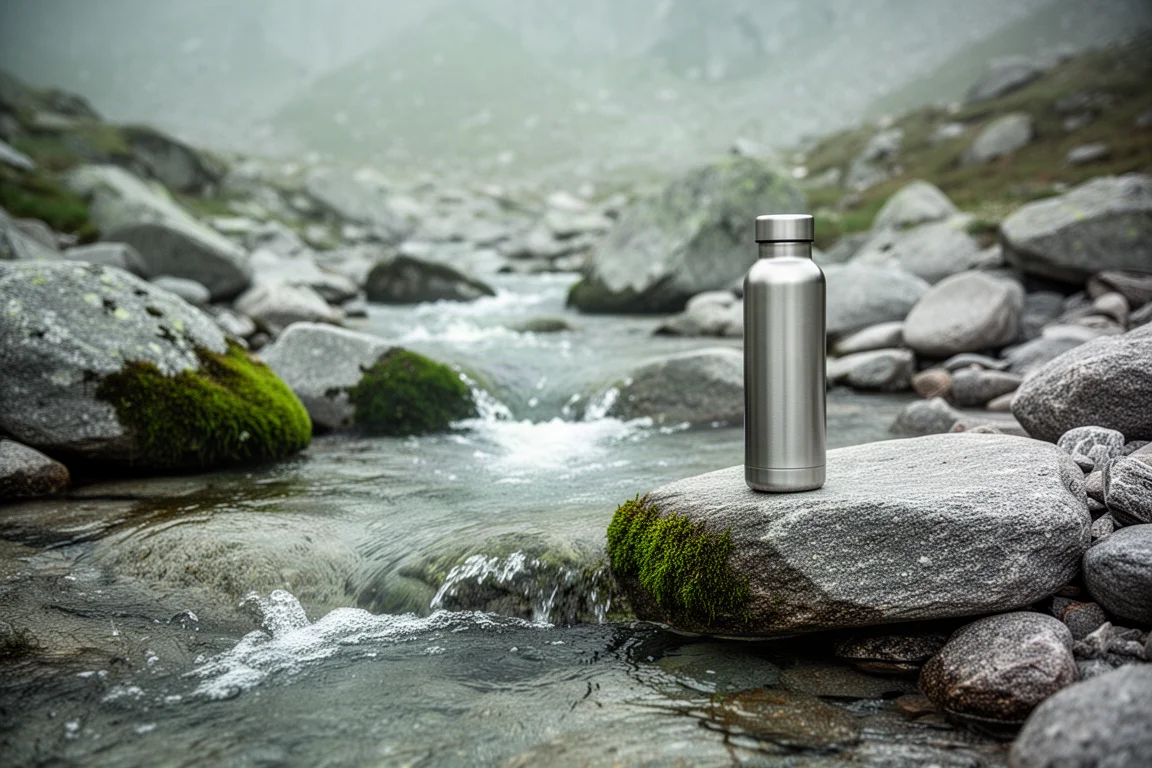
Taste is the fourth consideration, and it is easy to overlook. Purifiers often include an activated carbon stage that improves the taste and smell of the water. A hollow fiber filter does not enhance taste at all, which matters more when the source itself is less than appealing.
Hollow Fiber Filters: Sawyer Squeeze
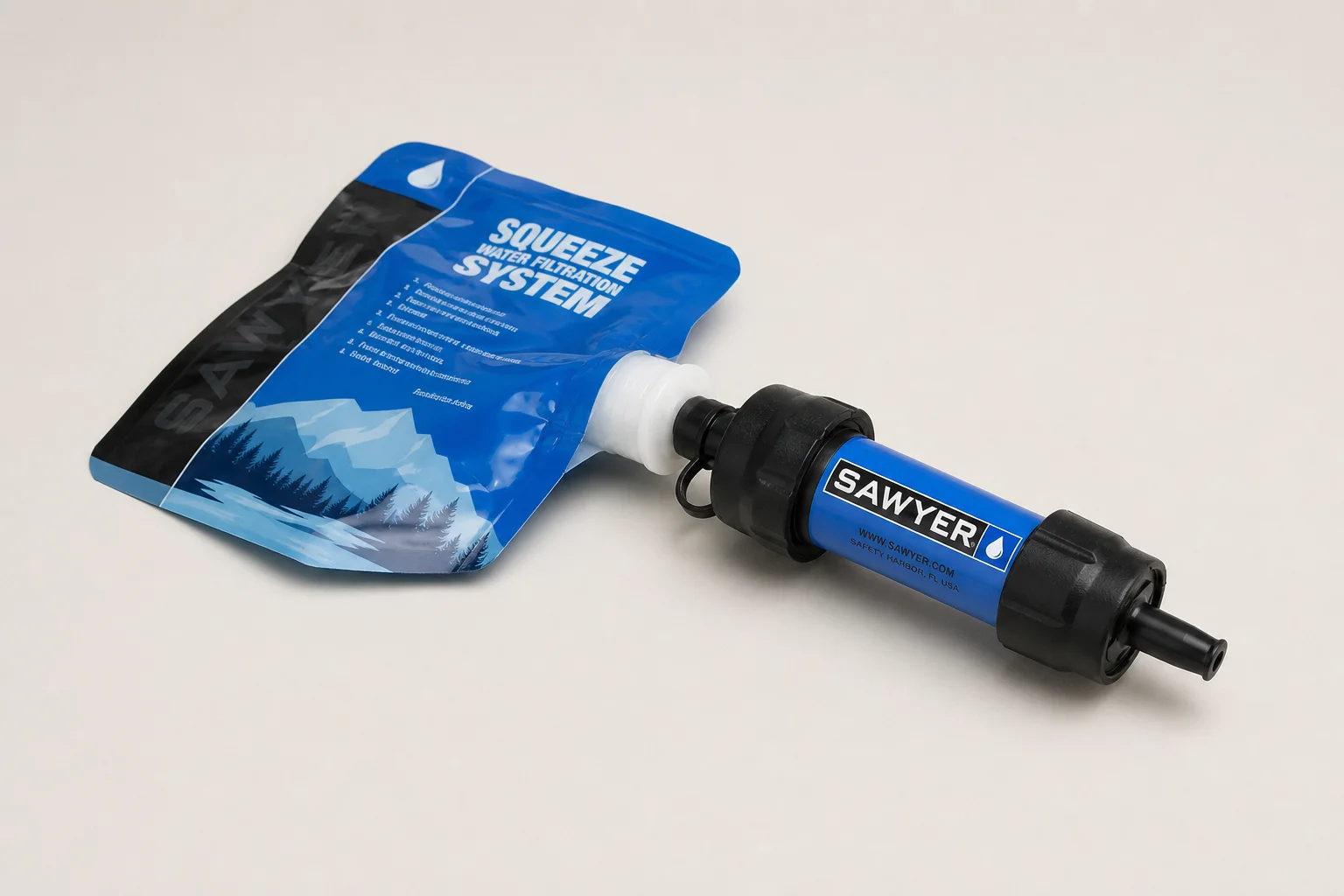
The Sawyer Squeeze is a hollow fiber filter, and this category is arguably the most popular and efficient way to filter water on the trail today. The housing contains bundles of tube-like strands with microscopic pores sized at 0.1 microns. Anything larger than 0.1 microns is trapped in those pores, which means bacteria and protozoa cannot pass through to the clean side.
The design is simple in use: dirty water goes in one end, clean water comes out the other. There are no moving parts, so maintenance is straightforward, but it is not optional. Backflushing pushes clean water in the reverse direction to clear the sediment that gradually clogs the pores.
The filter cannot be allowed to freeze. If it does, the expanding ice breaks apart those microscopic pores and the filter stops being effective, so keep it close to your body in cold conditions.
In practice, the filter threads onto a dirty water bag and clean water is squeezed directly into a bottle. Sealing is the detail worth watching. If the connection is not tight, dirty water can leak down the side of the filter and into your bottle, so hold the assembly at an angle and check the seal before you start squeezing.
Dirty Water Storage: CNOC Vecto
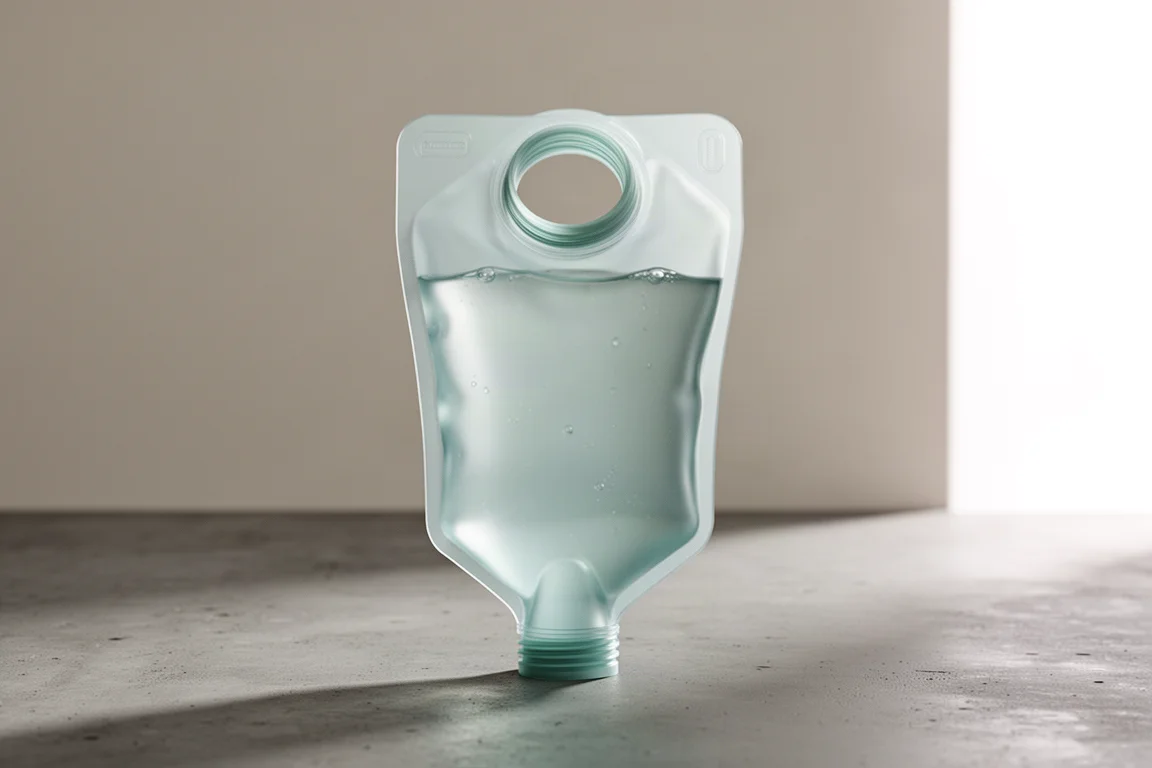
A hollow fiber filter is only half of a working system. The other half is a dedicated dirty water bag, and the CNOC Vecto is a practical example. Its wide opening makes it easy to scoop water from a stream, a seep, or a shallow pool where a narrow bottle mouth would struggle.
The bottom of the bag carries threads that accept a hollow fiber filter directly, so the bag becomes the dirty side of the system and your bottle stays the clean side.
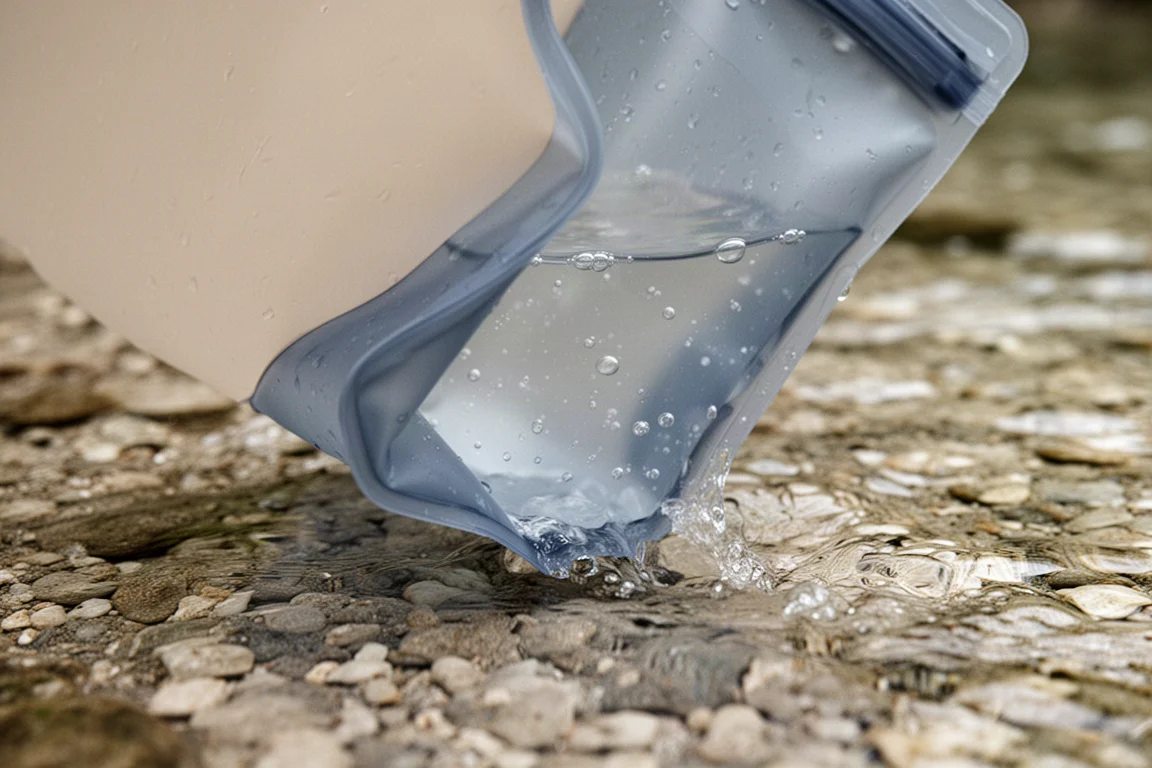
Thread compatibility and a clean seal are what keep the two sides separate. A loose connection is the most common way dirty water ends up where it should not, so it is worth taking an extra second to seat the filter properly before squeezing. Because the bag itself holds no filter media, it has nothing inside that can freeze or clog, and it packs down small when empty.
Chemical Treatment: Aquamira Chlorine Dioxide
Aquamira takes a completely different approach. It is a chlorine dioxide water treatment that kills the organisms that would make you sick rather than removing them from the water. It does not filter anything, and it does not need to, because once the treatment has run its course the water is safe to drink.
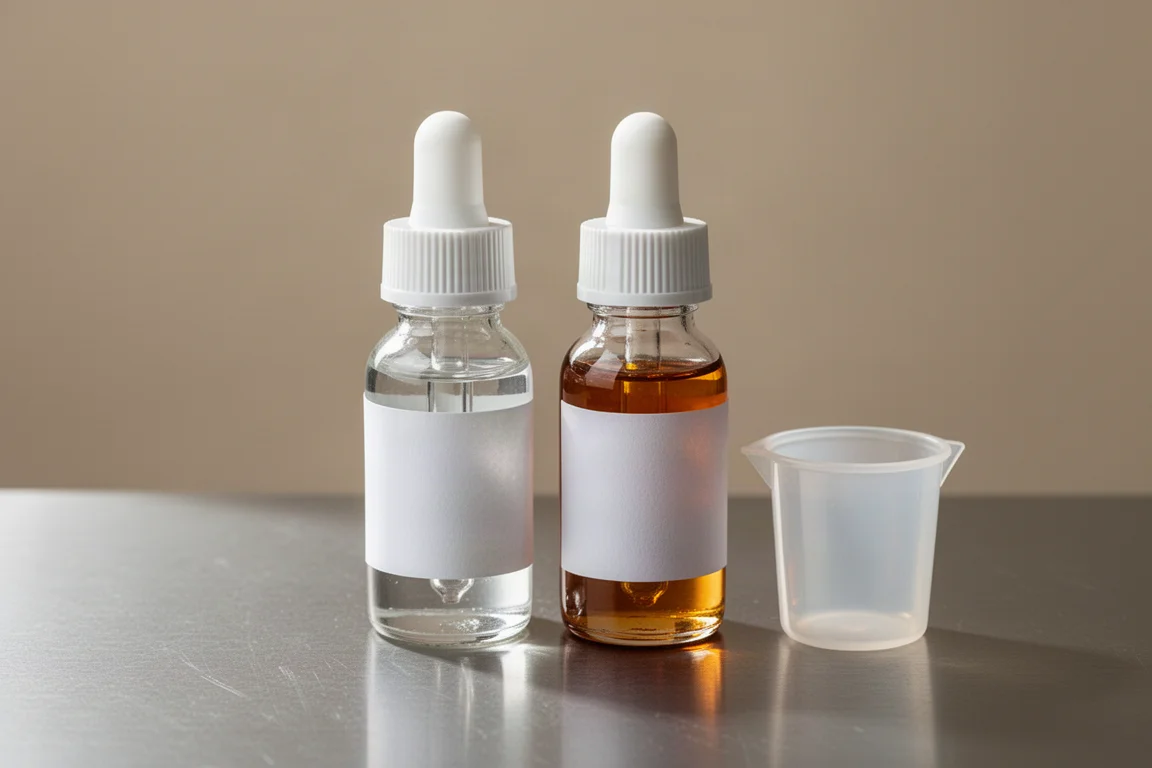
The system has two parts. Part A is the chlorine dioxide, and Part B is a phosphoric acid activator. You mix the two in a small container and let them sit for about five minutes, at which point the mixture takes on a color similar to a citrus soda.
That mixture treats one liter of water. Pour it in, shake to mix thoroughly, and let it stand for 15 minutes. If the water is turbid or carrying sediment, or if it is genuinely cold, extend that to 30 minutes. After the waiting period, everything in the bottle has been neutralized and the water is safe.
Two practical notes are worth remembering. First, if you dunked your bottle into the source, wipe the threads clean before you treat, so you are not reintroducing contamination. Second, chlorine dioxide can cause some digestive discomfort in some people. It does its job effectively and the water remains safe to drink, but the effect on your gut is a real consideration, especially on a multi-day trip.
Water Purifiers: Grayl
The distinction between a filter and a purifier comes down to what each one can remove. A purifier handles bacteria, protozoa, viruses, and heavy metals, which is a meaningful step up when the source is questionable or you have no idea what is upstream.
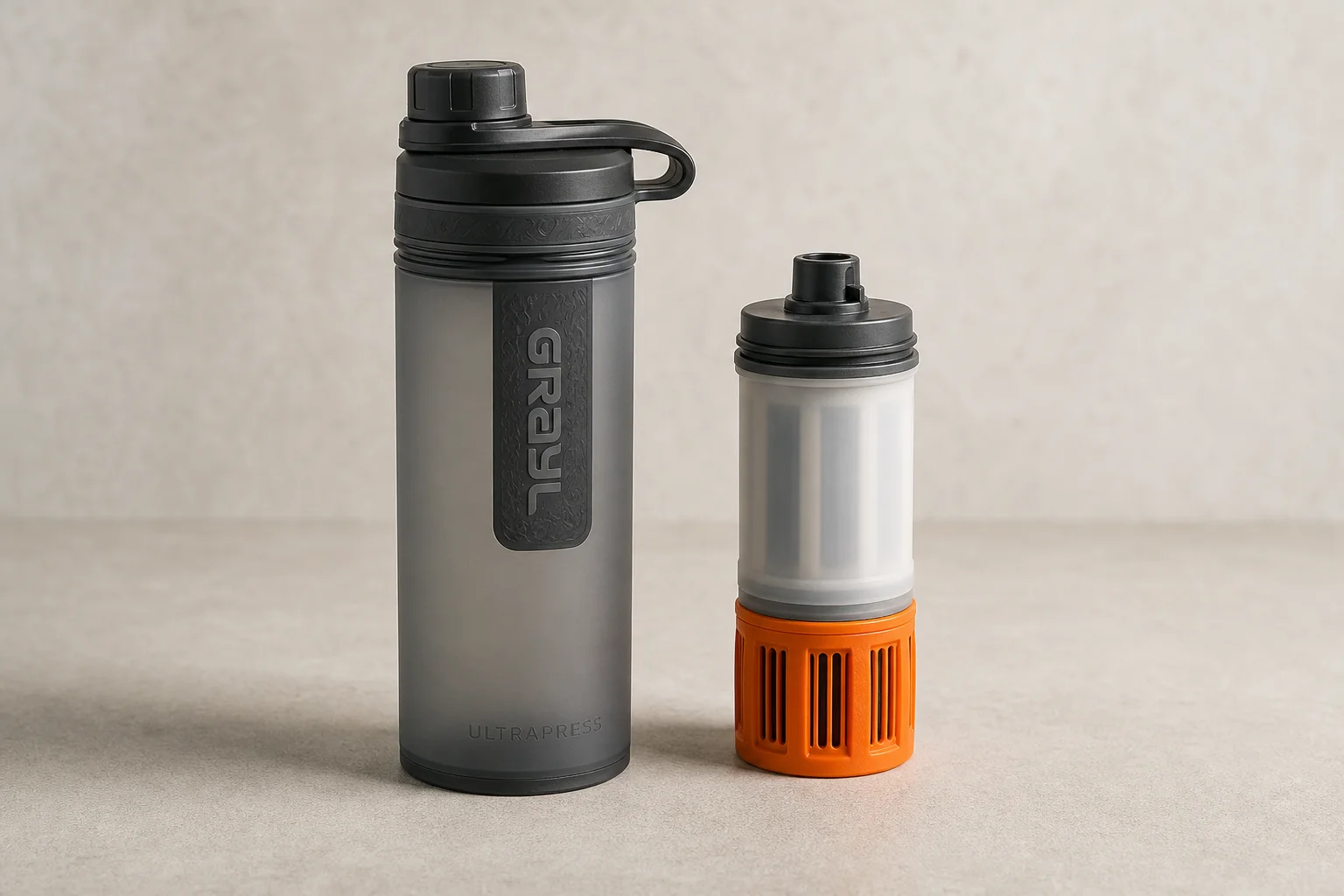
The Grayl is a two-piece press-style purifier. The outer piece is dunked into the water source to collect the dirty water, and the black filtration block sits at the bottom of the inner piece. Pressing the inner piece down forces the water through the purifier block and into the clean chamber. Remove the cap and the water is ready to drink.
Many purification systems also include an activated carbon stage, and the Grayl benefits from the same idea. That carbon improves the taste and smell of the water in a way a hollow fiber filter simply does not. The trade-offs are the ones that apply to purifiers generally: a higher cost and a shorter service life relative to the volume of water treated.
Pump-Style Purifier: LifeSaver Wayfarer
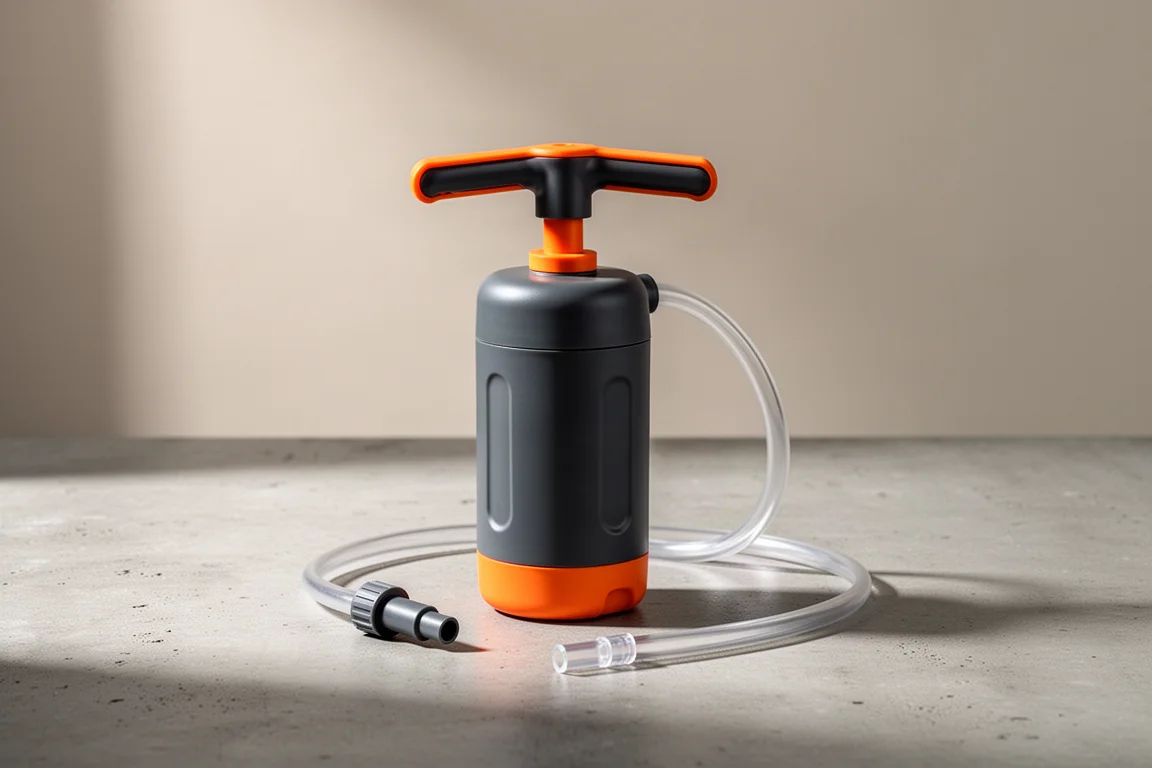
Pump filters work on a straightforward principle. The outlet side goes into your bottle, the inlet side goes into the water source, and pumping draws water up through the cartridge and pushes clean water into the bottle.
The LifeSaver Wayfarer is a pump filter that also happens to be a purifier, so it removes viruses and heavy metals in addition to bacteria and protozoa. It is genuinely quick. A full liter fills in a short amount of time, which is a real advantage when you are treating water for several people or refilling before a long dry stretch.
The downsides are equally clear. Pump filters are bulky and heavy compared with a hollow fiber filter, and they contain moving parts that can break in the field. Where a hollow fiber filter has nothing to fail and is easy to maintain, a pump rewards you with speed in exchange for weight and a few more things that can go wrong.
Ceramic Pump Filters: MSR MiniWorks
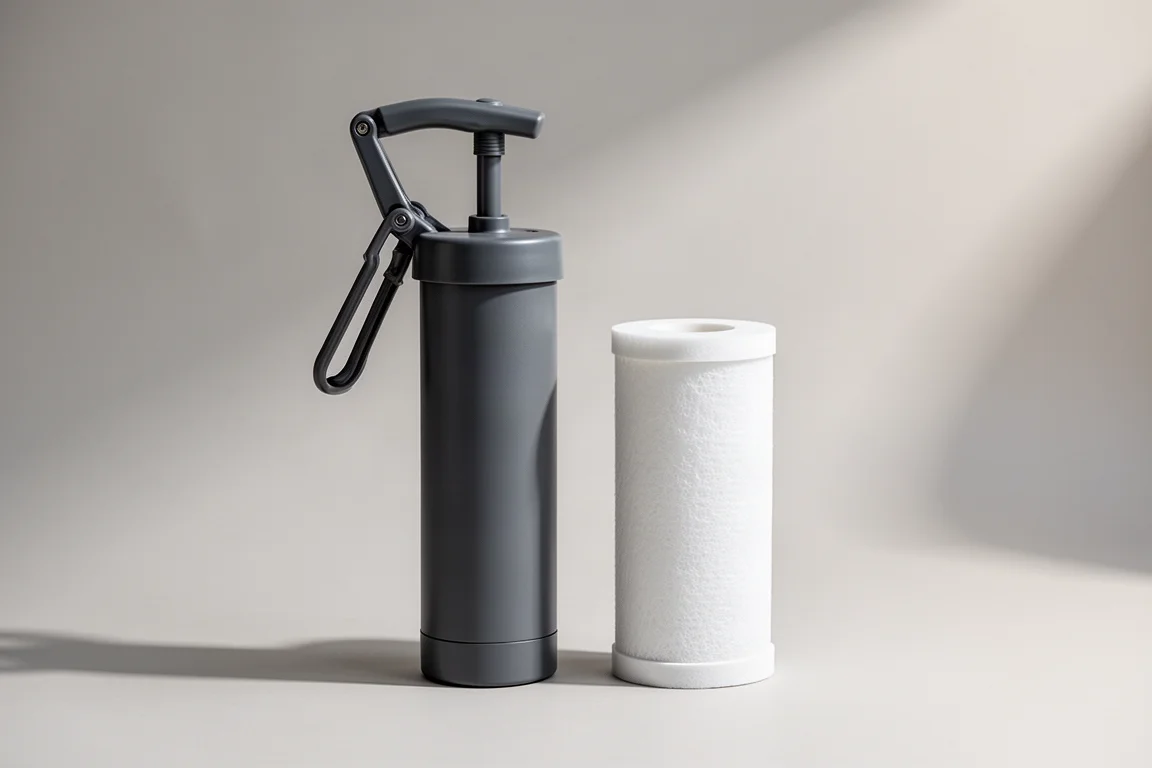
Not every pump filter is a purifier, and the MSR MiniWorks is the example worth knowing. It uses a ceramic filter element that works much like a hollow fiber filter: it removes bacteria and protozoa, but it does not remove viruses or heavy metals.
The pumping action is the same as any other pump filter. The inlet draws from the source, the outlet fills your bottle, and dirty water is forced through the ceramic cartridge on the way.
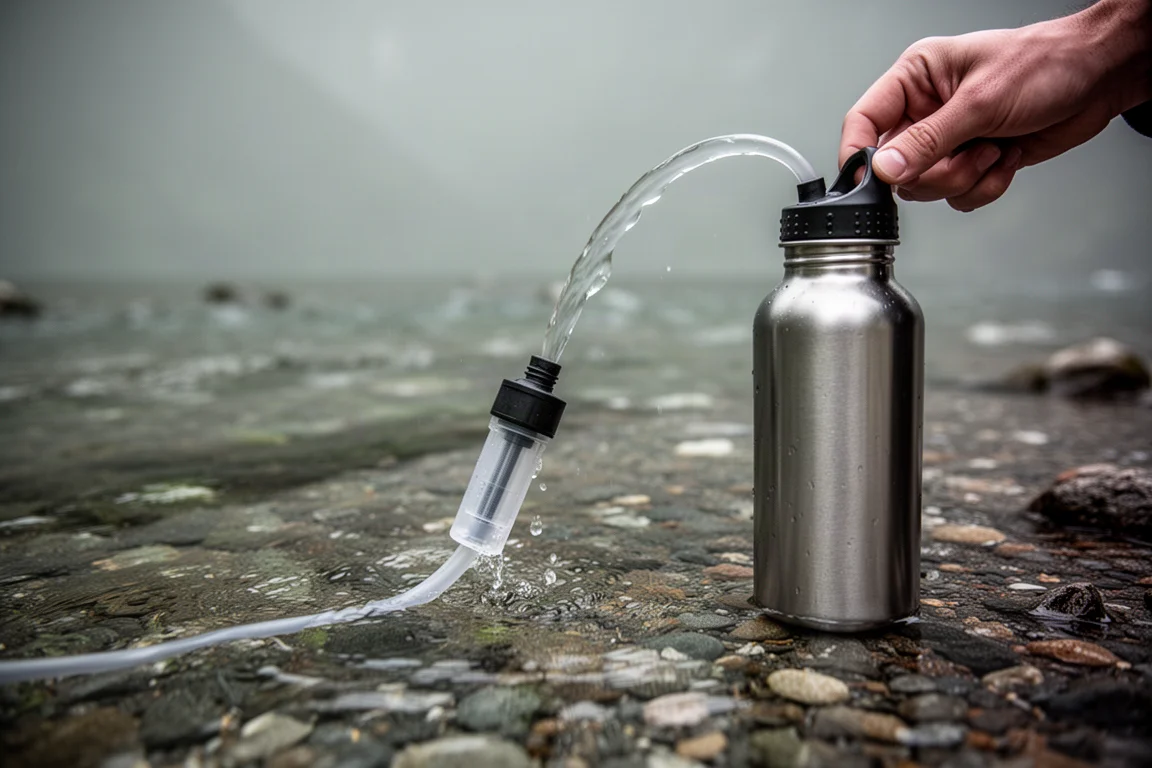
What you get in return is speed and predictability, and what you give up is portability. Ceramic elements are effective and durable, but the pump body, the hose, and the handle all add bulk and weight to a pack, and the moving parts are the components most likely to need attention. For a short trip with a reliable water source, that trade can make sense. For a long through-hike where every gram counts, a hollow fiber filter paired with a squeeze bag is the lighter answer.
Boiling Water as a Last Resort
Boiling is the oldest method and the simplest to understand. Once water reaches a rolling boil, everything in it that would harm you has been killed, and the water is safe to drink once it has cooled enough to consume. If you prefer to be cautious, hold the boil for 30 seconds to a minute.
It is still the least efficient option available. You are relying on a stove or a fire, which means fuel and time are spent on something other methods handle in seconds, and you have to wait for the water to cool before you can drink it.
Where boiling genuinely earns its place is winter camping, when you are melting snow for water. Snow is not clean. Birds and other animals can leave contamination behind, so melted snow still needs to reach a full rolling boil before you drink it. Outside of that scenario, boiling is best kept as a backup rather than a primary plan.
Overall Buying Advice
Match the method to the water you expect to find and the conditions you will actually meet.
A hollow fiber filter such as the Sawyer Squeeze, paired with a dirty water bag like the CNOC Vecto, is the lightest and lowest-maintenance setup for clear mountain water. It removes bacteria and protozoa, needs only occasional backflushing, and has no moving parts, as long as you keep it from freezing.
Chlorine dioxide treatment suits clean-looking water when you would rather not stop and filter, and it adds almost no weight. The trade-offs are the waiting time and the possibility of digestive discomfort.
A purifier earns its higher cost when the source is questionable or you want virus and heavy metal removal alongside improved taste. The Grayl covers that in a press format, while the LifeSaver Wayfarer does it faster through a pump at the cost of weight and bulk.
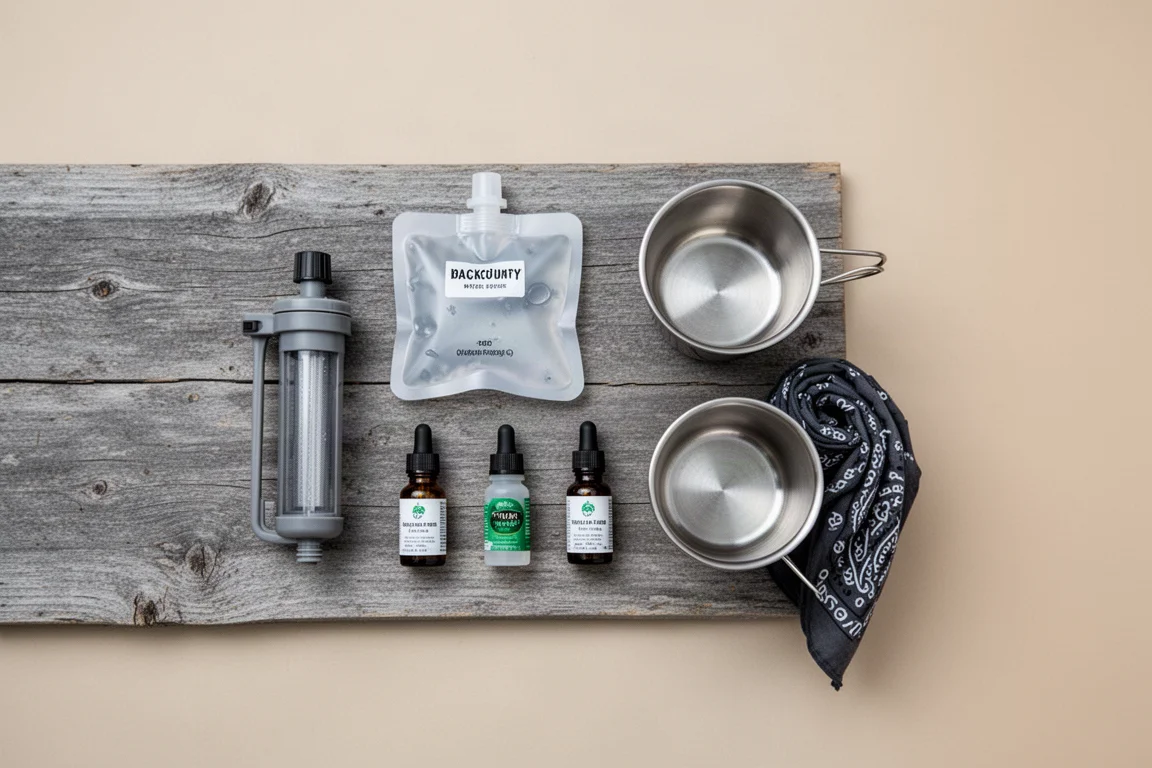
The MSR MiniWorks shows where the line sits within the pump category: ceramic pump filters are quick and effective against bacteria and protozoa, but they are not purifiers and they are not light. If your water sources are reliable and your priority is speed over pack weight, a pump is a reasonable pick. If your priority is a light pack and simple maintenance, a hollow fiber filter is the better fit.
Whichever you choose, the essentials do not change. Confirm what the device removes, plan for backflushing or replacement media, and protect the filter from freezing. Boiling remains a dependable fallback if everything else fails.
Conclusion
Backcountry water is rarely as clean as it looks, and the organisms that cause illness are exactly the ones you cannot see. Six options cover almost every trip: the Sawyer Squeeze for light and simple hollow fiber filtration, the CNOC Vecto as the dirty water bag that makes it practical, Aquamira for chemical treatment without filtering, the Grayl for press-style purification, the LifeSaver Wayfarer for fast pumping with purifier-level removal, and the MSR MiniWorks for a ceramic pump filter that handles bacteria and protozoa.
Pick the method that matches your water sources, your pack weight, and the temperatures you expect, and treat every liter before it goes in your bottle.
Further reading
Related Reviews
Outdoor Gear
Backpacking Gear Evolution: 100 Years of Technology Compared
We tested backpacking gear from 1925, 1975, and 2025 across a three-day hike in Yosemite. Here's how technology has transformed comfort, weight, and the outdoor experience.
Outdoor Gear
Best Affordable Hiking Watches: Five Rugged Options for Outdoor Adventures
Five durable hiking watches that balance ruggedness, functionality, and value for outdoor enthusiasts who need reliable GPS tracking and weather resistance.
Outdoor Gear
Best Backpack Coolers 2026: Five Practical Options for Outdoor Adventures
Five backpack coolers with distinct cooling capabilities, storage features, and design trade-offs to help you choose the right one for your outdoor needs.