Gaming Headsets
Audeze Maxwell 2 Review: A Wireless Gaming Headset That Doubles as Serious Hi-Fi
A detailed look at the Audeze Maxwell 2, a planar magnetic wireless gaming headset with 80-hour battery life, refined comfort, and genuine audiophile ambitions.
Introduction
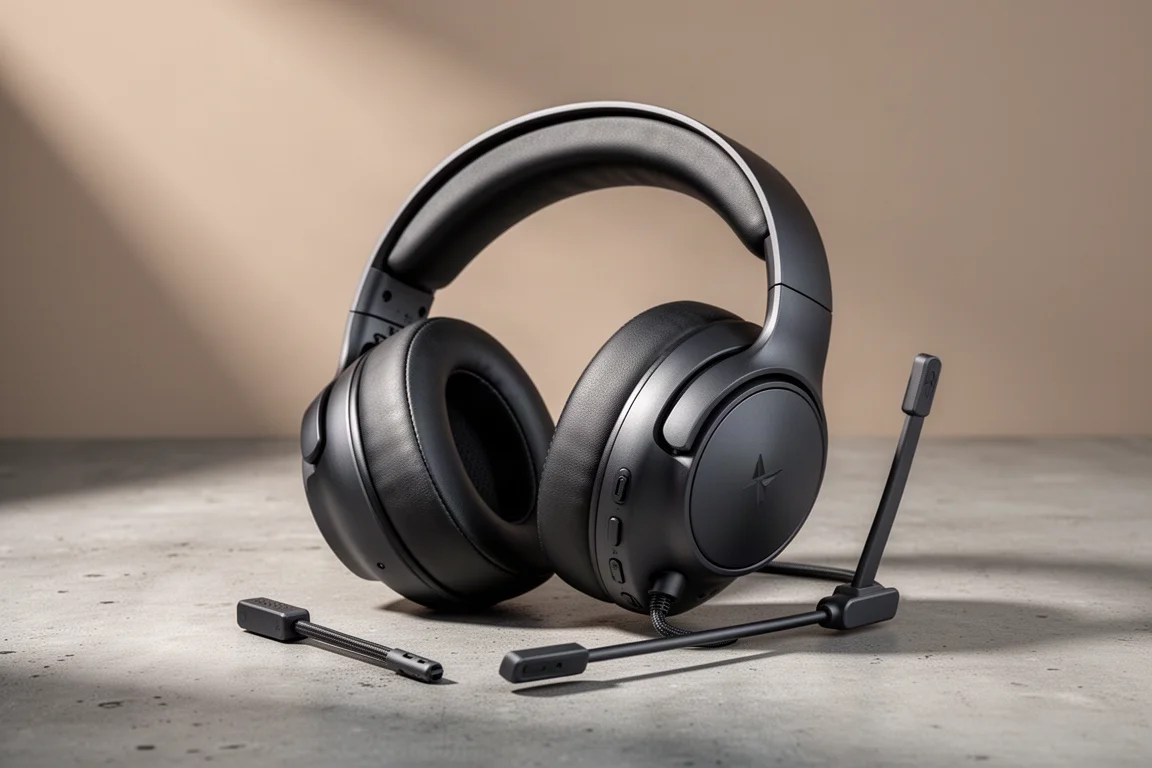
Audeze has spent years building high-resolution audio products around planar magnetic driver technology, and the Maxwell 2 brings that engineering heritage into a wireless gaming headset. The promise is specific: hyper-precise directional imaging for competitive play, audiophile-grade immersion for story-driven games, and battery life long enough that the headset never dies mid-session. What makes it more than a gaming accessory is that it also works as a genuinely capable pair of high-fidelity headphones for music.
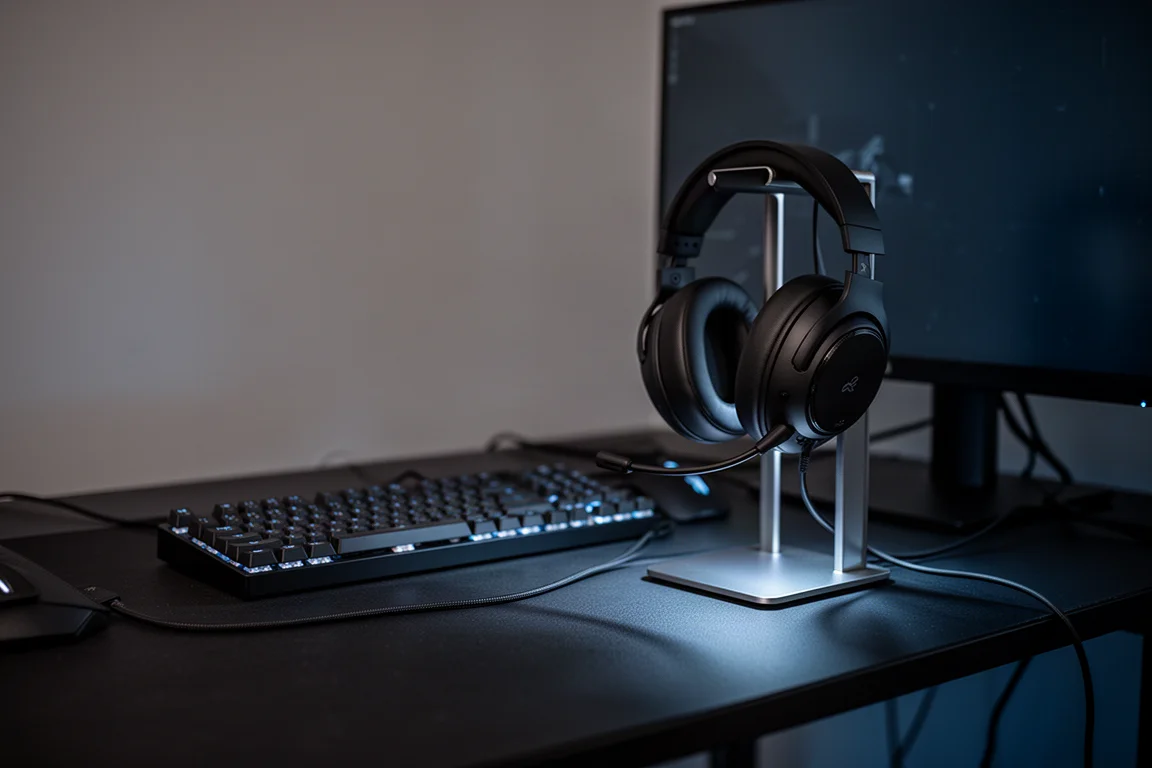
That dual role is the heart of the appeal. Rather than choosing between a competitive gaming headset and a dedicated music headphone, the Maxwell 2 is designed to cover both from a single device, with refinements layered on top of an already popular previous generation.
Who the Audeze Maxwell 2 Is For
This headset suits players who treat positional accuracy as a competitive advantage. The fast transient response and precise imaging are aimed squarely at people who need to separate a footstep from an explosion without the low end swallowing the detail.
It also suits listeners who want one pair of headphones for everything. Because the drivers deliver a flat, accurate frequency response and respond well to EQ, the Maxwell 2 works as a music and movie headphone rather than a gaming-only device.
A third audience is audio professionals working in Dolby Atmos production. The Xbox and PC version carries an embedded Dolby Atmos license, which allows full Atmos previews and head tracking integration with the Atmos renderer. Anyone who wants a single headset that moves between competitive play, casual listening, and reference work is the natural buyer here.
Planar Magnetic Drivers and Competitive Audio
Most gaming headsets rely on traditional dynamic drivers, which are essentially small cones pushed by a voice coil. The Maxwell 2 instead uses 90 mm planar magnetic drivers, where an ultra-thin, lightweight diaphragm is suspended between magnetic arrays. Three proprietary technologies shape the outcome. Uniform voice coils apply driving force evenly across the entire diaphragm for near-zero distortion. Fluxor magnets create a powerful magnetic array that doubles driving power for high efficiency. Fazor waveguides manage the flow of sound waves to prevent resonance, which supports a more accurate frequency response and a holographic sense of three-dimensional space.
Why that matters during play comes down to speed. Because the diaphragm is virtually weightless, it reacts almost instantly to audio signals. In competitive shooters, that rapid transient response keeps the booming bass of a nearby explosion from smearing into the midrange and masking the subtle high-frequency crunch of enemy footsteps.
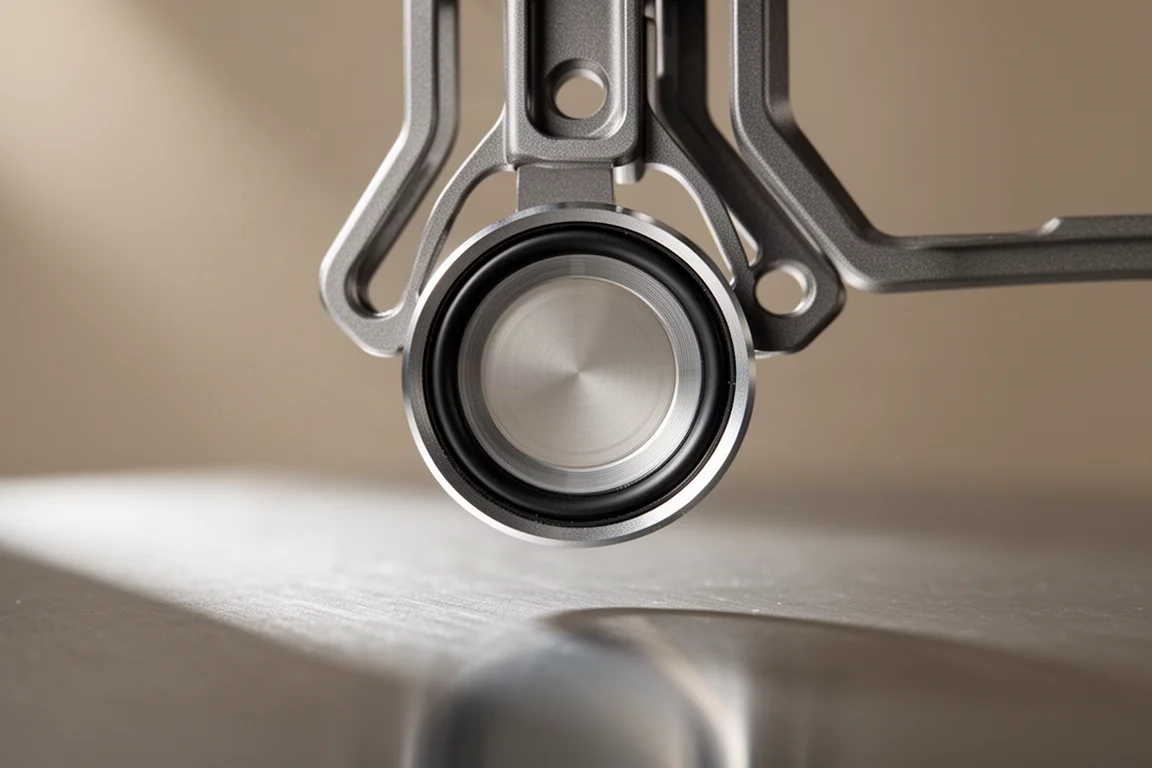
The biggest addition over the original Maxwell is the SLAM Acoustic Management System, short for Symmetric Linear Acoustic Modulator. Trickled down from Audeze’s $6,000 flagship headphones, it reshapes how bass energy behaves inside the ear cup. The result is a warmer, slightly friendlier tuning with impressive body. It is not a dramatic increase in raw bass quantity so much as a highly controlled, beautifully separated low end that responds well to EQ adjustments.
Battery Life, Connectivity, and Controls
Audeze packed a substantial battery into the Maxwell 2, rated for up to 80 hours of playback. That figure holds up in practice: across a full week of multi-hour evening gaming sessions, the headset drained only around 20 percent. At that pace, battery anxiety simply stops being part of the experience.
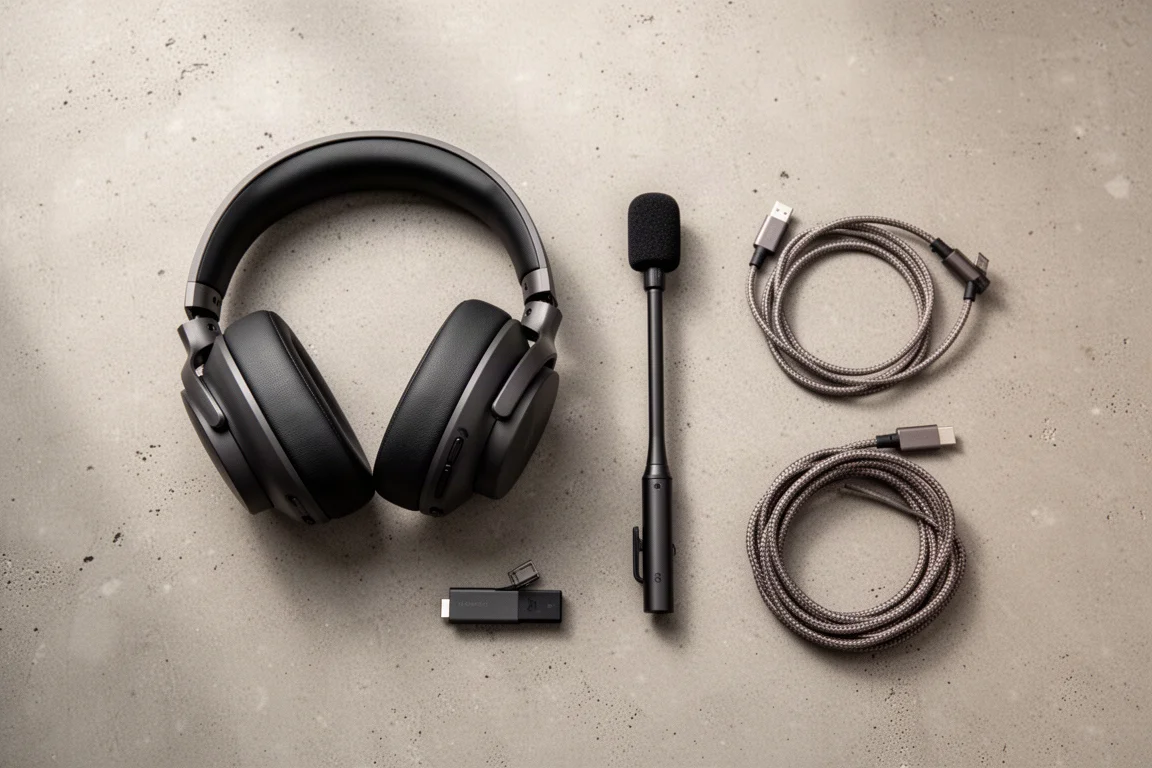
Connectivity is broad. There is a low-latency USB-C dongle, USB-C wired audio, a 3.5 mm analog connection, and Bluetooth 5.3 with support for high-res codecs including LDAC and LC3 Plus, so music playback benefits as much as gaming does.
One limitation deserves attention before buying. The Maxwell 2 does not support true simultaneous audio mixing. Instead it uses source prioritization, so if you are gaming through the dongle and a call or notification arrives on a Bluetooth-connected phone, the headset hands the feed over and your game audio cuts out entirely. Bluetooth here is a convenience feature for when you put the controller down, not a multitasking gaming tool.
For the best audio quality, use the direct USB-C connection, which supports 24-bit 96 kHz high-res playback. The 3.5 mm jack is worth understanding as well: the Maxwell 2 has no passive mode, so analog signals are reprocessed through the internal electronics anyway. Treat that jack as a convenient fallback for other headsets or airplane screens rather than an audiophile input.
Two versions exist, one for PlayStation and one for Xbox and PC. The Xbox version includes an embedded Dolby Atmos license and works with the Dolby Access app to take advantage of spatial audio tracks in modern games. The PlayStation version uses Sony’s Tempest 3D audio instead.
Controls have been thoughtfully placed. The left ear cup holds the connectivity ports and two recessed dials for master volume and game-to-chat balance. Pressing those dials cycles through EQ presets and sidetone levels, with built-in voice prompts confirming each change. The right ear cup carries the power button and the mic mute switch. To make room for the customizable outer plates, Audeze shrank that mute switch and tucked it at the bottom of the cup, which makes it harder to locate quickly during a match. The Audeze HQ app, available on PC, Mac, and mobile, has been overhauled with a smooth interface for multi-band EQ, voice prompt settings, and microphone noise reduction.
Comfort, Weight, and Fit
The chassis is built from high-quality aluminum and steel, which gives the headset a premium feel that far surpasses the creaky plastic construction typical of mainstream gaming headsets. That build quality comes with a trade-off. Housing 90 mm drivers, robust metal yokes, and a large battery pushes the weight to almost 20 oz, or roughly 560 g, making it more than 10 percent heavier than the original Maxwell.
The new suspension strap is wider and perforated, and it does a noticeably better job of spreading that mass across a larger area of the head. Even so, mass is still mass. During longer sessions the weight tends to become noticeable right around the two-hour mark, so anyone sensitive to neck fatigue may want to set the headset down during loading screens for a stretch.
Clamping force is moderate and comfortable, and the closed-back design paired with the new plusher pads produces an excellent seal, which translates into strong passive noise isolation. Keyboards and office chatter are easily blocked out. The leatherette pads can retain heat over long listening sessions, so some warmth is expected. Aftermarket pads in a more breathable material are an option, though they may cost a little passive isolation, and the magnetic attachment makes swapping them effortless.
Microphone, Music, and Everyday Use
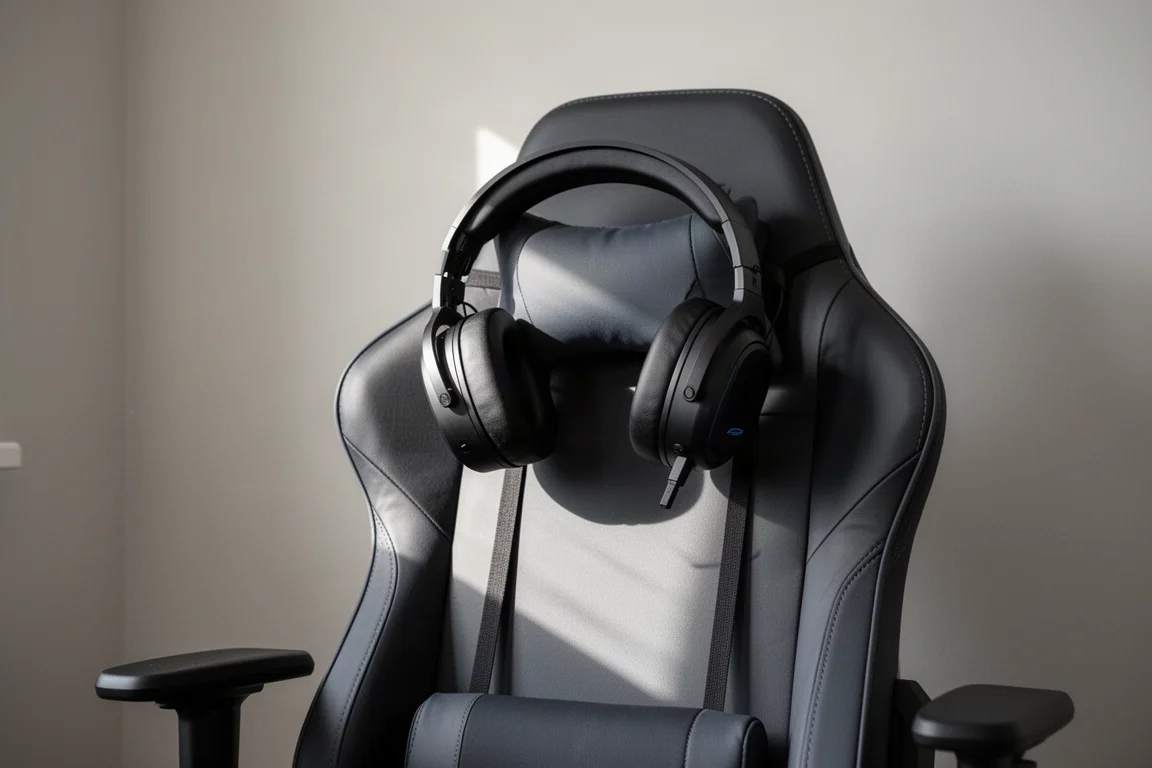
The Maxwell 2 uses a virtual dual mic setup with input from Shure Electronics. When the removable boom mic is plugged in, a dedicated AI processor combines it with onboard beamforming mics to suppress background noise. Setting AI noise reduction to low cleanly removes keyboard clutter while keeping voices clear. Pushing it to high removes even more background sound, but voices can start to sound compressed and robotic. Remove the boom mic entirely and the internal mics take over automatically, which is handy for phone calls without looking like you are wearing a gaming headset in public.
For music and movies, the headset performs at a level that is genuinely impressive for its category. The frequency response is flat and accurate, with lifelike detail across genres. Out of the box the tuning leans analytical rather than boomy, and the drivers are extremely EQ friendly, so a punchier cinematic low end can be dialed in through the app without introducing distortion.
One characteristic to know about: while the planar drivers deliver highly accurate bass, they do not produce the literal physical head rumble that some dynamic-driver headsets generate. Listeners who prize that tactile thump for cinematic immersion may miss it, though for competitive advantage the trade-off is clearly worthwhile.
Things to Consider Before Buying
Weight is the most obvious consideration. At roughly 560 g, the Maxwell 2 is heavy for a gaming headset, and longer sessions can bring noticeable neck fatigue despite the improved head strap.
The absence of simultaneous audio mixing is the second. If your workflow depends on hearing game audio and Bluetooth audio at the same time, this headset will not do it, and Bluetooth will interrupt your game feed instead.
Smaller details matter too. The mic mute switch is tiny and recessed, which makes quick mid-match toggling awkward. The leatherette pads can run warm during extended use. The 3.5 mm jack is a fallback rather than a high-fidelity input because there is no passive mode. And because the PlayStation and Xbox versions differ in their spatial audio support, the version you choose should match your platform.
Buying Advice
The Maxwell 2 makes the most sense for buyers who want a single headset to cover competitive gaming, immersive single-player titles, and music listening without compromise. If that describes you, the combination of planar magnetic clarity, a controlled and EQ-friendly low end, and up to 80 hours of battery life is difficult to argue with.
Choose the version that matches your platform first, since the Xbox and PC model includes an embedded Dolby Atmos license while the PlayStation model relies on Sony’s Tempest 3D audio. If you plan to use the headset mainly for music, connect over USB-C for 24-bit 96 kHz playback rather than relying on Bluetooth or the analog jack. And if long sessions are routine, consider that the weight may matter more to you than any specification on the box.
Conclusion
The Audeze Maxwell 2 remains one of the most impressive-sounding wireless gaming headsets available. It successfully bridges the gap between a serious audiophile reference monitor and a feature-rich gaming headset, with class-leading planar magnetic sound staging, pristine clarity, and extraordinary battery life.
It is not flawless. At roughly 560 g it is hefty, and the lack of simultaneous audio mixing keeps it from being perfect for every setup. But for anyone shopping for a wireless gaming headset that instantly transforms into a high-end music headphone, the Maxwell 2 is an easy recommendation.
Product link
View more details for Audeze Maxwell 2
This product is mentioned in the review. Check the specifications, options, and compatibility before buying.
View more details for Audeze Maxwell 2Further reading
Related Reviews

Gaming Headsets
ASUS ROG Cathara Review: Planar Magnetic Sound With a Few Caveats
The ASUS ROG Cathara brings planar magnetic drivers and audiophile-grade tuning to a gaming headset, but volume sensitivity and mic quirks mean it is not for everyone.

Gaming Headsets
Asus ROG Kithara Review: A Cozy Open-Back Headset With Audiophile Sound
The Asus ROG Kithara blends HiFi Man planar magnetic drivers with ROG gaming features. We test comfort, microphone quality, and sound across games and music.
Gaming Headsets
Audeze Maxwell Review: A Wireless Gaming Headset That Doubles as a Music Headphone
A practical look at the Audeze Maxwell, a wireless gaming headset with planar magnetic drivers, up to 80 hours of battery life, and a detachable boom mic that turns it into a serious music headphone.