Running Shoes
Atreyu Race Model Review: The Most Affordable Marathon Racer Gets Tested
A carbon-plated marathon racing shoe at $120 sounds too good to be true. We took the Atreyu Race Model out for speed work in Savannah to see where it excels and where it falls short.
Introduction
The Atreyu Race Model carries an unusual promise: a full carbon fiber plate, a supercritical foam midsole, and marathon-distance intent, all at $120. That makes it the most affordable marathon racing shoe on the market, undercutting plated trainers from much larger brands at roughly half the price.
The brand itself is part of the appeal. Atreyu is an independent, Austin, Texas based company whose entire business is running shoes. With only a handful of products in the lineup, each release carries real weight for the company, and that focus shows in small touches like the “Honor Simplicity” motto printed inside the box. Design and testing happen in Texas, and the brand leans into a western and skate-inspired aesthetic rather than the cookie-cutter look of mainstream racers.
This review is based on a first-run test: roughly six miles through downtown Savannah, Georgia, including a set of 400 meter repeats in hot afternoon conditions. Here is what the shoe does well, and what you should know before buying.
Specs and Design
Atreyu reports a 35 mm heel stack and 29 mm forefoot for a 6 mm drop, which is about 4 mm less foam under the heel than many premium marathon racers. Claimed weight is 8.2 oz in a men’s size 9, which puts it slightly heavier than some higher-stacked competitors despite offering significantly less foam.
The foam is billed as a supercritical TPE, though the labeling is a bit murky. On foot, it feels very much like a supercritical EVA: bouncy and comfortable, but denser and less explosive than a PEBA-based racing foam. Paired with the full carbon plate, the ride sits closer to a quality speed-day shoe than a soft, max-stack super shoe.
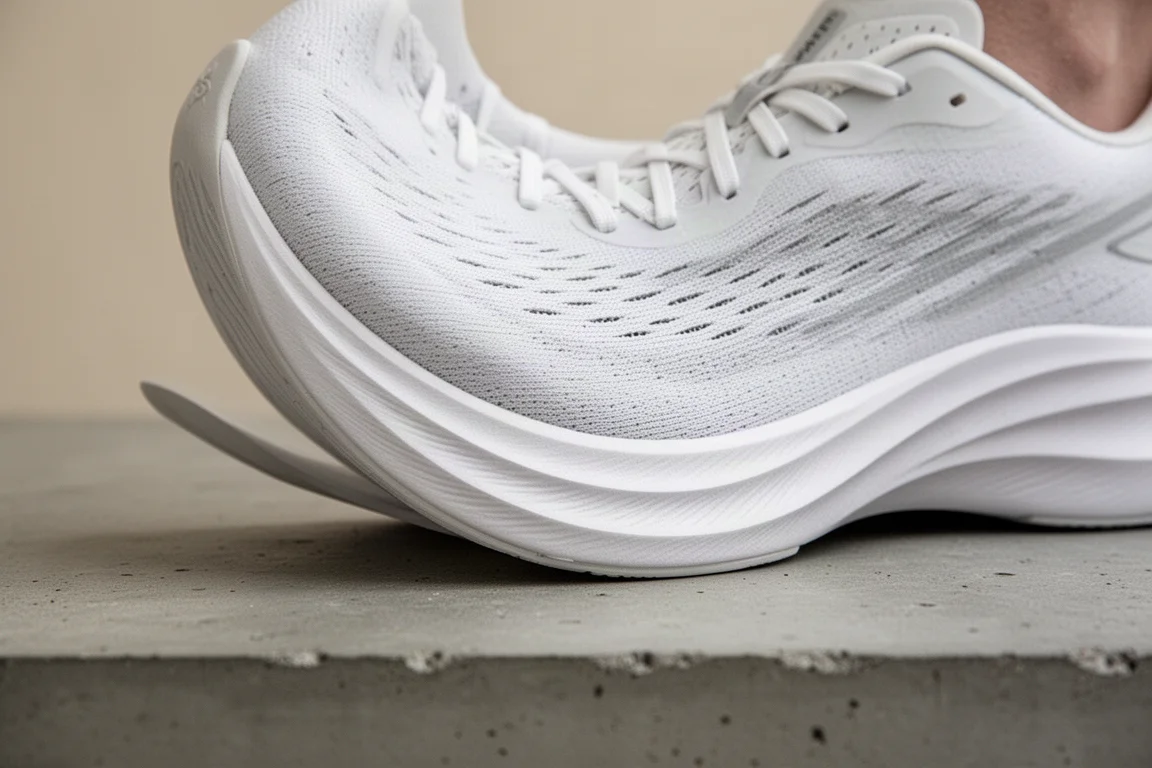
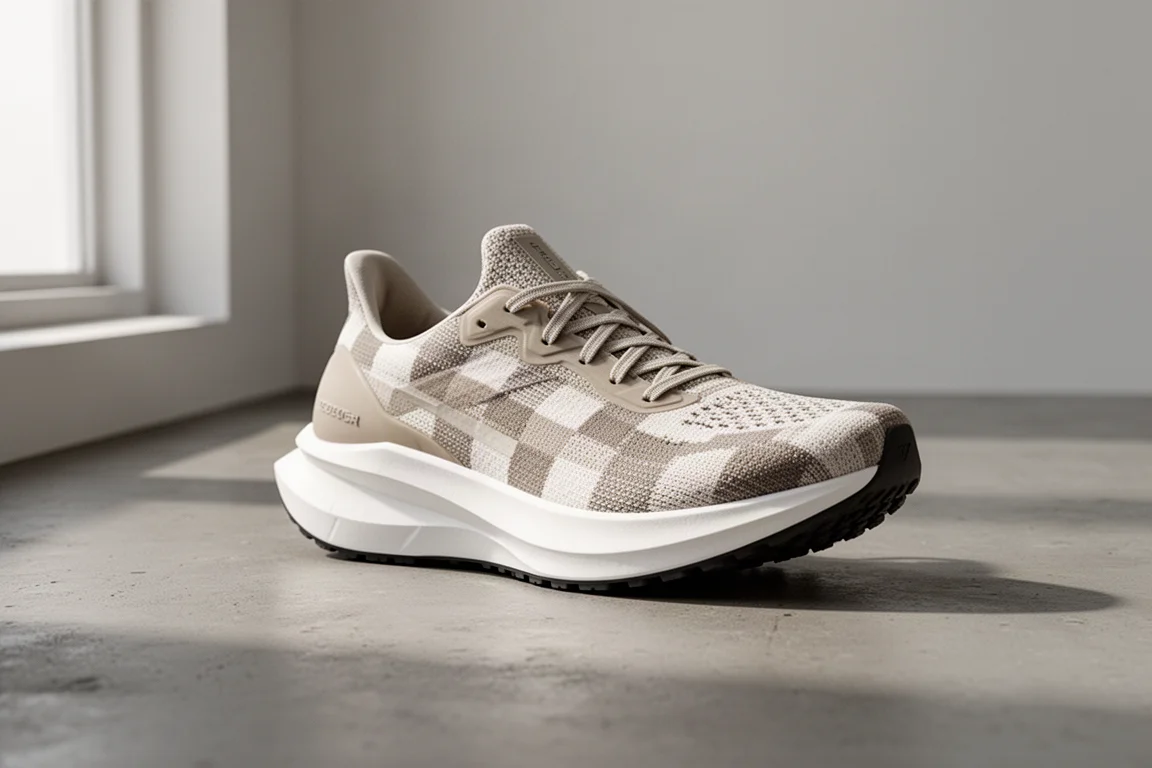
The geometry is the standout design element. The front of the platform curves up aggressively near the toes, much more than a typical daily trainer, and that shape genuinely pushes your toes upward and encourages a quicker, more efficient stride. Visually, the shoe is a differentiator too: with its checkered upper pattern and clean, simple lines, it would not look out of place among classic skate shoes from the late 2010s.
How It Rides
At an easy jog, the Race Model feels unremarkable. The narrow heel and dense foam do not exactly invite a relaxed everyday-pace run, and the low stack makes itself known compared to fuller-fledged super shoes.
Once the pace picks up, the story changes. During 400 meter repeats at roughly 5:40 to 5:50 mile pace, the shoe came alive. The combination of the firm-ish foam, carbon plate, and aggressive forefoot rocker rewarded quick turnover and a forefoot-biased strike, and the whole experience felt like an old-school racing flat updated with modern materials. It promotes good form in a way that slower running never reveals.

The closest comparisons are shoes like the Adidas Takumi Sen, a favorite speed-day shoe. The Race Model delivers maybe 95% of that experience with slightly softer, more comfortable foam, at a fraction of the price. It is less of a budget version of a max-stack super trainer and more a budget take on a sharp, minimal speed shoe.
That said, it is not a top-tier marathon contender. The dense foam tends to feel flat late in longer efforts, and the narrow platform offers limited stability for everyday paces. For most recreational runners, this is best understood as a speed-day and shorter-race tool rather than a 26.2 shoe.
Fit and Sizing
Fit is the biggest caution. The Race Model runs short and narrow, with a very low-volume toe box and a narrow heel and midfoot. In a men’s 10.5, the same size that fits comfortably in comparable trainers, the shoe felt tight, with toes pressed against the end of the box. Sizing up half a size for men is strongly recommended.
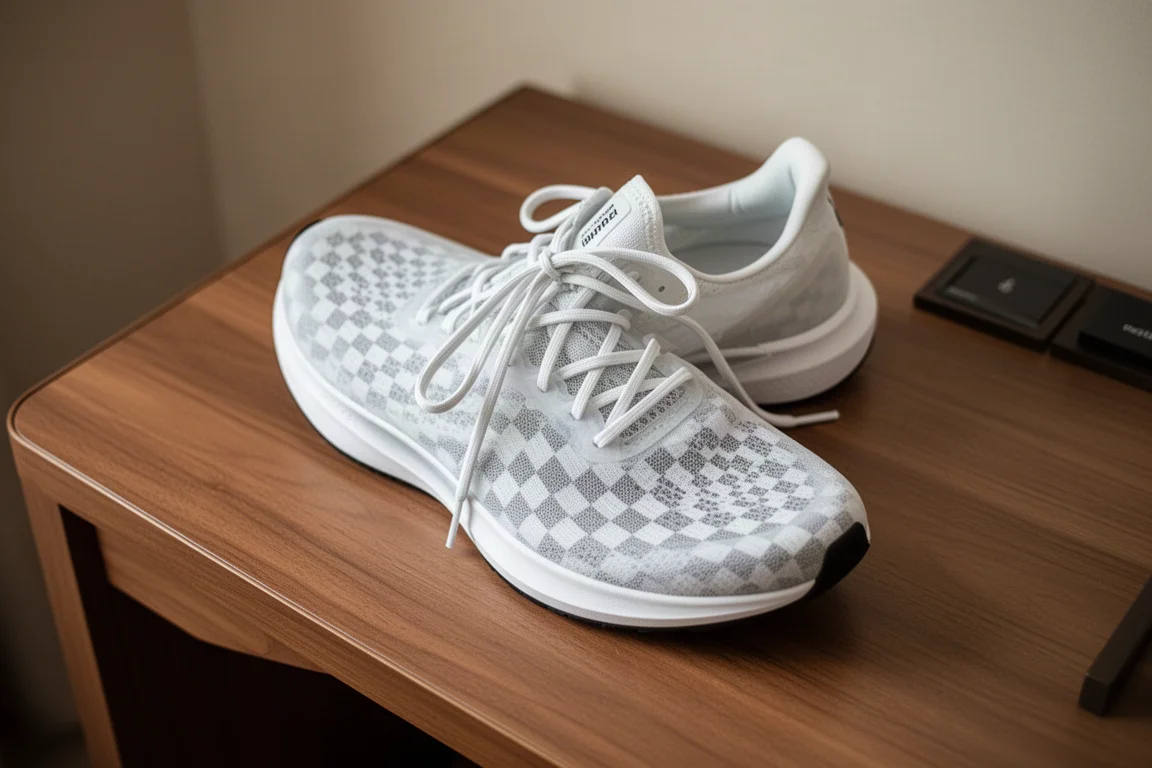
The upper is a lightweight, slightly see-through mesh that keeps the build feeling airy despite the modest weight penalty in the midsole. Heel collar height is quite low, almost slide-like, which some will find airy and others will find loose-feeling. The unisex sizing means men should be especially careful with their conversion.
One odd quirk: on polished surfaces like marble floors, the outsole has a noticeable suction-cup effect, both walking and midfoot striking on brick. It is strange enough that it may warrant attention in future versions.
Durability and Value
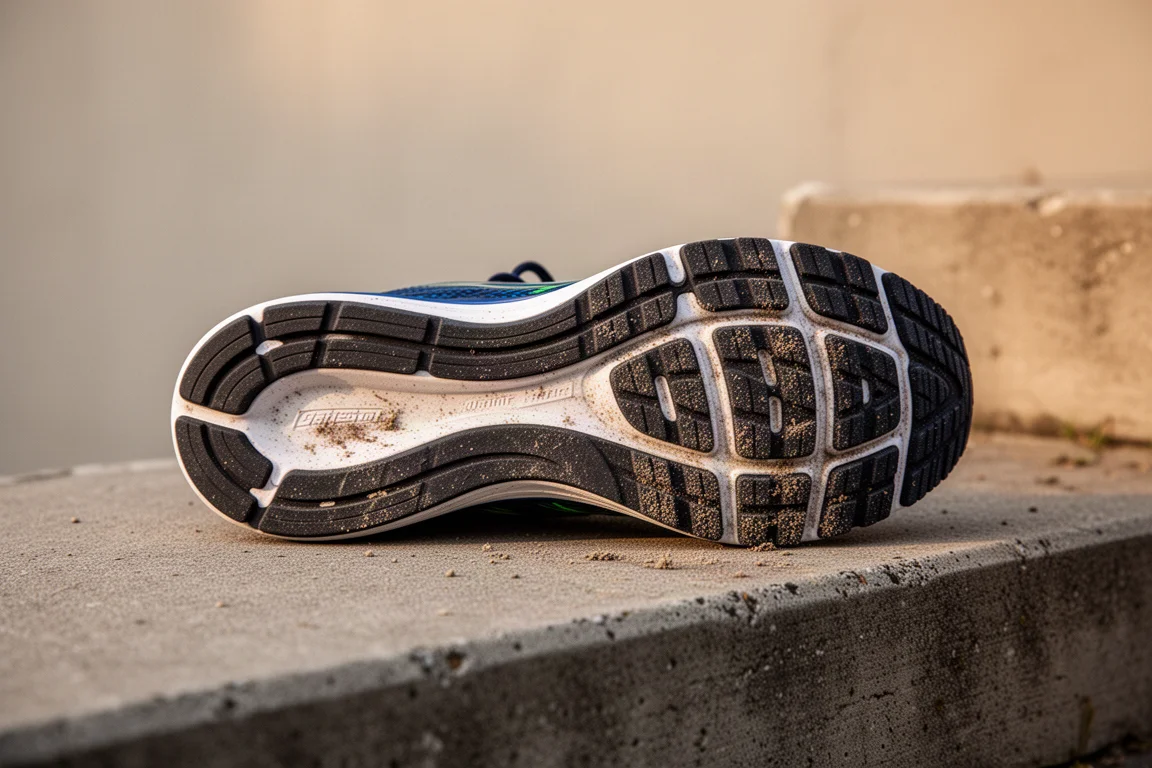
The rubber outsole layer is thin, so long-term durability past 100 miles is an open question. Still, the presence of any rubber at all is a plus at this price, since some similarly positioned training shoes skip it entirely. If the shoe holds up to 250 miles, the value case becomes very strong.
And the value is the headline. At $120, no other shoe on the market combines a carbon plate, a nice bouncy supercritical foam, and this level of speed performance. If it were priced at $250, it would be a hard pass given the weight-to-foam ratio and narrow fit, but at this price it is a legitimate tool for a rotation.
Buying Advice
The Atreyu Race Model makes the most sense for lighter, faster, or more efficient runners. If you run marathons at sub-6:00 to sub-6:30 mile pace, it could plausibly work as a race-day option, though most people will be better served keeping it under the half marathon distance. It shines brightest as a speed-day shoe for 400 and 800 meter repeats, where it offers more protection than minimal alternatives and costs close to half of the established competition.
Skip it if you need a wide, stable platform, want maximum cushioning for long miles, or prefer a shoe that works at every pace. And plan on going up half a size.
Conclusion
The Atreyu Race Model is fun, fast, and refreshingly affordable. It will not dethrone the premium marathon super shoes, and its sizing quirks demand attention, but as a carbon-plated speed shoe for $120 it is arguably the best deal in the category right now. For runners who want a dedicated faster-workday shoe without premium pricing, it is an easy recommendation.
Product link
View more details for Atreyu Race Model
This product is mentioned in the review. Check the specifications, options, and compatibility before buying.
View more details for Atreyu Race ModelFurther reading
Related Reviews

Running Shoes
Best Road-to-Trail Running Shoes: Three Versatile Options for Mixed Terrain
A practical guide to three road-to-trail running shoes that handle both pavement and mild trails, with clear strengths and trade-offs for different runner types.

Running Shoes
Best Running Shoes for Achilles Tendonitis: Three Options Explained
Three running shoes with different heel drops and support features designed to help reduce Achilles tendon pain during walking and running.

Running Shoes
Best Running Shoes for Women: Five Top Choices Ranked
A ranked guide to five women's running shoes, from versatile daily trainers to high-performance racing options, with real strengths and trade-offs for each.