All-Mountain Skis
Atomic Maverick 96 CTI Review: A Mid-90s All-Mountain Ski Built for Soft Snow
A close look at the 2026 Atomic Maverick 96 CTI, including its new poplar and ash core, more tapered shovel, shorter turn radius, and the firm-snow trade-offs that come with it.
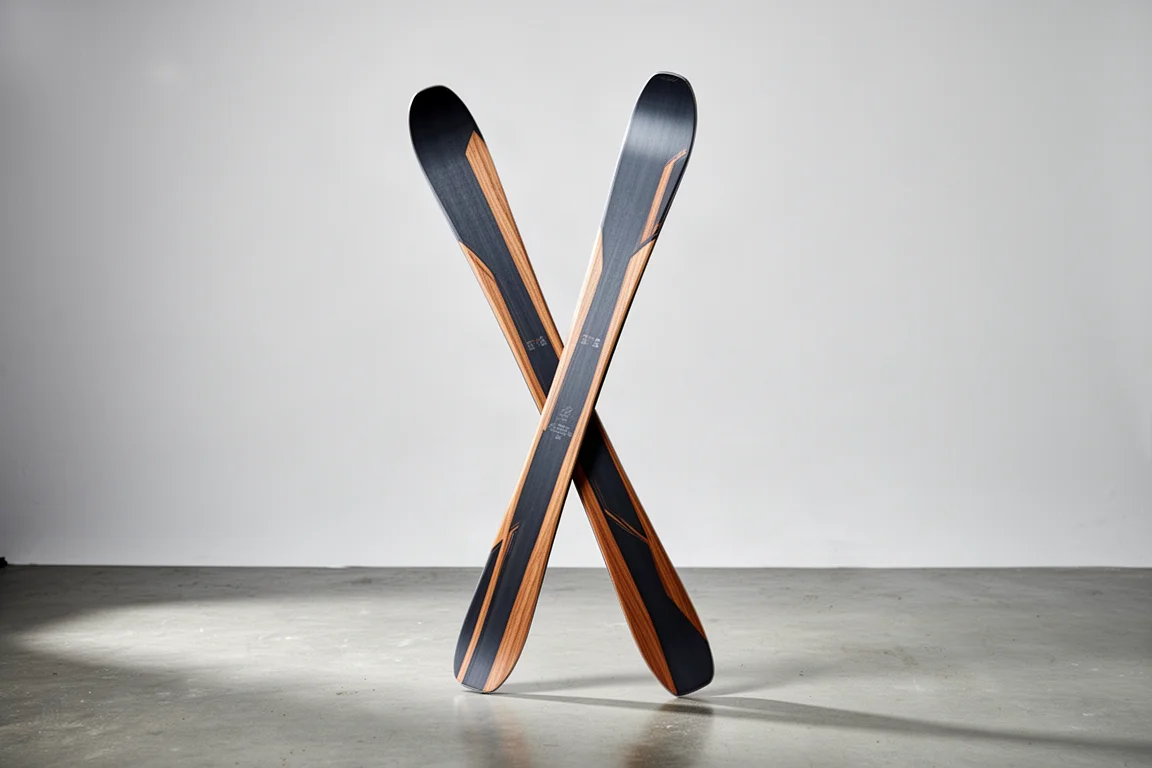
Introduction
The Atomic Maverick 96 CTI is the 2026 replacement for the Maverick 95 TI, and it borrows heavily from the wider Maverick 105 CTI that arrived the season before. Atomic has been nudging the Maverick family toward the freeride side of the all-mountain spectrum for a few seasons, with Horizon Tech shaping in the tips and a clear soft-snow bias built into the design. The 96 pushes that direction further than any Maverick at this width has gone before.
The headline changes are a new core recipe, a more tapered shovel, a shorter turn radius, and a slightly softer longitudinal flex. The result is a ski that gives up a small amount of groomer precision in exchange for noticeably stronger performance in soft snow, chop, bumps, and trees.
It also sits in a well-defined line. The narrower 88 and the wider 105 cover the same construction philosophy, and the 105 carries over unchanged for the coming season apart from a new graphic. That makes the 96 the new option for skiers who want freeride-leaning shaping without stepping over 100 mm underfoot.
Weight is essentially unchanged from the outgoing model, and the overall build stays thin. That continuity matters, because it means the 96 is not a heavier or more demanding ski than what it replaces. What changed is where the ski chooses to be good.
What Changed for 2026: Construction and Shape
The core is the biggest departure. Out goes the Omatic core with two full sheets of metal and a lighter poplar wood, and in comes a mix of poplar and ash, along with carbon and titanal, with titanal placed underfoot. The ash is the most significant addition. It is a denser wood more commonly found in race-oriented skis, where it is used to steady a build and boost sturdiness. Atomic also notes that leaning on that denser wood reduces the need for extra fiberglass and adhesive, which trims material waste in the build.
The core profile stays thin, and it is one of the thinner profiles you will find in a ski of this stature. The ski runs full sidewall and transitions into a cap construction close to the middle, a build that helps mobility and agility and takes some edge off when you are trying to stay light on your feet in softer snow. Updated Horizon Tech 3D puts more of the design into the shovel than the outgoing 95 had, and there is still none in the tail.
Weight lands mid-pack, slightly on the lighter side. Atomic lists 1900 g at 179 cm, and a 188 cm model came in around 1980 g. Flex is a touch softer than the 95 TI, which was always on the stiffer end of the spectrum, and the new ski takes a little off the top in longitudinal flex.
Shape tells the rest of the story. Turn radius drops roughly one meter, from 19.3 m on the 95 at 180 cm to 18 m on the 96, which is still average rather than short. Tip rocker is similar but carries slightly more splay. The shovel has considerably more taper, echoing the freeride-style tip on the 105 CTI. Tail rocker length is up about 5%, early taper is roughly 5% longer, and the tail gains a couple of millimeters in width, producing a more pin-tailed shape and a shorter effective edge.
Who the Atomic Maverick 96 CTI Is For
Because it is easier to ski than the Maverick 95 TI, the 96 opens up to a wider range of skiers, including developing skiers stepping into the mid-90s width for the first time. The 95 TI was more precise, and that precision demanded more input from the person on top of it.
At the same time, there is a real performance ceiling here. Very few skiers will ever find the limit of this ski, and that is part of the appeal: it is forgiving when you are not at your best and still substantial when you are.
It suits directional skiers who want a genuinely capable soft-snow ski without going over 100 mm underfoot, and who are willing to trade a little firm-snow bite for that versatility. It is a strong fit for someone who wants one pair of skis and spends a meaningful share of the season in softer conditions.

Groomer Performance and Turn Character
The shorter effective edge shows up immediately. The ski wants to start a turn smoothly rather than snap into one, and it is not as crisp as the 95 TI, which dug in and pulled you around earlier. That hesitation is most noticeable on packed powder.
On very firm, icy days the ski ends up skidding more than carving, and getting down becomes survival mode rather than something pleasurable. The metal underfoot still helps: it does not get bounced around badly, but there is only so much purchase available on that kind of surface.
Where it shines on piste is smoothness. Vibration damping is good, and the ski feels smoother in just about every application than the model it replaces. Short to medium radius turns are the sweet spot. In long radius, high speed carves on firm snow, the tapered shovel starts working against you.
Softer groomers suit it much better. On packed powder the shovel is already bent into the shape you want for a carving turn, so you can let the ski do its thing and then stand on the rest of it and push hard. Drive the turn aggressively from the front of the ski on firm snow, though, and you will find the limits, because there is very little edge up front to bite.
The honest framing is that you give up a bit of groomer performance, and it remains fine on a groomer. The top end of the 95 TI was difficult to reach in the first place, so few skiers were ever extracting all of it.
Main Strengths: Soft Snow, Bumps, and Trees
Off piste is where the Maverick 96 CTI makes its case. It is more smearable and surfy than previous Mavericks, and the amenable shovel makes it easy to drive into a mogul while the tail stays supportive and keeps some rocker. Bumps and trees, the terrain that rewards wiggle factor, are a clear strength.
In variable snow and chop, the shovel does double duty as flotation and absorption. It accepts variance in the snow instead of plowing straight through it, so wind-affected powder sitting on top of firm corduroy does not catch you out. Push it at speed through choppy, steep terrain and the stiff tail provides the reliability you need underneath.
The shape also pairs well with the ski’s damping. In steeper technical terrain with firmer snow underneath, it does not feel catchy and it does not feel pingy, a balance that stiff, light skis often struggle to strike.
Comparisons have shifted too. Where the 95 TI sat alongside metal-heavy mid-90s skis, the 96 now feels closer in overall capability to a Rustler, though considerably more directional. Against a Ripstick 96 it is stouter and more robust, closer in feel to an older Ripstick 96 Black Edition, and arguably a little more ski than that.
Things to Consider Before Buying
Firm snow precision is the trade-off. If you valued the 95 TI for how precise, reactive, and strong it felt on hardpack, the 96 may not feel like a straight upgrade to you.
Long radius, high speed carves on firm snow are not its strength. The taper that makes the ski so capable in soft snow works against you when you are trying to hold a big, fast arc on a hard surface.
It also rewards skiers who spend real time in softer conditions. If your season is mostly hardpack and you want maximum edge grip from a mid-90s ski, a narrower and more precise option in the same line may serve you better.
Buying Advice
As a one-ski quiver, the Maverick 96 CTI is about as well-rounded as they come in this width. It covers a lot of ground, from soft groomers to bumps, trees, and chop, and it is easy enough to ski that a broad range of abilities can get along with it. It was built to be a true all-conditions, all-terrain ski, and it behaves like one.
If you are choosing within the Maverick family, let the width follow what you actually ski most of the time. The 105 carries over unchanged apart from a new graphic, so the 96 is the fresh option for skiers who want freeride-leaning shaping without crossing the 100 mm line. The narrower 88 has its own character and excels at slightly different things, so it is worth treating as a separate decision rather than a simple size step.
Conclusion
The Atomic Maverick 96 CTI trades a little groomer precision for a lot of soft-snow capability, and for most skiers at this width that is a good trade. It is smooth, damp, forgiving, and genuinely fun in bumps, trees, and variable snow, with enough backbone to ski fast through chop.
If you want one ski that handles a wide range of terrain and conditions, and you are honest about how much of your season happens off piste, this is one of the strongest candidates in the mid-90s.
Product link
View more details for Atomic Maverick 96 CTI
This product is mentioned in the review. Check the specifications, options, and compatibility before buying.
View more details for Atomic Maverick 96 CTIFurther reading
Related Reviews
All-Mountain Skis
100mm All-Mountain Skis Compared: 23 Versatile Models Worth Knowing
A practical walkthrough of 23 all-mountain skis around 100mm underfoot, covering weight, rocker, metal construction, and the rider each model suits best.
All-Mountain Skis
2026 Black Crows Camox Review: A More Stable, More Versatile All-Mountain Twin Tip
The 2026 Black Crows Camox adds an ash layer underfoot, wider tips and tails, and a revised rocker profile. Here is what those changes mean on snow.
All-Mountain Skis
Armada Antimatter 88 Review: A Light, Lively All-Mountain Ski That Rewards Any Style
The Antimatter 88 pairs a poplar core with carbon stringers for a surprisingly energetic ride that suits intermediates and experts alike.