Fountain Pens
Asvine V800 vs Jinhao 9019: Two Affordable Oversized Fountain Pens Compared
Two clear demonstrator pens with number eight steel nibs face off. One wins on filling system and comfort, the other on pure value.
Introduction
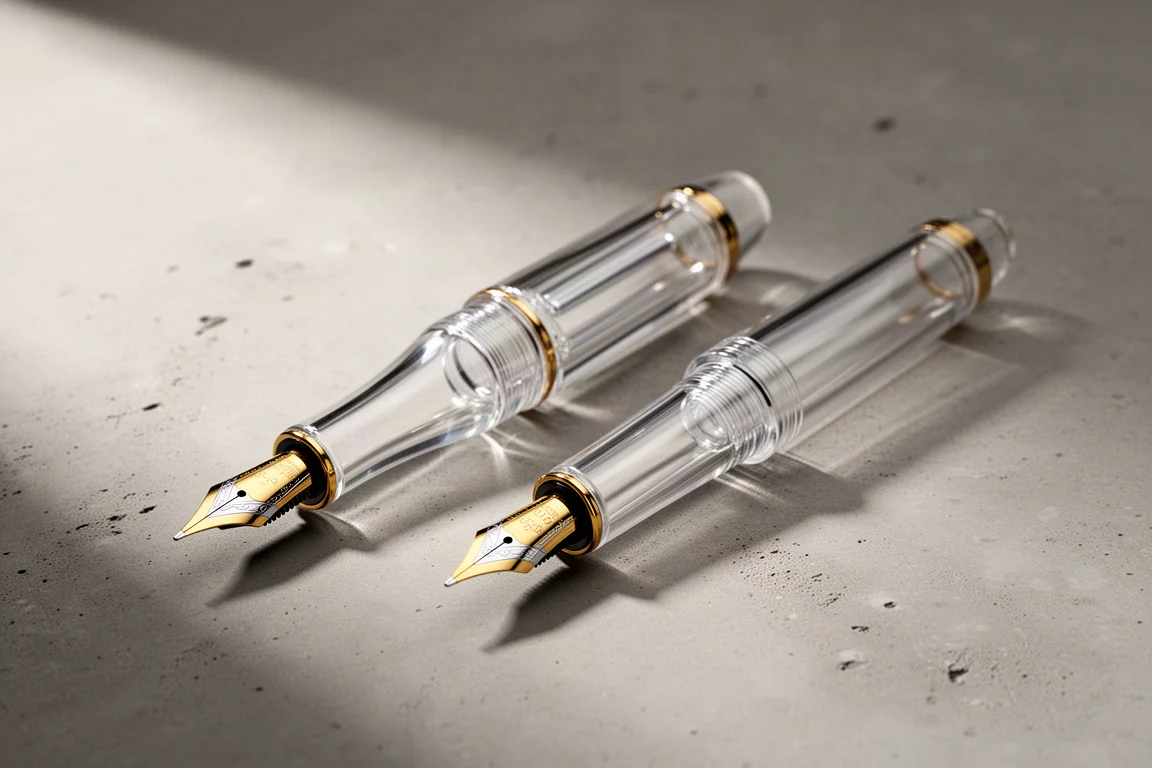
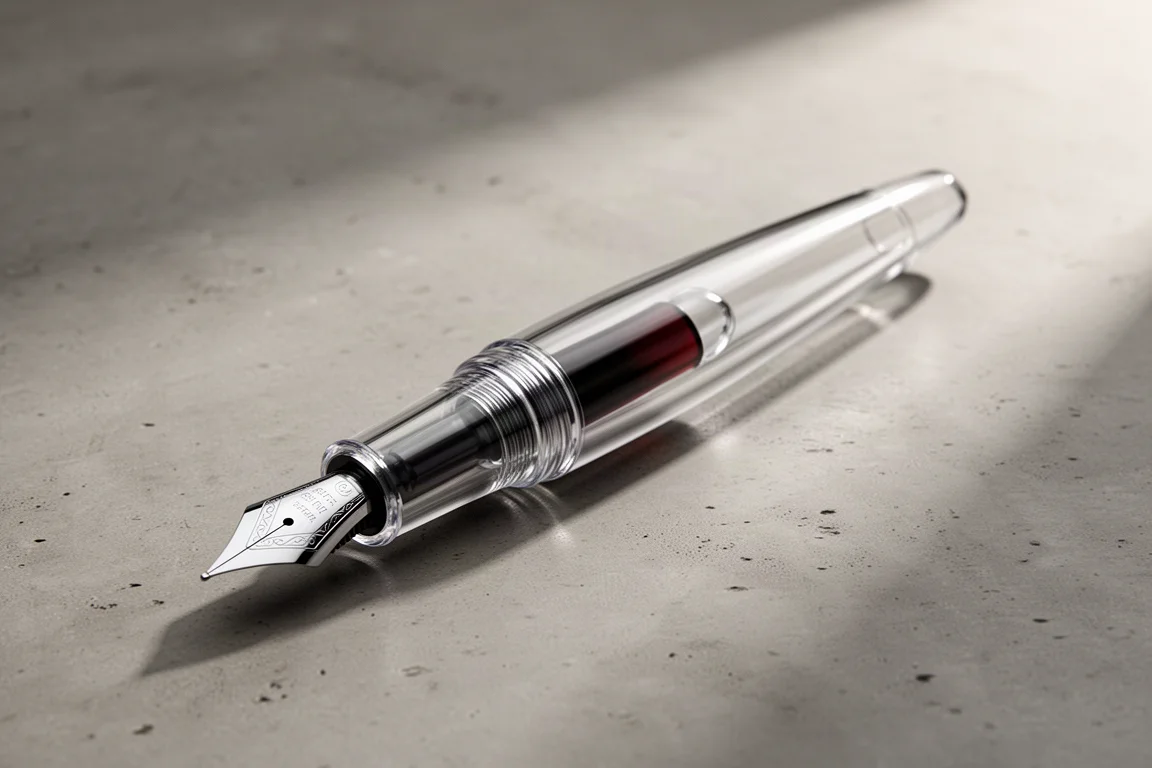
Every so often two products land in the same category so neatly that a side-by-side comparison practically writes itself. That is exactly the case here. The Asvine V800 and the Jinhao 9019 are both oversized clear demonstrator fountain pens with gold trim, number eight steel nibs, and prices that sit well below what most people expect to pay for a big-nibbed pen.
Both are larger than average, neither is subtle, and both come from Chinese brands that have been steadily earning attention in the fountain pen community. The question is not whether you get a lot of pen for your money with either of them. It is which one fits your hand, your budget, and your filling preferences better.
Jinhao 9019: Big Pen, Bigger Value
The Jinhao 9019 is a substantial pen from the first touch. The section is genuinely girthy, to the point where fingers cannot fully wrap around it, and the number eight steel medium nib adds to the sense of scale. Nib options include extra fine, fine, and medium, with a plastic feed and a cartridge converter filling system.
The included converter is a highlight on its own: noticeably larger in capacity than a standard international converter, and the pen may even be suitable for eyedropper filling if you are adventurous, though metal on the threads means some caution is warranted despite an O-ring seal.
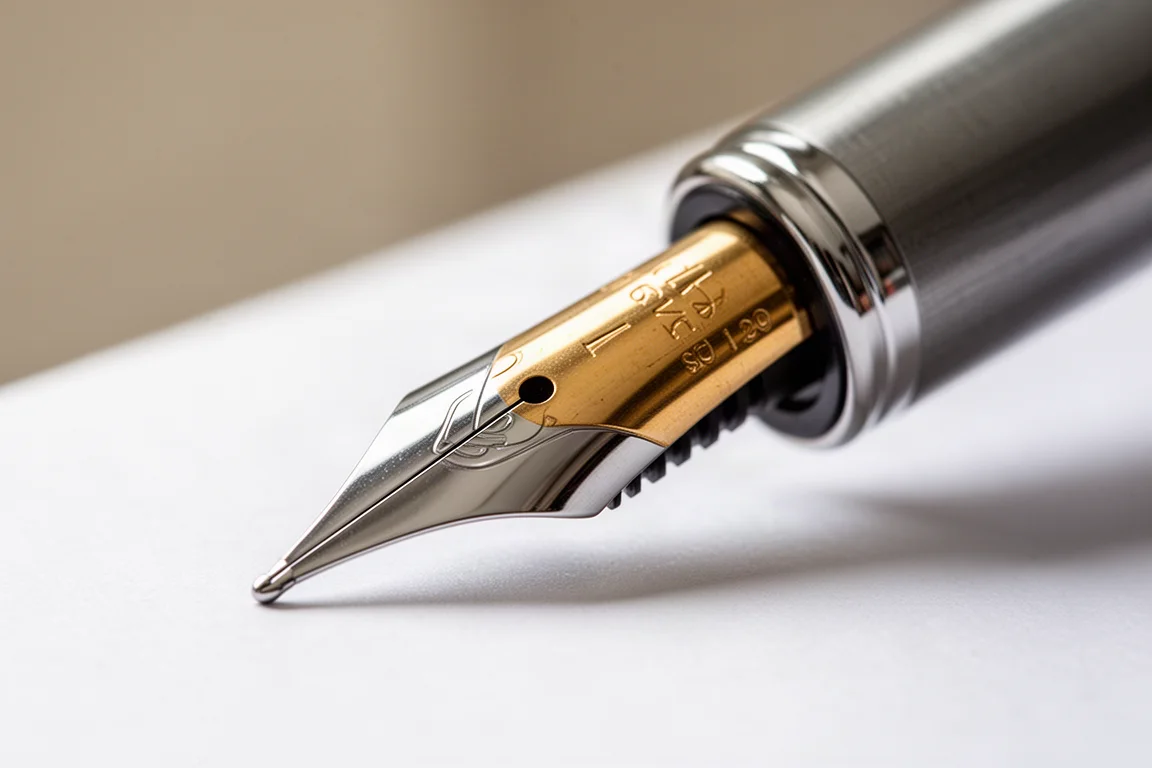
Priced at roughly $19.38 Canadian on AliExpress, the 9019 is an easy recommendation for anyone who wants a big nib and a fun, slightly blocky design without spending much. It is a smooth writer, the feed keeps up comfortably at speed, and the medium nib shows a faint hint of stub character with a slightly broader downstroke. Because it is clear, you can watch the ink level as you write.
Asvine V800: Vacuum Filler With a Purposeful Design
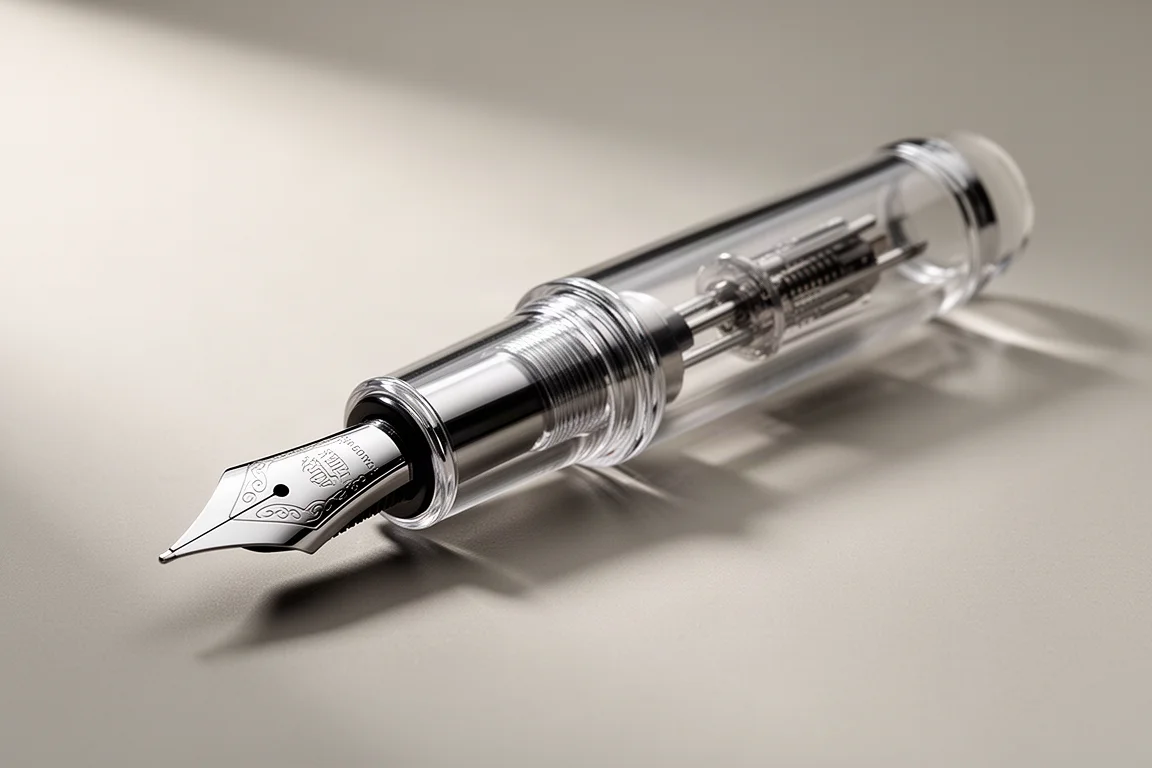
The Asvine V800 takes a different approach. Instead of cartridges or a converter, it is a vacuum filler: you unscrew the end, pull the rod, dip into a bottle, and push down to create a vacuum that draws up a large volume of ink. Filled completely, the capacity is genuinely huge, comfortably exceeding what the Jinhao offers.
Nib options run from extra fine and fine to medium and a 1.1 millimeter stub, all on a number eight steel body. Prices range from about 58 to 63 Canadian dollars depending on the finish, and non-clear versions are available if demonstrator pens are not your thing.
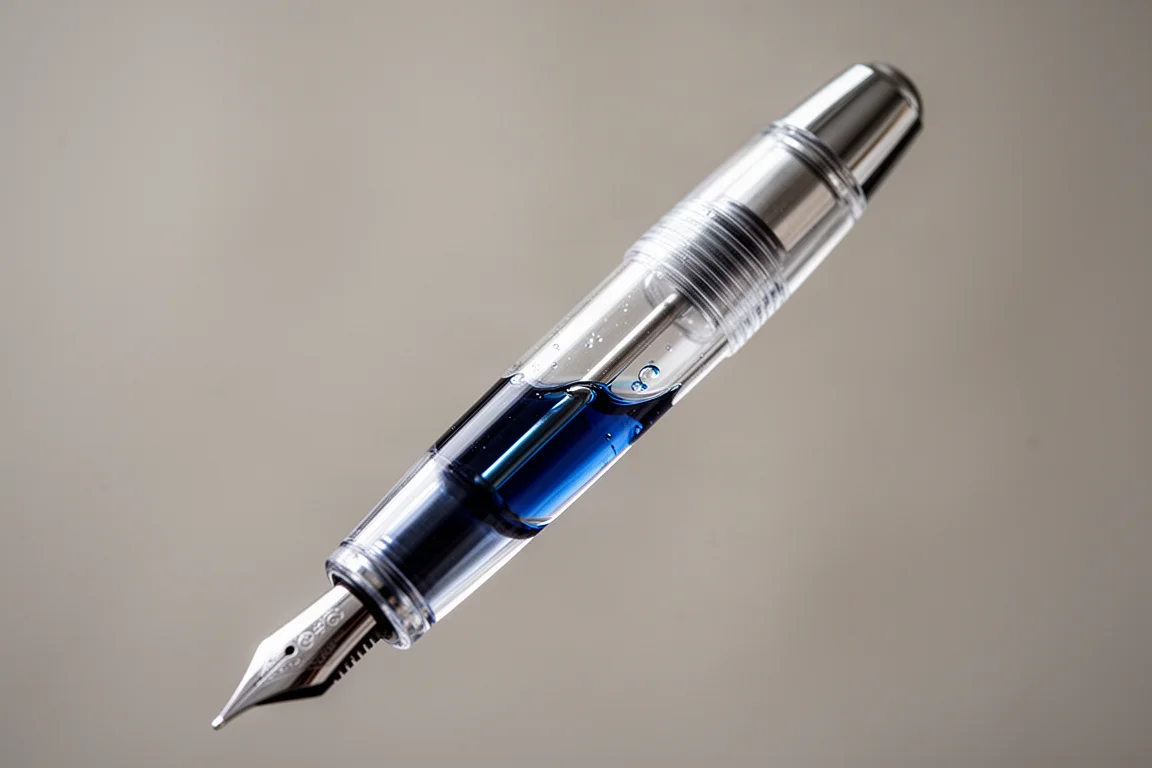
The 1.1 stub is the standout nib here. It is impressively smooth, runs wet and saturated, and produces natural line variation from its geometry alone, with rounded edges that keep it pleasant rather than crisp. The section tapers more gradually than the Jinhao’s, making the V800 feel less blocky, and it does not post deeply, which some will see as a limitation.
A genuine engineering bonus: the V800 fully disassembles. You get a small wrench and spare seals with the pen, so you can unscrew the entire assembly and clean it effortlessly. That kind of serviceability is rare at any price, let alone this one.
Writing Performance Side by Side
Writing both pens with the same blue ink makes the differences easy to see. The Jinhao 9019 medium is smooth, well tuned, and keeps pace with fast writing without hesitation. Squeezing light pressure into it produces some extra line variation, though it is not advertised as a flex nib, so treat that as a bonus rather than a feature.
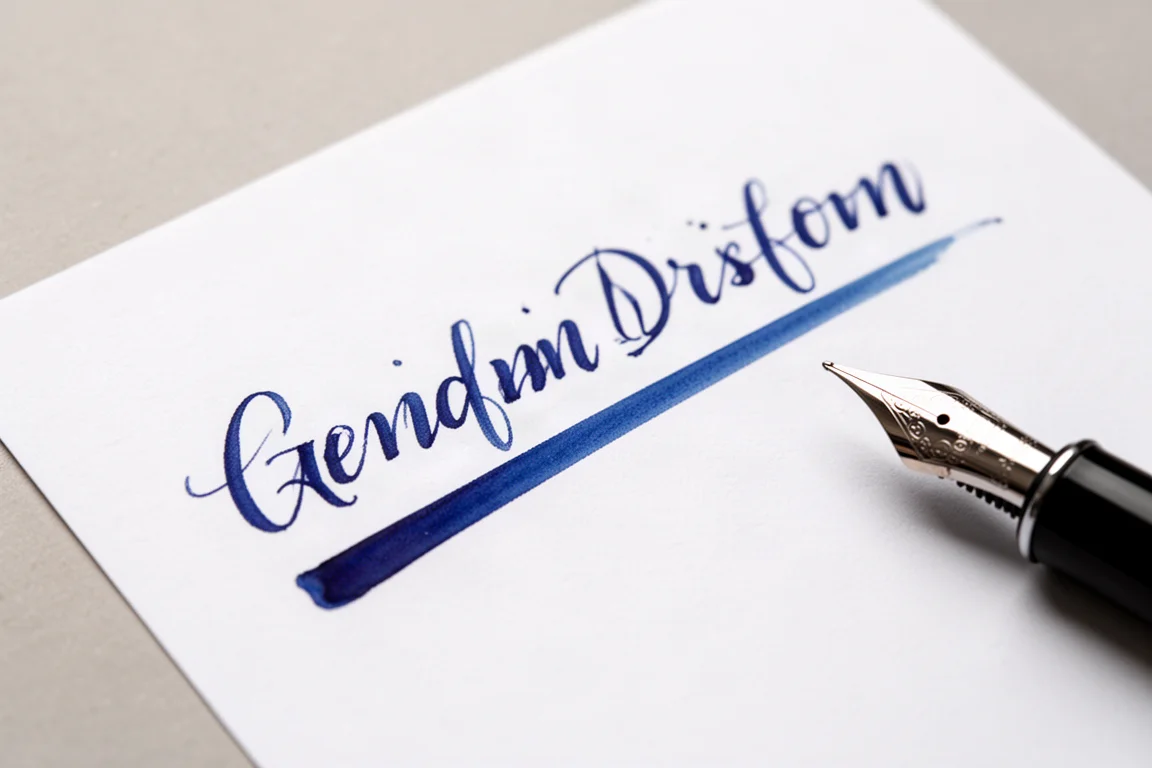
The Asvine V800 stub writes wetter and darker, guzzling ink in a way that suits its big capacity, and delivers consistent, rounded line variation. Posting the V800 makes it very large and slightly unbalanced, so unposted use is the more comfortable route. The Jinhao, by contrast, posts happily if you want an even bigger pen.
Which One Should You Buy?
If budget is the deciding factor, the Jinhao 9019 is the clear answer. Around twenty Canadian dollars buys a solid writer, a big nib, generous ink capacity, and a look that turns heads. Its main drawback is the very girthy, somewhat featureless section: writers with smaller hands, or anyone planning long sessions, may find it fatiguing.
The Asvine V800 justifies its higher price with a cooler filling system, full disassembly for easy cleaning, a slightly more comfortable tapered section, and a nib that feels a touch smoother overall. The ability to get a 1.1 millimeter stub, which the Jinhao does not offer, is another point in its favour.
For the writer in this comparison, the Asvine is the pick, mainly because the writing experience feels more pleasant over longer sessions. But the honest answer is that both pens are good: it is a matter of preference and budget, and neither choice is a bad one.
Conclusion
The Jinhao 9019 is one of the best value propositions around for an oversized, big-nibbed demonstrator, while the Asvine V800 refines the formula with a vacuum filler, better ergonomics, and a stub nib option. Buy the Jinhao to spend less, buy the Asvine to spend a little more for a more complete package. Either way, you get a genuinely fun pen.
Further reading
Related Reviews
Fountain Pens
Best Budget Fountain Pens Tested: 9 Pens, One Clear Winner
A hands-on comparison of nine affordable fountain pens for everyday writing, calligraphy, and sketching, with a clear standout for flexible nib fans.
Fountain Pens
Aurora Optima Review: An Italian Piston Filler That Punches Above Its Price
A 14k gold nib, ebonite feed, and a beautifully deep oraloid body make the Aurora Optima one of the most rewarding piston fillers around.
Fountain Pens
Cross Bailey Light Review: The Entry-Level Fountain Pen Worth Keeping at the Office
A plastic-bodied Cross with a metal clip, snap cap, and famously smooth extra fine steel nib. Around $15, available almost everywhere, and easy to recommend.