Fountain Pens
Asvine V169 Review: A $36 Vacuum Filler That Writes Like a Much More Expensive Pen
The Asvine V169 combines a vacuum filling system, metal overlay, and translucent acrylic barrel in an affordable package. Here's what works, and the one issue to watch.
Introduction
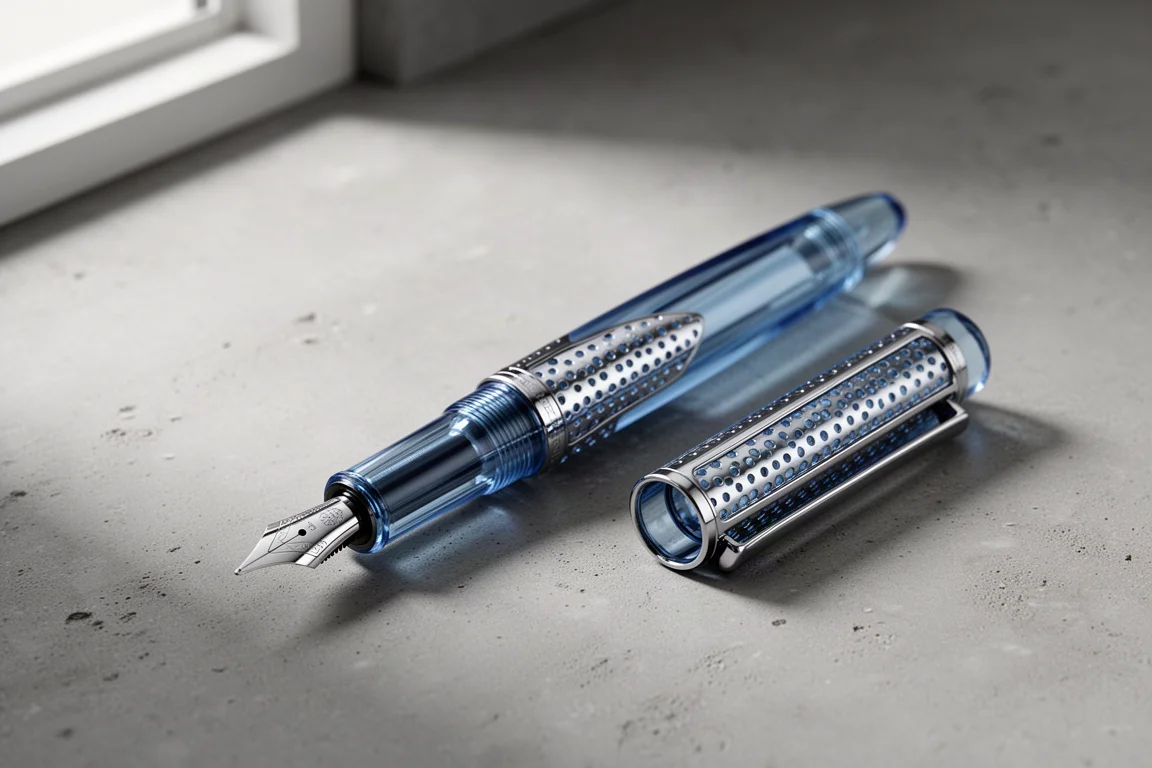
The Asvine V169 is a vacuum-filling fountain pen made in China, and it manages to pack a filling system usually reserved for pens costing many times more into a package that retails for $35.99 on Amazon. After several weeks of regular use, it has proven to be one of the more pleasant surprises in its price range: it writes beautifully out of the box, holds a large amount of ink, and feels solid in the hand.
This review covers the design, the filling system, writing performance, and one maintenance quirk worth knowing about before you buy.
First Impressions and Design
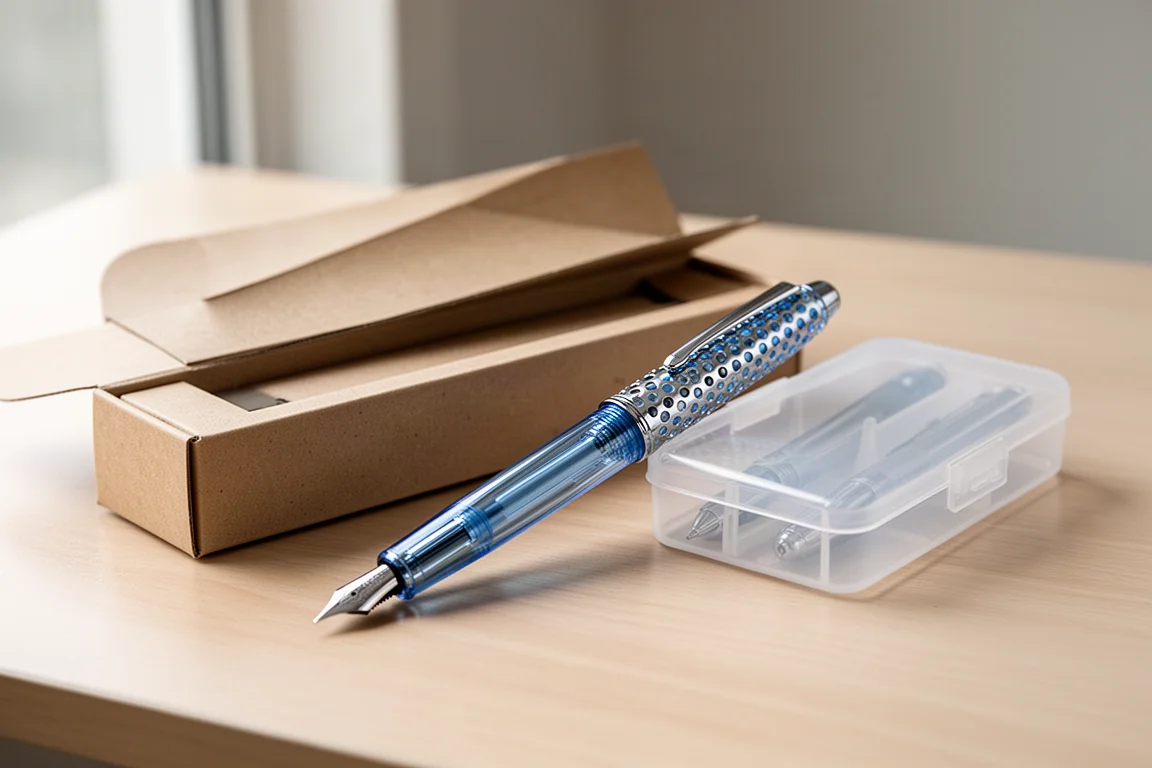
The V169 arrives in a cardboard outer box with the text “Write and Record Your Good Life” printed on it, plus a surprisingly nice plastic storage case, a well-written instruction manual, and a small silicone sleeve for the nib. Nothing extravagant, but the packaging feels considered for the price.
The pen itself is a decently sized writer, noticeably larger than something like a Pilot Metropolitan. It is built from acrylic and brass, with a translucent blue cap and barrel. The metal overlay is the visual signature here, and it is perforated with a pattern of small holes. If you have trypophobia, this is honestly a design you may want to skip entirely.
One note on the build: the overlay was reportedly delayed in development because the early metal used was too brittle, and the company chose to refine it before release. That care shows. The pen feels solid, and the springy clip resists bending out of shape. The clip can wobble slightly, and there are reports that it can rotate when uncapping and catch on one of the overlay holes, though that did not happen during testing.
The Vacuum Filling System
This is the star feature. The V169 is a vacuum filler: you unscrew the turning knob, pull the plunger out, submerge the nib in a bottle of ink, and push the piston back in. The vacuum created sucks ink into the barrel, and with a bit of technique you can fill nearly the entire barrel, leaving only a tiny air bubble. That translates into serious ink capacity for a pen at this price.
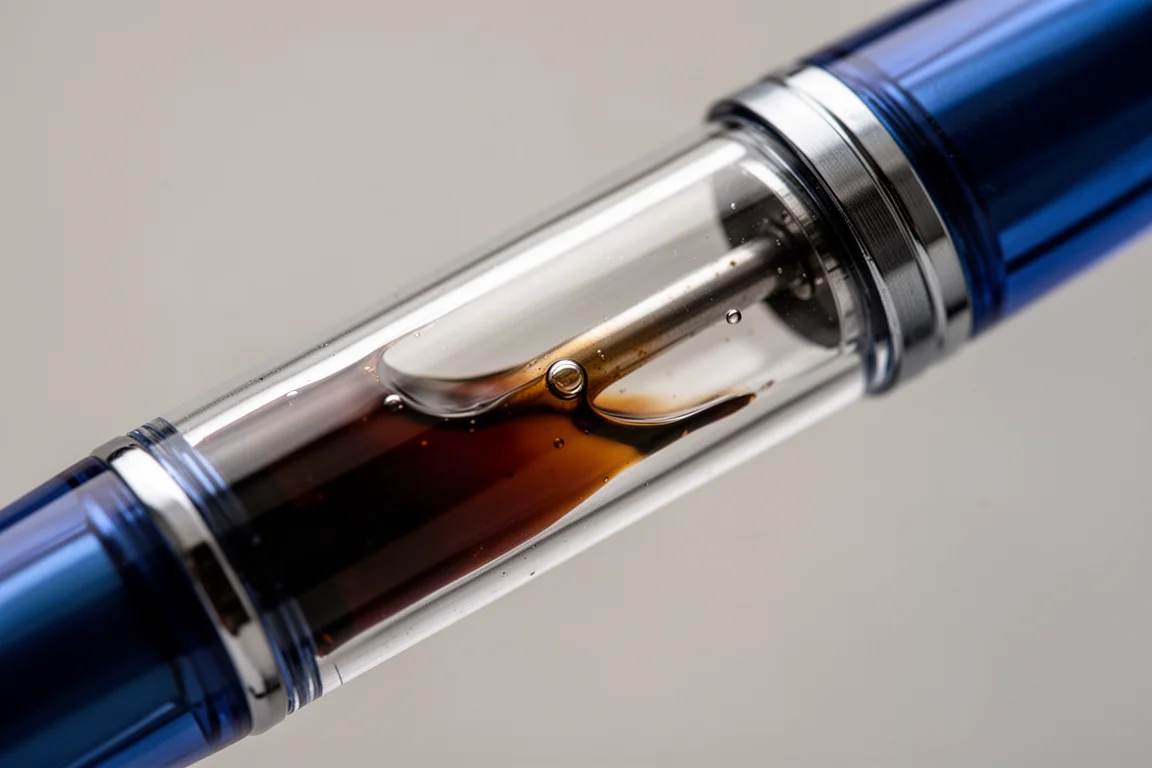
Because the barrel is translucent, you can see exactly how much ink is left, and you can watch the filling system at work, which is genuinely fun. There is also a small ink window for a secondary chamber: when the piston eventually travels all the way down and the secondary chamber runs dry, you simply crack the knob open slightly, pull it out a touch, and push it back in to refill the secondary chamber from the main reservoir.
One detail to know: the metal threads sit inside what appears to be an acrylic interior. That is a mild concern for long-term thread stripping, but weeks of use have caused no problems so far.
Writing Performance
The review unit came with a fine steel nib, and it wrote beautifully straight out of the box. The line is smooth but not overly smooth, wet but not too wet, with no skipping and no hard starts over weeks of use. Considering how many far more expensive pens write worse, this is the most impressive part of the package.
The nib has a touch of character: slight springiness with gentle pressure (it is not a flex nib), and it even handles reverse writing reasonably well, though it runs a bit drier and thinner, taking the fine line closer to an extra fine.
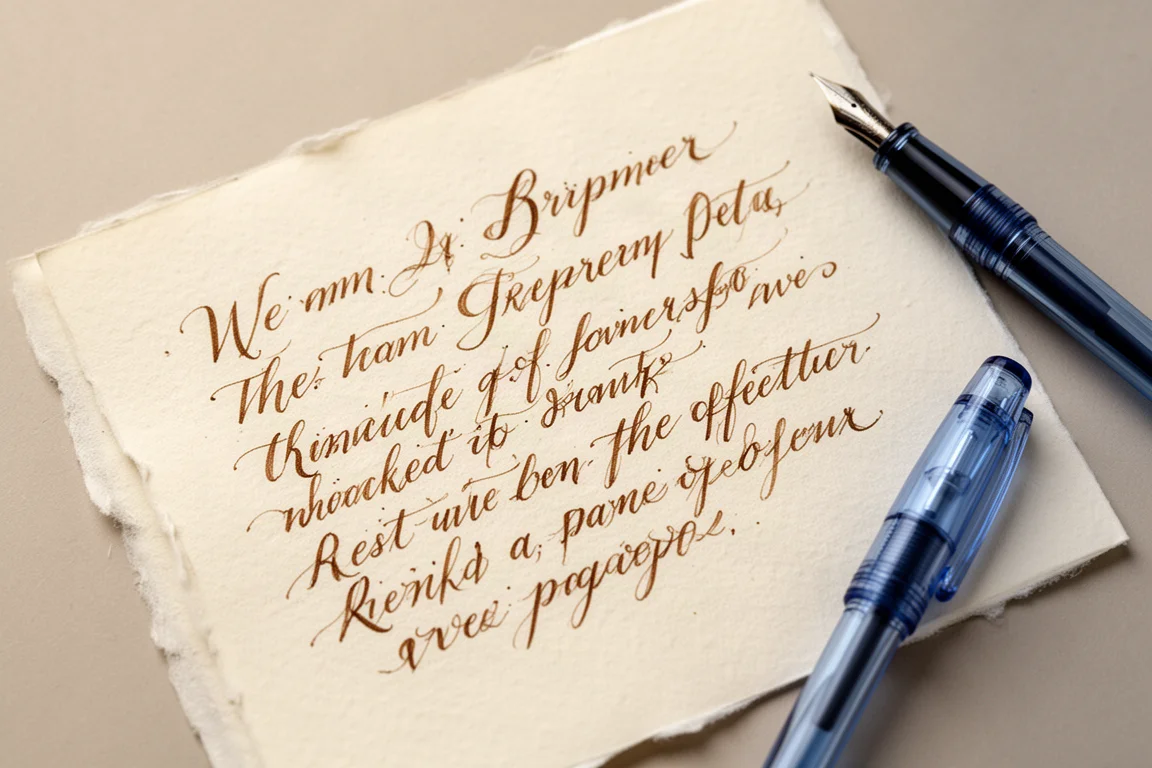
The section is hourglass shaped and comfortable to hold, and the nib engraving appears to be genuinely engraved rather than laser marked, a nice touch at this price. The pen does not post, but given the brass content it is already fairly weighty near the back end, and posting would make it very top-heavy. As it stands unposted, it feels balanced and comfortable despite being somewhat top-heavy by design.
Things to Consider Before Buying
The main caveat comes from the unscrewing section. On the very first inking, some ink leaked through the section. Since the pen holds a lot of ink, that is a lot of leakage potential. The fix turned out to be simple: unscrew the section, apply silicone grease to its threads, and the problem disappeared entirely. After weeks of deliberate testing and daily carry, not a single droplet has leaked since.
That maintenance ability is also a genuine strength. With a vacuum filler, being able to unscrew the section means you can lubricate the mechanism yourself with a little silicone grease, available at any hardware store, rather than sending the pen in for service.
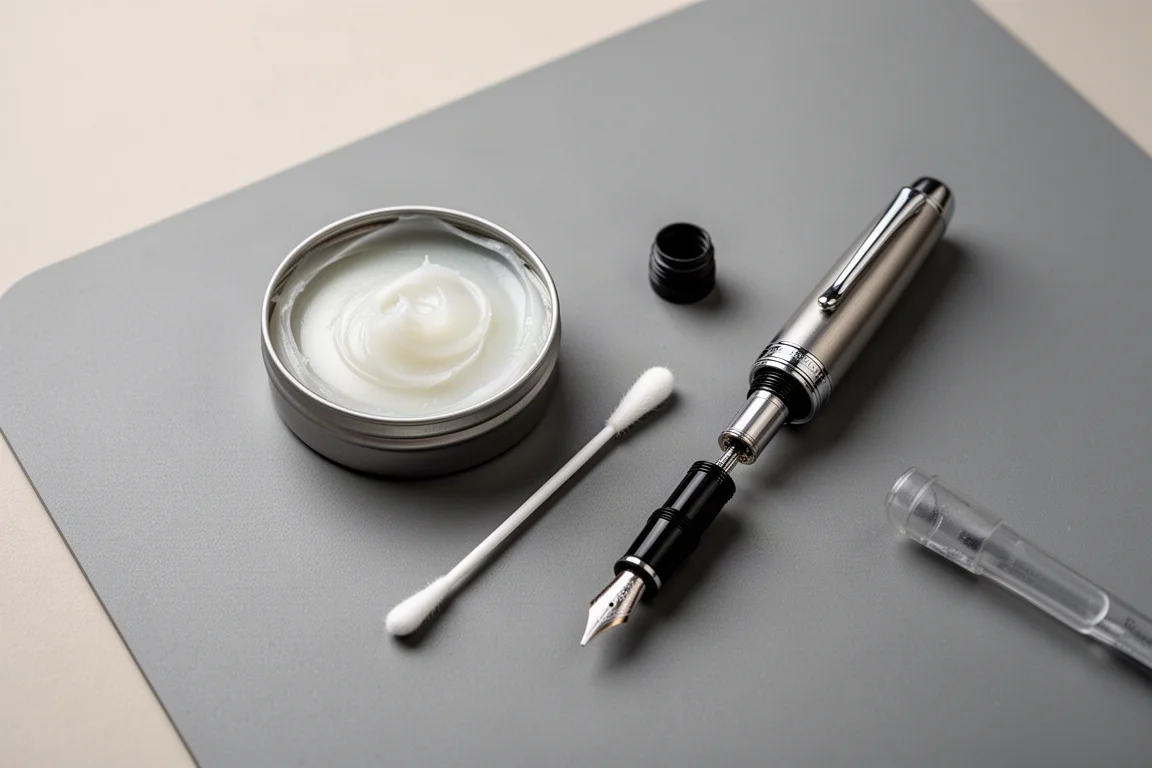
Beyond that, the only minor complaints are the slightly wobbly clip, the top-heavy weight from all the metal, and the overlay pattern, which will not suit everyone’s taste.
Buying Advice
At $35.99, the V169 is reasonably priced and arguably a bargain if you want to experience a vacuum filling system without spending several hundred dollars. Available nib options are extra fine and fine, in different colors. If you buy one, have some silicone grease on hand and grease the section threads during your initial cleaning as a precaution.
Conclusion
The Asvine V169 is a well-tuned, solidly built vacuum filler that punches well above its price. It writes smoothly out of the box, holds a barrel full of ink, and can be maintained at home. If the perforated overlay appeals to you at all, this is an easy recommendation for anyone curious about vacuum-filling pens.
Product link
View more details for Asvine V169
This product is mentioned in the review. Check the specifications, options, and compatibility before buying.
View more details for Asvine V169Further reading
Related Reviews
Fountain Pens
Best Budget Fountain Pens Tested: 9 Pens, One Clear Winner
A hands-on comparison of nine affordable fountain pens for everyday writing, calligraphy, and sketching, with a clear standout for flexible nib fans.
Fountain Pens
Aurora Optima Review: An Italian Piston Filler That Punches Above Its Price
A 14k gold nib, ebonite feed, and a beautifully deep oraloid body make the Aurora Optima one of the most rewarding piston fillers around.
Fountain Pens
Cross Bailey Light Review: The Entry-Level Fountain Pen Worth Keeping at the Office
A plastic-bodied Cross with a metal clip, snap cap, and famously smooth extra fine steel nib. Around $15, available almost everywhere, and easy to recommend.