Fountain Pens
Asvine P36 vs Conid Bulkfiller King Size: A Fountain Pen Comparison
Two visually similar clear fountain pens with very different filling systems and price points. Here is how they compare as everyday writers.
Introduction
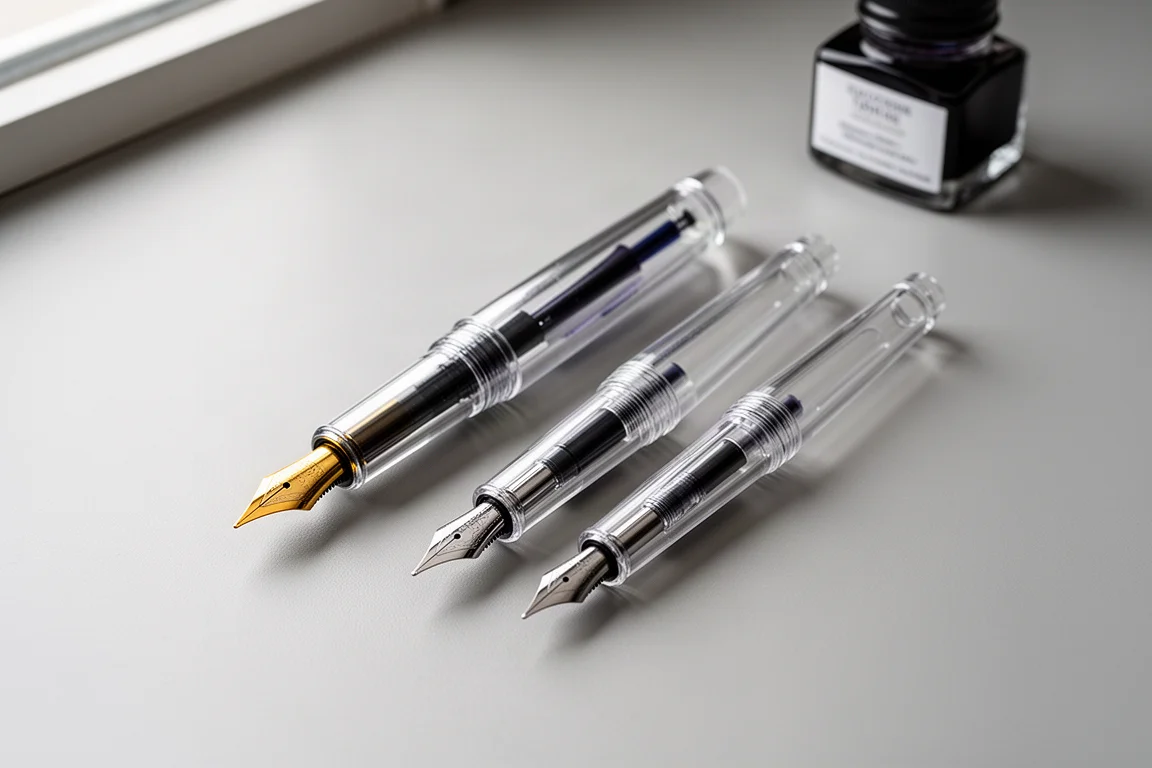
Some comparisons are unfair on paper, and this is one of them. The Asvine P36 and the Conid Bulkfiller King Size look strikingly similar side by side: both are clear pens with plenty of titanium, both are comfortable everyday writers, and both take inspiration from the same visual language. But the Conid sits roughly ten times higher in price than the Asvine, which lists at $60 Canadian. That gap makes this pairing worth a close look, because it raises a genuinely useful question: is the more expensive pen actually better for you?
Two Pens That Look Alike
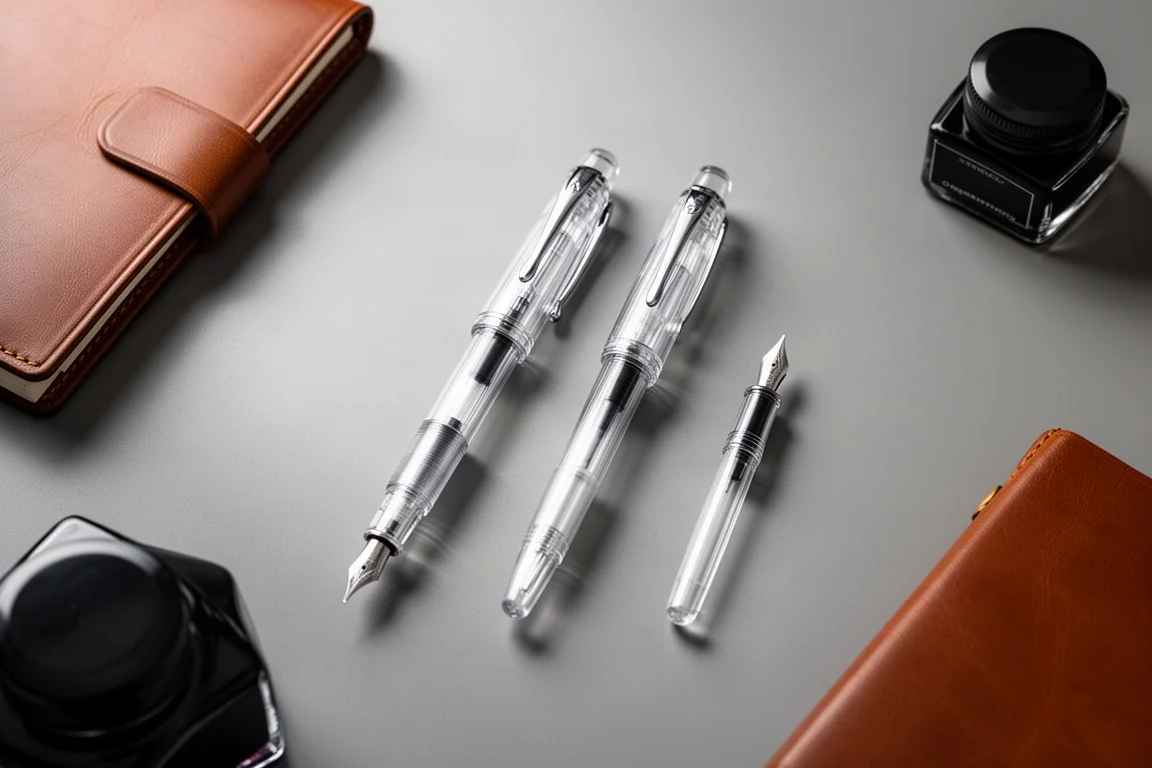
The resemblance between these two pens is hard to miss. Both feature a clear demonstrator body with an hourglass-shaped section, generous ink capacity, and a similar overall silhouette. The Conid King Size is noticeably longer and girthier, with a larger nib, but the section length is nearly identical between the two.
For scale, both pens run larger than something like a Pilot Metropolitan. The Conid is closer in shape and size to a Montblanc 149, while the Asvine is a more compact take on the same idea.
The Conid Bulkfiller King Size
Conid is a Belgian manufacturer with an unusual history. The pens were originally ordered online and made to order over a few weeks, and the company now sells through at least one store in Antwerp to streamline the process. Limited runs, such as batches of King Size Bulkfillers announced on the website, tend to sell out quickly.
Two things define the Conid. First, it is made in a factory that also manufactures pharmaceutical equipment, so tolerances are meant to be extremely tight and the machining very precise. Second, and most importantly, there is the Bulkfiller filling system. You unscrew the end of the pen, pull out the piston assembly, give it a half twist to lock it in place, push it down, and submerge the pen in a bottle of ink. Pulling the piston back up fills the entire body.
The result is a pen with two ink reservoirs, primary and secondary. The primary chamber feeds the nib, and when it runs low, you open the valve at the end and the secondary chamber refills it. The valve can also isolate the ink supply, which is helpful when flying.
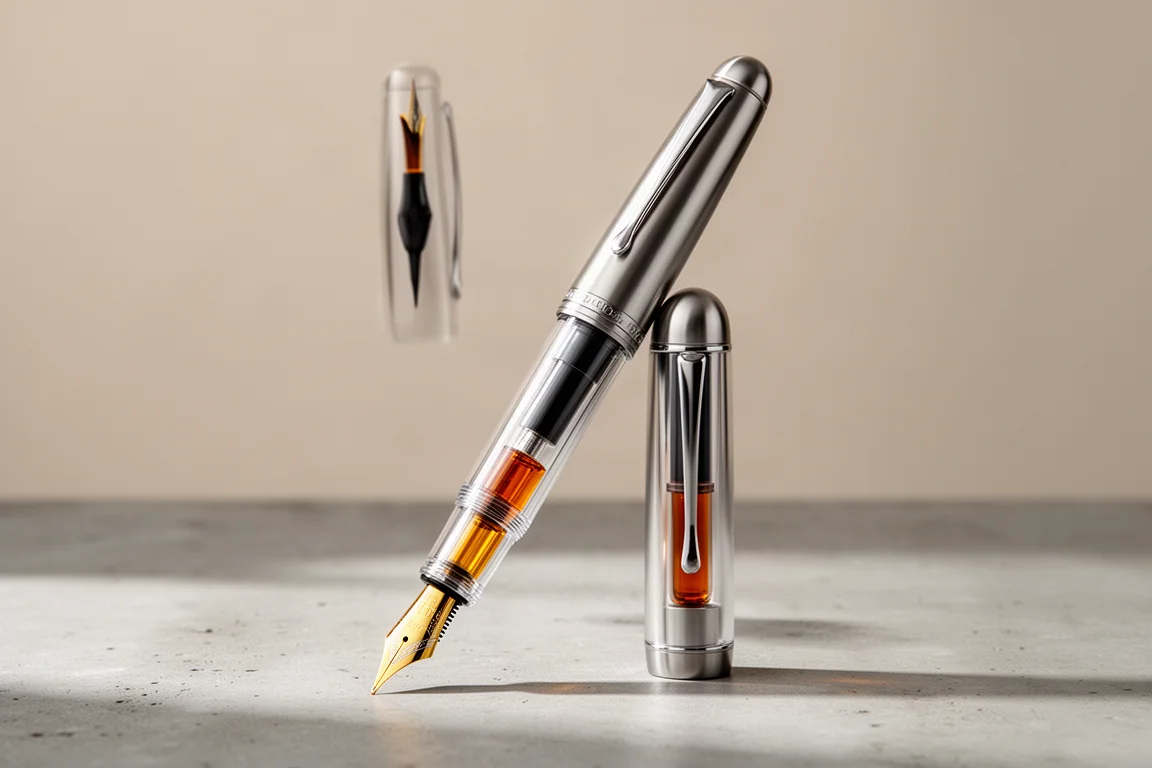
The King Size reviewed here has a round top, a number 8 Bock nib in 14k gold double broad, and an ebonite feed. It writes wet, bold, and expressive, and it is a genuinely pleasant everyday writer. The downsides are clear: it is very expensive and hard to get.
The Asvine P36
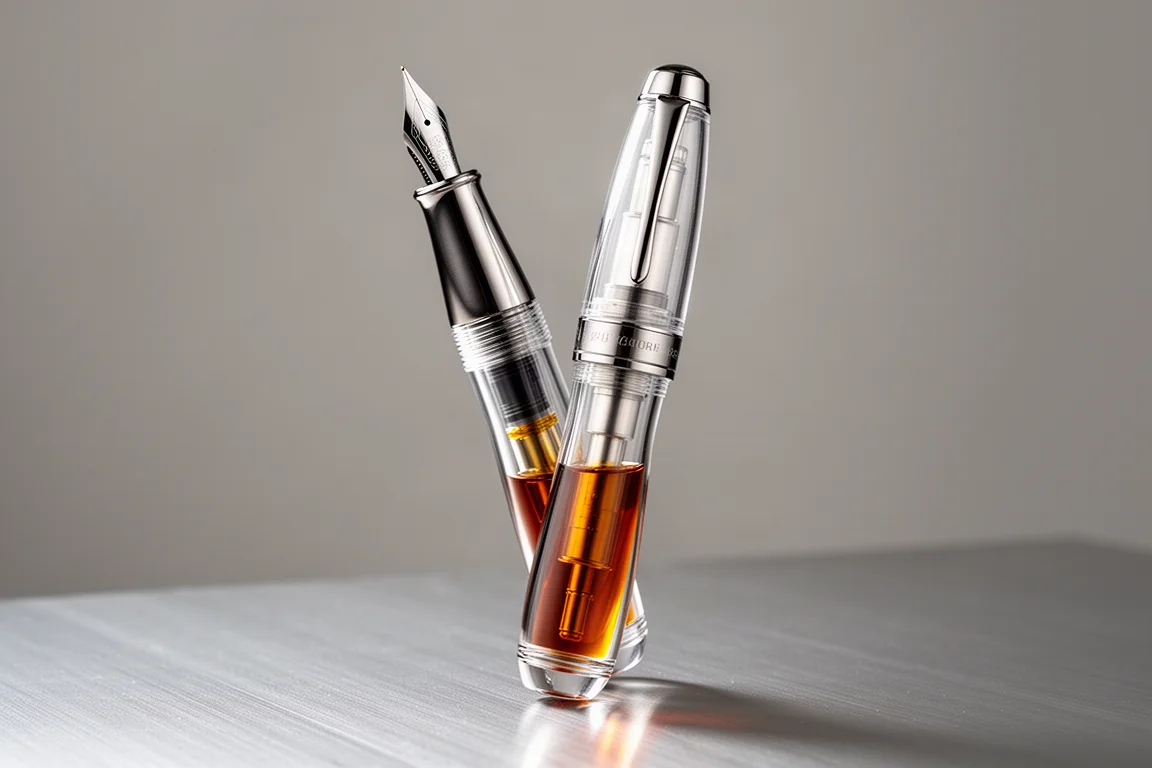
The Asvine P36 deliberately does not try to copy the Conid filling system. It is a straightforward piston filler: twist the end, the piston descends, dip into ink, twist back, and the barrel fills. It has roughly a primary and secondary ink chamber appearance inside, but the two are in communication, so there is no valve to close. You cannot isolate the ink supply the way you can on the Conid, but filling is simple and the capacity is large.
It also has a titanium construction, a clear body, and an hourglass section like the Conid. The nib is a number 6 rather than a number 8, but it comes as a really neat 1.1 mm stub. Despite having no tipping, the stub is not scratchy at all and lays down a pleasant, wet line.
At $60 Canadian, roughly a tenth of the Conid’s price, the P36 is impressively solid. Everything fits together tightly, it is comfortable to hold, and it works very well. Asvine did not chase the Bulkfiller mechanism, and the pen is honest about what it is: a piston filler called the P36, with the P presumably standing for piston. There is no ambiguity, and that clarity is part of its charm.
Filling Systems: Bulkfiller vs Piston
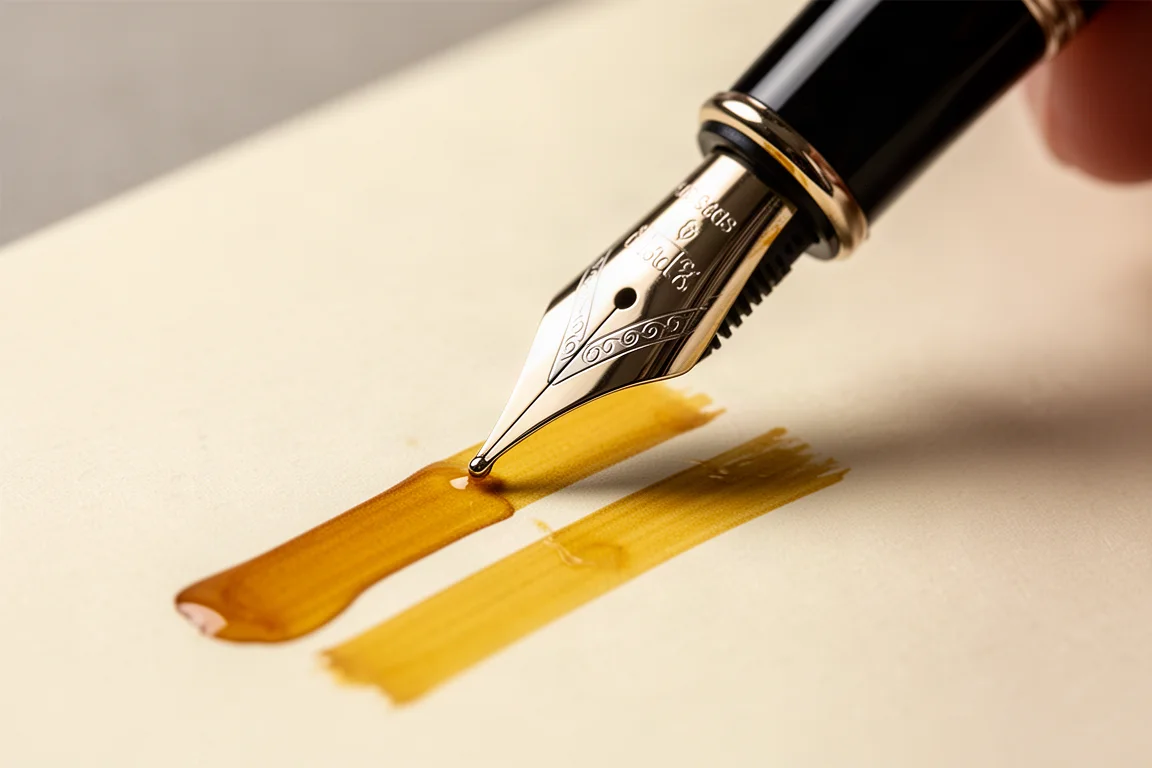
This is where the two pens genuinely differ. The Conid Bulkfiller fills the entire barrel through its unique pull-and-twist mechanism and then manages ink through a two-reservoir system with a valve. The Asvine uses a conventional piston, which is simpler but still delivers a large ink capacity. If you fly often, the Conid’s ability to seal off the primary chamber is a real advantage. For everyday desk use, the piston is perfectly practical and arguably easier to operate.
How They Write
Both pens were filled with the same ink to keep the comparison fair. The Conid, with its 14k double broad nib and ebonite feed, produces beautiful bold lines. It is expressive and on the softer side, and the writing experience is very pleasant. This particular unit was tuned slightly because the nib felt a touch overpolished when new, but it now writes wonderfully and very wet.
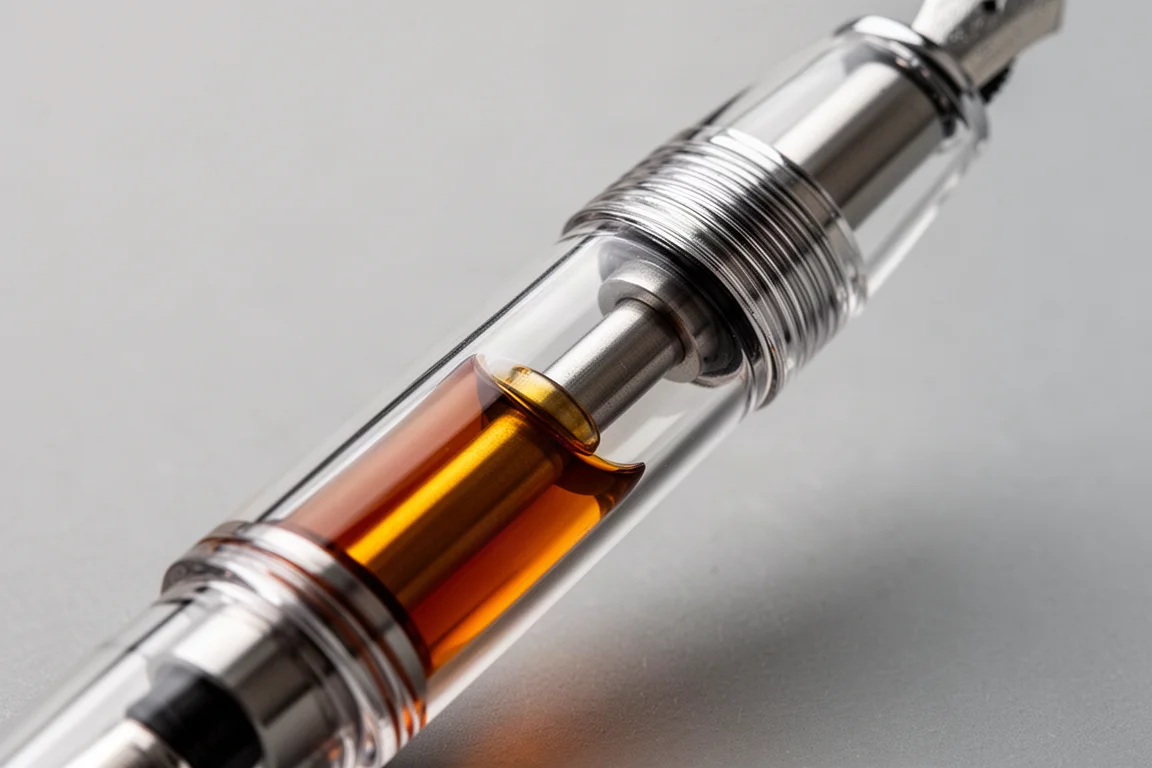
The Asvine’s 1.1 mm stub, properly aligned, delivers crisp line variation without any scratchiness. It is also a wet writer. Both pens are fantastic writers in slightly different ways: the Conid is the more expressive gold-nib experience, while the Asvine offers a fun, crisp stub at a fraction of the cost.
Which One Should You Buy?
If you could pick either, neither, or both, the Conid is the stronger pen in a direct comparison. It is the original, it is bigger, and it is refined. But there is no room for snobbery here. Expensive does not automatically mean better for you.
The P36 is a compelling pen at $60 Canadian: piston filled, titanium parts, a fun nib, and a body that is comfortable and solidly assembled. Notably, while the Conid is built to very tight tolerances, its center band can come loose over time and turn into something of a fidget spinner. The P36, meanwhile, stays solid. If money is a factor, the Asvine is the pick, and there is no shame in that at all.
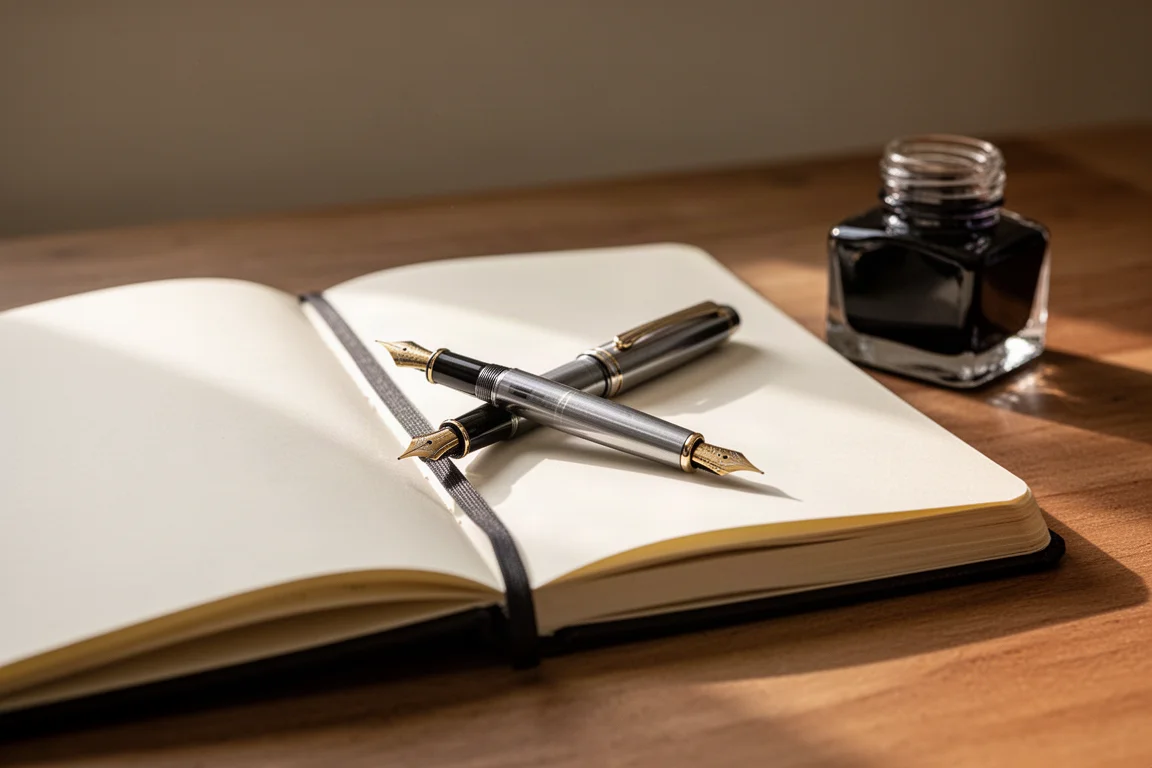
Think of it like choosing between a Ferrari and a Ford. Both are cars, both will get you where you need to go, but one is flashier. The Conid is flashier, and it was bought for that filling system. The Asvine looks great, writes well, and costs a tenth as much.
Conclusion
Both of these pens are fantastic writers with a similar visual identity, and the right choice depends entirely on what you value. The Conid Bulkfiller King Size is the refined original with a unique filling system, a large gold nib, and a price to match. The Asvine P36 is a well-executed piston filler that delivers most of the everyday experience for a tenth of the money. Neither choice is wrong.
Further reading
Related Reviews
Fountain Pens
Best Budget Fountain Pens Tested: 9 Pens, One Clear Winner
A hands-on comparison of nine affordable fountain pens for everyday writing, calligraphy, and sketching, with a clear standout for flexible nib fans.
Fountain Pens
Aurora Optima Review: An Italian Piston Filler That Punches Above Its Price
A 14k gold nib, ebonite feed, and a beautifully deep oraloid body make the Aurora Optima one of the most rewarding piston fillers around.
Fountain Pens
Cross Bailey Light Review: The Entry-Level Fountain Pen Worth Keeping at the Office
A plastic-bodied Cross with a metal clip, snap cap, and famously smooth extra fine steel nib. Around $15, available almost everywhere, and easy to recommend.