Running Shoes
ASICS Metaspeed Ray vs Adidas Adizero Adios Pro Evo 2: Two Ultra-Light Carbon Racers Compared
Two of the lightest carbon plate racing shoes on the market go head to head on weight, foam, grip, fit and value to help you pick the right one.
Introduction
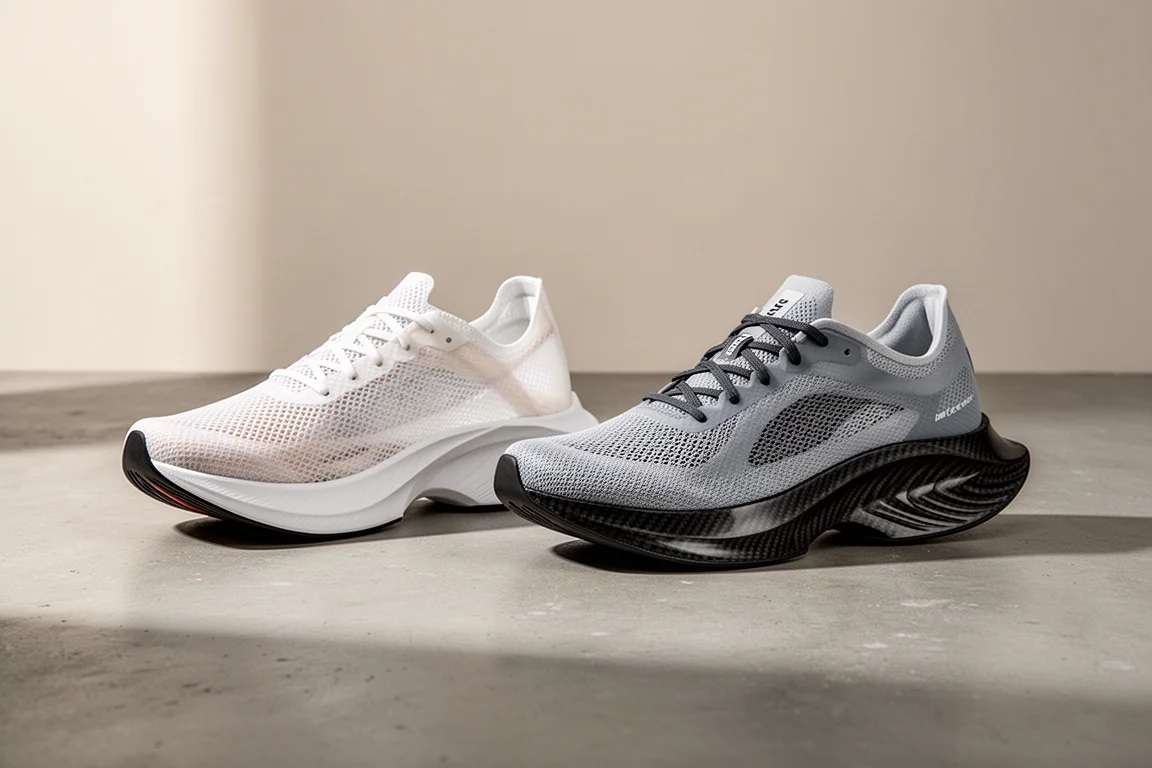
The ASICS Metaspeed Ray and the Adidas Adizero Adios Pro Evo 2 are two of the most exciting carbon plate racing shoes currently available, and arguably two of the lightest shoes ever tested in this category. Both sit firmly in the hyper shoe space: extremely expensive, extremely light, and aimed primarily at elite racing, though accessible to amateur runners who fancy using the lightest complex shoes on the market.
They are, however, very different shoes. One delivers its speed through soft, bouncy foam; the other through controlled, aggressive rocker geometry. And one of them has a grip problem serious enough to be close to a deal breaker.
Two of the Lightest Racing Shoes Ever Tested
Both shoes push the boundaries of what we can expect from lightweight carbon racers. The Metaspeed Ray is the cheaper of the two at £265 or $300, while the Adios Pro Evo 2 costs £450 or $500, a price tag that clearly is not marketed so much to amateur runners.
Surprisingly, the Adidas is the heavier shoe: 142g (5 oz) in a UK 9, which is a US 9.5. The Metaspeed Ray comes in at just 136g (4.8 oz) in a UK 9, which is a US 10. Both are so light that only the newest Mizuno entries have entered the same conversation.
Design and Construction
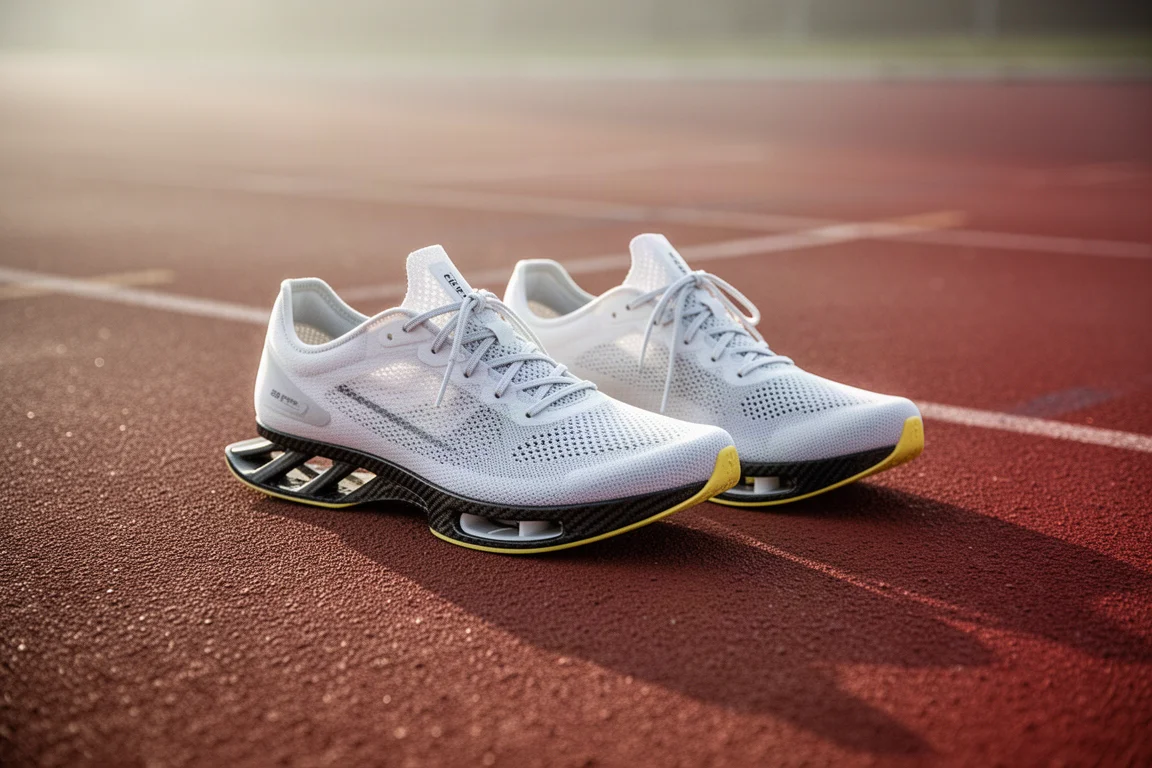
The Metaspeed Ray features a very lightweight, minimal matrix upper that is almost see-through, with essentially no padding or structure. The midsole is a full FF Leap foam, the softest and bounciest foam ASICS has ever made. Instead of a full plate, you get a teardrop-shaped plate that runs mostly under the forefoot through to the midfoot, with no plate under the heel. The ASICS Grip outsole has very minimal coverage, mainly around the forefoot with a little along the sides and at the heel.
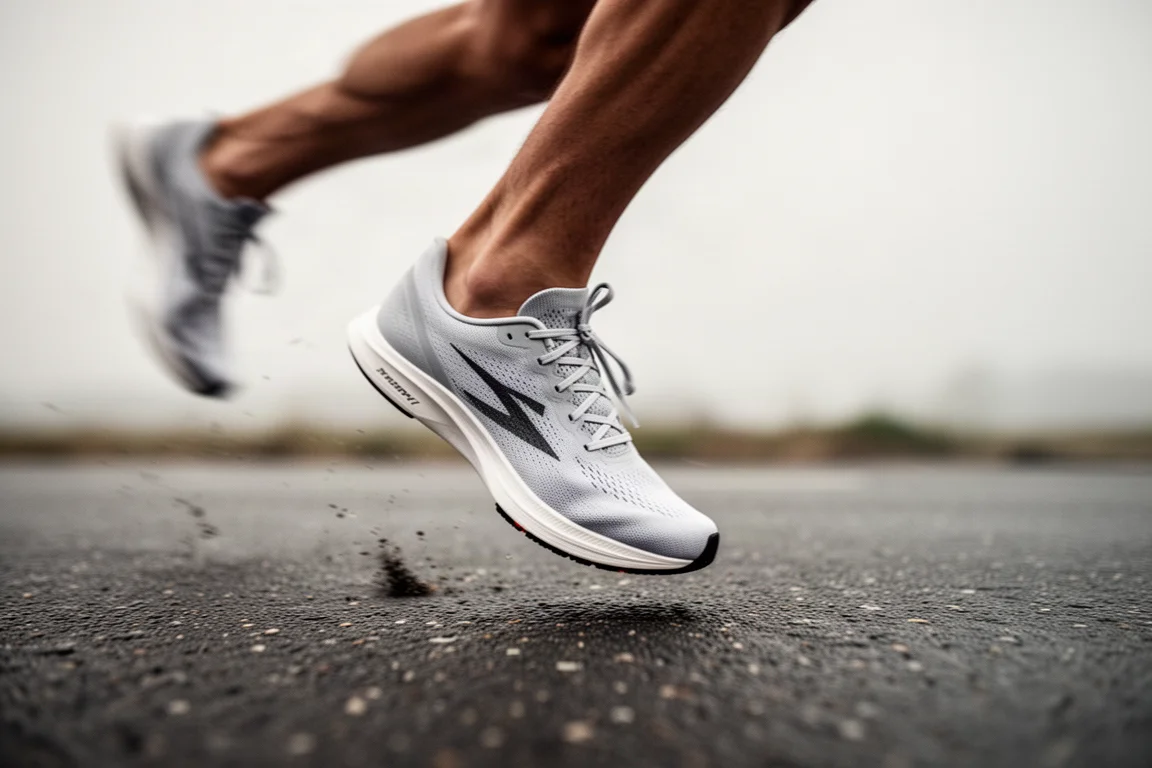
The Adios Pro Evo 2 also has a very lightweight mesh upper, though it feels slightly plasticky and is not quite as soft to the touch. The midsole is a special Lightstrike Pro Evo foam, more dynamic and energy returning than the Lightstrike Pro used in the Adios Pro 4, and lighter too. Rather than a full plate, Adidas uses energy rods, but it is a full-length system with a propulsive stabilizing unit running all the way back to the heel. The rocker geometry is very aggressive, with a pronounced forefoot rocker. The outsole has decent coverage on the forefoot and heel, but the thin, tacky material proved very poor for grip in testing.
Fit and Sizing
The Metaspeed Ray fits true to size with no real concerns. ASICS sizing is very consistent, and the fit offers enough room around the toes with good hold through the heel and midfoot. The upper has a bit more flex, so there is more room to splay the toes, and everything locks down securely. The tongue is quite narrow and can occasionally sit a little loosely, but it never comes undone.
The Adios Pro Evo 2 has a race fit that is really dialed in and fairly narrow across the toe knuckles. There is not much room for the toes up front. If you struggled with the toe box in the Adios Pro 4, going half a size up is a sensible move. Around the rest of the world, it is generally a true-to-size shoe, though UK runners may want to consider the half size up given Adidas sizing conventions.
Both shoes have minimal, racy heels with very little padding. The Ray’s heel tab sits slightly more comfortably under the Achilles and offers a touch more protection.
Run Feel and Performance
These two shoes deliver their performance in very different ways. The Adios Pro Evo 2 offers a lot of energy, but it is a controlled energy. It feels more instantly natural on the foot, and the early rocker point works well with certain running styles. There is also a bit of ground connection under the forefoot. It was good in most departments apart from grip, and it delivered a half marathon PB in testing.

The Metaspeed Ray, by comparison, is very soft, very bouncy, and very energetic, with that feeling coming from the compression of the midsole and it firing back. It is squidgy at the heel, where you land, but transitions really fast rather than sinking and hanging around. It has run a sub-32 10K PB and felt fantastic at marathon pace in training, where it feels like cruise control. One caveat: the softness makes it feel unstable, and runners with tight hips or ragged form late in a race may get wobbled around. The Pro Evo 2 gives a more uniform stride when things are not going well.
Grip: The Decisive Difference
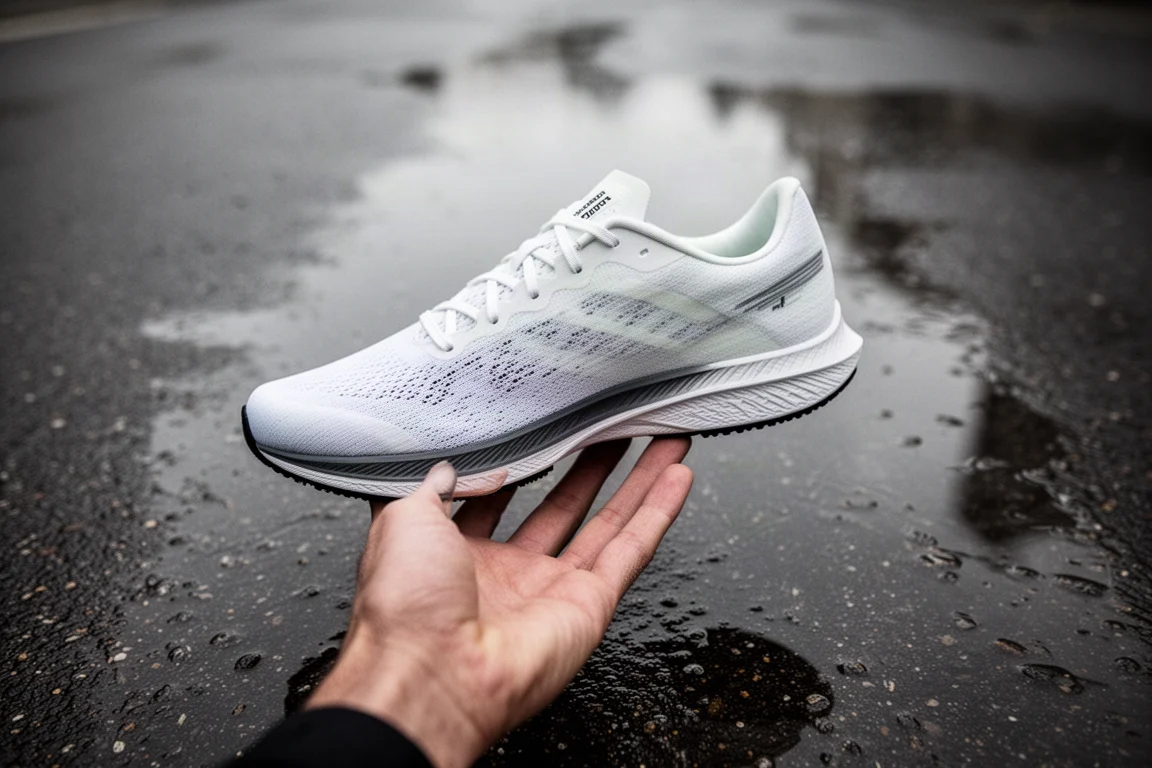
Grip is where these shoes really split. The Adios Pro Evo 2’s outsole is a major negative, almost a deal breaker. In a wet mile time trial, the grip essentially cost a PB: on certain types of ground in the rain, it simply did not cope. A shoe at this price that you cannot confidently run in the wet is hard to justify.
The Metaspeed Ray had no grip problems in testing, and on tight, twisty courses its grip was much better. If you race in changeable conditions, this alone could decide the comparison.
Verdict and Buying Advice
On price, there is only one winner: the Metaspeed Ray. The Adios Pro Evo 2 feels priced at a point where Adidas is not necessarily expecting to sell many pairs, something a bit concepty, and most runners will struggle to justify the margin gains versus the outlay.
On pure performance, the Ray is also the more enjoyable shoe. It is fun, bouncy, and feels genuinely different from other carbon racers, whereas the Pro Evo 2, while clearly a high performer capable of fast times, does not feel as exciting or as fluid for every stride pattern. If you are buying one of these hyper shoes with your eyes open about the Ray’s instability, you are likely to love it.
If you race a marathon and worry about holding form in the last six miles, the Pro Evo 2 is the safer pick for a more controlled stride. But for most runners, the Metaspeed Ray is the clear pick on both value and run feel.
Conclusion
Both are excellent shoes pushing the boundaries of lightweight carbon racing. The ASICS Metaspeed Ray wins on price, grip, and sheer enjoyment, while the Adidas Adizero Adios Pro Evo 2 offers a more controlled, stable ride at a much higher price, with wet-weather grip that is hard to forgive. For most runners eyeing the hyper shoe category, the Ray is the one to pick.
Product link
View more details for ASICS Metaspeed Ray
This product is mentioned in the review. Check the specifications, options, and compatibility before buying.
View more details for ASICS Metaspeed RayFurther reading
Related Reviews

Running Shoes
Best Road-to-Trail Running Shoes: Three Versatile Options for Mixed Terrain
A practical guide to three road-to-trail running shoes that handle both pavement and mild trails, with clear strengths and trade-offs for different runner types.

Running Shoes
Best Running Shoes for Achilles Tendonitis: Three Options Explained
Three running shoes with different heel drops and support features designed to help reduce Achilles tendon pain during walking and running.

Running Shoes
Best Running Shoes for Women: Five Top Choices Ranked
A ranked guide to five women's running shoes, from versatile daily trainers to high-performance racing options, with real strengths and trade-offs for each.