Fountain Pens
Armando Simoni Club Bologna Medio vs Bologna Extra: Which Fountain Pen Suits You?
Two celluloid flagships from Armando Simoni Club compared side by side, covering size, filling systems, nibs, and who each pen is really for.
Introduction
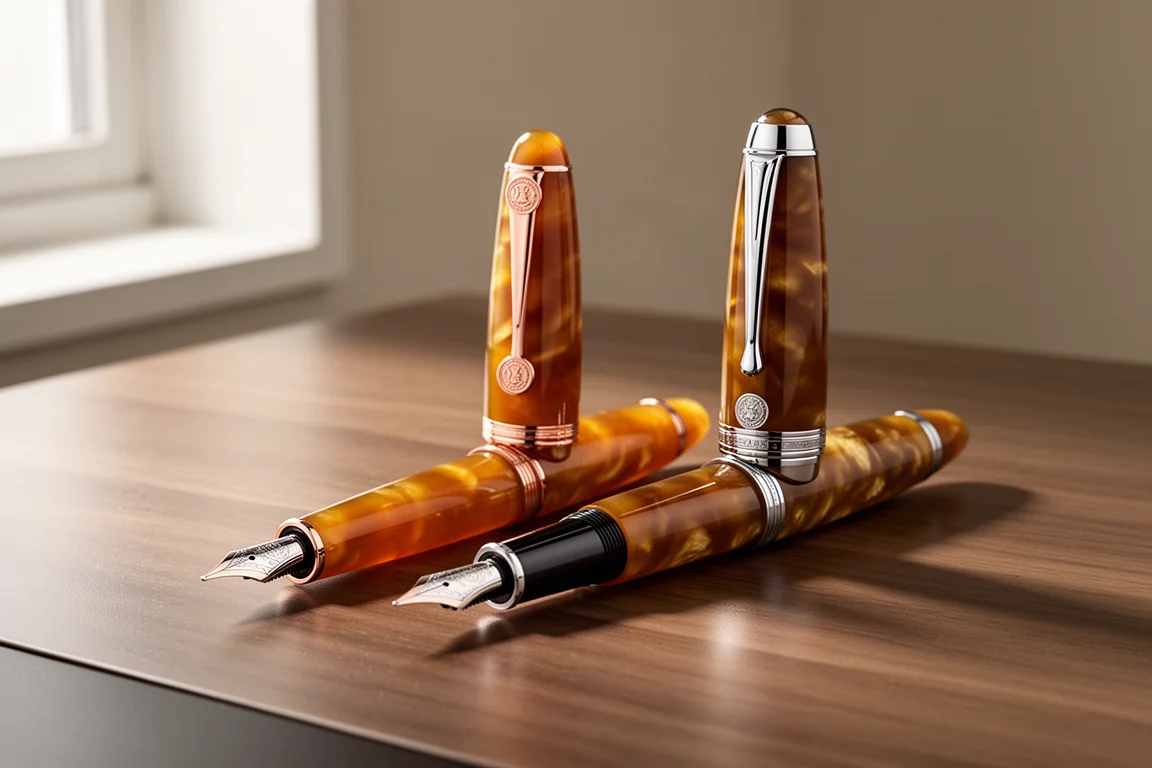
Armando Simoni Club makes some of the most characterful Italian celluloid fountain pens around, and two models in the Bologna line sit at very different points of the range. The Bologna Extra launched back in 2017: big, heavy, and long, with a look and feel that not everybody warms to. That size divide is exactly why the company later introduced the Bologna Medio, a more medium-sized pen aimed at people who love the design but not the bulk.
We compared the two side by side, in the same warm marbled celluloid finish, to see where the differences actually matter and which pen makes more sense for different kinds of buyers.
The Size Difference Is the Starting Point
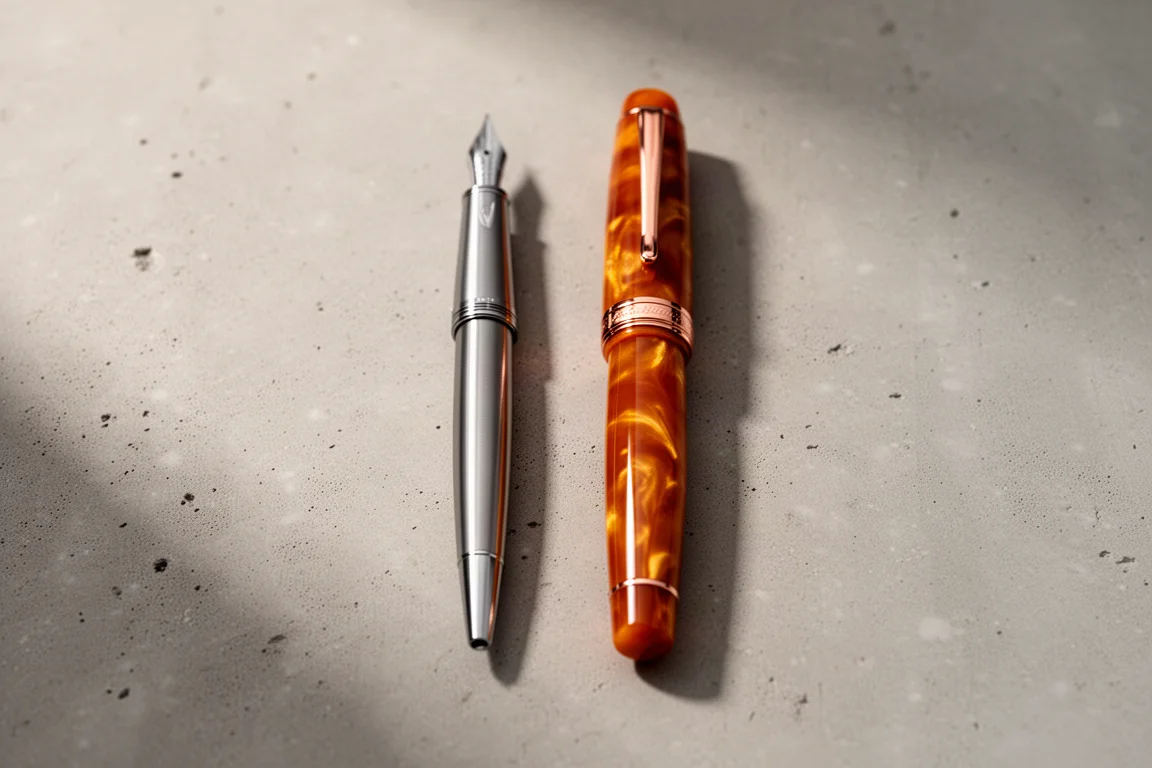
Against a slim everyday pen like a Pilot Metropolitan, the Medio looks only a little girthier and roughly comparable in overall length. It is a size that genuinely works for a lot of people. The Extra, by contrast, is much bigger in every dimension.
Weight separates them too. The Extra is brass lined, which gives it substantial heft, and the Medio has more metal inside than you would expect thanks to its piston filling mechanism. The Medio still feels heavier than it looks, but the Extra is the true heavyweight of the pair.
Another giveaway is the clip: the same clip looks proportionate on the Medio but noticeably small on the much larger Extra.
Build and Filling Systems
The filling systems are one of the biggest functional differences. The Medio uses a conventional piston filler with a substantial metal piston mechanism, which is easier to live with day to day and simpler to clean. The Extra uses a compressor filling system: you unscrew the end, pull out a hollow tube, cover a hole with your finger, push the tube back in to compress the sac inside, then release. Air rushes back in, the sac expands, and ink is drawn up from the bottle. It is a cool, slightly exotic system with a few moving parts, but it can be a little finicky. On the plus side, the sacs are fairly easy to replace, so a leak down the road is not a disaster.
The finishing details differ as well. The Medio carries an ASC medallion on the cap finial, while the Extra skips that and instead has a medallion on the cap itself. Both pens share a Greek key centre band, and the Extra has a slightly larger band on the section.
Cap Details and Small Durability Differences
One detail on the Medio that is easy to overlook: it has a metal ring at the cap lip to protect against cracking. The Extra does not. Its cap lip is exposed celluloid and fairly thin, so it needs a little more careful handling over the long term.
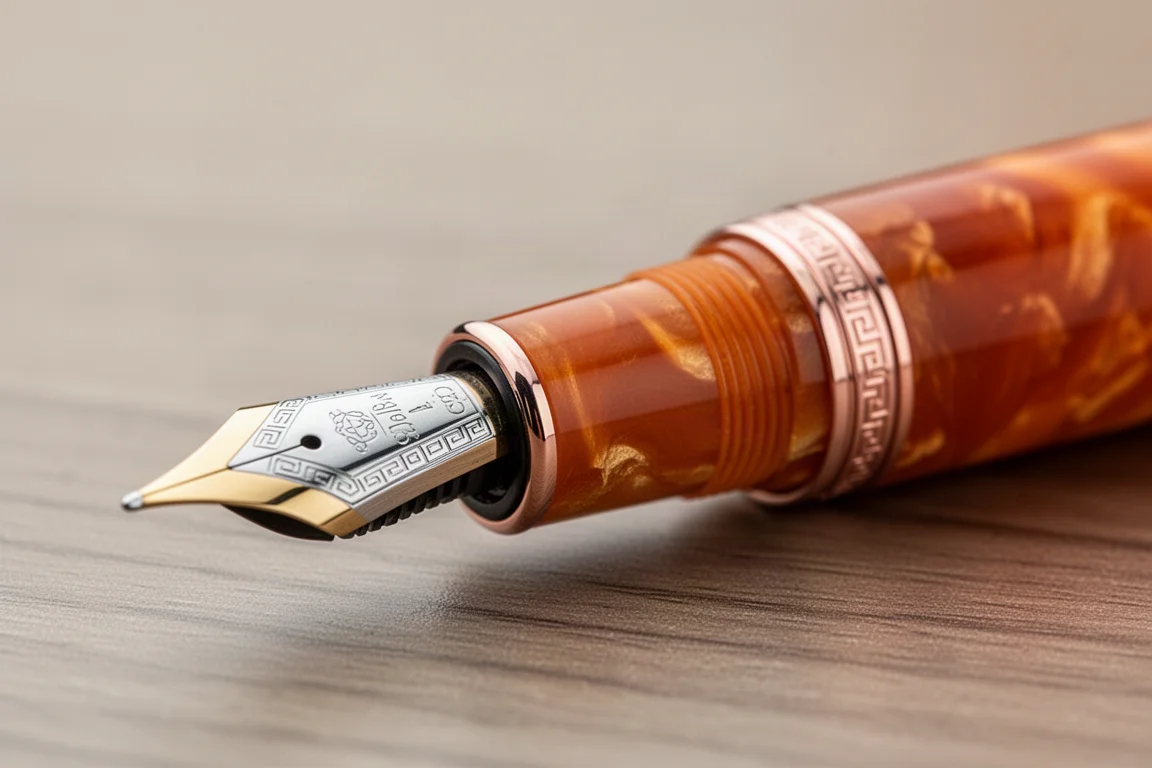
Neither of these is a dealbreaker, but if you plan to unscrew and repost caps regularly for years, the reinforced lip on the Medio is a quietly sensible piece of engineering.
Nibs, Feeds, and Flex Writing
Both pens in this comparison run Magic Flex style nibs, though the Medio’s is not labelled as such on the pen itself; the flexibility is there all the same. The trim differs, with rhodium on one and rose gold on the other, and the sizes differ more meaningfully: a number 8 nib on the Extra versus a number 6 on the Medio.
The feeds are where things get interesting. The Extra uses a bulky round feed with a built-in separator: a line along the feed acts as a separate part that pushes up when you flex the nib, keeping the feed connected to the nib and reducing railroading. The Medio has a flatter feed that looks closer to an Omas design.
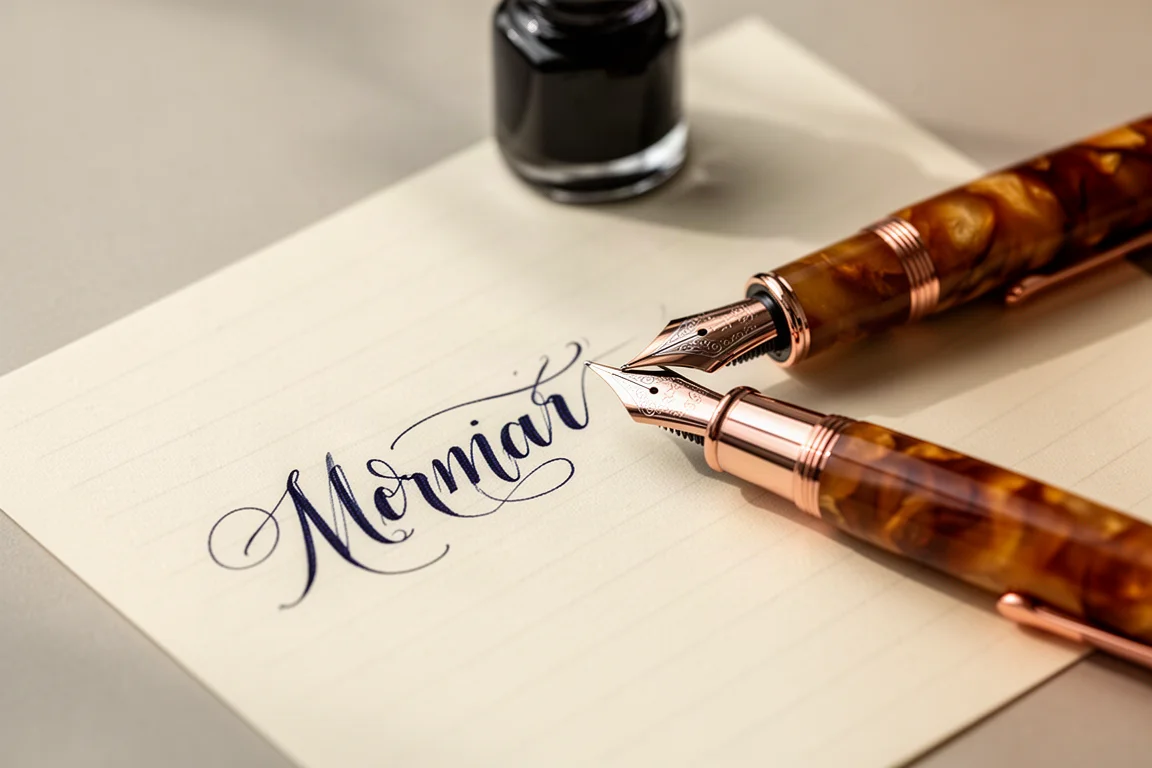
In writing samples with the same ink in both pens, both wrote smoothly with good ink flow and genuine line variation beyond what a standard gold nib delivers, with reasonable snapback. The Extra’s nib felt a touch more saturated with slightly more feedback, and it is arguably better set up for sustained flex work. For normal writing with the occasional flourish, the Medio is honestly enough.
Which One Should You Buy?
Price separates them clearly. The Extra runs around $1,200 to $1,300, while the Medio sits at $745, and the warm marbled Arco finish is the pricier option in either case. If price is the deciding factor, the Medio is simply the better deal and is certainly the more economical choice.
Hand size matters too. People with smaller hands consistently find the Extra too big and too heavy, while the Medio stays comfortable even unposted, and posts to a nicely balanced size despite a slightly wobbly cap. Even writers with larger hands tend to find the Medio very comfortable rather than too light.
Then there are the two remaining considerations. If you want an exotic filling system, the Extra’s compressor is the more interesting choice; if you want something conventional and easy to clean, the Medio’s piston filler wins. And if heavy flex writing is your main goal, the Extra’s purpose-built feed gives it a real edge for that style.
Conclusion
Both Bologna models deliver genuine flex-friendly writing in gorgeous celluloid, but they suit different buyers. The Extra is the statement piece: larger, heavier, brass lined, with a compressor filler and a bigger nib built for expressive writing. The Medio is the practical flagship: a more universal size, a piston filler, a reinforced cap lip, and a much friendlier price. Match the pen to your hand size and how you actually write, and the right choice becomes obvious.
Product link
View more details for Armando Simoni Club Bologna Medio
This product is mentioned in the review. Check the specifications, options, and compatibility before buying.
View more details for Armando Simoni Club Bologna MedioFurther reading
Related Reviews
Fountain Pens
Best Budget Fountain Pens Tested: 9 Pens, One Clear Winner
A hands-on comparison of nine affordable fountain pens for everyday writing, calligraphy, and sketching, with a clear standout for flexible nib fans.
Fountain Pens
Aurora Optima Review: An Italian Piston Filler That Punches Above Its Price
A 14k gold nib, ebonite feed, and a beautifully deep oraloid body make the Aurora Optima one of the most rewarding piston fillers around.
Fountain Pens
Cross Bailey Light Review: The Entry-Level Fountain Pen Worth Keeping at the Office
A plastic-bodied Cross with a metal clip, snap cap, and famously smooth extra fine steel nib. Around $15, available almost everywhere, and easy to recommend.