Ski Gear
Armada Declivity X 102 vs Rossignol Sender Soul 102: Two Versatile 102mm Skis Compared
Two 102mm all-mountain freeride skis with similar builds and very different personalities, and how to choose between them.
Introduction
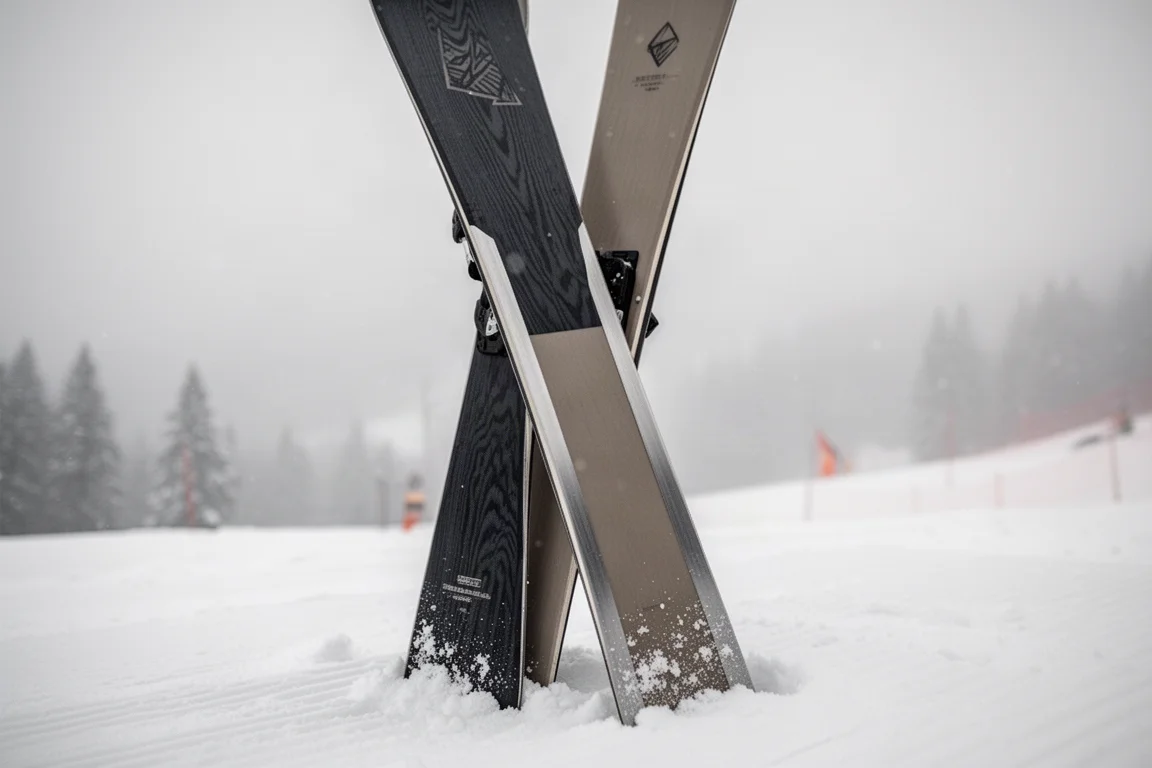
Two pairs of skis, both roughly 102mm underfoot, both new for 2025 and both returning structurally unchanged for 2026. They occupy the same corner of the market, a mid-fat width that blurs the line between all-mountain and freeride, and they are aimed at broadly the same kind of skier. On snow, however, they feel noticeably different.
That difference is worth unpacking, because the spec sheets do not explain it. One ski is smoother, quieter, and more drifty. The other is damper underfoot and far more eager to reward a high-edge-angle, hard-charging turn. Neither is a dedicated hard-snow carver, and neither is the quickest option in this width. Both, though, are unusually versatile tools for a skier who wants one pair to cover a wide range of days.
What These Two Skis Have in Common
Both models measure around 102mm underfoot and were skied in a 188cm length, which is a substantial amount of ski. Each pairs a thick wood core with a metal laminate, and that construction shows up in the same way on snow: a quiet, damp ride that absorbs uneven surfaces instead of transmitting them back through the boots.
Both also handle soft groomers better than their width might suggest. On a morning when the corduroy is still fresh, either ski will carve a clean turn, and both stay composed once the surface turns variable, cut up, or otherwise unpredictable. That combination of a wider platform with the energy and grip of something narrower is exactly what makes this category useful.
The shared limitation is agility. Neither ski is especially quick edge to edge, and in tight trees you need to plan a couple of turns ahead rather than reacting in the moment. Against a ski built purely for quickness in this width, both ask for more deliberate input.
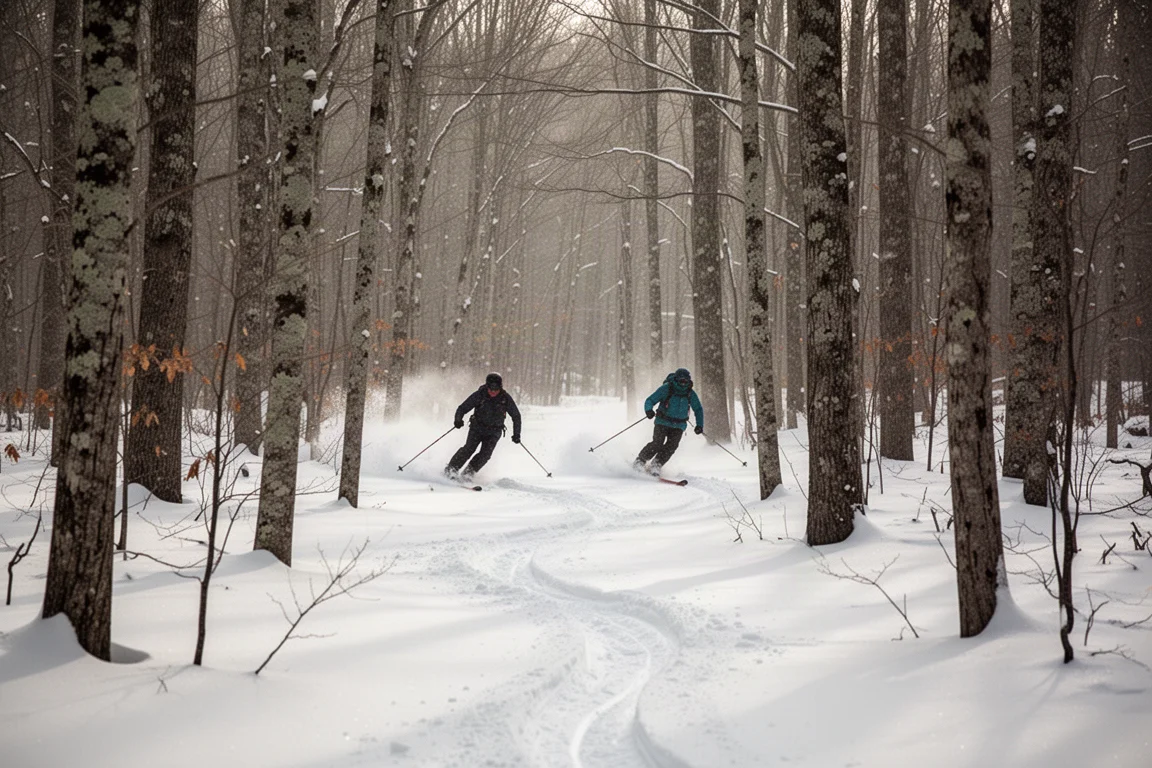
What that means in practice is that both skis reward a skier who reads terrain early. They are not punishing, but they do prefer to be driven rather than flicked around, and both come alive when the snow is soft enough to let them run.
Armada Declivity X 102: Drifty, Smooth, and Playful
The Declivity X 102 is the newer, revised take on Armada’s 102mm all-mountain shape. Anyone who has spent time on the earlier Declivity 102 Ti will notice the shift quickly: the X is smoother, quieter, and more drifty and floaty, comfortable working at lower edge angles rather than insisting on a high-angle carve.
It is also less eager to turn on its own. The X requires more input to come around, and where the previous version could feel reactive on uneven, variable snow, the new build stays composed through the same terrain. On soft groomers it is energetic and genuinely rewarding, especially in medium-radius turns, and it stays happy when you mix smeared turns along the edges of a trail with a longer, opened-up arc down the middle.
Firm, hard snow is the honest trade-off. At high edge angles and higher speeds on truly firm surfaces, the ski can feel inconsistent, and the tail can release when it is pushed hard. That is less a flaw than a statement of character: this ski leans toward the freeride side of the all-mountain spectrum, and it is happiest when conditions are mixed or soft.
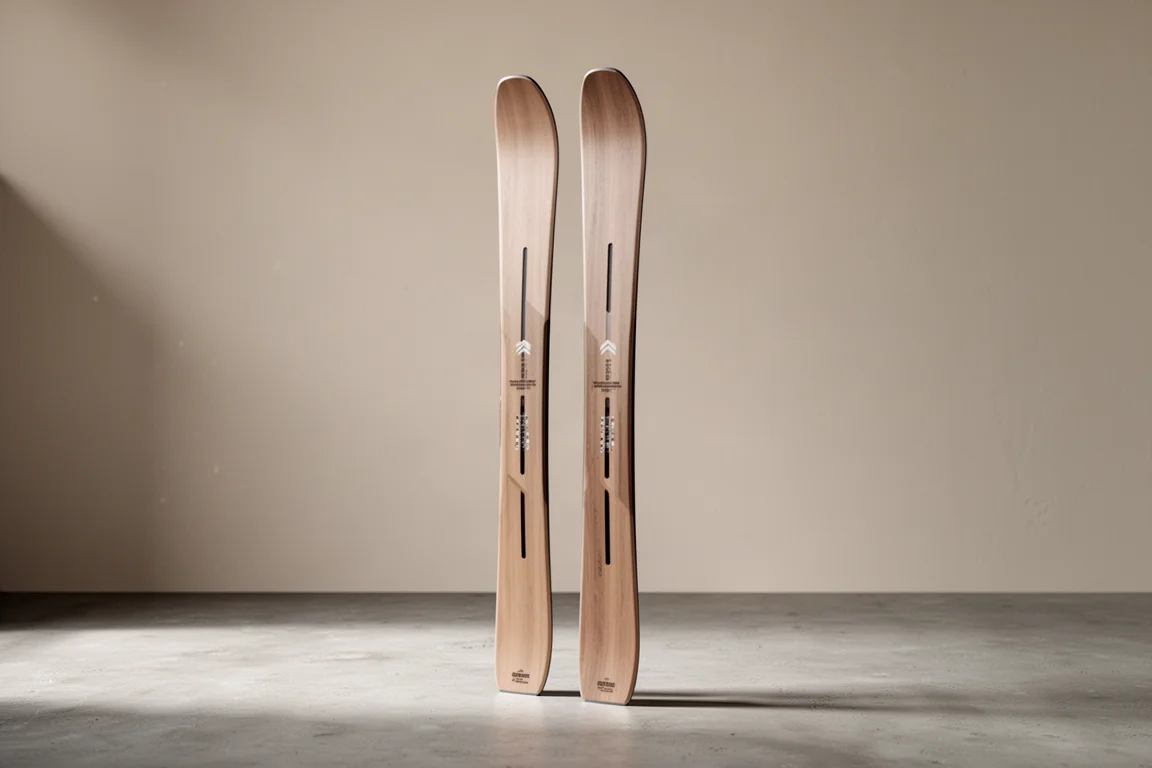
Rossignol Sender Soul 102: Damp, Supple, and Eager to Charge
The Sender Soul 102 takes a different route to the same category. It uses a titanal beam underfoot and a notably thick wood core, and the result is a ski that feels torsionally stiff and clearly damp without becoming lifeless. It is supple enough to bend into a turn and stable enough that you want to hold on and let it run.
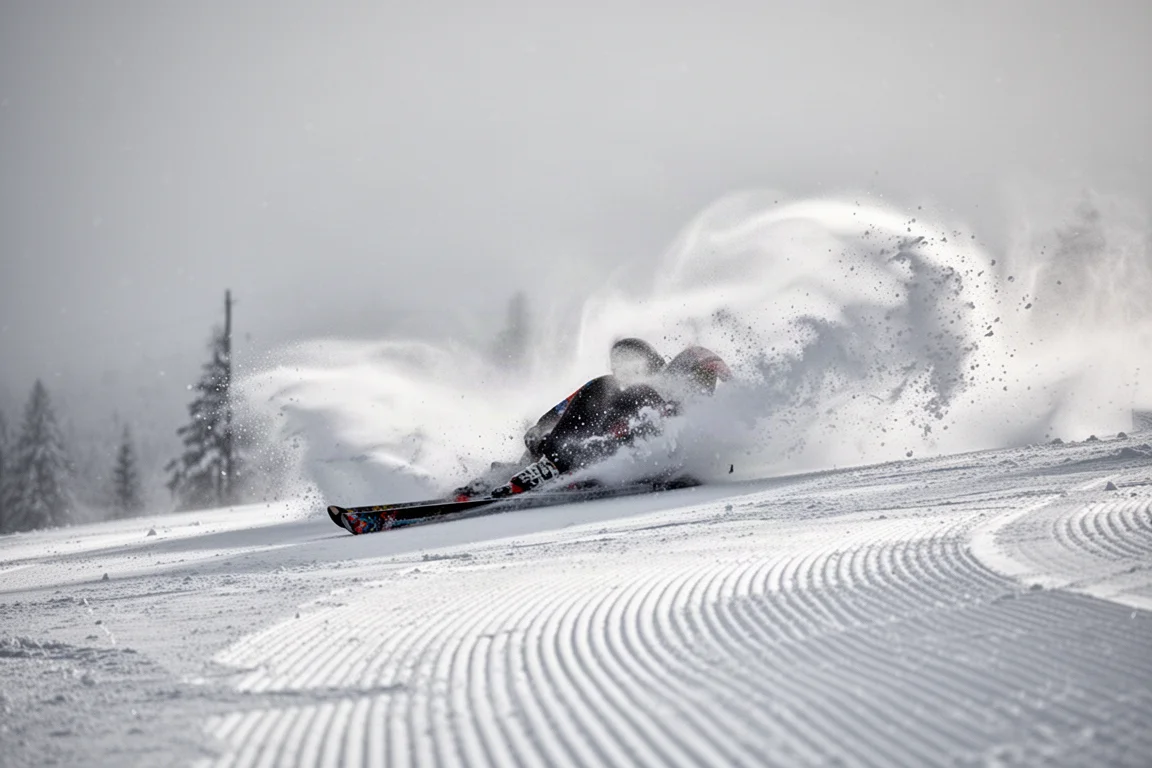
The more you push it, the more it gives back. Edge grip at higher edge angles is the standout quality, and that engagement is what separates it from the Declivity X on firm groomed terrain. There is also enough tail rocker to release the tail when you want to break a turn free, and the ski remains composed and predictable when the snow softens.
The tip design did not register as a factor in swing weight or edge-to-edge transitions. If it contributes anything, it is most likely to the damp feel underfoot, though that is difficult to isolate on a single day of testing. What is clear is that the metal and the core thickness are doing real work here, and they are the reason the ski feels as planted as it does.
View more details for Rossignol Sender Soul 102
How the Two Skis Differ on Snow
The clearest difference is edge grip at high edge angles. Push the Sender Soul hard and it responds, making it the more active and more engaged ski in a carve. The Declivity X is smoother, quieter, and more inclined to drift and smear, and it does not feel as connected through a high-angle turn.
Turn shape and initiation differ too. The Sender Soul flexes more readily and comes around a little more quickly, while the Declivity X takes longer to come around and needs more deliberate input to change direction.
It is worth setting both against the wider category. Skis such as the Mantra 102 or the Enforcer 99 and 104 offer a higher gear on hard snow, and that is a fair reference point. Neither of these two is trying to be that ski, and both trade a little top-end bite for a broader range of usable conditions.
Matching the Ski to Your Style
If your skiing is playful, creative, and drifty, and you like the idea of a ski that stays composed in mixed and variable snow while smearing turns at lower edge angles, the Declivity X 102 is the natural pick. It is the more forgiving and more relaxed of the two when you want to explore the sides of a trail rather than stand on the edge.
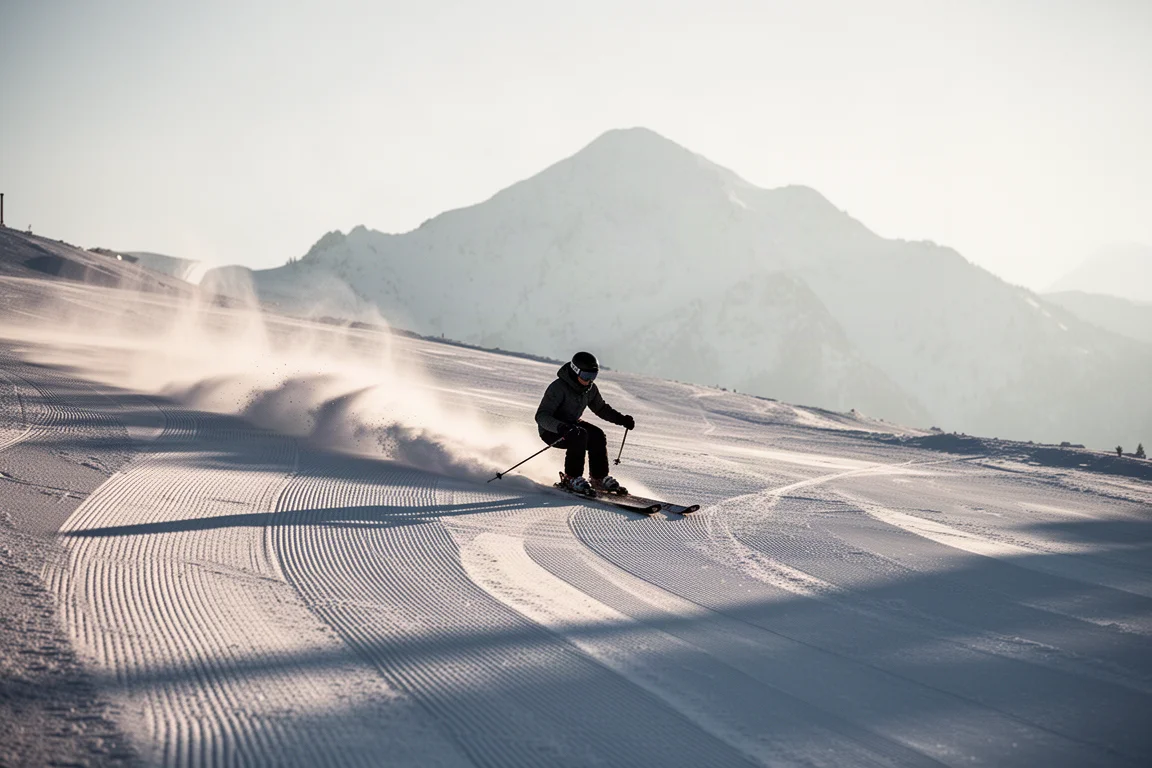
If you are a more aggressive, more powerful skier who likes to load the ski, stand on the edge, and feel it come back at you, the Sender Soul 102 will suit you better. It rewards commitment in a way the Declivity X does not, and it is the more satisfying ski when the surface is firm and the turns are clean.
There is no wrong answer here, only a mismatch. A rider who buys the Sender Soul expecting a drift-happy, low-edge-angle cruiser will find it more demanding than expected, just as a rider who buys the Declivity X hoping for maximum bite on hard snow will find the tail less planted than they want.
Conditions and Terrain to Consider
Both skis cover a genuinely wide range. Soft groomers, mixed and cut-up snow, chalky wind-scoured surfaces, and softer snow along the edges of a trail all fall inside their comfort zone. Each can serve as a daily driver in a western resort where conditions shift through the day, and each is useful on the East Coast for the mixed, unpredictable days that do not suit a narrower carving ski.
They are also both real skis in the hand. At 188cm they carry meaningful mass, so they are better suited to a skier who is comfortable driving a longer, wider platform than to someone looking for a light, nimble tree ski.
Buying Advice
Because both models return structurally unchanged, there is no reason to wait for a redesign before buying. The decision comes down to style rather than specification, and the fastest way to make it is to be honest about how you actually ski most days.
A useful way to frame it: if your best runs are the ones where you improvise, smear, and hunt for soft snow, lean toward the Declivity X 102. If your best runs are the ones where you commit early, hold a high edge angle, and let the ski run, lean toward the Sender Soul 102. Both are strong, versatile choices in this width, and both are likely to feel like a sensible single-pair quiver for a wide range of conditions.
Conclusion
These two skis sit in the same category and serve the same broad purpose, yet they ask for different things from the person on top of them. The Armada Declivity X 102 is the smoother, driftier, more playful option, best suited to creative skiers who value composure in mixed snow. The Rossignol Sender Soul 102 is the damper, more engaged option, best suited to aggressive skiers who want grip and reward at high edge angles.
Neither is the best hard-snow carver in the 100mm class, and neither is trying to be. What both deliver is versatility: a pair you can grab on almost any day and have a genuinely good time on. Pick the one that matches how you like to turn, and you will not spend much time second-guessing it.
Further reading
Related Reviews
Ski Gear
2023 Blizzard Hustle vs Rustler: Six Freeride Skis Compared
Blizzard's 2023 Hustle collection rebuilds the Rustler shape with a lighter core and no metal. Here is how all six skis differ, and which one suits your riding.
Ski Gear
2023 Skis of the Year: Atomic Maverick 88 TI, Salomon QST 106, and Look SPX 12 Pro
Three standout ski picks for all-mountain carving, powder days, and reliable binding performance, with practical buying notes for 2023 models.
Ski Gear
2025 Nordica Enforcer 104 Review: A Directional Charger Replaces the 104 Free
The 2025 Nordica Enforcer 104 drops the Free name and the twin-tip personality, gaining weight, stiffness and composure in rough snow. Here is what changed and who it suits.