Ski Gear
Armada Antimatter 2027 Collection: A Complete Lineup Guide from 75 to 114
A model-by-model walkthrough of the new Armada Antimatter ski line, covering construction, flex, shape, and who each width is built for.
Introduction
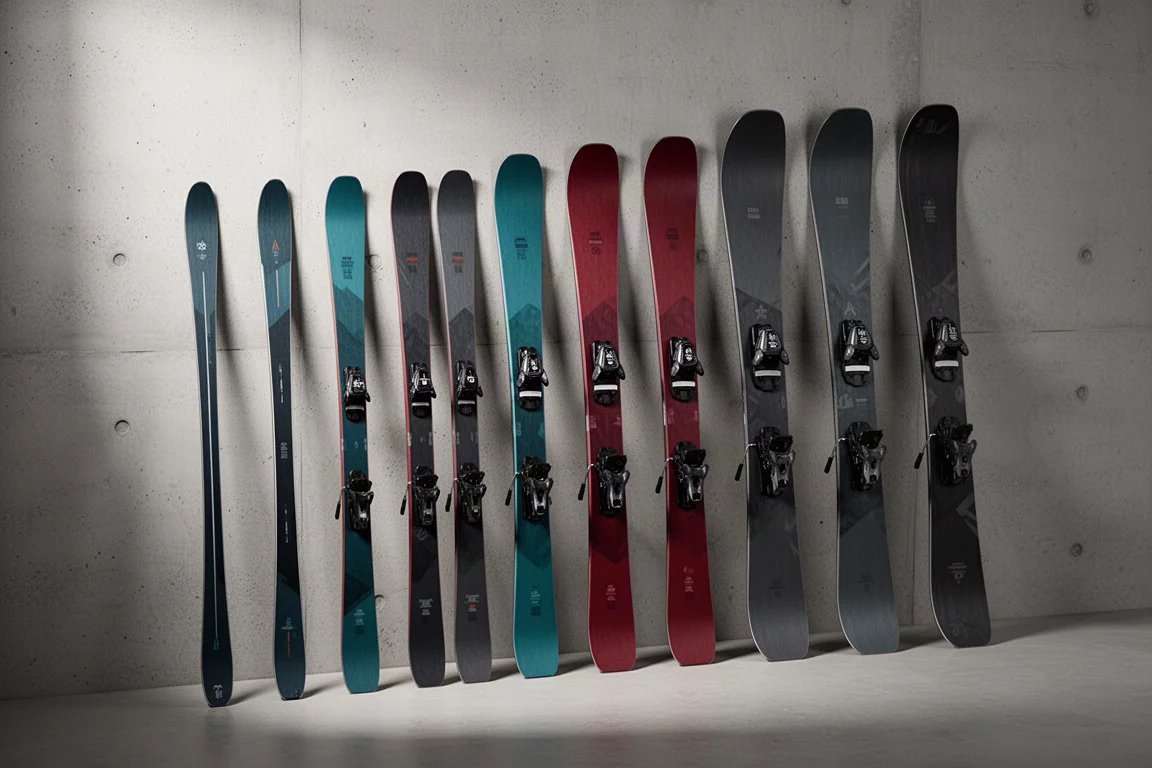
The Armada Antimatter collection is a completely new ski line for 2027, and it is unusually broad. It runs from a 75 mm waist all the way out to 114 mm, a 39 mm spread that almost no other single-name ski family covers today. Men’s and women’s versions sit alongside each other across most of the range, and for the most part they are the same ski, with one clear exception in the middle of the line.
That breadth is both the appeal and the challenge. Several models carry over shapes and constructions from earlier Armada designs under new names, while a handful are genuinely new. Waist width alone does not tell you what a given Antimatter ski will feel like, so this guide walks the line from narrowest to widest and explains what sits inside each one, how it differs from what came before, and who it tends to suit.
The practical takeaway up front is that shopping this collection means shopping individual models rather than a family. Two skis a few millimetres apart can share almost nothing in construction or shape.
How the Line Breaks Down
Three skis in the collection are completely new designs: the 75, the 100, and the 114. The rest are a mix of direct carryovers and updated versions of existing platforms.
The 82 W is the same shape and construction as the Reliance 82C, with a new name and a new topsheet. The 82 is the same ski as the Declivity 82 Ti. The 88 and 88 W carry over the construction of the Declivity 88C and Reliance 88C respectively. The 92 keeps the shape of the Declivity 92 but moves to a new internal build, and the 108 keeps the shape of the Declivity X 108 with the same updated construction.
That means consistency across the line is low by design. Construction changes from model to model, shape changes direction more than once as you move up in width, and the wider skis do not simply inherit a soft-snow shape. The 108, for example, is built around a firmer-snow profile than you might expect at that width, while the narrower 100 takes its cues from the 114. Width is a starting point here, not an answer.
Armada Antimatter 75
The 75 is one of the three genuinely new designs, and it is not what most people expect from this brand. Inside is a poplar wood core under a full titanal laminate, and the result is a ski that feels stiff both in the hand and underfoot. At 176 cm, which is the longest length offered, it comes in just under 1,700 g, so there is a lighter feel to it than the flex suggests.
The shape is tightly focused. There is effectively no discernible rocker, a generous amount of high-rise camber, and a 14.2 m turn radius at 176 cm. The shorter 152 cm version tightens that to 12.3 m, which is close to slalom territory. This is a frontside short-turn ski built for lateral acceleration and edge grip rather than straight-line speed, and it is happiest when you keep it on edge and keep turning.
Armada Antimatter 82
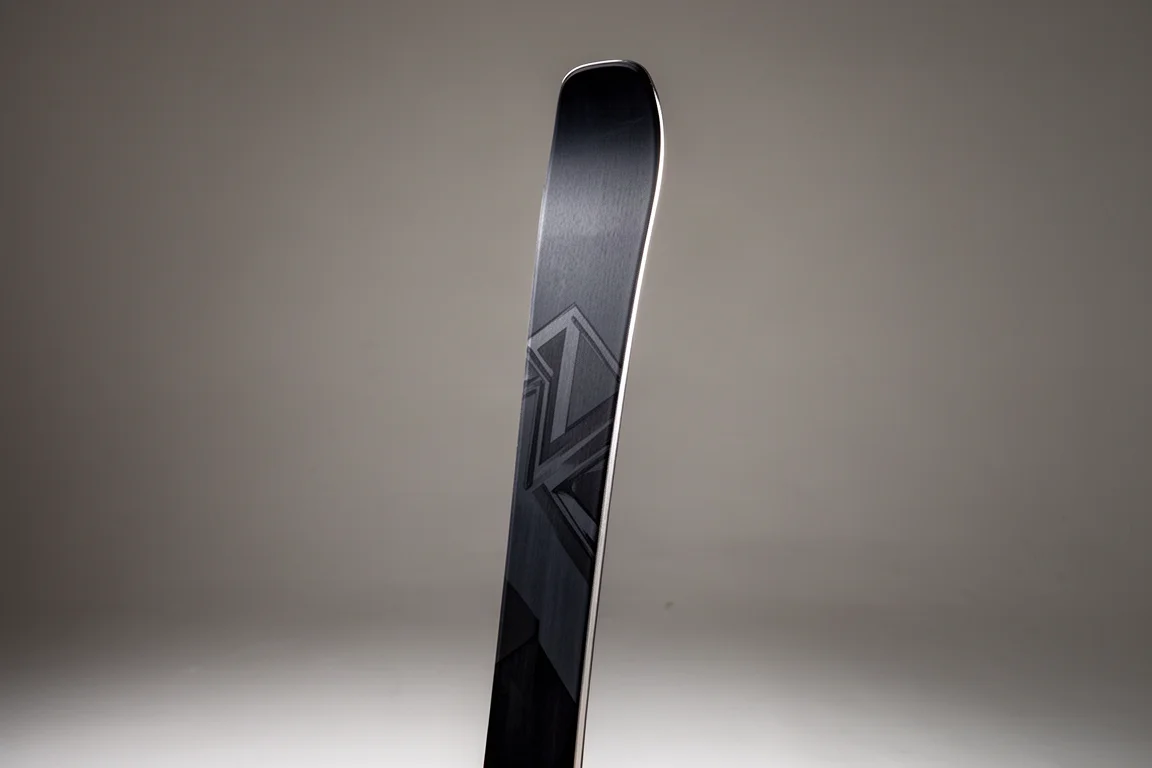
The 82 returns as the same ski as the Declivity 82 Ti, so anyone who liked that platform is getting the same shape, the same core, and the same feel under a new name and topsheet. Poplar wood core, and articulated titanal banding, which is the only place in the entire collection you can still find that construction. Articulated banding means full-width titanal laminates with slits cut into them, and it plays a larger role in how the ski twists than the more central metal used further up the line.
At 174 cm it weighs 1,800 g. The profile is mostly camber, but the shaping gives it a little more mogul capability and versatility than the 75, so you are not locked into pure carving turns. It is intuitive and easy to ski without being punishing, and it still has a genuinely high performance ceiling for a ski in this width.
Armada Antimatter 82 W
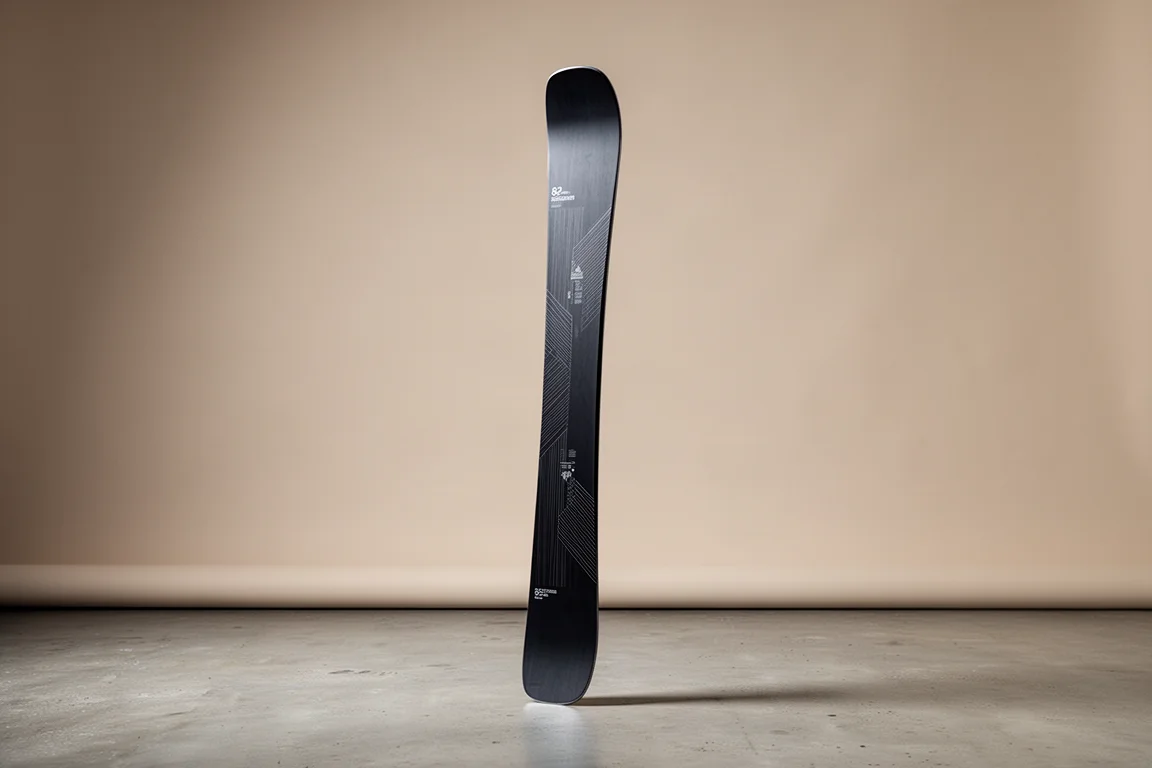
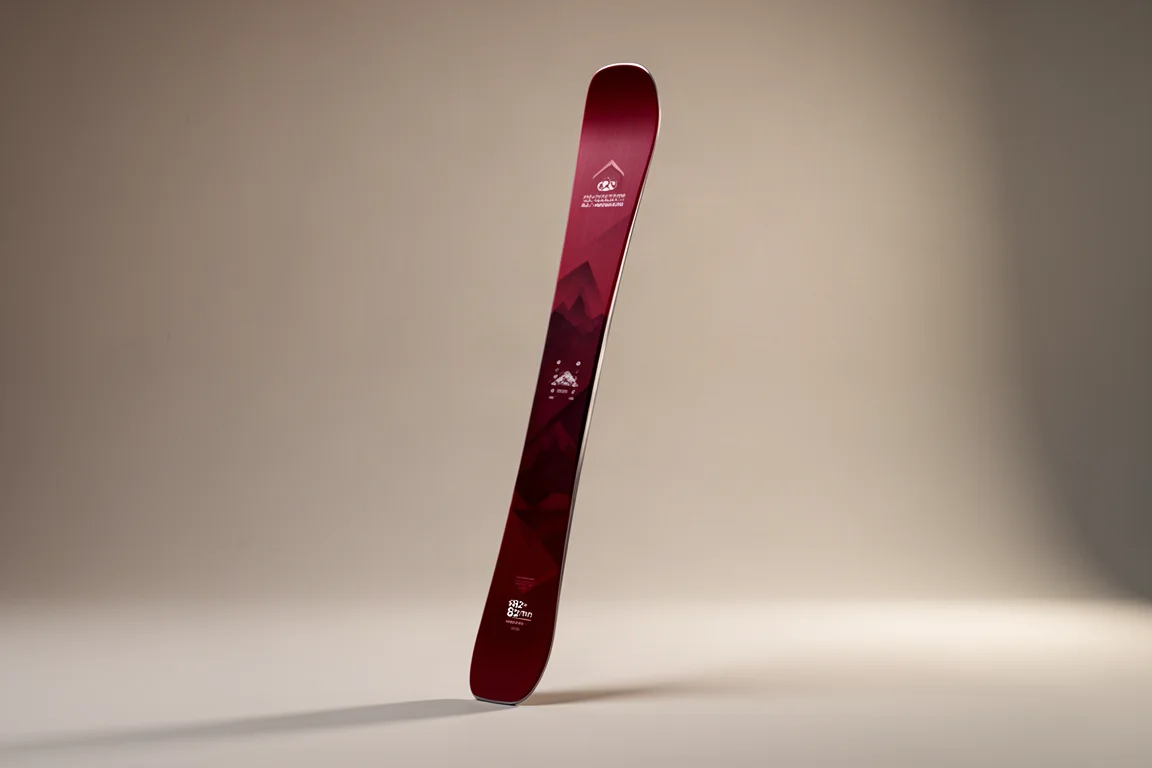
The 82 W is where the collection’s internal consistency breaks, and it is worth understanding before you buy. This ski is the Reliance 82C reincarnated: same shape, same construction, new name and new topsheet. Inside is a Karuba wood core, which is a lighter weight core, paired with carbon strips placed in front of and behind the binding zone. There is no metal in this ski.
It weighs 1,282 g, which is exceptionally light, and it feels that way. It is quick, agile, and easy to move around. The trade is straightforward: if you are shopping in the lower 80s and you want stability and power, the 82 with its titanal is the more appropriate ski. If you want quickness, agility, and easy mobility, the 82 W is the one.
Armada Antimatter 88 and 88 W
Both the 88 and the 88 W carry over their construction from the Declivity 88C and the Reliance 88C, and both use a poplar wood core with carbon strips. The flex has been moving in a more forgiving direction for a few seasons now. Earlier versions of this platform were notably stiff, and several years back it carried considerably more carbon stringers mixed through the build; those have since become more horizontal, and the ski has opened up as a result.
At 176 cm the 88 weighs 1,650 g, which is meaningfully lighter than the metal-equipped 82. The shape stays close to a groomer profile with very little taper, and it reads more like the 82 than anything wider in the line. That makes it a natural short-turn ski, an excellent mogul choice, and light enough to work through trees at moderate speeds.
It is easy to file a ski like this under intermediate and move on, but that undersells it. Short, quick turns on the side of the trail are a stylistic preference, not a skill ceiling, and stronger or heavier skiers can enjoy this profile just as much as anyone else. The ski rewards a skier who wants to stay active rather than one chasing big sweeping arcs.
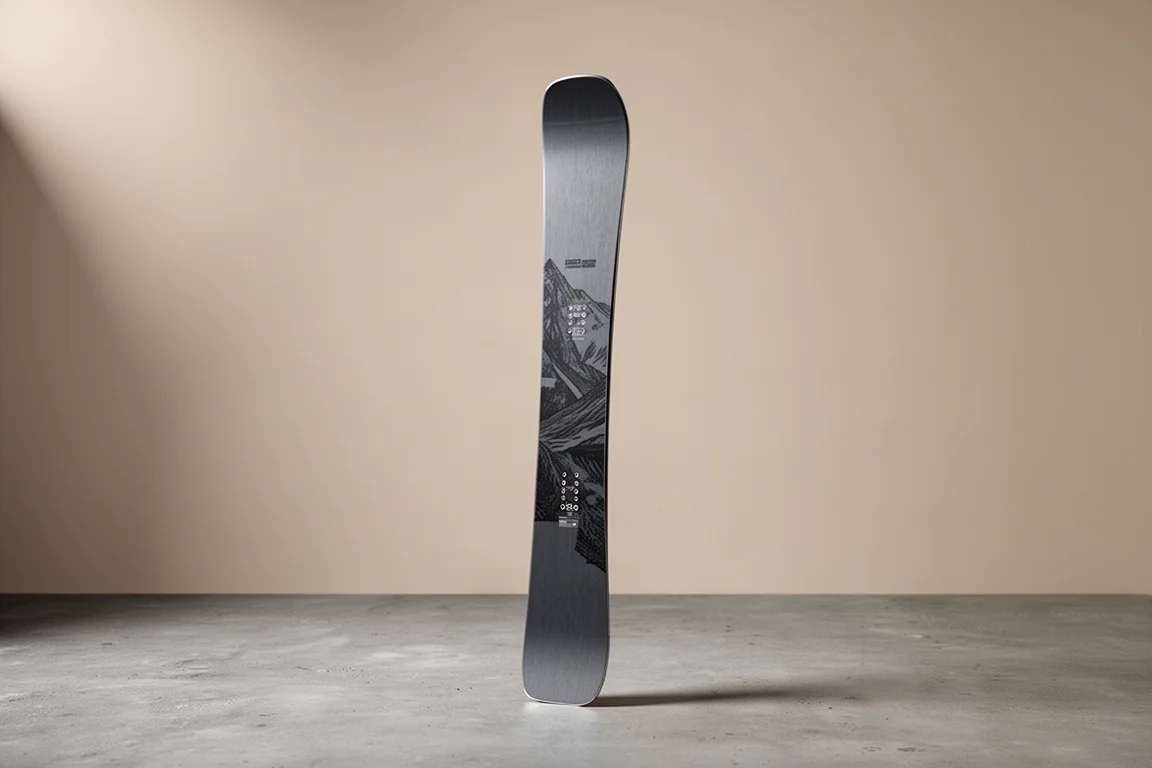
The 88 W shares that construction and that character, sized and finished for women. It is the same conversation at the same width, with the same light, energetic feel and the same well-rounded shape.
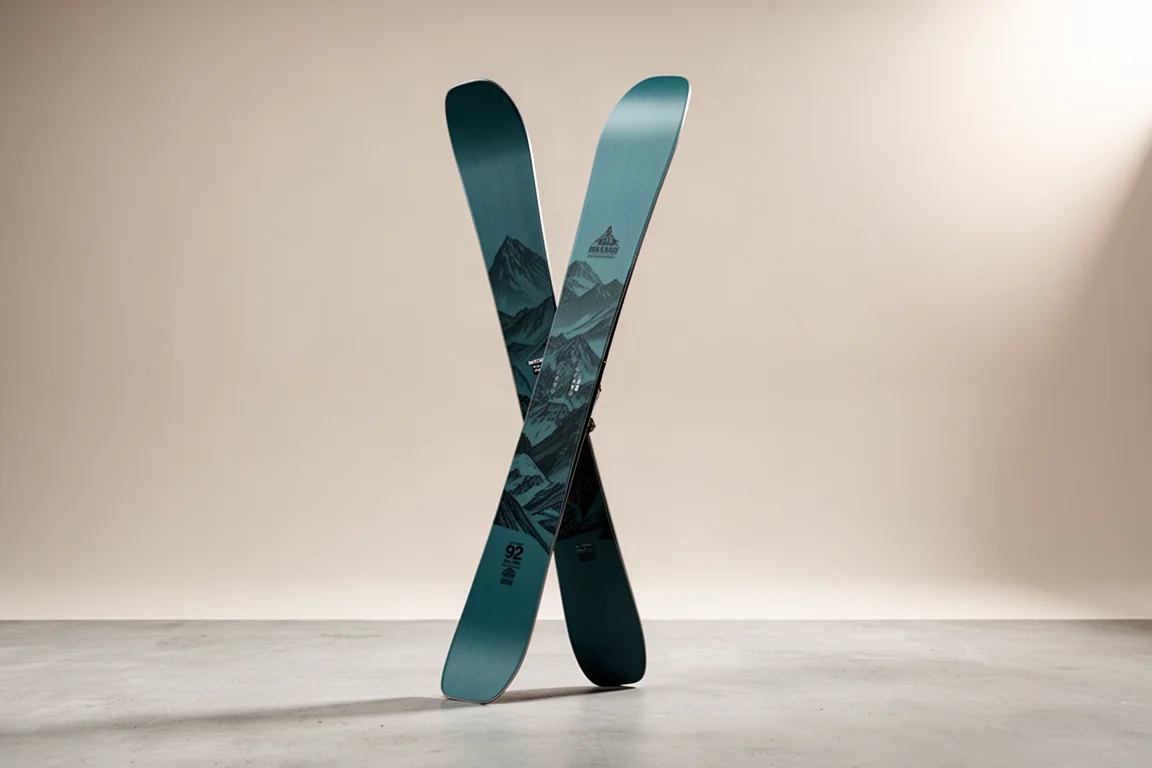
Armada Antimatter 92
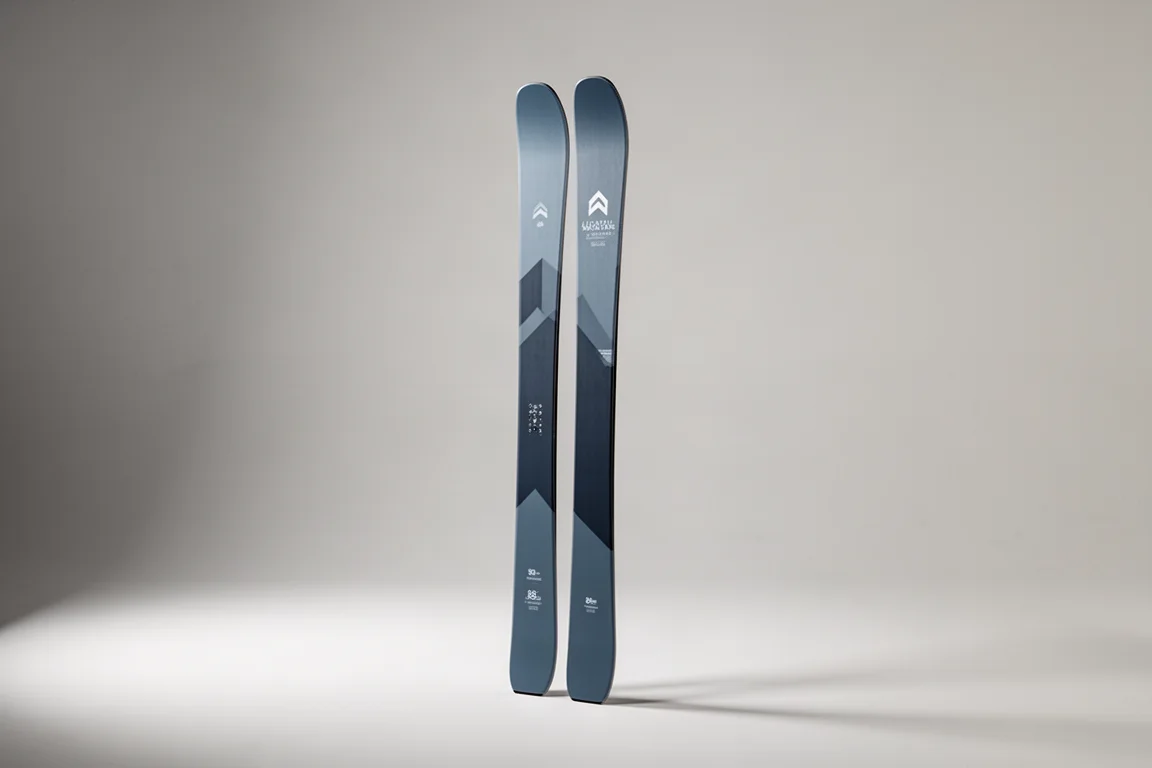
The 92 keeps the shape of the Declivity 92 and changes what is inside it. The poplar wood core stays, but the metal changes to speed metal, a new titanal laminate approach. Instead of full-width laminates with slits, speed metal uses two more central titanal layers. There is less metal overall, and it is doing a different job: the central spine is aimed at a suspension-like effect, while the older articulated banding was more involved in the twisting motion of the ski.
The measurable changes are a roughly 100 g weight reduction and a slightly softer flex. On snow, that shows up as a ski that wants to be tipped to a higher edge angle and then stays smooth through the whole turn without demanding much from the skier. There is a small reduction in raw power, but the ski gains range, and it is noticeably more versatile once you leave the groomed surface.
Armada Antimatter 100
The 100 is all new, and it is a different animal from the rest of the narrower half of the line. It shares the poplar core and speed metal construction of the 92, but the core profile is thinner, which leaves a visible raised section running along the ski and gives it more flex. The tip shape is substantially different from everything else here: a round flex pattern, a large amount of rocker, and pronounced pointy early taper.
On snow that translates into a ski that pivots easily and moves around a lot underfoot. It is not the strongest carver in the 100 mm class, and it expects the skier to do the work rather than doing it for you, but the mobility it unlocks everywhere else is the point. At 175 cm it weighs 1,800 g, and it is a shape that rewards sizing up if you are between lengths, because the longer version gets more of what the design is trying to do.

The 100 and the 114 also share a skin attachment point, which is a useful hint about how the two relate. Think of the 100 as a narrower expression of the same big-mountain idea, adapted for tighter terrain and firmer snow. It makes a strong tree ski in narrow, technical terrain.
Armada Antimatter 108
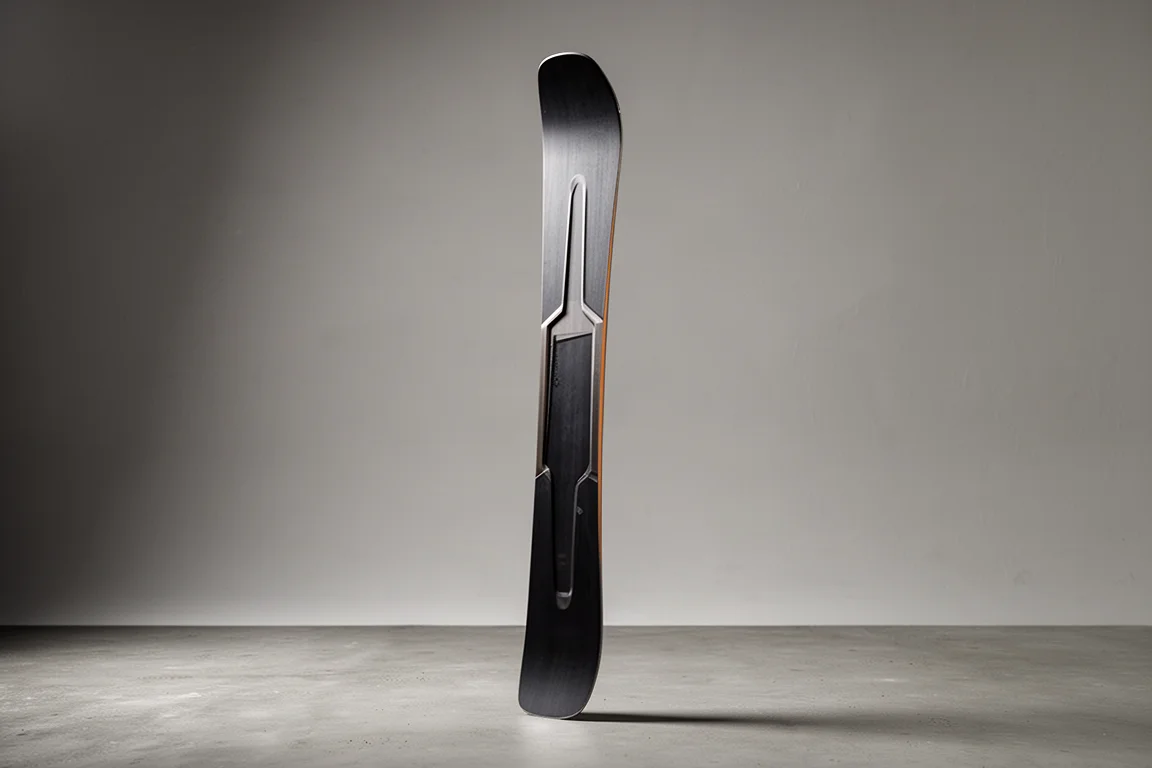
The 108 keeps the shape of the Declivity X 108 and adopts the updated speed metal construction. Flex is close between the two, only a few percent softer and mostly in the tail, and the new version is about 50 g lighter. What stands out is the profile: a lot of rocker, a straight cut, and a long taper, with a 24 m turn radius.
The mount point has also been simplified. The previous ski listed two options, a modern freeride line and a factory recommended line. The new one lists a single standard position, which sits where the modern freeride line used to be. Beyond that, this is essentially the same performance as before.
That makes it a high-speed, thrill-seeking ski with metal in it. When the subsurface under fresh snow is not bottomless, having something that tracks instead of going wherever it wants matters, and this ski tracks well. The turn radius puts it most at home in bowls and wider spaced trees rather than tight corridors.
Armada Antimatter 114
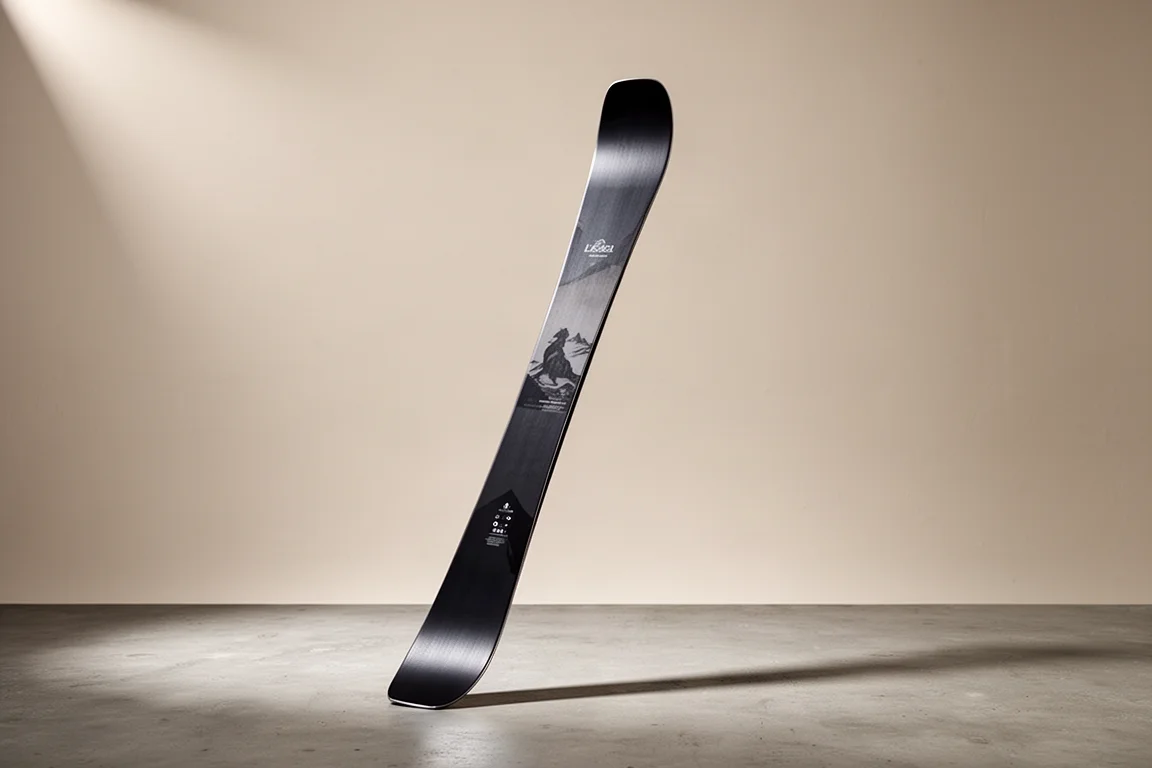
The 114 is the flagship of the collection and the ski that has been drawing the most attention. It weighs 2,100 g at 187 cm and uses the same poplar core and speed metal construction as the models below it, though core thickness is necessarily played with at this width, which is what shapes the flex.
The rocker profile is substantial. There is more splay and more tip rocker than the 108, and considerably more than the 100, plus a significant tail rocker that reads like a twin tip that has been squared off at the end. The ski is not soft, but with that much rocker built in it already sits in a round shape before you even decamber it. The turn radius is quite different from the 108.
The mount points are notably forward. The forward line sits less than 2 cm back from true center, and the further back line is still under 5 cm back. For a directional-leaning soft snow freeride ski, that is a clear nod to freestyle influence, and it leaves room to land switch or throw in creative lines. It is also the hardest model in the line to find, and the one that needs the right conditions to make sense.
Buying Advice
The single most useful thing to know about this collection is that it does not behave like a conventional width ladder. Construction shifts from model to model, and shape does not move in a straight line as the skis get wider. Buying by waist width alone here is a mistake.
Start with what you actually ski. If your days are mostly short-radius turns on groomed runs, the 75 is the most focused tool in the line, with a stiff full titanal build and a tight radius. If you want a similar width with more versatility and a metal laminate you can trust, the 82 is the more planted choice, while the 82 W trades that stability for a very light, agile feel. The 88 and 88 W sit in the middle as an easy, energetic short-turn and mogul option that is light enough for trees.
If you want one ski to cover a wider range, the 92 is the most broadly capable of the narrower models, with its new central-metal construction and its softer, more accessible flex. The 100 is the pivoty, mobile option for tight terrain and narrower freeride lines, and it rewards a skier who stays active. The 108 is the high-speed, rockered, metal-equipped choice for open terrain and soft snow. The 114 is a dedicated big-mountain and deep-snow ski with competition pedigree and forward mount points.
Two practical notes. First, decide how much metal you want before you decide on width, because the presence or absence of titanal changes these skis more than a couple of millimetres of waist does. Second, if you are between lengths on the 100, sizing up gets you more of the intended character.
Conclusion
The Antimatter collection covers more ground than almost any other line on the market, and the skis inside it are all credible in their own categories. What it does not offer is predictability. A 92, a 100, a 108, and a 114 all approach the mountain differently, and the narrower models differ from each other just as much.
For skiers who take the time to match the specific model to the terrain and style they actually ride, that variety is an advantage rather than a complication. Pick the construction and shape that fit your days, not the number on the waist.
Further reading
Related Reviews
Ski Gear
2023 Blizzard Hustle vs Rustler: Six Freeride Skis Compared
Blizzard's 2023 Hustle collection rebuilds the Rustler shape with a lighter core and no metal. Here is how all six skis differ, and which one suits your riding.
Ski Gear
2023 Skis of the Year: Atomic Maverick 88 TI, Salomon QST 106, and Look SPX 12 Pro
Three standout ski picks for all-mountain carving, powder days, and reliable binding performance, with practical buying notes for 2023 models.
Ski Gear
2025 Nordica Enforcer 104 Review: A Directional Charger Replaces the 104 Free
The 2025 Nordica Enforcer 104 drops the Free name and the twin-tip personality, gaining weight, stiffness and composure in rough snow. Here is what changed and who it suits.