Art Supplies
ARDEX Acrylic Marker Sets Review: 32 Standard Colors and 18 Metallics
Double-ended acrylic markers with brush and bullet nibs, strong flow, and vibrant coverage on the right paper. What works, what to watch for, and who they suit.
Introduction
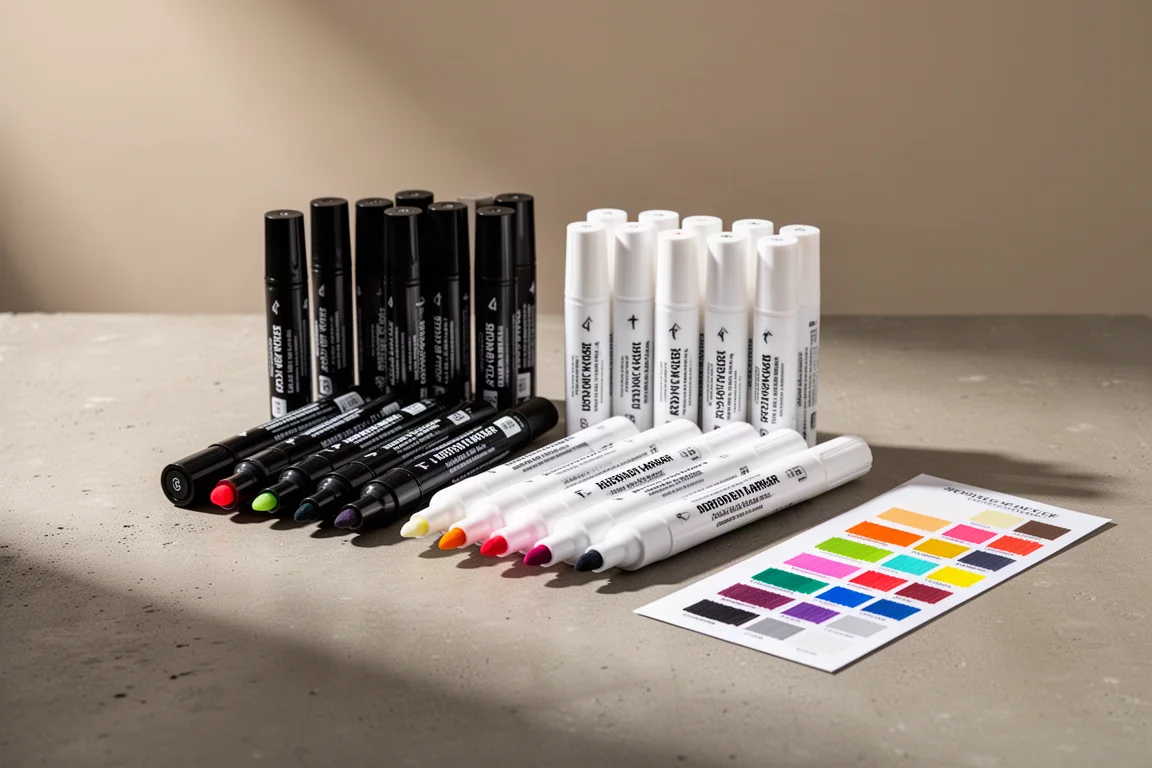
Acrylic markers occupy a useful middle ground between paint and pen, and the ARDEX acrylic marker range makes that format accessible at both ends of the color spectrum. The range comes in two sets: a 32-color set of standard colors and an 18-color metallic set. The markers themselves are essentially identical across both sets; the real differences come down to the palette, the barrel color, and, unfortunately, one significant labeling problem with the metallics.
These markers are often compared to POSCA-style paint markers, and the comparison is fair in terms of the surfaces you can work on. Where they differ is in flow, nib behavior, and a few design choices that matter more than they first appear. After spending real time with both sets, including a full finished illustration, here is how they actually perform.
Design and Nib Performance
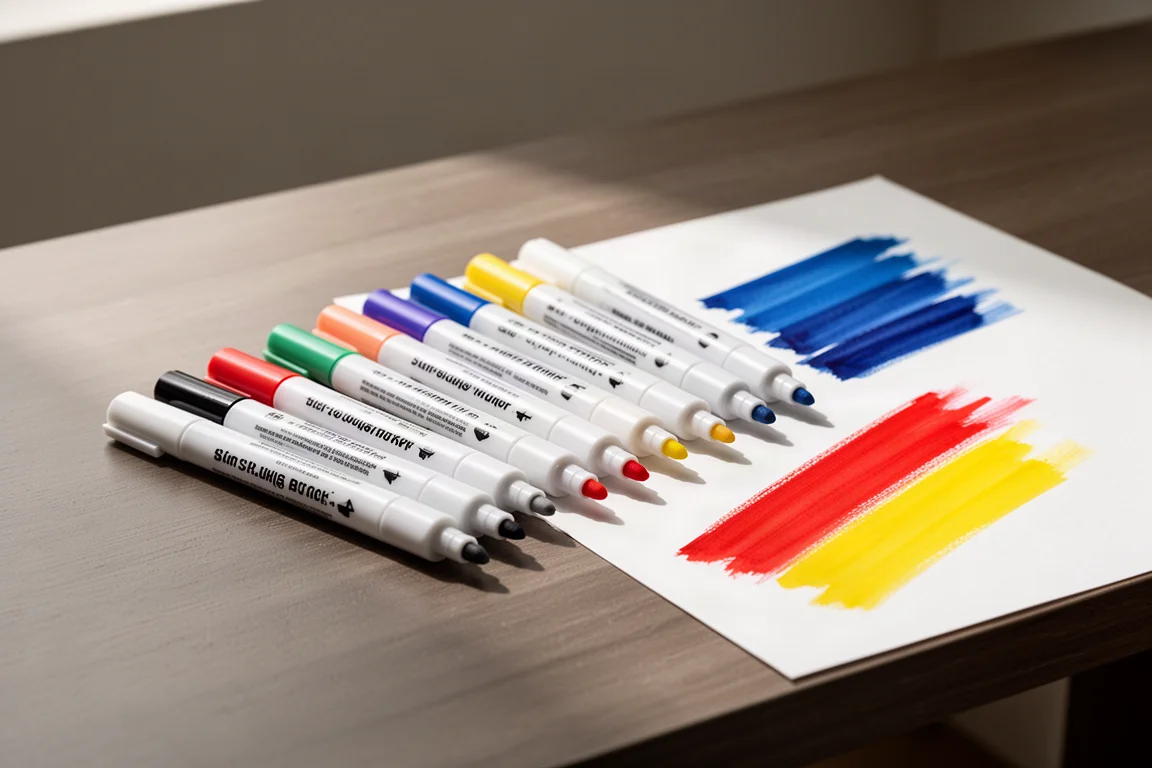
Each marker is double-ended. One side carries a 3.2 mm brush tip, marked with a brush icon on the cap; the other side carries a 1.9 mm bullet nib, marked with a fine nib icon. On the standard-color set, the barrels are black, and a clear band of pigment color sits at the brush end, making it easy to spot the shade you want when the pens are laid out together. The alphanumeric color code is also printed on the barrel, which matters more than it sounds: once you make your own swatch, that code is the only reliable way to match colors back to the pen.
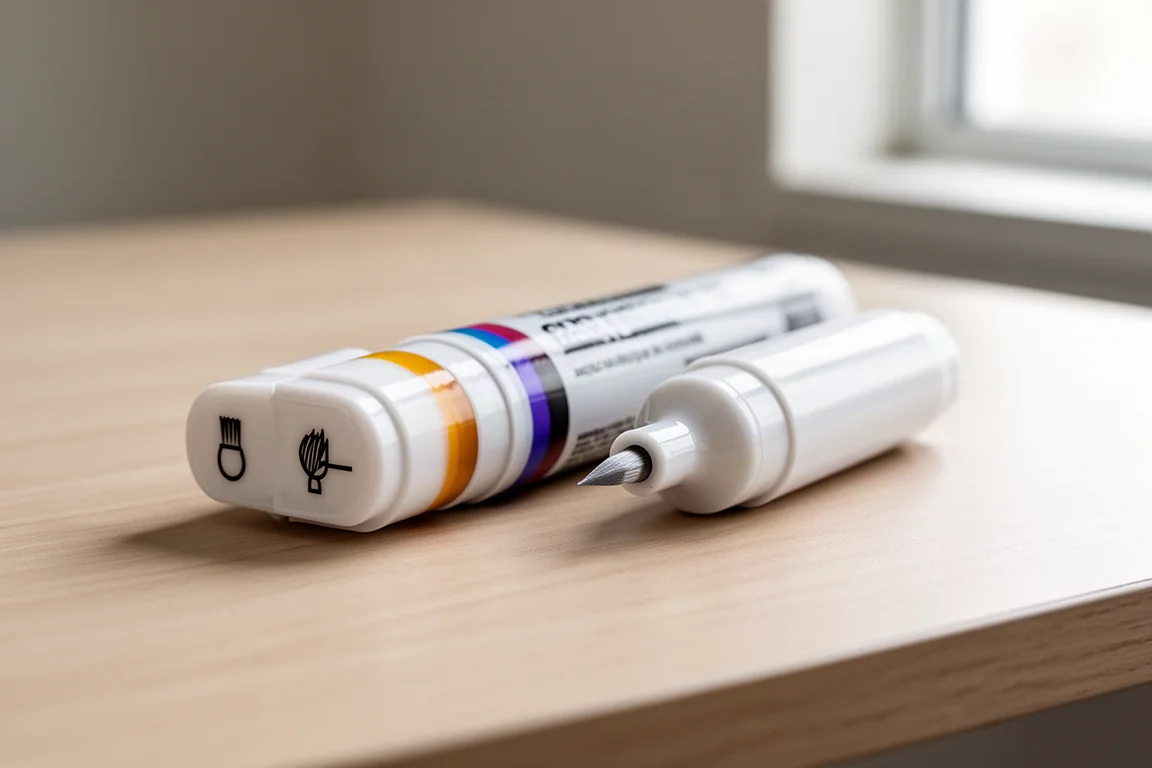
The brush nib is genuinely flexible and delivers a steady, controlled flow of acrylic paint. Unlike some paint markers that produce surprise ink bursts, the flow here is consistent. Pressing slightly harder releases more paint and gives thicker coverage, while light pressure gives finer work. The bullet nib is firmer but still feeds paint smoothly. Both caps also include small anti-roll wedges, a small but thoughtful touch given the round barrels. You do not need to shake these markers or prime them with pumping; the paint flows as soon as the cap comes off.
Color Selection and Vibrancy
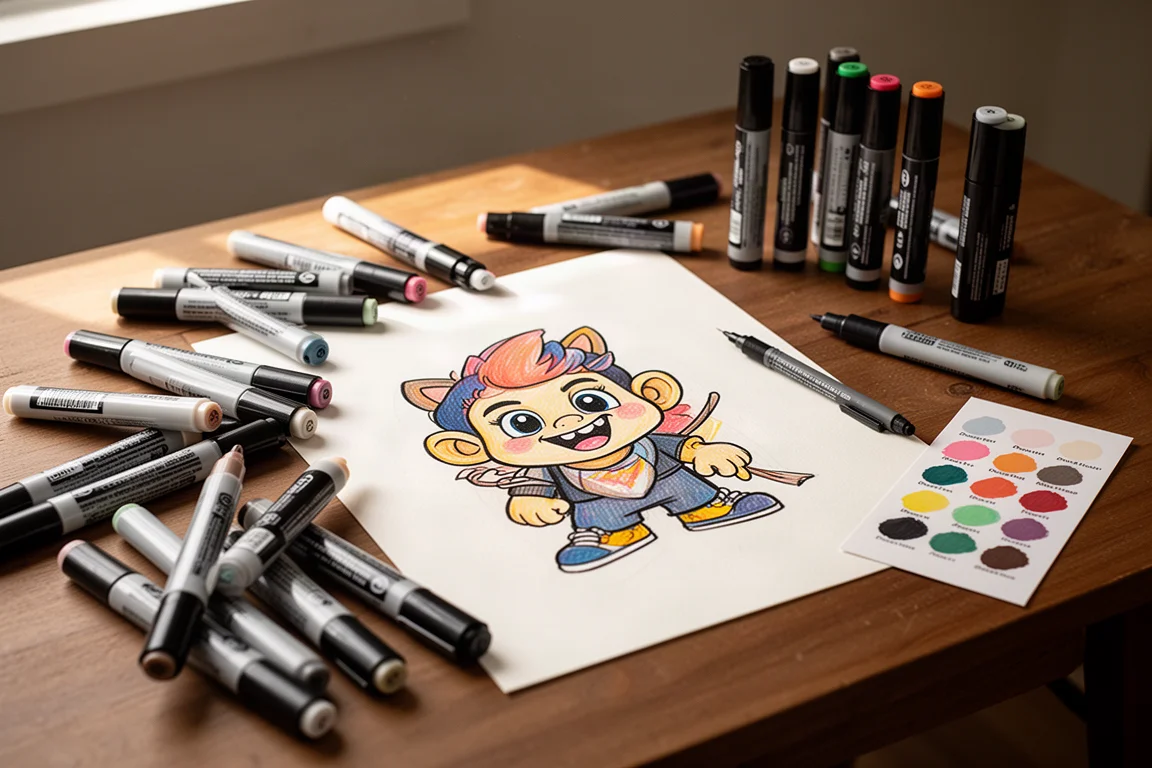
The 32-color standard set offers a bright, vibrant palette with a genuinely useful range of tones. The colors lay down boldly, and the selection covers everything you need for illustration-style work. On a finished cartoon-style test piece, the colors stayed saturated and clean, and light colors could even be laid back over darker ones when a mistake needed correcting.
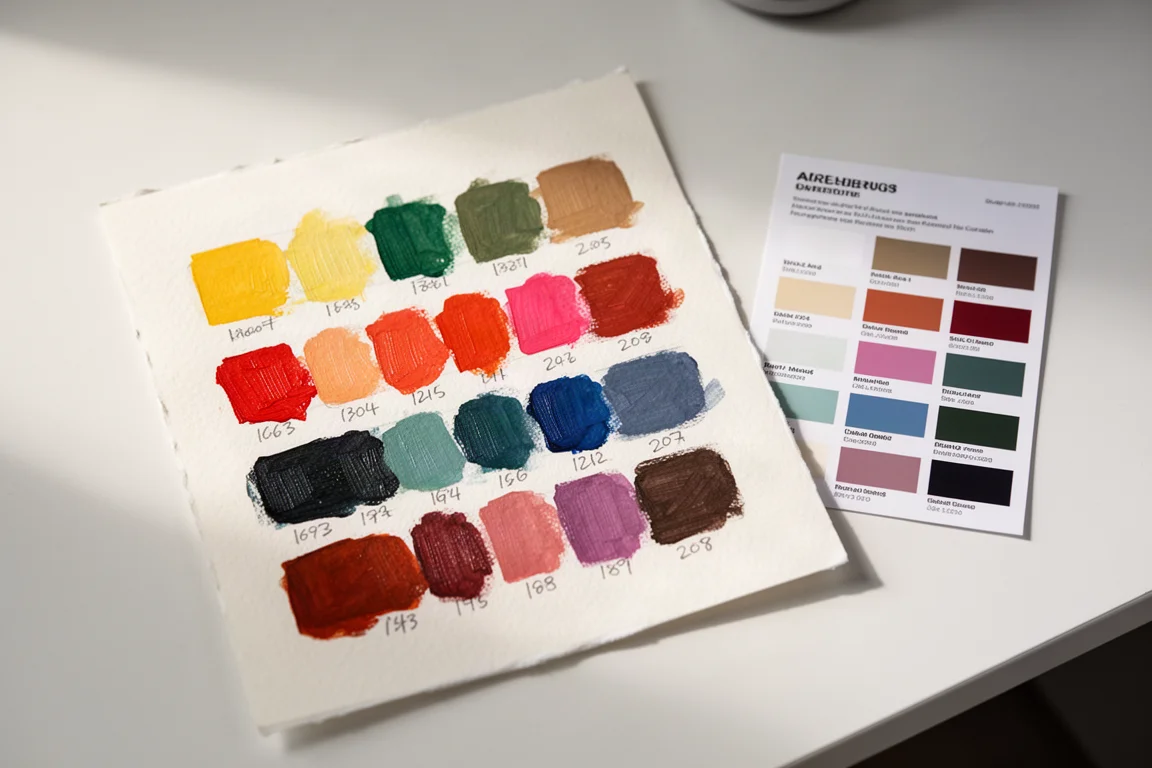
One caveat applies to any set like this: the printed swatch card included in the box is a guide for storage, not a reliable color reference. Printed swatches on the card vary wildly from how the paint actually looks on paper. Colors like Light Coffee and Golden Brown look dramatically different on the card compared to real strokes on bristol paper. Making your own swatch on the paper you actually use is essential, and the alphanumeric codes printed on the barrels make that process painless.
The Metallic Set’s Labeling Problem
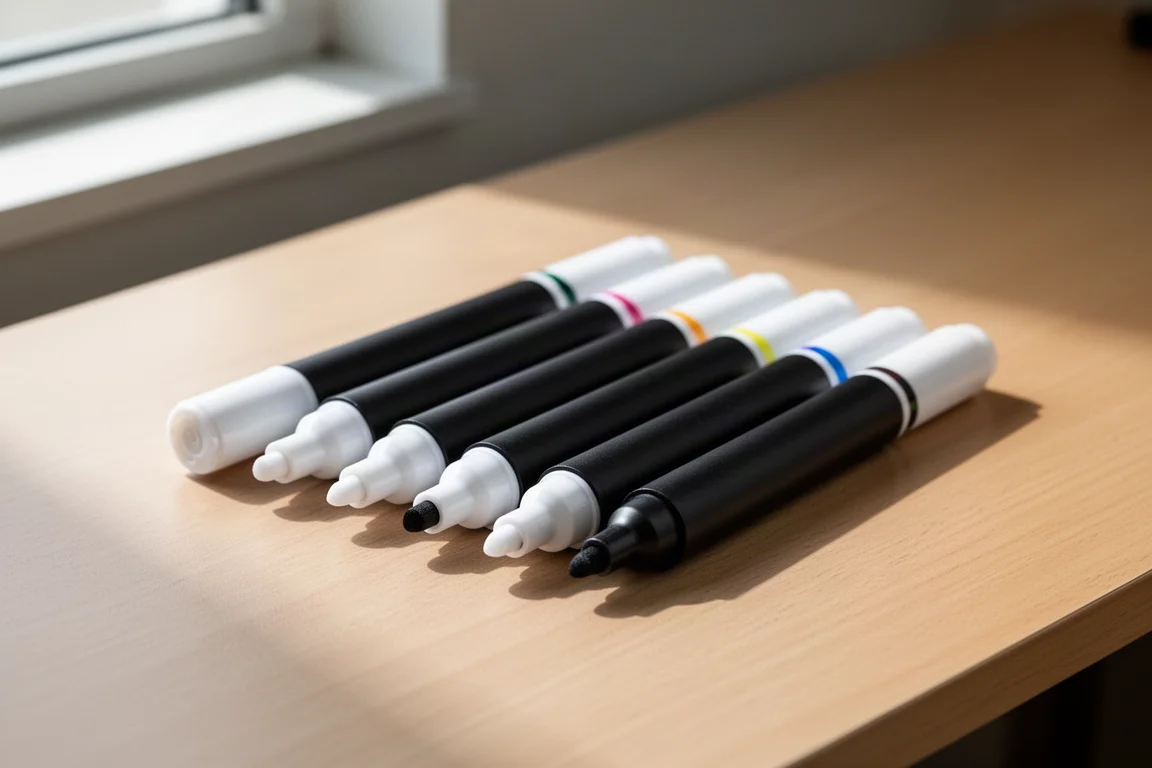
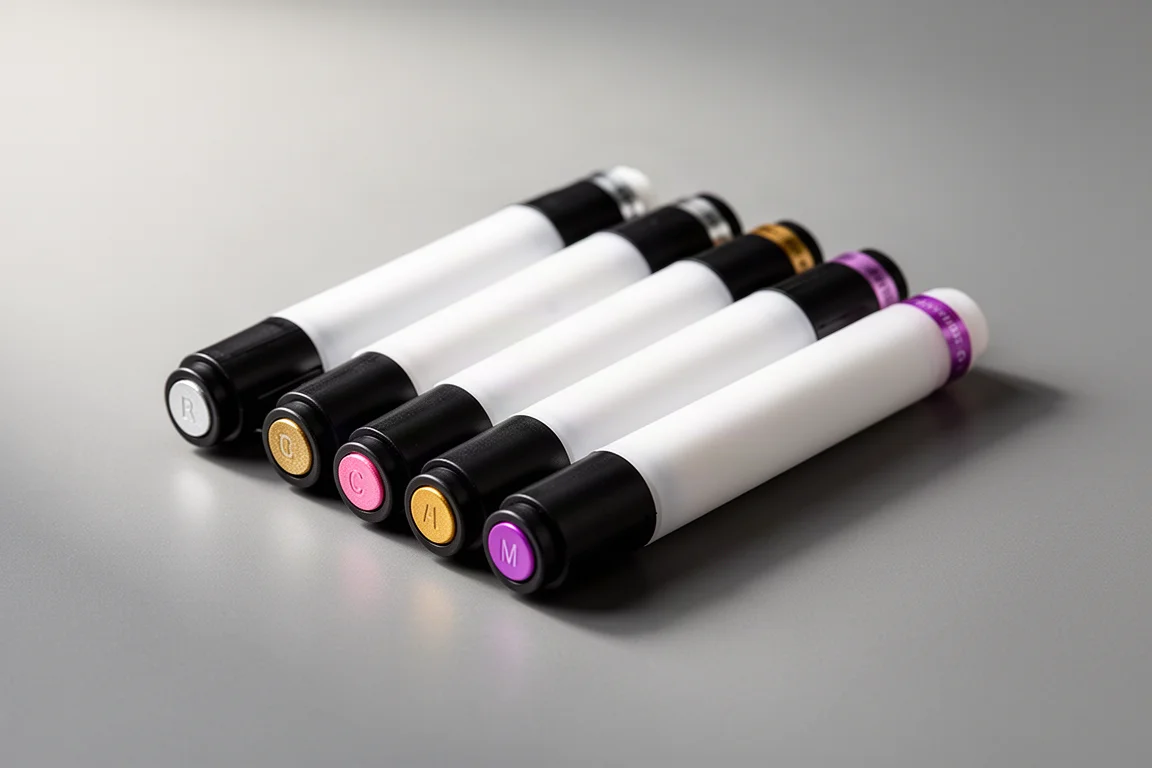
The 18-color metallic set uses the same marker body but with white barrels, which is arguably the nicer look since the pigment identifiers show up much better. Performance is not the issue here. Identification is. Unlike the standard set, the metallic pens have no alphanumeric number printed on the barrel, and there is no pigment name anywhere on the box, the pens, or the swatch card beyond the codes themselves. With several pinks, blues, and greens that look similar on the card, you are left guessing which pen is which. Once you make your own swatch, there is no way to reference that code back to the pen without making your own labels or stickers, which you should not have to do with any art supply.
Where the Metallics Truly Shine
In use, the metallics are excellent. On white paper they read as clearly metallic, but on black or dark paper they transform completely. The silver is almost mirror-like, the pink and gold shimmer as they leave the barrel, and the coverage is strong, especially with slightly firmer pressure.
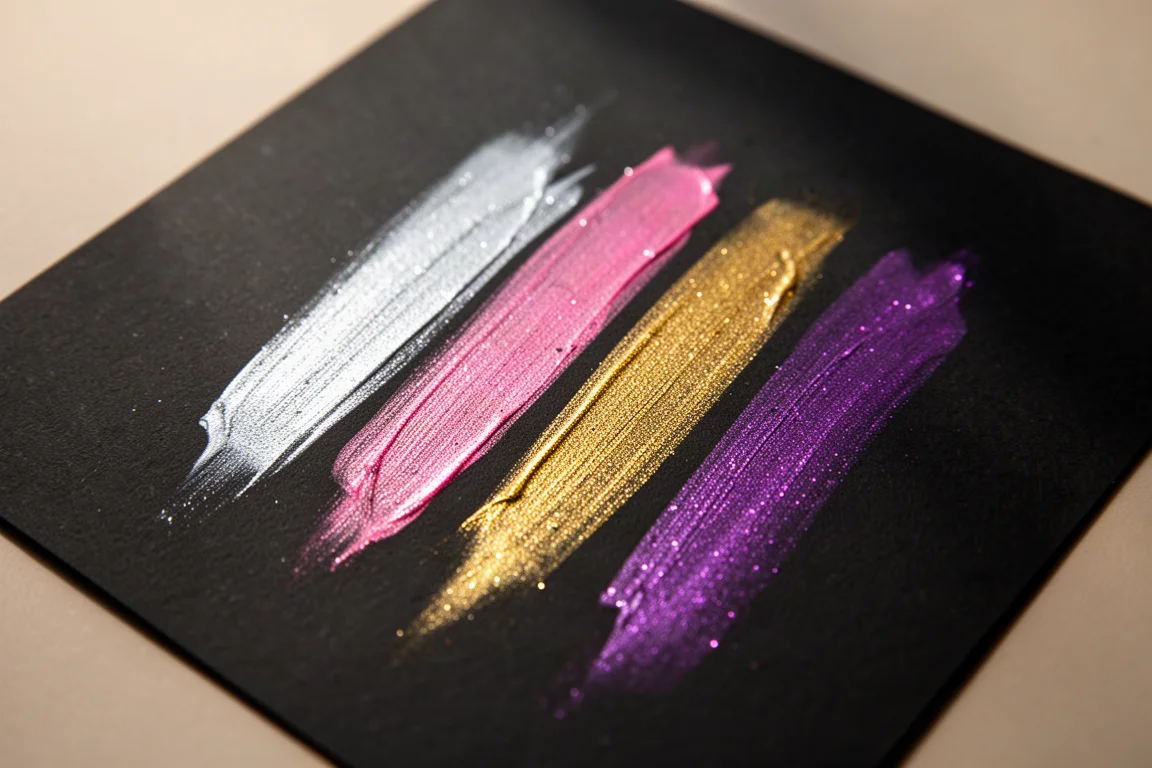
For artists working on dark paper, greeting cards, stones, or decorative projects, these metallics deliver a genuinely striking result with very little effort.
Paper Choice Makes a Real Difference
These markers are noticeably paper-sensitive. On a fibrous mixed media tan paper, the brush tip performed poorly. Bristol vellum gives decent coverage but slightly streaky first passes, often needing a second coat. Bristol smooth is the best match: the surface film helps the paint sit up, and coverage is noticeably better. Streakiness on the first pass generally disappears with a second layer, so patience solves most of it.
The bullet nib is also a bit thick for small, detailed outlining on modest-sized artwork; a separate fine liner may serve better for fine linework, though the bullet nib works fine on larger pieces.
How They Handle Layering and Blending
Layering is a real strength. Colors can be painted over each other cleanly, as demonstrated when a dark purple section was later covered with light lilac with no problem. Light blending is possible: touching a brush nib loaded with one color into another creates a simple gradient. However, heavy mixing is not really this medium’s strength. The soft brush nib and generous paint flow can lift and pick up fibers from the paper when working a area repeatedly, leaving grainy debris on the nib. Clean the nib promptly if that happens. Also, unlike alcohol markers, you cannot work in circling strokes to smooth out streaks; the paint flow is too generous and can stress the paper surface.
Overall Buying Advice
If you want a versatile paint marker for illustration, craft, and mixed surfaces, the standard 32-color set is the stronger buy: easy color identification, vibrant coverage, and double-ended flexibility. Choose it if you work on smooth bristol paper, decorate stones, canvas shoes, or plastics, and want controlled paint flow without priming. The metallic set is worth it specifically if you work on dark surfaces, where the colors genuinely transform, but go in knowing you will need to label the pens yourself.
Conclusion
The ARDEX acrylic markers turned out to be far more enjoyable than expected: well-controlled flow, flexible brush nibs, vibrant color, and the versatility to work across paper, stone, fabric, and plastic. The 32-color standard set is the easy recommendation, with the metallic set as a fantastic companion for dark-surface work provided you can live with its labeling shortcomings. For artists ready to branch out from alcohol markers or pencils, these are a rewarding place to start.
Further reading
Related Reviews
Art Supplies
Art Pop Watercolor Pencils 48-Color Set: A Thoughtfully Designed Student-Grade Option
The Art Pop 48-color watercolor pencil set blends well, dissolves smoothly, and includes artist-friendly details like barrel-printed color names, all at an affordable price.
Art Supplies
Artics Acrylic Markers 3mm Review: Versatile Paint Markers With a Few Caveats
A 48-color set of water-based acrylic paint markers that blend while wet, dry permanent, and keep the price low, though safety transparency remains a question.
Art Supplies
Best Art Supplies Worth Your Money: Pencils, Pens, Paints, and Paper That Earned Their Spot
After years of daily use and testing, these are the pencils, pens, watercolors, gouache, brushes, sketchbooks, and erasers that stand above the rest.