Snowboards
Arbor Koda Review: A Damp All-Mountain Freeride Board That Hasn't Been Fully Dialed In
Traditional camber, a directional flex, and a smoother ride than the carbon version, but inconsistent pop and edge hold hold it back.
Introduction
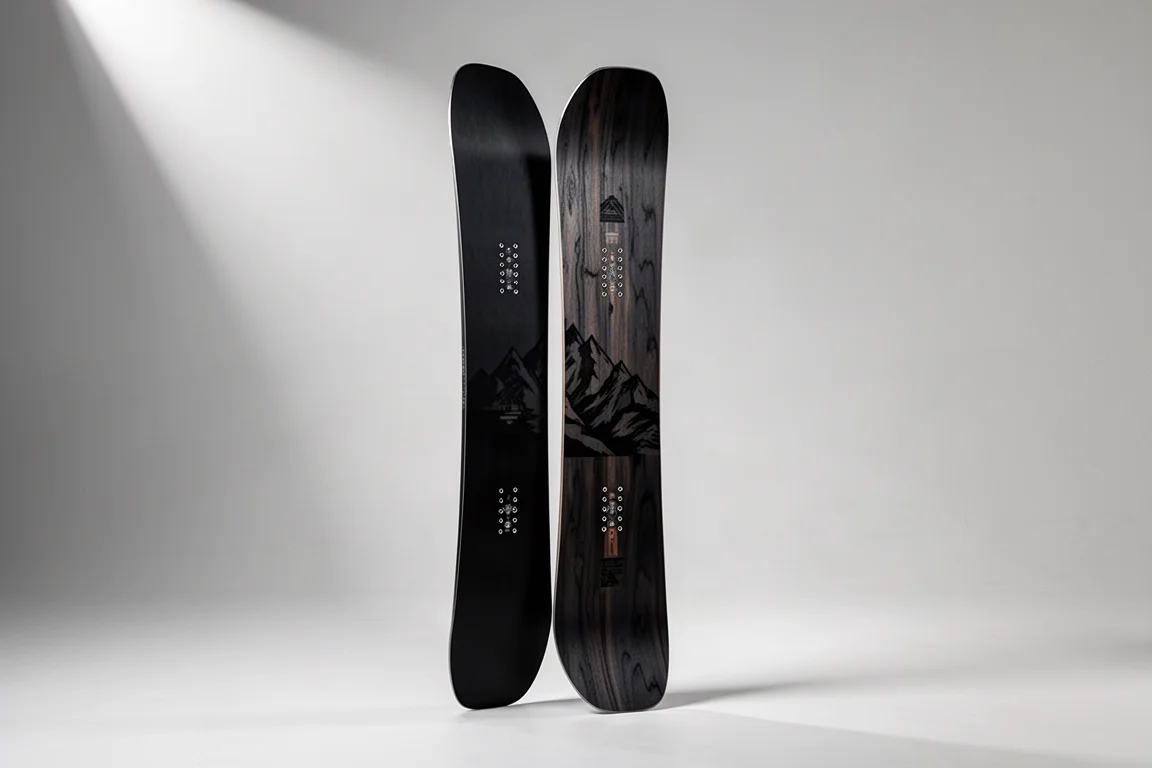
The Arbor Koda is an all-mountain freeride snowboard with Pat Moore’s name attached to it, built around good old-fashioned traditional camber. From contact point to contact point, that camber arc gives the board plenty of load, pop, snap, and drive. It is also the more damp sibling of the carbon version, trading some of that livelier feel for a smoother ride.
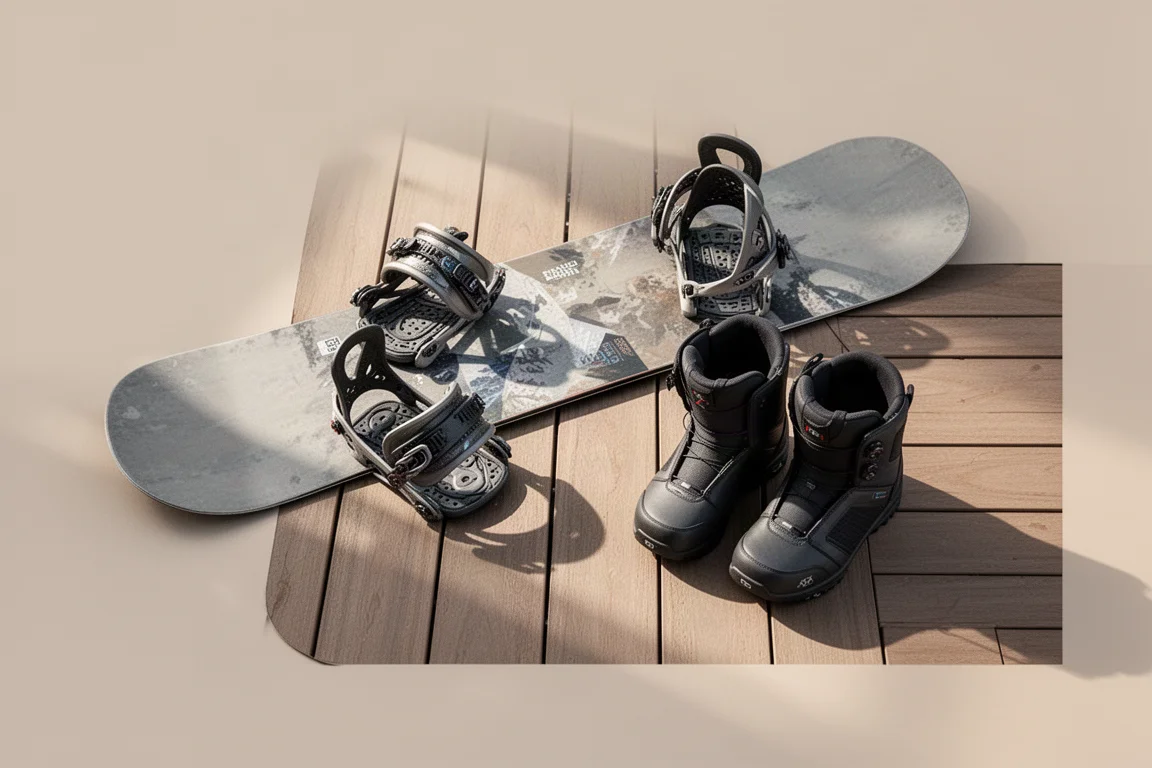
This review comes from riding it at Copper Mountain on a sunny, high-wind day, paired with Rome Black Label bindings and K2 Thorexis boots. The snow off the groomed runs was firm and chalky with chop, and the groomers were the place to really set an edge and carve.
Who This Board Is For
Arbor positions this board for the all-mountain freeride rider who mostly wants to cruise. If that describes your style, there is a lot to like here, and it is easier to ride than the carbon Koda precisely because it is more damp.
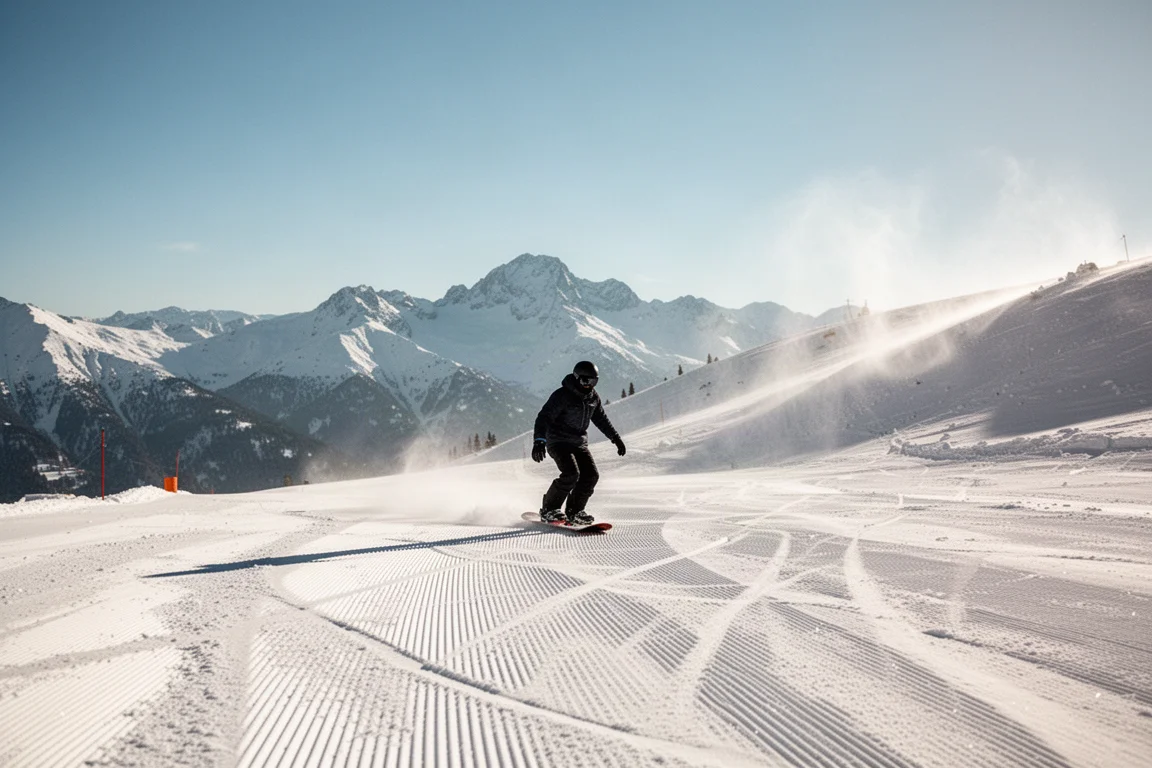
It is available in a wide size range: 155, 158, 159W, 161, 162W, 164, and 165W. That spread makes it approachable for a broad range of riders, including those who need a wide deck.
Ride Feel and Flex
The shape is directional, with a flex that is much softer out at the nose and progressively stiffens toward the tail, which is the stiffest section. The torsional flex is easy to engage but quick to rebound, so ankle steering snaps back aggressively.
Because it does not carry as much carbon as the carbon Koda, the micro-vibrations that resonate through that board are gone here. On groomers it felt smooth, damp, and settled. The only real chatter showed up in firm, chunky snow over scattered rocks, where it felt like ball bearings underneath.
Pop and Pressing
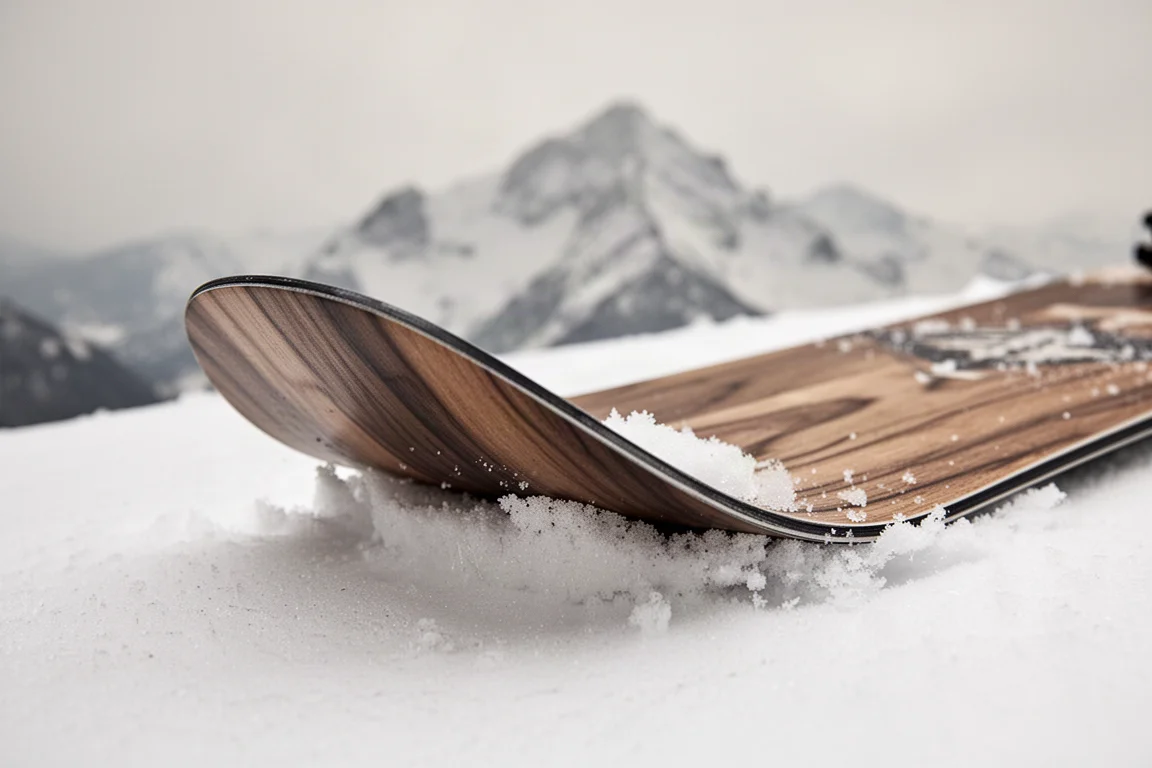
Pop is the weak point. On side hits and rollers, the board was noticeably inconsistent: one moment you would load it up aggressively and get underwhelming height, the next you would get launched skyward. Getting the most out of it seems to require moderate to fast speeds, and even then you spend time calculating how to load the tail rather than just doing it naturally.
Pressing is a workout too. You need to get your weight way out on the nose with speed and muscle to engage it, and it fights you the whole time. The tail is even stiffer to work with. If you already know how to butter, expect effort; if you do not, this board will punish you.
Edge Hold and Carving
Short, tight, quick carves and medium, mellow carves are consistent and predictable. The problem shows up when you drive your knee into the camber and push down on the tail for the hardest carves: the board washes out, skips, catches, and then re-engages. It happened almost every time, on steep firm terrain and even on mellow blues and greens.
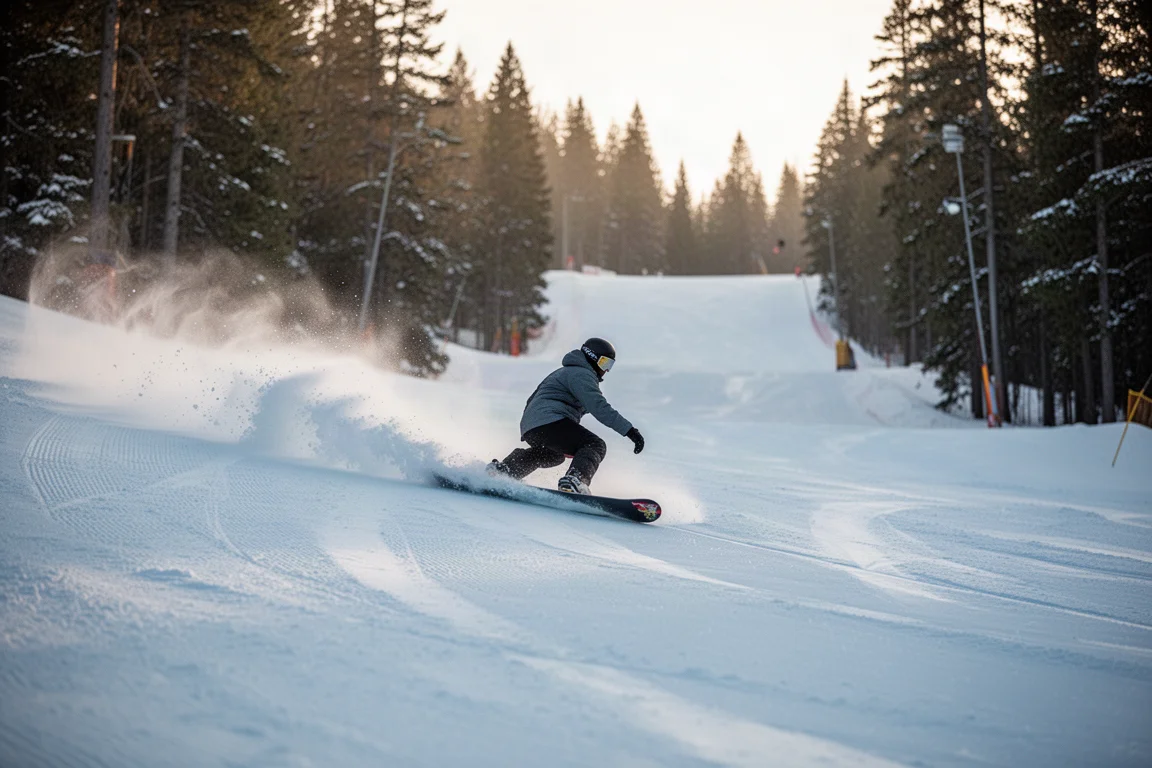
It is a letdown, because the board looks like it should have the power to apex and drive a deep carve, and it simply does not deliver there. Riders may need to pick their battles and lean on setup turns and mellower arcs instead.
Buying Advice
Compared to the carbon Koda, this version is more damp and easier to ride, which suits a cruising style better. What holds it back is the inconsistent pop and edge hold; in its current form, the board feels like it is still in a refinement phase and has not been fully dialed in.
If you do pick it up, Arbor Cypress bindings, Rome Katana (asym wrap), or Bent Metal Action are recommended pairings. Boards in a similar space include the Ride Moderator, Jones Flagship, and Yes (pick your line).
Conclusion
The Arbor Koda offers genuine strengths: a smooth, damp ride on groomers, traditional camber pop potential, and a rider-friendly directional flex. But inconsistent pop and edge hold that washes out on hard carves keep it from being as consistent as it should be. For cruising all-mountain freeride days at moderate speeds, it works; for riders who demand precision on every carve, it may be worth waiting to see if Arbor refines the sidecut in future versions.
Product link
View more details for Arbor Koda
This product is mentioned in the review. Check the specifications, options, and compatibility before buying.
View more details for Arbor KodaFurther reading
Related Reviews
Snowboards
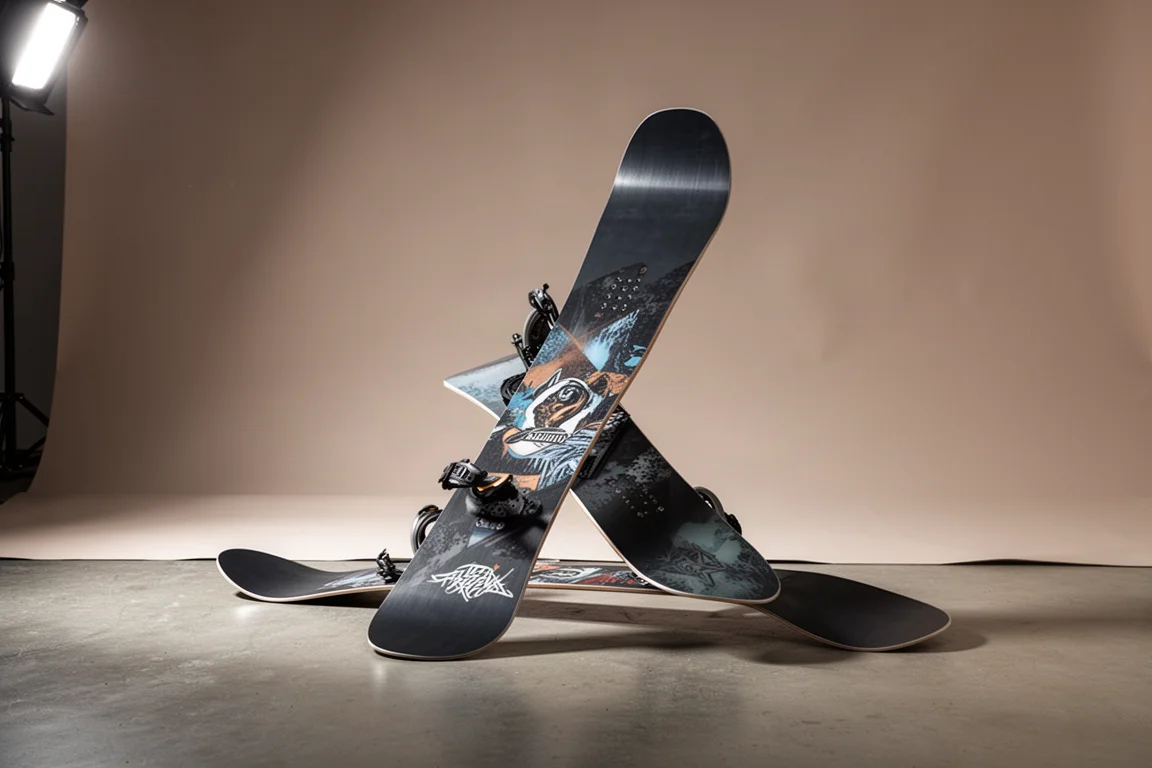
32 Middle Earth Scott Stevens Pro Model Snowboard Review: A Park Board With a Reversed Flex
A medium traditional camber park board with carbon V reinforcement that is stiffer in the tips and more playful between the feet. Here is how it rides and who it suits.
Snowboards
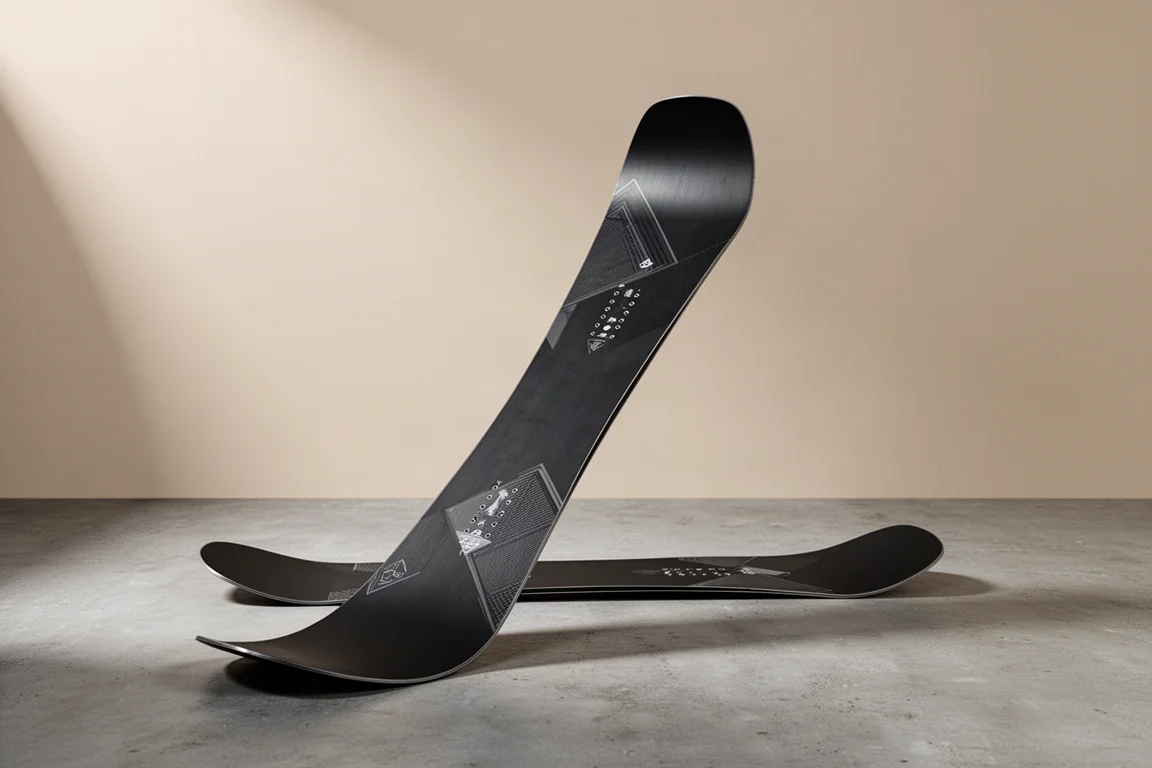
32 Snafu Review: A Directional All-Mountain Freestyle Board with Serious Pop
The 32 Snafu pairs a directional camber-rocker profile with a stiffening tail for powerful carves, big ollies, and a surprisingly damp ride.
Snowboards
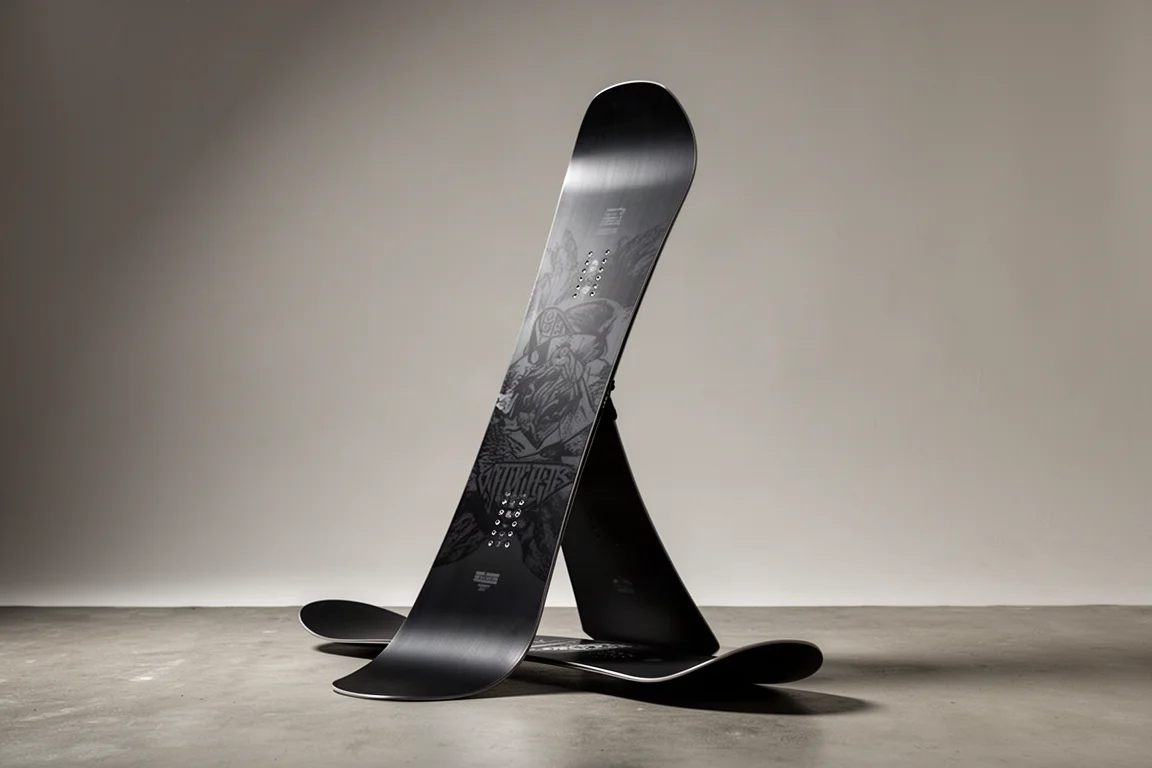
32 XXX Pat Fava Pro Snowboard Review: A Stiff Camber Beast for Hard-Charging Riders
A full-width traditional camber deck that rewards aggression with stability and edge power, but demands effort everywhere else.