Snowboards
Arbor Carter Review: Mark Carter's Pro Model Snowboard, Tested
A grip-tech camber freeride board with volume-shifted feel. Here's how the Arbor Carter performed on fresh pow, corduroy, and everything in between.
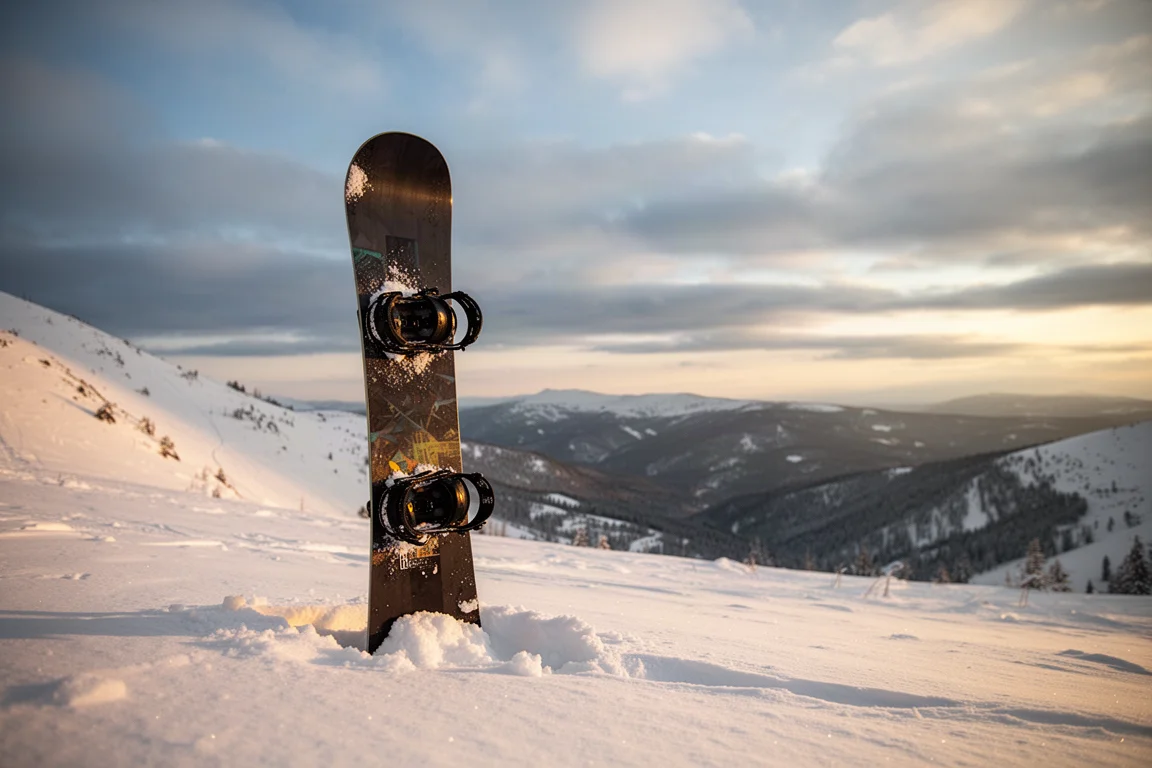
Introduction
The Arbor Carter is Mark Carter’s pro model, and it leans into freeride without becoming a hard-charging plank. The idea is simple: give riders a volume-shifted board with real power and edge control, but keep it approachable enough for tree runs, pow turns, and even the occasional park lap. This review breaks down how the board handles, what it does well, and where the trade-offs sit.
Who This Board Is For
Arbor positions this board for the freeride-focused rider who does not want a straight freeride board. Someone who wants a little volume shift and plans to spend plenty of time wiggling around in the trees will feel right at home on it. If that description matches the way you already ride, the Carter lines up cleanly with how it was designed to be used.
The Camber System, Offset Fenders, and Grip Tech
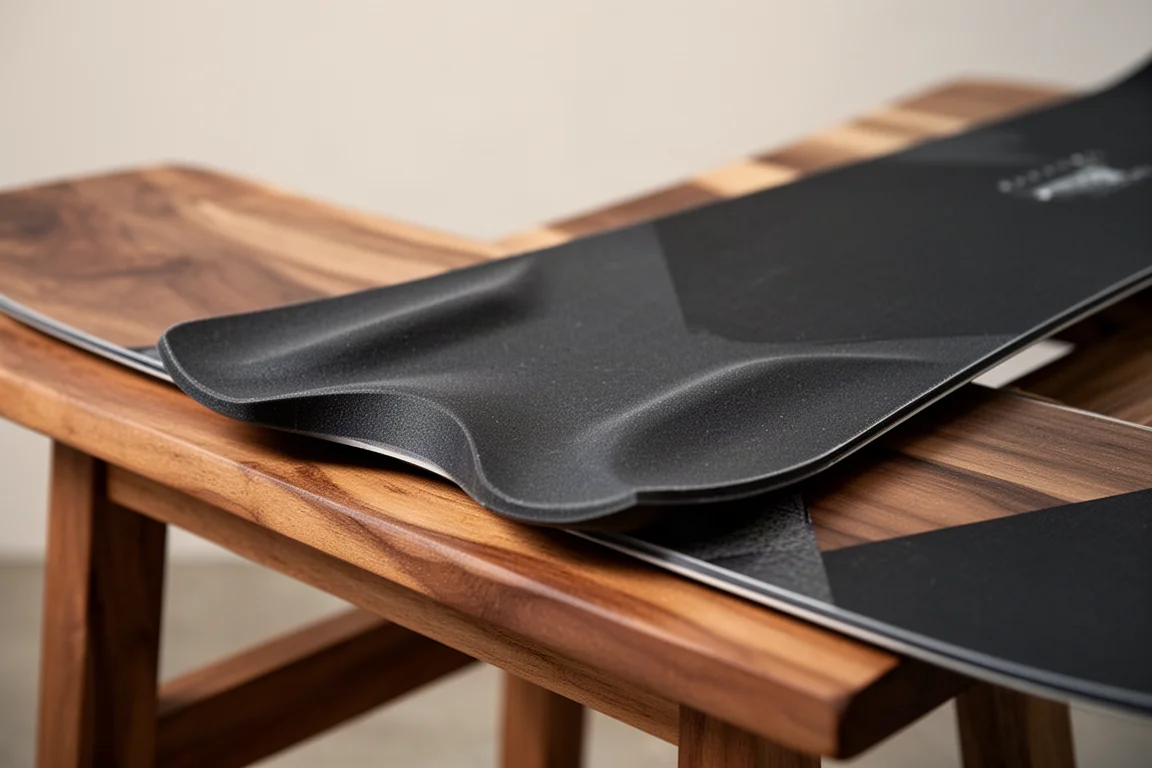
The Carter features Arbor’s System Camber, which has some 3D shaping built in. The camber itself delivers load, pop, snap, and drive, while the offset fenders help with powder displacement and turn control. Grip Tech adds extra contact points right underfoot for more edge control where it matters most.
In practice, those elevated offset fenders reduce edge bite when you are swizzling around. If you have ever hooked an edge while buttering and gone down hard, this shaping can help. The board can still butter, though it is not the most butter-friendly board on the market. If you know what you are doing, you can have plenty of fun with it.
Main Strengths
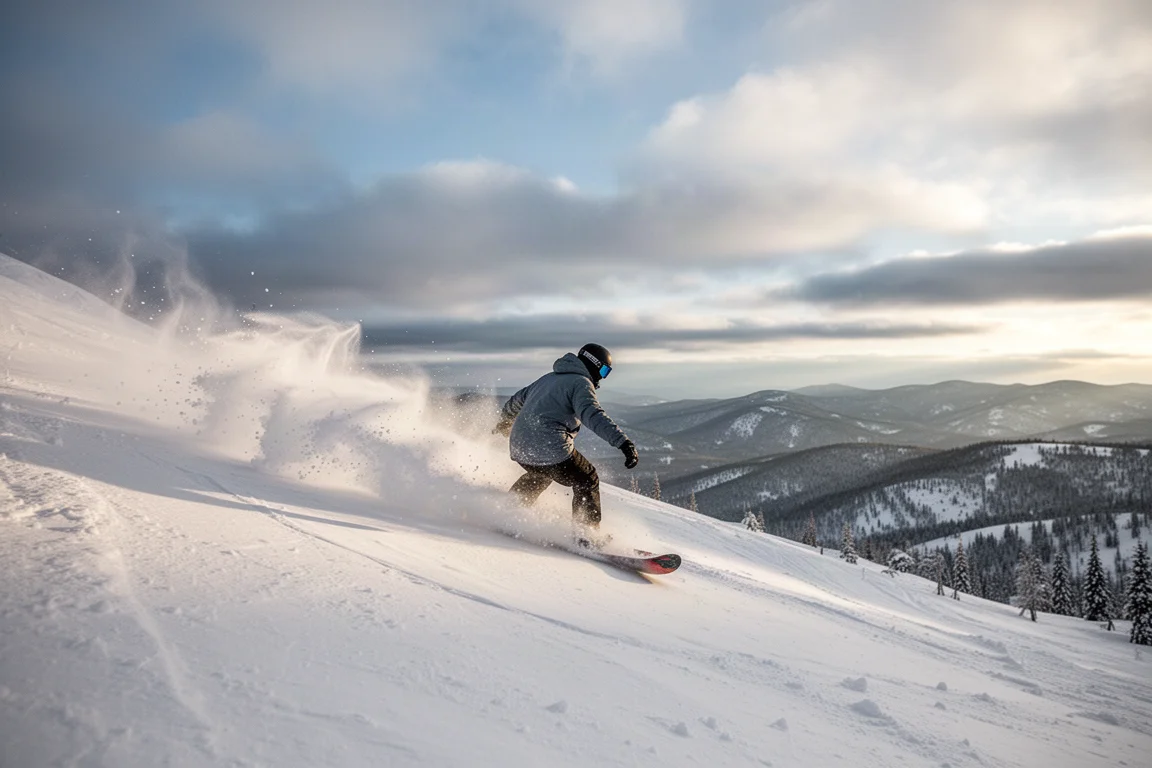
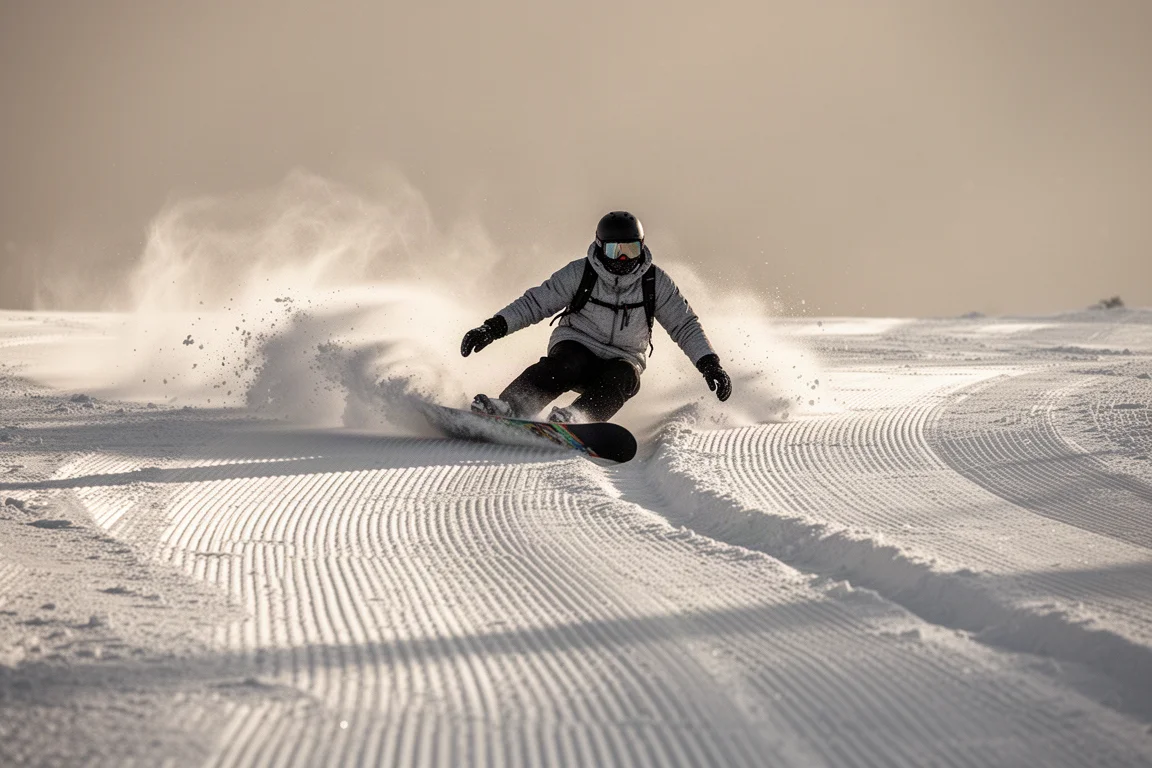
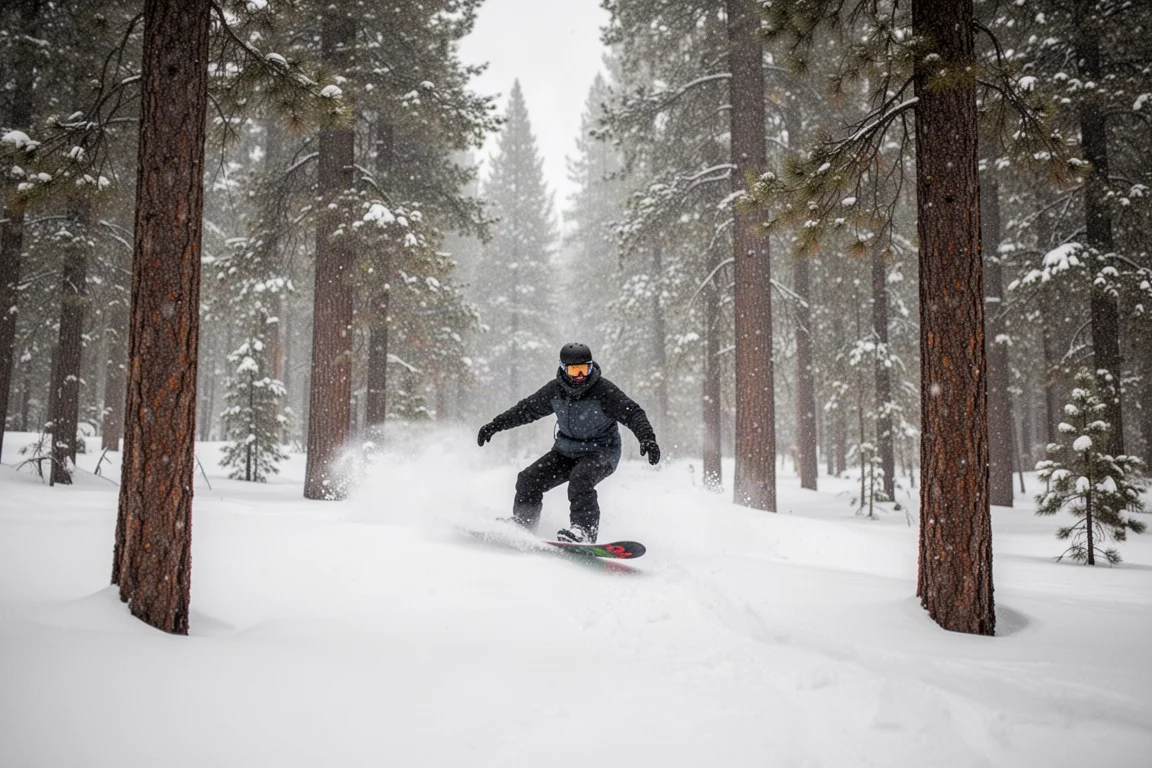
Grip Tech right underfoot is the standout. It makes the board easy to ankle steer and keeps you feeling locked in when you are on edge. Power transmission is smooth and fluid edge to edge, but there is real power behind it. On deep, hard, aggressive carves you stay locked in and can lay a trench from one side of the run to the other. Short, quick carves have a satisfying snap out of them too.
Stability is solid. There is a little chatter at the nose when cruising a groomer, but most of it dissipates before reaching the front foot. The width helps you stay on top of fresh powder and choppy terrain, and the ride feels damp yet still lively. It did not feel lifeless underfoot.
Riding Feel and Performance
The overall flex sits just above the middle of the range. The nose is a touch softer, the board progressively stiffens up inside the rear inserts, and the tail gets stiffer still. Torsional flex is noticeable with some rebound, yet the board is easy to ankle steer. You do have to leverage your weight out over the nose or tail to get it engaged, and it will put up a little fight before rebounding back under you.
On the pop front, System Camber is easy to load and gives the board almost a skate-like pop. Roll back on the tail at the last minute and it launches nicely. If you try to aggressively load and stay loaded before takeoff, you will be disappointed; it is not the snappiest board out there. It gets the job done in the air, but it is not going to wow anyone watching from the lift.
One honest caveat: at full speed, hitting an ice boulder was the only thing that rattled this board. That is how damp it is, and it was still enjoyable in the park. It was stable through a down flat down rail and genuinely fun for park laps, though it was way more fun in fresh powder.
Buying Advice
Sizing matters here. Arbor says you can downsize 3 to 5 cm on this board, and 3 cm is the sweet spot; 5 cm feels like overkill. Available sizes run 149, 152, 155, 158, and 161, so there is room to dial in the right fit.
If you want something stiffer and a bit more directional, the Carter is essentially a stiffer, more directional Satori, so that is the natural sibling to consider. Comparable boards worth checking out include the Telos Backslash, the Lib Tech Golden Orca, the Ride Super Pig, the Arbor Cyprus, the Bataleon Astro Fullwrap, and the Union Atlas.
Conclusion
The Arbor Carter carves well, floats well in the pow, and is stiffer than you might expect while staying approachable. Grip Tech makes it feel secure on edge, the volume-shifted shape keeps it playful in tight terrain, and the damp-but-lively character means it rarely feels harsh. For a freeride-focused rider who wants one board that handles trees, powder, and the odd park session, it is a well-rounded pick worth a serious look.
Product link
View more details for Arbor Carter
This product is mentioned in the review. Check the specifications, options, and compatibility before buying.
View more details for Arbor CarterFurther reading
Related Reviews
Snowboards
32 Middle Earth Scott Stevens Pro Model Snowboard Review: A Park Board With a Reversed Flex
A medium traditional camber park board with carbon V reinforcement that is stiffer in the tips and more playful between the feet. Here is how it rides and who it suits.
Snowboards
32 Snafu Review: A Directional All-Mountain Freestyle Board with Serious Pop
The 32 Snafu pairs a directional camber-rocker profile with a stiffening tail for powerful carves, big ollies, and a surprisingly damp ride.
Snowboards
32 XXX Pat Fava Pro Snowboard Review: A Stiff Camber Beast for Hard-Charging Riders
A full-width traditional camber deck that rewards aggression with stability and edge power, but demands effort everywhere else.