Fountain Pens
Annabelle Sophie Hiller Harmonic Nibs: Silver and Gold, a Handmade Pair Worth Knowing
A closer look at two handmade Harmonic fountain pen nibs, one silver and one 14k gold, covering grinds, feel, and who they suit.
Introduction
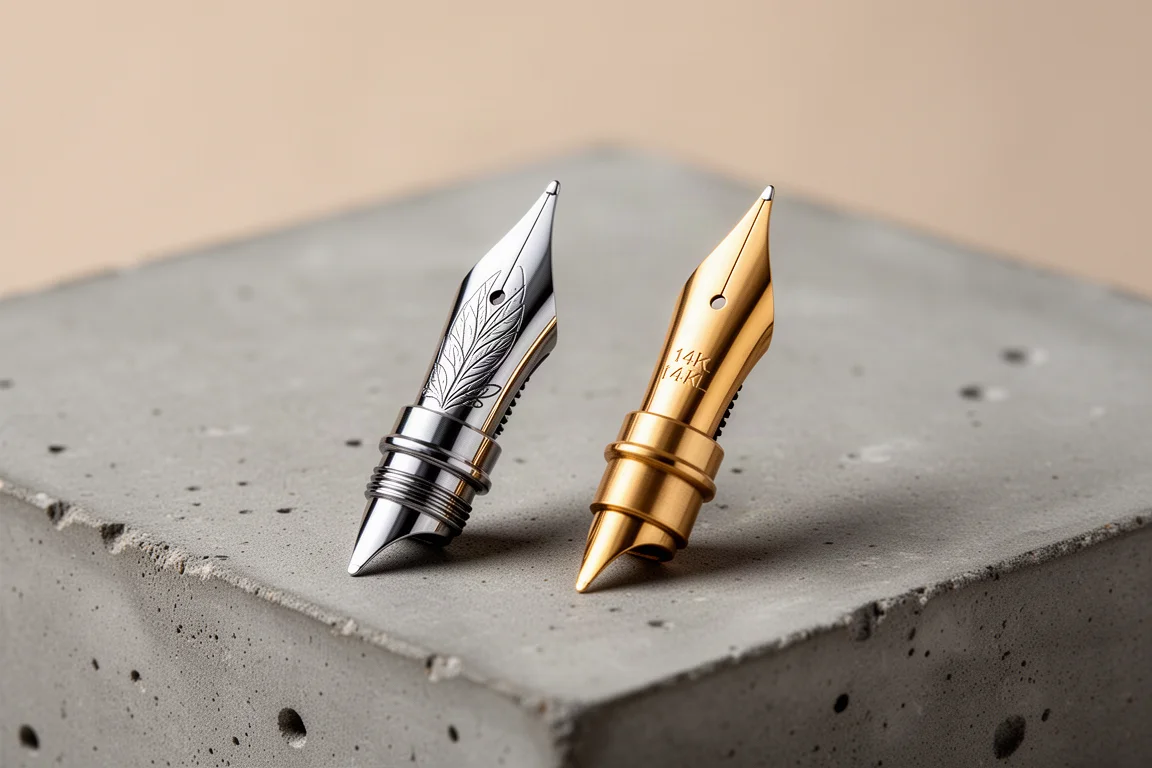
Handmade fountain pen nibs are rare, and when a new maker starts producing them, it is worth paying attention. Annabelle Sophie Hiller makes the Harmonic nib, a handcrafted fountain pen nib offered in both silver and 14k gold versions, each finished by hand with engraving and careful grind work.
This piece focuses on the silver Harmonic nib, with notes on how it compares to the earlier gold version. Both were ground and finished by the maker herself, and both are designed to give handwriting extra character with very little effort.
The Silver Harmonic Nib
The silver Harmonic nib was produced in a later batch than the gold. The first ten Harmonic nibs offered for sale were 14k gold with ebonite feeds. After that initial run, the maker purchased engraving materials and equipment, practiced, and within a remarkably short span produced a new batch of nibs to bring to the DC Pen Show. Those were the silver ones.
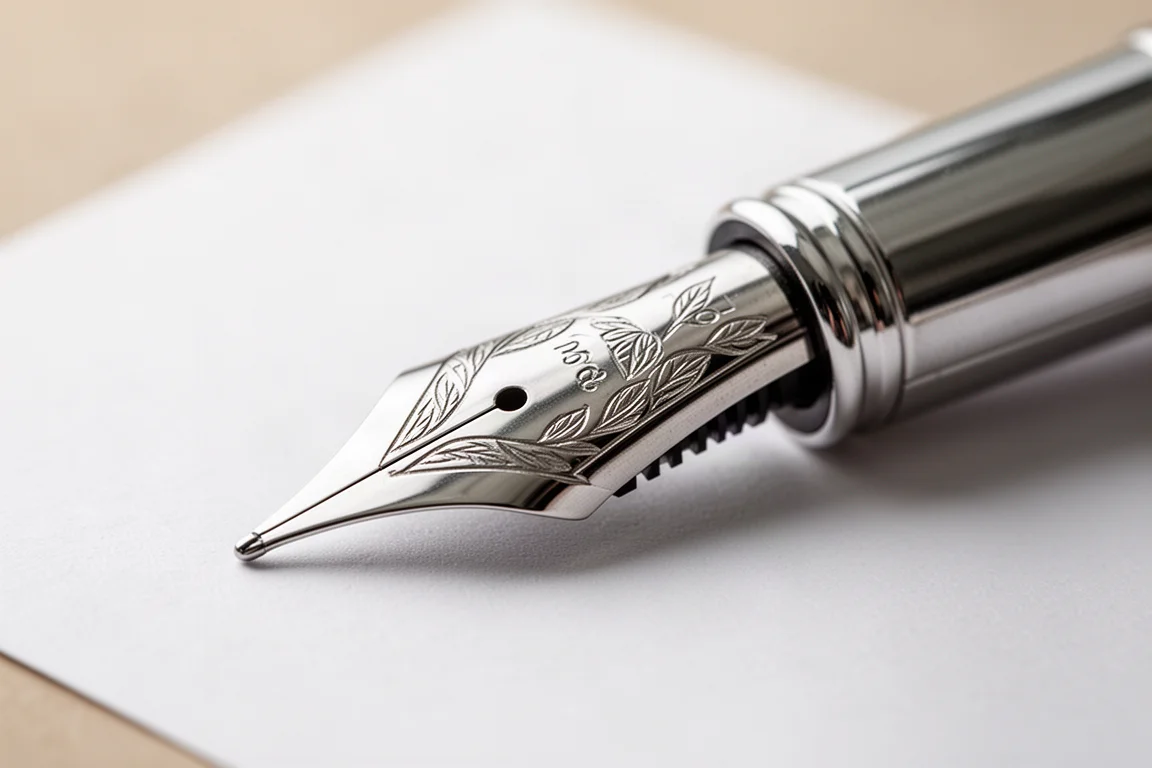
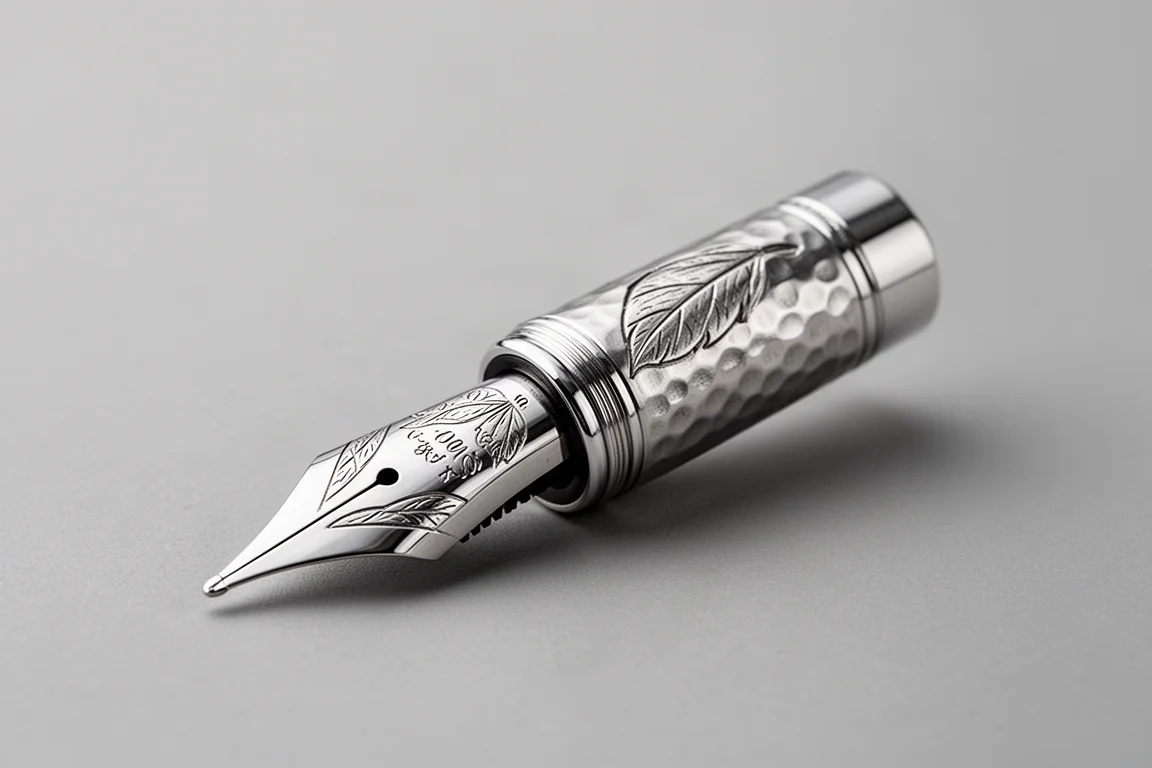
The silver nib is a double-layer design and is hand engraved, with a visible leaf design on the layered portion. It is also hand hammered. The engraving work is genuinely striking, and the craftsmanship shows in every close-up. These nibs are typically sold as the nib unit alone, ready to be fitted to a compatible pen body.
How the Silver Nib Writes
The standard grind on the silver version is a cursive italic, and it is an exceptionally good one. Because it is a cursive italic rather than a crisp italic, the edges are more forgiving, but you still get clear line variation. That makes it appealing both for calligraphy-leaning writers and for anyone who simply wants their everyday handwriting to look better.
The writing feel is where the silver differs most from the gold. The silver nib is notably soft and gives slightly under a gentle touch of pressure, which produces a slightly wetter line and a subtle yielding sensation. It does not offer the kind of dry, pencil-like feedback you find on some Japanese-style nibs; instead, it is smooth and lively. Some writers love that softness, others do not, but it is distinctive either way.
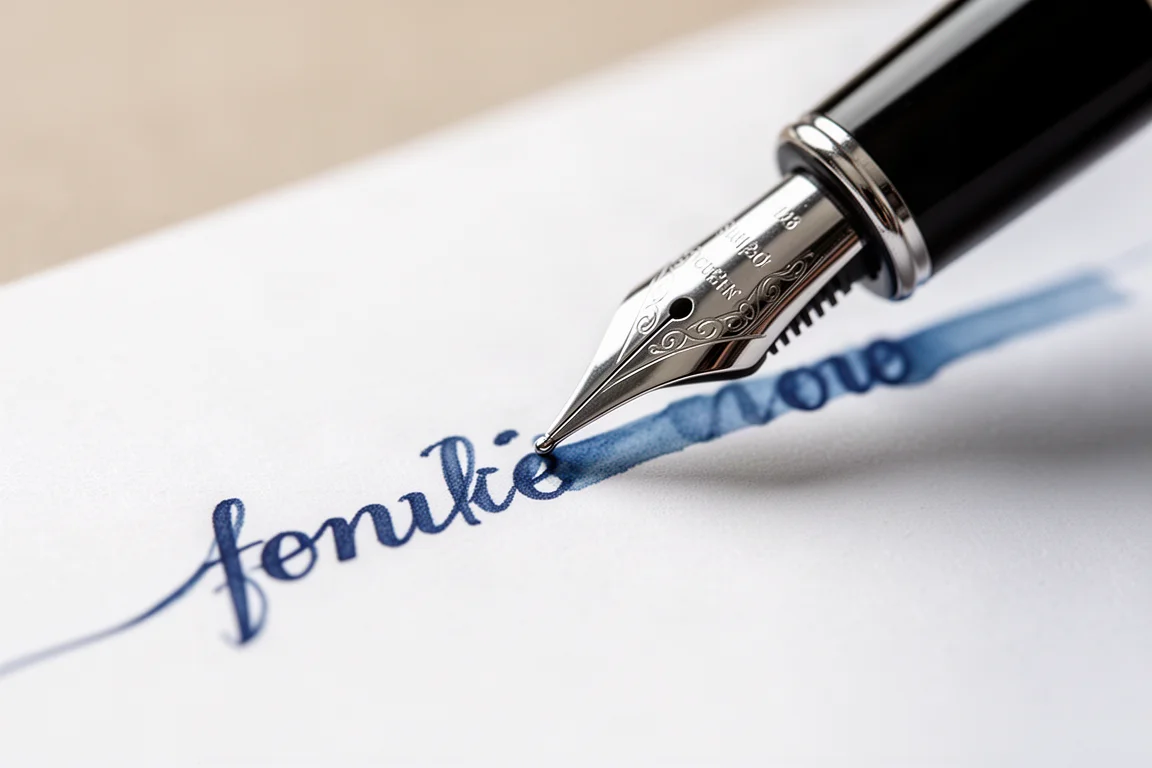
Two practical notes. First, this nib rewards a light hand. If you write with heavy pressure, you risk damaging it, so gentle touch matters. Second, it is not a nib that skips. Even when tested dry, it maintained flow, and with normal ink it writes with essentially no effort, producing soft shading with inks that shade well.
Silver vs Gold: What Sets Them Apart
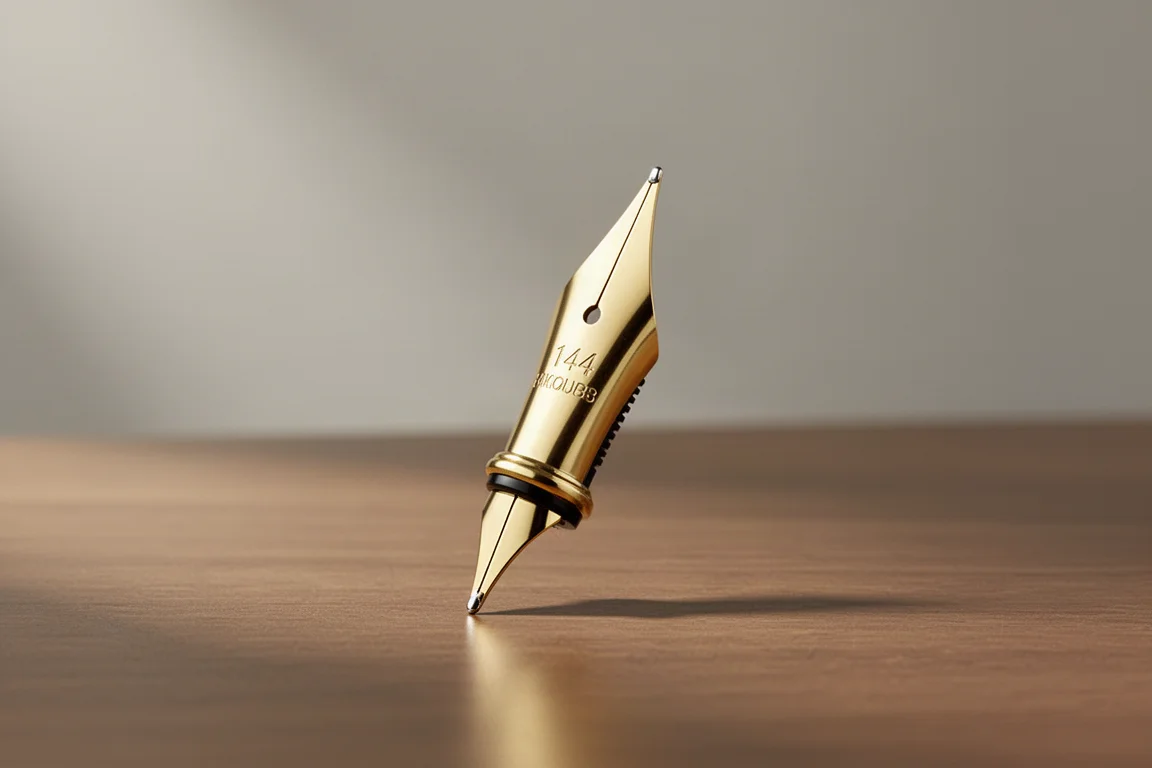
The gold Harmonic was the first batch, 14k gold with ebonite feeds, and the example covered here was ground to a round double broad tipping on request. The silver nibs come standard as cursive italics.
Beyond the grind differences, the two feel completely different in hand. The gold and silver versions have distinct styles and distinct writing characters, so they are not simply color variants of the same pen experience. The silver is softer and more yielding; the gold, at least with the grind chosen here, has its own personality entirely.
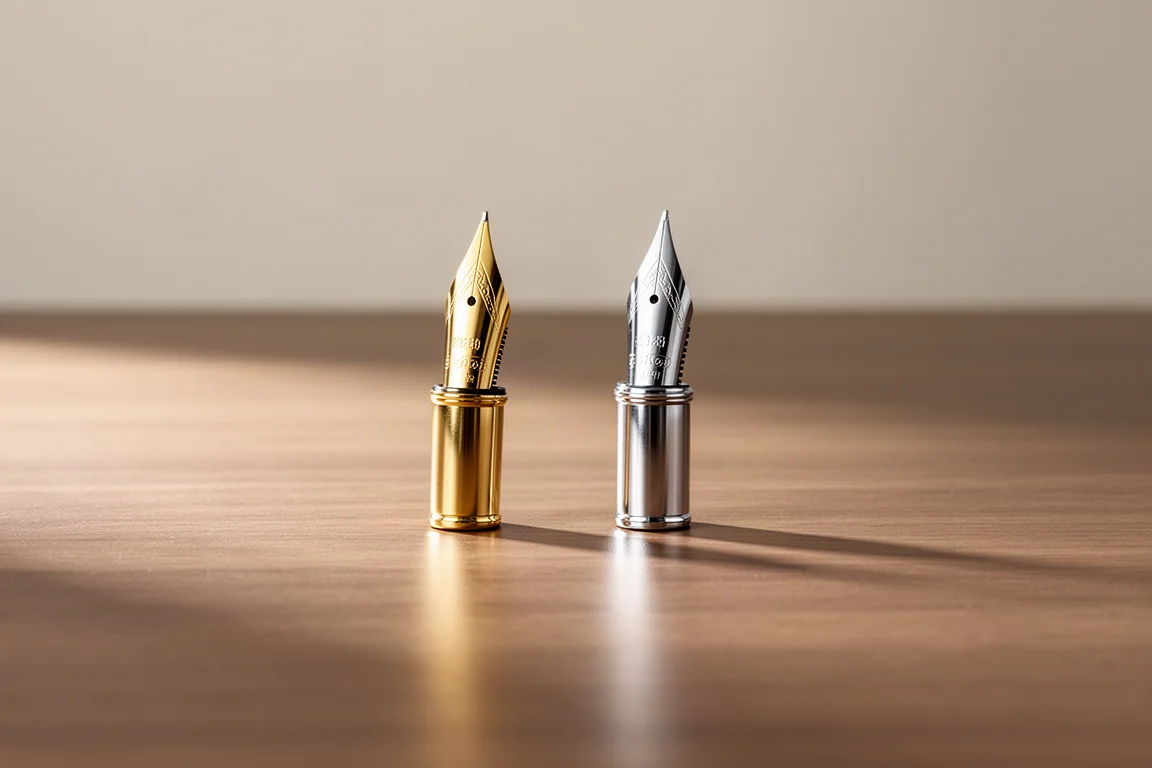
What both share is the sense that a real person made them: ground the tipping, engraved the body, hammered the metal. That connection to the maker is a big part of the appeal, and it makes exploring the nib’s sweet spot far more interesting than it is on a mass-produced unit.
Who Each Nib Is For
The silver Harmonic suits writers who want a forgiving cursive italic with visible line variation, enjoy a soft, slightly yielding nib, and are willing to write with a light touch. It is also the pick if the hand-engraved, hand-hammered finish is what draws you in.
The gold Harmonic suits writers who want a 14k gold nib with an ebonite feed and the option of a custom grind, such as the round double broad tipping requested on the example here. It is the earlier, rarer batch and has its own distinct writing feel.
Buying Advice
Because these are handmade nibs, availability is limited and batches sell at shows and directly from the maker. If you are considering one, decide first between silver and gold based on feel rather than looks: the silver is soft and yielding with a standard cursive italic grind, while the gold offers 14k construction and ebonite feed with grind options.
Second, be honest about your handwriting pressure. The softness of the silver nib is a feature, but only for writers who can respect its limits. If you press hard, the gold or a gentler grind discussion with the maker may be a better starting point.
Conclusion
The Harmonic nibs stand out because they combine genuine handcraft with excellent writing performance. The silver cursive italic is forgiving, expressive, and smooth, with a softness that gives handwriting an easy, inky flourish. The gold offers a different character entirely. For anyone who values the connection between writer and instrument, either one is a memorable choice.
Further reading
Related Reviews
Fountain Pens
Best Budget Fountain Pens Tested: 9 Pens, One Clear Winner
A hands-on comparison of nine affordable fountain pens for everyday writing, calligraphy, and sketching, with a clear standout for flexible nib fans.
Fountain Pens
Aurora Optima Review: An Italian Piston Filler That Punches Above Its Price
A 14k gold nib, ebonite feed, and a beautifully deep oraloid body make the Aurora Optima one of the most rewarding piston fillers around.
Fountain Pens
Cross Bailey Light Review: The Entry-Level Fountain Pen Worth Keeping at the Office
A plastic-bodied Cross with a metal clip, snap cap, and famously smooth extra fine steel nib. Around $15, available almost everywhere, and easy to recommend.