Backpacking Tents
ALPS Mountaineering Trail TP 2-Person Tent Review: A Trekking Pole Pyramid Shelter
A practical look at the ALPS Mountaineering Trail TP 2-Person Tent, covering its pyramid design, single wall construction, real interior space, and the trade-offs worth weighing before you buy.
Introduction
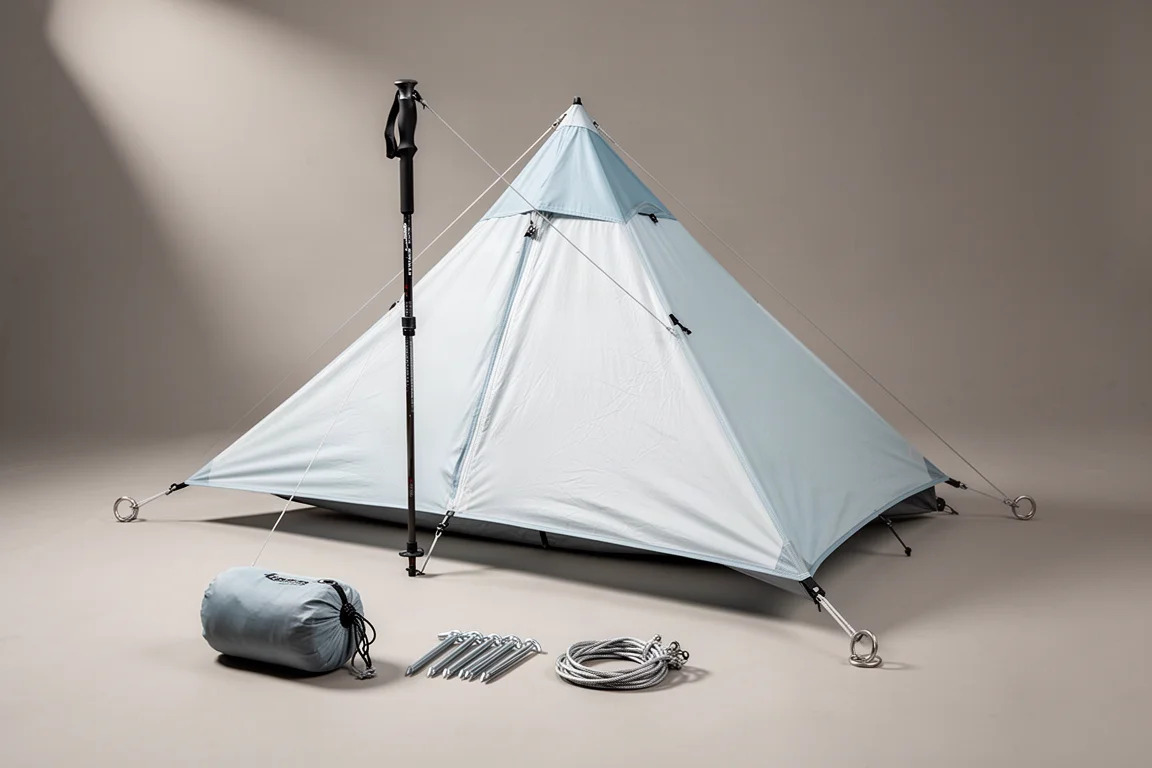
The ALPS Mountaineering Trail TP 2-Person Tent is a pyramid shelter, often shortened to a TP tent, that stands on a trekking pole rather than a dedicated tent pole. ALPS Mountaineering is a brand best known for budget-oriented shelters, and the Trail TP fits that positioning closely: generally good build quality at a generally fair price.
Retail pricing sits at around 150 dollars, though it has been picked up for roughly 112 dollars on Amazon. The headline weight is 3 pounds 10 ounces, and that number needs context. Because this is a trekking pole tent, no pole is included, so the real packed weight is 3 pounds 10 ounces plus whatever pole you carry.
The body and fly are integrated, which makes this a single wall tent. That single design decision shapes almost everything else about how the shelter performs.
Who This Tent Is For
This is a three-season shelter and a three-season shelter only. It is also non-freestanding, meaning it has to be staked out to stand. Pull the stakes and it falls over, so it suits campsites with ground soft enough to take a peg and enough space to run out the perimeter.
The most natural buyer is a backpacker who already carries trekking poles and wants a simple, low-cost pyramid shelter for mild-weather trips. The floor plan is worth thinking through carefully. On paper the footprint looks generous, but the walls are steeply angled, and the usable interior is noticeably tighter than the numbers suggest. Realistically this works best as a one-person shelter with gear, or one person plus a dog, rather than a comfortable two-person tent. Two shorter campers could each take a side toward the apex, but that is the limit of what the shape supports.
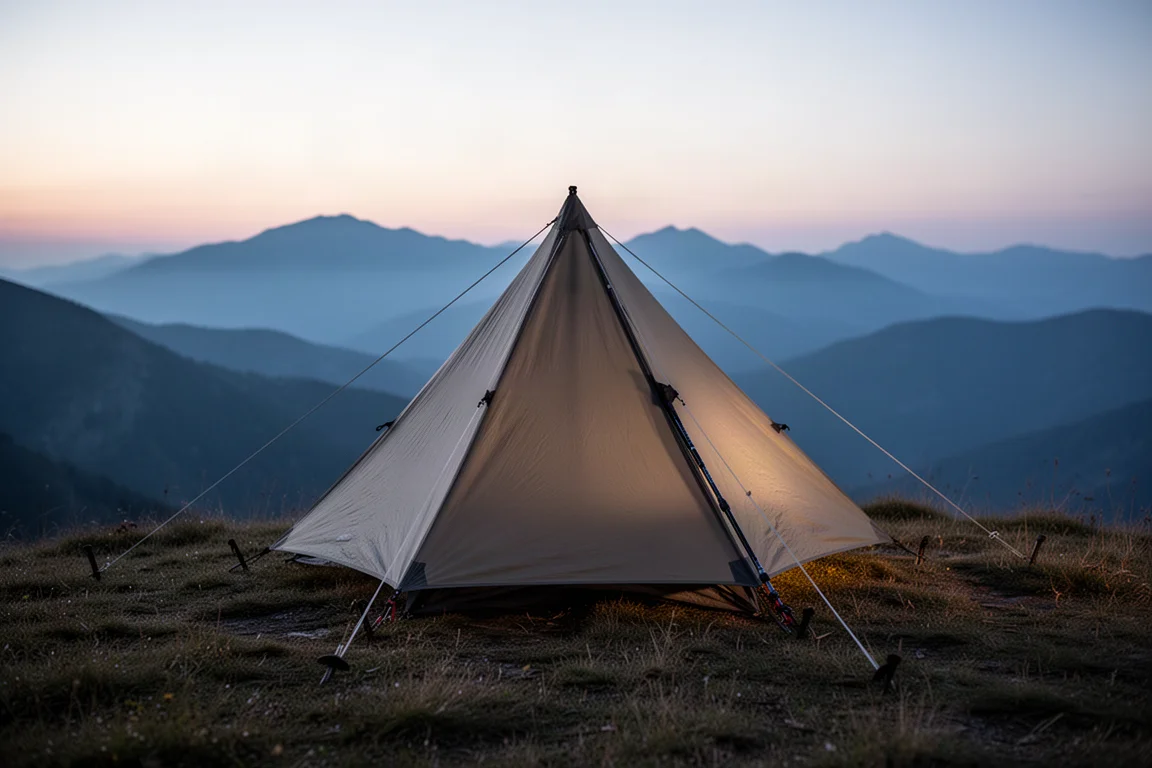
If your trips are solo or near-solo and you want a light, inexpensive pyramid, this is a sensible candidate. If you genuinely need to sleep two adults with pads and bags, look elsewhere.
Main Strengths
Setup is straightforward, and anyone who has pitched a pyramid shelter before will find nothing unfamiliar here. The routine is simple: stake out the perimeter, open the door, step inside, insert the pole, and the shelter stands.
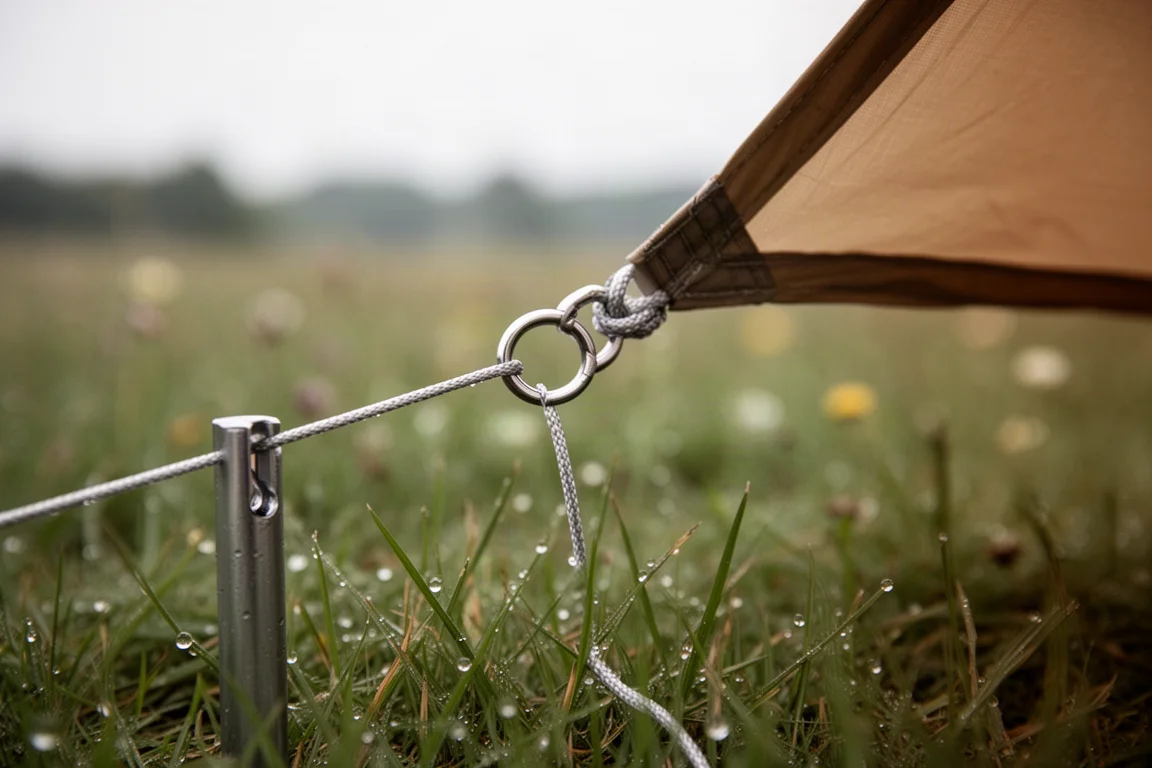
Small details are handled well. Each stakeout point uses a metal ring, and every one of those points is adjustable, which makes tensioning the perimeter easier than a fixed loop system. The top of the tent has a loop, so in the right situation you can rig the shelter without a pole at all, for example by tying off to a low tree limb if the placement lines up.
On the body there are two YKK zippers, and both door panels can be rolled back. Three vents are built into the body to help move air. Inside, a cutout in the middle of the floor locks the trekking pole into place, so rolling around at night is less likely to knock the pole out from under the shelter. The floor is a bathtub design, and all seams are taped.
Materials are reasonable for the price. The fabric is 75 denier 185T polyester with a 1,500 mm hydrostatic head rating, paired with polyester mesh and a polyester taffeta floor. Aluminium stakes are included, along with guy lines, a pole cap, and a square of repair fabric.
The storage bag is practical too. It measures about 16 inches long and 6.5 inches wide, with two compression straps, a handle, and a drawstring top.
Setup, Materials, and Build Quality
Pitching the Trail TP is a short, logical process. Stake the perimeter, tension the adjustable points, unzip the door, and drop your trekking pole into the floor cutout. There is no pole sleeve to thread and no pole set to assemble, which keeps the whole routine quick once you are familiar with the shape.
Build quality looks solid in the areas that matter most. Seam work is clean, the taped seams are neatly finished, and the stakeout hardware with its metal rings feels considered rather than cost-cut. The door zippers run on YKK hardware, and the vents are integrated into the body panels rather than tacked on.
The materials are a fair match for the price point. A 75 denier 185T polyester shell with a 1,500 mm hydrostatic head rating is a reasonable specification for three-season use, and the polyester taffeta floor adds a bit of durability underfoot. Aluminium stakes keep the carry weight sensible.
One practical note: because the fly and body are a single integrated piece, there is no option to pitch the fly alone or to separate the layers for drying. What you see is what the shelter is.
Things to Consider Before Buying
The first consideration is weight honesty. The 3 pounds 10 ounces figure excludes the trekking pole you must bring, so budget for that addition in both weight and packing.
The second is the single wall design. With an integrated fly and body, the two layers cannot be separated. That has real consequences for moisture, which is covered in more detail below.
The third is the floor plan. There are no pockets anywhere inside the tent, so small items need another home. Combined with the steep wall angles, the interior feels smaller than the stated dimensions imply.
The fourth is the lack of options. There is one version of this tent, the two-person model, and it comes in blue and white. There is no larger or smaller variant to step up or down to.
Finally, this is strictly a three-season shelter and it must be staked to stand. Rocky ground, platforms, or hard-packed sites will make pitching difficult or impossible.
Condensation and Weather Protection
Single wall tents have an inherent relationship with condensation, and this shelter is no exception. Moisture forms on the inside of the walls, and because the fly and body are one piece, that moisture has nowhere to go but into the living space. In a double wall design, condensation tends to collect on the outer body or fly and run down to the ground. Here, it stays inside with you.
This model also carries a notable reputation for leaking and for weak airflow. Those two complaints tend to travel together: limited ventilation keeps humid air trapped, and trapped humid air becomes condensation on cool fabric. The three vents in the body help, but they do not eliminate the problem, and no single wall tent design fully escapes it.
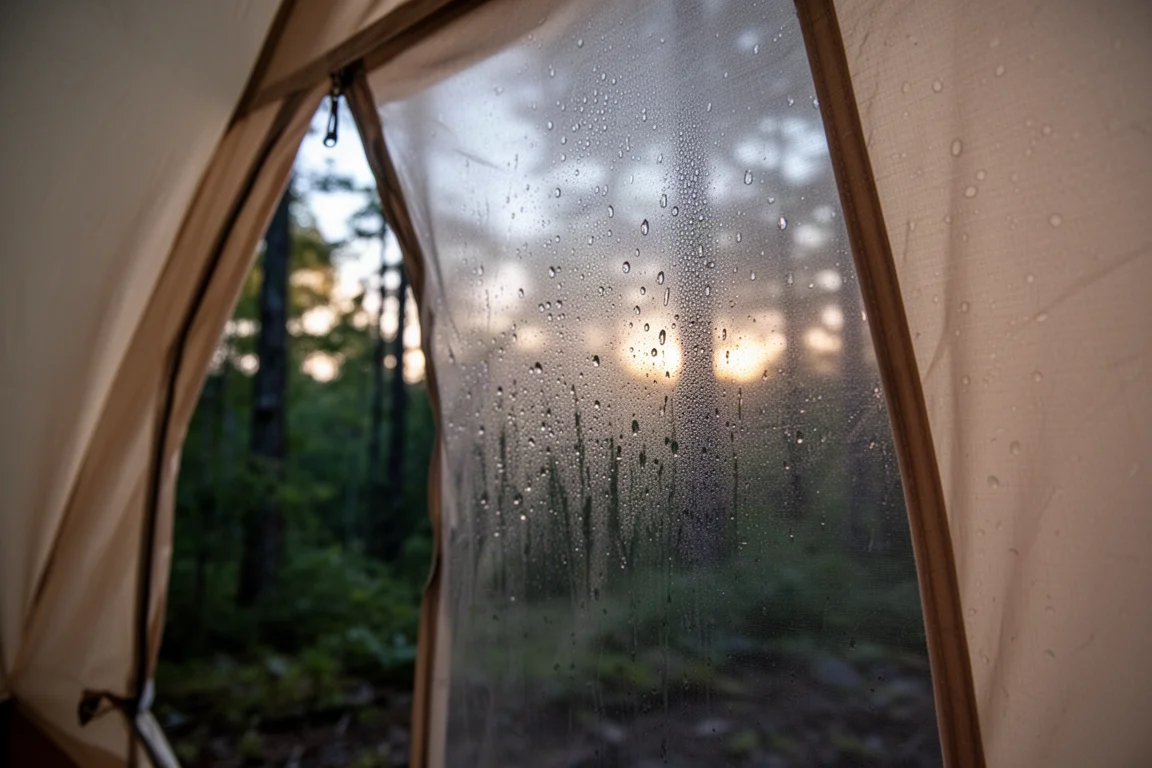
The 1,500 mm hydrostatic head rating and taped seams give the fabric a reasonable baseline for rain protection, and the bathtub floor helps keep ground water out. Still, if you camp in humid, still, or persistently wet conditions, expect to manage moisture. Choosing a breezy pitch, leaving vents open, and venting the door when weather allows will all make a difference.
Buying Advice
At around 150 dollars retail, and often closer to 112 dollars, the Trail TP is priced in line with what it offers: a simple pyramid shelter from a brand known for budget-oriented tents. The setup is easy, the hardware and seams look well executed, and the materials are reasonable for the money.
The trade-offs are equally clear. You supply the pole, the real packed weight is higher than the headline figure, the interior is best treated as a one-person-plus-gear space, and the single wall construction means condensation is a fact of ownership rather than an occasional annoyance. The model’s history of leak and airflow complaints is worth taking seriously if you camp in wet or humid regions.

The sensible way to decide is to match the shelter to the trip. If you hike with trekking poles, camp in mild three-season weather, and want a low-cost pyramid for solo use, this tent does the job it was designed for. If you need genuine two-person capacity, dependable airflow in humid conditions, or a freestanding shelter that pitches on hard ground, your budget is better spent on a different design.
Conclusion
The ALPS Mountaineering Trail TP 2-Person Tent is a well-priced entry into pyramid shelters, with easy pitching, tidy seam work, and useful details like adjustable stakeout rings, a pole-locking floor cutout, and a top loop for pole-free setups. It is also a single wall, non-freestanding, three-season tent that weighs more than the headline number once your trekking pole is counted, and it sleeps closer to one person plus gear than two adults. Buy it for simple solo trips in mild weather, and go in expecting to manage moisture.
Product link
View more details for ALPS Mountaineering Trail TP 2-Person Tent
This product is mentioned in the review. Check the specifications, options, and compatibility before buying.
View more details for ALPS Mountaineering Trail TP 2-Person TentFurther reading
Related Reviews
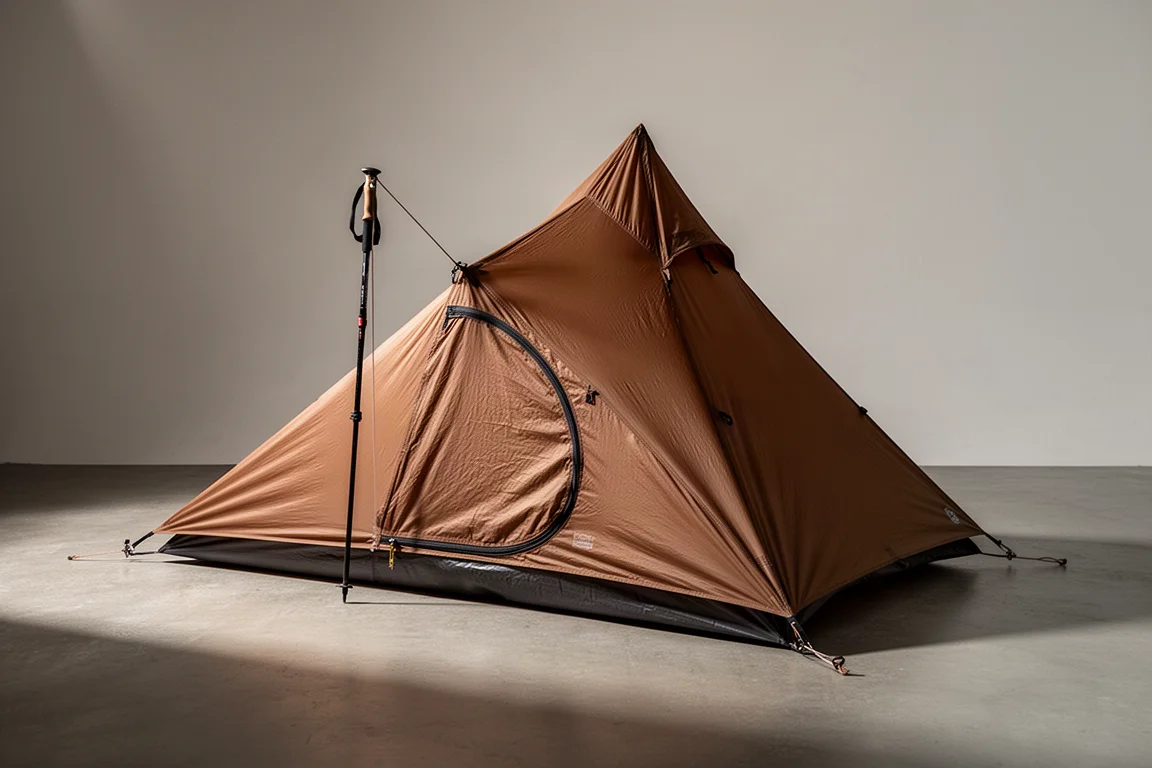
Backpacking Tents
3F UL Lanchan Pro 1 Review: A 1 lb 8 oz Single-Wall Trekking Pole Tent
A practical look at the 3F UL Lanchan Pro 1, a single-wall trekking pole shelter with a 1 lb 8 oz weight, 20D silnylon fabrics, and a roomy 90 x 31 x 49 inch interior.
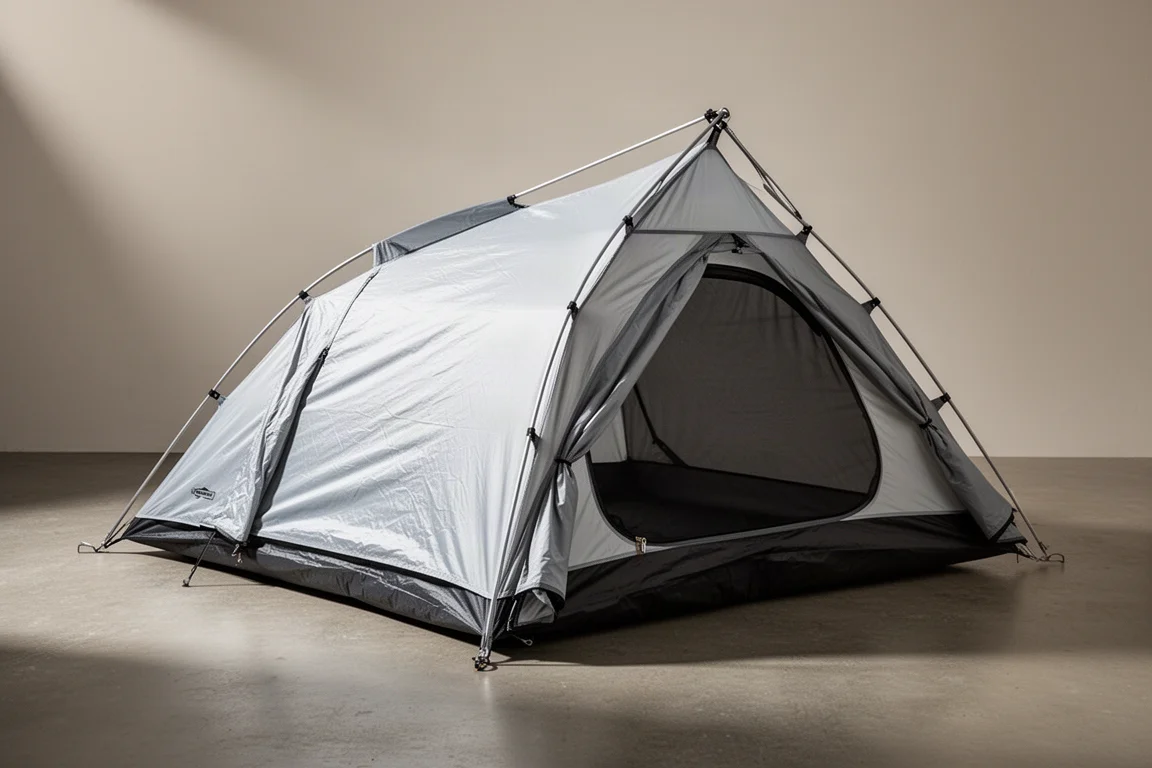
Backpacking Tents
3F UL Taiji 2-Person Tent: A Convertible Backpacking Shelter Worth a Closer Look
A practical look at the 3F UL Taiji two-person tent, covering its materials, true two-person interior, fly-first pitching, and the seasonal inner swap that lets one shelter cover more of the year.
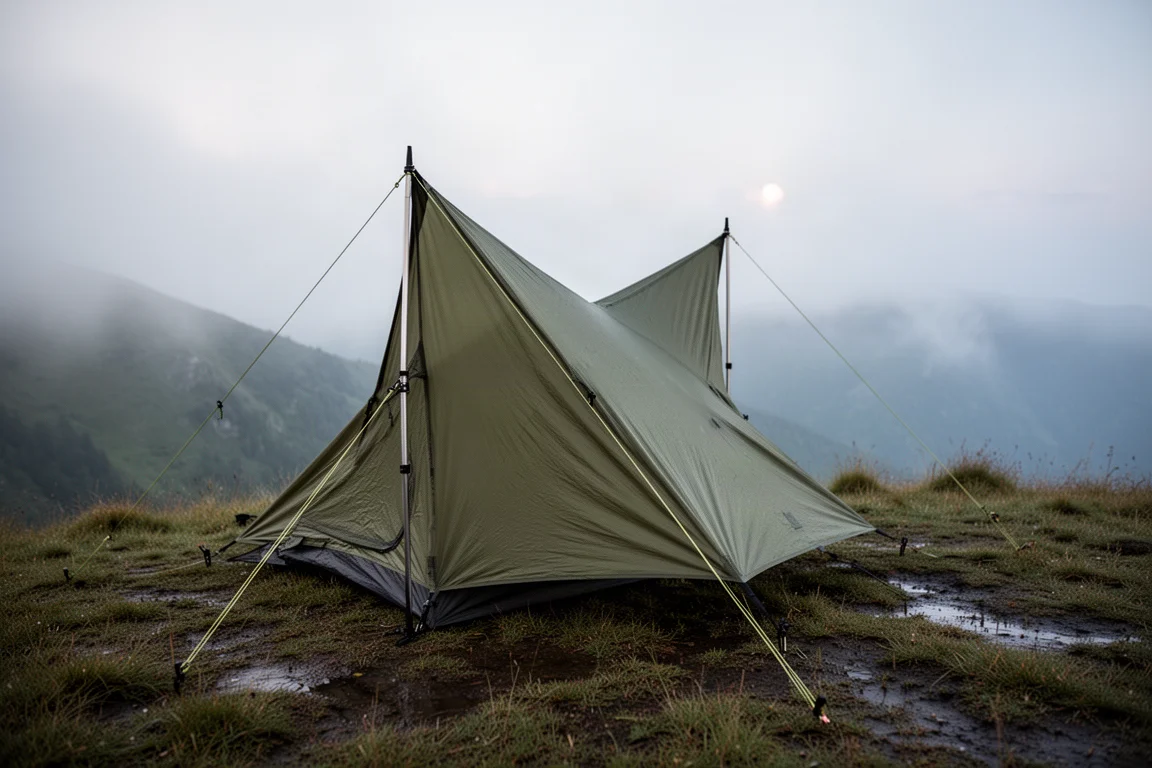
Backpacking Tents
3FUL Lanshan Twoerson Pro Review: A Light Trekking Pole Shelter That Struggled in Rain
A two-person trekking pole shelter with a 2026 redesign, pitched with sticks and put through a night of steady rain. Here is what worked, what did not, and what to check before buying.