Backpacking Tents
Alpkit Aeronaut 1 Review: An Inflatable One-Person Tent Built for Bikepacking
A lightweight inflatable backpacking tent that packs down remarkably small, with clear strengths for bikepacking and paddling trips and real trade-offs to weigh up.
Introduction
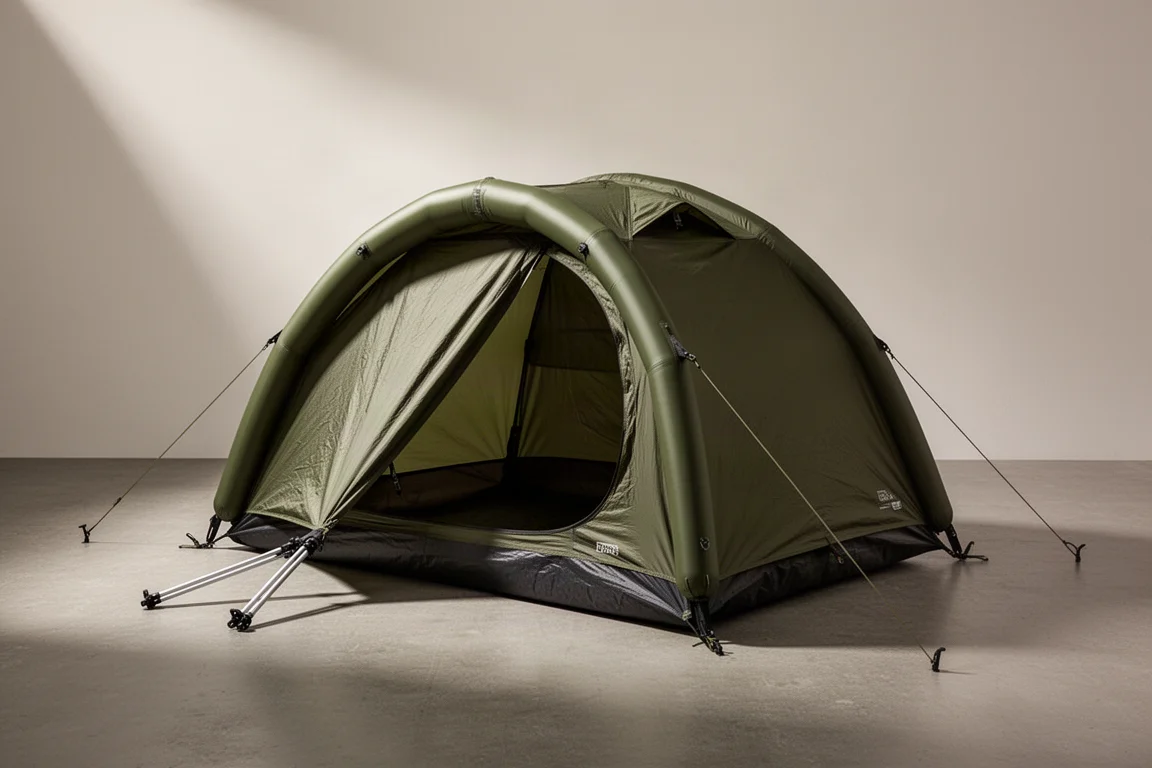
The Alpkit Aeronaut 1 is an inflatable one-person backpacking tent. Instead of the single alloy pole you would expect on a shelter of this shape, the main structure is an air beam, backed up by two small aluminium micro poles at either end. The inner and outer pitch together as one piece, so the sleeping area stays dry if the weather turns while you are setting up.
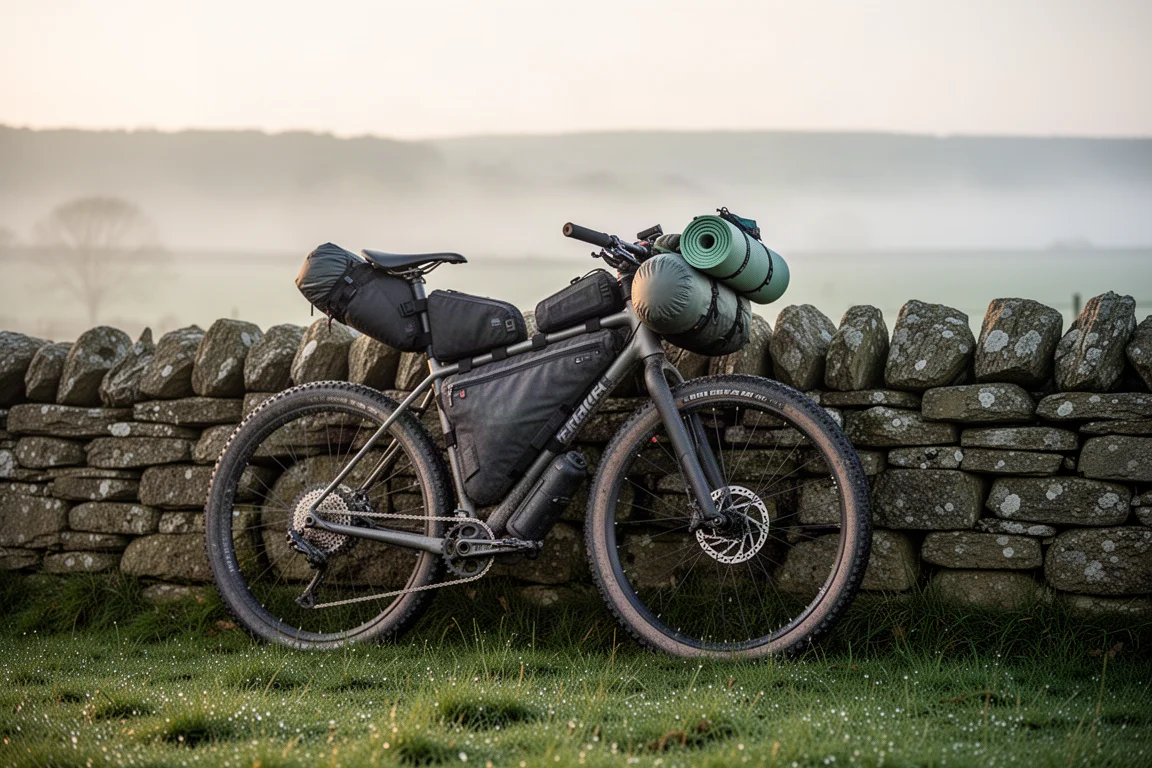
The numbers are what make it stand out. It weighs around 1.2 kg, and packed down it measures roughly 28 cm by 13 cm. There is no long rigid pole to work around, which opens up options for bikepacking, canoeing and kayaking as well as walking in.
This review covers what the Aeronaut 1 does well, where the inflatable design asks for compromises, and who should consider it.
Who the Alpkit Aeronaut 1 Is For
This tent suits riders and paddlers first. If you need a shelter that can be compressed into an awkward space, or split between bags, the absence of a rigid pole is a genuine advantage rather than a novelty. It also appeals to backpackers who want something different and are willing to trade some interior volume for a much smaller pack.
It is less suited to walkers who mostly camp on open, exposed ground. The air beam is not as rigid as an alloy pole, and the shape gives away height at the peak. Taller users should think carefully before committing.
Main Strengths
The Aeronaut 1 is designed around packability, and its details support that goal rather than fighting it.
Low Weight and Tiny Packed Size
At around 1.2 kg, this is a light shelter for one person. In its closed form it packs to about 28 cm by 13 cm, and because there is no full-length pole, the packed shape is flexible. It can be squeezed into a handlebar roll, a pannier or a dry bag without a long rigid section sticking out.
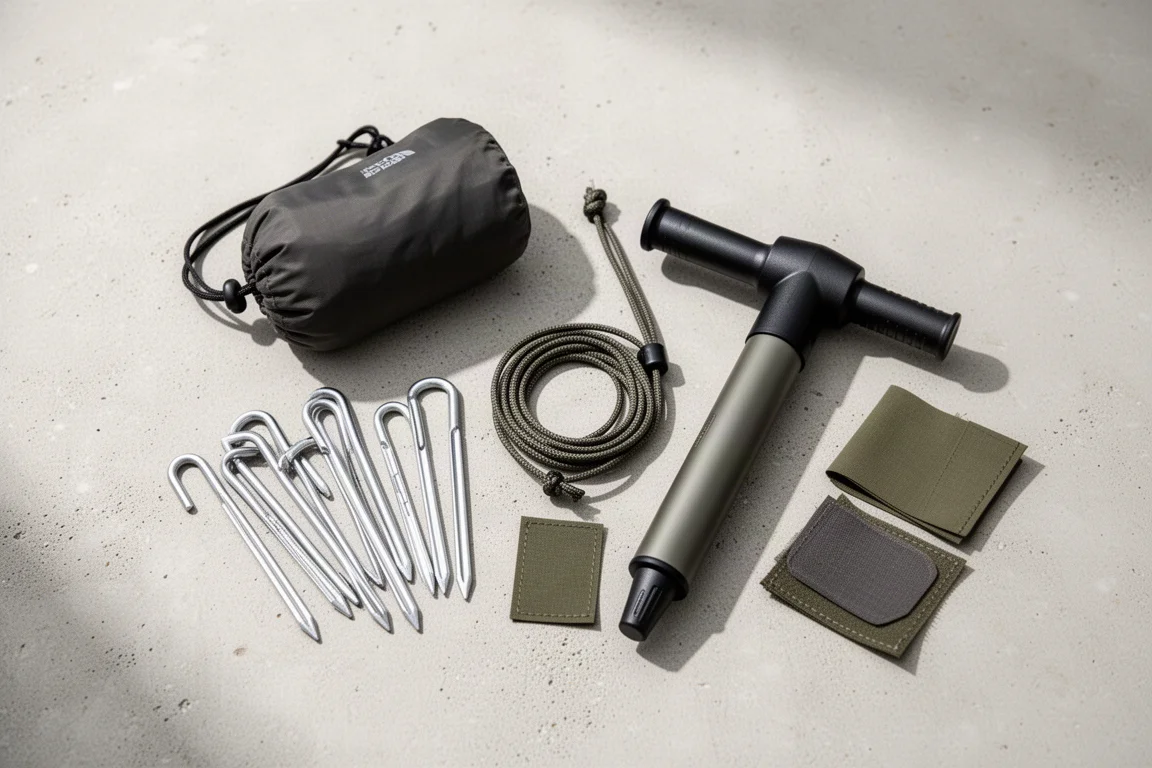
The two micro poles at the ends are split in the middle, so they can be broken down even further. Keeping them attached to the tent between trips makes pitching quicker when you arrive at camp.
That flexibility is the core argument for the design. It is not simply a light tent. It is a tent that fits into spaces a conventional pole-based shelter cannot.
Weather Protection and Build Quality
The fly uses a 20D nylon fabric with a 3,000 mm hydrostatic head rating, which is a properly waterproof specification for a three-season shelter. The included pegs are well made, the guy lines are tidy, and a small repair kit with squares of the tent fabrics comes in the bag.
Inside, the sleeping area has a solid mesh base with a more open mesh upper section, a sensible three-season arrangement for ventilation and condensation control. The single door uses two attachment points rather than one, which makes getting in and out noticeably easier. There are side pockets, a pocket at the top sized for a phone and head torch, a stow pocket for the door, and lantern hooks.
Living With the Inflatable Pole
The air beam changes how the tent behaves, both in ways that help and in ways worth understanding before you buy.
Pitching the Tent
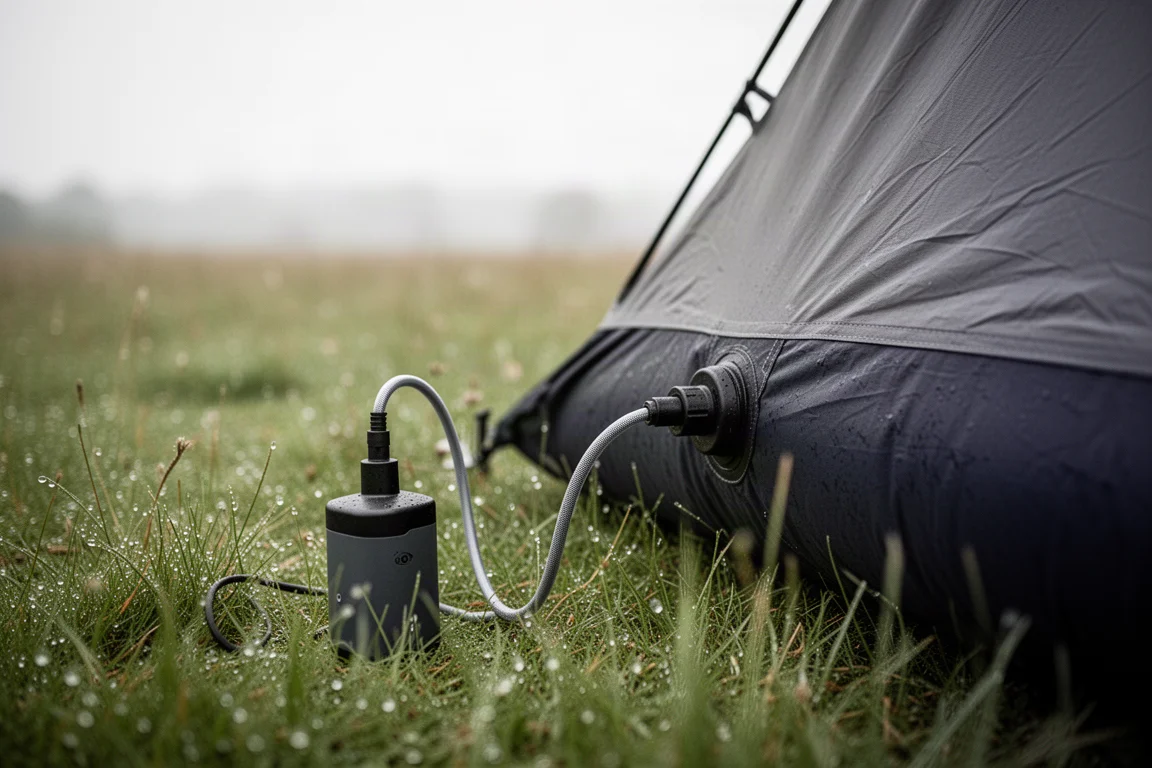
Because the inner and outer go up together, pitching is quick once you know the routine. The air beam can be inflated through a Schrader valve or through a second fitting, and a small electric pump can do most of the work. A non-return valve finishes the job, and the beam can be topped up by mouth. It should not be overinflated.
The micro poles slot into fixed fittings at the ends. The beam itself is not especially rigid, so the tent rewards fine-tuning: peg the small end first, then work around the shape until the fly sits taut.
Once set up, it has the classic single-pole one-person silhouette, with one vent and one door, and a nicely understated look on the hillside. In calm conditions it pitches in seconds.
Interior Space and Comfort
Alpkit quotes a ceiling height of 90 cm, a maximum width of 90 cm and a maximum length of 220 cm. In practice, the angled front and back of this style of tent eat into that length, so usable space is less than the figure suggests. Taller users are likely to find it tight.
The porch is a decent size for the category. A backpack fits in it comfortably, and there is enough sheltered room to cook. Headroom is the main compromise: an inflatable beam is much thicker than a conventional alloy pole, so the peak loses height compared with a standard single-pole tent.
Things to Consider Before Buying
Weight and packed size are excellent, but this is not a tent for every situation.
- The air beam is less rigid than a pole. In strong wind the tent is likely to deflect and press inward, which would be uncomfortable on exposed pitches.
- Punctures are a possibility with any inflatable structure. A repair kit can be carried, but it is one more thing to think about.
- Interior height is limited. If you are tall, the quoted 90 cm may feel optimistic.
- It is best suited to sheltered, fair-weather camps and to trips where packability matters more than storm performance.
Build quality is not one of the concerns. Everything, from the fabrics to the pegs and poles, is nicely made and well thought out for the job the tent is designed to do.
Buying Advice
The Alpkit Aeronaut 1 costs £179, with an optional footprint available for £30 extra. If you are bikepacking, canoeing or kayaking and want a shelter that packs down small and can be split or squashed into whatever space you have, it is a genuinely appealing option and worth serious consideration.
If your main use is ordinary backpacking on open ground, other tents will serve you better. The Aeronaut 1 makes its case on packability, not on all-round performance.
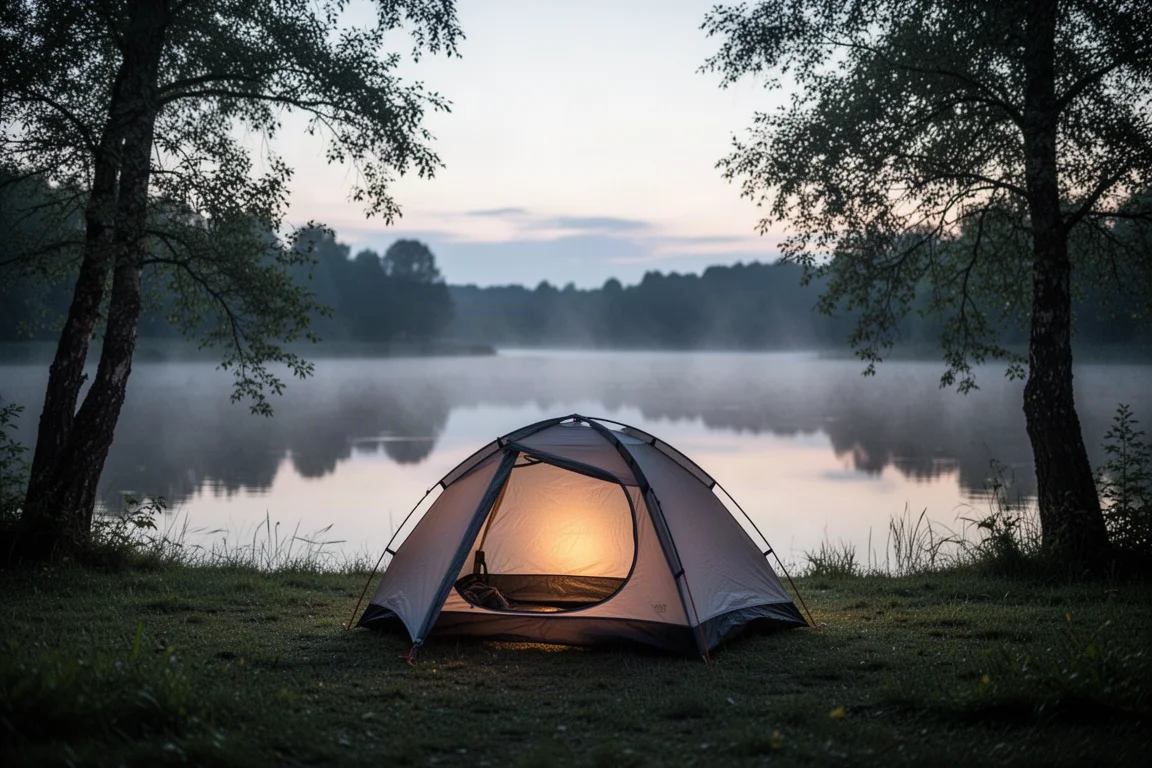
For the right rider or paddler, the combination of a 1.2 kg weight, a tiny packed size and a well-made three-season body is a compelling package. Match it to sheltered camps and fair-weather trips and it does its job well.
Conclusion
The Aeronaut 1 is an inventive tent. It is light, packs extremely small, and is very well made. The trade-offs are clear: less rigidity, less headroom, and a design that prefers calm conditions. For bikepacking and paddling trips where space is at a premium, those trade-offs are easy to accept. For general backpacking, they are harder to justify.
Product link
View more details for Alpkit Aeronaut 1
This product is mentioned in the review. Check the specifications, options, and compatibility before buying.
View more details for Alpkit Aeronaut 1Further reading
Related Reviews
Backpacking Tents
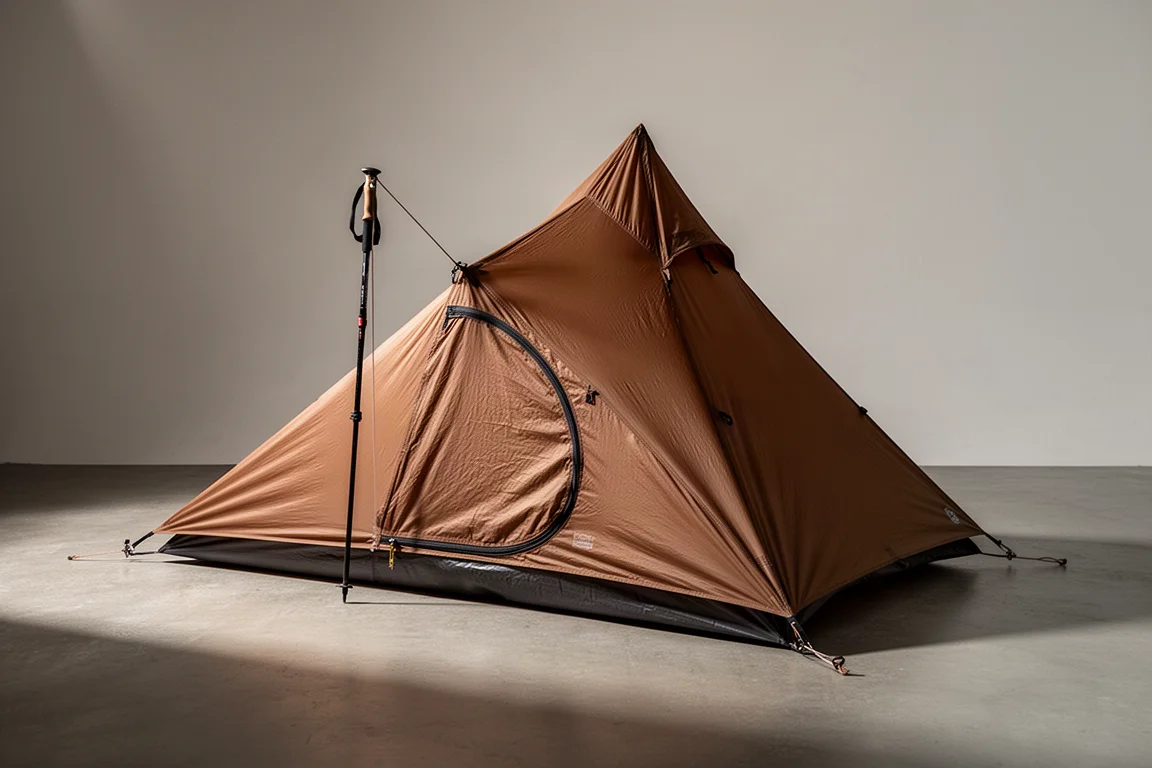
3F UL Lanchan Pro 1 Review: A 1 lb 8 oz Single-Wall Trekking Pole Tent
A practical look at the 3F UL Lanchan Pro 1, a single-wall trekking pole shelter with a 1 lb 8 oz weight, 20D silnylon fabrics, and a roomy 90 x 31 x 49 inch interior.
Backpacking Tents
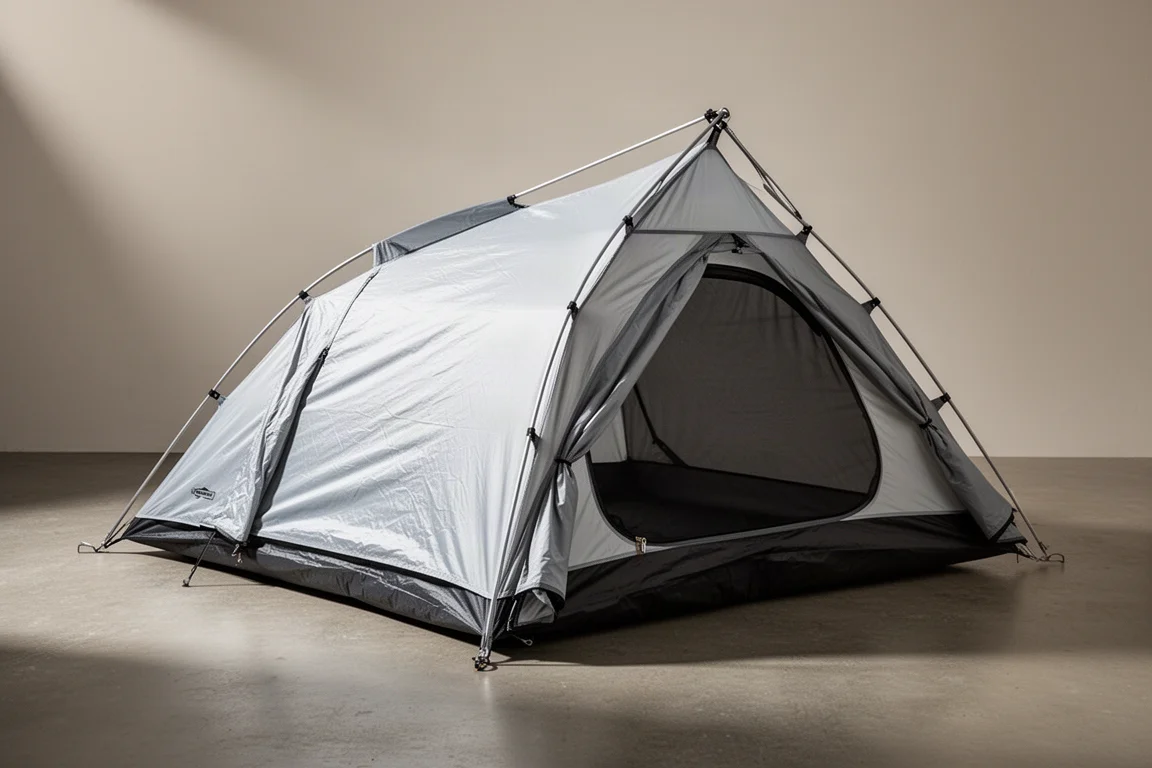
3F UL Taiji 2-Person Tent: A Convertible Backpacking Shelter Worth a Closer Look
A practical look at the 3F UL Taiji two-person tent, covering its materials, true two-person interior, fly-first pitching, and the seasonal inner swap that lets one shelter cover more of the year.
Backpacking Tents
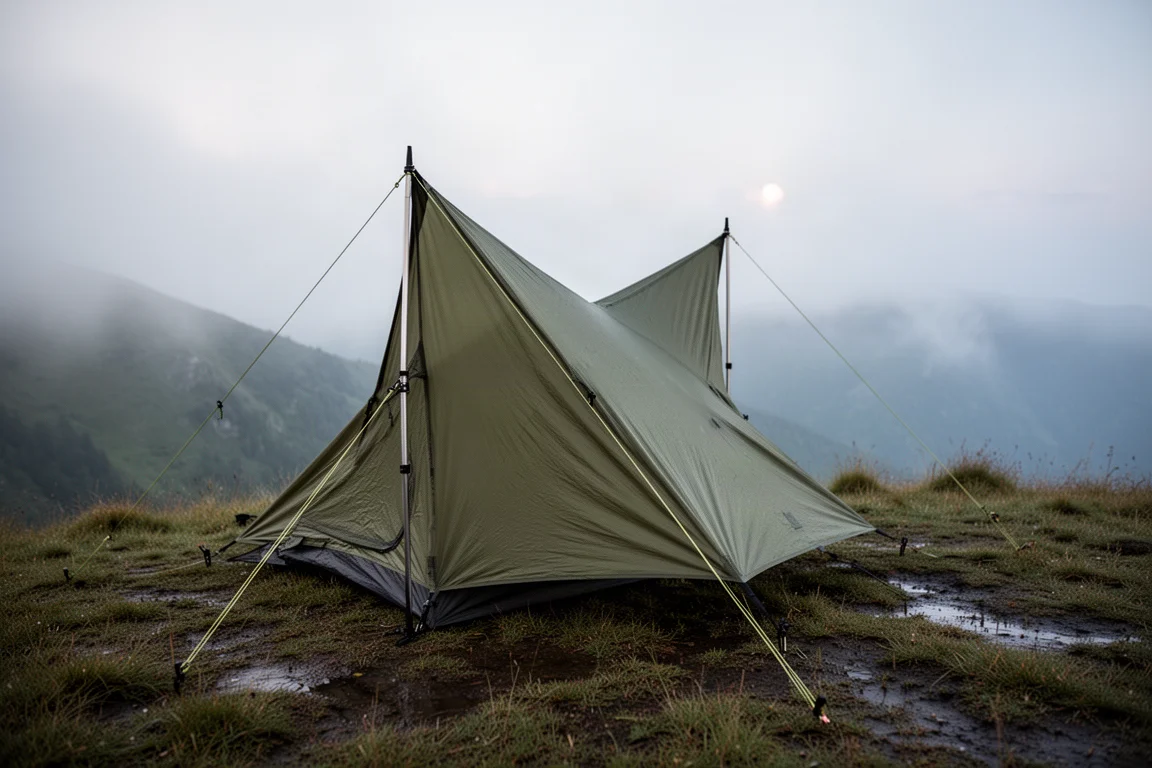
3FUL Lanshan Twoerson Pro Review: A Light Trekking Pole Shelter That Struggled in Rain
A two-person trekking pole shelter with a 2026 redesign, pitched with sticks and put through a night of steady rain. Here is what worked, what did not, and what to check before buying.