Ultralight Backpacks
Alien Outdoor Gear Custom Backpack Review: A 22-Ounce Ultralight Pack Built to Order
An initial look at a made-to-order 40-liter ultralight backpack: Ultra 200 fabric, a 22-ounce build, generous pockets, and the details worth checking before you order.
Introduction
A custom ultralight backpack can come from a large brand’s made-to-order program or from a single maker working in a small workshop. This one sits firmly in the second camp. It was built by Alien Outdoor Gear, a one-person operation, and it was assembled around a specific list of feature requests rather than pulled from a stock configuration.
That makes it slightly unusual to write about. There is no model name to look up and no fixed specification sheet, so the details below come from one overnight trip and a close look at the materials and construction. The useful question is whether a small-shop pack at roughly $240 can hold its own against a pack that has already covered a lot of ground.
What You Get: Materials and Capacity
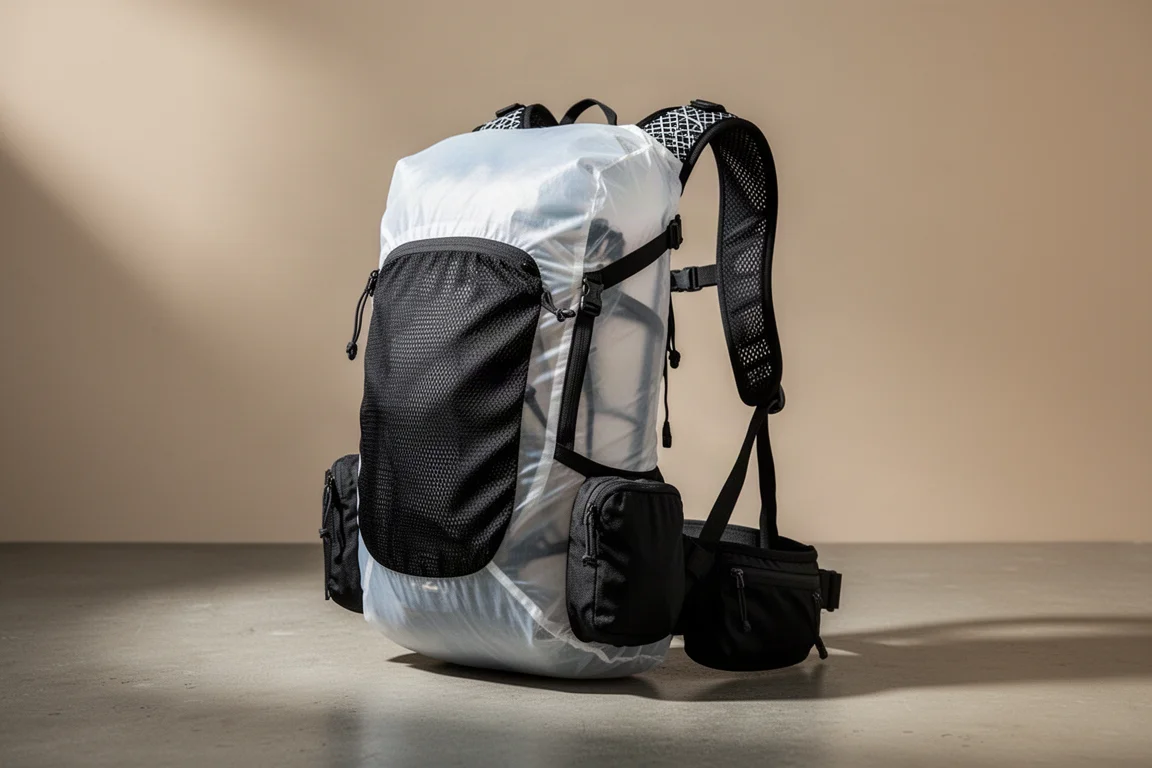
Total capacity is 40 liters, split into 30 liters of internal storage and about 10 liters spread across the external pockets. For a hiker with a compact ultralight kit, 30 liters of internal space is a workable main compartment, and the external capacity is where this pack earns its keep.
The main body uses a fabric called Ultra 200, which the maker describes as a woven Dyneema face fabric. The claim attached to it is that, at the same weight as DCF, it offers three times the tear strength and seven times the abrasion resistance. Visually it reads much like a white DCF laminate, so the difference is not obvious from across a campsite. The side pockets, shoulder straps, and hip belt use Dyneema grid stop, while the large front pocket uses Spandura, a stretch material that behaves like a tougher spandex.
Weight lands at 22 ounces, which is light for a 40-liter pack and a touch lighter than the long-serving pack this one was measured against. A comparable custom build runs around $240.
Who This Pack Is For
This pack suits hikers who already have their kit dialed in and know which features they want. Because it is made to order, the buyer can influence strap width, pocket layout, and overall volume. That is a real advantage for anyone who has spent years working around a stock pack’s compromises.
It is a less obvious fit for hikers who want a known quantity straight out of the box, a published spec sheet, or the lowest possible price. Custom work from a small maker means a conversation, a wait, and a build that reflects one person’s hands rather than a factory line.
Main Strengths: Comfort and Pockets
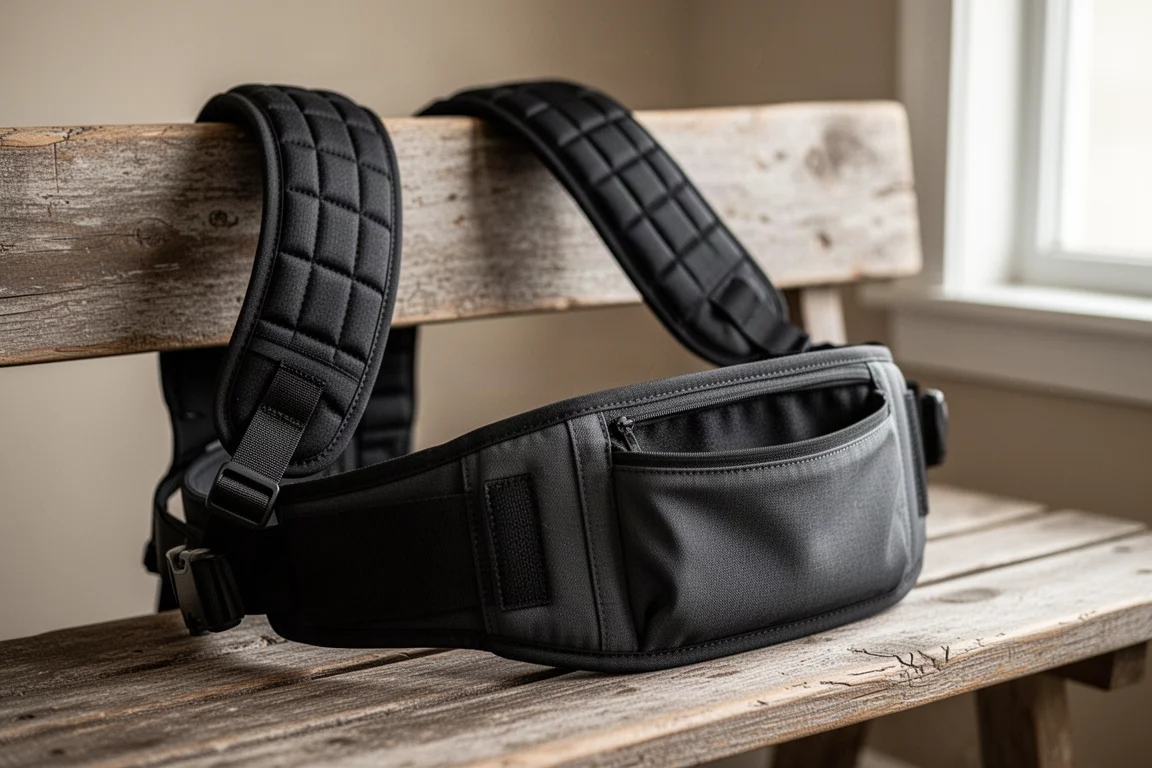
The shoulder straps and hip belt are the standout. They are noticeably thicker and wider than those on many ultralight packs, and the extra padding showed up immediately on the first carry, with no break-in period and no pressure points. The hip belt is a straightforward design, but it is beefier than expected for a pack in this weight class.
Two hip belt pockets, one per side, are removable for anyone counting ounces. They are also genuinely roomy, with enough space for a phone, snacks, or a map. The large front pocket was a requested addition and it delivers: the stretch fabric is strong and forgiving, and it swallows the items you want within reach during the day.
A pair of loops on the left side can hold trekking poles when they are not in use, which is handy in town or while hitching a ride. The design also holds up aesthetically, with a clean white laminate body, restrained color accents, and a small alien emblem near the base.
Real-World Use on a Single Overnight Trip
One overnight hike is not much of a durability test, and this should be read as an initial impression rather than a verdict. That said, the pack carried well from the start, with no hot spots and no adjustment fiddling beyond the usual. The trekking pole loops went untested. Long-term questions about abrasion resistance and seam life will only be answered by mileage.
Things to Consider Before Buying
A few details are worth thinking through before ordering, especially since a custom build lets you change most of them.
The bottom stretch pocket is the clearest example. It is intended for snacks and small items, but it is hard to see a real use for it, and anything stored there could work loose. Skipping it would save a small amount of weight.
The shoulder straps are wide, which helps comfort but rules out some camera clip mounts that clamp onto a strap. Ask about narrower straps if that matters.
The top closure uses a small hook that loops through webbing rather than a side-release buckle. It held securely on the trail, but it is fiddlier to operate with cold or tired hands.
Water bottle access from the side pockets was difficult with a fully loaded pack, and in that state the bottles could not be reached at all. Arm length, pack weight, and how the load is packed all change this, so it is worth testing early and adjusting the shoulder straps if needed.
None of these are dealbreakers, and most of them trace back to choices that can be revisited in a custom order rather than flaws in the construction.
How It Compares to a Familiar Pack
The natural comparison is the ULA CDT, a pack that has been in continuous use for years and is the reference point for every observation here. The custom Alien Outdoor Gear build is slightly lighter at 22 ounces and slightly smaller overall, which explains part of the weight difference. Its straps and hip belt are thicker and more generously padded, and its hip belt pockets are larger.
Against that, the CDT’s closure hardware and bottle access have proven themselves over many miles, and that kind of familiarity has real value on a long trail.
Buying Advice
Around $240 places this pack at the upper end of what many hikers want to spend, though it is not out of line with other ultralight options. The maker has acknowledged that a lower-priced option would appeal to more buyers and has been exploring more affordable builds, so a cheaper tier may appear over time.
For a long-distance thru hike, this pack was not the first choice. That decision came down to familiarity rather than quality: a trail of that length rewards gear that has already been proven, and a pack with years of miles behind it leaves less to chance. If the primary pack fails, this one steps in without hesitation.
Buy it if you want a made-to-order pack with unusually comfortable straps, generous pockets, and a low weight. Look at a stock pack if you would rather not spend the money or wait for a build.
Either way, it is worth settling strap width, pocket layout, and volume before the build starts, because those choices are baked in once the pack is sewn.
Conclusion
This is a well-built, genuinely comfortable ultralight pack. The 40-liter capacity suits a compact kit, the 22-ounce weight is competitive, and the padded straps and roomy pockets are the kind of details that make long days easier. A few quirks, including the bottom pocket, the wide straps, and the bottle access, are worth discussing with the maker before an order is placed. As a first impression, it lands well.
Product link
View more details for Alien Outdoor Gear Custom Backpack
This product is mentioned in the review. Check the specifications, options, and compatibility before buying.
View more details for Alien Outdoor Gear Custom BackpackFurther reading
Related Reviews
Ultralight Backpacks
Durston Gear Kakwa 40 Review: An Ultralight Pack That Holds Its Shape
A 1 lb 13 oz ultralight backpack with a shape-holding frame, load lifters, and Ultra 200 fabric. Here is what works well and what to weigh before buying.
Ultralight Backpacks
Gossamer Gear Mirage 40: First Impressions of a 19.4 oz Framed Ultralight Pack
An early look at the Gossamer Gear Mirage 40, a 19.4 oz framed pack built from welded V52 graphite fabric, covering what works, what to check, and who it suits.
Ultralight Backpacks
Outdoor Vitals CS40 Ultra vs Zpacks Arc Haul Ultra: Choosing an Ultralight Backpack
A practical comparison of two Ultra 200 ultralight backpacks, covering frame design, load comfort, pocket access, pricing, and the details worth checking before you buy.