Fountain Pens
Akruti Blender Fountain Pen Review: A Clever Idea That Fails in Practice
A $40 Indian fountain pen with three ink chambers and a titanium nib promises custom ink mixing. In testing, it fell short in nearly every way.
Introduction
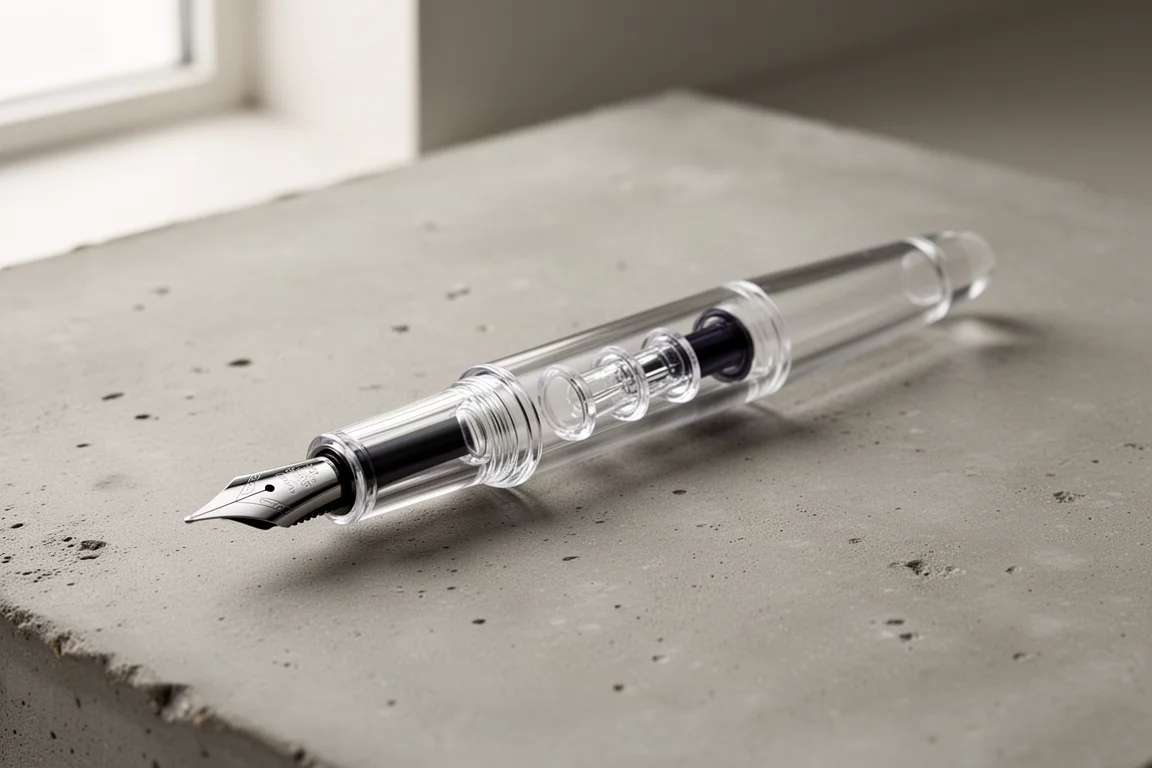
Every so often a product comes along with an idea interesting enough to overlook its modest price. The Akruti Blender, a fountain pen from a small company based in Mumbai, India, is one of those. The pitch: a transparent acrylic pen with three separate ink chambers, each loaded with a different ink, so the colors blend to create your own custom shade. Add a titanium nib at roughly $40, and it sounds like one of the more creative concepts to appear at a pen show in years.
Unfortunately, this is also the most disappointing pen we have put through testing. After multiple replacement units and repeated opportunities for the company to resolve the issues, the core premise simply does not function. Here is the full picture.
The Pen and Its Parts
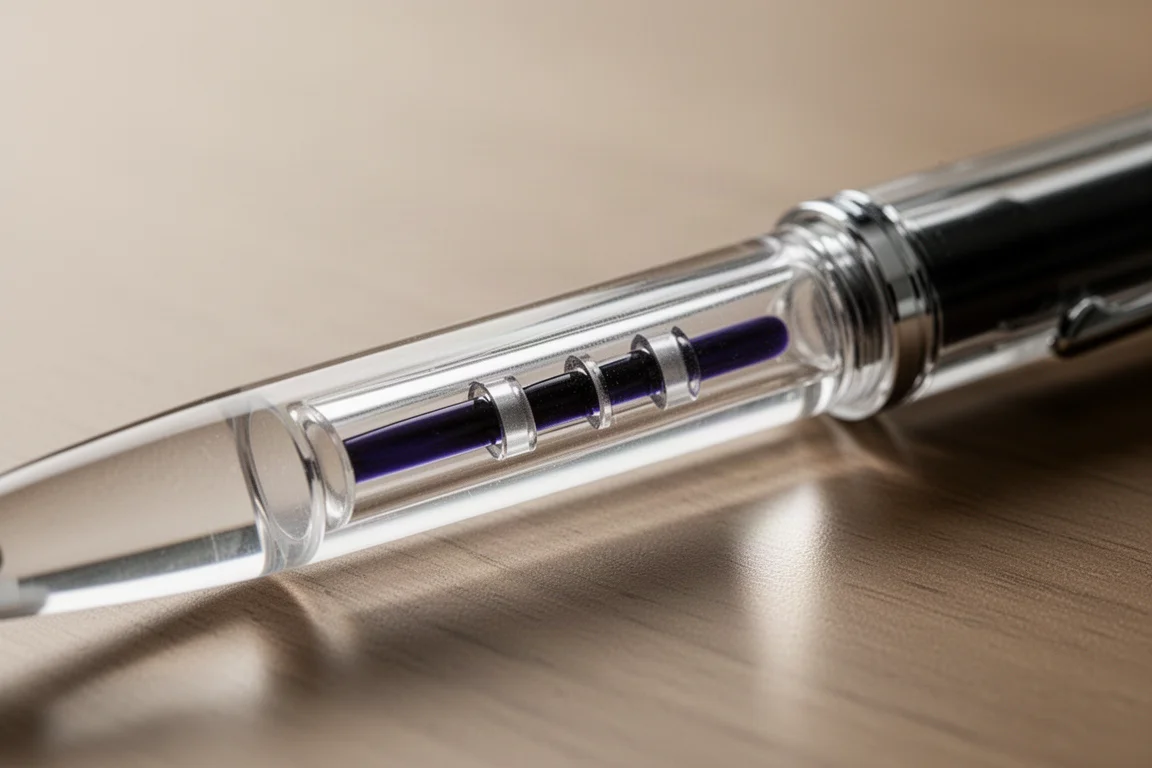
The Blender is a decent-sized pen molded from transparent acrylic, and its defining feature is the trio of ink chambers running through the barrel. The concept is that each chamber fills with a different ink, and the colors then combine to produce a new shade of your choosing. Under the twist-off cap sits a number 6-size titanium nib, offered in fine, medium, and broad points, plus 1.1mm and 1.4mm stubs.
The company argues that because titanium is non-corrosive, mixing inks from different manufacturers will not cause long-term damage to the nib. That is a reasonable claim in principle. The pen also uses an ebonite feed, though the boring on ours was noticeably rough, and there was some debris inside the cap on arrival.
Fit, Finish, and Build Quality
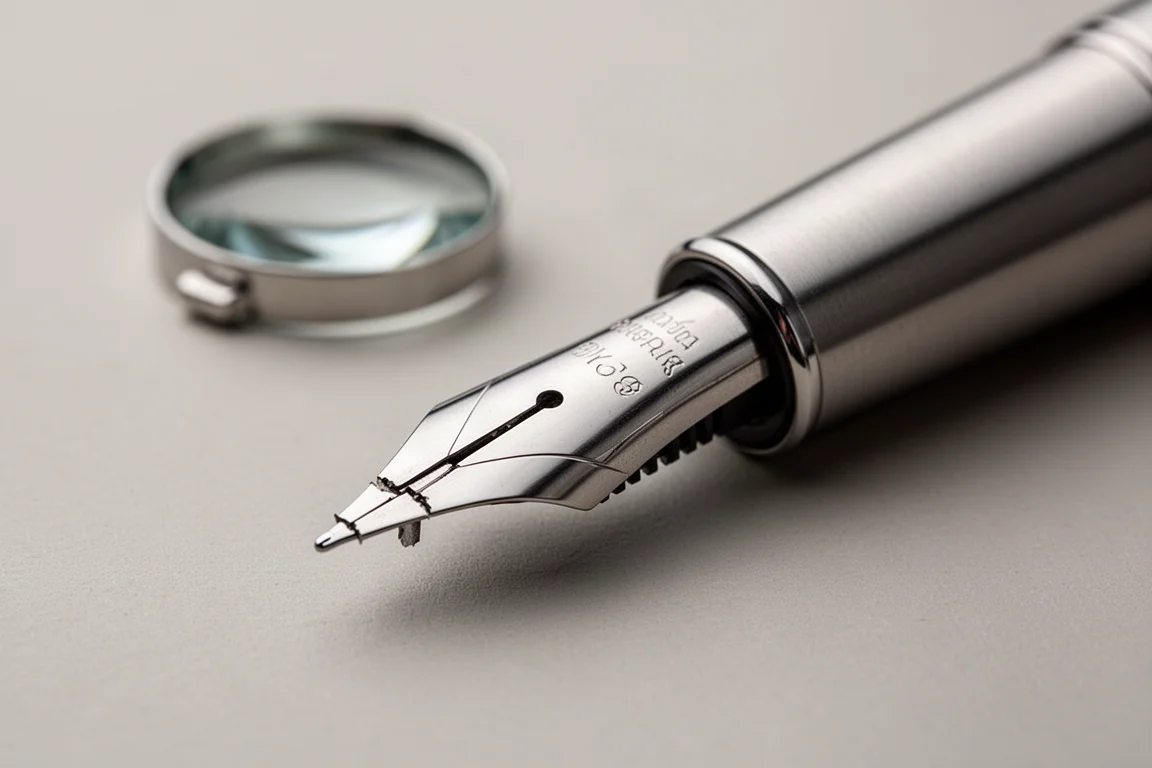
The first signs of trouble appeared before any ink was involved. Examined under a loupe, the nib’s tines were significantly farther apart than they should have been. Even after the company swapped the nib at their show table, the replacement arrived with visibly misaligned tines, which were then adjusted by hand without any magnification. On the unit we kept, the logo is off-center and the tine slit is notably skewed. It is also unclear whether the nib has real tipping material or simply a molded writing surface.
Elsewhere the picture is mixed. The ebonite feed looks presentable and the section has a comfortable size that feels good in the hand, with only a slightly oversized step up to the barrel as a minor gripe. The cap, however, is another story: the threads are unusually tight, making it an effort to cap and uncap, and the cap posts only loosely, so you will effectively use the pen unposted.
The Accessories Leave Something to Be Desired
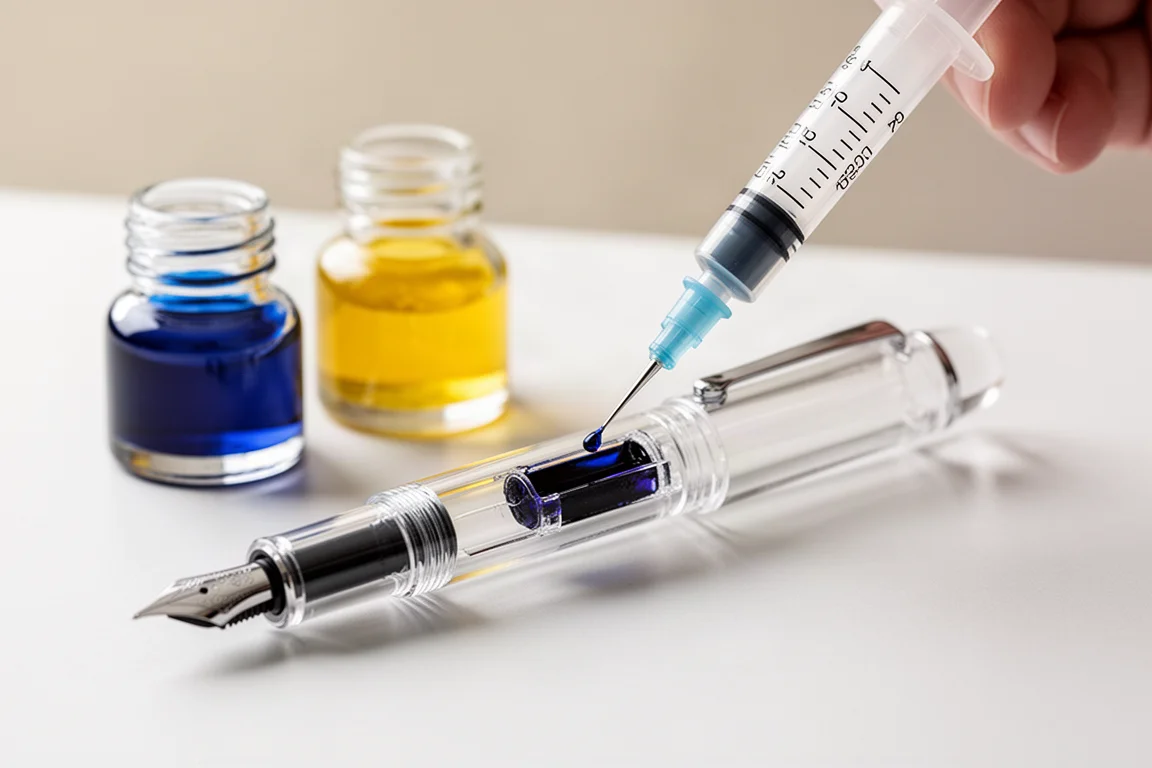
Filling three narrow chambers requires syringes, and the pen ships with them. The problem is what kind. Rather than safe blunt-tip filling syringes, the included units were medical-grade sharp needles, both difficult to draw ink with and genuinely hazardous to ship to customers. We flagged this directly, and on the replacement pen the same skinny syringes arrived with their sharp tips simply snipped off, leaving deformed ends that made them even harder to use. We ended up relying on our own blunt syringes for testing.
Testing the Ink Mixing Concept
The mixing idea sounds plausible. Two chambers of one color and one of another, say neon blue and neon yellow from Private Reserve, should in theory produce a custom green. In practice, filling three chambers was the easy part. The problems began the moment the pen was turned over.
The chambers are simply too narrow. Across four different ink brands, the ink refused to move, unable to overcome surface tension even with the pen held upside down. The only way to force any blending was to shake the pen hard, and even then the results were poor: the yellow emptied almost completely while both blue chambers stayed full, some color reached the section, and the inks never genuinely mixed. Instead of a custom shade, you get an unpredictable mess.
The Dealbreaker: It Simply Does Not Work
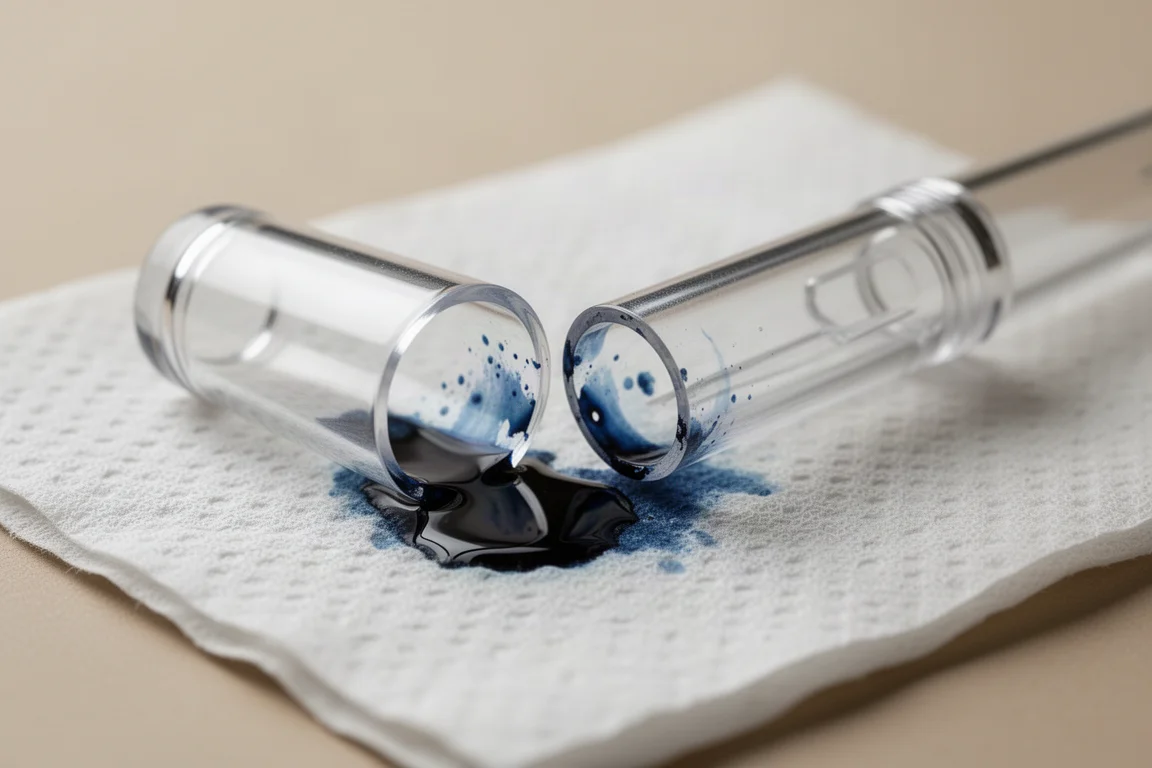
Storage made things worse. Left nib-down overnight, the second test pen drained nearly all of the ink sitting in the section directly into the cap. A trace of ink in a cap is normal wear; this quantity would create a serious mess the moment the cap came off. With no ink flowing behind it, the section dries out almost immediately, making a meaningful writing sample impractical to even attempt.
We gave this pen every reasonable chance. A nib swap at the show, direct communication about the failures, and a full replacement unit that arrived with identical problems. Nothing changed the outcome. Even at roughly $40, the pen does not deliver on its single defining feature, and we cannot recommend purchasing it.
Buying Advice
If the three-ink mixing concept appeals to you, our honest advice is to wait. Until the chamber design is revised so ink can actually flow and blend, the pen cannot do the one thing it exists to do. Enthusiasts who enjoy experimenting with custom ink blends would be better served by proven methods, such as mixing inks in a separate container before filling any conventional fountain pen.
Conclusion
Innovation in the pen world deserves encouragement, especially from small companies trying something new. The Akruti Blender deserves credit for ambition: a three-chamber mixing pen with a titanium nib at $40 is a genuinely novel idea. But the execution falls short at every turn, from nib alignment and tight cap threads to unusable syringes and, above all, chambers that will not let ink move. This is a pen we would steer most buyers away from, at least until a substantially revised version appears.
Product link
View more details for Akruti Blender
This product is mentioned in the review. Check the specifications, options, and compatibility before buying.
View more details for Akruti BlenderFurther reading
Related Reviews
Fountain Pens
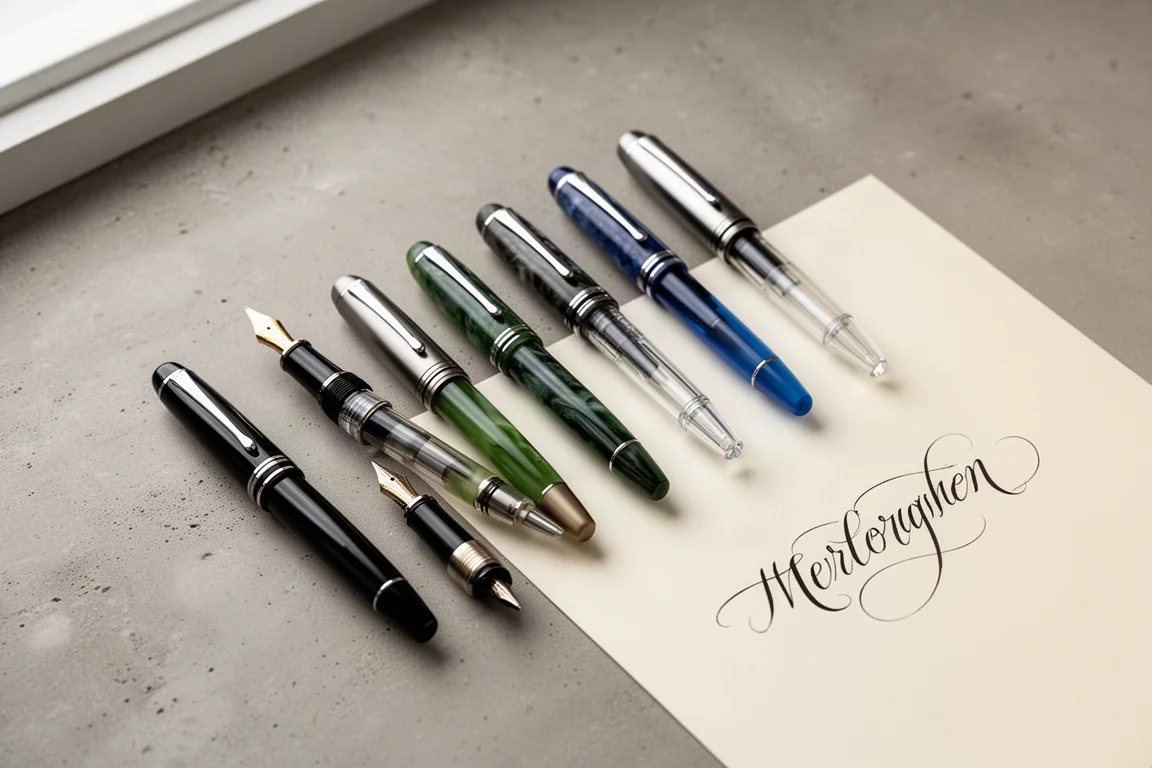
Best Budget Fountain Pens Tested: 9 Pens, One Clear Winner
A hands-on comparison of nine affordable fountain pens for everyday writing, calligraphy, and sketching, with a clear standout for flexible nib fans.
Fountain Pens
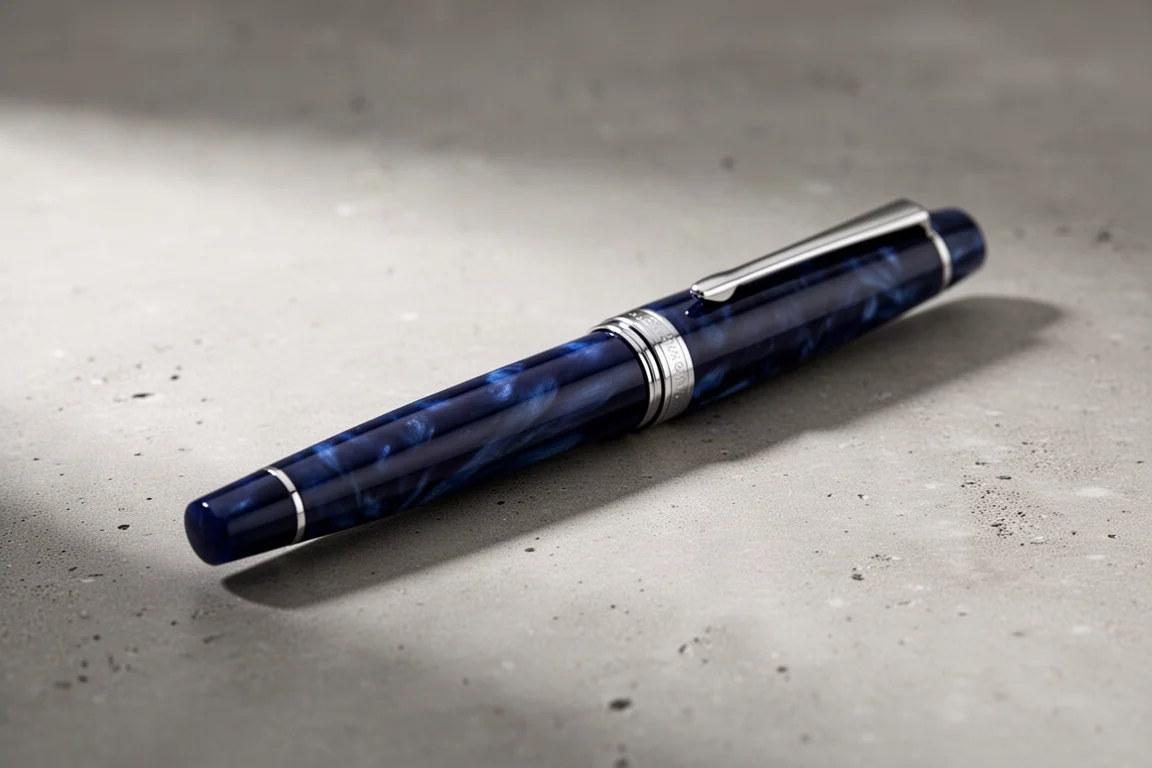
Aurora Optima Review: An Italian Piston Filler That Punches Above Its Price
A 14k gold nib, ebonite feed, and a beautifully deep oraloid body make the Aurora Optima one of the most rewarding piston fillers around.
Fountain Pens
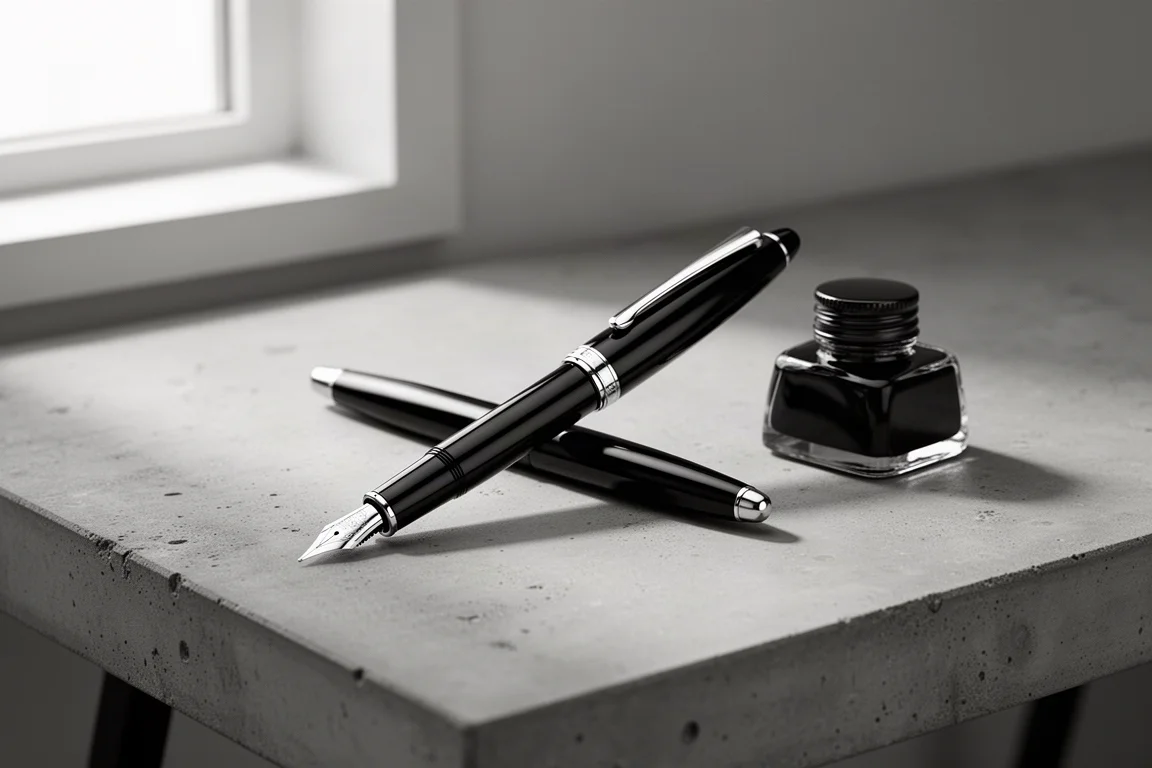
Cross Bailey Light Review: The Entry-Level Fountain Pen Worth Keeping at the Office
A plastic-bodied Cross with a metal clip, snap cap, and famously smooth extra fine steel nib. Around $15, available almost everywhere, and easy to recommend.