Tools
AIT DTX1 Review: A Laser Tape Measure Built for People Who Measure for a Living
The AIT DTX1 combines a digital tape measure, a room-filling laser line, and Bluetooth app support into one measurement tool for designers, installers, and tradespeople.
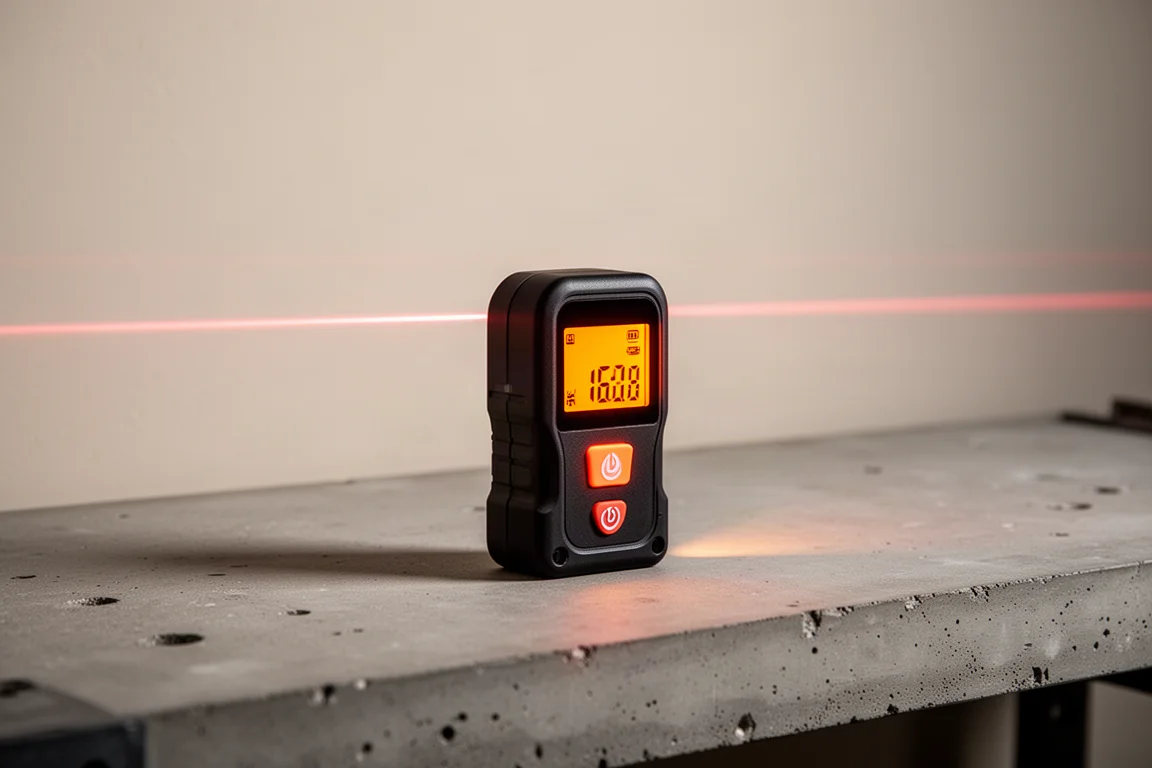
Introduction
Most measuring tools pick one job and do it well: a tape measure pulls out and reads back a number, a laser distance measure bounces a dot off a wall. The AIT DTX1 tries to be both at once, and it mostly pulls it off. It pairs a physical tape with a digital readout, adds a laser line that can fill an entire room, and syncs everything to your phone over Bluetooth. If you spend your days in furniture design, room layout, flooring, or any trade where measurements need to be shown to other people, this is an unusual tool worth a close look.
Who this product is for
The DTX1 makes the most sense for people who measure for a living but do not measure like a carpenter. Furniture designers, flooring installers, and anyone planning room layouts benefit from features that make measurements visible and shareable rather than just recorded.
The digital readout is the headline feature. Instead of squinting at tape markings, the tool displays the exact reading, down to fractions of an inch. The source reading showed 29 inches and 29/32 of an inch, which is the kind of precision you simply cannot eyeball on a standard tape. If your eyes are not great at reading small tape markings, this alone changes how you work.
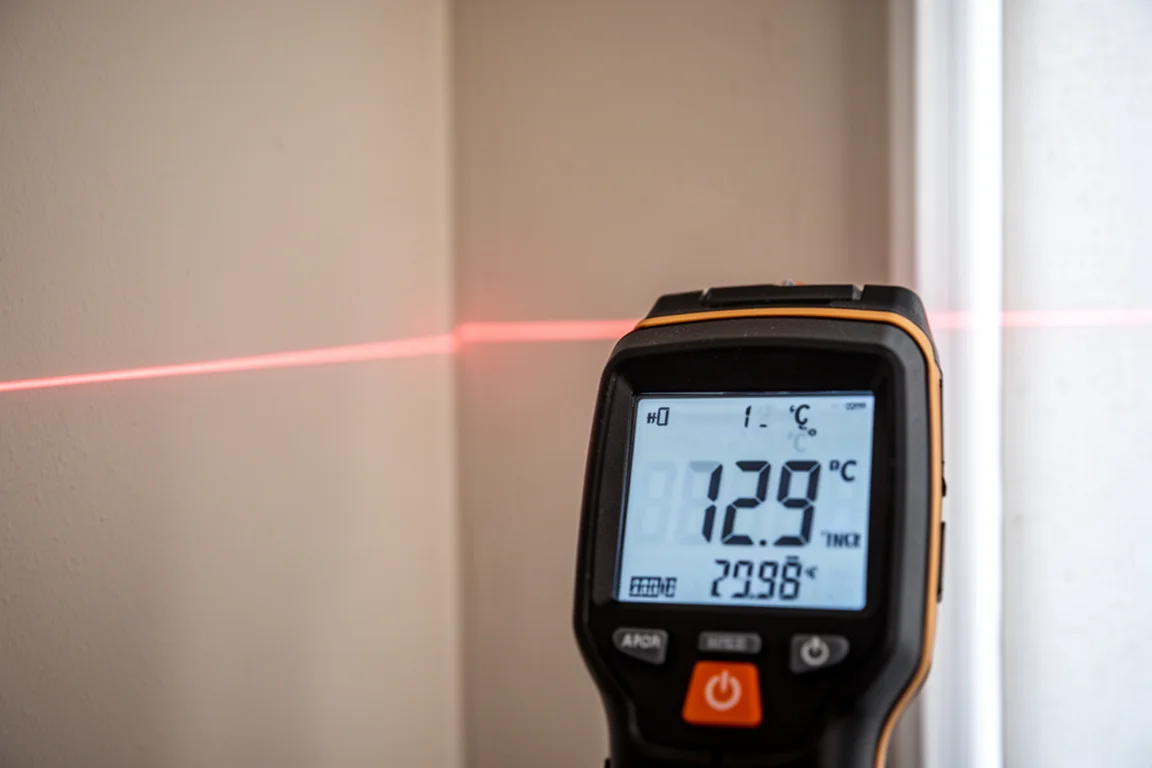
There is also a physical tape that extends from the unit and reads digitally as it moves. Push the tape even slightly and the reading updates, so the tool always knows what it is measuring. A retraction button pulls it back in, which is a small but welcome touch.
Main strengths
The laser line is what separates the DTX1 from ordinary digital tapes. It projects a line that extends to 180 degrees and can fill a whole room, which turns measurements into something other people can actually see. When you are laying out a couch and want to show that it will sit 5 feet out and 10 feet across, clients and coworkers can walk up to the line and visualize the space. That ability to make a plan tangible is, in practice, the tool’s biggest advantage.
The laser distance measure itself works as you would expect. Measurements can be taken from the front of the unit, from the line, or from the back, selected with a button on the body. Readings come back quickly and precisely, and the tool supports more advanced modes too: partial room measurements, volume calculations, and a simple height calculation that combines a horizontal distance reading with a vertical one to tell you how far you are from the ceiling.
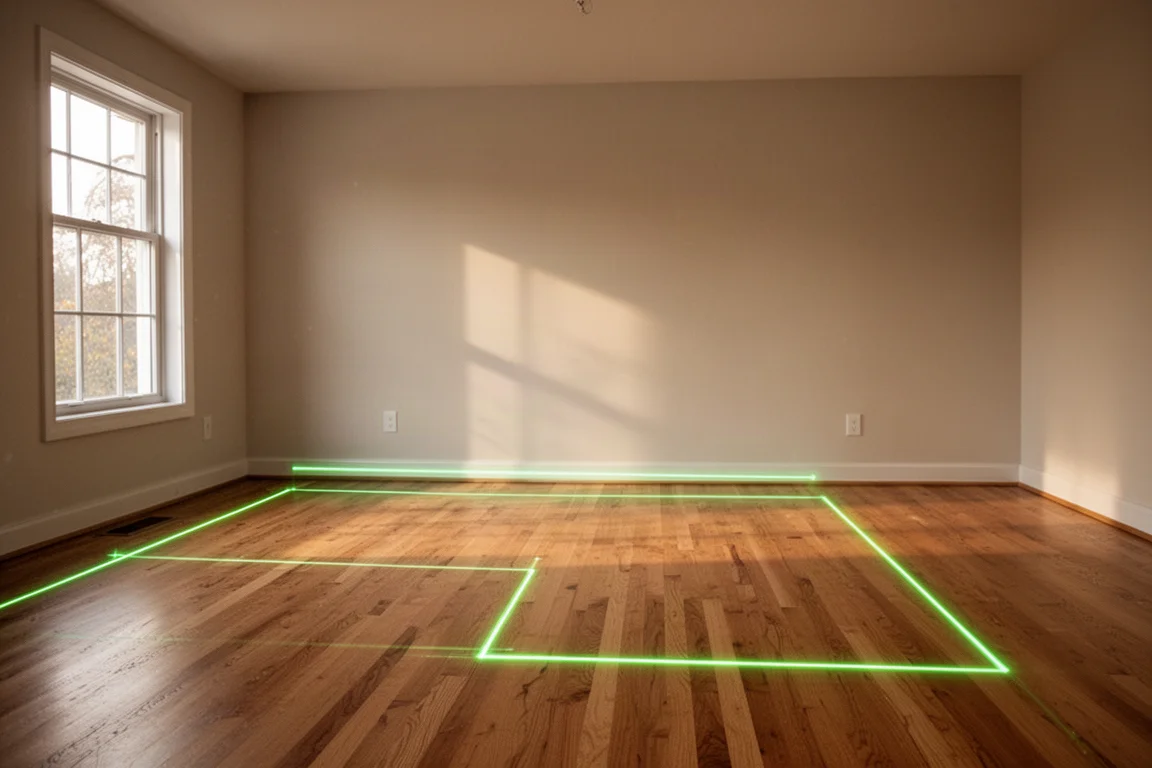
The display is also customizable. The line and interface colors can be switched between options like pink, green, white, black, and yellow, so you can pick whichever reads best for your eyes in your lighting conditions. That flexibility matters more than it sounds, especially indoors where a faint line would otherwise be hard to see.
Things to consider before buying
The honest downside is the learning curve. The DTX1 packs a lot of functions behind its buttons, and expect it to take a day or two before the menu structure feels natural. Setting up the Bluetooth connection and getting comfortable with the app’s drawing and editing tools takes a few more sessions. None of it is difficult, but it is not instant either.
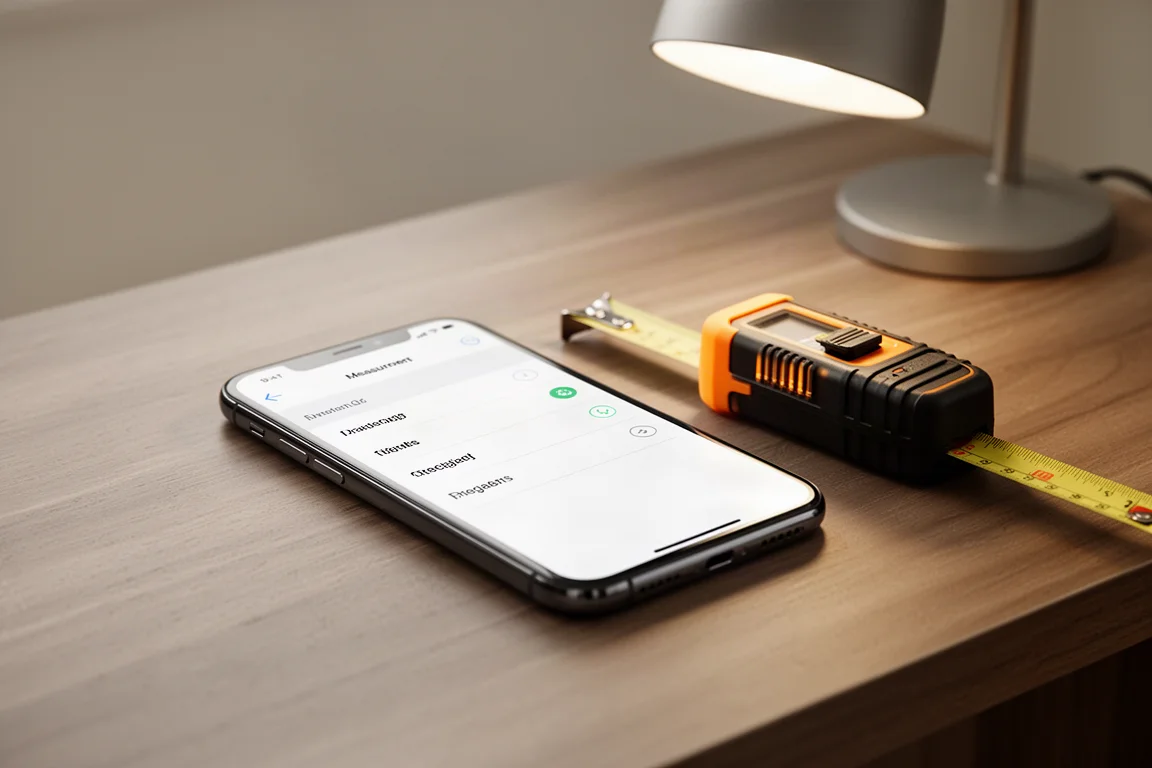
The app itself is genuinely useful once learned. Measurements sync to your phone over Bluetooth, where you can review every reading you have taken, edit measurements, and sketch floor plans by hand and drop in exact numbers. For furniture designers who want to document a layout or hand a marked-up drawing to a client, this is where the tool earns its place in the bag.
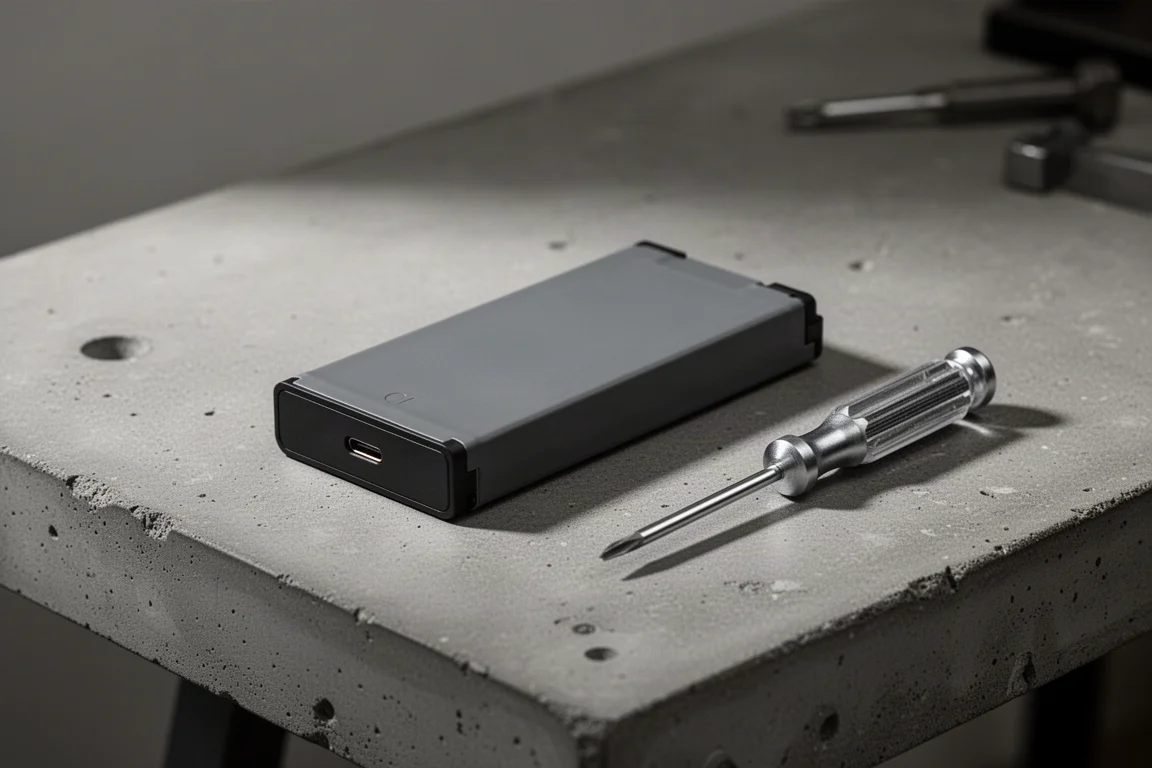
Battery access is the other friction point. The lithium battery lives inside the unit behind a cover secured by a Phillips screw. A small combination tool, part Allen wrench and part Phillips screwdriver, is included in the case. The screw is not easy to get to, and a click-lock design would be more convenient, though the upside is that the battery is absolutely not going to fall out or work loose on the job.
Buying advice
Battery life partly offsets the awkward access. The removable lithium battery charges over USB-C, and with heavy 8-hour daily use it lasts more than a week on a charge. Lighter use stretches that to months. Bluetooth does drain the battery somewhat faster, but the added functionality is worth it.
The DTX1 is not for everyone. If you only need an occasional measurement, a standard tape or a basic laser distance measure will do the job for less money and with nothing to learn. But if you want a tool that reads measurements for you, shows a visible line that clients can react to, saves and edits readings on your phone, and handles volume and height calculations in one device, there is not really a comparable alternative in this form factor. Accept the learning curve and it rewards the effort.
Conclusion
The AIT DTX1 is a clever hybrid that solves a real problem: making measurements accurate, readable, and visible to the people who need to act on them. The combination of digital tape readings, adjustable line colors, room-filling laser projection, and a capable Bluetooth app makes it a genuinely valuable tool for designers, installers, and anyone whose work depends on shared spatial understanding. Learn its menus over a couple of days, keep the included screwdriver handy for battery swaps, and it becomes one of those tools you wonder how you managed without.
Product link
View more details for AIT DTX1 Laser Tape Measure
This product is mentioned in the review. Check the specifications, options, and compatibility before buying.
View more details for AIT DTX1 Laser Tape MeasureFurther reading
Related Reviews

Tools
Best Contractor Grade Tape Measures 2026: Eight Models Tested Head to Head
We tested eight contractor grade tape measures from Milwaukee, DeWalt, Crescent Lufkin, Tajima, Stanley, Irwin, Gelan, and Craftsman to find the best value and performance.

Tools
Best Precision Screwdriver Sets 2026: Manual and Electric Options Compared
We compare 19 precision screwdriver sets, from budget manual kits to electric drivers, to find the strongest bits and best value.

Tools
Best Stud Finders 2026: Five Popular Models Put to the Test
We tested five popular stud finders on drywall, firewall, and lath and plaster surfaces to see which ones really find studs and avoid false readings.