Kitchen Appliances
Air Fryer vs Convection Toaster Oven: Which One Should You Buy?
A basket-style air fryer and a convection toaster oven went head to head with chicken wings, fries, and Brussels sprouts. Here is which one cooks faster, crisps better, and fits your kitchen.
Introduction
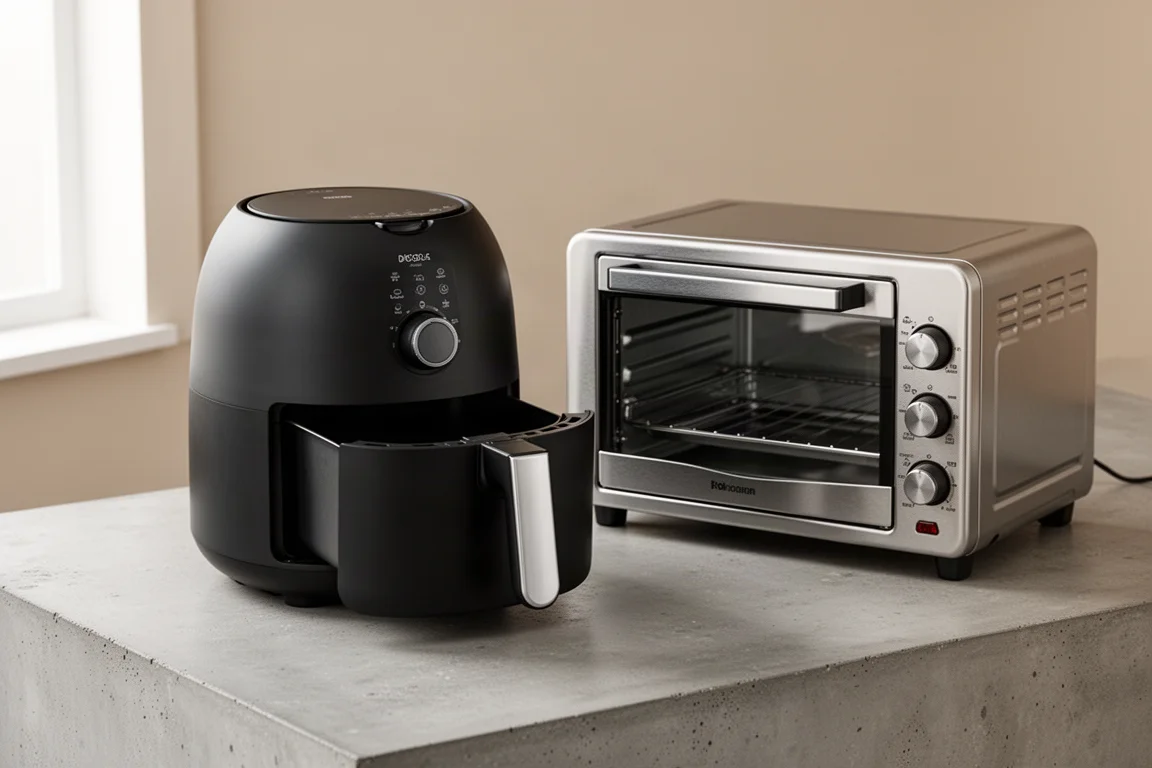
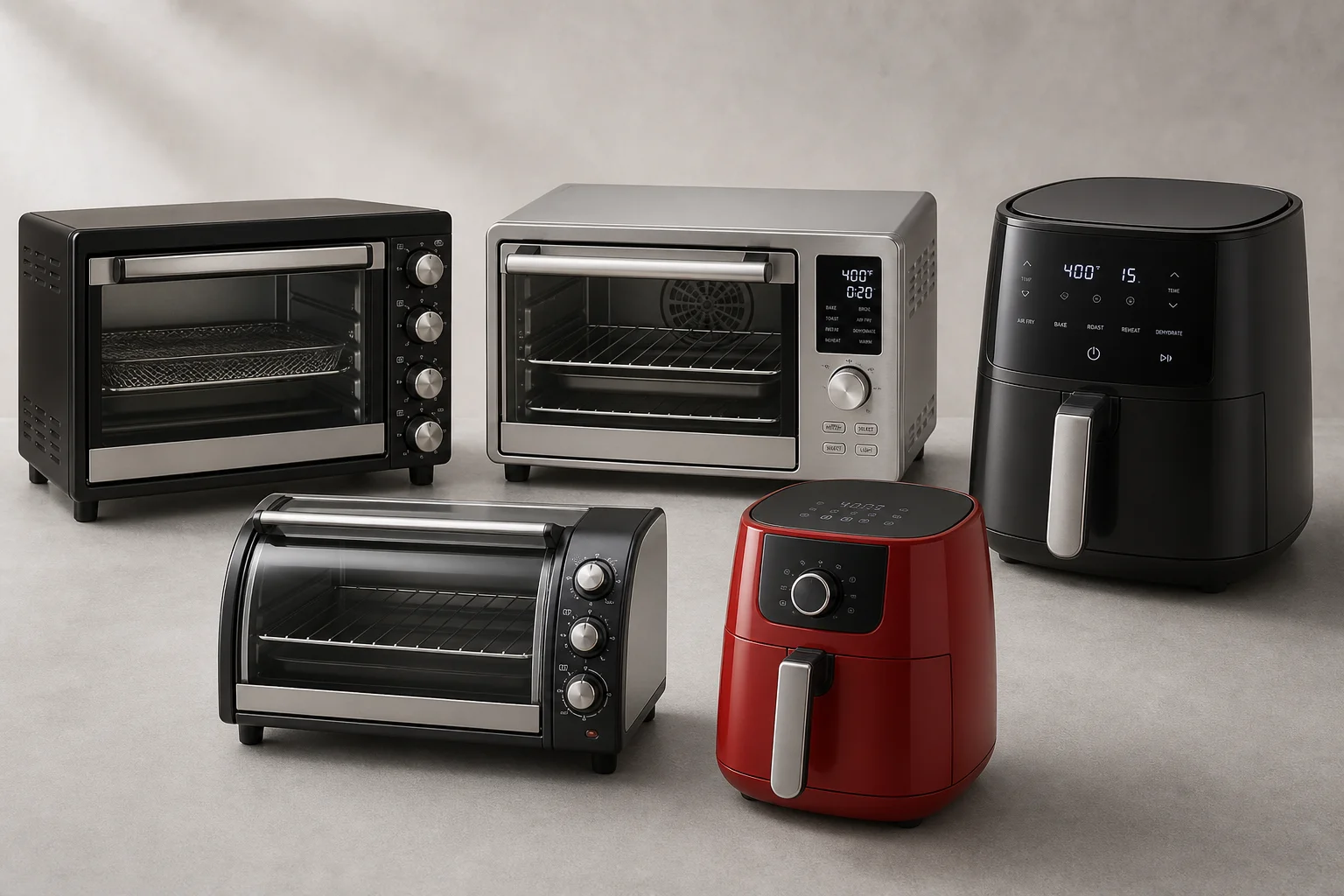
Should you buy a pod-style air fryer or a convection toaster oven with an air fryer setting? It is one of the most common questions in countertop cooking, and the honest answer is that both appliances are good at different things.
To make the comparison concrete, we cooked chicken wings, french fries, and Brussels sprouts in a Ninja Air Fryer Max XL and a PowerXL convection toaster oven, both priced right around $140, and compared them on versatility, cook time, cleaning, and overall performance.
Versatility and Capacity
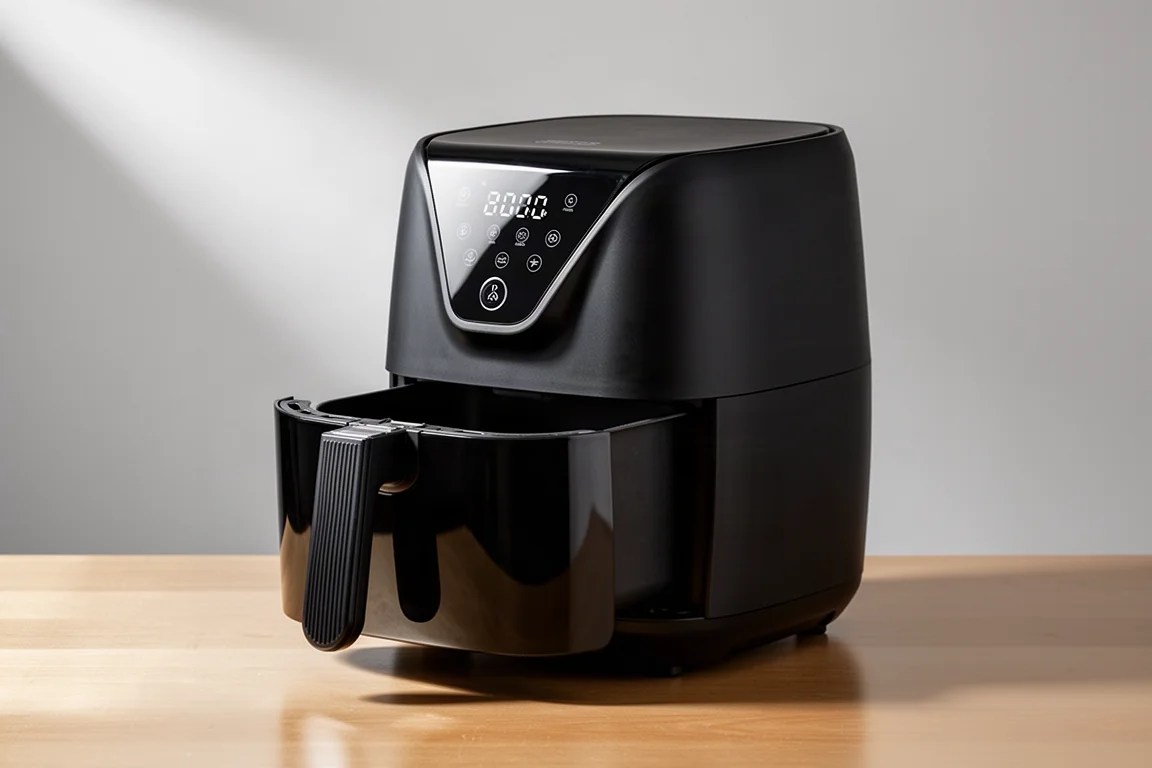
In general, convection toaster ovens are more versatile. Depending on the brand, most can air fry, bake, roast, broil, and toast. They handle pizza, cookies, muffins, and anything else that lays flat and needs space. An air fryer, by contrast, is built primarily to air fry. It is ideal for fries, chicken wings, and vegetables like Brussels sprouts, but it is not an all-purpose appliance. Large roasts cook unevenly, lightweight foods like leafy greens blow around, and toast overcooks on one side unless you flip it.
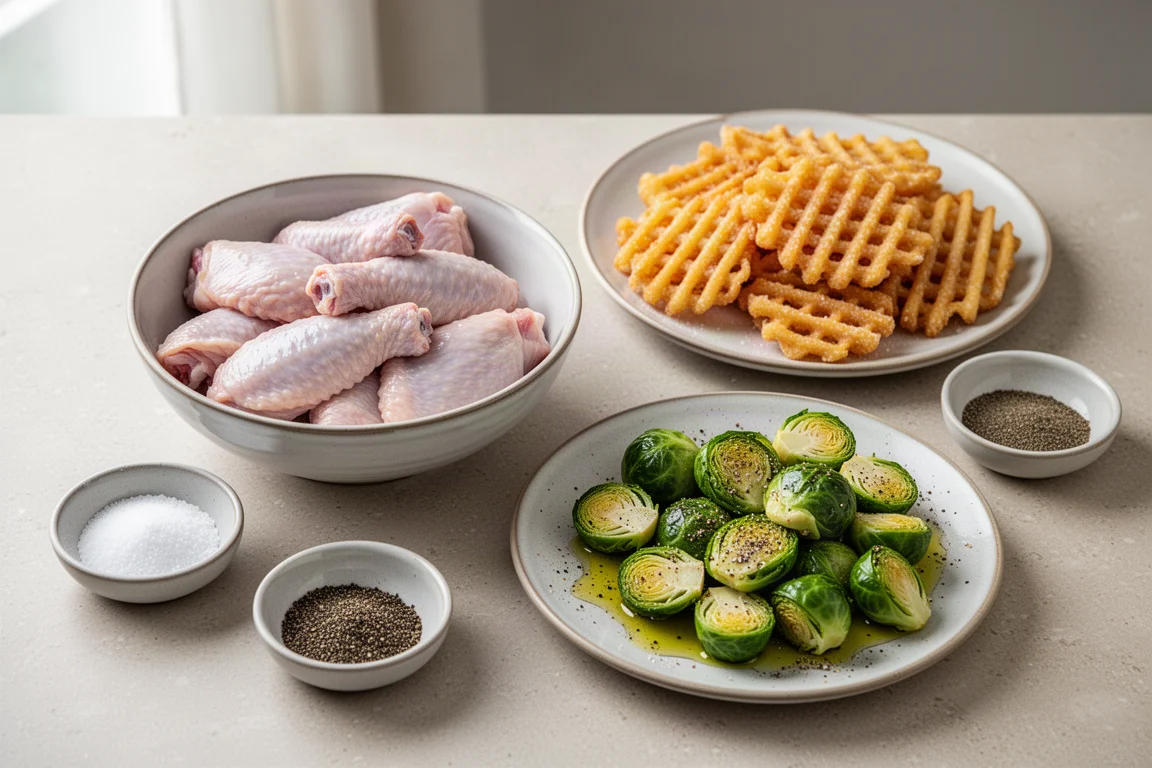
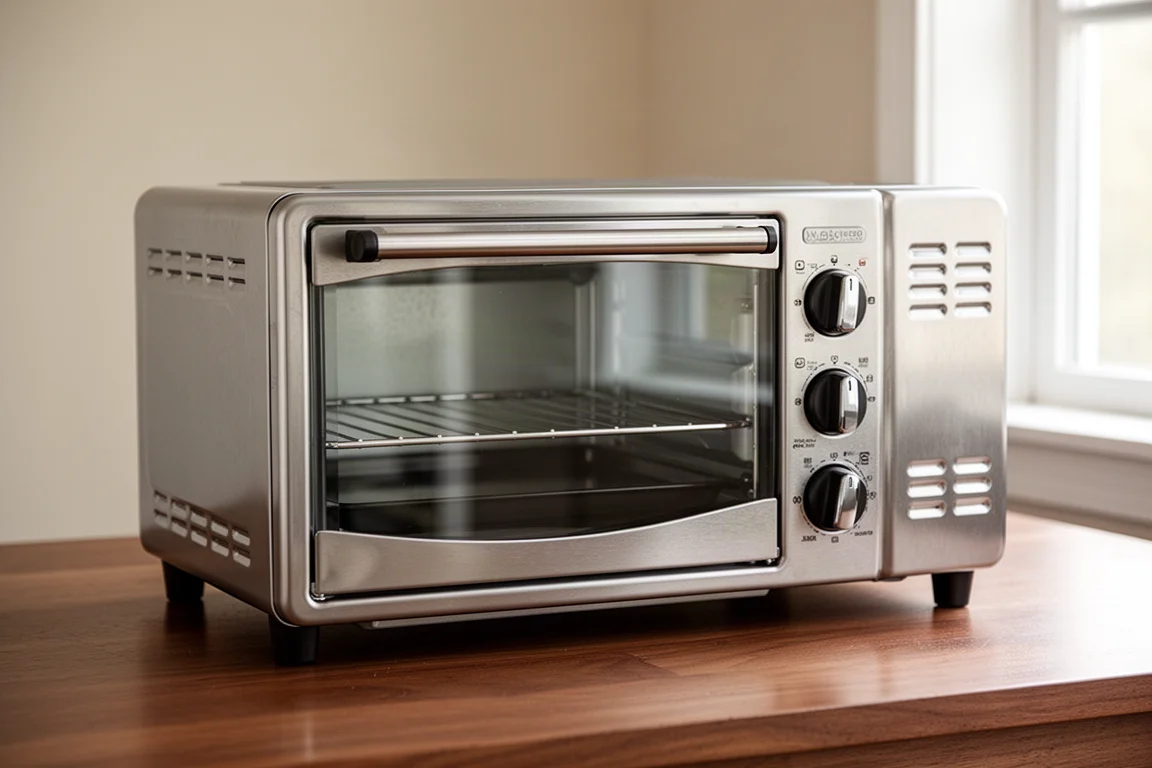
Capacity is another clear difference. Air fryers typically hold between two and six quarts. The Ninja Air Fryer Max XL has a 5.5-quart capacity with an 8-inch basket diameter. Convection toaster ovens range from 5 to 30 quarts, averaging 18 quarts. The PowerXL convection toaster oven has a 16-quart capacity and comes with an 11 by 10 inch air fryer basket.
That extra space lets you cook larger foods and more food at once, and lets you spread food out for better airflow and more even cooking. Air fryer baskets are easy to overcrowd, which is fine for frozen fries and nuggets, but crispy wings and Brussels sprouts need room. Stack them and they steam instead of crisping.
Cook Time and Convenience
Food generally cooks faster in an air fryer. The drawer has an airtight seal, the cooking chamber is smaller, the heating element sits closer to the food, and the fan blows faster. Most air fryers also need little or no preheating; the manual for this Ninja model calls for just three minutes.
Day-to-day use differs too. With a pod-style air fryer’s pull-out drawer and no glass window, you have to pull the basket out to check progress. A convection toaster oven’s glass door lets you watch the food without interruption or heat loss unless you need to flip something.
Cook Test Results: Chicken Wings, Fries, and Brussels Sprouts
Both appliances were set to air fry mode at the same temperature, with identical portions prepared the same way. The goals were cook time, crispiness, and the overall cooking experience.
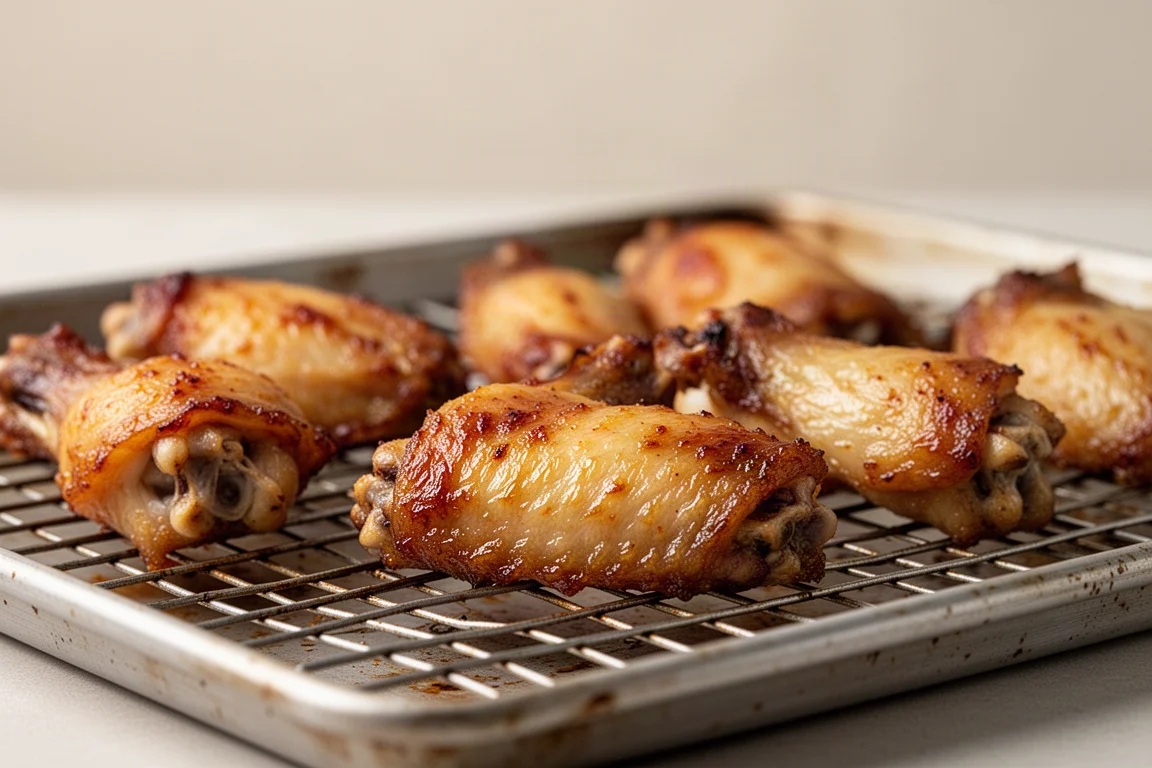
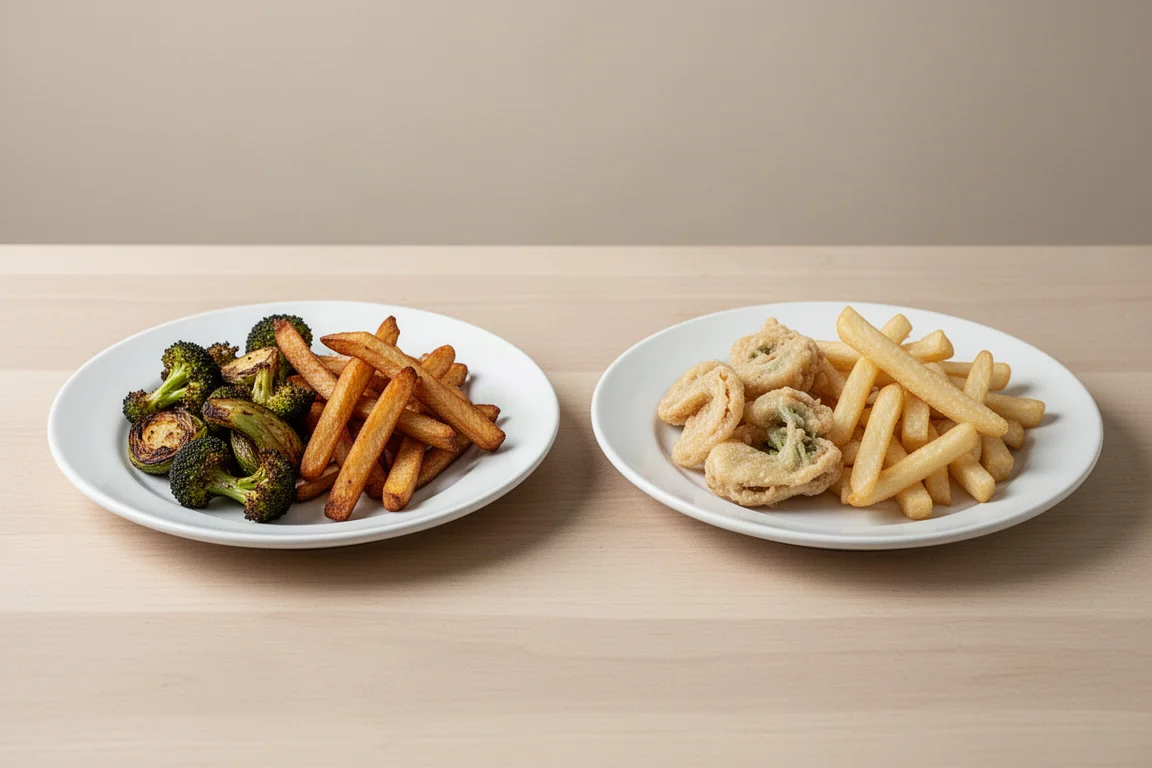
The chicken wings told a clear story. Wings in the air fryer took 25 minutes to cook fully; wings in the convection toaster oven took 35 minutes and still came out less crispy. The air fryer wings had darker, more golden skin. Both batches were delicious, but the air fryer batch was a step up in texture and taste.
For the fry test, we used frozen waffle fries. After 15 minutes, the air fryer fries were fully cooked with a golden, crispy exterior. The toaster oven batch took 20 minutes and turned out a bit floppy. Both tasted great, but the air fryer fries were so crisp they snapped when bent.
Brussels sprouts, prepared with a little olive oil, salt, and pepper, finished in just 13 minutes in the air fryer versus close to 20 minutes in the toaster oven. The air fryer batch came out significantly darker and crisper with a cooked-through but slightly firm center. The toaster oven sprouts were tasty and cooked well, but the exterior did not crisp up as much.
Cleaning and Everyday Use
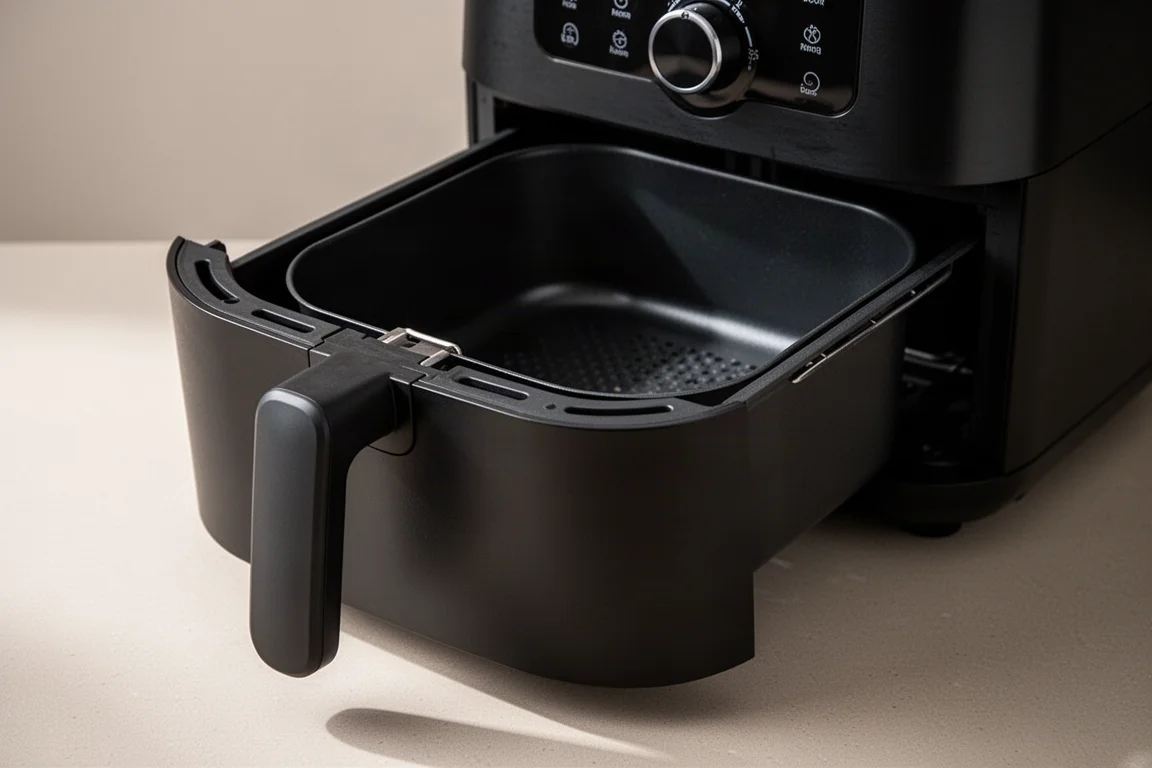
In practice, air fryers are much easier to clean. Most have a non-stick interior coating, and since food does not stick, cleanup is as simple as pulling out the basket and gently scrubbing it with soap and water.
The convection toaster oven requires more work: the metal air fryer basket has no coating so some food sticks, and you also have to clean the drip pan plus any splatter on the interior walls or door.
The overall cooking experience favored the air fryer as well. The drawer handle stays cool so you do not need an oven mitt to check progress, and all the drippings stayed contained in the drawer. With the toaster oven, you need an oven mitt to slide the basket out and flip the food, and rendered fat from the wings splattered across the drip tray and interior.
Which One Should You Buy?
Both appliances have real strengths and weaknesses. Air fryers cook certain foods remarkably fast with excellent texture and crispiness; their main downside is limited capacity. Convection toaster ovens take longer and need more cleanup effort, but they are like having a mini oven on your counter: you can cook almost anything and they fit more food.
The right choice depends on your situation. If your goal is to air fry, go with an air fryer. If you want an all-in-one mini oven that can air fry, bake, toast, and handle larger meals, go with a convection toaster oven.
Final Thoughts
If crisp texture and speed are what you are after, the air fryer wins on nearly every test we ran. If flexibility and capacity matter more, the convection toaster oven earns its place on the counter. Matching the appliance to how you actually cook is what makes either purchase a good one.
Further reading
Related Reviews
Kitchen Appliances
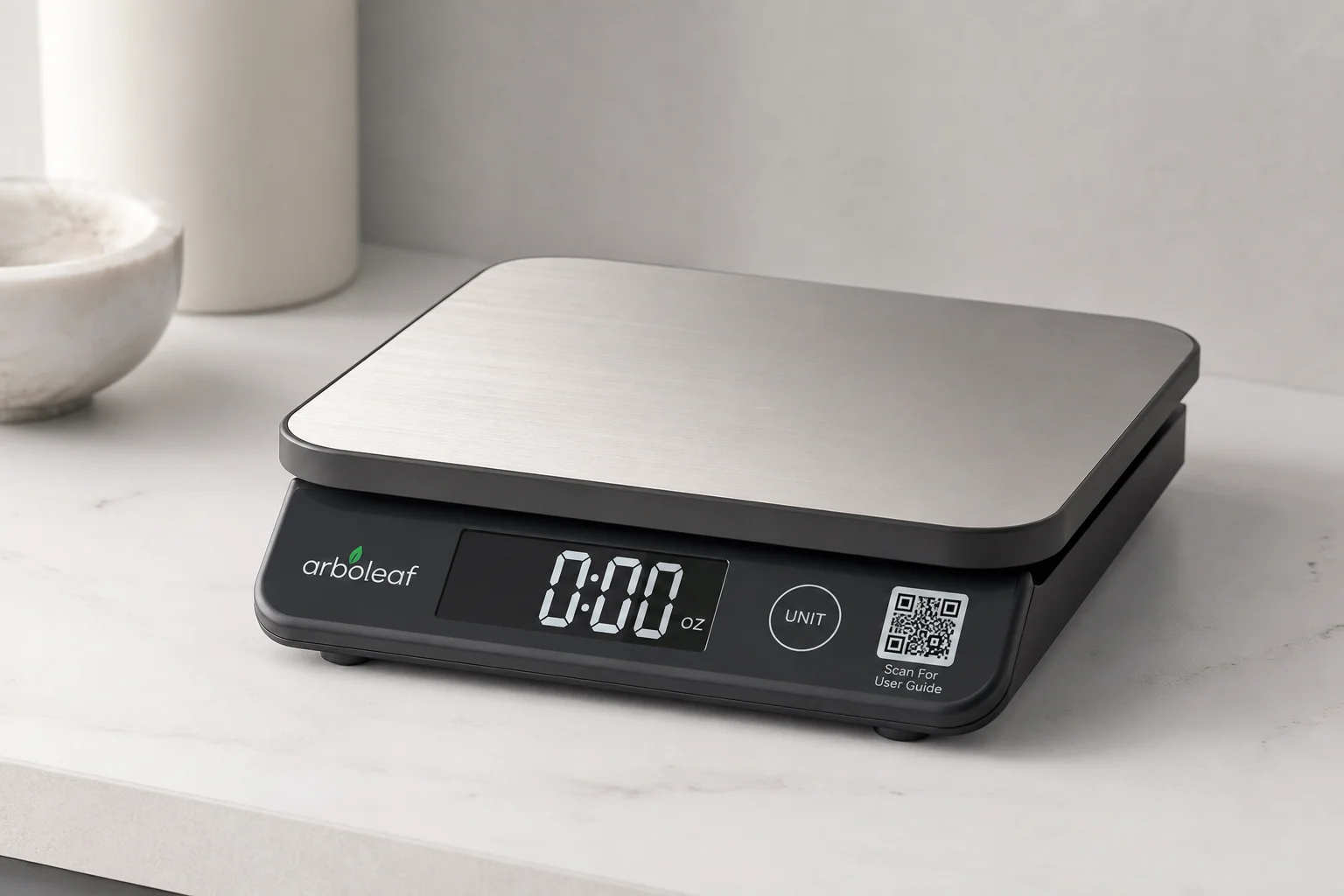
Arboleaf Smart Kitchen Scale Review: Connected Cooking Made Simple
A Bluetooth-enabled kitchen scale that syncs with a nutrition-tracking app, offering real-time weight monitoring and recipe guidance for home cooks.
Kitchen Appliances
Best Air Fryer Toaster Ovens Under 100: Five Practical Options for Budget-Conscious Kitchens
Five air fryer and toaster oven combinations that deliver real cooking performance without breaking the bank, each with distinct strengths for different kitchen needs.
Kitchen Appliances
Best Air Fryer Toaster Ovens: Three Top Picks for Multi-Function Cooking
Three high-performing air fryer toaster ovens tested for versatility, ease of use, and real-world cooking results. Find the right fit for your kitchen.