Art Supplies
AFMAT Electric Pencil Sharpener Review: A Colour Pencil Sharpener That Actually Works
A rechargeable electric sharpener with three point settings, auto feed and eject, and auto lead dislodging, tested across a wide range of artist pencils.
Introduction
Colour pencils are expensive, and a bad sharpener can waste a surprising amount of that investment before you even start drawing. Electric sharpeners in particular have a reputation for eating pencils or producing weak points, which is why many artists stick to hand crank models or even a craft knife.
The AFMAT electric pencil sharpener sets out to change that impression. It is a rechargeable, auto feed sharpener with three sharpness settings, support for pencils from 7 mm up to around 11.5 mm, and a claimed ability to automatically dislodge broken leads. We put it through a long run of artist pencils, from slim hexagonal barrels to thick triangular ones, to see how it holds up.
Design and Features
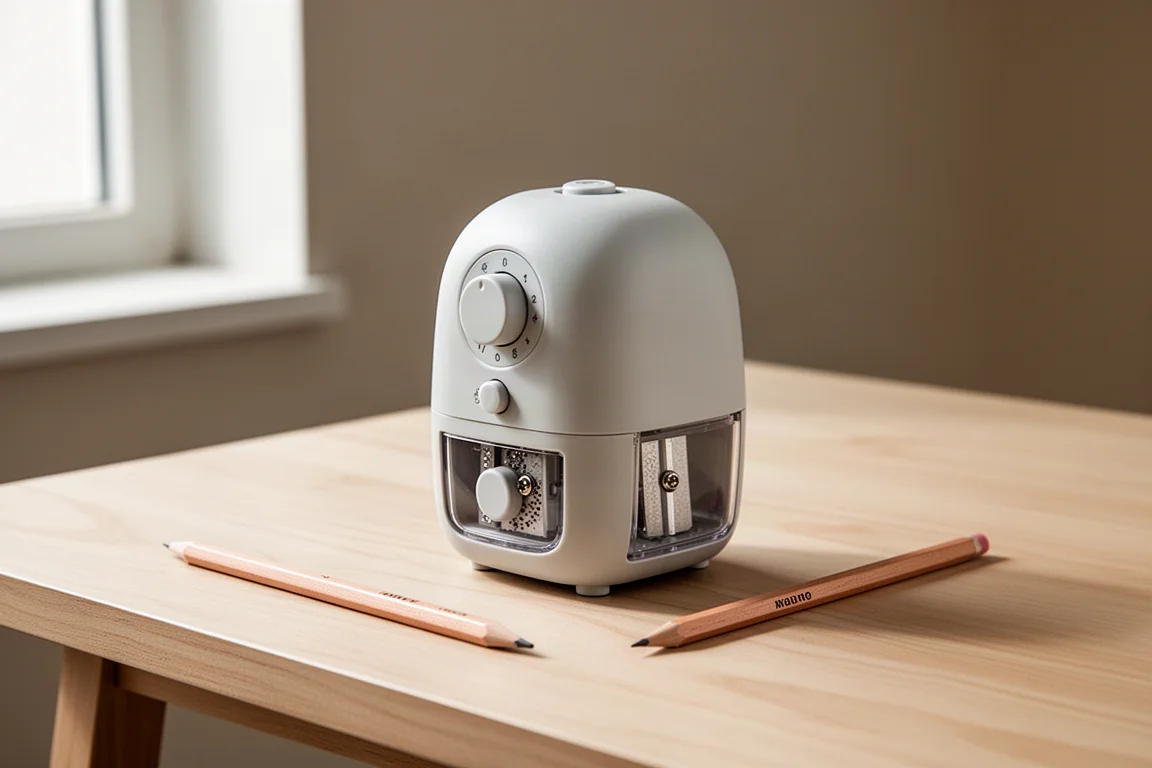
The sharpener has a compact, robot-like body with a genuine bit of weight to it, slightly bigger than an ordinary pencil laid alongside it. It comes in several colours, and the unit twists open at the top for emptying shavings, with the blade mechanism sitting inside that head.
The entry point is a flexible plastic membrane with an oval opening that widens to accept different barrel shapes. Inside, rubber wheels expand and contract to grip pencils of different thicknesses, drive them down into the blades, and then feed them back out again. Rubber pads on the base keep the unit from wandering across the desk, and the rechargeable battery is housed in the bottom.
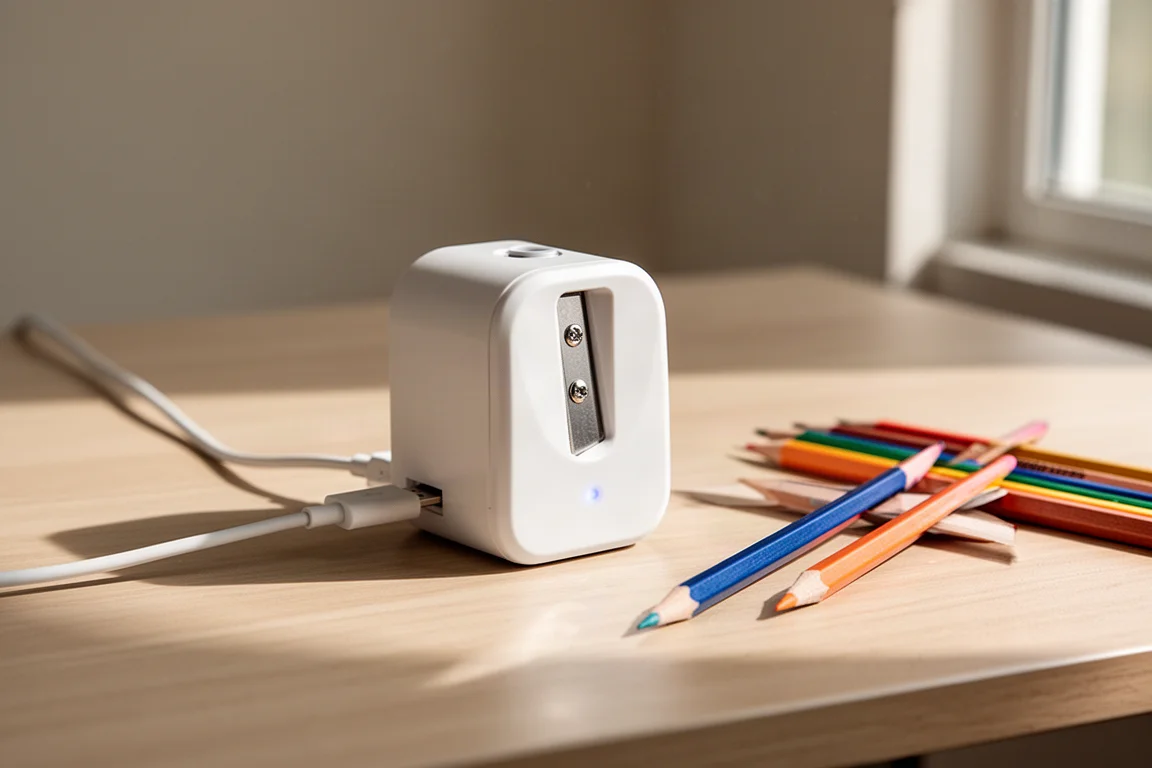
Charging is via USB-C, with a cable included in the box. A small indicator light flashes while charging. One important detail: the sharpener will not operate while the charging cable is connected, which appears to be a deliberate safety feature. Once charged, you can unplug it and use it anywhere.
Three Sharpness Settings
A dial at the front offers settings 1, 2 and 3, and the difference between them is easy to see on the finished point.
Setting 1 gives the finest, longest, needle-sharp point. Setting 2 leaves a sharp pencil with a slightly squared-off tip, and setting 3 produces a short, deliberately blunt core that has still been squared off. That third setting is genuinely useful if you want a blunter core for burnishing or other pressure-heavy techniques without snapping the lead.
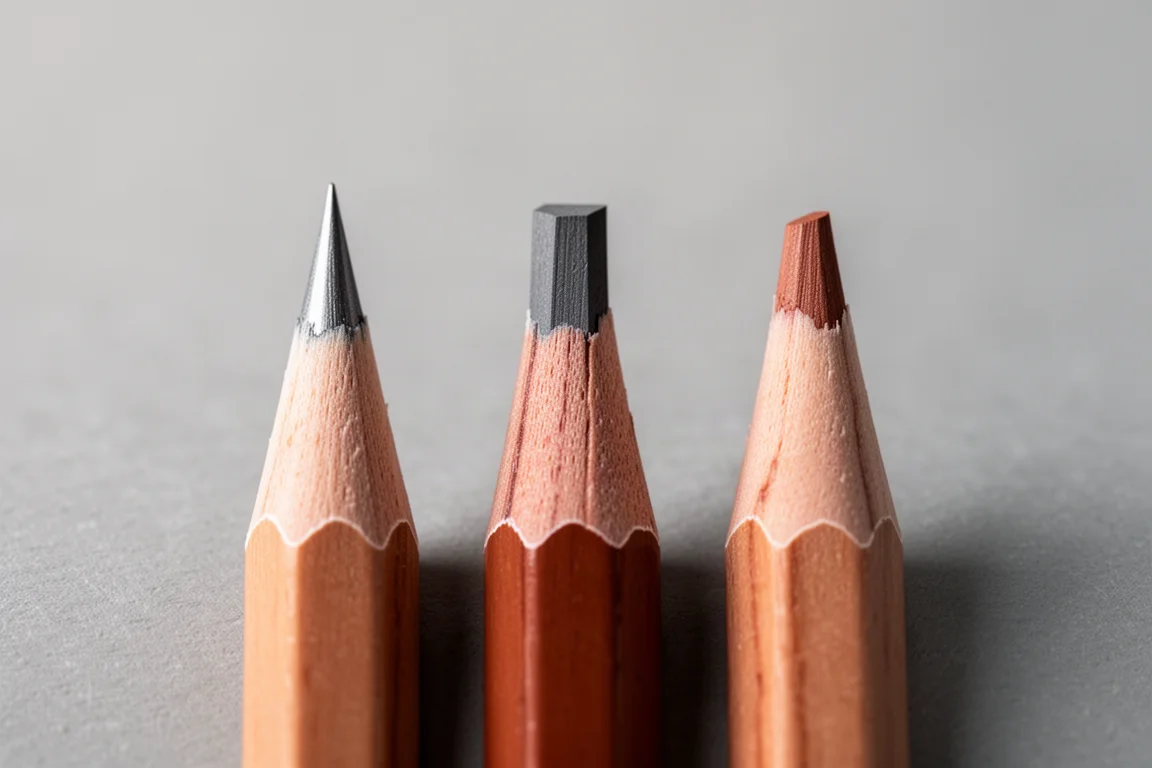
In practice, the difference between settings 1 and 2 is subtle: both give a decent core length, but setting 2 squares off the very tip. If you want the best point this sharpener can produce, setting 1 is the one to use.
Testing with Artist Colour Pencils
This is where the sharpener had to prove itself, and it did so across a remarkably wide range of barrels and cores.
Prismacolor, notorious for breaking in sharpeners, with its 7 mm barrel and roughly 3.9 mm core, produced an impressively fine point on setting 1. The Derwent Drawing pencil, a thick 8 mm round-barrel pencil that many sharpeners struggle with, also came out with a really good point.
The Lyra Rembrandt Polycolor (7.1 mm round, 3.6 mm core) sharpened well without eating the printed branding. The Caran d’Ache Luminance (7.7 mm round, 3.8 mm core) was sharpened with barely any wood removed past the barcode.
The standout result was the Koh-I-Noor Triocolor Magic, a triangular-barrel pencil with an 8.6 mm barrel and 5.2 mm core. Triangular barrels, especially thick ones, are usually a nightmare for any sharpener, and this one cut through it cleanly where even a hand crank sharpener had failed before.
The slim Prismacolor Verithin (6.4 mm hexagonal, 2.3 mm core) went in and came straight back out done, and the Derwent Inktense (7.5 mm round, 3.7 mm core), Faber-Castell Polychromos (7.5 mm round, 3.6 mm core), Faber-Castell Albrecht Dürer water-soluble (7.3 mm hexagonal, 3.6 mm core), and Derwent watercolour pencil (6.5 mm hexagonal, 3.1 mm core) all produced consistently good points. The tough-cored Derwent Artist also sharpened without trouble.
Graphite and Pastel Pencils
Graphite pencils with hard, brittle H-grade cores are notoriously difficult for sharpeners, and many graphite artists avoid them entirely. Even so, the Caran d’Ache Grafwood 3H (7.5 mm hexagonal, 2.5 mm core), a Koh-I-Noor 3B (6.6 mm hexagonal, 2.4 mm core), and a Staedtler Mars Lumograph 5H (6.6 mm hexagonal, 2.1 mm core) all sharpened with clean, usable points, which was genuinely unexpected for the 5H.
Pastel pencils are a different story. AFMAT specifically says not to use pastel pencils or charcoal pencils in this sharpener, so proceed at your own risk. When a Derwent pastel pencil core did break off during testing, the auto dislodge feature cleared the stuck fragment automatically, which is exactly the feature that makes hand sharpeners so frustrating when pastel cores snap. A Faber-Castell Pitt pastel pencil (6.6 mm round, 2.4 mm core) also sharpened beautifully.
To be clear: if something goes wrong while sharpening pastel or charcoal pencils, AFMAT’s guidance means you are on your own. But based on this testing, the mechanism handled them well.
Everyday Use and Accessibility
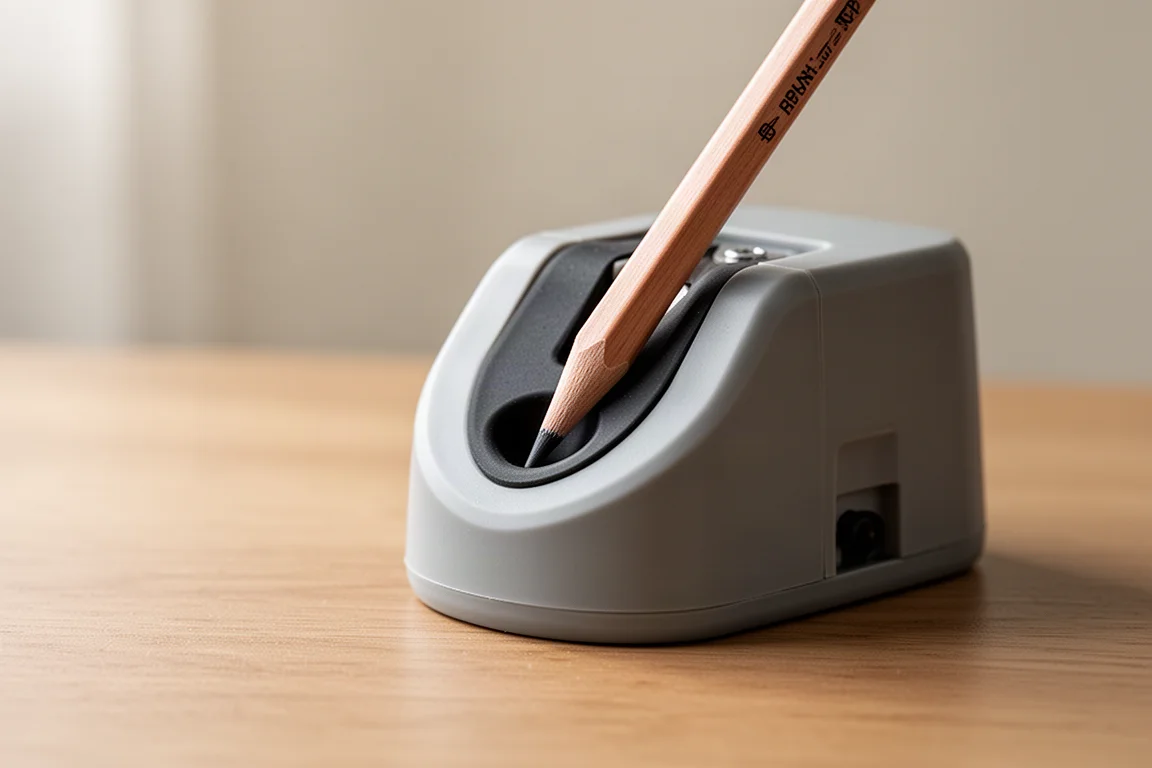
The auto feed and eject design is the biggest quality-of-life feature here. You push the pencil into the slot, let go, and the machine drives it down into the blades and feeds it back out. There is nothing to hold, crank, or twist, and you simply remove the pencil from the top when it is done.
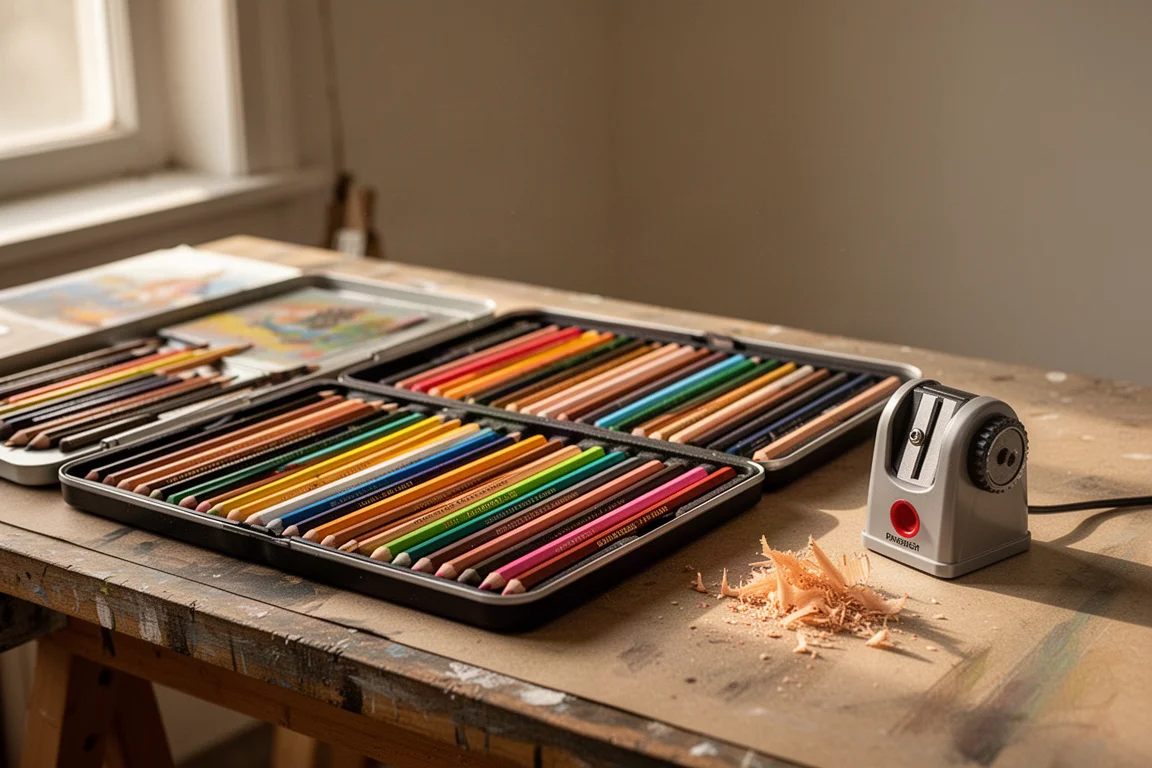
That makes this a strong candidate for anyone with arthritis, wrist pain, or limited hand strength, where repeated hand cranking is genuinely painful. It is also a huge time saver for anyone who needs to sharpen a large new set of pencils, such as a 150 or 500 pencil set, before using it for the first time. Sharpening a full set with a small handheld or hand crank sharpener is slow and hard on the hands; this handles it effortlessly.
Buying Advice
If you use expensive artist colour pencils and have been let down by electric sharpeners before, this is one of the few that consistently produced long, clean points across round, hexagonal, and triangular barrels from 6.4 mm to 8.6 mm. The three settings give real flexibility between needle-sharp and burnishing-friendly blunt cores, and the auto dislodge feature removes the single most annoying failure mode of pencil sharpeners.
Keep in mind that pastel and charcoal pencils are not officially supported, so factor that into your decision if they are a big part of your kit. Also note that the unit cannot be used while charging, so plan to work from battery power.
Conclusion
The AFMAT electric pencil sharpener delivers on its main promises: three usable point settings, auto feed and eject, automatic dislodging of broken leads, and support for a wide range of barrel sizes and shapes. The quality of the points it produces across colour, graphite, and even unofficially pastel pencils was consistently strong. For artists who sharpen a lot of pencils, or who find manual sharpening painful, it is an easy recommendation.
Product link
View more details for AFMAT Electric Pencil Sharpener
This product is mentioned in the review. Check the specifications, options, and compatibility before buying.
View more details for AFMAT Electric Pencil SharpenerFurther reading
Related Reviews
Art Supplies
Art Pop Watercolor Pencils 48-Color Set: A Thoughtfully Designed Student-Grade Option
The Art Pop 48-color watercolor pencil set blends well, dissolves smoothly, and includes artist-friendly details like barrel-printed color names, all at an affordable price.
Art Supplies
Artics Acrylic Markers 3mm Review: Versatile Paint Markers With a Few Caveats
A 48-color set of water-based acrylic paint markers that blend while wet, dry permanent, and keep the price low, though safety transparency remains a question.
Art Supplies
Best Art Supplies Worth Your Money: Pencils, Pens, Paints, and Paper That Earned Their Spot
After years of daily use and testing, these are the pencils, pens, watercolors, gouache, brushes, sketchbooks, and erasers that stand above the rest.